

Healing a broken heart
 |
Description
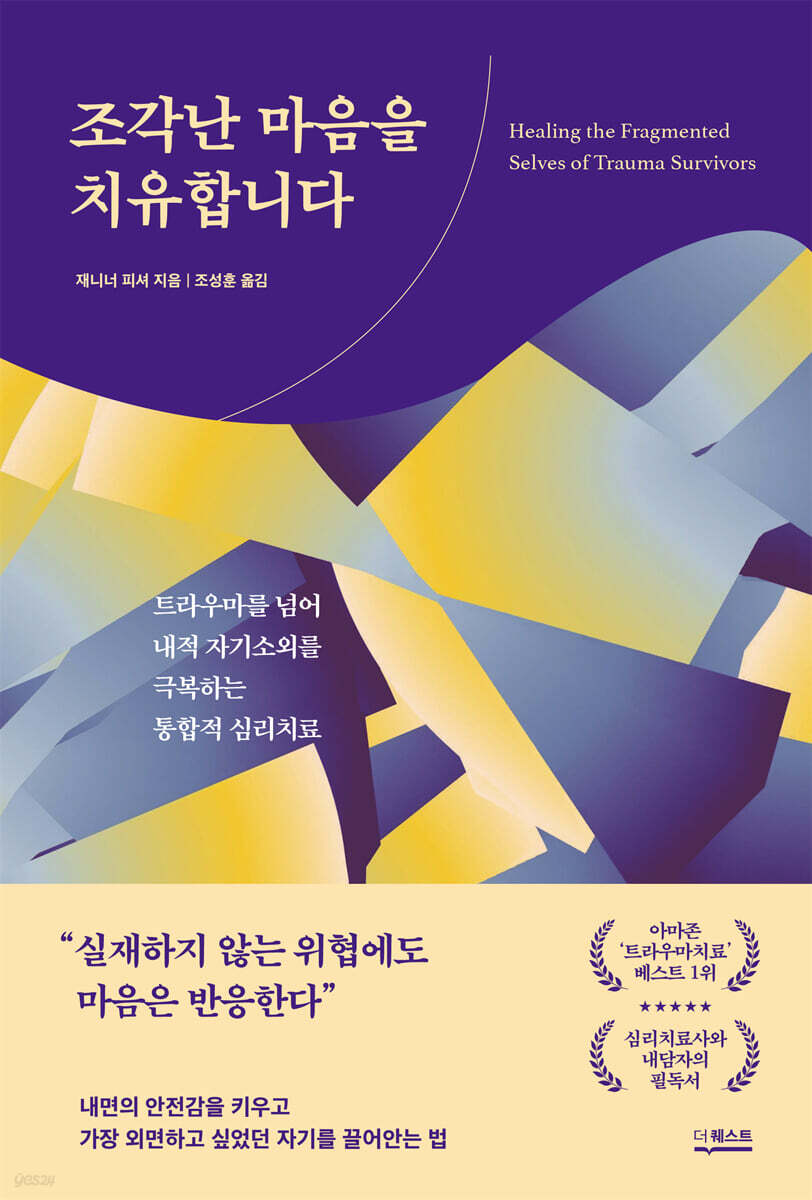
Book Introduction
“The inner self that is torn apart by trauma
How does one recover?
It encompasses sensorimotor psychotherapy, internal family systems therapy, and mindfulness-based therapy.
Understanding and Treating the Neurobiology of Trauma, Dissociation, and Attachment
Why do some clients, despite having "overcome" trauma and having good jobs, loving families, and abundant lives, still struggle to achieve a quality of life? This book is the ultimate guide for trauma survivors, whose inner lives remain as dark and painful as their past, and for therapists who acknowledge and heal their fragmented inner selves.
How does one recover?
It encompasses sensorimotor psychotherapy, internal family systems therapy, and mindfulness-based therapy.
Understanding and Treating the Neurobiology of Trauma, Dissociation, and Attachment
Why do some clients, despite having "overcome" trauma and having good jobs, loving families, and abundant lives, still struggle to achieve a quality of life? This book is the ultimate guide for trauma survivors, whose inner lives remain as dark and painful as their past, and for therapists who acknowledge and heal their fragmented inner selves.
- You can preview some of the book's contents.
Preview
index
Entering
The Road to This Book | Fragmentation and the Internal Struggle | The Cost of Self-Alienation: The 'False Self' | Obstacles to Trauma Healing: Attachment Trauma | Fixation: The Internal Conflicts Associated with Trauma | Structure of This Book
Chapter 1.
Neurobiological traces of trauma
: How did we become fragmented?
Living Traces of the Past | Parallel Worlds: Harry's Wife | Compartmentalization in Stressful Situations: Using Fault Lines | Recognizing Signs of Structural Dissociation | Means of Communication Between Parts: Symptoms | Helping Clients and Their Parts Be "Here" in the Now
Chapter 2.
Understanding Parts and Trauma Responses
Uninvited Memories | Remembering Actions and Reactions | Finding the "Now," Not the "Then"
Chapter 3.
Changing roles between clients and therapists
Dealing with the neurobiological traces of trauma | A multiple consciousness approach | Core lesions of memory | Acknowledging the past without exploring it | Another approach to traumatic memory | A different kind of witness | Distinguishing past from present | Witnessing the listening | The therapist as 'auxiliary cortex' and educator | Creative adaptation to abnormal experiences | The therapist's new role: neurobiological regulator | The therapist as director, coach, and pacemaker | The body: a shared whole | The evolving role of the therapist | Processing experiences, not just events
Chapter 4.
Learning to see my 'self'
: Meet the part
The Cost of Adaptation | Getting to Know You | Cultivating Curiosity: Who Am I? | Mindfully Noticing Your Inner Landscape | The Inner Struggle for Survival | Self-Acceptance
Chapter 5.
Become friends with parts
: Sowing the Seeds of Compassion
Recovering the Lost 'Self' | The Role of Mindfulness: How to Be Your Own 'Friend' | From Whose Perspective Should We Observe? | Distinguishing Between Observation and Meaning | Blending, Transformation, and Transition of Parts | Fostering Empathy | 'Seeing' the Parts: Externalized Mindfulness | Blending and Reality Testing | Blending Keeps Trauma 'Alive' | Learning to Separate | Offering Hospitality | Welcoming Lost Souls and Traumatized Children | Connecting with Wise and Compassionate Adults | Connecting to the Resources of Competent Adults | Self-Acceptance
Chapter 6.
A roadblock to treatment: attachment trauma
The 'loss experience' of secure attachment | Interpersonal habits: How to 'remember' early attachments | Trauma and attachment: The source of security becomes the source of danger | The 'attachment strategy of control' and trauma | Phobias about therapy and therapists | Awakening the desire to care | Recontextualizing disorganized attachment as an internal struggle | Many transferences, not just one | Recognizing the transference of parts | Building alliances with struggling parts | There is no 'he' or 'she' | A therapist for all parts, not just 'the client' | Listening to the 'voices' of the parts | Speaking for the parts | Avoiding the tendency to 'take sides' | The dance of two
Chapter 7.
Suicide, self-destruction, eating disorders, addiction
Meet the triggering parts
Is this a way out or a necessary path? | Extreme measures | Controlling unbearable emotions | Using the body for security | How do self-destructive behaviors work? | Self-destructive behaviors and attachment drives | Animal defenses and risky behaviors | Treating the causes of self-destructive behaviors | Trauma-informed stabilization therapy | Acknowledging the self-destructive parts | Soothing the vulnerable parts and honoring the caregiver parts | 'No part is left behind'
Chapter 8.
Treatment Challenges: Dissociative Systems and Dissociative Disorders
Recognizing clients with dissociative identity disorder | Diagnosing dissociative disorder | To diagnose or not to diagnose? | Assessment tools for diagnosing dissociative disorder | Diagnostic criteria and questions | There is no 'she' or 'he' | Keeping secrets even from yourself | Restoring order to the inner chaos | When there are many clients in one client | Teaching the normal self to work with parts | Making moment-to-moment experiences meaningful | Creating a present for parts stuck in the past | Overcoming conditioned learning | Continuous consciousness: Knowing 'who I am' moment-to-moment | Dissociation as a resource | Building inner trust | Gathering evidence: Establishing retrospective consciousness | Developing skills to overcome gaps in consciousness | There are no 'bad guys' or 'good guys' | Team coaching | Making the normal adult present more and more often | Keeping the parts updated: The 'trickle-down effect' | Patterns and role changes | Working with regression and aggression | Patience, persistence, and a good seatbelt | Treating young children with the help of their 'parents' | Self-Healing, Not Interpersonal Healing | Facilitating Reunification
Chapter 9.
Recovering from the Past: Embracing Ourselves
Accessing the resources of wise adults | Listening to children forms attachment bonds | Whose feelings are these? | Approaching parts from a place of strength | Accessing the resources of normal life | Putting young parts 'under the wing' of caregivers | Attachment bonds are formed through bodily experiences | Inviting parts 'here' rather than 'there' | Fears and terrors of internal attachment | Ruptures and repairs in internal attachment relationships
Chapter 10.
Recover what was lost
: Deepening the connection with your younger self
Reconstructing our relationship with the past | The role of memory | The "me now" versus the "me then" | Establishing internal communication with the parts of ourselves that have regulatory issues | Rupture and repair | Offering compassion to the wounded child parts of ourselves | Interfering with the healing experience | Four questions that befriend us | Cultivating the impulse to care | Overcoming inner mistrust and fear | Creating a new purpose and mission for each part of ourselves
Chapter 11.
Safety and Welcome: The Experience of Acquired Secure Attachment
Symptoms Tell More Than a 'Story' | Using Dissociative Symptoms to Heal Dissociative Fragmentation | Creating a Safe Place for the Child Part in Adult Daily Life | Supporting the Normal Life of a Functioning Adult Self | Acquired Secure Attachment | A Paradigm Shift: Past Influences Are Not Indelible | Secure Attachment Transmitted Intergenerationally | Secure Attachment Is Not an Event, It's a Physical and Emotional Experience | Avoiding Entanglement and Alienation | Acquired Secure Attachment and Resolving Trauma | Listening to the Cries of a Young Child
Appendix A.
5 Steps to 'Separation'
Appendix B.
Meditation meeting for parts
Appendix C.
Inner dialogue method
Appendix D.
A treatment paradigm for internal attachment restoration
Appendix E.
Harry's Experience Log
Appendix F.
Four Questions to Ask Your Friend
References
The Road to This Book | Fragmentation and the Internal Struggle | The Cost of Self-Alienation: The 'False Self' | Obstacles to Trauma Healing: Attachment Trauma | Fixation: The Internal Conflicts Associated with Trauma | Structure of This Book
Chapter 1.
Neurobiological traces of trauma
: How did we become fragmented?
Living Traces of the Past | Parallel Worlds: Harry's Wife | Compartmentalization in Stressful Situations: Using Fault Lines | Recognizing Signs of Structural Dissociation | Means of Communication Between Parts: Symptoms | Helping Clients and Their Parts Be "Here" in the Now
Chapter 2.
Understanding Parts and Trauma Responses
Uninvited Memories | Remembering Actions and Reactions | Finding the "Now," Not the "Then"
Chapter 3.
Changing roles between clients and therapists
Dealing with the neurobiological traces of trauma | A multiple consciousness approach | Core lesions of memory | Acknowledging the past without exploring it | Another approach to traumatic memory | A different kind of witness | Distinguishing past from present | Witnessing the listening | The therapist as 'auxiliary cortex' and educator | Creative adaptation to abnormal experiences | The therapist's new role: neurobiological regulator | The therapist as director, coach, and pacemaker | The body: a shared whole | The evolving role of the therapist | Processing experiences, not just events
Chapter 4.
Learning to see my 'self'
: Meet the part
The Cost of Adaptation | Getting to Know You | Cultivating Curiosity: Who Am I? | Mindfully Noticing Your Inner Landscape | The Inner Struggle for Survival | Self-Acceptance
Chapter 5.
Become friends with parts
: Sowing the Seeds of Compassion
Recovering the Lost 'Self' | The Role of Mindfulness: How to Be Your Own 'Friend' | From Whose Perspective Should We Observe? | Distinguishing Between Observation and Meaning | Blending, Transformation, and Transition of Parts | Fostering Empathy | 'Seeing' the Parts: Externalized Mindfulness | Blending and Reality Testing | Blending Keeps Trauma 'Alive' | Learning to Separate | Offering Hospitality | Welcoming Lost Souls and Traumatized Children | Connecting with Wise and Compassionate Adults | Connecting to the Resources of Competent Adults | Self-Acceptance
Chapter 6.
A roadblock to treatment: attachment trauma
The 'loss experience' of secure attachment | Interpersonal habits: How to 'remember' early attachments | Trauma and attachment: The source of security becomes the source of danger | The 'attachment strategy of control' and trauma | Phobias about therapy and therapists | Awakening the desire to care | Recontextualizing disorganized attachment as an internal struggle | Many transferences, not just one | Recognizing the transference of parts | Building alliances with struggling parts | There is no 'he' or 'she' | A therapist for all parts, not just 'the client' | Listening to the 'voices' of the parts | Speaking for the parts | Avoiding the tendency to 'take sides' | The dance of two
Chapter 7.
Suicide, self-destruction, eating disorders, addiction
Meet the triggering parts
Is this a way out or a necessary path? | Extreme measures | Controlling unbearable emotions | Using the body for security | How do self-destructive behaviors work? | Self-destructive behaviors and attachment drives | Animal defenses and risky behaviors | Treating the causes of self-destructive behaviors | Trauma-informed stabilization therapy | Acknowledging the self-destructive parts | Soothing the vulnerable parts and honoring the caregiver parts | 'No part is left behind'
Chapter 8.
Treatment Challenges: Dissociative Systems and Dissociative Disorders
Recognizing clients with dissociative identity disorder | Diagnosing dissociative disorder | To diagnose or not to diagnose? | Assessment tools for diagnosing dissociative disorder | Diagnostic criteria and questions | There is no 'she' or 'he' | Keeping secrets even from yourself | Restoring order to the inner chaos | When there are many clients in one client | Teaching the normal self to work with parts | Making moment-to-moment experiences meaningful | Creating a present for parts stuck in the past | Overcoming conditioned learning | Continuous consciousness: Knowing 'who I am' moment-to-moment | Dissociation as a resource | Building inner trust | Gathering evidence: Establishing retrospective consciousness | Developing skills to overcome gaps in consciousness | There are no 'bad guys' or 'good guys' | Team coaching | Making the normal adult present more and more often | Keeping the parts updated: The 'trickle-down effect' | Patterns and role changes | Working with regression and aggression | Patience, persistence, and a good seatbelt | Treating young children with the help of their 'parents' | Self-Healing, Not Interpersonal Healing | Facilitating Reunification
Chapter 9.
Recovering from the Past: Embracing Ourselves
Accessing the resources of wise adults | Listening to children forms attachment bonds | Whose feelings are these? | Approaching parts from a place of strength | Accessing the resources of normal life | Putting young parts 'under the wing' of caregivers | Attachment bonds are formed through bodily experiences | Inviting parts 'here' rather than 'there' | Fears and terrors of internal attachment | Ruptures and repairs in internal attachment relationships
Chapter 10.
Recover what was lost
: Deepening the connection with your younger self
Reconstructing our relationship with the past | The role of memory | The "me now" versus the "me then" | Establishing internal communication with the parts of ourselves that have regulatory issues | Rupture and repair | Offering compassion to the wounded child parts of ourselves | Interfering with the healing experience | Four questions that befriend us | Cultivating the impulse to care | Overcoming inner mistrust and fear | Creating a new purpose and mission for each part of ourselves
Chapter 11.
Safety and Welcome: The Experience of Acquired Secure Attachment
Symptoms Tell More Than a 'Story' | Using Dissociative Symptoms to Heal Dissociative Fragmentation | Creating a Safe Place for the Child Part in Adult Daily Life | Supporting the Normal Life of a Functioning Adult Self | Acquired Secure Attachment | A Paradigm Shift: Past Influences Are Not Indelible | Secure Attachment Transmitted Intergenerationally | Secure Attachment Is Not an Event, It's a Physical and Emotional Experience | Avoiding Entanglement and Alienation | Acquired Secure Attachment and Resolving Trauma | Listening to the Cries of a Young Child
Appendix A.
5 Steps to 'Separation'
Appendix B.
Meditation meeting for parts
Appendix C.
Inner dialogue method
Appendix D.
A treatment paradigm for internal attachment restoration
Appendix E.
Harry's Experience Log
Appendix F.
Four Questions to Ask Your Friend
References
Detailed image

Into the book
There was something that neither the therapist nor the client could see.
The point is that the client's inner self is fragmented.
In order to adapt, the client had to radically separate his 'self' from his identity, which turned his inner world into a battlefield.
Another thing I noticed was that clients felt relieved when I told them that dissociative splitting was a normal response to trauma.
First, I explain the structural dissociation theory, and then I explain the difficult struggle they are currently going through using the language of the 'parts language' and the 'animal defense survival response', which are the foundations of the structural dissociation theory.
During our conversation, the client often had an expression of understanding, as if what I was saying was nothing new, as if he had already known it but had been unable to express it, and had finally found the right words.
The structural dissociative model seemed much more reassuring than feeling stigmatized or crazy.
A core tenet of the structural dissociation model is that dissociation allows us to adapt and survive more successfully in an unsafe world.
This helps even the most self-conscious and narcissistic people accept fragmentation not as evidence of flaws but as a necessary necessity for survival.
---From "Entering"
The treatment paradigm in this book is not intended to treat any specific disorder.
It is designed for all trauma survivors, regardless of whether they have been diagnosed with post-traumatic stress disorder (PTSD), a commonly diagnosed disorder associated with trauma such as attention deficit hyperactivity disorder (ADHD), bipolar disorder, borderline personality disorder, or dissociative disorder, and whether they have seen a mental health professional before.
If you, the reader, have been rejected, attacked, threatened, abandoned, or abused by someone and are still carrying the emotional and physical scars of such experiences, or if you are helping someone who has, I believe this book will be beneficial to you.
---From "Entering"
To avoid having the rejected child, the "not-me," outside of consciousness, we must continue to resort to dissociation, denial, and self-loathing long after the traumatic event has ended.
Ultimately, this child survived the lack of security, abuse, and betrayal at the cost of denying his most vulnerable and most wounded 'self.'
But he feels hypocritical because he recognizes that his outward appearance and ability to function as a person are only a part of his true self.
As you struggle to distance yourself from the 'bad' side and identify with the good, you may feel like you are 'putting on airs' or trying to be what others want you to be.
As the conviction that they are hypocrites grows, some become indignant, while others are overcome with shame and self-doubt.
But in both cases, the traces of trauma remain unresolved.
---「Chapter 1.
From "The Neurobiological Traces of Trauma: How We Became Fragmented"
Trauma often leaves its mark in ways that don't lend themselves to traditional diagnosis or treatment.
Rather than feeling relieved when revealing their secrets, clients often feel ashamed, suspicious, or exposed.
They have difficulty remembering or generalizing what they have learned in therapy to life outside the therapy room, and like Winnie the Pooh, they keep falling back into the same old patterns.
Otherwise, each time you come to the counseling room, you feel like a different person, leaving the therapist with no one to form a therapeutic alliance with.
A client who was excited and angry last week may be depressed, gloomy, and tight-lipped this week.
And next week, the topic of conversation becomes planning for the future rather than despair and suicide.
When I bring up the sexual abuse I disclosed last week again, the client is startled.
The revelation was forgotten as if it had never happened.
Last week, the client felt the therapy room was the only safe place; today, he feels threatened.
More seriously, the determination to change turns into a fear of change.
When the state of mind changes like this, not only the therapist but also the client becomes confused.
---「Chapter 2.
From "Understanding Parts and Trauma Reactions"
The 'partial approach' offers several new possibilities to address the difficulties mentioned above.
First, if we treat symptoms as manifestations of parts, we can incorporate mindfulness-based techniques.
It is about helping clients to 'become aware' of their experiences rather than 'make contact' with them.
Clients who have suffered psychological trauma may feel overwhelmed or helpless when 'getting in touch with their emotions' due to tension or numbness caused by dysregulation of the autonomic nervous system, which can lead to anxiety, depression, and impulsive behavior.
By practicing mindfulness-based awareness, or 'noticing,' clients can achieve 'dual awareness,' that is, they can remain connected to their emotional or physical experiences while simultaneously observing what they are experiencing from a bit of psychological distance.
(Omitted) This ability is very important for treatment.
---「Chapter 3.
From “Changes in the Roles of Clients and Therapists”
It is not difficult to understand that humans have additional subdivisions, each of which contributes to different survival strategies.
Ask clients who understand these to consider what they already know about each part so that they can connect their case to the theoretical model.
Do you recognize your "normal self"? Do you recognize the part of yourself that knows how to ask for help, the part that knows how to fight or get angry? Can you recognize the part that feels fearful, ashamed, or conforming? What parts of yourself are the most difficult for the client to deal with? Which parts do they find most rewarding?
Using Figure 4.1, I will show how each part sees the world through its own lens, how each part responds to different emergent animal defenses, and how each part relates to the other parts based on its biological role as well as its own history.
Each part has different implicit memories and interpretations of what happened, and each part also has different expectations about what to do.
---「Chapter 4.
From "Learning to See My 'Self': Meeting the Part"
'Dual awareness' is the mental ability or habit of mind that allows one to keep two or more states of consciousness in mind simultaneously.
Dual awareness is when a client stays in the present while mindfully becoming aware of both the experience of the present moment and the implicit or explicit memories connected to the past.
If clients can feel the length and stability of their spine, their inhalation and exhalation, their heartbeat, and the ground beneath their feet, while simultaneously connecting with the somatic sensations of painful emotions felt by their younger selves, they can tolerate intense emotions.
Some of our most popular therapies, such as Eye Movement Desensitization Therapy (EMDR) and Somatic Experiencing Therapy (SE), as well as Sensorimotor Psychotherapy, Internal Family Systems Therapy, and Ego State Therapy using Hypnosis, are all based on mindfulness.
---「Chapter 5.
From “Becoming Friends of Parts: Sowing the Seeds of Compassion”
Traces of disorganized attachment and control strategies affect all interpersonal relationships in adulthood, including treatment.
Van der Hart, Nijenhuis, Steele, and others call this phenomenon related to therapy "therapy and therapist phobia."
The more traumatized clients seek reassurance, understanding, and care from their therapists (seeking proximity), the more likely they are to experience fear and distrust in the early stages of treatment or as their relationship with the therapist progresses.
The prospect of trusting someone, being seen, and having your secrets exposed doesn't bring comfort; it breeds fear.
As Jessica Benjamin says, “To be known or recognized is to immediately experience the power of another.
The other person becomes someone who can either acknowledge me or ignore me.
“It is about becoming someone who can see what is hidden, reach the core of oneself, and perhaps even invade it.”
The life experiences of a traumatized person create an inescapable and painful paradox: intimacy is untrustworthy, yet solitude is unsafe.
They learned from experience that while being alone or unprotected makes them more vulnerable, being close to others is also unsafe.
---「Chapter 6.
From “Stumbling Blocks to Treatment: Attachment Trauma”
When it comes to understanding risky behaviors, the most common mistake both professionals and laypeople make is assuming that self-harm, suicide, suicidal thoughts, eating disorders, and substance abuse are about "seeking destruction" rather than "seeking relief."
If self-harm is assumed to cause pain, then interpretations of it as masochism, self-punishment, or a cry for help follow.
If we assume that suicidal thoughts reflect a conscious desire to die, we would interpret them as either a threat to life or a cry for help.
Interpreting it this way misses the core issue of self-harm: an attempt to successfully control unbearable emotions or a quest for relief.
At the heart of all self-destructive behavior lies a simple fact:
Injuring one's body, starving oneself, planning one's own death, or compulsively engaging in addictive behaviors often have the welcome consequence of relieving physical and emotional pain.
Ironically, given their physiological effects, high-risk behaviors appear to be ingenious attempts by clients to cope with or live with pain using the limited means they know.
If we can acknowledge to clients that there is no better way to soothe themselves now, or that self-destructive behaviors like self-harm or suicidal thoughts paradoxically bring relief, we can create an opportunity to build a collaborative relationship with the client and the parts of themselves that are struggling or fleeing in the pursuit of relief.
Therapists should begin by expressing curiosity rather than immediately reacting to suicidal thoughts, active addiction, and self-harm as safety concerns.
'What problem is this a solution to?' 'What triggered this impulse?' 'What does the client hope to achieve as a result of this behavior?' 'Has the client found relief in this way before?'
---From "Chapter 7: Encountering the Parts That Lead to Suicide, Self-Destruction, Eating Disorders, and Addiction"
What makes things more difficult is that DID clients often have an "eraser" part, a "thought-stopping" part, or a "snatching" part that actively interferes with the encoding of new, present-oriented information.
These parts feel that trusting new information is risky.
In a dangerous world of implicit memory, they fear that changing the assumptions related to survival is reckless.
---「Chapter 8.
From “Therapeutic Tasks: Dissociative Systems and Dissociative Disorders”
The sword discovered a 'gatekeeper' part that acts as a barrier to forming attachment bonds with young and vulnerable parts.
The gatekeeper had obviously learned this rule from Carl's parents.
In his home, only rational and goal-oriented behavior was welcomed.
But Carl was a sensitive child, and although he didn't yet know he was gay, he was anxious about the fact that he was different from other children.
I suffered from separation anxiety from my mother and was afraid of my father.
The message from his parents was that our son should not act like a "girl" and that he had to live up to their standards to be loved.
The gatekeeper part developed to protect this young boy from rejection.
“Don’t take your eyes off the ‘important things.’
Then you will be accepted and respected.”
The gatekeeper's tireless efforts culminated in Carl successfully graduating from law school to the congratulations of his parents.
A series of rejections from men that followed triggered a powerful feeling in the young boy, leaving Carl gripped by a fear of abandonment and an intense desire to feel special to someone.
The gatekeeper's judgment and distraction alone were not enough to prevent this child's wounds and deprivation.
This was followed by several rounds where another gatekeeper appeared and created obstacles to prevent the sword from forming an attachment with the child part.
---「Chapter 9.
From "Recovering the Past: Embracing Ourselves"
For clients who are unable to communicate freely internally or are in the early stages of learning how to communicate freely, more structured internal dialogue that does not require much capacity on the part of the client may be helpful.
The Four Questions to Become a Friend is structured and easy to learn to help you conduct your inner dialogue even if you have a personality disorder or adjustment disorder.
The idea behind this technique is to make the parts feel welcome and heard by befriending them, as the name suggests.
The first three questions focus on understanding the core fears of the parts, which are primarily fears of harm, extinction, and abandonment.
Whenever there is any emotion or issue that reflects the communication of the parts, use the four questions that become your friend.
I often use this conversational technique to help clients regain stability when they feel overwhelmed by parts of their daily lives.
It is also useful when the parts of us that fear everyday triggers are inhibiting our lives.
Annie was invited to the birthday party of an old friend she hadn't seen in years, and the very thought of going to the party was too embarrassing.
I guided her through the steps below, asking her to focus on the feeling of shame as a message from a part of her.
· Ask this part of you who is so embarrassed what you would worry about if you went to the party.
Annie: She says she's worried that people will see her.
· Ask people what concerns them when they see you.
Annie: People won't like seeing you.
People say it's disgusting.
· So what are you worried about that people don't like?
Annie: She tells them that they will reject her and she will end up alone.
(core fear)
· Ask the fourth and final question.
“To avoid being so afraid of rejection and abandonment, ask your child what he or she needs from you right here and now.”
---「Chapter 10.
From “Reclaiming What Was Lost: Deepening the Connection with Your Childhood”
As I listened carefully to the story Mark's symptoms told me, there were instances where it became clear to me that it was unsafe to express that my words or opinions were worth listening to.
Josh often reported experiencing poverty, neglect, humiliating verbal abuse, and peer bullying, but his symptoms revealed some details he didn't share.
Josh had to survive by avoiding the attention of others, pleasing his parents, and appeasing those who tormented him.
His desire to learn and his fear of failure combined to make him an excellent student.
Although he didn't feel like he belonged anywhere, his intellectual resources gave him the opportunity to disappear and start a new life.
This was the story his symptoms told (just as in the world Diane described, even the smallest child was never allowed to show weakness).
In each case, the events were important only in that they created a context for understanding and empathizing with the parts.
The resolution of trauma fundamentally occurs in the context of restoring attachment to each part.
The point is that the client's inner self is fragmented.
In order to adapt, the client had to radically separate his 'self' from his identity, which turned his inner world into a battlefield.
Another thing I noticed was that clients felt relieved when I told them that dissociative splitting was a normal response to trauma.
First, I explain the structural dissociation theory, and then I explain the difficult struggle they are currently going through using the language of the 'parts language' and the 'animal defense survival response', which are the foundations of the structural dissociation theory.
During our conversation, the client often had an expression of understanding, as if what I was saying was nothing new, as if he had already known it but had been unable to express it, and had finally found the right words.
The structural dissociative model seemed much more reassuring than feeling stigmatized or crazy.
A core tenet of the structural dissociation model is that dissociation allows us to adapt and survive more successfully in an unsafe world.
This helps even the most self-conscious and narcissistic people accept fragmentation not as evidence of flaws but as a necessary necessity for survival.
---From "Entering"
The treatment paradigm in this book is not intended to treat any specific disorder.
It is designed for all trauma survivors, regardless of whether they have been diagnosed with post-traumatic stress disorder (PTSD), a commonly diagnosed disorder associated with trauma such as attention deficit hyperactivity disorder (ADHD), bipolar disorder, borderline personality disorder, or dissociative disorder, and whether they have seen a mental health professional before.
If you, the reader, have been rejected, attacked, threatened, abandoned, or abused by someone and are still carrying the emotional and physical scars of such experiences, or if you are helping someone who has, I believe this book will be beneficial to you.
---From "Entering"
To avoid having the rejected child, the "not-me," outside of consciousness, we must continue to resort to dissociation, denial, and self-loathing long after the traumatic event has ended.
Ultimately, this child survived the lack of security, abuse, and betrayal at the cost of denying his most vulnerable and most wounded 'self.'
But he feels hypocritical because he recognizes that his outward appearance and ability to function as a person are only a part of his true self.
As you struggle to distance yourself from the 'bad' side and identify with the good, you may feel like you are 'putting on airs' or trying to be what others want you to be.
As the conviction that they are hypocrites grows, some become indignant, while others are overcome with shame and self-doubt.
But in both cases, the traces of trauma remain unresolved.
---「Chapter 1.
From "The Neurobiological Traces of Trauma: How We Became Fragmented"
Trauma often leaves its mark in ways that don't lend themselves to traditional diagnosis or treatment.
Rather than feeling relieved when revealing their secrets, clients often feel ashamed, suspicious, or exposed.
They have difficulty remembering or generalizing what they have learned in therapy to life outside the therapy room, and like Winnie the Pooh, they keep falling back into the same old patterns.
Otherwise, each time you come to the counseling room, you feel like a different person, leaving the therapist with no one to form a therapeutic alliance with.
A client who was excited and angry last week may be depressed, gloomy, and tight-lipped this week.
And next week, the topic of conversation becomes planning for the future rather than despair and suicide.
When I bring up the sexual abuse I disclosed last week again, the client is startled.
The revelation was forgotten as if it had never happened.
Last week, the client felt the therapy room was the only safe place; today, he feels threatened.
More seriously, the determination to change turns into a fear of change.
When the state of mind changes like this, not only the therapist but also the client becomes confused.
---「Chapter 2.
From "Understanding Parts and Trauma Reactions"
The 'partial approach' offers several new possibilities to address the difficulties mentioned above.
First, if we treat symptoms as manifestations of parts, we can incorporate mindfulness-based techniques.
It is about helping clients to 'become aware' of their experiences rather than 'make contact' with them.
Clients who have suffered psychological trauma may feel overwhelmed or helpless when 'getting in touch with their emotions' due to tension or numbness caused by dysregulation of the autonomic nervous system, which can lead to anxiety, depression, and impulsive behavior.
By practicing mindfulness-based awareness, or 'noticing,' clients can achieve 'dual awareness,' that is, they can remain connected to their emotional or physical experiences while simultaneously observing what they are experiencing from a bit of psychological distance.
(Omitted) This ability is very important for treatment.
---「Chapter 3.
From “Changes in the Roles of Clients and Therapists”
It is not difficult to understand that humans have additional subdivisions, each of which contributes to different survival strategies.
Ask clients who understand these to consider what they already know about each part so that they can connect their case to the theoretical model.
Do you recognize your "normal self"? Do you recognize the part of yourself that knows how to ask for help, the part that knows how to fight or get angry? Can you recognize the part that feels fearful, ashamed, or conforming? What parts of yourself are the most difficult for the client to deal with? Which parts do they find most rewarding?
Using Figure 4.1, I will show how each part sees the world through its own lens, how each part responds to different emergent animal defenses, and how each part relates to the other parts based on its biological role as well as its own history.
Each part has different implicit memories and interpretations of what happened, and each part also has different expectations about what to do.
---「Chapter 4.
From "Learning to See My 'Self': Meeting the Part"
'Dual awareness' is the mental ability or habit of mind that allows one to keep two or more states of consciousness in mind simultaneously.
Dual awareness is when a client stays in the present while mindfully becoming aware of both the experience of the present moment and the implicit or explicit memories connected to the past.
If clients can feel the length and stability of their spine, their inhalation and exhalation, their heartbeat, and the ground beneath their feet, while simultaneously connecting with the somatic sensations of painful emotions felt by their younger selves, they can tolerate intense emotions.
Some of our most popular therapies, such as Eye Movement Desensitization Therapy (EMDR) and Somatic Experiencing Therapy (SE), as well as Sensorimotor Psychotherapy, Internal Family Systems Therapy, and Ego State Therapy using Hypnosis, are all based on mindfulness.
---「Chapter 5.
From “Becoming Friends of Parts: Sowing the Seeds of Compassion”
Traces of disorganized attachment and control strategies affect all interpersonal relationships in adulthood, including treatment.
Van der Hart, Nijenhuis, Steele, and others call this phenomenon related to therapy "therapy and therapist phobia."
The more traumatized clients seek reassurance, understanding, and care from their therapists (seeking proximity), the more likely they are to experience fear and distrust in the early stages of treatment or as their relationship with the therapist progresses.
The prospect of trusting someone, being seen, and having your secrets exposed doesn't bring comfort; it breeds fear.
As Jessica Benjamin says, “To be known or recognized is to immediately experience the power of another.
The other person becomes someone who can either acknowledge me or ignore me.
“It is about becoming someone who can see what is hidden, reach the core of oneself, and perhaps even invade it.”
The life experiences of a traumatized person create an inescapable and painful paradox: intimacy is untrustworthy, yet solitude is unsafe.
They learned from experience that while being alone or unprotected makes them more vulnerable, being close to others is also unsafe.
---「Chapter 6.
From “Stumbling Blocks to Treatment: Attachment Trauma”
When it comes to understanding risky behaviors, the most common mistake both professionals and laypeople make is assuming that self-harm, suicide, suicidal thoughts, eating disorders, and substance abuse are about "seeking destruction" rather than "seeking relief."
If self-harm is assumed to cause pain, then interpretations of it as masochism, self-punishment, or a cry for help follow.
If we assume that suicidal thoughts reflect a conscious desire to die, we would interpret them as either a threat to life or a cry for help.
Interpreting it this way misses the core issue of self-harm: an attempt to successfully control unbearable emotions or a quest for relief.
At the heart of all self-destructive behavior lies a simple fact:
Injuring one's body, starving oneself, planning one's own death, or compulsively engaging in addictive behaviors often have the welcome consequence of relieving physical and emotional pain.
Ironically, given their physiological effects, high-risk behaviors appear to be ingenious attempts by clients to cope with or live with pain using the limited means they know.
If we can acknowledge to clients that there is no better way to soothe themselves now, or that self-destructive behaviors like self-harm or suicidal thoughts paradoxically bring relief, we can create an opportunity to build a collaborative relationship with the client and the parts of themselves that are struggling or fleeing in the pursuit of relief.
Therapists should begin by expressing curiosity rather than immediately reacting to suicidal thoughts, active addiction, and self-harm as safety concerns.
'What problem is this a solution to?' 'What triggered this impulse?' 'What does the client hope to achieve as a result of this behavior?' 'Has the client found relief in this way before?'
---From "Chapter 7: Encountering the Parts That Lead to Suicide, Self-Destruction, Eating Disorders, and Addiction"
What makes things more difficult is that DID clients often have an "eraser" part, a "thought-stopping" part, or a "snatching" part that actively interferes with the encoding of new, present-oriented information.
These parts feel that trusting new information is risky.
In a dangerous world of implicit memory, they fear that changing the assumptions related to survival is reckless.
---「Chapter 8.
From “Therapeutic Tasks: Dissociative Systems and Dissociative Disorders”
The sword discovered a 'gatekeeper' part that acts as a barrier to forming attachment bonds with young and vulnerable parts.
The gatekeeper had obviously learned this rule from Carl's parents.
In his home, only rational and goal-oriented behavior was welcomed.
But Carl was a sensitive child, and although he didn't yet know he was gay, he was anxious about the fact that he was different from other children.
I suffered from separation anxiety from my mother and was afraid of my father.
The message from his parents was that our son should not act like a "girl" and that he had to live up to their standards to be loved.
The gatekeeper part developed to protect this young boy from rejection.
“Don’t take your eyes off the ‘important things.’
Then you will be accepted and respected.”
The gatekeeper's tireless efforts culminated in Carl successfully graduating from law school to the congratulations of his parents.
A series of rejections from men that followed triggered a powerful feeling in the young boy, leaving Carl gripped by a fear of abandonment and an intense desire to feel special to someone.
The gatekeeper's judgment and distraction alone were not enough to prevent this child's wounds and deprivation.
This was followed by several rounds where another gatekeeper appeared and created obstacles to prevent the sword from forming an attachment with the child part.
---「Chapter 9.
From "Recovering the Past: Embracing Ourselves"
For clients who are unable to communicate freely internally or are in the early stages of learning how to communicate freely, more structured internal dialogue that does not require much capacity on the part of the client may be helpful.
The Four Questions to Become a Friend is structured and easy to learn to help you conduct your inner dialogue even if you have a personality disorder or adjustment disorder.
The idea behind this technique is to make the parts feel welcome and heard by befriending them, as the name suggests.
The first three questions focus on understanding the core fears of the parts, which are primarily fears of harm, extinction, and abandonment.
Whenever there is any emotion or issue that reflects the communication of the parts, use the four questions that become your friend.
I often use this conversational technique to help clients regain stability when they feel overwhelmed by parts of their daily lives.
It is also useful when the parts of us that fear everyday triggers are inhibiting our lives.
Annie was invited to the birthday party of an old friend she hadn't seen in years, and the very thought of going to the party was too embarrassing.
I guided her through the steps below, asking her to focus on the feeling of shame as a message from a part of her.
· Ask this part of you who is so embarrassed what you would worry about if you went to the party.
Annie: She says she's worried that people will see her.
· Ask people what concerns them when they see you.
Annie: People won't like seeing you.
People say it's disgusting.
· So what are you worried about that people don't like?
Annie: She tells them that they will reject her and she will end up alone.
(core fear)
· Ask the fourth and final question.
“To avoid being so afraid of rejection and abandonment, ask your child what he or she needs from you right here and now.”
---「Chapter 10.
From “Reclaiming What Was Lost: Deepening the Connection with Your Childhood”
As I listened carefully to the story Mark's symptoms told me, there were instances where it became clear to me that it was unsafe to express that my words or opinions were worth listening to.
Josh often reported experiencing poverty, neglect, humiliating verbal abuse, and peer bullying, but his symptoms revealed some details he didn't share.
Josh had to survive by avoiding the attention of others, pleasing his parents, and appeasing those who tormented him.
His desire to learn and his fear of failure combined to make him an excellent student.
Although he didn't feel like he belonged anywhere, his intellectual resources gave him the opportunity to disappear and start a new life.
This was the story his symptoms told (just as in the world Diane described, even the smallest child was never allowed to show weakness).
In each case, the events were important only in that they created a context for understanding and empathizing with the parts.
The resolution of trauma fundamentally occurs in the context of restoring attachment to each part.
---「Chapter 11.
From “Safety and Welcome: The Experience of Acquired Secure Attachment”
From “Safety and Welcome: The Experience of Acquired Secure Attachment”
Publisher's Review
“The mind reacts even to unrealistic threats.”
# Some clients, despite seemingly having no significant treatment issues, repeatedly exhibit deep-seated self-alienation, intense self-loathing, and confusing emotions, behaviors, and physical reactions.
Therapists become embarrassed, doubt their own abilities, and become frustrated when faced with such clients.
What kind of internal struggles are taking place in the minds and bodies of these complex and demanding clients who come to us with intractable diagnoses like bipolar disorder or schizophrenia?
# The concept that 'a person's personality and identity can be fragmented and separated' has long been poorly accepted in traditional mental health circles.
Dissociative disorders (including dissociative identity disorder, dissociative disorder not otherwise classified (DDNOS), and depersonalization disorder) remain among the most challenging to diagnose.
However, the approach of Bessel van der Kolk (author of the famous book “The Body Remembers”), which revolutionized our understanding of trauma, and the advancement of neurobiological research in the 21st century, have made it possible to understand that dissociative splitting is a normal adaptive response to trauma.
Develop a sense of inner security
How to embrace the self you most want to ignore
What would it be like to live under constant threat of extinction, hating oneself because one cannot bear the risk of hating the person who has harmed one?
Janina Fisher, who has worked with trauma survivors for decades, has realized that it is the quality of our internal attachment that determines how safe we feel "inside" and how easy or difficult it is to be ourselves.
Those who suffered terribly as children due to abuse, violence, and neglect were unable to cherish themselves and provide for their safety.
If I ignore, despise, and neglect the most insignificant parts of myself, I will feel their pain and be unable to welcome them again.
(*'Partial' approach: This book takes the position that humans are a single system.
Just as a family is a system made up of multiple family members, it is believed that there are multiple sub-personalities within a single person.
In this book, this is expressed as part or parts, and a part does not simply refer to a specific emotional state or thought pattern, but is a personality that exists within an individual, and is not only distinct from each other, but also has an autonomous thought system and its own unique emotions, expression styles, abilities, desires, and worldview.
As a trauma specialist who consulted with numerous therapists and clients, Fisher began to notice something that neither therapist nor client could see.
The point is that the client's inner self is fragmented.
In order to survive and adapt to extreme danger, the client had to radically separate his 'self', his identity, and this turned his inner world into a battlefield.
When we approached the client with the 'structural dissociation model', which accepted that this 'dissociative dissociation' was a normal response to adapting to trauma, the client also felt relieved.
And it became increasingly clear that when we 'accept' or love the wounded, abandoned, and lonely parts of ourselves, amazing things happen.
Their self-deprecation, self-loathing, and disconnection from themselves naturally began to transform into self-pity.
While clients abhorred and avoided the idea of being 'kind', 'caring', or 'compassionate' to themselves, they had no difficulty following the therapist's guidance in 'looking at' their 'child-like part' and being kind and caring to it.
As my inner attachment to my younger selves grew, they too began to heal.
Janina Fisher, a world-renowned expert in trauma and dissociation, offers a vision of hope and validation for people suffering from complex trauma and their therapists.
Fisher offers a unique and compelling roadmap for addressing chronic trauma by uniquely integrating the core of cutting-edge trauma treatments.
Written with sincerity, clarity, and accuracy, this book is accessible, incredibly practical, and a unique contribution to the field.
Pat Ogden, founder of Sensorimotor Psychotherapy Institute
Recovering the lost 'selves'
Change the way your body, mind, and soul remember wounds
Fisher has developed a unique and compelling roadmap for addressing chronic trauma by uniquely integrating the core of cutting-edge trauma treatments.
This book has been a leading bestseller in trauma treatment in the United States since its publication in 2017, and has received unparalleled reviews (Amazon reader rating of 4.9/1,000 reviews).
It has been a valuable reference for students, researchers, and practitioners in the fields of mental health and psychotherapy, as well as for those suffering from the long-term aftereffects of complex trauma, those receiving long-term treatment for chronic mental illness (depression, dissociative disorder, borderline personality disorder, schizophrenia, etc.) but unable to find a breakthrough in treatment, and their families.
The integrative psychotherapy presented in this book is deeply influenced by neuroscientific research that began to revolutionize our understanding of trauma and by Bessel Van der Kolk's belief that "the body remembers."
In addition, the author organically integrates the latest psychotherapeutic techniques, including sensorimotor psychotherapy, internal family systems therapy, mindfulness-based therapy, and even clinical hypnosis, with the author's 'structural dissociation model' (an approach that suggests that inner separation can help us more successfully adapt and survive in an unsafe world) and long-term clinical experience to present a vision of hope and confidence.
The book begins with Chapter 1, "The Neurobiological Imprint of Trauma: How We Became Fragmented," by explaining dissociative dissociation and fragmentation as adaptive responses to abnormal experiences.
Chapter 2, "Understanding Parts and Trauma Responses," then examines the implications of neuroscientific research on traumatic memory as a foundation for recognizing and understanding signs of fragmentation in clients' lives.
Briefly understand the emergency stress response to a threat and explain how the traces of trauma are encoded in the body.
Chapter 3, “The Changing Roles of Clients and Therapists,” discusses the fundamental shifts in perspective and approach needed when viewing trauma clients from a neuroscientific perspective.
Treatment begins with therapist education about the nature of trauma and dissociation, with the goal of reassuring the client by explaining that the symptoms they are struggling with are normal and logical responses to trauma.
In Chapter 4, "Learning to See My 'Self': Encountering the Parts," therapists and clients learn the core skills needed to truly counsel through the parts paradigm.
Chapter 5, “Becoming Friends with Parts: Sowing the Seeds of Compassion,” focuses on the process of cultivating self-understanding and self-compassion for healing.
When asked to be compassionate toward themselves or to take better care of themselves, most trauma clients react strongly negatively.
However, when a client's emotions, such as fear or shame, are connected to the somatosensory sensations they felt as a child, they often empathize with that child and may even feel resentment toward that child.
Chapter 6, “Stumbling Blocks to Treatment: Attachment Trauma,” addresses the internal conflicts and struggles created by an individual’s attachment trauma history.
Chapter 7, "Meeting the Parts That Trigger Suicide, Self-Destruction, Eating Disorders, and Addiction," sheds new light on unsafe and dangerous behaviors such as self-harm, suicide attempts, eating disorders, and addictions as manifestations of animal defense survival responses born from the parts.
Addictions, eating disorders, suicidal and self-harming behaviors can all be reinterpreted from a neurobiological perspective, allowing us to acknowledge and embrace their existence in a new way.
Chapter 8, "Therapeutic Challenges: Dissociative Systems and Dissociative Disorders," addresses issues unique to clients with diagnosable dissociative disorders (dissociative identity disorder (DID), dissociative disorder not otherwise classified (DDNOS), and depersonalization disorder).
The premise of Chapter 9, “Recovering the Past: Embracing Our Selves,” is that resolving traumatic experiences depends on overcoming the self-alienation associated with survival.
By reconciling our child selves with our adult, "normal" selves, each part of us can feel more comfortable and connected to the other, experiencing a greater sense of security and warmth.
Chapter 10, "Reclaiming What's Lost: Deepening Your Connection with Your Childhood," takes the healing work one step further.
Above all, the client must gain trust from the parties involved, which is not an easy task.
Because of the implicit memory of false bonds and broken trust, parts are overly wary and hesitant to trust, even though they long to do so.
The therapist continually asks the client to represent the parts, communicate with them, cooperate with them, and show compassion.
Finally, Chapter 11, "Safety and Welcome: The Experience of Acquired Secure Attachment," views "integration" not simply as a therapeutic goal, but as a process that occurs naturally when we use mindfulness-based techniques to become aware of and compassionate toward the systems of traumatized parts.
In conclusion, what trauma survivors need to find peace of mind is to learn to love their inner wounded child and to be unconditionally "loving" to themselves and their "parts."
This book, which aims to understand and treat the neurobiology of trauma, dissociation, and attachment, is written in an accessible manner for both clients and therapists. It contains a variety of detailed case studies, from stories of clients who found peace of mind by being compassionate to their wounded inner child to ways to cope with difficult therapeutic relationships, therapeutic impasses, and complex and paradoxical symptoms.
If we can cultivate inner security and transform shame, self-loathing, and guilt into compassionate acceptance, even the darkest, most profoundly dark soul can transform its relationship with itself and become the friend it so desperately sought to shun.
# Some clients, despite seemingly having no significant treatment issues, repeatedly exhibit deep-seated self-alienation, intense self-loathing, and confusing emotions, behaviors, and physical reactions.
Therapists become embarrassed, doubt their own abilities, and become frustrated when faced with such clients.
What kind of internal struggles are taking place in the minds and bodies of these complex and demanding clients who come to us with intractable diagnoses like bipolar disorder or schizophrenia?
# The concept that 'a person's personality and identity can be fragmented and separated' has long been poorly accepted in traditional mental health circles.
Dissociative disorders (including dissociative identity disorder, dissociative disorder not otherwise classified (DDNOS), and depersonalization disorder) remain among the most challenging to diagnose.
However, the approach of Bessel van der Kolk (author of the famous book “The Body Remembers”), which revolutionized our understanding of trauma, and the advancement of neurobiological research in the 21st century, have made it possible to understand that dissociative splitting is a normal adaptive response to trauma.
Develop a sense of inner security
How to embrace the self you most want to ignore
What would it be like to live under constant threat of extinction, hating oneself because one cannot bear the risk of hating the person who has harmed one?
Janina Fisher, who has worked with trauma survivors for decades, has realized that it is the quality of our internal attachment that determines how safe we feel "inside" and how easy or difficult it is to be ourselves.
Those who suffered terribly as children due to abuse, violence, and neglect were unable to cherish themselves and provide for their safety.
If I ignore, despise, and neglect the most insignificant parts of myself, I will feel their pain and be unable to welcome them again.
(*'Partial' approach: This book takes the position that humans are a single system.
Just as a family is a system made up of multiple family members, it is believed that there are multiple sub-personalities within a single person.
In this book, this is expressed as part or parts, and a part does not simply refer to a specific emotional state or thought pattern, but is a personality that exists within an individual, and is not only distinct from each other, but also has an autonomous thought system and its own unique emotions, expression styles, abilities, desires, and worldview.
As a trauma specialist who consulted with numerous therapists and clients, Fisher began to notice something that neither therapist nor client could see.
The point is that the client's inner self is fragmented.
In order to survive and adapt to extreme danger, the client had to radically separate his 'self', his identity, and this turned his inner world into a battlefield.
When we approached the client with the 'structural dissociation model', which accepted that this 'dissociative dissociation' was a normal response to adapting to trauma, the client also felt relieved.
And it became increasingly clear that when we 'accept' or love the wounded, abandoned, and lonely parts of ourselves, amazing things happen.
Their self-deprecation, self-loathing, and disconnection from themselves naturally began to transform into self-pity.
While clients abhorred and avoided the idea of being 'kind', 'caring', or 'compassionate' to themselves, they had no difficulty following the therapist's guidance in 'looking at' their 'child-like part' and being kind and caring to it.
As my inner attachment to my younger selves grew, they too began to heal.
Janina Fisher, a world-renowned expert in trauma and dissociation, offers a vision of hope and validation for people suffering from complex trauma and their therapists.
Fisher offers a unique and compelling roadmap for addressing chronic trauma by uniquely integrating the core of cutting-edge trauma treatments.
Written with sincerity, clarity, and accuracy, this book is accessible, incredibly practical, and a unique contribution to the field.
Pat Ogden, founder of Sensorimotor Psychotherapy Institute
Recovering the lost 'selves'
Change the way your body, mind, and soul remember wounds
Fisher has developed a unique and compelling roadmap for addressing chronic trauma by uniquely integrating the core of cutting-edge trauma treatments.
This book has been a leading bestseller in trauma treatment in the United States since its publication in 2017, and has received unparalleled reviews (Amazon reader rating of 4.9/1,000 reviews).
It has been a valuable reference for students, researchers, and practitioners in the fields of mental health and psychotherapy, as well as for those suffering from the long-term aftereffects of complex trauma, those receiving long-term treatment for chronic mental illness (depression, dissociative disorder, borderline personality disorder, schizophrenia, etc.) but unable to find a breakthrough in treatment, and their families.
The integrative psychotherapy presented in this book is deeply influenced by neuroscientific research that began to revolutionize our understanding of trauma and by Bessel Van der Kolk's belief that "the body remembers."
In addition, the author organically integrates the latest psychotherapeutic techniques, including sensorimotor psychotherapy, internal family systems therapy, mindfulness-based therapy, and even clinical hypnosis, with the author's 'structural dissociation model' (an approach that suggests that inner separation can help us more successfully adapt and survive in an unsafe world) and long-term clinical experience to present a vision of hope and confidence.
The book begins with Chapter 1, "The Neurobiological Imprint of Trauma: How We Became Fragmented," by explaining dissociative dissociation and fragmentation as adaptive responses to abnormal experiences.
Chapter 2, "Understanding Parts and Trauma Responses," then examines the implications of neuroscientific research on traumatic memory as a foundation for recognizing and understanding signs of fragmentation in clients' lives.
Briefly understand the emergency stress response to a threat and explain how the traces of trauma are encoded in the body.
Chapter 3, “The Changing Roles of Clients and Therapists,” discusses the fundamental shifts in perspective and approach needed when viewing trauma clients from a neuroscientific perspective.
Treatment begins with therapist education about the nature of trauma and dissociation, with the goal of reassuring the client by explaining that the symptoms they are struggling with are normal and logical responses to trauma.
In Chapter 4, "Learning to See My 'Self': Encountering the Parts," therapists and clients learn the core skills needed to truly counsel through the parts paradigm.
Chapter 5, “Becoming Friends with Parts: Sowing the Seeds of Compassion,” focuses on the process of cultivating self-understanding and self-compassion for healing.
When asked to be compassionate toward themselves or to take better care of themselves, most trauma clients react strongly negatively.
However, when a client's emotions, such as fear or shame, are connected to the somatosensory sensations they felt as a child, they often empathize with that child and may even feel resentment toward that child.
Chapter 6, “Stumbling Blocks to Treatment: Attachment Trauma,” addresses the internal conflicts and struggles created by an individual’s attachment trauma history.
Chapter 7, "Meeting the Parts That Trigger Suicide, Self-Destruction, Eating Disorders, and Addiction," sheds new light on unsafe and dangerous behaviors such as self-harm, suicide attempts, eating disorders, and addictions as manifestations of animal defense survival responses born from the parts.
Addictions, eating disorders, suicidal and self-harming behaviors can all be reinterpreted from a neurobiological perspective, allowing us to acknowledge and embrace their existence in a new way.
Chapter 8, "Therapeutic Challenges: Dissociative Systems and Dissociative Disorders," addresses issues unique to clients with diagnosable dissociative disorders (dissociative identity disorder (DID), dissociative disorder not otherwise classified (DDNOS), and depersonalization disorder).
The premise of Chapter 9, “Recovering the Past: Embracing Our Selves,” is that resolving traumatic experiences depends on overcoming the self-alienation associated with survival.
By reconciling our child selves with our adult, "normal" selves, each part of us can feel more comfortable and connected to the other, experiencing a greater sense of security and warmth.
Chapter 10, "Reclaiming What's Lost: Deepening Your Connection with Your Childhood," takes the healing work one step further.
Above all, the client must gain trust from the parties involved, which is not an easy task.
Because of the implicit memory of false bonds and broken trust, parts are overly wary and hesitant to trust, even though they long to do so.
The therapist continually asks the client to represent the parts, communicate with them, cooperate with them, and show compassion.
Finally, Chapter 11, "Safety and Welcome: The Experience of Acquired Secure Attachment," views "integration" not simply as a therapeutic goal, but as a process that occurs naturally when we use mindfulness-based techniques to become aware of and compassionate toward the systems of traumatized parts.
In conclusion, what trauma survivors need to find peace of mind is to learn to love their inner wounded child and to be unconditionally "loving" to themselves and their "parts."
This book, which aims to understand and treat the neurobiology of trauma, dissociation, and attachment, is written in an accessible manner for both clients and therapists. It contains a variety of detailed case studies, from stories of clients who found peace of mind by being compassionate to their wounded inner child to ways to cope with difficult therapeutic relationships, therapeutic impasses, and complex and paradoxical symptoms.
If we can cultivate inner security and transform shame, self-loathing, and guilt into compassionate acceptance, even the darkest, most profoundly dark soul can transform its relationship with itself and become the friend it so desperately sought to shun.
GOODS SPECIFICS
- Date of issue: March 13, 2024
- Page count, weight, size: 512 pages | 732g | 152*215*25mm
- ISBN13: 9791140708635
You may also like
카테고리
korean


korean

![GQ KOREA Mark (Monthly): December [2025]](http://librairie.coreenne.fr/cdn/shop/files/8ef265dbbfbf186523ed75ba7319009d.jpg?v=1765340328&width=3840)


