

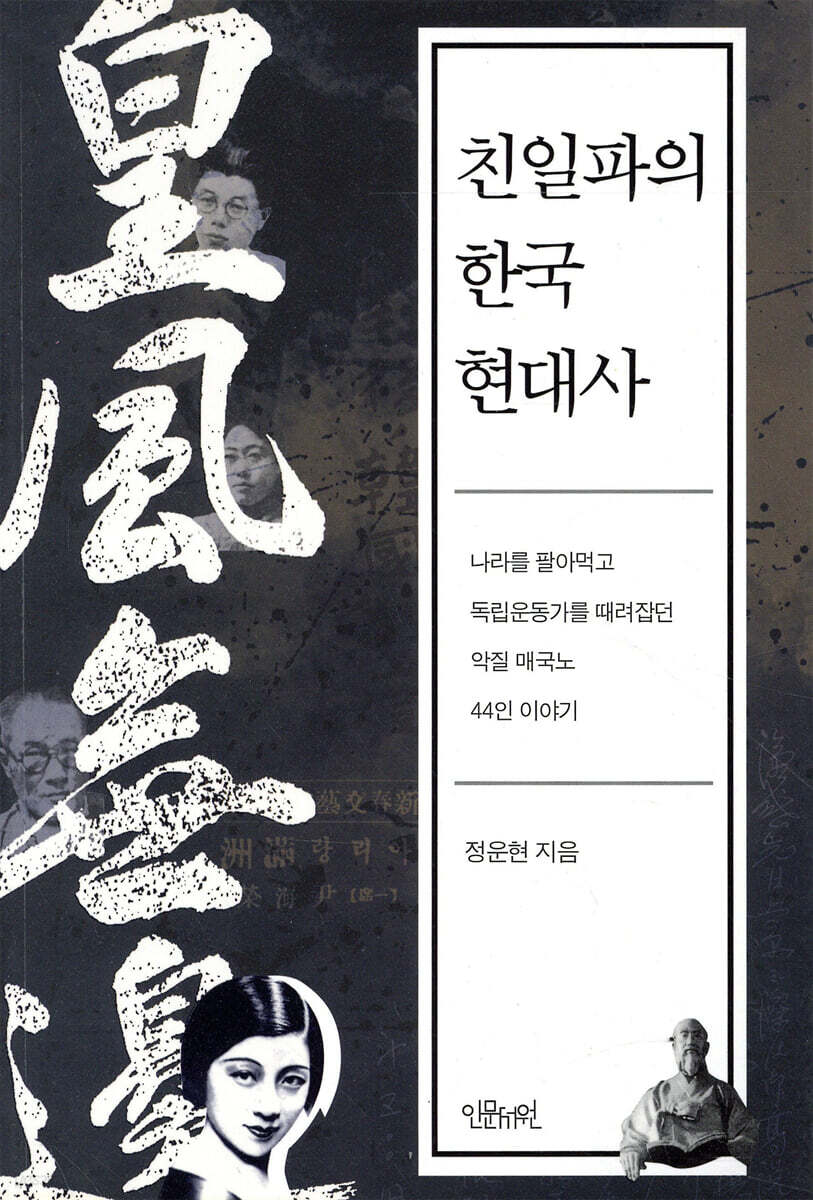
Pro-Japanese Collaborators' Modern Korean History
 |
Description
Book Introduction
What did the 44 pro-Japanese collaborators gain and lose?
As the straightforward subtitle, “The Story of 44 Traitors Who Sold Out Their Country and Beat Up Independence Activists,” suggests, “The Modern History of Korea Through the Stories of Traitors” is a book about our modern history read through the stories of traitors.
From the well-known 'most famous pro-Japanese collaborator' Yi Wan-yong to the little-known 'No. 1 pro-Japanese collaborator' Kim In-seung and Yi San-yeon, the 'Korean who worshipped Japanese gods', we delve into the activities of 44 pro-Japanese figures representing various fields such as politics, business, culture, and religion.
The book begins with the story of Woo Beom-seon, the father of Dr. Woo Jang-chun, a Korean breeding expert, and a pro-Japanese collaborator who assassinated Empress Myeongseong.
It includes the story of Bae Jeong-ja, the "Mata Hari of Joseon" who was trained as a spy by Ito Hirobumi and sent to infiltrate the Joseon palace; the story of Kim In-seung, the "first pro-Japanese collaborator" who helped under the Japanese when signing the Ganghwa Treaty; the pro-Japanese activities of Choi Nam-seon, the author of the Gimi Independence Declaration; and the story of Moon Myeong-gi, a wealthy man from Yeongdeok.
As the straightforward subtitle, “The Story of 44 Traitors Who Sold Out Their Country and Beat Up Independence Activists,” suggests, “The Modern History of Korea Through the Stories of Traitors” is a book about our modern history read through the stories of traitors.
From the well-known 'most famous pro-Japanese collaborator' Yi Wan-yong to the little-known 'No. 1 pro-Japanese collaborator' Kim In-seung and Yi San-yeon, the 'Korean who worshipped Japanese gods', we delve into the activities of 44 pro-Japanese figures representing various fields such as politics, business, culture, and religion.
The book begins with the story of Woo Beom-seon, the father of Dr. Woo Jang-chun, a Korean breeding expert, and a pro-Japanese collaborator who assassinated Empress Myeongseong.
It includes the story of Bae Jeong-ja, the "Mata Hari of Joseon" who was trained as a spy by Ito Hirobumi and sent to infiltrate the Joseon palace; the story of Kim In-seung, the "first pro-Japanese collaborator" who helped under the Japanese when signing the Ganghwa Treaty; the pro-Japanese activities of Choi Nam-seon, the author of the Gimi Independence Declaration; and the story of Moon Myeong-gi, a wealthy man from Yeongdeok.
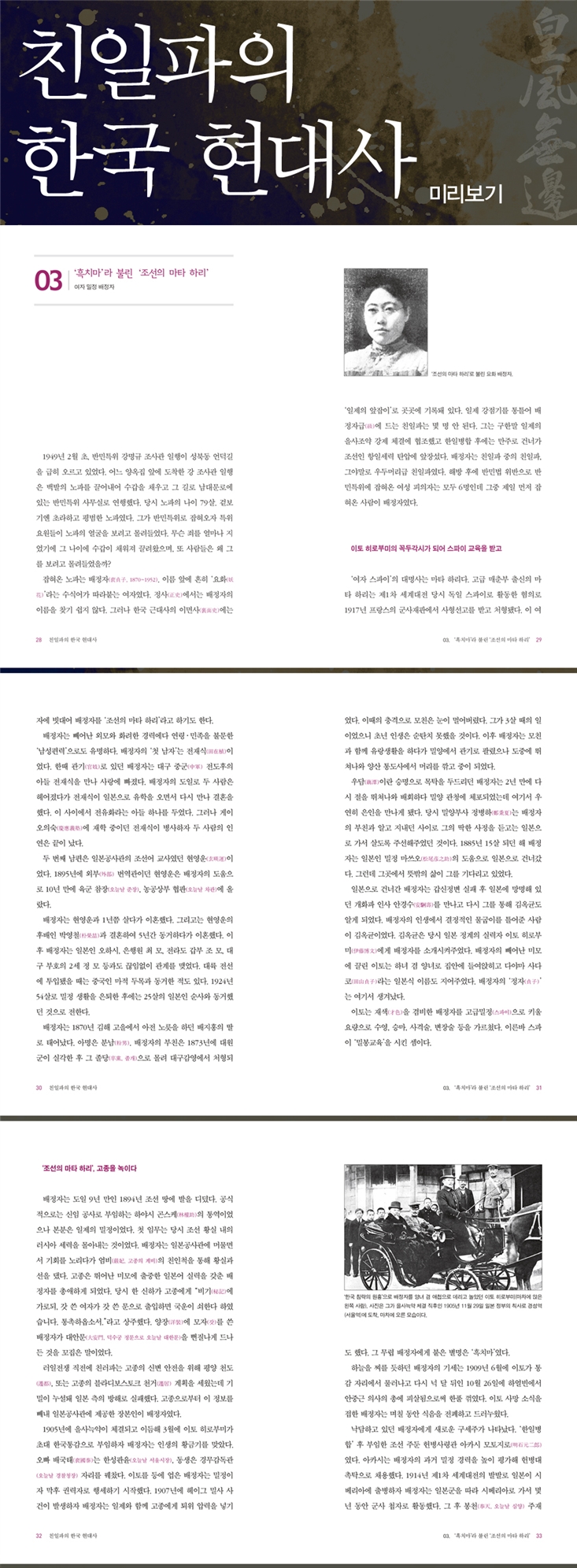
- You can preview some of the book's contents.
Preview
index
Preface - A 'Pro-Japanese Republic' Through the Generations
1.
A Father's Crime, A Son's Atonement - Woo Beom-seon and his son, Woo Jang-chun, involved in the Eulmi Incident.
2.
The cruel 'torture king' who tortured three independence activists to death - the worst police officer, Noh Deok-sul
3.
The 'Mata Hari of Joseon', nicknamed 'Black Skirt' - Female spy Bae Jeong-ja
4.
Kim In-seung, the Korean who helped conclude the Ganghwa Island Treaty - "The First Pro-Japanese Collaborator"
5.
Japan's "Scotlandization": Joseon's Path to Survival - Yun Chi-ho, Chairman of the Independence Association
6.
The 'Flower of Joseon' Who Went North - Choi Seung-hee, the Dancer Who Deferred to North Korea
7.
The first arrest by the Special Committee on Anti-National Activities: Park Heung-sik, former president of Hwasin Department Store
8.
The Chameleon Life of the First Female PhD - Former Ewha Womans University President Kim Hwal-ran
9.
Noble or Ghostly Noble - Lee Geun-taek, one of the 'Eulsa Five Traitors'
10.
The Emperor of Joseon Finance? The Emperor of Colonial Exploitation! - Former Hanseong Bank President Han Sang-ryong
11.
Kim Hee-seon, former deputy director of the Shanghai Provisional Government's Military Affairs Department, a "disguised worker"
12.
A former labor gangster becomes a member of the Japanese Diet: Park Chun-geum, a prominent pro-Japanese figure in Japan.
13.
The first people to kill - the brothers Seonwoo Soon and Seonwoo Gap, professional spies and high-level detectives
14.
Don't Ask About the Past? - Lee Gap-seong, one of the 33 national representatives who later became a spy.
15.
Joseon's Land Speculator - Kim Gap-sun, the First Princess Wealthy Man
16.
Integrity or Scholarship? - Choi Nam-seon, the Founder of the Declaration of Independence
17.
Like father, like son - Min Byeong-seok and Min Bok-gi, father and son who continued to be pro-Japanese
18.
The Path to Success Through the Narrative of an Imperial Subject - Kim Dae-woo, Governor of North Gyeongsang Province before Liberation
19.
Kim Chang-young, the elite Manchurian special agent who spearheaded the suppression of anti-Japanese forces
20.
A "patriotic man" who seized his chance at success with fish as bait - Yeongdeok's wealthy man, Moon Myeong-gi
21.
Providing military rations to the Kwantung Army, which was suppressing the independence fighters - Former Minister of Education Lee Seon-geun
22.
"Point the finger at me" - Lee Hang-nyeong, former president of Hongik University
23.
Seo Chun, a key figure in the February 8th Declaration of Independence, ultimately surrendered to Japanese rule.
24.
The founder of Minjokji, enraged by the removal of the Japanese flag, is Kim Seong-su, founder of the Dong-A Ilbo.
25.
Journalist Jin Hak-moon, a facilitator of Japanese "cultural politics"
26.
The author of 'Fireworks' who shouted 'Palgwangilwoo' - Poet Jo Yo-han
27.
"Students, Come to the Temple" - Poet Kim Dong-hwan
28.
The Dream of a Vanished Pioneer - Poet and Lyricist Haeyoung Yoon
29.
A Poem Dedicated to the Unity of the Self and the Ecliptic Way - Poet Kim Yong-je
30.
Living More Japanese Than the Japanese - Yi San-yeon, the First Korean Priest
31.
Lee Jong-wook, the first pro-Japanese monk to call for the "construction of Imperial Buddhism," was a prominent figure in the Buddhist community.
32.
Anti-Japanese sentiment is short, pro-Japanese sentiment is long - Choi Rin, one of the 33 national representatives
33.
Jongno Police Station Commander Cho Byeong-sang, a "pro-Japanese collaborator" who sent his two sons to battle.
34.
Artists of the Namsan Baekbeom Statue that Makes Baekbeom Cry - Brothers Kim In-seung and Kim Gyeong-seung
35.
A great writer who was "heartless" to history and the people - Lee Gwang-su
36.
The pro-Japanese monk who broke the Samyeongdang monument into four pieces - Haeinsa Temple chief priest Byeon Seol-ho
37.
Forced Collaboration on a Dark Age Nation - Bang Eung-mo, President of the Chosun Ilbo
38.
From pro-American to pro-Russian, from pro-Russian to pro-Japanese: Yi Wan-yong, who pursued only personal glory.
39.
Song Byeong-jun, the traitor who threatened Emperor Gojong and submitted the "Petition for Japan-Korea Annexation."
40.
How the Donghak Peasant Leader Became a Traitor - Iljinhoe Chairman Lee Yong-gu
41.
'All-Weather Pro-Japanese' - Mo Yun-suk, the Symbol of Female Pro-Japanese Collaborators
References
1.
A Father's Crime, A Son's Atonement - Woo Beom-seon and his son, Woo Jang-chun, involved in the Eulmi Incident.
2.
The cruel 'torture king' who tortured three independence activists to death - the worst police officer, Noh Deok-sul
3.
The 'Mata Hari of Joseon', nicknamed 'Black Skirt' - Female spy Bae Jeong-ja
4.
Kim In-seung, the Korean who helped conclude the Ganghwa Island Treaty - "The First Pro-Japanese Collaborator"
5.
Japan's "Scotlandization": Joseon's Path to Survival - Yun Chi-ho, Chairman of the Independence Association
6.
The 'Flower of Joseon' Who Went North - Choi Seung-hee, the Dancer Who Deferred to North Korea
7.
The first arrest by the Special Committee on Anti-National Activities: Park Heung-sik, former president of Hwasin Department Store
8.
The Chameleon Life of the First Female PhD - Former Ewha Womans University President Kim Hwal-ran
9.
Noble or Ghostly Noble - Lee Geun-taek, one of the 'Eulsa Five Traitors'
10.
The Emperor of Joseon Finance? The Emperor of Colonial Exploitation! - Former Hanseong Bank President Han Sang-ryong
11.
Kim Hee-seon, former deputy director of the Shanghai Provisional Government's Military Affairs Department, a "disguised worker"
12.
A former labor gangster becomes a member of the Japanese Diet: Park Chun-geum, a prominent pro-Japanese figure in Japan.
13.
The first people to kill - the brothers Seonwoo Soon and Seonwoo Gap, professional spies and high-level detectives
14.
Don't Ask About the Past? - Lee Gap-seong, one of the 33 national representatives who later became a spy.
15.
Joseon's Land Speculator - Kim Gap-sun, the First Princess Wealthy Man
16.
Integrity or Scholarship? - Choi Nam-seon, the Founder of the Declaration of Independence
17.
Like father, like son - Min Byeong-seok and Min Bok-gi, father and son who continued to be pro-Japanese
18.
The Path to Success Through the Narrative of an Imperial Subject - Kim Dae-woo, Governor of North Gyeongsang Province before Liberation
19.
Kim Chang-young, the elite Manchurian special agent who spearheaded the suppression of anti-Japanese forces
20.
A "patriotic man" who seized his chance at success with fish as bait - Yeongdeok's wealthy man, Moon Myeong-gi
21.
Providing military rations to the Kwantung Army, which was suppressing the independence fighters - Former Minister of Education Lee Seon-geun
22.
"Point the finger at me" - Lee Hang-nyeong, former president of Hongik University
23.
Seo Chun, a key figure in the February 8th Declaration of Independence, ultimately surrendered to Japanese rule.
24.
The founder of Minjokji, enraged by the removal of the Japanese flag, is Kim Seong-su, founder of the Dong-A Ilbo.
25.
Journalist Jin Hak-moon, a facilitator of Japanese "cultural politics"
26.
The author of 'Fireworks' who shouted 'Palgwangilwoo' - Poet Jo Yo-han
27.
"Students, Come to the Temple" - Poet Kim Dong-hwan
28.
The Dream of a Vanished Pioneer - Poet and Lyricist Haeyoung Yoon
29.
A Poem Dedicated to the Unity of the Self and the Ecliptic Way - Poet Kim Yong-je
30.
Living More Japanese Than the Japanese - Yi San-yeon, the First Korean Priest
31.
Lee Jong-wook, the first pro-Japanese monk to call for the "construction of Imperial Buddhism," was a prominent figure in the Buddhist community.
32.
Anti-Japanese sentiment is short, pro-Japanese sentiment is long - Choi Rin, one of the 33 national representatives
33.
Jongno Police Station Commander Cho Byeong-sang, a "pro-Japanese collaborator" who sent his two sons to battle.
34.
Artists of the Namsan Baekbeom Statue that Makes Baekbeom Cry - Brothers Kim In-seung and Kim Gyeong-seung
35.
A great writer who was "heartless" to history and the people - Lee Gwang-su
36.
The pro-Japanese monk who broke the Samyeongdang monument into four pieces - Haeinsa Temple chief priest Byeon Seol-ho
37.
Forced Collaboration on a Dark Age Nation - Bang Eung-mo, President of the Chosun Ilbo
38.
From pro-American to pro-Russian, from pro-Russian to pro-Japanese: Yi Wan-yong, who pursued only personal glory.
39.
Song Byeong-jun, the traitor who threatened Emperor Gojong and submitted the "Petition for Japan-Korea Annexation."
40.
How the Donghak Peasant Leader Became a Traitor - Iljinhoe Chairman Lee Yong-gu
41.
'All-Weather Pro-Japanese' - Mo Yun-suk, the Symbol of Female Pro-Japanese Collaborators
References
Detailed image
Into the book
I've been focusing on the pro-Japanese issue for nearly 30 years, but I still feel frustrated.
It is believed that the efforts of researchers have yielded significant results in investigating the activities of pro-Japanese collaborators.
The problem is not the research level, but the anti-historical behavior and historical distortion conspiracy of the vested interests in our society.
The culmination is the Park Geun-hye administration's nationalization of history textbooks.
If things continue this way, it is clear as day that false and distorted history will prevail in the future surrounding the pro-Japanese issue.
If we can't even properly record and teach one single issue of pro-Japanese collaboration, what kind of history education can we possibly have?
The media, which is always shaking whenever a controversy arises and then acts as if nothing happened, the political world that stands by and watches without enacting a single related law, such as the "Act on the Punishment of Collaborators and Collaborators," and the national character that is easily fooled - all of these are unsatisfactory.
It is a pity that we have no choice but to report and record this reality through books like this.
It is believed that the efforts of researchers have yielded significant results in investigating the activities of pro-Japanese collaborators.
The problem is not the research level, but the anti-historical behavior and historical distortion conspiracy of the vested interests in our society.
The culmination is the Park Geun-hye administration's nationalization of history textbooks.
If things continue this way, it is clear as day that false and distorted history will prevail in the future surrounding the pro-Japanese issue.
If we can't even properly record and teach one single issue of pro-Japanese collaboration, what kind of history education can we possibly have?
The media, which is always shaking whenever a controversy arises and then acts as if nothing happened, the political world that stands by and watches without enacting a single related law, such as the "Act on the Punishment of Collaborators and Collaborators," and the national character that is easily fooled - all of these are unsatisfactory.
It is a pity that we have no choice but to report and record this reality through books like this.
---From the "Preface"
Publisher's Review
Even though they sold out their country and people, they do not reflect on history.
The names of the 44 pro-Japanese collaborators, their shameful names, will be engraved here forever!
“I have approved the Eulsa Treaty today, so now I will have great authority and a long-lasting salary.”
This is what Lee Geun-taek, one of the 'Five Traitors of Eulsa', said after returning home and gathering his family after signing the Eulsa Treaty that sold out the country and leaving the palace.
Upon hearing this, the maid in the kitchen slammed the kitchen knife on the cutting board and said, “I didn’t know that the owner of this house was such a vicious traitor, so I ate from this house for years. How can I ever wash away this shame?” and then left the house.
A man with a historical consciousness worse than that of an illiterate servant girl lives a life of luxury as a high-ranking official, and instead of feeling ashamed of having sold out the country, he proudly boasts about how his family will do well in the future. This was the true face of the pro-Japanese collaborators of the late Joseon Dynasty.
They sold out the country and beat up independence activists.
What was gained and what was lost
As the straightforward subtitle, “The Story of 44 Traitors Who Sold Out Their Country and Beat Up Independence Activists,” suggests, “The Modern History of Korea Through the Stories of 44 Traitors Who Sold Out Their Country and Beat Up Independence Activists,” is a modern history of our country read through the stories of shameless traitors who “sold out their country” and “beat up independence activists.”
From the well-known 'most famous pro-Japanese collaborator' Yi Wan-yong to the little-known 'No. 1 pro-Japanese collaborator' Kim In-seung and the 'Korean who worshipped Japanese gods' Yi San-yeon, we delve into the pro-Japanese activities of 44 pro-Japanese figures representing various fields such as politics, business, culture, and religion through records.
The book begins with the story of Woo Beom-seon, the father of Dr. Woo Jang-chun, a Korean breeding expert, and a pro-Japanese collaborator who assassinated Empress Myeongseong.
Reading the story of Bae Jeong-ja, the 'Mata Hari of Joseon' who was trained as a spy by Ito Hirobumi and installed in the Joseon palace (?) and who, while favored by Emperor Gojong, helped sell out the country by digging up the secrets of the Joseon palace; the story of a scholar named Kim In-seung, the 'first pro-Japanese collaborator' who worked actively as a practical worker under the Japanese during the signing of the Ganghwa Island Treaty; the long and 'exuberant' pro-Japanese activities of Choi Nam-seon, the author of the Gimi Independence Declaration; the story of Myeong-gi Moon, a wealthy man from Yeongdeok who amassed a fortune by giving tuna to the house of a police chief but squandered all that fortune and donated an airplane to the Japanese; the story of Gongju tycoon Kim Gap-soon, the 'first land speculator' of the Republic of Korea who bought a government post with money and then used that post to make more money—you will want to spit on the graves of these dirty people.
44 'dog-like lives',
In the face of history, ask yourself, "How should I live?"
『Modern Korean History of Pro-Japanese Collaborators』 is a history book that serves as a cautionary tale, telling us not to emulate people we should emulate, but rather to avoid living like this.
Rather than organizing the characters by field, it is organized in a list format so that anyone can choose and read the 'pro-Japanese' characters they want to read, like a collection of short stories, making it highly accessible.
Every year, on March 1st or Liberation Day, interest in independence fighters briefly revives, and voices criticizing pro-Japanese collaborators are heard, but they are often buried under other current issues.
『Modern Korean History of Collaborators』 will provide an opportunity to deeply contemplate the relationship between history and the individual, and "How should I live?" in the face of history, through the stories of "dog-like lives" who clung to the Japanese for personal gain and comfort, on the opposite side of the independence activists who fought for liberation.
The names of the 44 pro-Japanese collaborators, their shameful names, will be engraved here forever!
“I have approved the Eulsa Treaty today, so now I will have great authority and a long-lasting salary.”
This is what Lee Geun-taek, one of the 'Five Traitors of Eulsa', said after returning home and gathering his family after signing the Eulsa Treaty that sold out the country and leaving the palace.
Upon hearing this, the maid in the kitchen slammed the kitchen knife on the cutting board and said, “I didn’t know that the owner of this house was such a vicious traitor, so I ate from this house for years. How can I ever wash away this shame?” and then left the house.
A man with a historical consciousness worse than that of an illiterate servant girl lives a life of luxury as a high-ranking official, and instead of feeling ashamed of having sold out the country, he proudly boasts about how his family will do well in the future. This was the true face of the pro-Japanese collaborators of the late Joseon Dynasty.
They sold out the country and beat up independence activists.
What was gained and what was lost
As the straightforward subtitle, “The Story of 44 Traitors Who Sold Out Their Country and Beat Up Independence Activists,” suggests, “The Modern History of Korea Through the Stories of 44 Traitors Who Sold Out Their Country and Beat Up Independence Activists,” is a modern history of our country read through the stories of shameless traitors who “sold out their country” and “beat up independence activists.”
From the well-known 'most famous pro-Japanese collaborator' Yi Wan-yong to the little-known 'No. 1 pro-Japanese collaborator' Kim In-seung and the 'Korean who worshipped Japanese gods' Yi San-yeon, we delve into the pro-Japanese activities of 44 pro-Japanese figures representing various fields such as politics, business, culture, and religion through records.
The book begins with the story of Woo Beom-seon, the father of Dr. Woo Jang-chun, a Korean breeding expert, and a pro-Japanese collaborator who assassinated Empress Myeongseong.
Reading the story of Bae Jeong-ja, the 'Mata Hari of Joseon' who was trained as a spy by Ito Hirobumi and installed in the Joseon palace (?) and who, while favored by Emperor Gojong, helped sell out the country by digging up the secrets of the Joseon palace; the story of a scholar named Kim In-seung, the 'first pro-Japanese collaborator' who worked actively as a practical worker under the Japanese during the signing of the Ganghwa Island Treaty; the long and 'exuberant' pro-Japanese activities of Choi Nam-seon, the author of the Gimi Independence Declaration; the story of Myeong-gi Moon, a wealthy man from Yeongdeok who amassed a fortune by giving tuna to the house of a police chief but squandered all that fortune and donated an airplane to the Japanese; the story of Gongju tycoon Kim Gap-soon, the 'first land speculator' of the Republic of Korea who bought a government post with money and then used that post to make more money—you will want to spit on the graves of these dirty people.
44 'dog-like lives',
In the face of history, ask yourself, "How should I live?"
『Modern Korean History of Pro-Japanese Collaborators』 is a history book that serves as a cautionary tale, telling us not to emulate people we should emulate, but rather to avoid living like this.
Rather than organizing the characters by field, it is organized in a list format so that anyone can choose and read the 'pro-Japanese' characters they want to read, like a collection of short stories, making it highly accessible.
Every year, on March 1st or Liberation Day, interest in independence fighters briefly revives, and voices criticizing pro-Japanese collaborators are heard, but they are often buried under other current issues.
『Modern Korean History of Collaborators』 will provide an opportunity to deeply contemplate the relationship between history and the individual, and "How should I live?" in the face of history, through the stories of "dog-like lives" who clung to the Japanese for personal gain and comfort, on the opposite side of the independence activists who fought for liberation.
GOODS SPECIFICS
- Date of issue: August 16, 2016
- Page count, weight, size: 380 pages | 663g | 152*224*23mm
- ISBN13: 9791186542248
- ISBN10: 1186542241
You may also like
카테고리
korean


korean

![GQ KOREA Mark (Monthly): December [2025]](http://librairie.coreenne.fr/cdn/shop/files/8ef265dbbfbf186523ed75ba7319009d.jpg?v=1765340328&width=3840)


