

Spanish history lecture
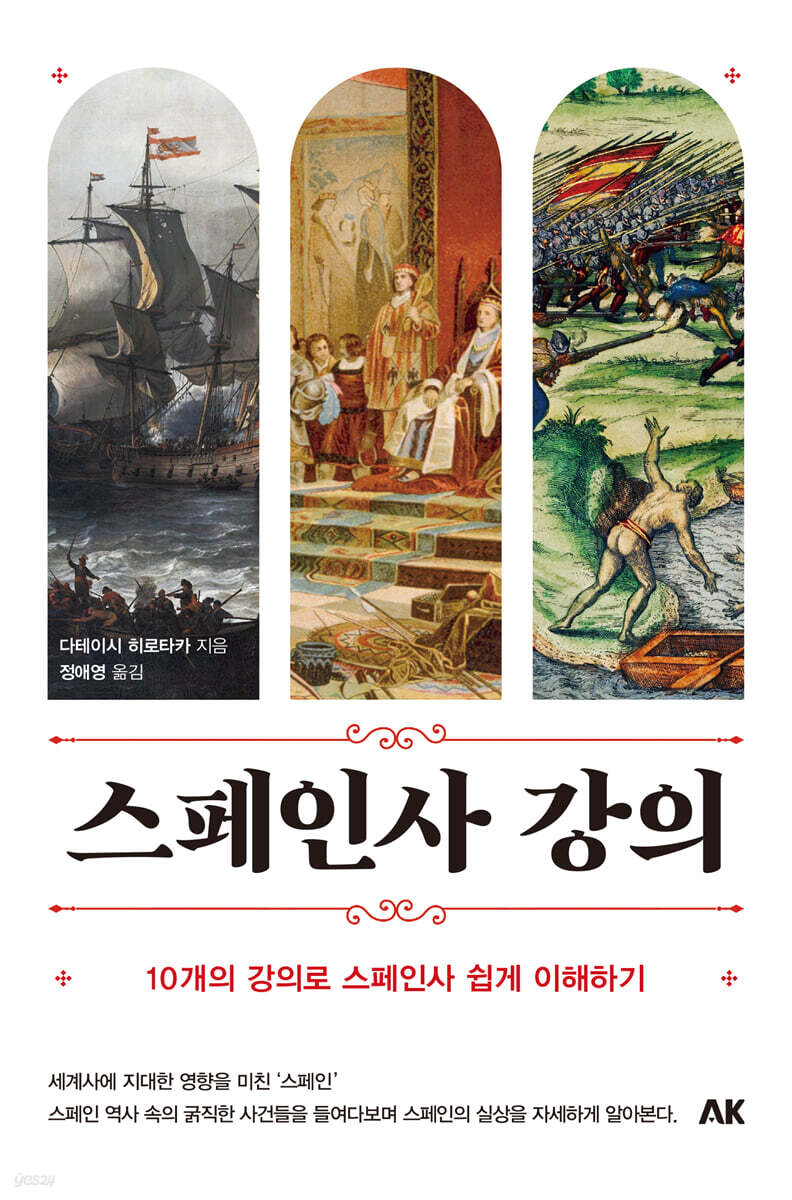 |
Description
Book Introduction
Spain, which had a profound influence on world history
A look into the major events in Spanish history
Let's take a closer look at the reality of Spain.
Spain has demonstrated a unique path as a meeting place for four worlds: Europe and Africa, the Mediterranean and the Atlantic.
We examine the historical significance of major events, focusing on the complex formation of nations that stem from diverse regionalities as well as art, culture, and religion.
This is a comprehensive history of Spain that presents its turbulent history in an interesting way, from the beginning of Spanish history through the imperialist era, the creation of a democratic constitution, and up to the present day.
A look into the major events in Spanish history
Let's take a closer look at the reality of Spain.
Spain has demonstrated a unique path as a meeting place for four worlds: Europe and Africa, the Mediterranean and the Atlantic.
We examine the historical significance of major events, focusing on the complex formation of nations that stem from diverse regionalities as well as art, culture, and religion.
This is a comprehensive history of Spain that presents its turbulent history in an interesting way, from the beginning of Spanish history through the imperialist era, the creation of a democratic constitution, and up to the present day.
- You can preview some of the book's contents.
Preview
index
Lecture 1: The Beginning of Spanish History: Dawn to the 4th Century
1.
Geopolitical location of the Iberian Peninsula
The Iberian Peninsula as a Crossroads of Continents and Oceans / Border Region
2.
Prehistoric Iberian Peninsula
Paleolithic and Neolithic Ages / Metal Age
3.
The Ancient Mediterranean World and the Iberian Peninsula
The influx of people from the Mediterranean / Tartessos / Iberians and Celts / Carthage in the Western Mediterranean
4.
The Roman Empire and the Formation of Hispania
The Roman conquest / The siege of Numantia / The Roman province of Hispania / The economic prosperity of Hispania / The crisis of the Roman Empire / Culture and Christianity in the province of Hispania
Lecture 2: From the Visigothic Kingdom to Andalusia, 5th to 15th centuries
1.
Visigothic Kingdom
The Visigothic Expansion into the Peninsula / The Establishment of Visigothic Monarchy / The Isidorean Renaissance
2.
The Advance of Islam and the Formation of Andalusia
The expansion of Islamic power / The ruling class in Andalusia / The establishment of the later Umayyad dynasty / The Islamization of Andalusia
3.
The prosperity of the Islamic dynasty
The Caliphate of Cordoba / The Taifa Period / The Muravid and Muwahid Dynasties / The Culture of Andalusia
4.
Nasrid Kingdom of Granada
The Alhambra Palace / The Genoese Network / The Rise and Fall of the Kingdom of Granada
Lecture 3: Medieval Society in Diversity: 8th to 15th Centuries
1.
The Beginning of the Reconquista and the Formation of the Christian Empire
The Battle of Covadonga and the Reconquista / The Pilgrimage to Santiago and St. James the Moor's Murder / The Kingdom of León and the County of Castile / The Rise and Fall of the Kingdom of Navarre / The Hispanic Frontier and the Dominance of the Counts of Barcelona
2.
Expansion of the Kingdom of Castile
The development of the Kingdom of Castile / The execution of the 'Great Reconquista' / The crisis of the Kingdom of Castile / Castile under the Trastámara dynasty
3.
The expansion of the Kingdom of Aragon into the Mediterranean
The Rise of the Aragonese Empire / The Mediterranean Empire / Economic Crisis and Intensifying Social Conflict
4.
Coexistence of Three Religions
The Hymns of the Virgin Mary and the Three Religions / The Toledo Translation Group / Anti-Jewish Riots and the Converso Problem
Lecture 4: From the Reign of the Two Catholic Kings to the Spanish Monarchy: Late 15th to 16th Century
1.
The Catholic Union of the Two Kings
Co-rule and the 'Spanish Monarchy' / The Predominance of the Kingdom of Castile / Four Events / Marriage Policy of the Dynastic States
2.
The birth and development of Habsburg Spain
The Comunidades Revolt / The Wandering King / The Fight with the Protestants, and the Dream of Leaning on His Son
3.
Philip II and the Catholic Monarchy
The Making of the Institution of Madrid / The Spanish Inquisition and the Catholic Monarchy / The Repeated Wars and Their Burdens
4.
The Age of Exploration and the Empire on Which the Sun Never Sets
Conquest and Colonization of the New World / Legitimacy of the Conquest / The Spanish Empire Expands into Asia
Lecture 5: The Decline of the Spanish Monarchy in the 17th Century
1.
Madrid, the capital of the Spanish Monarchy and Empire
The expulsion of Philip III and the Moriscos / Philip IV and his favorite, Olivares / The plan to unite the army and the resistance of the kingdom / Madrid, the theater city
2.
The crisis of the 1640s
Catalan revolt / Portuguese independence / devastated economy
3.
The turmoil and end of Habsburg Spain
Loss of hegemony / Signs of economic recovery
4.
Culture of the Golden Century
Religion in the Counter-Reformation / The World of Cervantes / Court Painter Velázquez
Lecture 6: From the Catholic Enlightenment to the Crisis of the Ancien Régime, 18th and 19th Centuries
1.
The War of the Spanish Succession and the New Royal Order
The War of the Spanish Succession as an International War / The War of the Spanish Succession as a Civil War / The Promulgation of the New Constitution and the Reform of the Kingdom / The Restoration of Italian Territories
2.
Catholic Enlightenment and Bourbon Reformation
The Seven Years' War and the Esquilates Revolt / Catholic Enlightenment / Various reforms by the Enlightenment Reformers / Promotion of "Free Trade"
3.
The French Revolution and the Crisis of the Spanish Ancien Régime
The Influence of the French Revolution / Godoy's Prime Ministerial Absolutism / Following Napoleon
Lecture 7: The Age of Revolution and Counterrevolution: The First Half of the 19th Century to the 1870s
1.
Napoleon's invasion and the Spanish War of Independence
The Establishment of the Bonaparte Dynasty / The May 2 Incident / Guerrilla Warfare
2.
From the Constitution of Cadiz to the Constitution of 1813
The Constitution of Cádiz and the "Spain of the North and South" / The Restoration of Absolutism and Three Years of "Liberalism" / The Independence of Spanish America / The Establishment of a Liberal State System
3.
oligarchic liberal state system
The establishment of a moderate government / The "Two Years of Progressives" / The crisis of the moderates / The dissolution of Yeongdae-owned properties and the progress of industrialization / The formation of national consciousness and national history
4.
The Rise and Fall of the First Republic
The September Revolution of 1868 / The establishment and collapse of the First Republic / The achievement of the "Six Years of Revolution"
Lecture 8: From the Restoration to the Spanish Civil War, 1870–1930
1.
The establishment and turmoil of the monarchy restoration system
The Two-Party System's Transition to Power / The Defeat of 1898 / The Creation of "Hispaniards" / The Development of Regional Nationalism / The Age of Gunfire
2.
Primo de Rivera's dictatorship
Welcome and opposition to dictatorship / Attempts at a corporatist state / The collapse of the monarchy
3.
Second Republic
The Birth of the Second Republic / The Failure of the Azaña Regime / Political Polarization Between Left and Right / The Victory of the Popular Front and the Coup d'état
4.
Spanish Civil War
Civil War and Foreign Aid / The Development of the Civil War / The Republican Bloc and the Social Revolution / The Rebel Bloc's Construction of a New State
Lecture 9: Franco's Dictatorship 1939–1975
1.
The establishment of the Franco dictatorship
Oppression by the victors of the civil war / International isolation / Autarchian regime
2.
Return to the international community and become a stronghold of anti-communism
The Progress of the Cold War and the Franco Regime / Qualitative Changes in the Anti-Regime Movement / Latin America, Gibraltar, and Morocco
3.
From the 'Economic Miracle' to the End of the System
The Realization of Economic Growth / The Catholic Church and the Franco Regime / The Transformation of Society / Toward a "Franco Regime After Franco's Death" / The End of the Franco Regime
Lecture 10: Progress in Democratization and the Autonomous State System, 1970s to Present
1.
Democratization and the 1978 Constitution
Suárez's Leadership / The 1978 Constitution / The Failure of the Francoist Resistance
2.
Establishment of an autonomous state system
Nationality and Autonomous Prefectures / Establishment of 17 Autonomous Prefectures / Historical Autonomous Prefectures and Language Normalization
3.
Change of government between the Socialist Labor Party and the Kuomintang
González's Socialist Workers' Party government / Aznar's Nationalist government / Zapatero's Socialist Workers' Party government
4.
Quo Vadis
Rajoy's Nationalist government / From Sanchez's single-party government to a coalition government / Quo Vadis
Reviews
Translator's Note
1.
Geopolitical location of the Iberian Peninsula
The Iberian Peninsula as a Crossroads of Continents and Oceans / Border Region
2.
Prehistoric Iberian Peninsula
Paleolithic and Neolithic Ages / Metal Age
3.
The Ancient Mediterranean World and the Iberian Peninsula
The influx of people from the Mediterranean / Tartessos / Iberians and Celts / Carthage in the Western Mediterranean
4.
The Roman Empire and the Formation of Hispania
The Roman conquest / The siege of Numantia / The Roman province of Hispania / The economic prosperity of Hispania / The crisis of the Roman Empire / Culture and Christianity in the province of Hispania
Lecture 2: From the Visigothic Kingdom to Andalusia, 5th to 15th centuries
1.
Visigothic Kingdom
The Visigothic Expansion into the Peninsula / The Establishment of Visigothic Monarchy / The Isidorean Renaissance
2.
The Advance of Islam and the Formation of Andalusia
The expansion of Islamic power / The ruling class in Andalusia / The establishment of the later Umayyad dynasty / The Islamization of Andalusia
3.
The prosperity of the Islamic dynasty
The Caliphate of Cordoba / The Taifa Period / The Muravid and Muwahid Dynasties / The Culture of Andalusia
4.
Nasrid Kingdom of Granada
The Alhambra Palace / The Genoese Network / The Rise and Fall of the Kingdom of Granada
Lecture 3: Medieval Society in Diversity: 8th to 15th Centuries
1.
The Beginning of the Reconquista and the Formation of the Christian Empire
The Battle of Covadonga and the Reconquista / The Pilgrimage to Santiago and St. James the Moor's Murder / The Kingdom of León and the County of Castile / The Rise and Fall of the Kingdom of Navarre / The Hispanic Frontier and the Dominance of the Counts of Barcelona
2.
Expansion of the Kingdom of Castile
The development of the Kingdom of Castile / The execution of the 'Great Reconquista' / The crisis of the Kingdom of Castile / Castile under the Trastámara dynasty
3.
The expansion of the Kingdom of Aragon into the Mediterranean
The Rise of the Aragonese Empire / The Mediterranean Empire / Economic Crisis and Intensifying Social Conflict
4.
Coexistence of Three Religions
The Hymns of the Virgin Mary and the Three Religions / The Toledo Translation Group / Anti-Jewish Riots and the Converso Problem
Lecture 4: From the Reign of the Two Catholic Kings to the Spanish Monarchy: Late 15th to 16th Century
1.
The Catholic Union of the Two Kings
Co-rule and the 'Spanish Monarchy' / The Predominance of the Kingdom of Castile / Four Events / Marriage Policy of the Dynastic States
2.
The birth and development of Habsburg Spain
The Comunidades Revolt / The Wandering King / The Fight with the Protestants, and the Dream of Leaning on His Son
3.
Philip II and the Catholic Monarchy
The Making of the Institution of Madrid / The Spanish Inquisition and the Catholic Monarchy / The Repeated Wars and Their Burdens
4.
The Age of Exploration and the Empire on Which the Sun Never Sets
Conquest and Colonization of the New World / Legitimacy of the Conquest / The Spanish Empire Expands into Asia
Lecture 5: The Decline of the Spanish Monarchy in the 17th Century
1.
Madrid, the capital of the Spanish Monarchy and Empire
The expulsion of Philip III and the Moriscos / Philip IV and his favorite, Olivares / The plan to unite the army and the resistance of the kingdom / Madrid, the theater city
2.
The crisis of the 1640s
Catalan revolt / Portuguese independence / devastated economy
3.
The turmoil and end of Habsburg Spain
Loss of hegemony / Signs of economic recovery
4.
Culture of the Golden Century
Religion in the Counter-Reformation / The World of Cervantes / Court Painter Velázquez
Lecture 6: From the Catholic Enlightenment to the Crisis of the Ancien Régime, 18th and 19th Centuries
1.
The War of the Spanish Succession and the New Royal Order
The War of the Spanish Succession as an International War / The War of the Spanish Succession as a Civil War / The Promulgation of the New Constitution and the Reform of the Kingdom / The Restoration of Italian Territories
2.
Catholic Enlightenment and Bourbon Reformation
The Seven Years' War and the Esquilates Revolt / Catholic Enlightenment / Various reforms by the Enlightenment Reformers / Promotion of "Free Trade"
3.
The French Revolution and the Crisis of the Spanish Ancien Régime
The Influence of the French Revolution / Godoy's Prime Ministerial Absolutism / Following Napoleon
Lecture 7: The Age of Revolution and Counterrevolution: The First Half of the 19th Century to the 1870s
1.
Napoleon's invasion and the Spanish War of Independence
The Establishment of the Bonaparte Dynasty / The May 2 Incident / Guerrilla Warfare
2.
From the Constitution of Cadiz to the Constitution of 1813
The Constitution of Cádiz and the "Spain of the North and South" / The Restoration of Absolutism and Three Years of "Liberalism" / The Independence of Spanish America / The Establishment of a Liberal State System
3.
oligarchic liberal state system
The establishment of a moderate government / The "Two Years of Progressives" / The crisis of the moderates / The dissolution of Yeongdae-owned properties and the progress of industrialization / The formation of national consciousness and national history
4.
The Rise and Fall of the First Republic
The September Revolution of 1868 / The establishment and collapse of the First Republic / The achievement of the "Six Years of Revolution"
Lecture 8: From the Restoration to the Spanish Civil War, 1870–1930
1.
The establishment and turmoil of the monarchy restoration system
The Two-Party System's Transition to Power / The Defeat of 1898 / The Creation of "Hispaniards" / The Development of Regional Nationalism / The Age of Gunfire
2.
Primo de Rivera's dictatorship
Welcome and opposition to dictatorship / Attempts at a corporatist state / The collapse of the monarchy
3.
Second Republic
The Birth of the Second Republic / The Failure of the Azaña Regime / Political Polarization Between Left and Right / The Victory of the Popular Front and the Coup d'état
4.
Spanish Civil War
Civil War and Foreign Aid / The Development of the Civil War / The Republican Bloc and the Social Revolution / The Rebel Bloc's Construction of a New State
Lecture 9: Franco's Dictatorship 1939–1975
1.
The establishment of the Franco dictatorship
Oppression by the victors of the civil war / International isolation / Autarchian regime
2.
Return to the international community and become a stronghold of anti-communism
The Progress of the Cold War and the Franco Regime / Qualitative Changes in the Anti-Regime Movement / Latin America, Gibraltar, and Morocco
3.
From the 'Economic Miracle' to the End of the System
The Realization of Economic Growth / The Catholic Church and the Franco Regime / The Transformation of Society / Toward a "Franco Regime After Franco's Death" / The End of the Franco Regime
Lecture 10: Progress in Democratization and the Autonomous State System, 1970s to Present
1.
Democratization and the 1978 Constitution
Suárez's Leadership / The 1978 Constitution / The Failure of the Francoist Resistance
2.
Establishment of an autonomous state system
Nationality and Autonomous Prefectures / Establishment of 17 Autonomous Prefectures / Historical Autonomous Prefectures and Language Normalization
3.
Change of government between the Socialist Labor Party and the Kuomintang
González's Socialist Workers' Party government / Aznar's Nationalist government / Zapatero's Socialist Workers' Party government
4.
Quo Vadis
Rajoy's Nationalist government / From Sanchez's single-party government to a coalition government / Quo Vadis
Reviews
Translator's Note
Publisher's Review
Spain, which had a profound influence on world history
A look into the major events in Spanish history
Let's take a closer look at the reality of Spain.
Spain has demonstrated a unique path as a meeting place for four worlds: Europe and Africa, the Mediterranean and the Atlantic.
We examine the historical significance of major events that left a significant mark on Spanish history, focusing on the complex formation of a nation stemming from diverse regional characteristics as well as art, culture, and religion.
As the country that initiated and institutionalized overseas colonization in earnest, Spain became a major model for Western imperialist colonial rule. Therefore, understanding Spanish history will help us view world history more clearly.
This book is a comprehensive history of Spain that provides an interesting overview of its turbulent history, from its beginnings through the imperialist era, through the creation of a democratic constitution, and up to the present day.
The desire for democracy, which was achieved through experiencing and overcoming military dictatorship and civil war, is similar to Korean history, making it an interesting passage to approach.
The author presents a balanced account of Spain's rise, decline, and triumph from a world historical perspective, fully revealing the true nature of Spain.
A look into the major events in Spanish history
Let's take a closer look at the reality of Spain.
Spain has demonstrated a unique path as a meeting place for four worlds: Europe and Africa, the Mediterranean and the Atlantic.
We examine the historical significance of major events that left a significant mark on Spanish history, focusing on the complex formation of a nation stemming from diverse regional characteristics as well as art, culture, and religion.
As the country that initiated and institutionalized overseas colonization in earnest, Spain became a major model for Western imperialist colonial rule. Therefore, understanding Spanish history will help us view world history more clearly.
This book is a comprehensive history of Spain that provides an interesting overview of its turbulent history, from its beginnings through the imperialist era, through the creation of a democratic constitution, and up to the present day.
The desire for democracy, which was achieved through experiencing and overcoming military dictatorship and civil war, is similar to Korean history, making it an interesting passage to approach.
The author presents a balanced account of Spain's rise, decline, and triumph from a world historical perspective, fully revealing the true nature of Spain.
GOODS SPECIFICS
- Date of issue: November 10, 2025
- Page count, weight, size: 372 pages | 380g | 128*188*18mm
- ISBN13: 9791127496791
- ISBN10: 1127496794
You may also like
카테고리
korean


korean

![ELLE 엘르 스페셜 에디션 A형 : 12월 [2025]](http://librairie.coreenne.fr/cdn/shop/files/b8e27a3de6c9538896439686c6b0e8fb.jpg?v=1766436872&width=3840)


