

Edo's bureaucratic society
 |
Description
Book Introduction
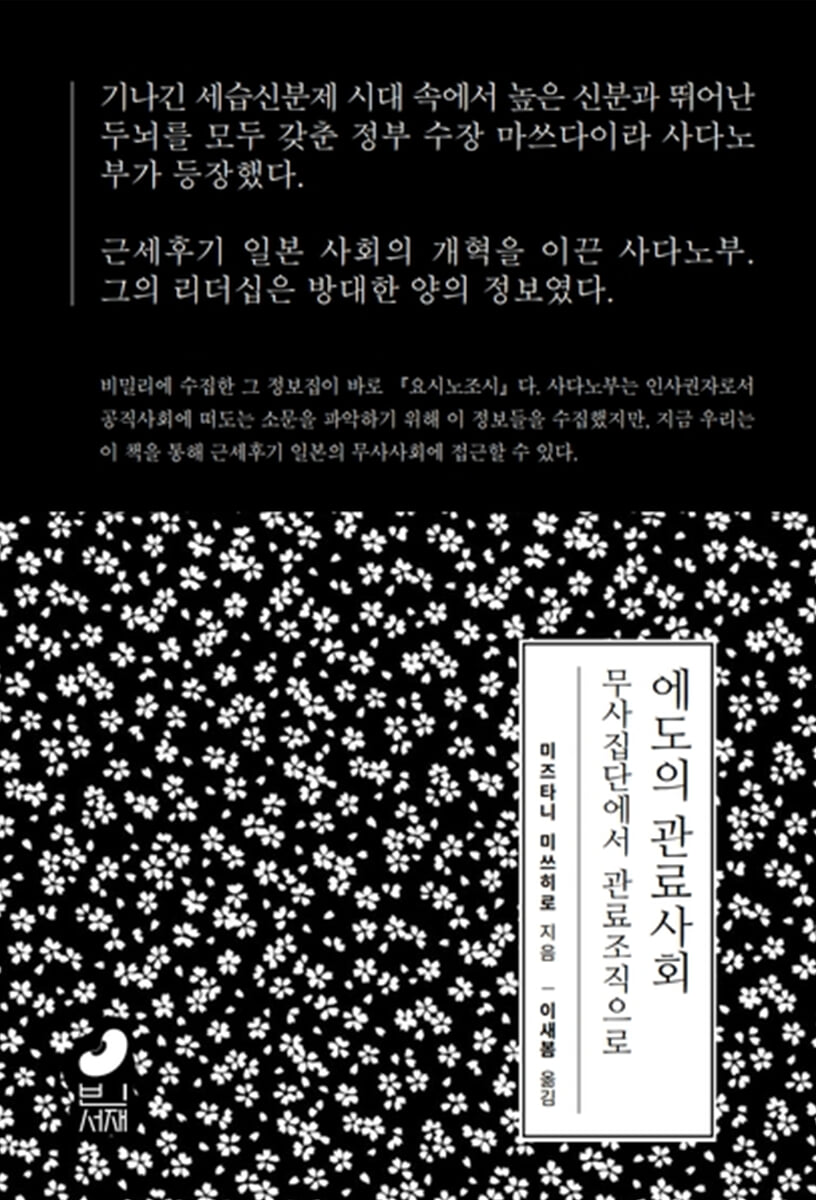
"In the long era of hereditary class system, a government head with both high status and outstanding intelligence, Matsudaira Sadanobu, emerged.
Sadanobu, who led the reform of Japanese society in the late modern period.
His leadership was a vast amount of information."
The secretly collected information is called "Yoshinojoshi."
Sadanobu, as the person with the power to appoint personnel, collected this information to understand rumors circulating in the public service, but now, through this book, we can gain access to the samurai society of late modern Japan.
The key position of Edo civil servants was the Metsuke.
Metsuke was the chief secretary and head of the audit office, and although it was a stepping stone for promotion, he was overworked to the point of death.
We will examine how these Metsuke worked and how they supported the Edo shogunate through the secretly collected 'Kadara Communication' reports.
Another key organization was the Kanjo Show.
This organization, which seemed to be a mix of the Ministry of Strategy and Finance and the Ministry of the Interior and Safety, actually managed most of the matters related to money and the national finances.
A strategy was needed to figure out how to get promoted or how to survive without being demoted.
Ability was helpful, but not the core element.
Sadanobu, who led the reform of Japanese society in the late modern period.
His leadership was a vast amount of information."
The secretly collected information is called "Yoshinojoshi."
Sadanobu, as the person with the power to appoint personnel, collected this information to understand rumors circulating in the public service, but now, through this book, we can gain access to the samurai society of late modern Japan.
The key position of Edo civil servants was the Metsuke.
Metsuke was the chief secretary and head of the audit office, and although it was a stepping stone for promotion, he was overworked to the point of death.
We will examine how these Metsuke worked and how they supported the Edo shogunate through the secretly collected 'Kadara Communication' reports.
Another key organization was the Kanjo Show.
This organization, which seemed to be a mix of the Ministry of Strategy and Finance and the Ministry of the Interior and Safety, actually managed most of the matters related to money and the national finances.
A strategy was needed to figure out how to get promoted or how to survive without being demoted.
Ability was helpful, but not the core element.
index
Preface and Preface 8
To our Korean readers, 8
Preface 11
Chapter 1: A Story of Lies Being True and Truth Being Lies 17
1.1 The World of 'It Seems' 21
1.2 Nagauta or Waka 22
1.3 Verification of Mr. Sadanobu's authenticity? 24
1.4 Oniwaban and Taiping Boke 27
1.5 Testimony from the Diary of a Great Scholar 31
1.6 ?Ancestors' Book? Uproar 33
1.7 The Villain's Rampage 36
1.8 Edo's 'Ireko Zaiku' 38
1.9 Controversy surrounding the detection of 'Ireko' 41
1.10 'Ireko' and Yangja 48
1.11 'Alive' 54
1.12 Darkness of Official Documents 56
1.13 Kimura Kaishu's Observations 59
Chapter 2: The World of High-ranking Officials? Hatamoto's Pride and Advancement 61
2.1 Honest Working Human 62
2.2 'This is the true God' 66
2.3 Edo's Prime Minister 68
2.4 Before the arrival of the guests of the 'Mejiro Palace', 71
2.5 Metsuke's Duties and Positions 75
2.6 Remuneration and necessary expenses 78
2.7 Peeing 81
2.8 Spies and Staff 83
2.9 Metsuke's Staff Function 84
2.10 The prestigious Ryoban family 88
2.11 Career and Non-Career 91
2.12 Voting and Meritocracy 95
2.13 The Inside Story of 'Irehuda' 97
The February 14 Coup and Metsuke 100
2.15 Rumors of Mass Dismissals of Metsuke 105
2.16 Success and 'Death from Overwork' 109
Chapter 3: Metsuke and Donosama 115
3.1 Serok is the source of incompetence 116
3.2 Quantum and Meritocracy 118
3.3 'Oku' and Difficulty Level 121
3.4 The case of the Iwamoto family, the Shogun's 'maternal relatives' 126
3.5 The Oku and Omote Uprising 130
3.6 Oku's 'Throw' 132
3.7 Metsuke's Discontent and Discouragement 136
3.8 'Oku's Special' 139
3.9 Odagiri Tosanokami's "Chocheon" from Machibugyoro 144
3.10 'Poor people eat dog' 146
3.11 Donosama and Yoriki/Doshin 152
3.12 'Reputation' and 'The Murderer' 157
3.13 Reform and Machibugyosho 160
Chapter 4: The Kanjo Sho Leader and Reform Politics 166
4.1 Kanjosho, a government office 167
4.2 Hope of the Lower Class 170
4.3 Coup and the Bugyo Show Personnel 172
4.4 Sadanobu's Vice-Admirals 174
4.5 Kinmiyaku and Kanjosho Reforms 181
4.6 The Strangeness of Kinmiya Kuarata Megumi 185
4.7 The fallout from the embezzlement scandal 187
4.8 Spies and Informers 191
4.9 Jinpachi Sensei's Triple Jump 194
4.10 Selection and Complaints 198
The 'Success' of the 4.11 Low Tide Show Control 201
4.12 Survival of Rescue 204
The Nagasaki Issue and the "Right Person in the Right Place" 206
4.14 Donosama's "Rookie Logic" and the Practitioner's "Maintaining the Status Quo" 208
Chapter 5: Promotion and Profession 211
5.1 'Labor' and 'Piousness' 212
5.2 The Emotion of Writing and the "Ono Diary" 217
5.3 Internal and General Testing 220
5.4 Exam Study 224
5.5 20 Years of Service Principle 230
5.6 Rule 234 for Non-Participation of High-Level Hatamoto
5.7 Kinship Network 237
5.8 'Competent' Men and 'Compartmentalized' Competition 240
5.9 'Blood-Coughing' Effort 243
5.10 Connections and Skills 246
The Black Ships of Kansei, the Black Ships of the Edo period? Line and Staff 250
1.
Kansei's Black Ship 251
2.
The Smelly Child 255
3.
The practical and the strategic 258
4.
Confrontation of the Endless Words 260
5.
Edo Line and Staff 269
6.
Lessons from History 271
Reviews and References 274
Author's Note 274
Translator's Note 278
Reference 293
Edo Period Shogunate Official Structure 296
Search 304
To our Korean readers, 8
Preface 11
Chapter 1: A Story of Lies Being True and Truth Being Lies 17
1.1 The World of 'It Seems' 21
1.2 Nagauta or Waka 22
1.3 Verification of Mr. Sadanobu's authenticity? 24
1.4 Oniwaban and Taiping Boke 27
1.5 Testimony from the Diary of a Great Scholar 31
1.6 ?Ancestors' Book? Uproar 33
1.7 The Villain's Rampage 36
1.8 Edo's 'Ireko Zaiku' 38
1.9 Controversy surrounding the detection of 'Ireko' 41
1.10 'Ireko' and Yangja 48
1.11 'Alive' 54
1.12 Darkness of Official Documents 56
1.13 Kimura Kaishu's Observations 59
Chapter 2: The World of High-ranking Officials? Hatamoto's Pride and Advancement 61
2.1 Honest Working Human 62
2.2 'This is the true God' 66
2.3 Edo's Prime Minister 68
2.4 Before the arrival of the guests of the 'Mejiro Palace', 71
2.5 Metsuke's Duties and Positions 75
2.6 Remuneration and necessary expenses 78
2.7 Peeing 81
2.8 Spies and Staff 83
2.9 Metsuke's Staff Function 84
2.10 The prestigious Ryoban family 88
2.11 Career and Non-Career 91
2.12 Voting and Meritocracy 95
2.13 The Inside Story of 'Irehuda' 97
The February 14 Coup and Metsuke 100
2.15 Rumors of Mass Dismissals of Metsuke 105
2.16 Success and 'Death from Overwork' 109
Chapter 3: Metsuke and Donosama 115
3.1 Serok is the source of incompetence 116
3.2 Quantum and Meritocracy 118
3.3 'Oku' and Difficulty Level 121
3.4 The case of the Iwamoto family, the Shogun's 'maternal relatives' 126
3.5 The Oku and Omote Uprising 130
3.6 Oku's 'Throw' 132
3.7 Metsuke's Discontent and Discouragement 136
3.8 'Oku's Special' 139
3.9 Odagiri Tosanokami's "Chocheon" from Machibugyoro 144
3.10 'Poor people eat dog' 146
3.11 Donosama and Yoriki/Doshin 152
3.12 'Reputation' and 'The Murderer' 157
3.13 Reform and Machibugyosho 160
Chapter 4: The Kanjo Sho Leader and Reform Politics 166
4.1 Kanjosho, a government office 167
4.2 Hope of the Lower Class 170
4.3 Coup and the Bugyo Show Personnel 172
4.4 Sadanobu's Vice-Admirals 174
4.5 Kinmiyaku and Kanjosho Reforms 181
4.6 The Strangeness of Kinmiya Kuarata Megumi 185
4.7 The fallout from the embezzlement scandal 187
4.8 Spies and Informers 191
4.9 Jinpachi Sensei's Triple Jump 194
4.10 Selection and Complaints 198
The 'Success' of the 4.11 Low Tide Show Control 201
4.12 Survival of Rescue 204
The Nagasaki Issue and the "Right Person in the Right Place" 206
4.14 Donosama's "Rookie Logic" and the Practitioner's "Maintaining the Status Quo" 208
Chapter 5: Promotion and Profession 211
5.1 'Labor' and 'Piousness' 212
5.2 The Emotion of Writing and the "Ono Diary" 217
5.3 Internal and General Testing 220
5.4 Exam Study 224
5.5 20 Years of Service Principle 230
5.6 Rule 234 for Non-Participation of High-Level Hatamoto
5.7 Kinship Network 237
5.8 'Competent' Men and 'Compartmentalized' Competition 240
5.9 'Blood-Coughing' Effort 243
5.10 Connections and Skills 246
The Black Ships of Kansei, the Black Ships of the Edo period? Line and Staff 250
1.
Kansei's Black Ship 251
2.
The Smelly Child 255
3.
The practical and the strategic 258
4.
Confrontation of the Endless Words 260
5.
Edo Line and Staff 269
6.
Lessons from History 271
Reviews and References 274
Author's Note 274
Translator's Note 278
Reference 293
Edo Period Shogunate Official Structure 296
Search 304
Publisher's Review
Professor Park Hoon, who mainly studies the late Edo period and the transition period to the Meiji Restoration, was concerned that there were very few research papers on the Tokugawa period.
He gathered researchers around him, waited for the right time, and then created an opportunity to publish a research paper with the Platonic Academy.
As Korea-Japan relations worsen, I believe that understanding each other is crucial for building a brighter future. Therefore, I would like to introduce key studies on Japan's modern and contemporary history, which have been previously neglected.
In response, Binseojae Publishing prepared a research series.
He gathered researchers around him, waited for the right time, and then created an opportunity to publish a research paper with the Platonic Academy.
As Korea-Japan relations worsen, I believe that understanding each other is crucial for building a brighter future. Therefore, I would like to introduce key studies on Japan's modern and contemporary history, which have been previously neglected.
In response, Binseojae Publishing prepared a research series.
GOODS SPECIFICS
- Date of issue: November 12, 2025
- Page count, weight, size: 314 pages | 128*188*30mm
- ISBN13: 9791199133464
- ISBN10: 1199133469
You may also like
카테고리
korean


korean

![ELLE 엘르 스페셜 에디션 A형 : 12월 [2025]](http://librairie.coreenne.fr/cdn/shop/files/b8e27a3de6c9538896439686c6b0e8fb.jpg?v=1766436872&width=3840)


