

Russell's History of Western Philosophy
 |
Description
Book Introduction
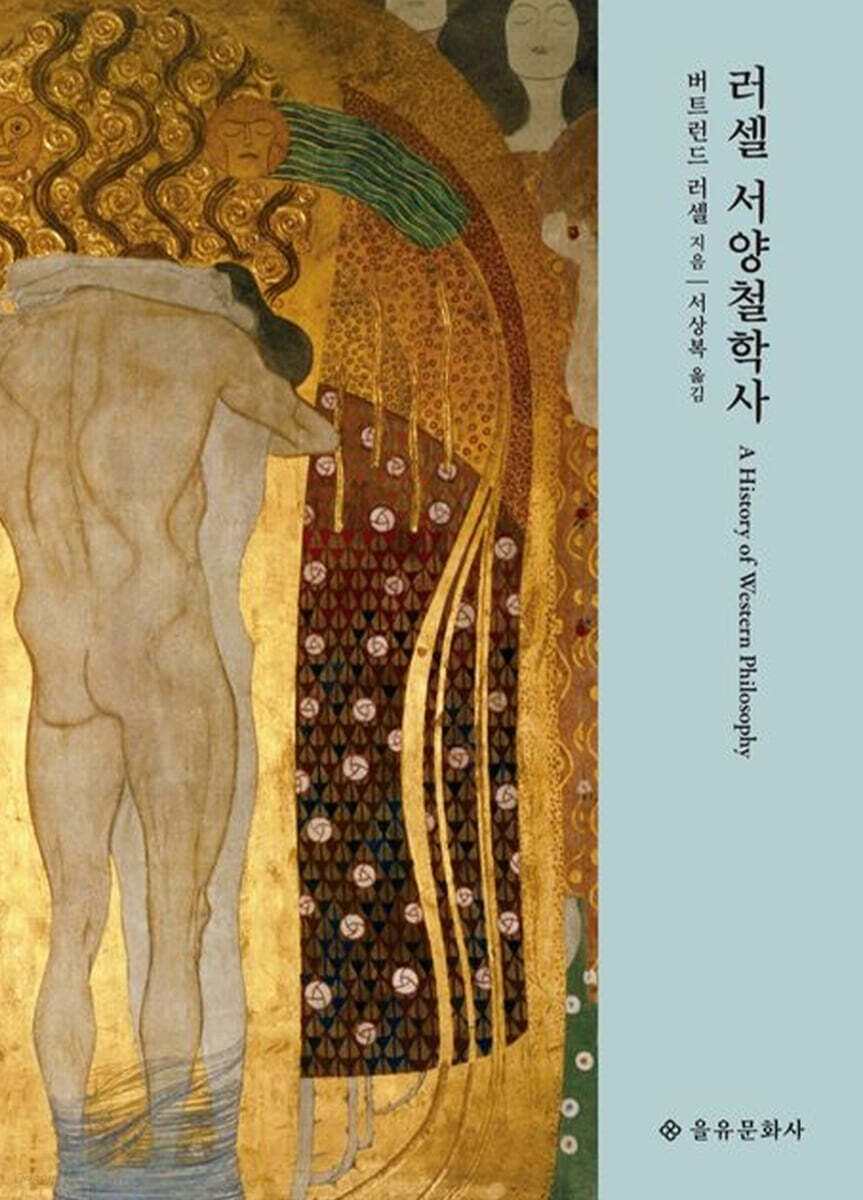
The third edition of Russell's History of Western Philosophy, considered a unique canon in the history of Western philosophy, has been published by Eulyoo Publishing.
This book, which highlights Bertrand Russell's insight, explains the somewhat difficult and rigid aspects of Western philosophy in an easy-to-understand manner using the author's unique style.
This book, which highlights the author's academic depth and elegant prose, which had a profound influence on Wittgenstein while establishing symbolic logic, has long been loved by readers as a classic and introductory text to Western philosophy.
In particular, the third edition produced this time has a smaller format than the existing hardcover edition, making it more portable, while also increasing the value of the book as a collection through hardcover binding.
This book, which highlights Bertrand Russell's insight, explains the somewhat difficult and rigid aspects of Western philosophy in an easy-to-understand manner using the author's unique style.
This book, which highlights the author's academic depth and elegant prose, which had a profound influence on Wittgenstein while establishing symbolic logic, has long been loved by readers as a classic and introductory text to Western philosophy.
In particular, the third edition produced this time has a smaller format than the existing hardcover edition, making it more portable, while also increasing the value of the book as a collection through hardcover binding.
- You can preview some of the book's contents.
Preview
index
Translator's Preface
Author's Preface
introduction
Book 1: Ancient Philosophy
Part 1: Pre-Socratics
1.
The development of Greek civilization / 2.
Miletus School / 3.
Pythagoras / 4.
Heraclitus / 5.
Parmenides /
6.
Empedocles / 7.
Culture of Athens / 8.
Anaxagoras / 9 Atomists / 10.
Protagoras
Part 2: Socrates, Plato, and Aristotle
11.
Socrates / 12.
Spartan influence / 13.
The Origins of Plato's Thought / 14.
Plato's utopia /
15.
Idealism / 16.
Plato's theory of the immortality of the soul / 17.
Plato's Cosmology / 18.
Plato's knowledge and perception /
19.
Aristotle's Metaphysics / 20.
Aristotle's Ethics / 21.
Aristotle's Politics /
22.
Aristotle's Logic / 23.
Aristotle's Physics / 24.
Early Greek mathematics and astronomy
Part 3: Ancient Philosophy After Aristotle
25.
Hellenistic World / 26.
Cynicism and Skepticism / 27.
Epicureanism / 28.
Stoicism /
29.
Culture of the Roman Empire / 30.
Plotinus
Book 2 Catholic Philosophy
Introduction to Volume 2
Part 1: Patristic Philosophy
1.
The Development of Judaism / 2.
Christianity in the early 4th century / 3.
The Three Doctors of the Church /
4.
Augustine's Philosophy and Theology / 5.
5th and 6th centuries / 6.
Saints Benedict and Gregory the Great
Part II: Scholastic Philosophy
7.
The Papacy in the Dark Ages / 8.
The Thought of John Scotus / 9.
11th Century Church Reform /
10.
Islamic Culture and Philosophy / 11.
12th century / 12.
13th century / 13.
St. Thomas Aquinas /
14.
The Scholastic Philosophers of the Franciscan Order / 15.
The decline of the papacy
Volume 3: Modern and Contemporary Philosophy
Part 1: From the Renaissance to Hume
1.
General Features / 2.
Italian Renaissance Movement / 3.
Machiavelli / 4.
Erasmus and Thomas More /
5.
Reformation and Counter-Reformation / 6.
Advances in Science / 7.
Francis Bacon / 8.
Hobbes's Leviathan /
9.
Descartes / 10.
Spinoza / 11.
Leibniz / 12.
Philosophical Liberalism / 13.
Locke's epistemology /
14.
Locke's Political Philosophy / 15.
Locke's Influence / 16.
Berkeley / 17.
Hume
Part 2: From Rousseau to the Present
18.
Romantic Movement / 19.
Rousseau / 20.
Kant / 21.
The flow of thought in the 19th century / 22.
Hegel / 23.
Byron /
24.
Schopenhauer / 25.
Nietzsche / 26.
Utilitarianism / 27.
Karl Marx / 28.
Bergson /
29.
William James / 30.
John Dewey / 31.
Logical-analytic philosophy
clear
References
Bertrand Russell Chronology
Source of the illustration
Search
Author's Preface
introduction
Book 1: Ancient Philosophy
Part 1: Pre-Socratics
1.
The development of Greek civilization / 2.
Miletus School / 3.
Pythagoras / 4.
Heraclitus / 5.
Parmenides /
6.
Empedocles / 7.
Culture of Athens / 8.
Anaxagoras / 9 Atomists / 10.
Protagoras
Part 2: Socrates, Plato, and Aristotle
11.
Socrates / 12.
Spartan influence / 13.
The Origins of Plato's Thought / 14.
Plato's utopia /
15.
Idealism / 16.
Plato's theory of the immortality of the soul / 17.
Plato's Cosmology / 18.
Plato's knowledge and perception /
19.
Aristotle's Metaphysics / 20.
Aristotle's Ethics / 21.
Aristotle's Politics /
22.
Aristotle's Logic / 23.
Aristotle's Physics / 24.
Early Greek mathematics and astronomy
Part 3: Ancient Philosophy After Aristotle
25.
Hellenistic World / 26.
Cynicism and Skepticism / 27.
Epicureanism / 28.
Stoicism /
29.
Culture of the Roman Empire / 30.
Plotinus
Book 2 Catholic Philosophy
Introduction to Volume 2
Part 1: Patristic Philosophy
1.
The Development of Judaism / 2.
Christianity in the early 4th century / 3.
The Three Doctors of the Church /
4.
Augustine's Philosophy and Theology / 5.
5th and 6th centuries / 6.
Saints Benedict and Gregory the Great
Part II: Scholastic Philosophy
7.
The Papacy in the Dark Ages / 8.
The Thought of John Scotus / 9.
11th Century Church Reform /
10.
Islamic Culture and Philosophy / 11.
12th century / 12.
13th century / 13.
St. Thomas Aquinas /
14.
The Scholastic Philosophers of the Franciscan Order / 15.
The decline of the papacy
Volume 3: Modern and Contemporary Philosophy
Part 1: From the Renaissance to Hume
1.
General Features / 2.
Italian Renaissance Movement / 3.
Machiavelli / 4.
Erasmus and Thomas More /
5.
Reformation and Counter-Reformation / 6.
Advances in Science / 7.
Francis Bacon / 8.
Hobbes's Leviathan /
9.
Descartes / 10.
Spinoza / 11.
Leibniz / 12.
Philosophical Liberalism / 13.
Locke's epistemology /
14.
Locke's Political Philosophy / 15.
Locke's Influence / 16.
Berkeley / 17.
Hume
Part 2: From Rousseau to the Present
18.
Romantic Movement / 19.
Rousseau / 20.
Kant / 21.
The flow of thought in the 19th century / 22.
Hegel / 23.
Byron /
24.
Schopenhauer / 25.
Nietzsche / 26.
Utilitarianism / 27.
Karl Marx / 28.
Bergson /
29.
William James / 30.
John Dewey / 31.
Logical-analytic philosophy
clear
References
Bertrand Russell Chronology
Source of the illustration
Search
Detailed image
.jpg)
Into the book
Philosophers are both the effect and the cause of things.
They are the product of their respective social circumstances and the politics and institutions of their respective eras, and (if they are lucky) the contributors to the formation of belief systems that will become the foundation of later politics and institutions.
In most histories of philosophy, philosophers appear as if they exist in a vacuum.
Each philosopher's views are at best just a list of views that have nothing to do with those of previous philosophers.
On the contrary, I have illuminated philosophers as products of the social and cultural environment in which they live, striving to express concretely and concentrating on the ideas and feelings that are shared but vague or scattered in their society, as long as they do not deviate from the truth.
--- p.8
In all history, nothing is more surprising or difficult to explain than the sudden emergence of Greek civilization.
The elements necessary for the formation of civilization had already existed in Egypt and Mesopotamia for thousands of years and had spread to neighboring countries.
However, some elements were not discovered until the Greeks invented them.
While the Greeks' achievements in art and literature are familiar to everyone, their achievements in the purely intellectual realm are far more unusual.
--- p.39
I felt that to understand the origins and significance of Catholic philosophy, it was necessary to cover more general history than either ancient or modern philosophy.
Catholic philosophy is essentially the philosophy of a specific institution, namely the Catholic Church.
So to speak, even when modern philosophy is far from orthodox Catholic philosophy, it is largely concerned with issues that diverge from the Christian view of the moral law and the Catholic doctrine of the relationship between church and state.
It is particularly prominent in the fields of ethics and political theory.
In Greek and Roman paganism there was never any such thing as the dual loyalty that Christianity owed to God and Caesar, or in political terms, to church and state.
--- p.497
A philosophy inspired by the advancement of science and technology is a philosophy that emphasizes power.
Here, too, there is a tendency to think of all non-human beings as mere raw material.
Now, the goal is no longer considered, and only the process of mastery is given value.
This tendency is also a kind of madness and foolishness.
This is the most dangerous philosophy of our time.
A sound philosophy must provide an antidote to this.
--- p.781
Russell, who always loved himself, others, and the universe in which he was born and lived, said that love and knowledge led him to heaven within a limited scope, but compassion for those who suffer always brought him back to earth.
Russell was not so intoxicated by the beauty of the world that he insisted that the ugly was beautiful, nor was he so intoxicated by his own happiness that he turned a blind eye to the misfortune of others.
Russell, who wanted everyone's life to be beautiful, joyful, and good, did not always succeed, but he generally made his own life, his life, and the lives of others beautiful, joyful, and good.
They are the product of their respective social circumstances and the politics and institutions of their respective eras, and (if they are lucky) the contributors to the formation of belief systems that will become the foundation of later politics and institutions.
In most histories of philosophy, philosophers appear as if they exist in a vacuum.
Each philosopher's views are at best just a list of views that have nothing to do with those of previous philosophers.
On the contrary, I have illuminated philosophers as products of the social and cultural environment in which they live, striving to express concretely and concentrating on the ideas and feelings that are shared but vague or scattered in their society, as long as they do not deviate from the truth.
--- p.8
In all history, nothing is more surprising or difficult to explain than the sudden emergence of Greek civilization.
The elements necessary for the formation of civilization had already existed in Egypt and Mesopotamia for thousands of years and had spread to neighboring countries.
However, some elements were not discovered until the Greeks invented them.
While the Greeks' achievements in art and literature are familiar to everyone, their achievements in the purely intellectual realm are far more unusual.
--- p.39
I felt that to understand the origins and significance of Catholic philosophy, it was necessary to cover more general history than either ancient or modern philosophy.
Catholic philosophy is essentially the philosophy of a specific institution, namely the Catholic Church.
So to speak, even when modern philosophy is far from orthodox Catholic philosophy, it is largely concerned with issues that diverge from the Christian view of the moral law and the Catholic doctrine of the relationship between church and state.
It is particularly prominent in the fields of ethics and political theory.
In Greek and Roman paganism there was never any such thing as the dual loyalty that Christianity owed to God and Caesar, or in political terms, to church and state.
--- p.497
A philosophy inspired by the advancement of science and technology is a philosophy that emphasizes power.
Here, too, there is a tendency to think of all non-human beings as mere raw material.
Now, the goal is no longer considered, and only the process of mastery is given value.
This tendency is also a kind of madness and foolishness.
This is the most dangerous philosophy of our time.
A sound philosophy must provide an antidote to this.
--- p.781
Russell, who always loved himself, others, and the universe in which he was born and lived, said that love and knowledge led him to heaven within a limited scope, but compassion for those who suffer always brought him back to earth.
Russell was not so intoxicated by the beauty of the world that he insisted that the ugly was beautiful, nor was he so intoxicated by his own happiness that he turned a blind eye to the misfortune of others.
Russell, who wanted everyone's life to be beautiful, joyful, and good, did not always succeed, but he generally made his own life, his life, and the lives of others beautiful, joyful, and good.
--- p.1269
Publisher's Review
Expanding the horizons of Western philosophy from ancient philosophy to modern analytic philosophy
The life's work of Bertrand Russell, a representative intellectual of the 20th century
This book, considered a classic of Western philosophy and a masterpiece by Bertrand Russell, a representative intellectual of the 20th century, focuses on the role that philosophy plays in integrating the life of a social community and that philosophers are products of their social and cultural environment.
Russell explains how philosophy, politics, and the social environment influence and develop each other, adding wit and humor to suit the general public.
Unlike conventional monotonous philosophy books, this book is easy to read while also demonstrating sharp critical thinking and insight.
In this book, Russell explores and discusses in an engaging way the consistent philosophical themes that have developed over 2,500 years in Western philosophy.
However, since no philosopher is simply worshipped, but rather applies analytical methods to sharply criticize, there is no part that is unclear from beginning to end.
For Russell, philosophy was a process of trying to gain certain knowledge through analytical methods.
The author develops the story by meticulously examining controversial issues while also doggedly examining fundamental principles.
In this process, Russell's excellent writing skills allow him to convey potentially difficult philosophical arguments in an easily understandable way to readers.
As if to prove this, the book remains a true bestseller in the philosophy field on Amazon, an online bookstore, and many reader reviews rave about its ease of reading.
Above all, it is unique that Russell, who was also a mathematical philosopher who studied philosophical reflections on the methods, objects, and propositions of mathematics, presented a writing style that was largely literary.
This reminds us that he is a true intellectual, not limited to any particular field.
Sidney Hook, an American philosopher who highly praised Russell's intellect for transcending boundaries, called him a genius who comes once in 500 years.
In particular, among Russell's many works, "Russell's History of Western Philosophy" was cited as a reason for his selection for the Nobel Prize in Literature in 1950, and can be said to be a work that represents the author's intellectual and literary writing skills.
Through this book, readers will discover the rigor and logic reminiscent of mathematical definitions, and the rich literary metaphors and allusions that express them.
The third edition of 『Russell's History of Western Philosophy』, presented this time, has been made smaller than the existing hardcover edition to enhance portability, while considering the value of the book as a collection by binding it in hardcover. In addition, some typos discovered in the past have been corrected, and the text size, line spacing, and margins have been adjusted to improve readability.
Through this newly released book, readers will be able to savor the joy of philosophizing while savoring Russell's extensive knowledge, free interpretation, and clear criticism.
A monumental masterpiece by Nobel Prize winner Bertrand Russell
Russell's History of Western Philosophy now exclusively published in Korea.
This book is largely divided into three sections: ‘Ancient Philosophy,’ ‘Catholic Philosophy,’ and ‘Modern and Contemporary Philosophy.’
'Ancient Philosophy' examines the flow of thought before and after the time of Socrates, focusing on Socrates, Plato, and Aristotle, including Pythagoras, Epicureanism, and Stoicism.
Through this, it tells the story of the rise of Greek civilization, the influence and culture of Athens, Sparta, the Hellenistic world, and the Roman Empire.
According to Russell, ancient Greek philosophy was divided into two tendencies: one that valued passion and was absorbed in religion, and the other that valued experience and promoted rationalism, and these two tendencies dominated Greek culture.
And the latter tendency, which had sunk beneath the surface in the Middle Ages, was revived in modern philosophy.
So to speak, the Greek civilization, which gave birth to philosophy, also contributed to the emergence of medieval Christian civilization, became the driving force of the Renaissance movement, and is the ideological origin of modern philosophy.
In 'Catholic Philosophy', we examine the establishment and development of church philosophy, focusing on patristic and scholastic philosophy, and cover the development of Judaism, the rise and fall of the papal system, and Islamic culture and philosophy.
At that time, Catholic philosophy played a role in unifying European society, and the conflict between orthodox faith and heretical ideas within the Catholic Church became the impetus for reforming the Catholic system and the beginning of the Reformation.
In 'Modern and Contemporary Philosophy,' we examine major figures and trends such as Descartes, Locke, Kant, utilitarianism, and logical-analytic philosophy, while adding the Renaissance, modern scientific development, religious reform, liberalism, romanticism, and 19th-century thought to provide an understanding of the social and cultural background of the time.
Russell viewed modern and contemporary philosophy as the result of efforts to push subjectivism to its extreme or to break away from it.
Of course, it also covers the Enlightenment philosophy, positivism, utilitarianism, and romanticism contained in modern and contemporary philosophy.
This book, which discusses the entire history of Western philosophy, not only provides a clear overview of the flow of major doctrines, but also allows one to grasp the representative central ideas of famous intellectuals at a glance.
The life's work of Bertrand Russell, a representative intellectual of the 20th century
This book, considered a classic of Western philosophy and a masterpiece by Bertrand Russell, a representative intellectual of the 20th century, focuses on the role that philosophy plays in integrating the life of a social community and that philosophers are products of their social and cultural environment.
Russell explains how philosophy, politics, and the social environment influence and develop each other, adding wit and humor to suit the general public.
Unlike conventional monotonous philosophy books, this book is easy to read while also demonstrating sharp critical thinking and insight.
In this book, Russell explores and discusses in an engaging way the consistent philosophical themes that have developed over 2,500 years in Western philosophy.
However, since no philosopher is simply worshipped, but rather applies analytical methods to sharply criticize, there is no part that is unclear from beginning to end.
For Russell, philosophy was a process of trying to gain certain knowledge through analytical methods.
The author develops the story by meticulously examining controversial issues while also doggedly examining fundamental principles.
In this process, Russell's excellent writing skills allow him to convey potentially difficult philosophical arguments in an easily understandable way to readers.
As if to prove this, the book remains a true bestseller in the philosophy field on Amazon, an online bookstore, and many reader reviews rave about its ease of reading.
Above all, it is unique that Russell, who was also a mathematical philosopher who studied philosophical reflections on the methods, objects, and propositions of mathematics, presented a writing style that was largely literary.
This reminds us that he is a true intellectual, not limited to any particular field.
Sidney Hook, an American philosopher who highly praised Russell's intellect for transcending boundaries, called him a genius who comes once in 500 years.
In particular, among Russell's many works, "Russell's History of Western Philosophy" was cited as a reason for his selection for the Nobel Prize in Literature in 1950, and can be said to be a work that represents the author's intellectual and literary writing skills.
Through this book, readers will discover the rigor and logic reminiscent of mathematical definitions, and the rich literary metaphors and allusions that express them.
The third edition of 『Russell's History of Western Philosophy』, presented this time, has been made smaller than the existing hardcover edition to enhance portability, while considering the value of the book as a collection by binding it in hardcover. In addition, some typos discovered in the past have been corrected, and the text size, line spacing, and margins have been adjusted to improve readability.
Through this newly released book, readers will be able to savor the joy of philosophizing while savoring Russell's extensive knowledge, free interpretation, and clear criticism.
A monumental masterpiece by Nobel Prize winner Bertrand Russell
Russell's History of Western Philosophy now exclusively published in Korea.
This book is largely divided into three sections: ‘Ancient Philosophy,’ ‘Catholic Philosophy,’ and ‘Modern and Contemporary Philosophy.’
'Ancient Philosophy' examines the flow of thought before and after the time of Socrates, focusing on Socrates, Plato, and Aristotle, including Pythagoras, Epicureanism, and Stoicism.
Through this, it tells the story of the rise of Greek civilization, the influence and culture of Athens, Sparta, the Hellenistic world, and the Roman Empire.
According to Russell, ancient Greek philosophy was divided into two tendencies: one that valued passion and was absorbed in religion, and the other that valued experience and promoted rationalism, and these two tendencies dominated Greek culture.
And the latter tendency, which had sunk beneath the surface in the Middle Ages, was revived in modern philosophy.
So to speak, the Greek civilization, which gave birth to philosophy, also contributed to the emergence of medieval Christian civilization, became the driving force of the Renaissance movement, and is the ideological origin of modern philosophy.
In 'Catholic Philosophy', we examine the establishment and development of church philosophy, focusing on patristic and scholastic philosophy, and cover the development of Judaism, the rise and fall of the papal system, and Islamic culture and philosophy.
At that time, Catholic philosophy played a role in unifying European society, and the conflict between orthodox faith and heretical ideas within the Catholic Church became the impetus for reforming the Catholic system and the beginning of the Reformation.
In 'Modern and Contemporary Philosophy,' we examine major figures and trends such as Descartes, Locke, Kant, utilitarianism, and logical-analytic philosophy, while adding the Renaissance, modern scientific development, religious reform, liberalism, romanticism, and 19th-century thought to provide an understanding of the social and cultural background of the time.
Russell viewed modern and contemporary philosophy as the result of efforts to push subjectivism to its extreme or to break away from it.
Of course, it also covers the Enlightenment philosophy, positivism, utilitarianism, and romanticism contained in modern and contemporary philosophy.
This book, which discusses the entire history of Western philosophy, not only provides a clear overview of the flow of major doctrines, but also allows one to grasp the representative central ideas of famous intellectuals at a glance.
GOODS SPECIFICS
- Publication date: December 30, 2020
- Format: Hardcover book binding method guide
- Page count, weight, size: 1,308 pages | 1,590g | 150*210*80mm
- ISBN13: 9788932452715
- ISBN10: 8932452717
You may also like
카테고리
korean


korean

![GQ KOREA Mark (Monthly): December [2025]](http://librairie.coreenne.fr/cdn/shop/files/8ef265dbbfbf186523ed75ba7319009d.jpg?v=1765340328&width=3840)


