

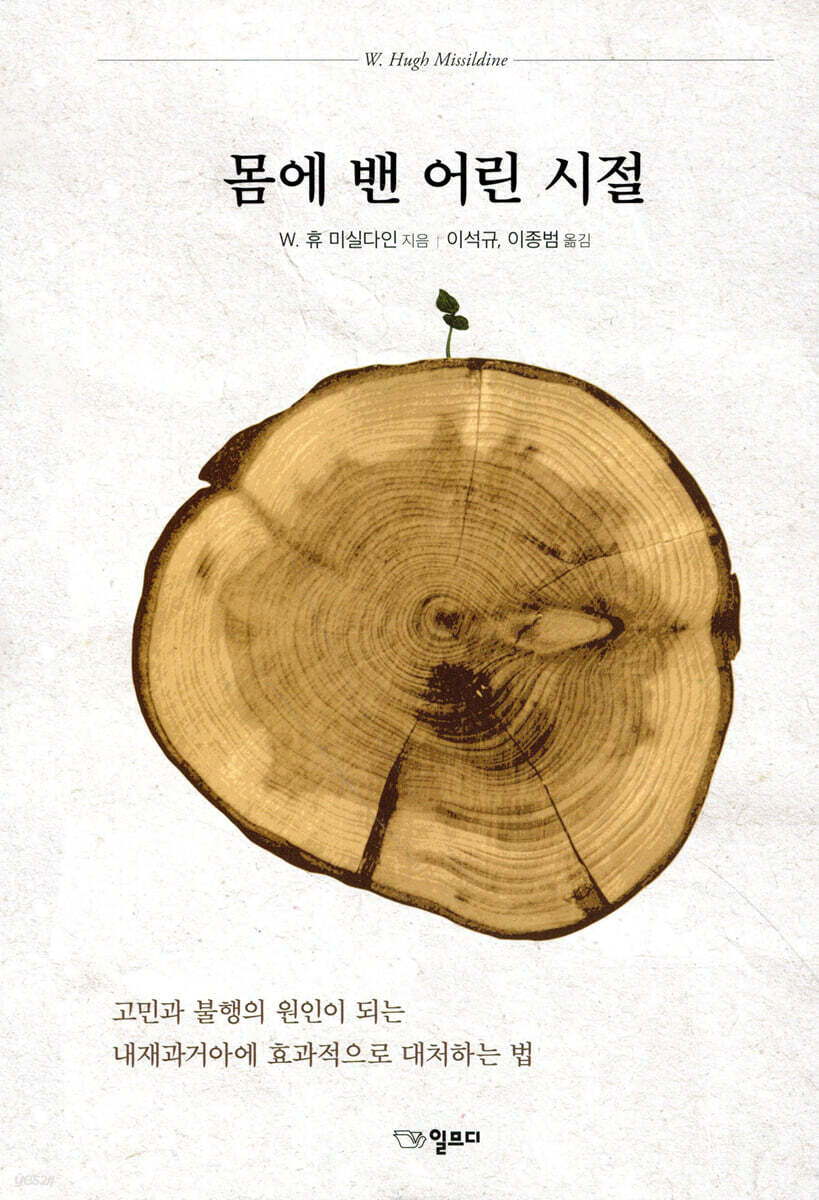
Childhood that is ingrained in the body
 |
Description
Book Introduction
A new perspective on childhood
A steady seller in the psychology field for 15 years
The childhood we once experienced is not something that happened in the distant past. Even now, as adults, it influences every aspect of our lives, including our lifestyles, work life, interpersonal relationships, and marriage.
But we always try to 'grow up' and easily ignore or forget our childhood.
This is where many adults' worries and unhappiness begin.
Ilmdi Publishing has revised and published 『Childhood Embodied in the Body』, which contains a new perspective on childhood.
This book has been a steady seller that has been loved for about 15 years since its first publication.
Although the content was satisfactory, there were some reviews expressing regret that the translation was lacking.
In this revised edition, we have focused on natural reading and refined the expressions to make it easier for readers.
It is often said that 'people do not change easily.'
In fact, many people set new goals every year, but end up not putting them into action and end up setting the same goals the following year.
The reason is that there is something inside that blocks positive change.
If you want to change your life, I highly recommend reading "Childhood in the Body."
By looking back on our childhood, which is deeply ingrained in our bodies, we can prepare for a different life as true adults.
A steady seller in the psychology field for 15 years
The childhood we once experienced is not something that happened in the distant past. Even now, as adults, it influences every aspect of our lives, including our lifestyles, work life, interpersonal relationships, and marriage.
But we always try to 'grow up' and easily ignore or forget our childhood.
This is where many adults' worries and unhappiness begin.
Ilmdi Publishing has revised and published 『Childhood Embodied in the Body』, which contains a new perspective on childhood.
This book has been a steady seller that has been loved for about 15 years since its first publication.
Although the content was satisfactory, there were some reviews expressing regret that the translation was lacking.
In this revised edition, we have focused on natural reading and refined the expressions to make it easier for readers.
It is often said that 'people do not change easily.'
In fact, many people set new goals every year, but end up not putting them into action and end up setting the same goals the following year.
The reason is that there is something inside that blocks positive change.
If you want to change your life, I highly recommend reading "Childhood in the Body."
By looking back on our childhood, which is deeply ingrained in our bodies, we can prepare for a different life as true adults.
- You can preview some of the book's contents.
Preview
index
Part 1: Understanding and Accepting the Immanent Past Self
Chapter 1: Who is the Immanent Past Self? 9
Chapter 2: Why Do We Experience Emotional Confusion? 19
Chapter 3: How Does the Immanent Past Affect Adult Life? 29
Chapter 4: How Our Attitude Towards Childhood Leads Us astray 42
Chapter 5: When the Immanent Past Self Embodies the Body 57
Chapter 6: Are You Having Internal Conflict? 73
Chapter 7: It Takes Four People to Make a Marriage 80
Chapter 8: Areas of Conflict: Money, Sex, and Entertainment 93
Chapter 9: What Kind of Child Were You? 110
Part 2: Parental Excessive Attitudes: How Are These Attitudes Affecting You Now?
Chapter 10: Perfectionism: If You Think You Should Be Trying to Do Better 129
Chapter 11: Coercion: If You Can't Let Go of Your Procrastination 156
Chapter 12: If You Are Demanding and Impulsive 193
Chapter 13: Neglect: If You're Bored and Can't Endure It 226
Chapter 14: Health Anxiety: If You Always Have to Worry About Your Health 269
Chapter 15: Retribution: If You Continue to Retaliate for Past Events 306
Chapter 16: Neglect: If you feel like you don't belong and it's hard to belong, 368
Chapter 17: Rejection: If You're Trying to Isolate Yourself 420
Chapter 18: Sexual Stimulation: If You Feel You're Misunderstanding the Role of Sex 442
Part 3: Changing Yourself and Your Life
Chapter 19: Taking on Your New Parenting Role 481
Chapter 1: Who is the Immanent Past Self? 9
Chapter 2: Why Do We Experience Emotional Confusion? 19
Chapter 3: How Does the Immanent Past Affect Adult Life? 29
Chapter 4: How Our Attitude Towards Childhood Leads Us astray 42
Chapter 5: When the Immanent Past Self Embodies the Body 57
Chapter 6: Are You Having Internal Conflict? 73
Chapter 7: It Takes Four People to Make a Marriage 80
Chapter 8: Areas of Conflict: Money, Sex, and Entertainment 93
Chapter 9: What Kind of Child Were You? 110
Part 2: Parental Excessive Attitudes: How Are These Attitudes Affecting You Now?
Chapter 10: Perfectionism: If You Think You Should Be Trying to Do Better 129
Chapter 11: Coercion: If You Can't Let Go of Your Procrastination 156
Chapter 12: If You Are Demanding and Impulsive 193
Chapter 13: Neglect: If You're Bored and Can't Endure It 226
Chapter 14: Health Anxiety: If You Always Have to Worry About Your Health 269
Chapter 15: Retribution: If You Continue to Retaliate for Past Events 306
Chapter 16: Neglect: If you feel like you don't belong and it's hard to belong, 368
Chapter 17: Rejection: If You're Trying to Isolate Yourself 420
Chapter 18: Sexual Stimulation: If You Feel You're Misunderstanding the Role of Sex 442
Part 3: Changing Yourself and Your Life
Chapter 19: Taking on Your New Parenting Role 481
Detailed image
.jpg)
Into the book
Like it or not, we are both children, living in the emotional atmosphere of the past, meddling in our present lives, and adults, trying to forget the past and living solely in the present.
Your inner past self can interfere with or nullify your fulfillment as an adult, embarrass you, torment you, make you sick, or enrich your life.
---From "Who is the Immanent Past Self?"
Children feel it is essential to gain their parents' approval because they view their parents as almost god-like and omnipotent beings.
But as children grow older and become more responsible for themselves, the godlike aspect of their parents diminishes.
In time, we gradually come to see our fathers and mothers as ordinary human beings with all their desires, difficulties, weaknesses, and eccentricities.
Accepting your parents' human flaws and strengths is a sign of maturity.
But parents, almost without exception, are people who 'did the best they could' despite harsh constraints.
---From "What Kind of Child Were You?"
In some ways, people with perfectionist tendencies may seem very competitive.
But his persistent efforts are not a measure of his desire to achieve something for its own sake, but rather a measure of his underestimation of himself.
Perfectionists, who have difficulty accepting themselves, are constantly motivated to do better in order to gain recognition, so they have little interest in competition itself.
---From "Perfectionism: If You Think You Should Try to Do Better"
If you tire easily, can't do anything because you're feeling irritable, or constantly self-diagnose even when your doctor can't find a reason for your complaints, it's worth considering that your inner past child may be suffering from parental hypochondria (an inability to do anything because you're so preoccupied with worrying about illness, pain, or disease).
The same is true when we think about the condition and function of our own body in relation to the possibility of disease.
---From "Health Anxiety: If You Always Have to Worry About Your Health"
You will be punishing yourself in the same way your parents chose to punish you in the past.
If your parents were inconsistent, neither will you.
If your parents created strict rules that ignored your desires, you will do the same, and they will constantly force you to break those rules based on your desires.
---From "Retribution: If You Continue to Retaliate for the Past"
If you truly understand how your past self's difficult emotions arose and how they are expressed now, and if you can use this knowledge to act as a respectful and kind parent to your past self, you can gradually break free from the distorted life of your past.
You will have more freedom and energy to act in an appropriate and fulfilling way as an adult, and to participate in the many activities of life, without being bound by the past.
Your inner past self can interfere with or nullify your fulfillment as an adult, embarrass you, torment you, make you sick, or enrich your life.
---From "Who is the Immanent Past Self?"
Children feel it is essential to gain their parents' approval because they view their parents as almost god-like and omnipotent beings.
But as children grow older and become more responsible for themselves, the godlike aspect of their parents diminishes.
In time, we gradually come to see our fathers and mothers as ordinary human beings with all their desires, difficulties, weaknesses, and eccentricities.
Accepting your parents' human flaws and strengths is a sign of maturity.
But parents, almost without exception, are people who 'did the best they could' despite harsh constraints.
---From "What Kind of Child Were You?"
In some ways, people with perfectionist tendencies may seem very competitive.
But his persistent efforts are not a measure of his desire to achieve something for its own sake, but rather a measure of his underestimation of himself.
Perfectionists, who have difficulty accepting themselves, are constantly motivated to do better in order to gain recognition, so they have little interest in competition itself.
---From "Perfectionism: If You Think You Should Try to Do Better"
If you tire easily, can't do anything because you're feeling irritable, or constantly self-diagnose even when your doctor can't find a reason for your complaints, it's worth considering that your inner past child may be suffering from parental hypochondria (an inability to do anything because you're so preoccupied with worrying about illness, pain, or disease).
The same is true when we think about the condition and function of our own body in relation to the possibility of disease.
---From "Health Anxiety: If You Always Have to Worry About Your Health"
You will be punishing yourself in the same way your parents chose to punish you in the past.
If your parents were inconsistent, neither will you.
If your parents created strict rules that ignored your desires, you will do the same, and they will constantly force you to break those rules based on your desires.
---From "Retribution: If You Continue to Retaliate for the Past"
If you truly understand how your past self's difficult emotions arose and how they are expressed now, and if you can use this knowledge to act as a respectful and kind parent to your past self, you can gradually break free from the distorted life of your past.
You will have more freedom and energy to act in an appropriate and fulfilling way as an adult, and to participate in the many activities of life, without being bound by the past.
---From "Taking on a New Parental Role for Yourself"
Publisher's Review
A new perspective on childhood
A steady seller in the psychology field for 15 years
The childhood we once experienced is not something that happened in the distant past. Even now, as adults, it influences every aspect of our lives, including our lifestyles, work life, interpersonal relationships, and marriage.
But we always try to 'grow up' and easily ignore or forget our childhood.
This is where many adults' worries and unhappiness begin.
Ilmdi Publishing has revised and published 『Childhood Embodied in the Body』, which contains a new perspective on childhood.
This book has been a steady seller that has been loved for about 15 years since its first publication.
Although the content was satisfactory, there were some reviews expressing regret that the translation was lacking.
In this revised edition, we have focused on natural reading and refined the expressions to make it easier for readers.
It is often said that 'people do not change easily.'
In fact, many people set new goals every year, but end up not putting them into action and end up setting the same goals the following year.
The reason is that there is something inside that blocks positive change.
If you want to change your life, I highly recommend reading "Childhood in the Body."
By looking back on our childhood, which is deeply ingrained in our bodies, we can prepare for a different life as true adults.
Most of the issues addressed in this book are not relevant to people who require professional psychiatric treatment.
Here we discuss problems that normal people face in their daily lives, problems that they can solve on their own if they understand what causes them and how to deal with them.
― From the text
The cause of worry and unhappiness
How to Effectively Deal with Your Internal Past Self
The most important concept covered in this book is the 'inner child of the past.'
It refers to the image of a child from the past that remains in our lives and influences us even now that we are adults.
We often act as our internal past self wants us to act, and we also act as parents to our own internal past self.
And these behaviors are the cause of many problems in our daily lives.
For example, the internal past self of a person who grew up under pressure may choose procrastination as the only means of rebelling against the constant direction of their parents.
So even after becoming adults, they often have trouble finishing things they start and feel like they are worthless.
To get rid of these feelings, I get even angrier at myself, yell at myself, and write down a list of things I absolutely have to do tomorrow, but I always end up not getting anything done.
Moreover, the plans these people make are often as unattainable as the instructions their parents gave them.
Because you cannot realistically and objectively assess what you can expect from yourself, you come to believe that you are even more worthless.
This book analyzes common parental attitudes, including perfectionism, coercion, laxity, neglect, health anxiety, punishment, abandonment, rejection, and sexual stimulation, and provides various case studies.
In reality, these attitudes may be mixed.
However, this book describes each attitude in its 'pure' form, making it easier to understand our childhood.
Everyone has an inner past self.
The implicit past self remains and continues even after becoming an adult.
Traces of this immanent past self remain throughout our lives.
We are already dealing with these internal past selves in our own way.
However, many people fail to properly understand how their past self affects their present life, and so they end up exhausted and without any results.
Especially when you're trying to eradicate childhood emotions.
Even now that we are adults, our inner self is persistently trying to force us to live in the same atmosphere that we were accustomed to as children.
Through this, we gain the ‘security that comes from familiarity’ that we have had since childhood.
For example, if a person was pressured by his or her parents as a child, he or she may still be pressured by his or her spouse as an adult, and he or she may respond by procrastinating.
Therefore, we need to look at our parents' attitudes during our childhood and see how they are influencing us now.
And while respecting the feelings of the implicit past self, we must sometimes impose limits on the implicit past self.
Of course, it is not an easy task.
But only then can we overcome the wounds of childhood and become true adults.
The process of finding a new parental role for oneself
We often think that our quirky and unconventional aspects are just due to our personality or stubbornness.
But none of them came into existence without a reason.
"Childhood Embodied" guides us to recognize the inner self that still thrives within us, and to move forward into a new life by acting as a respectful and kind parent to ourselves.
Many books that deal with personal anxiety or conflict often involve reflecting on the present and finding solutions in one's current life.
On the other hand, this book provides a perspective for understanding the present through the past and moving toward a better future.
Of course, there have been many psychology books that conceptualize the child within.
But few books offer as comprehensive an insight as 『Childhood in the Body』.
Although it is a bit thick, it is rich in deep insights.
"Childhood in the Body" has been recognized as a must-read by countless readers for 15 years.
This book, written by an author with extensive experience in the field of children's mental health, offers a profound analysis that prompts us to reflect on ourselves.
It will be of great help to anyone who wants to know themselves better or to change their future life.
It will be especially useful for couples about to get married or parents interested in their children's education.
This book is easy to understand and has sufficient content to be selected as a liberal arts textbook for university psychology departments, so anyone can read it with immersion.
Looking back on childhood is never going to be fun.
Perhaps the wounds inflicted by your parents' attitude are so great that it is difficult to even recall them.
Many people grow up without ever being able to deal with that wound.
But dealing with a wounded inner self doesn't necessarily have to be painful.
Your future life depends on what kind of parent you are to yourself.
I hope that through this book, you will rediscover the ability to live as a true adult.
By being a conscious and active parent who is gentle with your inner child, yet sometimes firm, you can accomplish something no one else can do for you.
That is, you can create new ways to live a new and satisfying life for yourself and new ways to think about those close to you.
― From the text
A steady seller in the psychology field for 15 years
The childhood we once experienced is not something that happened in the distant past. Even now, as adults, it influences every aspect of our lives, including our lifestyles, work life, interpersonal relationships, and marriage.
But we always try to 'grow up' and easily ignore or forget our childhood.
This is where many adults' worries and unhappiness begin.
Ilmdi Publishing has revised and published 『Childhood Embodied in the Body』, which contains a new perspective on childhood.
This book has been a steady seller that has been loved for about 15 years since its first publication.
Although the content was satisfactory, there were some reviews expressing regret that the translation was lacking.
In this revised edition, we have focused on natural reading and refined the expressions to make it easier for readers.
It is often said that 'people do not change easily.'
In fact, many people set new goals every year, but end up not putting them into action and end up setting the same goals the following year.
The reason is that there is something inside that blocks positive change.
If you want to change your life, I highly recommend reading "Childhood in the Body."
By looking back on our childhood, which is deeply ingrained in our bodies, we can prepare for a different life as true adults.
Most of the issues addressed in this book are not relevant to people who require professional psychiatric treatment.
Here we discuss problems that normal people face in their daily lives, problems that they can solve on their own if they understand what causes them and how to deal with them.
― From the text
The cause of worry and unhappiness
How to Effectively Deal with Your Internal Past Self
The most important concept covered in this book is the 'inner child of the past.'
It refers to the image of a child from the past that remains in our lives and influences us even now that we are adults.
We often act as our internal past self wants us to act, and we also act as parents to our own internal past self.
And these behaviors are the cause of many problems in our daily lives.
For example, the internal past self of a person who grew up under pressure may choose procrastination as the only means of rebelling against the constant direction of their parents.
So even after becoming adults, they often have trouble finishing things they start and feel like they are worthless.
To get rid of these feelings, I get even angrier at myself, yell at myself, and write down a list of things I absolutely have to do tomorrow, but I always end up not getting anything done.
Moreover, the plans these people make are often as unattainable as the instructions their parents gave them.
Because you cannot realistically and objectively assess what you can expect from yourself, you come to believe that you are even more worthless.
This book analyzes common parental attitudes, including perfectionism, coercion, laxity, neglect, health anxiety, punishment, abandonment, rejection, and sexual stimulation, and provides various case studies.
In reality, these attitudes may be mixed.
However, this book describes each attitude in its 'pure' form, making it easier to understand our childhood.
Everyone has an inner past self.
The implicit past self remains and continues even after becoming an adult.
Traces of this immanent past self remain throughout our lives.
We are already dealing with these internal past selves in our own way.
However, many people fail to properly understand how their past self affects their present life, and so they end up exhausted and without any results.
Especially when you're trying to eradicate childhood emotions.
Even now that we are adults, our inner self is persistently trying to force us to live in the same atmosphere that we were accustomed to as children.
Through this, we gain the ‘security that comes from familiarity’ that we have had since childhood.
For example, if a person was pressured by his or her parents as a child, he or she may still be pressured by his or her spouse as an adult, and he or she may respond by procrastinating.
Therefore, we need to look at our parents' attitudes during our childhood and see how they are influencing us now.
And while respecting the feelings of the implicit past self, we must sometimes impose limits on the implicit past self.
Of course, it is not an easy task.
But only then can we overcome the wounds of childhood and become true adults.
The process of finding a new parental role for oneself
We often think that our quirky and unconventional aspects are just due to our personality or stubbornness.
But none of them came into existence without a reason.
"Childhood Embodied" guides us to recognize the inner self that still thrives within us, and to move forward into a new life by acting as a respectful and kind parent to ourselves.
Many books that deal with personal anxiety or conflict often involve reflecting on the present and finding solutions in one's current life.
On the other hand, this book provides a perspective for understanding the present through the past and moving toward a better future.
Of course, there have been many psychology books that conceptualize the child within.
But few books offer as comprehensive an insight as 『Childhood in the Body』.
Although it is a bit thick, it is rich in deep insights.
"Childhood in the Body" has been recognized as a must-read by countless readers for 15 years.
This book, written by an author with extensive experience in the field of children's mental health, offers a profound analysis that prompts us to reflect on ourselves.
It will be of great help to anyone who wants to know themselves better or to change their future life.
It will be especially useful for couples about to get married or parents interested in their children's education.
This book is easy to understand and has sufficient content to be selected as a liberal arts textbook for university psychology departments, so anyone can read it with immersion.
Looking back on childhood is never going to be fun.
Perhaps the wounds inflicted by your parents' attitude are so great that it is difficult to even recall them.
Many people grow up without ever being able to deal with that wound.
But dealing with a wounded inner self doesn't necessarily have to be painful.
Your future life depends on what kind of parent you are to yourself.
I hope that through this book, you will rediscover the ability to live as a true adult.
By being a conscious and active parent who is gentle with your inner child, yet sometimes firm, you can accomplish something no one else can do for you.
That is, you can create new ways to live a new and satisfying life for yourself and new ways to think about those close to you.
― From the text
GOODS SPECIFICS
- Date of issue: June 14, 2020
- Format: Hardcover book binding method guide
- Page count, weight, size: 500 pages | 722g | 148*217*30mm
- ISBN13: 9791197031700
- ISBN10: 1197031707
You may also like
카테고리
korean


korean

![GQ KOREA Mark (Monthly): December [2025]](http://librairie.coreenne.fr/cdn/shop/files/8ef265dbbfbf186523ed75ba7319009d.jpg?v=1765340328&width=3840)


