

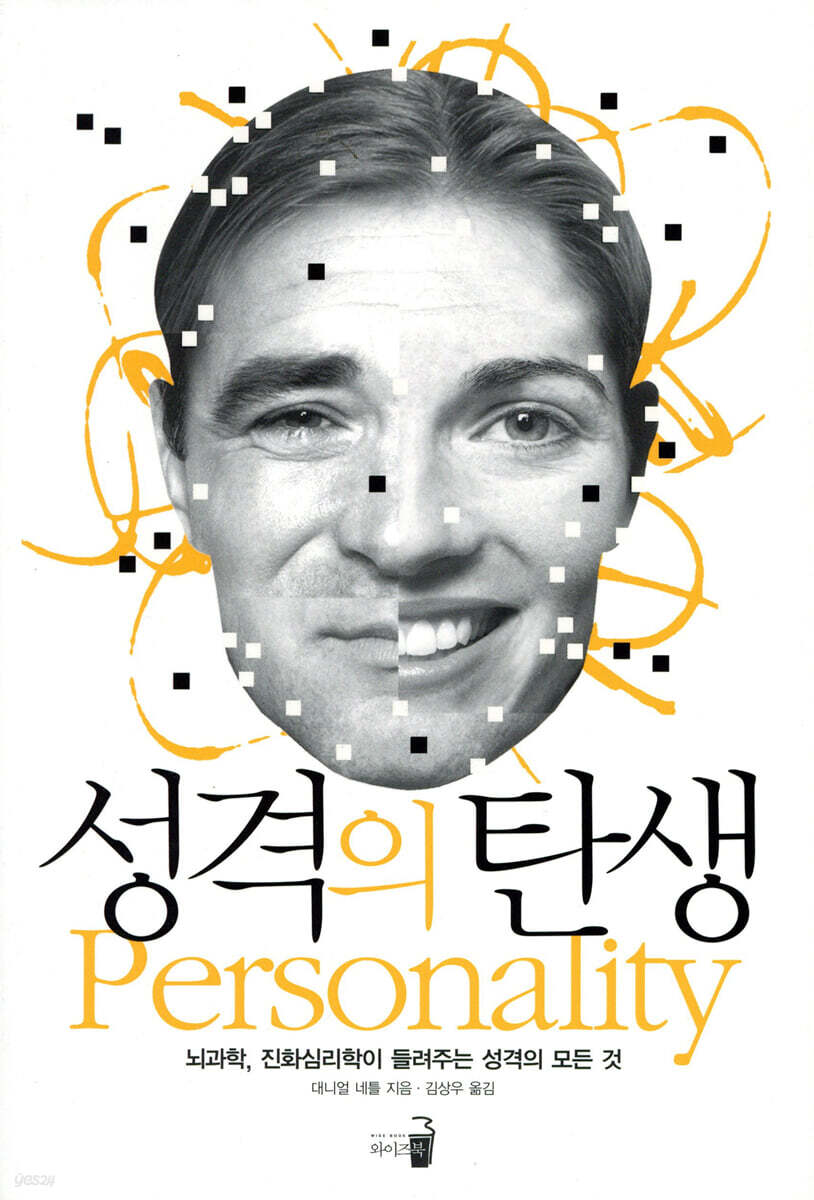
The Birth of Personality
 |
Description
Book Introduction
How was my personality formed?
Why do people have different personalities?
Can you change your personality?
The most intelligent personality exploration book that uncovers the roots of personality!
Interpersonal conflicts, complexes, worries, and anxiety.
At its root lies ‘personality.’
My values, my career, my love life, my relationships are all a result of my personality.
Why is personality important? The author, a behavioral scientist and psychologist, explains that personality is crucial because it determines our lives.
People are loved because they have good personalities, ostracized because they have bad personalities, and break up because of personality differences.
You can also predict a person's happiness or unhappiness based on their personality.
To clarify 'personality', the author explores questions such as whether there are scientific standards that can be used to determine "my personality is like this" and why and how individual differences in personality exist.
It is based on personality surveys of hundreds of people, life stories of people from around the world, and research in evolutionary psychology, genetics, and brain science.
First, the author attaches a 'personality diagnosis chart' at the beginning so that readers can diagnose their own personality, and then immediately introduces the 'five personality traits' such as 'extroversion', 'neuroticism', 'conscientiousness', 'agreeableness', and 'openness', and categorizes people's personalities.
Through this, we comprehensively evaluate the characteristics and strengths and weaknesses of personality and unravel the interesting stories inherent in human personality.
Based on the latest research findings in genetics and brain science, the evolutionary reasons for different personalities are clearly presented.
Why do people have different personalities?
Can you change your personality?
The most intelligent personality exploration book that uncovers the roots of personality!
Interpersonal conflicts, complexes, worries, and anxiety.
At its root lies ‘personality.’
My values, my career, my love life, my relationships are all a result of my personality.
Why is personality important? The author, a behavioral scientist and psychologist, explains that personality is crucial because it determines our lives.
People are loved because they have good personalities, ostracized because they have bad personalities, and break up because of personality differences.
You can also predict a person's happiness or unhappiness based on their personality.
To clarify 'personality', the author explores questions such as whether there are scientific standards that can be used to determine "my personality is like this" and why and how individual differences in personality exist.
It is based on personality surveys of hundreds of people, life stories of people from around the world, and research in evolutionary psychology, genetics, and brain science.
First, the author attaches a 'personality diagnosis chart' at the beginning so that readers can diagnose their own personality, and then immediately introduces the 'five personality traits' such as 'extroversion', 'neuroticism', 'conscientiousness', 'agreeableness', and 'openness', and categorizes people's personalities.
Through this, we comprehensively evaluate the characteristics and strengths and weaknesses of personality and unravel the interesting stories inherent in human personality.
Based on the latest research findings in genetics and brain science, the evolutionary reasons for different personalities are clearly presented.
- You can preview some of the book's contents.
Preview
index
Translator's Note / A Report on the Unlikable Self and the Incomprehensible Other
Prologue / Complexes, Mental Illness, the Source of Interpersonal Conflict, Personality
Diagnose Your Personality / Personality Assessment Chart? Interpret Your Personality Score
Chapter 1
Who am I?
The true nature of personality as revealed by science
Can personality be determined? / What are 'personality traits'? / People who like social activities also like to travel, have sex, and are competitive. / Each person has a unique personality pattern. / Five personality traits: extroversion, neuroticism, conscientiousness, agreeableness, and openness. / Marital life can be predicted with personality scores. / Terman's children: Life expectancy can be predicted with personality. / The challenges of personality psychology: Why do individual differences in personality exist? / Personality differences are created by brain structure and function. / Is it innate or influenced by the environment? / Can future behavior be predicted with personality? / Different personalities lead to different situations. / Personality can be predicted with behavioral patterns. / Personality is an evolved psychological mechanism.
Chapter 2
Finch's beak:
Why do people have different personalities?
Natural selection: Keep only what is advantageous to survival / Personality is a product of evolution / Why genetic differences exist / Mutations also produce genetic differences / Wandering selection creates differences in human personality / Interesting animal examples: Temperamental differences created by the environment
Chapter 3
You are crying or laughing:
Extroversion and introversion
Extroverts: Erica's case / Extroversion and sociability, extroversion and agreeableness, extroversion and conscientiousness / Positive emotions are a reward psychology / Extroverts: Bill's case / Some people do not seek rewards / Introverts: Andrew's case / Introverts: David's case / Why people have different motivations for achievement / Extroverts are people obsessed with dopamine / Extroversion genes are different / Extroverts' success and risks / There are environmental conditions that are unfavorable to extroverts
Chapter 4
Negative people:
Psychological roots of neurosis, anxiety, and depression
Neuroticism and Bad Luck: Susan's Case / People Who Live with Worry, Anxiety, and Sadness / Negative Emotions Are Like Fire Alarms / The Brains of People with High Neuroticism / Neuroticism and Depression / Depression and Genes / Characteristics of People with High Neuroticism: Identity Insecurity, Low Self-Esteem / Every Personality Has Benefits and Costs / Neuroticism is a Motivation for Artistic Achievement / Understand and Control Neuroticism
Chapter 5
The Honest Man and the Alcoholic:
Moderation and impulsive tendencies
Psychological Experiments: Iowa Gambling Task / People who fall into drugs, gambling, and alcohol / Addiction is an inherited brain command / Brain mechanisms of self-control and impulse control / People with high conscientiousness are more successful in their careers / The smarter a person is, the less conscientious they are / Attention Deficit Hyperactivity Disorder, Obsessive Compulsive Disorder / Obsessive Compulsive Personality Disorder: Ronald's Case / Anorexia, an eating disorder in women / Obsessive Compulsive Disorder: Catherine's Case
Chapter 6
Psychopaths and Great Empaths:
Agreeableness and empathy
Psychological experiments: Empathy between chimpanzees and humans / Dictator game: Human behavior of respecting others / Individual differences in empathy / Differences between people with high and low agreeableness / People with high agreeableness: Maria's case / People with low agreeableness: Jack's case / Psychological origins of psychopathy / People with low agreeableness: David's case / People with high agreeableness also have high empathy / Origin of the psychology of respecting others / What is the appropriate agreeableness level? / Evolutionary model of prosocial and antisocial people / Successful people have low agreeableness / Gender differences in agreeableness
Chapter 7
Creator, Freak, Madman, Pervert:
The psychological world of an open temperament
Open temperament and intellectual ability / Artistic temperament: Free consciousness / Psychopathic temperament: Unique thoughts and beliefs / Open-minded people possess extraordinary mental abilities / Creativity of open-minded people / How open-minded people see things / Mating patterns of open-minded people / Sexual attractiveness and costs of open-minded people / Evolutionary models of open-minded people
Chapter 8
personality and environment
Does environment affect personality? / Studies on identical and fraternal twins / Genetic factors and upbringing / The influence of family environment on personality formation / The interaction between environment and personality revealed by behavioral genetics / The influence of maternal attachment on personality / The influence of sibling rank on personality / The influence of prenatal environment on personality / The influence of physical characteristics such as height, body shape, and attractiveness on personality
Chapter 9
Can you change your personality?
Understanding and Overcoming Personality Disorders
The Diverse Personality Spectrum / Can Personality Be Changed? / Changing Personality Requires a Change in Thinking / Behavioral Strategies for Personality Change / Understand Your Personality and Maximize Your Strengths / Personality is the Foundation of Self-Development: Sing with Your Own Voice
Prologue / Complexes, Mental Illness, the Source of Interpersonal Conflict, Personality
Diagnose Your Personality / Personality Assessment Chart? Interpret Your Personality Score
Chapter 1
Who am I?
The true nature of personality as revealed by science
Can personality be determined? / What are 'personality traits'? / People who like social activities also like to travel, have sex, and are competitive. / Each person has a unique personality pattern. / Five personality traits: extroversion, neuroticism, conscientiousness, agreeableness, and openness. / Marital life can be predicted with personality scores. / Terman's children: Life expectancy can be predicted with personality. / The challenges of personality psychology: Why do individual differences in personality exist? / Personality differences are created by brain structure and function. / Is it innate or influenced by the environment? / Can future behavior be predicted with personality? / Different personalities lead to different situations. / Personality can be predicted with behavioral patterns. / Personality is an evolved psychological mechanism.
Chapter 2
Finch's beak:
Why do people have different personalities?
Natural selection: Keep only what is advantageous to survival / Personality is a product of evolution / Why genetic differences exist / Mutations also produce genetic differences / Wandering selection creates differences in human personality / Interesting animal examples: Temperamental differences created by the environment
Chapter 3
You are crying or laughing:
Extroversion and introversion
Extroverts: Erica's case / Extroversion and sociability, extroversion and agreeableness, extroversion and conscientiousness / Positive emotions are a reward psychology / Extroverts: Bill's case / Some people do not seek rewards / Introverts: Andrew's case / Introverts: David's case / Why people have different motivations for achievement / Extroverts are people obsessed with dopamine / Extroversion genes are different / Extroverts' success and risks / There are environmental conditions that are unfavorable to extroverts
Chapter 4
Negative people:
Psychological roots of neurosis, anxiety, and depression
Neuroticism and Bad Luck: Susan's Case / People Who Live with Worry, Anxiety, and Sadness / Negative Emotions Are Like Fire Alarms / The Brains of People with High Neuroticism / Neuroticism and Depression / Depression and Genes / Characteristics of People with High Neuroticism: Identity Insecurity, Low Self-Esteem / Every Personality Has Benefits and Costs / Neuroticism is a Motivation for Artistic Achievement / Understand and Control Neuroticism
Chapter 5
The Honest Man and the Alcoholic:
Moderation and impulsive tendencies
Psychological Experiments: Iowa Gambling Task / People who fall into drugs, gambling, and alcohol / Addiction is an inherited brain command / Brain mechanisms of self-control and impulse control / People with high conscientiousness are more successful in their careers / The smarter a person is, the less conscientious they are / Attention Deficit Hyperactivity Disorder, Obsessive Compulsive Disorder / Obsessive Compulsive Personality Disorder: Ronald's Case / Anorexia, an eating disorder in women / Obsessive Compulsive Disorder: Catherine's Case
Chapter 6
Psychopaths and Great Empaths:
Agreeableness and empathy
Psychological experiments: Empathy between chimpanzees and humans / Dictator game: Human behavior of respecting others / Individual differences in empathy / Differences between people with high and low agreeableness / People with high agreeableness: Maria's case / People with low agreeableness: Jack's case / Psychological origins of psychopathy / People with low agreeableness: David's case / People with high agreeableness also have high empathy / Origin of the psychology of respecting others / What is the appropriate agreeableness level? / Evolutionary model of prosocial and antisocial people / Successful people have low agreeableness / Gender differences in agreeableness
Chapter 7
Creator, Freak, Madman, Pervert:
The psychological world of an open temperament
Open temperament and intellectual ability / Artistic temperament: Free consciousness / Psychopathic temperament: Unique thoughts and beliefs / Open-minded people possess extraordinary mental abilities / Creativity of open-minded people / How open-minded people see things / Mating patterns of open-minded people / Sexual attractiveness and costs of open-minded people / Evolutionary models of open-minded people
Chapter 8
personality and environment
Does environment affect personality? / Studies on identical and fraternal twins / Genetic factors and upbringing / The influence of family environment on personality formation / The interaction between environment and personality revealed by behavioral genetics / The influence of maternal attachment on personality / The influence of sibling rank on personality / The influence of prenatal environment on personality / The influence of physical characteristics such as height, body shape, and attractiveness on personality
Chapter 9
Can you change your personality?
Understanding and Overcoming Personality Disorders
The Diverse Personality Spectrum / Can Personality Be Changed? / Changing Personality Requires a Change in Thinking / Behavioral Strategies for Personality Change / Understand Your Personality and Maximize Your Strengths / Personality is the Foundation of Self-Development: Sing with Your Own Voice
Publisher's Review
The Source of Interpersonal Conflicts, Complexes, and Anxiety - Personality
Interpersonal conflicts, complexes, worries, and anxiety.
At its root lies ‘personality.’
My values, my career, my love life, my relationships are all a result of my personality.
Why is personality important? The author, a behavioral scientist and psychologist, explains that personality is crucial because it determines our lives.
People are loved because they have good personalities, ostracized because they have bad personalities, and break up because of personality differences.
You can also predict a person's happiness or unhappiness based on their personality.
To clarify 'personality', the author explores questions such as whether there are scientific standards that can be used to determine "my personality is like this" and why and how individual differences in personality exist.
It is based on personality surveys of hundreds of people, life stories of people from around the world, and research in evolutionary psychology, genetics, and brain science.
First, the author attaches a 'personality diagnosis chart' at the beginning so that readers can diagnose their own personality, and then immediately introduces the 'five personality traits' such as 'extroversion', 'neuroticism', 'conscientiousness', 'agreeableness', and 'openness', and categorizes people's personalities.
Through this, we comprehensively evaluate the characteristics and strengths and weaknesses of personality and unravel the interesting stories inherent in human personality.
Based on the latest research findings in genetics and brain science, the evolutionary reasons for different personalities are clearly presented.
Personality: Is it nature or nurture?
Is personality a product of nature or nurture? To clarify this question, we present the results of a study of twin and sibling pedigrees and a follow-up study of children's developmental histories.
About 50 percent of personality is determined by genes inherited from ancestors, and the rest by environment.
The logic that personality is inherited is not new, but the author's argument for assessing why different people have different personalities is quite novel.
In other words, what creates personality differences is the result of ‘wandering choice.’
In the evolutionary process in which humans select conditions favorable for survival, the evolutionary model in which personality A is naturally selected in some environments and personality B in other environments is constantly repeated and transformed, resulting in countless genetic differences, which in turn gives rise to complex and diverse personalities.
It also presents various scientific data and examples on how and to what extent environmental conditions such as upbringing environment, family environment, attachment relationship with mother, sibling hierarchy, fetal environment, height, body shape, attractiveness, and intelligence affect personality formation.
The most surprising and counterintuitive finding is that family environment and relationships have little influence on personality formation.
For example, children raised by parents who experience depression and divorce are more likely to experience depression and divorce themselves, not because they learned it from their parents, but because they inherited those genes from the beginning.
They also conclude that sibling rank does not influence personality formation, a finding that refutes recent claims that sibling competition for parental resources has a profound effect on personality.
The Story of Brain Science: The Personality That Makes Us Build
Various psychological experiments and brain science stories that elucidate human personality are also presented.
The brain mechanisms involved in emotions such as worry, anxiety, sadness, joy, and happiness are scientific evidence that personality stems from differences in brain nerves and genes.
The brain structure and functioning of people who are addicted to drugs, gambling, and alcohol, those who suffer from depression and neuroticism, and those who are extroverted, show that personality is not just a matter of psychology, but the realm of brain science.
Various psychological experiments that reveal human extroversion, agreeableness, and conscientiousness, as well as the Iowa Gambling Experiment, the chimpanzee experiment, the Dictator Game, and the Terman Children case study, have scientifically and clearly explained complex personality issues.
This book tells a fascinating story about "invented personality" through scientific data and a wide range of case studies on human personality, while also revealing that life stories are a result of personality by telling the real life stories of people from around the world.
Readers interested in personality can use this book to diagnose and find solutions to their psychological problems caused by personality traits, such as extroversion, introversion, neuroticism, depression, alcoholism, obsessive-compulsive disorder, and anorexia.
Every personality has its strengths and weaknesses.
The author argues that throughout human history, there has never been a single best personality, that every personality has its advantages (benefits) and disadvantages (costs), and that life is a process of finding the "niche" that fits your personality.
For example, an introvert may feel dissatisfied with his or her passive personality.
Because I had to let go of the person I admired without being able to confess my love.
Most people like this tend to envy extroverts.
However, people with high extroversion are good at socializing and having casual sex, but their dopamine-driven impulsiveness makes them prone to many accidents and the risk of a short life.
Instead, introverts live long lives because they don't take risks, and in a sense, they have the extraordinary power to be unfettered by the rewards the world offers.
The same goes for nervousness.
If your neuroticism score is low, you may be sloppy at work and make frequent mistakes, but you may be liked by others because you are bright and cheerful.
On the other hand, if your neuroticism score is high, you will be meticulous and complete your work perfectly, but because of that perfectionism, you will have trouble completing your work and will easily fall into depression.
Rather than trying to change your personality, the author advises identifying the strengths and weaknesses of your personality and maximizing the strengths while minimizing the weaknesses.
Can you change your personality?
Can personality be changed? The author argues that while fundamental personality cannot be changed, the behaviors that express one's personality and the subjective assessment of one's life can be altered.
In other words, by changing your behavior, you can maximize the strengths of your personality and minimize its weaknesses.
For example, extroverts can maximize their strengths by choosing a job that involves interacting with a lot of people (proactive behavior) and minimize their weaknesses by intentionally choosing a sedentary hobby (converse behavior).
It is relatively easy to take the positive action that maximizes your strengths, but it is very difficult to take the negative action that minimizes your weaknesses because it is an action that runs counter to your personality and requires you to force your brain to do so.
However, if these efforts can reduce personality problems and improve your life, it is worth the effort.
We also need to change the way we look at life.
For example, instead of being pessimistic about one's own poor life, one might see oneself enjoying the pleasure of 'non-possession'.
The author advises that people with high neuroticism, especially those with strong negative thoughts about life, should make an effort to discover the positive aspects of life through cognitive behavioral therapy, etc.
A change of mindset to overcome personality problems
Filled with scientific insights as well as human insights, this book keenly points out the potential and risk factors of personality, helping people understand and become aware of their own personalities.
We cannot change the great destiny that has been given to us, but it is good that there is room to explore something within it.
The starting point of that search is self-awareness, and to become self-aware, it is important to properly understand your personality and its strengths and weaknesses.
For many people struggling with their personality, this book offers a new understanding of their own personality and suggests the necessary shift in thinking and practical methods to overcome it.
Interpersonal conflicts, complexes, worries, and anxiety.
At its root lies ‘personality.’
My values, my career, my love life, my relationships are all a result of my personality.
Why is personality important? The author, a behavioral scientist and psychologist, explains that personality is crucial because it determines our lives.
People are loved because they have good personalities, ostracized because they have bad personalities, and break up because of personality differences.
You can also predict a person's happiness or unhappiness based on their personality.
To clarify 'personality', the author explores questions such as whether there are scientific standards that can be used to determine "my personality is like this" and why and how individual differences in personality exist.
It is based on personality surveys of hundreds of people, life stories of people from around the world, and research in evolutionary psychology, genetics, and brain science.
First, the author attaches a 'personality diagnosis chart' at the beginning so that readers can diagnose their own personality, and then immediately introduces the 'five personality traits' such as 'extroversion', 'neuroticism', 'conscientiousness', 'agreeableness', and 'openness', and categorizes people's personalities.
Through this, we comprehensively evaluate the characteristics and strengths and weaknesses of personality and unravel the interesting stories inherent in human personality.
Based on the latest research findings in genetics and brain science, the evolutionary reasons for different personalities are clearly presented.
Personality: Is it nature or nurture?
Is personality a product of nature or nurture? To clarify this question, we present the results of a study of twin and sibling pedigrees and a follow-up study of children's developmental histories.
About 50 percent of personality is determined by genes inherited from ancestors, and the rest by environment.
The logic that personality is inherited is not new, but the author's argument for assessing why different people have different personalities is quite novel.
In other words, what creates personality differences is the result of ‘wandering choice.’
In the evolutionary process in which humans select conditions favorable for survival, the evolutionary model in which personality A is naturally selected in some environments and personality B in other environments is constantly repeated and transformed, resulting in countless genetic differences, which in turn gives rise to complex and diverse personalities.
It also presents various scientific data and examples on how and to what extent environmental conditions such as upbringing environment, family environment, attachment relationship with mother, sibling hierarchy, fetal environment, height, body shape, attractiveness, and intelligence affect personality formation.
The most surprising and counterintuitive finding is that family environment and relationships have little influence on personality formation.
For example, children raised by parents who experience depression and divorce are more likely to experience depression and divorce themselves, not because they learned it from their parents, but because they inherited those genes from the beginning.
They also conclude that sibling rank does not influence personality formation, a finding that refutes recent claims that sibling competition for parental resources has a profound effect on personality.
The Story of Brain Science: The Personality That Makes Us Build
Various psychological experiments and brain science stories that elucidate human personality are also presented.
The brain mechanisms involved in emotions such as worry, anxiety, sadness, joy, and happiness are scientific evidence that personality stems from differences in brain nerves and genes.
The brain structure and functioning of people who are addicted to drugs, gambling, and alcohol, those who suffer from depression and neuroticism, and those who are extroverted, show that personality is not just a matter of psychology, but the realm of brain science.
Various psychological experiments that reveal human extroversion, agreeableness, and conscientiousness, as well as the Iowa Gambling Experiment, the chimpanzee experiment, the Dictator Game, and the Terman Children case study, have scientifically and clearly explained complex personality issues.
This book tells a fascinating story about "invented personality" through scientific data and a wide range of case studies on human personality, while also revealing that life stories are a result of personality by telling the real life stories of people from around the world.
Readers interested in personality can use this book to diagnose and find solutions to their psychological problems caused by personality traits, such as extroversion, introversion, neuroticism, depression, alcoholism, obsessive-compulsive disorder, and anorexia.
Every personality has its strengths and weaknesses.
The author argues that throughout human history, there has never been a single best personality, that every personality has its advantages (benefits) and disadvantages (costs), and that life is a process of finding the "niche" that fits your personality.
For example, an introvert may feel dissatisfied with his or her passive personality.
Because I had to let go of the person I admired without being able to confess my love.
Most people like this tend to envy extroverts.
However, people with high extroversion are good at socializing and having casual sex, but their dopamine-driven impulsiveness makes them prone to many accidents and the risk of a short life.
Instead, introverts live long lives because they don't take risks, and in a sense, they have the extraordinary power to be unfettered by the rewards the world offers.
The same goes for nervousness.
If your neuroticism score is low, you may be sloppy at work and make frequent mistakes, but you may be liked by others because you are bright and cheerful.
On the other hand, if your neuroticism score is high, you will be meticulous and complete your work perfectly, but because of that perfectionism, you will have trouble completing your work and will easily fall into depression.
Rather than trying to change your personality, the author advises identifying the strengths and weaknesses of your personality and maximizing the strengths while minimizing the weaknesses.
Can you change your personality?
Can personality be changed? The author argues that while fundamental personality cannot be changed, the behaviors that express one's personality and the subjective assessment of one's life can be altered.
In other words, by changing your behavior, you can maximize the strengths of your personality and minimize its weaknesses.
For example, extroverts can maximize their strengths by choosing a job that involves interacting with a lot of people (proactive behavior) and minimize their weaknesses by intentionally choosing a sedentary hobby (converse behavior).
It is relatively easy to take the positive action that maximizes your strengths, but it is very difficult to take the negative action that minimizes your weaknesses because it is an action that runs counter to your personality and requires you to force your brain to do so.
However, if these efforts can reduce personality problems and improve your life, it is worth the effort.
We also need to change the way we look at life.
For example, instead of being pessimistic about one's own poor life, one might see oneself enjoying the pleasure of 'non-possession'.
The author advises that people with high neuroticism, especially those with strong negative thoughts about life, should make an effort to discover the positive aspects of life through cognitive behavioral therapy, etc.
A change of mindset to overcome personality problems
Filled with scientific insights as well as human insights, this book keenly points out the potential and risk factors of personality, helping people understand and become aware of their own personalities.
We cannot change the great destiny that has been given to us, but it is good that there is room to explore something within it.
The starting point of that search is self-awareness, and to become self-aware, it is important to properly understand your personality and its strengths and weaknesses.
For many people struggling with their personality, this book offers a new understanding of their own personality and suggests the necessary shift in thinking and practical methods to overcome it.
GOODS SPECIFICS
- Publication date: November 10, 2019
- Page count, weight, size: 320 pages | 538g | 145*213*19mm
- ISBN13: 9791186993095
- ISBN10: 118699309X
You may also like
카테고리
korean


korean

![GQ KOREA Mark (Monthly): December [2025]](http://librairie.coreenne.fr/cdn/shop/files/8ef265dbbfbf186523ed75ba7319009d.jpg?v=1765340328&width=3840)


