

History of Byzantium
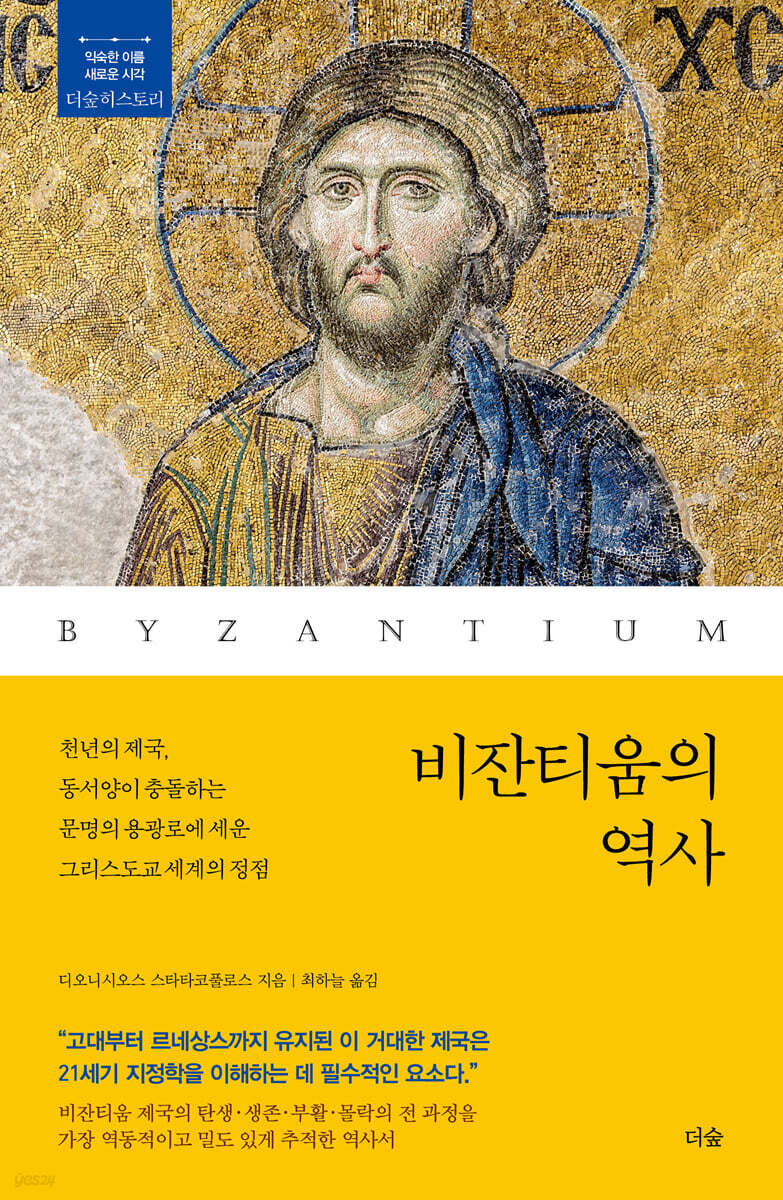 |
Description
Book Introduction
What is Byzantium? Why should we learn about it now?
“This great empire, which lasted from ancient times to the Renaissance,
“It is an essential element in understanding 21st century geopolitics.”
World history is both a valuable discipline for understanding the world today and a treasure trove of fascinating stories. Through various media, including television, YouTube, and podcasts, historical narratives are experiencing an unprecedented heyday.
In this period, a book titled "The History of Byzantium" was published, which covers a grand civilization that played an extremely important role in the flow of world history and created a turning point, yet was overshadowed by the Western European-centered world history, a millennial empire established in the melting pot of civilizations where East and West collided.
Despite its position at the crossroads of East and West for a millennium, the Byzantine Empire is often overlooked in history because the two sides subsequently took different paths.
Moreover, the time and space of the empire were overshadowed by the Western European-centric historical perspective based on modern and contemporary political and economic development.
This book challenges stereotypes about the Byzantine Empire.
The author, who poses controversial questions and is considered an authority on Byzantine history, differs from existing Byzantine histories, which primarily focus on political and military events, by giving equal weight to society, economy, and culture, thereby revealing what the history of this empire, which connected the ancient and modern worlds, means to people today.
The author states this in the preface to the Korean edition:
“What amazes me is how the Byzantine Empire accepted people regardless of their country, language, or faith; how it adapted and survived in the face of great crises; how it kept one foot in antiquity and recreated the books, art, and culture of that time to suit the tastes and sensibilities of the Christian Empire.” The story of the birth, survival, and resurrection of the millennial empire, the pinnacle of the Christian world, and the fall of Constantinople and the subsequent collapse of the empire, which shocked the entire Christian world, is an essential element in understanding the past that continues to this day, as well as in understanding 21st-century geopolitics.
“This great empire, which lasted from ancient times to the Renaissance,
“It is an essential element in understanding 21st century geopolitics.”
World history is both a valuable discipline for understanding the world today and a treasure trove of fascinating stories. Through various media, including television, YouTube, and podcasts, historical narratives are experiencing an unprecedented heyday.
In this period, a book titled "The History of Byzantium" was published, which covers a grand civilization that played an extremely important role in the flow of world history and created a turning point, yet was overshadowed by the Western European-centered world history, a millennial empire established in the melting pot of civilizations where East and West collided.
Despite its position at the crossroads of East and West for a millennium, the Byzantine Empire is often overlooked in history because the two sides subsequently took different paths.
Moreover, the time and space of the empire were overshadowed by the Western European-centric historical perspective based on modern and contemporary political and economic development.
This book challenges stereotypes about the Byzantine Empire.
The author, who poses controversial questions and is considered an authority on Byzantine history, differs from existing Byzantine histories, which primarily focus on political and military events, by giving equal weight to society, economy, and culture, thereby revealing what the history of this empire, which connected the ancient and modern worlds, means to people today.
The author states this in the preface to the Korean edition:
“What amazes me is how the Byzantine Empire accepted people regardless of their country, language, or faith; how it adapted and survived in the face of great crises; how it kept one foot in antiquity and recreated the books, art, and culture of that time to suit the tastes and sensibilities of the Christian Empire.” The story of the birth, survival, and resurrection of the millennial empire, the pinnacle of the Christian world, and the fall of Constantinople and the subsequent collapse of the empire, which shocked the entire Christian world, is an essential element in understanding the past that continues to this day, as well as in understanding 21st-century geopolitics.
- You can preview some of the book's contents.
Preview
index
Preface for Korean Readers
Translator's Note
map
Timeline
Structure of this book
Entering, what is 'Byzantium'?
The Surviving Roman Empire | The Land and Population of the Byzantine Empire | The Crisis of the Third Century and the Rise of Constantine I
Chapter 1: The Birth of the Byzantine Empire (Eastern Roman Empire) (330–491)
The situation after the death of Constantine I│The empire divided into East and West│Early social classes│Social stability and economic expansion│The birth of the Christian empire│The birth of Constantinople, the heart of Byzantium
Chapter 2: Becoming the Master of the Mediterranean (491–602)
Expanding influence through alliances│The era of Justinian, which occupied the greatest territory│Byzantium after Justinian I│Centralization│Division of the elite│Eschatology and Christianity│Cathedral architecture and new forms of culture and art
Chapter 3: The Struggle for Survival (602–717)
The Islamic Empire's Offensive | Strategies for Overcoming Territorial Losses | A Society Under Siege | "God, Help the Romans"
Chapter 4: Spreading the Wings of Resurrection (717–867)
The Light and Shadow of the Iconoclastic Emperors│Institutional Reforms in a Period of Relative Stability│“I am both Emperor and Priest”│A Culture Inspired by Islam│Two Churches in Peril
Chapter 5: The Glory of the Empire Shines Brightly (867–1056)
The Macedonian Dynasty at the height of Byzantium│Byzantium's counterattack│Vast lands and glory│Conflicts between the emperor, patriarch, and pope│Art and ideology for a powerful empire
Chapter 6: Weakness in Strength (1056–1204)
The rise of warlords and the Crusades│The devaluation of coins and economic reconstruction│The acceleration of decentralization│A culture that blossomed between oppression and humanism
Chapter 7: The Legacy of Division Rises to the Surface (1204–1341)
The power struggles of the states that emerged in the Byzantine world│The glory of the Palaiologan dynasty, the last dynasty│The diverse consequences of political fragmentation│The literary revival in the early Palaiologan period
Chapter 8: Moving Toward Downfall (1341–1453)
Missed Opportunities│The Fall of the Byzantine Empire, a Forlorn Empire│A Wealthy Subject in a Poor Nation│The Coexistence of Change and Stagnation
Chapter 9: The Fall of the Millennial Empire and Its Aftermath
The Fall of Constantinople | Traces of Byzantium in Europe | Scholarly Changes Surrounding Byzantine Studies | Byzantium Today
Appendix: Barbarians of the Byzantine World
Nomadic groups│Arab world│Germanic world│Indo-European groups
Further Reading
Acknowledgements
List of images and sources
Search
List of Popes, Patriarchs, Ecumenical Councils, and Emperors
Translator's Note
map
Timeline
Structure of this book
Entering, what is 'Byzantium'?
The Surviving Roman Empire | The Land and Population of the Byzantine Empire | The Crisis of the Third Century and the Rise of Constantine I
Chapter 1: The Birth of the Byzantine Empire (Eastern Roman Empire) (330–491)
The situation after the death of Constantine I│The empire divided into East and West│Early social classes│Social stability and economic expansion│The birth of the Christian empire│The birth of Constantinople, the heart of Byzantium
Chapter 2: Becoming the Master of the Mediterranean (491–602)
Expanding influence through alliances│The era of Justinian, which occupied the greatest territory│Byzantium after Justinian I│Centralization│Division of the elite│Eschatology and Christianity│Cathedral architecture and new forms of culture and art
Chapter 3: The Struggle for Survival (602–717)
The Islamic Empire's Offensive | Strategies for Overcoming Territorial Losses | A Society Under Siege | "God, Help the Romans"
Chapter 4: Spreading the Wings of Resurrection (717–867)
The Light and Shadow of the Iconoclastic Emperors│Institutional Reforms in a Period of Relative Stability│“I am both Emperor and Priest”│A Culture Inspired by Islam│Two Churches in Peril
Chapter 5: The Glory of the Empire Shines Brightly (867–1056)
The Macedonian Dynasty at the height of Byzantium│Byzantium's counterattack│Vast lands and glory│Conflicts between the emperor, patriarch, and pope│Art and ideology for a powerful empire
Chapter 6: Weakness in Strength (1056–1204)
The rise of warlords and the Crusades│The devaluation of coins and economic reconstruction│The acceleration of decentralization│A culture that blossomed between oppression and humanism
Chapter 7: The Legacy of Division Rises to the Surface (1204–1341)
The power struggles of the states that emerged in the Byzantine world│The glory of the Palaiologan dynasty, the last dynasty│The diverse consequences of political fragmentation│The literary revival in the early Palaiologan period
Chapter 8: Moving Toward Downfall (1341–1453)
Missed Opportunities│The Fall of the Byzantine Empire, a Forlorn Empire│A Wealthy Subject in a Poor Nation│The Coexistence of Change and Stagnation
Chapter 9: The Fall of the Millennial Empire and Its Aftermath
The Fall of Constantinople | Traces of Byzantium in Europe | Scholarly Changes Surrounding Byzantine Studies | Byzantium Today
Appendix: Barbarians of the Byzantine World
Nomadic groups│Arab world│Germanic world│Indo-European groups
Further Reading
Acknowledgements
List of images and sources
Search
List of Popes, Patriarchs, Ecumenical Councils, and Emperors
Detailed image

Publisher's Review
The entire process of the birth, survival, revival, and fall of the Byzantine Empire
The most dynamic and densely traced history book
The story begins with the name 'Byzantium'.
Due to the great migration of Germanic peoples and internal divisions, the Roman Empire was divided into the Eastern Roman Empire and the Western Roman Empire in 395 AD, and the Byzantine Empire refers to the Eastern Roman Empire.
Byzantium is one of the most impressive empires in history.
From its capital in Byzantium in 324 until its conquest by the Ottoman Empire in 1453, the Byzantine Empire was a center of literature, art, theology, law, and learning.
Constantine I, the first Christian emperor who declared freedom to Christians; Justinian I, who compiled the 『Collection of Roman Law』, which became the origin of the spirit of modern law; Basil I, who was born the son of a farmer and was illiterate, but became the sole emperor and led the revival with military achievements… … .
The ambitious emperor and the heroes surrounding him endured for a thousand years despite the invasions of foreign nations that coveted the empire.
Byzantium was also a melting pot that brought together all the world's cultures.
Merchants of various races flocked to Byzantium, where a diverse and dynamic culture flourished.
This book vividly portrays the Byzantine Empire, both luxurious and humble, truthful and contradictory.
The Empire's vast and fascinating story unfolds in a friendly, easy-to-read chronological order.
Based on a wealth of historical materials and records, it contains colorful interpretations of many historical figures, and vivid scenes and surprising aspects of politics, religion, economy, society, and culture are revealed one by one.
The author's perspective is cool and objective.
The appendix, "Barbarians in the Byzantine World," not only helps us understand the dynamics of the times surrounding the Byzantine Empire, but also reconnects us with the fragmentary world history we knew.
Additionally, to help domestic readers understand more easily and quickly, the Korean edition includes a list of popes, patriarchs, ecumenical councils, and emperors at the end of the book.
The final chapter, Chapter 9, covers the story from the day after the fall of Constantinople in 1453 to the present day, concluding with the words of the 14th-century scholar and statesman Theodoros Metochitis.
“All empires are born, flourish, decline, and die.”
A scene of a clash of civilizations, where the spirit of all races and nations was in full swing.
The condensed history of the Millennium Empire flows like a short film.
Almost the entire history of Byzantium is vividly unfolded through nine spectacular stories.
In "Introduction," the book begins with the question, "What is Byzantium?" and announces the beginning of the Byzantine Empire through the surviving Roman Empire and the emergence of Constantine I.
Chapter 1 (330–491) begins in 330, when Constantine I declared his final victory over Licinius in Constantinople and became sole emperor of the Roman Empire.
After that, in 395, the Roman Empire was divided into East and West, and in the 4th and 5th centuries, the Roman Empire changed greatly in many ways.
The biggest change among them is Christianization.
With the Edict of Milan in 313, persecution was ended, and Christianity became the religion of the empire, enjoying privileges and culturally transforming Roman life both internally and externally.
Chapter 2 (491-602) unfolds the era of Justinian, when the empire conquered its greatest territory. Through stories about the strengthening of the emperor's power, the differentiation of the elite, the construction of cathedrals such as Hagia Sophia, and new styles of culture and art, we can glimpse the empire that became the master of the Mediterranean.
Chapter 3 (602-717) is a period of overcoming the social unrest caused by the Islamic Empire's offensive and epidemics, and the resource shortage caused by the loss of territory through change and reform.
The numerous wars and epidemics that occurred during this period greatly reduced the population, which in turn led to a significant decrease in agricultural productivity, military manpower, and tax revenue.
Stories of war and plague that transcend time and space provide an opportunity to look back at the present from history.
Chapter 4 (717–867) is a period of revival, and the 8th and 9th centuries were periods of relative stability for the Byzantine Empire, which had endured a long period of defeat.
At this time, the empire improved several institutions, which were important reforms that would last for a long time.
Islam became another stimulus to Byzantine culture during this period.
Chapter 5 (867–1056) covers the Macedonian dynasty, the golden age of Byzantium, the period of imperial glory.
It reached its peak politically and culturally, with vast territorial expansion and the compilation of a large number of books under the patronage of the imperial family.
Chapter 6 (1056–1204) reveals the empire's gradual decline in weakness, with several crusades taking place, decentralization accelerating, and a prosperous economy, but the value of the coin declining.
Meanwhile, the allure of Constantinople became a Byzantine craze, and the cathedrals of the empire's enemies and allies were decorated with mosaics modeled after Byzantine art.
Chapter 7 (1204–1341) covers the period from 1204, when the Crusaders conquered Constantinople.
After 1204, the empire was divided into three states, the Latin Empire, a Crusader state, the Empire of Nicaea founded by the Byzantines, and the Empire of Trebizond, a Greek successor state, which fought for power.
Constantinople, which was taken by the Crusaders in 1204, was recovered by Michael VIII of the Nicaean Empire in 1261.
And this political fragmentation has brought about various social and economic consequences.
Chapter 8 (1341–1453) depicts the fall of the thousand-year empire with the rise of the Ottoman state.
The last century of the Byzantine Empire was a period of gradual economic and physical decline for the nation, but it was also a time of great prosperity for aristocratic entrepreneurs, and the gap between rich and poor widened significantly.
The rise of wealthy subjects in poor countries has led young people to become more interested in commerce than in the pure pursuit of mastering the knowledge of the Greek classics.
Byzantium, which was heading towards collapse, tried to survive by getting help from the Crusaders, even the emperor, but it was eventually destroyed with the fall of Constantinople on May 29, 1453.
Chapter 9 tells the story of the Byzantine Empire, which met its end at the hands of the Ottoman Empire, and the Byzantine world and its people thereafter.
With the fall of Constantinople, the empire was over, but the Byzantine world survived for another two decades until 1475, when Kaffa was captured by the Ottomans, and the abandoned and desolate Constantinople was transformed into the Ottoman capital.
Many Byzantine scholars went to Italy to pursue academic work, work as Greek teachers, and transcribe Greek literature and translate it into Latin.
France became the intellectual center of Europe thanks to its national fund, which brought together historical sources from all periods of the Byzantine Empire, and its royal collection of Byzantine art.
Although Byzantium was destroyed, it still remains with us today by preserving and transmitting its knowledge.
A new perspective on the history of a familiar name
What is 'history as we know it'?
〈The Forest History〉 deals with regions and civilizations whose names are well known but whose temporal and spatial backgrounds and histories are not well known or cannot be known.
The second book in this series, "A History of Byzantium," which introduces a diverse world that is both familiar and unfamiliar in a concise yet profound way, poses the question, "What is the history we know?"
The history we are familiar with is only suitable for the modern and contemporary situation in which Europe led the way in world history, and most of the records are written by them.
The most representative example is the Byzantine Empire, the Eastern Roman Empire.
Now that we can no longer view the world through a biased lens within the dense web of world history, the history of Byzantium, which had to remain on the periphery for a while, will become the beginning of a new perspective on the world.
“The History of Byzantium” is the second story in “The Forest History,” which “looks at the history of familiar names from a new perspective,” following “The History of Babylon.”
The most dynamic and densely traced history book
The story begins with the name 'Byzantium'.
Due to the great migration of Germanic peoples and internal divisions, the Roman Empire was divided into the Eastern Roman Empire and the Western Roman Empire in 395 AD, and the Byzantine Empire refers to the Eastern Roman Empire.
Byzantium is one of the most impressive empires in history.
From its capital in Byzantium in 324 until its conquest by the Ottoman Empire in 1453, the Byzantine Empire was a center of literature, art, theology, law, and learning.
Constantine I, the first Christian emperor who declared freedom to Christians; Justinian I, who compiled the 『Collection of Roman Law』, which became the origin of the spirit of modern law; Basil I, who was born the son of a farmer and was illiterate, but became the sole emperor and led the revival with military achievements… … .
The ambitious emperor and the heroes surrounding him endured for a thousand years despite the invasions of foreign nations that coveted the empire.
Byzantium was also a melting pot that brought together all the world's cultures.
Merchants of various races flocked to Byzantium, where a diverse and dynamic culture flourished.
This book vividly portrays the Byzantine Empire, both luxurious and humble, truthful and contradictory.
The Empire's vast and fascinating story unfolds in a friendly, easy-to-read chronological order.
Based on a wealth of historical materials and records, it contains colorful interpretations of many historical figures, and vivid scenes and surprising aspects of politics, religion, economy, society, and culture are revealed one by one.
The author's perspective is cool and objective.
The appendix, "Barbarians in the Byzantine World," not only helps us understand the dynamics of the times surrounding the Byzantine Empire, but also reconnects us with the fragmentary world history we knew.
Additionally, to help domestic readers understand more easily and quickly, the Korean edition includes a list of popes, patriarchs, ecumenical councils, and emperors at the end of the book.
The final chapter, Chapter 9, covers the story from the day after the fall of Constantinople in 1453 to the present day, concluding with the words of the 14th-century scholar and statesman Theodoros Metochitis.
“All empires are born, flourish, decline, and die.”
A scene of a clash of civilizations, where the spirit of all races and nations was in full swing.
The condensed history of the Millennium Empire flows like a short film.
Almost the entire history of Byzantium is vividly unfolded through nine spectacular stories.
In "Introduction," the book begins with the question, "What is Byzantium?" and announces the beginning of the Byzantine Empire through the surviving Roman Empire and the emergence of Constantine I.
Chapter 1 (330–491) begins in 330, when Constantine I declared his final victory over Licinius in Constantinople and became sole emperor of the Roman Empire.
After that, in 395, the Roman Empire was divided into East and West, and in the 4th and 5th centuries, the Roman Empire changed greatly in many ways.
The biggest change among them is Christianization.
With the Edict of Milan in 313, persecution was ended, and Christianity became the religion of the empire, enjoying privileges and culturally transforming Roman life both internally and externally.
Chapter 2 (491-602) unfolds the era of Justinian, when the empire conquered its greatest territory. Through stories about the strengthening of the emperor's power, the differentiation of the elite, the construction of cathedrals such as Hagia Sophia, and new styles of culture and art, we can glimpse the empire that became the master of the Mediterranean.
Chapter 3 (602-717) is a period of overcoming the social unrest caused by the Islamic Empire's offensive and epidemics, and the resource shortage caused by the loss of territory through change and reform.
The numerous wars and epidemics that occurred during this period greatly reduced the population, which in turn led to a significant decrease in agricultural productivity, military manpower, and tax revenue.
Stories of war and plague that transcend time and space provide an opportunity to look back at the present from history.
Chapter 4 (717–867) is a period of revival, and the 8th and 9th centuries were periods of relative stability for the Byzantine Empire, which had endured a long period of defeat.
At this time, the empire improved several institutions, which were important reforms that would last for a long time.
Islam became another stimulus to Byzantine culture during this period.
Chapter 5 (867–1056) covers the Macedonian dynasty, the golden age of Byzantium, the period of imperial glory.
It reached its peak politically and culturally, with vast territorial expansion and the compilation of a large number of books under the patronage of the imperial family.
Chapter 6 (1056–1204) reveals the empire's gradual decline in weakness, with several crusades taking place, decentralization accelerating, and a prosperous economy, but the value of the coin declining.
Meanwhile, the allure of Constantinople became a Byzantine craze, and the cathedrals of the empire's enemies and allies were decorated with mosaics modeled after Byzantine art.
Chapter 7 (1204–1341) covers the period from 1204, when the Crusaders conquered Constantinople.
After 1204, the empire was divided into three states, the Latin Empire, a Crusader state, the Empire of Nicaea founded by the Byzantines, and the Empire of Trebizond, a Greek successor state, which fought for power.
Constantinople, which was taken by the Crusaders in 1204, was recovered by Michael VIII of the Nicaean Empire in 1261.
And this political fragmentation has brought about various social and economic consequences.
Chapter 8 (1341–1453) depicts the fall of the thousand-year empire with the rise of the Ottoman state.
The last century of the Byzantine Empire was a period of gradual economic and physical decline for the nation, but it was also a time of great prosperity for aristocratic entrepreneurs, and the gap between rich and poor widened significantly.
The rise of wealthy subjects in poor countries has led young people to become more interested in commerce than in the pure pursuit of mastering the knowledge of the Greek classics.
Byzantium, which was heading towards collapse, tried to survive by getting help from the Crusaders, even the emperor, but it was eventually destroyed with the fall of Constantinople on May 29, 1453.
Chapter 9 tells the story of the Byzantine Empire, which met its end at the hands of the Ottoman Empire, and the Byzantine world and its people thereafter.
With the fall of Constantinople, the empire was over, but the Byzantine world survived for another two decades until 1475, when Kaffa was captured by the Ottomans, and the abandoned and desolate Constantinople was transformed into the Ottoman capital.
Many Byzantine scholars went to Italy to pursue academic work, work as Greek teachers, and transcribe Greek literature and translate it into Latin.
France became the intellectual center of Europe thanks to its national fund, which brought together historical sources from all periods of the Byzantine Empire, and its royal collection of Byzantine art.
Although Byzantium was destroyed, it still remains with us today by preserving and transmitting its knowledge.
A new perspective on the history of a familiar name
What is 'history as we know it'?
〈The Forest History〉 deals with regions and civilizations whose names are well known but whose temporal and spatial backgrounds and histories are not well known or cannot be known.
The second book in this series, "A History of Byzantium," which introduces a diverse world that is both familiar and unfamiliar in a concise yet profound way, poses the question, "What is the history we know?"
The history we are familiar with is only suitable for the modern and contemporary situation in which Europe led the way in world history, and most of the records are written by them.
The most representative example is the Byzantine Empire, the Eastern Roman Empire.
Now that we can no longer view the world through a biased lens within the dense web of world history, the history of Byzantium, which had to remain on the periphery for a while, will become the beginning of a new perspective on the world.
“The History of Byzantium” is the second story in “The Forest History,” which “looks at the history of familiar names from a new perspective,” following “The History of Babylon.”
GOODS SPECIFICS
- Date of issue: February 20, 2023
- Page count, weight, size: 410 pages | 664g | 145*222*24mm
- ISBN13: 9791192444383
- ISBN10: 1192444388
You may also like
카테고리
korean


korean

![GQ KOREA Mark (Monthly): December [2025]](http://librairie.coreenne.fr/cdn/shop/files/8ef265dbbfbf186523ed75ba7319009d.jpg?v=1765340328&width=3840)


