

The shell blooms are gone
 |
Description
Book Introduction
Frog in a well? Forget the boring study abroad experience!
18 Modern Confucian Scholars Reflect on the Times
This book is a guide to modern Korean Confucianism, aiming to rediscover Joseon Confucianism.
In an effort to move beyond the old framework of 'Western modernity and traditional Confucianism,' I sought out problematic sites of 'modern Confucianism.'
I selected impressive writings by eighteen Confucian intellectuals, translated them into modern Korean, and wrote a review of them from the perspective of a historian.
This is because the subtitle of this book, which combines a selection of literary works and commentary, is ‘Exploring the History of Modern Confucianism in Korea.’
18 Modern Confucian Scholars Reflect on the Times
This book is a guide to modern Korean Confucianism, aiming to rediscover Joseon Confucianism.
In an effort to move beyond the old framework of 'Western modernity and traditional Confucianism,' I sought out problematic sites of 'modern Confucianism.'
I selected impressive writings by eighteen Confucian intellectuals, translated them into modern Korean, and wrote a review of them from the perspective of a historian.
This is because the subtitle of this book, which combines a selection of literary works and commentary, is ‘Exploring the History of Modern Confucianism in Korea.’
- You can preview some of the book's contents.
Preview
index
Author's Note
Part 1 The World
Chapter 1: The Truth and Facts of a World of Enlightenment
1.
The shell blossoms are gone (Jeong Il-woo, “Blossoms” in “Yulheonjip”)
2.
I am a water polo player, resisting the world (Yoo Young-seon, "Hyungokjip" (Unofficial History Questions and Answers))
Chapter 2: Desire for Social Change
3.
Questions about the Donghak Peasant Revolution (Lee Gwan-hu, Woojae Anthology, "Gap-o Questions and Answers")
4.
Farmers are the future of scholars (Gonghakwon, Dobong Yujip, 〈Theory of the People〉)
Chapter 3: Establishment of a new cultural system
5.
The Secret Garden of the Korean Empire (An Jong-deok, Seokhajip, 〈Restored to the Secret Garden of Changdeokgung Palace, the Original Pagoda of the Incarnation of the Lotus Flower〉)
6.
Introducing the Kaesong Museum (Son Bong-sang, "Museum Notes," Sosanjip)
Part 2 History
Chapter 4: Memories of the Late Joseon Dynasty
1.
Reflecting on the final years of Joseon (Yang Jae-gyeong, "History of the State" in "Hee-am Yugo")
2.
The Will of Heaven That Made the History of Liberation (Kim Jong-ga, Ipheonjip, Seodonggamgangmokhu)
Chapter 5: The Aftermath of the Chinese Revolution
3.
Monarchy or Republic? (Im Han-ju, Seongheonjip, 〈Soksanjungmundap〉)
4.
The Xinhai Revolution, the Taisho Coup, and Emperor Gojong's secret orders (Im Byeong-chan, "Dunheon Yugo", "Gwan-gyeon")
Chapter 6: The Korean Independence Movement
5.
West Gando and Hong Kong, Lim Gyeong-eop of the Korean Liberation Army (Park Eun-sik, "The Story of General Han Kyo-je")
6.
The theory of Emperor Gojong's poisoning and the independence movement of the Confucian scholars (Song Ju-heon, Samhojaejip, 〈Mugisabyeonsihyoseop〉, 〈History of the Joseon Confucian Independence Movement〉)
Part 3 Academics
Chapter 7: Recognition of Chinese and Western Books
1.
Reflecting on World History (Kwon Sang-gyu, Inamjip, "Postscript to Seo Tae-seo Shin Sa-hu")
2.
Expanding theology to aid in the study of theology (Lee Byung-hun, "Jeju-Gukjin Saiga Baekssi Shinguhakseolhu" in "Lee Byung-hun Complete Works")
Chapter 8: Awareness of Overseas Studies
3.
Confucianism is illuminated by the light from the sea (Song Gi-sik, Haechangmunjip, Haechangseol)
4.
What is Studying Abroad in Japan? (Jang Hwa-sik, Bokamjip, "Retreating from the East")
Chapter 9: Confucianism: Tradition and Modernity
5.
Is the Way of Confucianism True Virtue or Great Virtue? (Kim Yun-sik, Unyangjip, “Donhwaron”)
6.
Criticizing fake new theology (Lee Geon-bang, Nangokjongo, 〈Principles, Part 2〉)
References
Source of the illustration
Search
Part 1 The World
Chapter 1: The Truth and Facts of a World of Enlightenment
1.
The shell blossoms are gone (Jeong Il-woo, “Blossoms” in “Yulheonjip”)
2.
I am a water polo player, resisting the world (Yoo Young-seon, "Hyungokjip" (Unofficial History Questions and Answers))
Chapter 2: Desire for Social Change
3.
Questions about the Donghak Peasant Revolution (Lee Gwan-hu, Woojae Anthology, "Gap-o Questions and Answers")
4.
Farmers are the future of scholars (Gonghakwon, Dobong Yujip, 〈Theory of the People〉)
Chapter 3: Establishment of a new cultural system
5.
The Secret Garden of the Korean Empire (An Jong-deok, Seokhajip, 〈Restored to the Secret Garden of Changdeokgung Palace, the Original Pagoda of the Incarnation of the Lotus Flower〉)
6.
Introducing the Kaesong Museum (Son Bong-sang, "Museum Notes," Sosanjip)
Part 2 History
Chapter 4: Memories of the Late Joseon Dynasty
1.
Reflecting on the final years of Joseon (Yang Jae-gyeong, "History of the State" in "Hee-am Yugo")
2.
The Will of Heaven That Made the History of Liberation (Kim Jong-ga, Ipheonjip, Seodonggamgangmokhu)
Chapter 5: The Aftermath of the Chinese Revolution
3.
Monarchy or Republic? (Im Han-ju, Seongheonjip, 〈Soksanjungmundap〉)
4.
The Xinhai Revolution, the Taisho Coup, and Emperor Gojong's secret orders (Im Byeong-chan, "Dunheon Yugo", "Gwan-gyeon")
Chapter 6: The Korean Independence Movement
5.
West Gando and Hong Kong, Lim Gyeong-eop of the Korean Liberation Army (Park Eun-sik, "The Story of General Han Kyo-je")
6.
The theory of Emperor Gojong's poisoning and the independence movement of the Confucian scholars (Song Ju-heon, Samhojaejip, 〈Mugisabyeonsihyoseop〉, 〈History of the Joseon Confucian Independence Movement〉)
Part 3 Academics
Chapter 7: Recognition of Chinese and Western Books
1.
Reflecting on World History (Kwon Sang-gyu, Inamjip, "Postscript to Seo Tae-seo Shin Sa-hu")
2.
Expanding theology to aid in the study of theology (Lee Byung-hun, "Jeju-Gukjin Saiga Baekssi Shinguhakseolhu" in "Lee Byung-hun Complete Works")
Chapter 8: Awareness of Overseas Studies
3.
Confucianism is illuminated by the light from the sea (Song Gi-sik, Haechangmunjip, Haechangseol)
4.
What is Studying Abroad in Japan? (Jang Hwa-sik, Bokamjip, "Retreating from the East")
Chapter 9: Confucianism: Tradition and Modernity
5.
Is the Way of Confucianism True Virtue or Great Virtue? (Kim Yun-sik, Unyangjip, “Donhwaron”)
6.
Criticizing fake new theology (Lee Geon-bang, Nangokjongo, 〈Principles, Part 2〉)
References
Source of the illustration
Search
Into the book
Enlightenment refers to ‘opening things and making things become things’ and ‘changing the people and making them into people’.
If we strive steadfastly to refinement and order, eliminate complex and outdated politics, consistently pursue convenient and simple practices, consider the past and present, and strive to develop knowledge by taking advantage of the current situation, and advance toward civilization day by day, this is truly enlightenment.
--- p.18
What matters more than how you live is what you live for.
Just because we live in a world of migration, doesn't mean that the humane principles we must uphold as humans are being abandoned.
More important than the world's "nature" is the "natural" of heaven.
--- p.32
'Conservatism' as an uncompromising and resistant movement emerged in modern times.
In Japan, the old-fashioned samurai group that started the Southwestern War in 1877 and resisted the Meiji government were called 'sugu', and in Joseon, the scholars who opposed or resisted the government's 'enlightenment' after the Gabo Reform in 1894 were called 'sugu'.
… … ‘Water polo’ was one of the various forms of resistance against a changing world.
--- p.33
They are mainly motivated by the desire to monopolize profits, so they never know how to love their fellow countrymen again. They use their power to take away everything they can.
A weak person has no place to move his hands or feet and no one to appeal to, so the resentment he harbors inside has accumulated for a long time. Then, when one person cries out loudly and is heard from a thousand miles away, he comes up with a plan to save all life and relieve the resentment that had filled his heart.
So, even without making plans, we gathered together and planned together, and that's how we got to this point.
From this, isn't it true that the reason for the chaos in the world today is because of the rich and noble?
--- p.38
There are three people in this world.
One is the people who are always in favor, another is the people who are in resentment, and another is the people who are in power.
People generally obey the ruling order of the state and live like rebels, but if harsh exploitation continues, they will resent the state like commoners, and if a change occurs in the country, they will resist the state like commoners.
When Homin raises the flag of resistance, Wonmin will always rally together, and Hangmin will also have no choice but to join in, seeking a way to survive.
--- p.41
Punishment and honor are the great robbers of state affairs, so it is not impossible to control people through criminal law, but if this is made a rule, more and more people will be caught.
It's not wrong to choose someone based on honor, but doing so constantly only exacerbates the desire for favor.
--- p.47
The rear garden of Changdeokgung Palace became a tourist attraction for foreigners during the reign of Emperor Gojong of the Korean Empire.
Gojong, who resided at Gyeongungung Palace, permitted officials from diplomatic missions in Korea and foreigners sponsored by them to tour Gyeongbokgung Palace and Changdeokgung Palace.
When diplomatic missions of each country sent an official document, the Royal Ceremonial Office of the Korean Empire issued a ticket, and visitors could view the palace by bringing this ticket and giving it to the palace guard.
In 1903, the rear garden of Changdeokgung Palace was renovated on a large scale and newly renovated, and a secret garden was established to manage this area within the Ministry of the Interior.
--- p.63
The world today has no outside world, and all nations are competing to become wealthy and civilized. Therefore, they must fill their interiors with museums and books, and display their grandeur on the outside with tanks, battleships, and guns. Tanks, battleships, and guns can be made at any time, but antiques and treasures cannot be collected without devoting time to research and collecting.
How much more so would it be collected and brought from all over the world, when it is not found in one country? This is not only because the uniqueness of silk treasures is valued, but also because it can be used to glean insights into local customs, politics, utensil usage, and etiquette.
--- p.67
Now, they have dismantled the battlefields of the former kings, abandoned the words of the sages, destroyed traditional clothing, and called it 'freedom' and 'independence,' but in reality, they have used barbarism to change civilization, and have demoted humans to beasts.
Even when issuing a single government decree or taking a single step, the Japanese had to be consulted. This was called 'Great Reform' and 'Great Enlightenment,' but it was only a pretext for destroying the nation.
--- p.84
Oh my.
‘Independence’ changed to ‘enlightenment’, ‘enlightenment’ changed to ‘protection’, and ‘protection’ changed to ‘merger’.
We could not negotiate with foreign embassies outside, nor fight a final battle inside. We gave away three thousand ri of land and five hundred years of ancestral rites overnight on a piece of paper—something unheard of in the history of the world.
--- p.85
There are many liberations in history.
The event in which Queen Inhyeon was restored to the throne through the Gapsul Hwan-guk was called liberation.
The event in which King Yeongjo restored his family's rule after the Im-o Incident was also called liberation.
Originally, the liberation was the event in which Emperor Guangwu of the Later Han Dynasty destroyed Wang Mang's Xin Dynasty and succeeded the Former Han Dynasty.
Similarly, the event in which King Seonjo of Joseon almost lost his country during the Imjin War but was able to recover it was also liberation.
In the 20th century, liberation was combined with the East Asian national movement, leading to the emergence of the Liberation Association, the Vietnam Liberation Association, and the Korean Liberation Association.
--- p.92
In the case of the Republic of Korea, the people's rights and political parties conduct politics through public opinion.
It seems appropriate to share the likes and dislikes of the people, as the government cannot dare to arbitrarily do what the people do not want.
But the Min-dang is not necessarily all gentlemen, and the government is not necessarily all petty people, so how can we believe everything the Min-dang says and how can we reject everything the government says? … … Moreover, the government is a high-ranking official with a heavy salary, and is incomparable to the Min-dang. If it must wait for the people’s opinion to govern, what use is this government?
--- p.105
At the time of the establishment of the Provisional Government of the Republic of Korea, Emperor Yunghui, the last emperor of the Korean Empire, was still alive in the country.
The fact that a republic was established overseas despite the presence of an emperor.
At the New Year's celebration in 1920, Ahn Chang-ho said:
“There is an emperor in our country today.
“In the past, there was only one emperor in Korea, but now all 20 million people are emperors.”
--- p.111
As Cho Geung-seop (1873-1933) pointed out, in a situation where the basic virtues of the politically active class of the republic were not established, the possibility of a candidate like Confucius or Mencius being elected president was low, and political chaos was likely to accelerate amid fierce conflict over the presidential position.
Lee Byeong-heon (1870-1940) criticized that the Chinese people under the republic were engaged in fierce partisan strife and did not know what a nation was, and that anyone who spoke of a republic or freedom in such a situation was either an adult or a fool.
--- p.113
Although Joseon's Confucian scholars did not participate as 33 national representatives in the March 1st Declaration of Independence, they were active as representatives in various anti-Japanese movements around the same time.
On March 5th, after the banwuje (ceremony for Emperor Gojong), Song Ju-heon waited for Emperor Sunjong's royal carriage to pass through Cheongnyangni and delivered a surprise petition requesting Emperor Sunjong's reinstatement.
Fifteen representatives of the Confucian scholars, including Yoo Jun-geun, signed this petition.
On the same day, Eodaeseon also attempted to give a speech in front of the crowd in the name of Yulim representative.
On this day, the heavens and earth shook with the sound of petitions being read, cries being wailed, and shouts of "Manse" in front of the Cheongnyangni Royal Palace.
--- p.152
Japan set the wedding date for Prince Yeongchin and Masako as January 25, 1919, and sent them on their honeymoon to Paris, France, in order to promote the strong relationship between the royal families of Korea and Japan before the eyes of the world powers who were holding the peace conference.
Japan's plans were thwarted by Emperor Gojong's sudden death on January 21st.
--- p.155
The March 2nd article in the Joseon underground newspaper, Joseon Independent Newspaper, reported that seven traitors, including Yi Wan-yong and Yun Deok-yeong, attempted to send a document to the Paris Peace Conference stating that Joseon had volunteered for annexation, stamped their own seals and forced Emperor Gojong to do the same. However, Emperor Gojong refused to permit this, and was poisoned to death that night.
--- p.155
Originally, D-day was March 3rd, the day when Emperor Gojong's state funeral was scheduled.
The plan was to rise up simultaneously in various places, but in Seoul, they would declare independence and protest, and if Japan brutally suppressed them, they would enter Deoksugung Palace, where Emperor Gojong's spirit was, raise the Taegeukgi at Daehanmun Gate, and fight a final, desperate battle while shouting "Manse!"
It was a form of struggle optimized for the time and space of mourning for Emperor Gojong.
Park Eun-sik's "Bleeding History of the Korean Independence Movement" reports this fact, writing, "The Emperor Sacrificed Himself for the Independence Movement" (title of Chapter 4, Part 2).
--- p.156
In 1898, the Imperial College of Korea created 11 essay test questions and sent out instructions to public elementary schools in South Pyongan Province.
The students were to read the “Tae Seo Shin Sa Nam Yo” and submit their written essays to the department within three months.
… … First problem.
'Why is the Dharma Kingdom in such chaos, and what kind of hero is the first Napa Lun?' The second question.
'How did Britain rise to become a world-class nation, and how do its political pros and cons compare to those of our country?'
--- p.165
Broadens theology to help students learn.
This article by Gilbert Reed was concise and to the point.
In China, the ancient 'Silhak' disappeared because of Emperor Qin Shi Huang and Emperor Wu of Han, but Taeseo developed the 'Silhak' that disappeared in China, namely the study of technical skills and art, and so it should be accepted as a universal study common to all nations.
Western learning is 'practical learning'
--- p.179
If you live in a locked country, the sea is a wall.
If you open the country, the sea is a window.
When the sea is a wall, the scholar who reads exalts what he sees and learns what he hears.
Because of this, there are no other thoughts that can be reflected other than one's own.
However, they are concerned that other theories will invade, so they use the exclusion of outsiders as a justification.
When the sea is open, the scholar who reads the texts compromises the past and present and synthesizes the East and the West.
For this reason, they discard their own shortcomings and willingly adopt the strengths of others to do good.
And yet, he is concerned that his own doctrine may be biased, so he is careful to accept it humbly.
--- p.182
Looking at the words of people who were renowned for their theology and were known for their will, they say, 'In our country's Hunmongseo, the words of Mencius are quoted as lessons, but Mencius was from China, so if you teach children with this, their senses will pass and they will worship people, and they will develop a slave nature and lose their patriotic spirit.'
The Great Way exists in the world, and is not divided into east and west, nor is there any gap between the center and the outside.
To respect that person is to respect the way.
If Taoism existed in the West, I would truly worship it.
Moreover, isn't China a sacred territory and close to us?
--- p.212
Lee Sang-su (1820-1882) of the late Joseon Dynasty also criticized the Joseon Dynasty's social trend of indiscriminately quoting sages to embellish selfish desires.
In a situation where those who love women use the excuse of "like women" in the Great Learning, and those who indulge in misfortune use the excuse of "like tricks," he criticized the secularization of Confucianism, in which the original elegant language of Confucianism is degraded into vulgar colloquialism.
--- p.218
The problem with false theology was academic colonialism, which placed the center of learning in the West, blindly believed in it as universal, and discriminated against Chinese and Korean learning.
For example, the reason why the false theological argument that Mencius was a Chinese person and that using Mencius in educating students would foster a slavish nature and cause them to lose their patriotism is wrong is because, even from a theoretical perspective, there is no difference between the East and the West in the way of the world, so there is no reason to deny that Mencius can also be a classic that reaches universal learning.
If we strive steadfastly to refinement and order, eliminate complex and outdated politics, consistently pursue convenient and simple practices, consider the past and present, and strive to develop knowledge by taking advantage of the current situation, and advance toward civilization day by day, this is truly enlightenment.
--- p.18
What matters more than how you live is what you live for.
Just because we live in a world of migration, doesn't mean that the humane principles we must uphold as humans are being abandoned.
More important than the world's "nature" is the "natural" of heaven.
--- p.32
'Conservatism' as an uncompromising and resistant movement emerged in modern times.
In Japan, the old-fashioned samurai group that started the Southwestern War in 1877 and resisted the Meiji government were called 'sugu', and in Joseon, the scholars who opposed or resisted the government's 'enlightenment' after the Gabo Reform in 1894 were called 'sugu'.
… … ‘Water polo’ was one of the various forms of resistance against a changing world.
--- p.33
They are mainly motivated by the desire to monopolize profits, so they never know how to love their fellow countrymen again. They use their power to take away everything they can.
A weak person has no place to move his hands or feet and no one to appeal to, so the resentment he harbors inside has accumulated for a long time. Then, when one person cries out loudly and is heard from a thousand miles away, he comes up with a plan to save all life and relieve the resentment that had filled his heart.
So, even without making plans, we gathered together and planned together, and that's how we got to this point.
From this, isn't it true that the reason for the chaos in the world today is because of the rich and noble?
--- p.38
There are three people in this world.
One is the people who are always in favor, another is the people who are in resentment, and another is the people who are in power.
People generally obey the ruling order of the state and live like rebels, but if harsh exploitation continues, they will resent the state like commoners, and if a change occurs in the country, they will resist the state like commoners.
When Homin raises the flag of resistance, Wonmin will always rally together, and Hangmin will also have no choice but to join in, seeking a way to survive.
--- p.41
Punishment and honor are the great robbers of state affairs, so it is not impossible to control people through criminal law, but if this is made a rule, more and more people will be caught.
It's not wrong to choose someone based on honor, but doing so constantly only exacerbates the desire for favor.
--- p.47
The rear garden of Changdeokgung Palace became a tourist attraction for foreigners during the reign of Emperor Gojong of the Korean Empire.
Gojong, who resided at Gyeongungung Palace, permitted officials from diplomatic missions in Korea and foreigners sponsored by them to tour Gyeongbokgung Palace and Changdeokgung Palace.
When diplomatic missions of each country sent an official document, the Royal Ceremonial Office of the Korean Empire issued a ticket, and visitors could view the palace by bringing this ticket and giving it to the palace guard.
In 1903, the rear garden of Changdeokgung Palace was renovated on a large scale and newly renovated, and a secret garden was established to manage this area within the Ministry of the Interior.
--- p.63
The world today has no outside world, and all nations are competing to become wealthy and civilized. Therefore, they must fill their interiors with museums and books, and display their grandeur on the outside with tanks, battleships, and guns. Tanks, battleships, and guns can be made at any time, but antiques and treasures cannot be collected without devoting time to research and collecting.
How much more so would it be collected and brought from all over the world, when it is not found in one country? This is not only because the uniqueness of silk treasures is valued, but also because it can be used to glean insights into local customs, politics, utensil usage, and etiquette.
--- p.67
Now, they have dismantled the battlefields of the former kings, abandoned the words of the sages, destroyed traditional clothing, and called it 'freedom' and 'independence,' but in reality, they have used barbarism to change civilization, and have demoted humans to beasts.
Even when issuing a single government decree or taking a single step, the Japanese had to be consulted. This was called 'Great Reform' and 'Great Enlightenment,' but it was only a pretext for destroying the nation.
--- p.84
Oh my.
‘Independence’ changed to ‘enlightenment’, ‘enlightenment’ changed to ‘protection’, and ‘protection’ changed to ‘merger’.
We could not negotiate with foreign embassies outside, nor fight a final battle inside. We gave away three thousand ri of land and five hundred years of ancestral rites overnight on a piece of paper—something unheard of in the history of the world.
--- p.85
There are many liberations in history.
The event in which Queen Inhyeon was restored to the throne through the Gapsul Hwan-guk was called liberation.
The event in which King Yeongjo restored his family's rule after the Im-o Incident was also called liberation.
Originally, the liberation was the event in which Emperor Guangwu of the Later Han Dynasty destroyed Wang Mang's Xin Dynasty and succeeded the Former Han Dynasty.
Similarly, the event in which King Seonjo of Joseon almost lost his country during the Imjin War but was able to recover it was also liberation.
In the 20th century, liberation was combined with the East Asian national movement, leading to the emergence of the Liberation Association, the Vietnam Liberation Association, and the Korean Liberation Association.
--- p.92
In the case of the Republic of Korea, the people's rights and political parties conduct politics through public opinion.
It seems appropriate to share the likes and dislikes of the people, as the government cannot dare to arbitrarily do what the people do not want.
But the Min-dang is not necessarily all gentlemen, and the government is not necessarily all petty people, so how can we believe everything the Min-dang says and how can we reject everything the government says? … … Moreover, the government is a high-ranking official with a heavy salary, and is incomparable to the Min-dang. If it must wait for the people’s opinion to govern, what use is this government?
--- p.105
At the time of the establishment of the Provisional Government of the Republic of Korea, Emperor Yunghui, the last emperor of the Korean Empire, was still alive in the country.
The fact that a republic was established overseas despite the presence of an emperor.
At the New Year's celebration in 1920, Ahn Chang-ho said:
“There is an emperor in our country today.
“In the past, there was only one emperor in Korea, but now all 20 million people are emperors.”
--- p.111
As Cho Geung-seop (1873-1933) pointed out, in a situation where the basic virtues of the politically active class of the republic were not established, the possibility of a candidate like Confucius or Mencius being elected president was low, and political chaos was likely to accelerate amid fierce conflict over the presidential position.
Lee Byeong-heon (1870-1940) criticized that the Chinese people under the republic were engaged in fierce partisan strife and did not know what a nation was, and that anyone who spoke of a republic or freedom in such a situation was either an adult or a fool.
--- p.113
Although Joseon's Confucian scholars did not participate as 33 national representatives in the March 1st Declaration of Independence, they were active as representatives in various anti-Japanese movements around the same time.
On March 5th, after the banwuje (ceremony for Emperor Gojong), Song Ju-heon waited for Emperor Sunjong's royal carriage to pass through Cheongnyangni and delivered a surprise petition requesting Emperor Sunjong's reinstatement.
Fifteen representatives of the Confucian scholars, including Yoo Jun-geun, signed this petition.
On the same day, Eodaeseon also attempted to give a speech in front of the crowd in the name of Yulim representative.
On this day, the heavens and earth shook with the sound of petitions being read, cries being wailed, and shouts of "Manse" in front of the Cheongnyangni Royal Palace.
--- p.152
Japan set the wedding date for Prince Yeongchin and Masako as January 25, 1919, and sent them on their honeymoon to Paris, France, in order to promote the strong relationship between the royal families of Korea and Japan before the eyes of the world powers who were holding the peace conference.
Japan's plans were thwarted by Emperor Gojong's sudden death on January 21st.
--- p.155
The March 2nd article in the Joseon underground newspaper, Joseon Independent Newspaper, reported that seven traitors, including Yi Wan-yong and Yun Deok-yeong, attempted to send a document to the Paris Peace Conference stating that Joseon had volunteered for annexation, stamped their own seals and forced Emperor Gojong to do the same. However, Emperor Gojong refused to permit this, and was poisoned to death that night.
--- p.155
Originally, D-day was March 3rd, the day when Emperor Gojong's state funeral was scheduled.
The plan was to rise up simultaneously in various places, but in Seoul, they would declare independence and protest, and if Japan brutally suppressed them, they would enter Deoksugung Palace, where Emperor Gojong's spirit was, raise the Taegeukgi at Daehanmun Gate, and fight a final, desperate battle while shouting "Manse!"
It was a form of struggle optimized for the time and space of mourning for Emperor Gojong.
Park Eun-sik's "Bleeding History of the Korean Independence Movement" reports this fact, writing, "The Emperor Sacrificed Himself for the Independence Movement" (title of Chapter 4, Part 2).
--- p.156
In 1898, the Imperial College of Korea created 11 essay test questions and sent out instructions to public elementary schools in South Pyongan Province.
The students were to read the “Tae Seo Shin Sa Nam Yo” and submit their written essays to the department within three months.
… … First problem.
'Why is the Dharma Kingdom in such chaos, and what kind of hero is the first Napa Lun?' The second question.
'How did Britain rise to become a world-class nation, and how do its political pros and cons compare to those of our country?'
--- p.165
Broadens theology to help students learn.
This article by Gilbert Reed was concise and to the point.
In China, the ancient 'Silhak' disappeared because of Emperor Qin Shi Huang and Emperor Wu of Han, but Taeseo developed the 'Silhak' that disappeared in China, namely the study of technical skills and art, and so it should be accepted as a universal study common to all nations.
Western learning is 'practical learning'
--- p.179
If you live in a locked country, the sea is a wall.
If you open the country, the sea is a window.
When the sea is a wall, the scholar who reads exalts what he sees and learns what he hears.
Because of this, there are no other thoughts that can be reflected other than one's own.
However, they are concerned that other theories will invade, so they use the exclusion of outsiders as a justification.
When the sea is open, the scholar who reads the texts compromises the past and present and synthesizes the East and the West.
For this reason, they discard their own shortcomings and willingly adopt the strengths of others to do good.
And yet, he is concerned that his own doctrine may be biased, so he is careful to accept it humbly.
--- p.182
Looking at the words of people who were renowned for their theology and were known for their will, they say, 'In our country's Hunmongseo, the words of Mencius are quoted as lessons, but Mencius was from China, so if you teach children with this, their senses will pass and they will worship people, and they will develop a slave nature and lose their patriotic spirit.'
The Great Way exists in the world, and is not divided into east and west, nor is there any gap between the center and the outside.
To respect that person is to respect the way.
If Taoism existed in the West, I would truly worship it.
Moreover, isn't China a sacred territory and close to us?
--- p.212
Lee Sang-su (1820-1882) of the late Joseon Dynasty also criticized the Joseon Dynasty's social trend of indiscriminately quoting sages to embellish selfish desires.
In a situation where those who love women use the excuse of "like women" in the Great Learning, and those who indulge in misfortune use the excuse of "like tricks," he criticized the secularization of Confucianism, in which the original elegant language of Confucianism is degraded into vulgar colloquialism.
--- p.218
The problem with false theology was academic colonialism, which placed the center of learning in the West, blindly believed in it as universal, and discriminated against Chinese and Korean learning.
For example, the reason why the false theological argument that Mencius was a Chinese person and that using Mencius in educating students would foster a slavish nature and cause them to lose their patriotism is wrong is because, even from a theoretical perspective, there is no difference between the East and the West in the way of the world, so there is no reason to deny that Mencius can also be a classic that reaches universal learning.
--- p.220
Publisher's Review
A Close Look at the Development of Modern Confucianism in Joseon
The image of Joseon Confucianism that is familiar to Korean society today is that of a pre-modern, frozen time that has not yet crossed the threshold of modernity.
Is that all?
It is also pointed out that the failure to read the flow of the times was one of the reasons for the fall of Joseon.
The reason is not difficult to understand.
This is because the dichotomous perception framework of enlightenment or conservatism, new learning or old learning, Western modernity or traditional Confucianism has been rampant in Korean society for a long time.
The reality is different.
Joseon Confucian scholars had a more intense sense of problem than anyone else, pondered the times, and offered sincere suggestions.
They discussed various topics, including what true civilization means, how the Western powers became wealthy, and the meaning of a republic.
Thus, it helps readers encounter the reality of Joseon Confucianism.
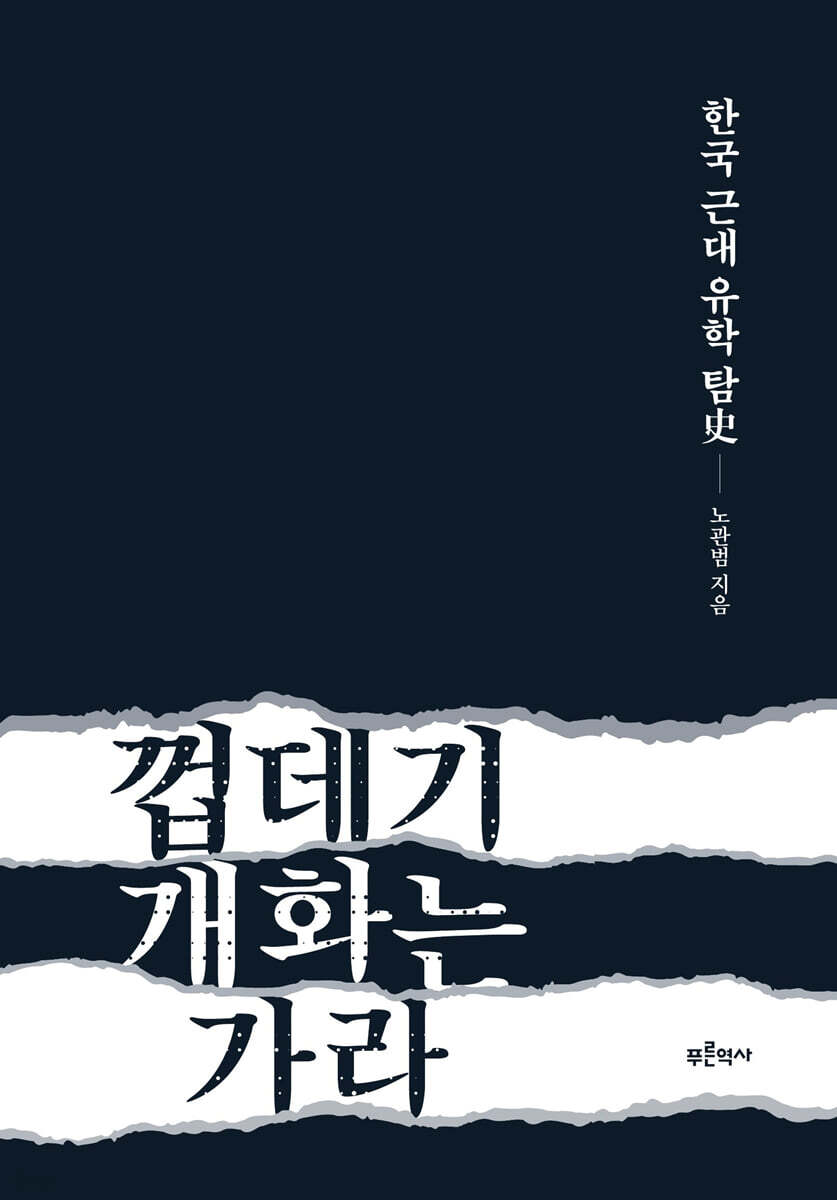
The title of the book, borrowed from the editorial “The Great Harm of Shell-like Enlightenment” in the July 6, 1906 edition of the Hwangseong Newspaper and the famous poem “Shell, Go Away” by poet Shin Dong-yeop, encapsulates the author’s intention.
Pondering the path to true enlightenment and prosperity
The articles in the book are broadly divided into three parts: world, history, and scholarship.
Part 1 contains six articles criticizing and suggesting the current state of affairs in the world, which is creating a sloppy enlightenment without knowing the great path of enlightenment.
These are writings that make us think about questions such as when did the self-reflection of intellectuals begin in modern Korea, when did the concept of noblesse oblige begin in modern Korea, what does the so-called 'conservatism' mean, and what true enlightenment is.
This is why, after the Gabo Reforms, Korean society strove for enlightenment, reforming institutions and establishing schools, all while shouting, "Enlightenment! Enlightenment!" Why did the country fall into ruin? It was because of the empty-sounding enlightenment, the superficial enlightenment that dressed up and pretended to be enlightened with half-baked knowledge" (p. 23), a self-deprecating lament.
On the other hand, regarding the fall of the Confucian state of Joseon, it is said that “there were many noblemen, but few scholars.
… … It was a case of holding the person responsible for not fulfilling his duties.
… … Now, we can see a glimpse of self-reflection in the phrase “Now the four classes of scholars, farmers, artisans, and merchants have gone and the four classes of merchants, artisans, and farmers have come” (page 55).
Looking back on history and seeking a path to national salvation
Part 2, History, contains six articles that show the historical perception of modern Confucian scholars.
A passage from the “History of the Late Joseon Dynasty” written by Yang Jae-gyeong, a Confucian scholar from Honam in 1911, states, “A rebellion does not happen overnight. Just as solid ice forms when you step on frost, it must have a beginning.” If this is the case, and “If our king and his subjects had repented their wrongdoings in the year of Im-o, the rebellion of the year of Gap-sin (1884) would not have occurred. If they had repented their wrongdoings in the year of Gap-sin, the rebellions of the years of Gap-o (1894) and Eul-mi (1895), the rebellions of the years of Eul-sa (1905) and Byeong-o (1906) would not have occurred, and the downfall of the nation in the year of Gyeong-sul (1910) would not have occurred” (p. 81).
In addition, the author's commentary introduces historical facts such as the plotting of a volunteer army in 1913, immediately following the Taisho Coup in Japan, following a secret order from Emperor Gojong, and the fact that Japan attempted to show off the friendship between the Korean and Japanese royal families by sending Prince Yeongchin and his wife on their honeymoon to Paris, France, where the Peace Conference was being held, but this was canceled due to Emperor Gojong's sudden death.
Seeking harmony between Confucian tradition and Western learning
Part 3, Academics, contains six essays that capture the struggles of Confucian scholars to keep up with the changing times.
It is difficult to find writings that mention the fact that Kwon Sang-gyu, who read 『Tae Seo Shin Sa』, which deals with 19th-century Western history, said, “Only after learning from the West for the benefit of the people and focusing on assimilation for education can we seek prosperity and talk about permanence,” or that Andong Confucian scholar Song Gi-sik mentioned Rousseau’s folk medicine theory, Darwin’s theory of evolution, Franklin’s theory of electricity, and even Marx’s theory of science.
You can encounter the serious exploration of Confucian scholars regarding academics, such as the critique of world history by modern Korean Confucian scholars, the intellectual project of writing a general theory of world studies in modern Korea, and the plan of a modern Korean Confucian scholar to write a general theory of world studies.
Lee Geon-bang's question, "If we reject the East and worship the West without even asking whether it is suitable or not, we are turning our backs on our roots and deceiving the saints. What relationship does this have with our country?" (p. 214), still resonates today.
The author, Professor Noh Gwan-beom (Seoul National University Kyujanggak), has previously conducted a study of classical readings and historical commentary on Korean classical Chinese literature from the 18th to 20th centuries in his previous work, 『Gojeon Tongbyeon』.
This book has the unique characteristic of focusing on modern Korean Confucianism while continuing the methods of its predecessor.
The author hopes that this book will become a small seed that will help Joseon Confucianism be recognized not as a past that was frustrated at the threshold of modernity, but as a present that grapples with the problems of modernity.
The image of Joseon Confucianism that is familiar to Korean society today is that of a pre-modern, frozen time that has not yet crossed the threshold of modernity.
Is that all?
It is also pointed out that the failure to read the flow of the times was one of the reasons for the fall of Joseon.
The reason is not difficult to understand.
This is because the dichotomous perception framework of enlightenment or conservatism, new learning or old learning, Western modernity or traditional Confucianism has been rampant in Korean society for a long time.
The reality is different.
Joseon Confucian scholars had a more intense sense of problem than anyone else, pondered the times, and offered sincere suggestions.
They discussed various topics, including what true civilization means, how the Western powers became wealthy, and the meaning of a republic.
Thus, it helps readers encounter the reality of Joseon Confucianism.
The title of the book, borrowed from the editorial “The Great Harm of Shell-like Enlightenment” in the July 6, 1906 edition of the Hwangseong Newspaper and the famous poem “Shell, Go Away” by poet Shin Dong-yeop, encapsulates the author’s intention.
Pondering the path to true enlightenment and prosperity
The articles in the book are broadly divided into three parts: world, history, and scholarship.
Part 1 contains six articles criticizing and suggesting the current state of affairs in the world, which is creating a sloppy enlightenment without knowing the great path of enlightenment.
These are writings that make us think about questions such as when did the self-reflection of intellectuals begin in modern Korea, when did the concept of noblesse oblige begin in modern Korea, what does the so-called 'conservatism' mean, and what true enlightenment is.
This is why, after the Gabo Reforms, Korean society strove for enlightenment, reforming institutions and establishing schools, all while shouting, "Enlightenment! Enlightenment!" Why did the country fall into ruin? It was because of the empty-sounding enlightenment, the superficial enlightenment that dressed up and pretended to be enlightened with half-baked knowledge" (p. 23), a self-deprecating lament.
On the other hand, regarding the fall of the Confucian state of Joseon, it is said that “there were many noblemen, but few scholars.
… … It was a case of holding the person responsible for not fulfilling his duties.
… … Now, we can see a glimpse of self-reflection in the phrase “Now the four classes of scholars, farmers, artisans, and merchants have gone and the four classes of merchants, artisans, and farmers have come” (page 55).
Looking back on history and seeking a path to national salvation
Part 2, History, contains six articles that show the historical perception of modern Confucian scholars.
A passage from the “History of the Late Joseon Dynasty” written by Yang Jae-gyeong, a Confucian scholar from Honam in 1911, states, “A rebellion does not happen overnight. Just as solid ice forms when you step on frost, it must have a beginning.” If this is the case, and “If our king and his subjects had repented their wrongdoings in the year of Im-o, the rebellion of the year of Gap-sin (1884) would not have occurred. If they had repented their wrongdoings in the year of Gap-sin, the rebellions of the years of Gap-o (1894) and Eul-mi (1895), the rebellions of the years of Eul-sa (1905) and Byeong-o (1906) would not have occurred, and the downfall of the nation in the year of Gyeong-sul (1910) would not have occurred” (p. 81).
In addition, the author's commentary introduces historical facts such as the plotting of a volunteer army in 1913, immediately following the Taisho Coup in Japan, following a secret order from Emperor Gojong, and the fact that Japan attempted to show off the friendship between the Korean and Japanese royal families by sending Prince Yeongchin and his wife on their honeymoon to Paris, France, where the Peace Conference was being held, but this was canceled due to Emperor Gojong's sudden death.
Seeking harmony between Confucian tradition and Western learning
Part 3, Academics, contains six essays that capture the struggles of Confucian scholars to keep up with the changing times.
It is difficult to find writings that mention the fact that Kwon Sang-gyu, who read 『Tae Seo Shin Sa』, which deals with 19th-century Western history, said, “Only after learning from the West for the benefit of the people and focusing on assimilation for education can we seek prosperity and talk about permanence,” or that Andong Confucian scholar Song Gi-sik mentioned Rousseau’s folk medicine theory, Darwin’s theory of evolution, Franklin’s theory of electricity, and even Marx’s theory of science.
You can encounter the serious exploration of Confucian scholars regarding academics, such as the critique of world history by modern Korean Confucian scholars, the intellectual project of writing a general theory of world studies in modern Korea, and the plan of a modern Korean Confucian scholar to write a general theory of world studies.
Lee Geon-bang's question, "If we reject the East and worship the West without even asking whether it is suitable or not, we are turning our backs on our roots and deceiving the saints. What relationship does this have with our country?" (p. 214), still resonates today.
The author, Professor Noh Gwan-beom (Seoul National University Kyujanggak), has previously conducted a study of classical readings and historical commentary on Korean classical Chinese literature from the 18th to 20th centuries in his previous work, 『Gojeon Tongbyeon』.
This book has the unique characteristic of focusing on modern Korean Confucianism while continuing the methods of its predecessor.
The author hopes that this book will become a small seed that will help Joseon Confucianism be recognized not as a past that was frustrated at the threshold of modernity, but as a present that grapples with the problems of modernity.
GOODS SPECIFICS
- Publication date: April 9, 2022
- Page count, weight, size: 244 pages | 338g | 133*189*20mm
- ISBN13: 9791156122173
- ISBN10: 1156122171
You may also like
카테고리
korean


korean

![GQ KOREA Mark (Monthly): December [2025]](http://librairie.coreenne.fr/cdn/shop/files/8ef265dbbfbf186523ed75ba7319009d.jpg?v=1765340328&width=3840)


