

Hanbija
 |
Description
Book Introduction
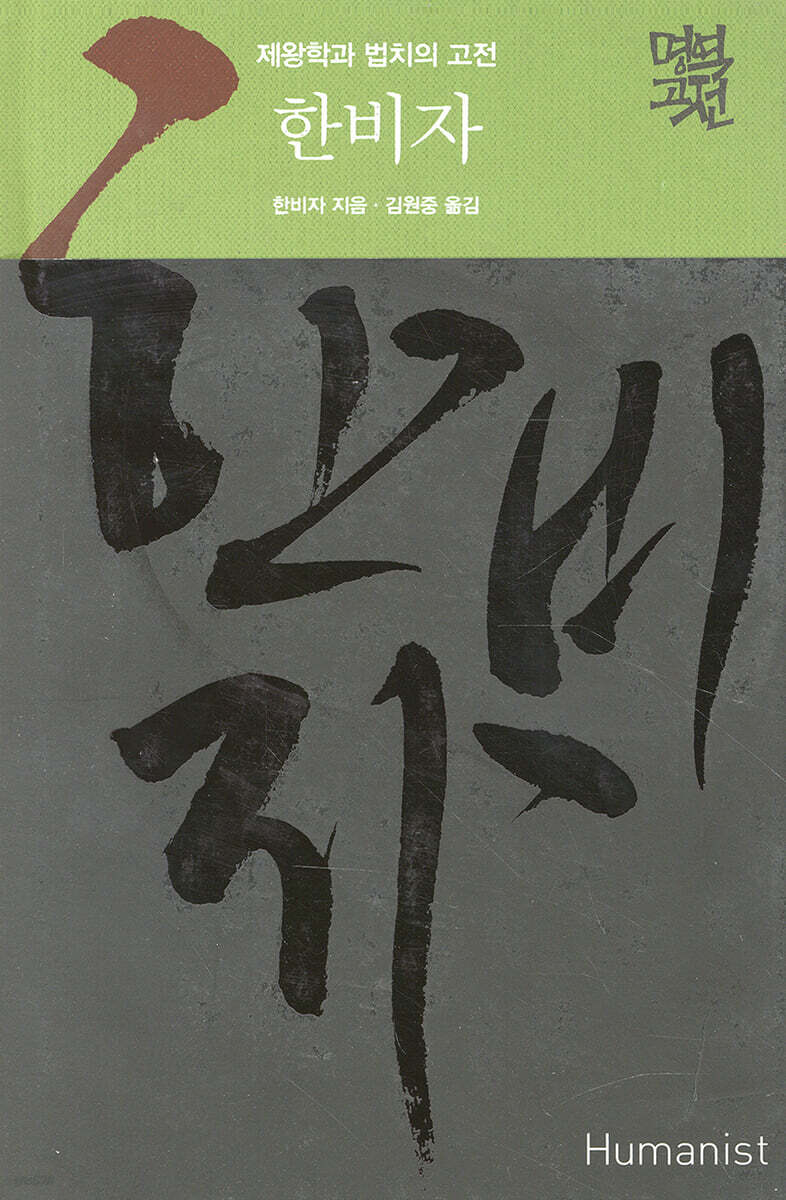
Everything a monarch in troubled times must know about governance, Han Feizi The complete translation of "Han Feizi" has been published, translated by Professor Kim Won-joong, the world's first translator of "Records of the Grand Historian"! Professor Won-Joong Kim (Department of Chinese Language Education, Dankook University), a master of classical translation who was the first individual in the world to translate Sima Qian's Records of the Grand Historian, has published a complete translation of Han Feizi after 17 years. Except for the 20 or so previously published volumes that were subject to controversy over forgery, all previously published volumes have been completely translated this time, and the existing translations have also been further refined. This complete translation is based on Cheon Chi-yoo's "Han Feizi Jiao Shi" and consulted Wang Seon-sin's "Han Feizi Jihai" and other editions, and, when necessary, exchanged views with various editions. During the chaotic Spring and Autumn Period and the Warring States Period, the Han Feizi, which presented the emperors with a solution for calming the troubled times, establishing a country, and ruling for a long time, was read by Qin Shi Huang and was widely read as a classic on Chinese governance. In terms of ideology, it has also been considered a classic that summarizes Legalist thought. The governing principles presented by Han Feizi are based on three things: law, wine, and taxation. When a monarch must rule a country, the most important basis for his reliance is 'law', and the personnel policy of using his subjects well to solidify the monarch's position is 'sul'. The sole and exclusive authority that only the monarch possesses is explained as 'se'. The position that one should not blindly trust people and that the monarch's position should be solidified through systems and political techniques may on the one hand be a form of monarchical dictatorship, but from a modern perspective, it reveals the true face of the rule of law politics, which is thoroughly based on the law. Above all, Han Feizi's voice, which experienced the cruelty of the realistic competitive system and spent his life searching for very specific and practical ways for a monarch to rule properly, is still very suggestive even today. |
- You can preview some of the book's contents.
Preview
index
introduction
Commentary: The Holy Book of Princely Theory and the Study of Imperialism, Han Feizi
Volume 1
Part 1: Encountering the King of Qin for the First Time
*Why the storehouses and granaries are empty *Three reasons why the path of the overlord was missed *Why the country that should have perished did not perish *If the feudal lords from all directions do not come to pay their respects
Part 2: Preserving the Han Dynasty
*Qin intends to attack Han while leaving Zhao alone *Blessings and calamities *Why regret is useless *Li Si's rebuttal to Han Fei's writing *Another writing containing Li Si's rebuttal
Part 3: Difficulty in Speaking
*It's not that it's difficult, it's that you're reluctant. *When the persuasion of the wise fails.
Part 4: Aesin [Favored Subject]
*Those who put the monarch in danger *How a wise monarch prepares for the unexpected
Part 5: The Way of the Monarch
*Why a monarch should keep his true feelings to himself *Five obstacles that threaten a monarch *How to achieve a thorough performance-based system
Volume 2
Chapter 6: There is a Rule for Governing a Country
*A nation becomes strong when it upholds the law. *Weigh people on the scales of law and save them. *Uphold the public law and abandon private tricks. *The law does not flatter the noble.
Part 7: Two Handles
*Why a tiger can subdue a dog *Why Sohu punished both Jeon-gwan and Jeon-i *Why a monarch must abandon what he likes and what he dislikes
Chapter 8: Relief [Yanggak: Outline]
*A ruler must be quiet and empty to make his subjects work *Six ways for a ruler and his subjects to live in harmony *Listen to your subjects' opinions and keep your mouth shut *When a ruler loses his god-like authority, his subjects, like tigers, will follow him *Why you shouldn't put wolves and sheep in the same pen
Part 9: The Eight Cults [Eight Cunning Plots and Methods]
*Cunning acts committed by subjects and how to prevent them *Trends that destroy a country
Volume 3
Chapter 10: Ten Mistakes
*Ten mistakes of a falling monarch *The difference between small loyalty and great loyalty *The difference between small profit and great profit *The reason why King Ying of Chu starved to death *Gong Ping, who ruined himself by loving only music *Ji Baek-yao, who brought about his downfall because he was greedy and eccentric *King Rong, who neglected state affairs because he was obsessed with dancers and music *Jeon Seong-ja, who enjoyed a trip and ended up in danger *The reason why Duke Huan of Qi could not even collect his body after death *If you rely on foreign powers, you will lose your territory *The reason why Suk Cheon's body was hung up and Yi Bu-gi survived
Volume 4
Part 11: Lonely Anger [Lonely Anger]
*Let a person skilled in the arts govern the country *Four kinds of assistants *Why the country cannot hope to continue peacefully *To ensure that competent people and clean officials remain in the court and government *The monarch's great mistake, the subject's great negligence
Chapter 12: The Difficulties of Evangelism
*Work must be done secretly, otherwise it will fail.
Part 13: The Story of Mr. Hwa
*Hwa-shi, who was punished by having both feet cut off *The reason the world is in chaos and the king does not appear
Chapter 14: A Minister Who Coerces and Murders His Ruler with Cunning Schemes
*How a subject manipulates the monarch as he pleases. *A wise monarch can see the world from the depths of the palace. *A wise person never reveals himself. *Chunsingun, who was deceived by the words of his concubine and killed his wife. *You can become a tyrant only when you rule with severe punishment. *Why a leper pities the king.
Volume 5
Chapter 15: Signs of Destruction
*If the power of the monarch is light and the power of the subject is heavy, the country will fall.
Chapter 16: The Three Principles a Monarch Must Observe
*Three things a monarch must guard against *Three threats a monarch must prepare for
Chapter 17: Defend the Interior
*Making carts and coffins is also done for profit. *If you lend the monarch's authority, your position will change.
Chapter 18: Nammyeon [Southern Side: The Monarch]
*A monarch must hold his subjects accountable for their advice and silence. *It is difficult to change the old because it is familiar.
Chapter 19: Meals [飾邪: Beware of Evil]
*If you rely on fortune telling and superstition, the country will perish. *Why the six states of Shandong were weakened and fell. *Get rid of it, it's alcohol. *The difference between public and private duty.
Volume 6
Chapter 20: The Sea Route [Interpreting the Lao-tzu]
*The highest virtue is not virtue *In, Ui, and Ye *The reason why the beads of Huashi and the pearls of Suhou are beautiful *A black ox with white horns *Disaster is where fortune awaits, and fortune is where misfortune hides *The four things that Lao Tzu speaks of *The meaning of governing the people and serving Heaven *When governing a great country, laws should not be changed frequently *A ruler who has mastered the Way has no enemies *There is no greater disaster than greed *Humans from birth to death *When reason is established, handling matters becomes clear *The Great Way is the right way
Volume 7
Chapter 21: Metaphors of Lao-tzu
*Beautiful leather invites disaster *A country is a monarch's overweight *Power is like a pond *Beware of small signs *Nip off the buds to avoid later trouble *Observe the subtle signs *The meaning of shame *A farmer who offers unprocessed jade *A person who burns books and dances *A person who makes leaves out of ivory for a monarch *A large vessel is made late *A person who does not even know the prick on his cheek *A king who flaps his wings after three years *Cannot see his own eyebrows *A person who gains weight after winning a war
Chapter 22: The Forest of Stories, Part 1
*Wu Guang does not receive the world *Will he be blessed or a wanderer? *Confucius does not hold office *King Hui fails to establish an emperor *Huan Gong does not go to the rescue of Jing *Wu Zixu is captured and then released *Jing Feng tries to flee to Yue *Greedy Zhi Bo demands land *The Chu army stops marching *Chus's reinforcements do not arrive in Song *Even if you lend a way, it must seem inevitable *A big snake and a small snake leave a dry pond *Guest or host? *Trying to appoint both Gongjung and Gongsuk *Jeol gets drunk and loses the world *Using the wisdom of an old horse and an ant *The fate of the one who drank the elixir of life from the king of Chu *If you close one eye when meeting the monarch *Water from afar cannot put out a nearby fire *How to get rid of someone you hate *There are others who become prime ministers *Two people who achieved merit but were suspected, and committed crimes but were trusted *The inner thoughts of Zeng Zongzi, a sword expert *The reason why Gija was afraid when Zhou made ivory chopsticks *Making a small country submit to frighten a large country *Gija refuses, claiming he does not know, because he is drunk *A person from Lu tries to move to Yue *Huizi's advice to manage his surroundings well *Wu Qi leaves Lu for Jin *Shipsi Mi stops cutting wood *Two maids at the inn where Yang Zhu stays *A father who teaches his married daughter to be driven out *Lu Dan After a successful campaign, he is about to leave in a hurry. *The reason for looking at people in the same field
Volume 8
Chapter 23: The Forest of Stories, Part 2
*If you lock a monkey in a cage, it will become like a pig *Literature meets Zengzi *A bird with a heavy head and a crooked tail *The reason for catching eels and beating silkworms *Baek Luo teaches the method of appraising the Thousand-Li Horse *The reason for making the nose large and the eyes small *The reason for knowing both the mind of the monarch and the state of affairs *What Yang Zi said to Ji Zi, who was about to meet the monarch of Song *What he said to his younger brother, who was about to beat a dog *The reason why a mother locks the room and avoids her young child *The limits of wealth *How a wealthy merchant, Gam-sik, makes money *The story of a man who reported the envious *What an old man said to Confucius *Xu You, who abandoned the world, and the house owner who hid his leather hat *The reason these three fought *A bug with two mouths on one body *Conduct is like painting a palace and washing dishes *The reason Duke Huan killed Confucius Gui *I am not your brother *The neighbor of a wicked man sells his house and moves away *Zixu is killed *The reason for avoiding someone who sent gifts twice *Obtaining power in two places at the same time *How to continue to be respected and occupy a high position *Guan Zhong also waits for Bao Shu's help to become a prime minister *A word from someone who escaped death's door *Losing the country because of a large bell *Offering 500 li of land as a bribe *Defeat the Wu army exhausted from marching *The Marquis of Wei summons the kings of Han and Zhao to pay tribute *I also value trust *The story of Confucius Gu Gu of Han *Stabilizing the Dingguo Army with three words from a guest *Bringing the younger brother of the king of Chu back from Jin *A word from Wu Zixu to He Lu *The same words can be different depending on the person they are spoken to
Chapter 24: Practice [Observing Behavior]
*He who wears leather on his waist, he who wears a bow *The three sure principles of the world
Part 25: Safety and Danger
*How to make a country peaceful, how to put it in danger *The medical art of Bian Que, the advice of Wu Zixu *The standard for distinguishing the safety of a country
Chapter 26: How to Protect the Country
*Protecting the country by keeping the pillow high *Keeping the edicts in check makes the world fair *Keeping the law close and using talented people well is the perfect way to protect the country
Chapter 27: Employing Talented People
*To use people *Rewards that can be received, punishments that can be avoided *If the monarch does not want to be isolated *Do not admire the wise men of old in matters of the near world
Chapter 28: Merit and Fame
*Four Ways a Monarch Achieves Merit *Why King Yao and King Shun Achieved Merit
Chapter 29: The Essentials of Politics
*Don't blow your hair and try to find small flaws *Your superiors should be like the sky
Volume 9
Chapter 30: The Seven Methods of Internal Storage
*Gyeong: Seven Ways to Lead Subjects
*Biography 1: Refer to and observe the words of various ministers.
*Tale 2: Those who are guilty must be punished.
*Tale 3: Give rewards and praise
*Tale 4: Listen to each one
*Tale 5: Use a plan
*Tale 6: Ask as if you don't know
*Tale 7: Say the opposite
Volume 10
Chapter 31: The Six Minutes of the Internal Storage
*Gyeonggyeong: Things a monarch must be careful about
*Tale 1: Do not hand over power to your subjects.
*Tale 2: The interests of the king and his subjects are different.
*Tale 3: Take advantage of ambiguity
*Tale 4: Examine conflicting understandings
*Tale 5: Examine the forces
*Tale 6: Make the promotion of officials clear.
Volume 11
Chapter 32: The Six Dharma Techniques of the External Storage
*Sutra: Six things not to forget when governing by law
*Tale 1: Examine the words of praise.
*Legend 2: Aim for practical utility.
*Tale 3: Do not imitate the previous kings, but look after the affairs of the country.
*Tale 4: Treat the person accordingly.
*Tale 5: Leading by example should also be appropriate.
*Tale 6: Keep a small faith
Volume 12
Chapter 33: Theory of External Storage, Part 33: Six Rules
*Gyeonggyeong: Six Rules for Good Governance
*Tale 1: The principle of reward and punishment
*Tale 2: Rely on alcohol, not on faith.
*Biography 3: Etiquette between a monarch and his subjects
*Tale 4: What should be prohibited and what should be considered beneficial
*Tale 5: If a monarch does not want to be isolated,
*Tale 6: When the authority of the court falls
Volume 13
Chapter 34: The Three Principles of External Storage
*Gyeong: Three principles for governing subjects
*Tale 1: Cut off the sly sprouts
*Tale 2: The monarch is a target that invites conflicts of interest.
*Tale 3: The reason why drinking is not allowed
Volume 14
Chapter 35: The Five Ways of Exterior Storage
*Gyeonggyeong: Five principles of reward and punishment and methods of governance
*Tale 1: The monarch and his subjects should not reward and punish each other simultaneously.
*Tale 2: The country is governed only when the law is properly enforced.
*Tale 3: Do not try to take foreign or ancient things as examples.
*Tale 4: Master the Core
*Biography 5: How a monarch achieves success
Volume 15
Chapter 36: The Difficult Times [Difficult Times: The Use and Control of Power 1]
*The reason why Duke Wen gave a reward to Yongjie rather than Gu Fan *Whether Yongjie's answer was appropriate or not for Duke Wen's question *The story of the spear and shield *The three ministers that Guan Zhong asked Duke Huan to get rid of as he was dying *When is it wrong to give a reward *Is it the way of a monarch or the etiquette of a minister? *The reason why Duke Huan does not know etiquette *The story of Ji Xianzi *The three conditions that Guan Zhong requested of Duke Huan *Should two people be appointed or only one?
Chapter 37: Difficulty 2: The Use and Control of Power 2
*What Anzi saw and what Jinggong did not see *What happened after the drunken Duke Huan lost his coffin *Why Confucius thought King Wen was wise *Whether it was the ability of the subject or the ability of the ruler *Why Duke Huan was a foolish ruler *Why he stopped reporting accounts *Was the ruler incompetent or were the soldiers exhausted?
Volume 16
Chapter 38: Nansam [Nansam: Rewards and Punishments 1]
*Why woodworking is strange *Why a monarch's heart is not two-minded *Three riddles that Duke Huan could not solve *Politics is about choosing wise ministers *How did the great man know that? *The king is excessive in judging the world *Why a monarch's eyes are blinded *A monarch's great affairs are law or wine
Chapter 39: The Four Difficulties [Rewards and Punishments 2]
*If you overturn righteousness and go against virtue, *If a family has a lot of money, its children will not be kind. *If you know what to hate, you will be in danger if you hire a virtuous person without adding wisdom.
Volume 17
Chapter 40: Troubled Times [Difficult Times: Making Power a Subject of Controversy]
*When the clouds clear and the fog clears, dragons and snakes become like earthworms and ants. *When Wang Liang commands a horse, he can travel a thousand miles in a day. *The paradox of the spear and shield. *Why today's charioteers are better than Wang Liang of old.
Part 41: Questions and Answers and Debates
*If the ruler is not bright, there will be controversy.
Chapter 42: Asking the Field [Questioning the Field]
*Will a wise person be treated with courtesy by the monarch without having to follow the lower position? *What do you think is dangerous to yourself and dangerous to your body?
Chapter 43: The Law of the Righteous
*Law and wine, the tools of the emperor *Problems that arise when the monarch fails to control law and wine *Law and wine are not perfect either
Chapter 44: Doubt [Establishing a Doubt]
*First, refrain from evil thoughts, then refrain from speaking *The six ministers who ruined the country *The reason why twelve wise men cannot be appointed *The reason why six ministers cannot be appointed *The reason why nine ministers cannot be recognized *Fifteen ministers, the advisers of the overlord *Twelve flattering ministers *Ministers appointed without regard for social status *The reason why it is the greatest shame to hand over the country while making the people whole *The five adulteries, what should be destroyed and what should not be destroyed
Chapter 45: The Treachery [The Treachery: A Contradictory Command]
*Three laws of politics *Governance between a monarch and his subjects is bound to be out of sync *The fundamental principle of governance and chaos *The means by which a monarch governs is punishment *The reason why monarchs are humbled and their ministers are respected *The reason why monarchs cannot overcome their subjects
Volume 18
Chapter 46: Six Opposites
*The Six Types of Rebellion *A Mother's Thick Love and a Father's Thin Love *You Don't Fall on a Mountain, But You'll Fall in an Anthill *Why Vain and Outdated Learning Isn't a Topic of Discussion
Chapter 47: Eight Hypotheses
*Eight types of people who harm the monarch *If a monarch appoints people without the skills and entrusts them with tasks, he invites chaos *What can and cannot be accomplished *Law is a means of controlling work, and work is a means of naming achievements *Both the kind and the violent are those who ruin the country *The difference between a noble subject and a weighty subject
Chapter 48: The Eightfold Path [The Eightfold Path: The Eightfold Path]
*Follow your emotions *The way of the monarch *Raise a rebellion *Establish the way *The reason why both the name and reality must be present *Speak with reference to *Listen to the law *Practice the way
Volume 19
Chapter 49: Five Kinds of Insects
*A farmer waiting for a rabbit that died with its neck broken by a stump *Why the people did not fight in the past, but now they do *A policy to cope with the changing times *When things are different, preparations must also change *Why a monarch should not shed tears while enforcing the law *Why a parent's love alone can never teach a child *Why the people become more and more confused *Why the world becomes more and more chaotic *A wise monarch strengthens his art, and does not admire those who are trusted *When there are too many people who talk about farming and too few who hold the plow, the country becomes chaotic *If your sleeves are long, you can dance well, and if you have a lot of money, you can do business well *If you do not get rid of the five worms
Chapter 50: Distinct Schools of Thought
*Two schools of thought a wise ruler must reject *Are Mohist funerals frugal and Confucian funerals extravagant? *Should taxes be collected from the rich and given to the poor? *Whose side should a ruler take, the tillers or the scholars? *Performance or ability? *If you rely on the people to be good on their own without relying on rewards and punishments, *The beauty of Mao Zhang and Xi Shi does not add to my countenance. *Do not expect to please the hearts of the people.
Volume 20
Chapter 51: Loyalty and Filial Piety
*Why you should not put the law above the virtuous *Why it is different from the world's evaluation *Why you cannot command the people and lose money *You cannot become a loser or a prince through alliances and collusion
Chapter 52: The Heart of a Monarch
*Protect the monarch's claws and fangs like a tiger or a leopard. *Why those who have mastered the art of sorcery are in danger. *Why wise and intelligent people do not offer advice.
Edict No. 53 [Strict Order]
*You will become rich if you stop fighting and do not go on expeditions. *Should you make punishments heavier or give fewer rewards?
Chapter 54: The Depth of Heart [The Law of the People's Heart]
*The law is the foundation of being a king, and punishment is the thread of love. *To be a king, you must close the door and block out selfishness.
Part 55: The Establishment and Classification of Rewards and Punishments
*You can only move the people by relying on punishment and reward. *The reason for implementing the system of collective punishment. *Stop talking and leave it to the law.
References
Search
Commentary: The Holy Book of Princely Theory and the Study of Imperialism, Han Feizi
Volume 1
Part 1: Encountering the King of Qin for the First Time
*Why the storehouses and granaries are empty *Three reasons why the path of the overlord was missed *Why the country that should have perished did not perish *If the feudal lords from all directions do not come to pay their respects
Part 2: Preserving the Han Dynasty
*Qin intends to attack Han while leaving Zhao alone *Blessings and calamities *Why regret is useless *Li Si's rebuttal to Han Fei's writing *Another writing containing Li Si's rebuttal
Part 3: Difficulty in Speaking
*It's not that it's difficult, it's that you're reluctant. *When the persuasion of the wise fails.
Part 4: Aesin [Favored Subject]
*Those who put the monarch in danger *How a wise monarch prepares for the unexpected
Part 5: The Way of the Monarch
*Why a monarch should keep his true feelings to himself *Five obstacles that threaten a monarch *How to achieve a thorough performance-based system
Volume 2
Chapter 6: There is a Rule for Governing a Country
*A nation becomes strong when it upholds the law. *Weigh people on the scales of law and save them. *Uphold the public law and abandon private tricks. *The law does not flatter the noble.
Part 7: Two Handles
*Why a tiger can subdue a dog *Why Sohu punished both Jeon-gwan and Jeon-i *Why a monarch must abandon what he likes and what he dislikes
Chapter 8: Relief [Yanggak: Outline]
*A ruler must be quiet and empty to make his subjects work *Six ways for a ruler and his subjects to live in harmony *Listen to your subjects' opinions and keep your mouth shut *When a ruler loses his god-like authority, his subjects, like tigers, will follow him *Why you shouldn't put wolves and sheep in the same pen
Part 9: The Eight Cults [Eight Cunning Plots and Methods]
*Cunning acts committed by subjects and how to prevent them *Trends that destroy a country
Volume 3
Chapter 10: Ten Mistakes
*Ten mistakes of a falling monarch *The difference between small loyalty and great loyalty *The difference between small profit and great profit *The reason why King Ying of Chu starved to death *Gong Ping, who ruined himself by loving only music *Ji Baek-yao, who brought about his downfall because he was greedy and eccentric *King Rong, who neglected state affairs because he was obsessed with dancers and music *Jeon Seong-ja, who enjoyed a trip and ended up in danger *The reason why Duke Huan of Qi could not even collect his body after death *If you rely on foreign powers, you will lose your territory *The reason why Suk Cheon's body was hung up and Yi Bu-gi survived
Volume 4
Part 11: Lonely Anger [Lonely Anger]
*Let a person skilled in the arts govern the country *Four kinds of assistants *Why the country cannot hope to continue peacefully *To ensure that competent people and clean officials remain in the court and government *The monarch's great mistake, the subject's great negligence
Chapter 12: The Difficulties of Evangelism
*Work must be done secretly, otherwise it will fail.
Part 13: The Story of Mr. Hwa
*Hwa-shi, who was punished by having both feet cut off *The reason the world is in chaos and the king does not appear
Chapter 14: A Minister Who Coerces and Murders His Ruler with Cunning Schemes
*How a subject manipulates the monarch as he pleases. *A wise monarch can see the world from the depths of the palace. *A wise person never reveals himself. *Chunsingun, who was deceived by the words of his concubine and killed his wife. *You can become a tyrant only when you rule with severe punishment. *Why a leper pities the king.
Volume 5
Chapter 15: Signs of Destruction
*If the power of the monarch is light and the power of the subject is heavy, the country will fall.
Chapter 16: The Three Principles a Monarch Must Observe
*Three things a monarch must guard against *Three threats a monarch must prepare for
Chapter 17: Defend the Interior
*Making carts and coffins is also done for profit. *If you lend the monarch's authority, your position will change.
Chapter 18: Nammyeon [Southern Side: The Monarch]
*A monarch must hold his subjects accountable for their advice and silence. *It is difficult to change the old because it is familiar.
Chapter 19: Meals [飾邪: Beware of Evil]
*If you rely on fortune telling and superstition, the country will perish. *Why the six states of Shandong were weakened and fell. *Get rid of it, it's alcohol. *The difference between public and private duty.
Volume 6
Chapter 20: The Sea Route [Interpreting the Lao-tzu]
*The highest virtue is not virtue *In, Ui, and Ye *The reason why the beads of Huashi and the pearls of Suhou are beautiful *A black ox with white horns *Disaster is where fortune awaits, and fortune is where misfortune hides *The four things that Lao Tzu speaks of *The meaning of governing the people and serving Heaven *When governing a great country, laws should not be changed frequently *A ruler who has mastered the Way has no enemies *There is no greater disaster than greed *Humans from birth to death *When reason is established, handling matters becomes clear *The Great Way is the right way
Volume 7
Chapter 21: Metaphors of Lao-tzu
*Beautiful leather invites disaster *A country is a monarch's overweight *Power is like a pond *Beware of small signs *Nip off the buds to avoid later trouble *Observe the subtle signs *The meaning of shame *A farmer who offers unprocessed jade *A person who burns books and dances *A person who makes leaves out of ivory for a monarch *A large vessel is made late *A person who does not even know the prick on his cheek *A king who flaps his wings after three years *Cannot see his own eyebrows *A person who gains weight after winning a war
Chapter 22: The Forest of Stories, Part 1
*Wu Guang does not receive the world *Will he be blessed or a wanderer? *Confucius does not hold office *King Hui fails to establish an emperor *Huan Gong does not go to the rescue of Jing *Wu Zixu is captured and then released *Jing Feng tries to flee to Yue *Greedy Zhi Bo demands land *The Chu army stops marching *Chus's reinforcements do not arrive in Song *Even if you lend a way, it must seem inevitable *A big snake and a small snake leave a dry pond *Guest or host? *Trying to appoint both Gongjung and Gongsuk *Jeol gets drunk and loses the world *Using the wisdom of an old horse and an ant *The fate of the one who drank the elixir of life from the king of Chu *If you close one eye when meeting the monarch *Water from afar cannot put out a nearby fire *How to get rid of someone you hate *There are others who become prime ministers *Two people who achieved merit but were suspected, and committed crimes but were trusted *The inner thoughts of Zeng Zongzi, a sword expert *The reason why Gija was afraid when Zhou made ivory chopsticks *Making a small country submit to frighten a large country *Gija refuses, claiming he does not know, because he is drunk *A person from Lu tries to move to Yue *Huizi's advice to manage his surroundings well *Wu Qi leaves Lu for Jin *Shipsi Mi stops cutting wood *Two maids at the inn where Yang Zhu stays *A father who teaches his married daughter to be driven out *Lu Dan After a successful campaign, he is about to leave in a hurry. *The reason for looking at people in the same field
Volume 8
Chapter 23: The Forest of Stories, Part 2
*If you lock a monkey in a cage, it will become like a pig *Literature meets Zengzi *A bird with a heavy head and a crooked tail *The reason for catching eels and beating silkworms *Baek Luo teaches the method of appraising the Thousand-Li Horse *The reason for making the nose large and the eyes small *The reason for knowing both the mind of the monarch and the state of affairs *What Yang Zi said to Ji Zi, who was about to meet the monarch of Song *What he said to his younger brother, who was about to beat a dog *The reason why a mother locks the room and avoids her young child *The limits of wealth *How a wealthy merchant, Gam-sik, makes money *The story of a man who reported the envious *What an old man said to Confucius *Xu You, who abandoned the world, and the house owner who hid his leather hat *The reason these three fought *A bug with two mouths on one body *Conduct is like painting a palace and washing dishes *The reason Duke Huan killed Confucius Gui *I am not your brother *The neighbor of a wicked man sells his house and moves away *Zixu is killed *The reason for avoiding someone who sent gifts twice *Obtaining power in two places at the same time *How to continue to be respected and occupy a high position *Guan Zhong also waits for Bao Shu's help to become a prime minister *A word from someone who escaped death's door *Losing the country because of a large bell *Offering 500 li of land as a bribe *Defeat the Wu army exhausted from marching *The Marquis of Wei summons the kings of Han and Zhao to pay tribute *I also value trust *The story of Confucius Gu Gu of Han *Stabilizing the Dingguo Army with three words from a guest *Bringing the younger brother of the king of Chu back from Jin *A word from Wu Zixu to He Lu *The same words can be different depending on the person they are spoken to
Chapter 24: Practice [Observing Behavior]
*He who wears leather on his waist, he who wears a bow *The three sure principles of the world
Part 25: Safety and Danger
*How to make a country peaceful, how to put it in danger *The medical art of Bian Que, the advice of Wu Zixu *The standard for distinguishing the safety of a country
Chapter 26: How to Protect the Country
*Protecting the country by keeping the pillow high *Keeping the edicts in check makes the world fair *Keeping the law close and using talented people well is the perfect way to protect the country
Chapter 27: Employing Talented People
*To use people *Rewards that can be received, punishments that can be avoided *If the monarch does not want to be isolated *Do not admire the wise men of old in matters of the near world
Chapter 28: Merit and Fame
*Four Ways a Monarch Achieves Merit *Why King Yao and King Shun Achieved Merit
Chapter 29: The Essentials of Politics
*Don't blow your hair and try to find small flaws *Your superiors should be like the sky
Volume 9
Chapter 30: The Seven Methods of Internal Storage
*Gyeong: Seven Ways to Lead Subjects
*Biography 1: Refer to and observe the words of various ministers.
*Tale 2: Those who are guilty must be punished.
*Tale 3: Give rewards and praise
*Tale 4: Listen to each one
*Tale 5: Use a plan
*Tale 6: Ask as if you don't know
*Tale 7: Say the opposite
Volume 10
Chapter 31: The Six Minutes of the Internal Storage
*Gyeonggyeong: Things a monarch must be careful about
*Tale 1: Do not hand over power to your subjects.
*Tale 2: The interests of the king and his subjects are different.
*Tale 3: Take advantage of ambiguity
*Tale 4: Examine conflicting understandings
*Tale 5: Examine the forces
*Tale 6: Make the promotion of officials clear.
Volume 11
Chapter 32: The Six Dharma Techniques of the External Storage
*Sutra: Six things not to forget when governing by law
*Tale 1: Examine the words of praise.
*Legend 2: Aim for practical utility.
*Tale 3: Do not imitate the previous kings, but look after the affairs of the country.
*Tale 4: Treat the person accordingly.
*Tale 5: Leading by example should also be appropriate.
*Tale 6: Keep a small faith
Volume 12
Chapter 33: Theory of External Storage, Part 33: Six Rules
*Gyeonggyeong: Six Rules for Good Governance
*Tale 1: The principle of reward and punishment
*Tale 2: Rely on alcohol, not on faith.
*Biography 3: Etiquette between a monarch and his subjects
*Tale 4: What should be prohibited and what should be considered beneficial
*Tale 5: If a monarch does not want to be isolated,
*Tale 6: When the authority of the court falls
Volume 13
Chapter 34: The Three Principles of External Storage
*Gyeong: Three principles for governing subjects
*Tale 1: Cut off the sly sprouts
*Tale 2: The monarch is a target that invites conflicts of interest.
*Tale 3: The reason why drinking is not allowed
Volume 14
Chapter 35: The Five Ways of Exterior Storage
*Gyeonggyeong: Five principles of reward and punishment and methods of governance
*Tale 1: The monarch and his subjects should not reward and punish each other simultaneously.
*Tale 2: The country is governed only when the law is properly enforced.
*Tale 3: Do not try to take foreign or ancient things as examples.
*Tale 4: Master the Core
*Biography 5: How a monarch achieves success
Volume 15
Chapter 36: The Difficult Times [Difficult Times: The Use and Control of Power 1]
*The reason why Duke Wen gave a reward to Yongjie rather than Gu Fan *Whether Yongjie's answer was appropriate or not for Duke Wen's question *The story of the spear and shield *The three ministers that Guan Zhong asked Duke Huan to get rid of as he was dying *When is it wrong to give a reward *Is it the way of a monarch or the etiquette of a minister? *The reason why Duke Huan does not know etiquette *The story of Ji Xianzi *The three conditions that Guan Zhong requested of Duke Huan *Should two people be appointed or only one?
Chapter 37: Difficulty 2: The Use and Control of Power 2
*What Anzi saw and what Jinggong did not see *What happened after the drunken Duke Huan lost his coffin *Why Confucius thought King Wen was wise *Whether it was the ability of the subject or the ability of the ruler *Why Duke Huan was a foolish ruler *Why he stopped reporting accounts *Was the ruler incompetent or were the soldiers exhausted?
Volume 16
Chapter 38: Nansam [Nansam: Rewards and Punishments 1]
*Why woodworking is strange *Why a monarch's heart is not two-minded *Three riddles that Duke Huan could not solve *Politics is about choosing wise ministers *How did the great man know that? *The king is excessive in judging the world *Why a monarch's eyes are blinded *A monarch's great affairs are law or wine
Chapter 39: The Four Difficulties [Rewards and Punishments 2]
*If you overturn righteousness and go against virtue, *If a family has a lot of money, its children will not be kind. *If you know what to hate, you will be in danger if you hire a virtuous person without adding wisdom.
Volume 17
Chapter 40: Troubled Times [Difficult Times: Making Power a Subject of Controversy]
*When the clouds clear and the fog clears, dragons and snakes become like earthworms and ants. *When Wang Liang commands a horse, he can travel a thousand miles in a day. *The paradox of the spear and shield. *Why today's charioteers are better than Wang Liang of old.
Part 41: Questions and Answers and Debates
*If the ruler is not bright, there will be controversy.
Chapter 42: Asking the Field [Questioning the Field]
*Will a wise person be treated with courtesy by the monarch without having to follow the lower position? *What do you think is dangerous to yourself and dangerous to your body?
Chapter 43: The Law of the Righteous
*Law and wine, the tools of the emperor *Problems that arise when the monarch fails to control law and wine *Law and wine are not perfect either
Chapter 44: Doubt [Establishing a Doubt]
*First, refrain from evil thoughts, then refrain from speaking *The six ministers who ruined the country *The reason why twelve wise men cannot be appointed *The reason why six ministers cannot be appointed *The reason why nine ministers cannot be recognized *Fifteen ministers, the advisers of the overlord *Twelve flattering ministers *Ministers appointed without regard for social status *The reason why it is the greatest shame to hand over the country while making the people whole *The five adulteries, what should be destroyed and what should not be destroyed
Chapter 45: The Treachery [The Treachery: A Contradictory Command]
*Three laws of politics *Governance between a monarch and his subjects is bound to be out of sync *The fundamental principle of governance and chaos *The means by which a monarch governs is punishment *The reason why monarchs are humbled and their ministers are respected *The reason why monarchs cannot overcome their subjects
Volume 18
Chapter 46: Six Opposites
*The Six Types of Rebellion *A Mother's Thick Love and a Father's Thin Love *You Don't Fall on a Mountain, But You'll Fall in an Anthill *Why Vain and Outdated Learning Isn't a Topic of Discussion
Chapter 47: Eight Hypotheses
*Eight types of people who harm the monarch *If a monarch appoints people without the skills and entrusts them with tasks, he invites chaos *What can and cannot be accomplished *Law is a means of controlling work, and work is a means of naming achievements *Both the kind and the violent are those who ruin the country *The difference between a noble subject and a weighty subject
Chapter 48: The Eightfold Path [The Eightfold Path: The Eightfold Path]
*Follow your emotions *The way of the monarch *Raise a rebellion *Establish the way *The reason why both the name and reality must be present *Speak with reference to *Listen to the law *Practice the way
Volume 19
Chapter 49: Five Kinds of Insects
*A farmer waiting for a rabbit that died with its neck broken by a stump *Why the people did not fight in the past, but now they do *A policy to cope with the changing times *When things are different, preparations must also change *Why a monarch should not shed tears while enforcing the law *Why a parent's love alone can never teach a child *Why the people become more and more confused *Why the world becomes more and more chaotic *A wise monarch strengthens his art, and does not admire those who are trusted *When there are too many people who talk about farming and too few who hold the plow, the country becomes chaotic *If your sleeves are long, you can dance well, and if you have a lot of money, you can do business well *If you do not get rid of the five worms
Chapter 50: Distinct Schools of Thought
*Two schools of thought a wise ruler must reject *Are Mohist funerals frugal and Confucian funerals extravagant? *Should taxes be collected from the rich and given to the poor? *Whose side should a ruler take, the tillers or the scholars? *Performance or ability? *If you rely on the people to be good on their own without relying on rewards and punishments, *The beauty of Mao Zhang and Xi Shi does not add to my countenance. *Do not expect to please the hearts of the people.
Volume 20
Chapter 51: Loyalty and Filial Piety
*Why you should not put the law above the virtuous *Why it is different from the world's evaluation *Why you cannot command the people and lose money *You cannot become a loser or a prince through alliances and collusion
Chapter 52: The Heart of a Monarch
*Protect the monarch's claws and fangs like a tiger or a leopard. *Why those who have mastered the art of sorcery are in danger. *Why wise and intelligent people do not offer advice.
Edict No. 53 [Strict Order]
*You will become rich if you stop fighting and do not go on expeditions. *Should you make punishments heavier or give fewer rewards?
Chapter 54: The Depth of Heart [The Law of the People's Heart]
*The law is the foundation of being a king, and punishment is the thread of love. *To be a king, you must close the door and block out selfishness.
Part 55: The Establishment and Classification of Rewards and Punishments
*You can only move the people by relying on punishment and reward. *The reason for implementing the system of collective punishment. *Stop talking and leave it to the law.
References
Search
Detailed image
.jpg)
Publisher's Review
1.
Han Feizi, a writer who wrote advice for the monarch in an era of broken law, venting his anger.
- A textbook on governance written in the midst of the chaos of the Spring and Autumn Period and the Warring States Period, lamenting the lords who did not recognize him.
The Spring and Autumn Period and the Warring States Period were literally 'chaotic times'.
As the expression 'Warring States' suggests, it was a time of constant fighting, so each country and each feudal lord had no choice but to do everything they could to survive.
Therefore, in order to survive, the warlords went around to the lords of each country and preached to them how to establish and govern a country and how to win battles, looking for an opportunity to express their will.
However, Han Feizi was unable to display his outstanding talents and swallowed his resentment, writing a book called "Han Feizi" that contained all the governing skills that a feudal lord should possess.
Han Feizi was disappointed by the attitude of the king of his home country, Han, who did not put in effort to govern and strengthen the country, but rather promoted ineffective people and treated them higher than those who actually had merit, favored those who appealed to the king based on Confucian classics, and then hurriedly promoted warriors who could actually fight when times were critical.
So he proposed to the king a way to govern the country through law, but when it was not accepted, he wrote a book called "Han Feizi."
After Han Feizi was published, Qin Shi Huang happened to read the book and was so moved that he wanted to meet Han Feizi in person.
However, ironically, after Qin Shi Huang met Han Feizi in person, Han Feizi was killed in Qin due to the frame-up by Li Si, who was a friend of Han Feizi.
Qin Shi Huang belatedly regretted his actions and reorganized the Qin Dynasty's governance based on Han Feizi's ideas.
The core of the theory of governance put forward by Han Feizi can be summarized into three points.
These are ‘law’, ‘alcohol’, and ‘tax’.
Han Feizi believed that a wise ruler would be fair and uphold principles when implementing a system ('law'), and would be as clever as a ghost in selecting talented people, so no one would slander or put the ruler in trouble ('sul'), and even if he used his power to strictly enforce the law, no people would go against the ruler's will ('se').
In particular, Han Feizi's idea of 'law' is the basis of governance that takes precedence over all practical responses as a code of conduct that everyone must follow regardless of their status.
Although Han Feizi did not create specific and systematic laws, he emphasized the principle of rewarding and encouraging those who have done good deeds and punishing those who have committed crimes to encourage them to repent.
Han Feizi believed that the international relations of the Warring States period were governed by the principle of survival of the fittest, and that, in order to avoid the destruction of the country, it was most important to achieve a wealthy and strong nation through strict law enforcement.
2.
A classic of reality, by reality, and for reality
- "Han Feizi", which sharply examines reality and seeks practical methods
Han Feizi was, above all, very critical of the attitude of the Confucian schools of thought, including the Hundred Schools of Thought, of only worshipping ancient sages.
Han Feizi believed that because history evolves, when a problem is discovered, it must be dealt with in a new way according to the changing times and environment.
Rather than wasting time waiting for a rabbit to die by chance, as in the famous idiom 'Sujudaeto', I considered it important to consider concrete and realistic alternatives.
Han Feizi's realism starts from the view that the basic relationship between a ruler and his subjects is one in which they instinctively pursue only their own interests.
In this respect, the Confucian idea of viewing human nature as good and trying to emulate the idealistic sages of ancient times was considered very unrealistic.
In particular, the view that 'law' is the most effective and fundamental method to control human nature, which only pursues profit, is groundbreaking even from a modern perspective and still has a valid meaning.
This is because, while advocating for the rule of law based on the constitution as a modern democratic nation, we secretly agree that in reality, there are many cases where the law is not enforced fairly based on wealth and social status, as in the saying, “the guilty are the innocent, the innocent are the guilty.”
3.
Professor Kim Won-joong, who has dedicated his life to translating Eastern classics, has translated the complete Han Feizi.
- A masterpiece that completely translated the entire Han Feizi, 20 volumes and 55 chapters, in nearly 20 years.
Professor Kim Won-joong, who became a topic of conversation by becoming the first individual to translate Sima Qian's Records of the Grand Historian, wakes up at 3 a.m. every day to devote himself to translating classics, even during his busy schedule.
Based on such sincerity, the translated work 《Sagiyeoljeon》 was selected as the best translated work by the Kyunghyang Shinmun, and he has translated over 20 classics, including 《Samguk Yusa》, which was selected as a book by MBC's 〈Exclamation Point〉.
The extensive knowledge of Chinese classics, built on the basis of such extensive translation work, is unparalleled and difficult to match in Korea.
This time, the complete translation of the entire "Han Feizi" is a masterpiece that was done based on Tian Qiyi You's "Han Feizi Jiao Shu" and also by referring to Wang Xianxin's "Han Feizi Jiphae" and other works. When necessary, a lot of effort was put into comparing and contrasting various editions to ensure that it is a smooth translation while remaining faithful to the original text.
Han Feizi, a writer who wrote advice for the monarch in an era of broken law, venting his anger.
- A textbook on governance written in the midst of the chaos of the Spring and Autumn Period and the Warring States Period, lamenting the lords who did not recognize him.
The Spring and Autumn Period and the Warring States Period were literally 'chaotic times'.
As the expression 'Warring States' suggests, it was a time of constant fighting, so each country and each feudal lord had no choice but to do everything they could to survive.
Therefore, in order to survive, the warlords went around to the lords of each country and preached to them how to establish and govern a country and how to win battles, looking for an opportunity to express their will.
However, Han Feizi was unable to display his outstanding talents and swallowed his resentment, writing a book called "Han Feizi" that contained all the governing skills that a feudal lord should possess.
Han Feizi was disappointed by the attitude of the king of his home country, Han, who did not put in effort to govern and strengthen the country, but rather promoted ineffective people and treated them higher than those who actually had merit, favored those who appealed to the king based on Confucian classics, and then hurriedly promoted warriors who could actually fight when times were critical.
So he proposed to the king a way to govern the country through law, but when it was not accepted, he wrote a book called "Han Feizi."
After Han Feizi was published, Qin Shi Huang happened to read the book and was so moved that he wanted to meet Han Feizi in person.
However, ironically, after Qin Shi Huang met Han Feizi in person, Han Feizi was killed in Qin due to the frame-up by Li Si, who was a friend of Han Feizi.
Qin Shi Huang belatedly regretted his actions and reorganized the Qin Dynasty's governance based on Han Feizi's ideas.
The core of the theory of governance put forward by Han Feizi can be summarized into three points.
These are ‘law’, ‘alcohol’, and ‘tax’.
Han Feizi believed that a wise ruler would be fair and uphold principles when implementing a system ('law'), and would be as clever as a ghost in selecting talented people, so no one would slander or put the ruler in trouble ('sul'), and even if he used his power to strictly enforce the law, no people would go against the ruler's will ('se').
In particular, Han Feizi's idea of 'law' is the basis of governance that takes precedence over all practical responses as a code of conduct that everyone must follow regardless of their status.
Although Han Feizi did not create specific and systematic laws, he emphasized the principle of rewarding and encouraging those who have done good deeds and punishing those who have committed crimes to encourage them to repent.
Han Feizi believed that the international relations of the Warring States period were governed by the principle of survival of the fittest, and that, in order to avoid the destruction of the country, it was most important to achieve a wealthy and strong nation through strict law enforcement.
2.
A classic of reality, by reality, and for reality
- "Han Feizi", which sharply examines reality and seeks practical methods
Han Feizi was, above all, very critical of the attitude of the Confucian schools of thought, including the Hundred Schools of Thought, of only worshipping ancient sages.
Han Feizi believed that because history evolves, when a problem is discovered, it must be dealt with in a new way according to the changing times and environment.
Rather than wasting time waiting for a rabbit to die by chance, as in the famous idiom 'Sujudaeto', I considered it important to consider concrete and realistic alternatives.
Han Feizi's realism starts from the view that the basic relationship between a ruler and his subjects is one in which they instinctively pursue only their own interests.
In this respect, the Confucian idea of viewing human nature as good and trying to emulate the idealistic sages of ancient times was considered very unrealistic.
In particular, the view that 'law' is the most effective and fundamental method to control human nature, which only pursues profit, is groundbreaking even from a modern perspective and still has a valid meaning.
This is because, while advocating for the rule of law based on the constitution as a modern democratic nation, we secretly agree that in reality, there are many cases where the law is not enforced fairly based on wealth and social status, as in the saying, “the guilty are the innocent, the innocent are the guilty.”
3.
Professor Kim Won-joong, who has dedicated his life to translating Eastern classics, has translated the complete Han Feizi.
- A masterpiece that completely translated the entire Han Feizi, 20 volumes and 55 chapters, in nearly 20 years.
Professor Kim Won-joong, who became a topic of conversation by becoming the first individual to translate Sima Qian's Records of the Grand Historian, wakes up at 3 a.m. every day to devote himself to translating classics, even during his busy schedule.
Based on such sincerity, the translated work 《Sagiyeoljeon》 was selected as the best translated work by the Kyunghyang Shinmun, and he has translated over 20 classics, including 《Samguk Yusa》, which was selected as a book by MBC's 〈Exclamation Point〉.
The extensive knowledge of Chinese classics, built on the basis of such extensive translation work, is unparalleled and difficult to match in Korea.
This time, the complete translation of the entire "Han Feizi" is a masterpiece that was done based on Tian Qiyi You's "Han Feizi Jiao Shu" and also by referring to Wang Xianxin's "Han Feizi Jiphae" and other works. When necessary, a lot of effort was put into comparing and contrasting various editions to ensure that it is a smooth translation while remaining faithful to the original text.
GOODS SPECIFICS
- Date of publication: April 11, 2016
- Format: Hardcover book binding method guide
- Page count, weight, size: 960 pages | 1,276g | 140*210*40mm
- ISBN13: 9788958623236
- ISBN10: 8958623233
You may also like
카테고리
korean


korean

![GQ KOREA Mark (Monthly): December [2025]](http://librairie.coreenne.fr/cdn/shop/files/8ef265dbbfbf186523ed75ba7319009d.jpg?v=1765340328&width=3840)


