

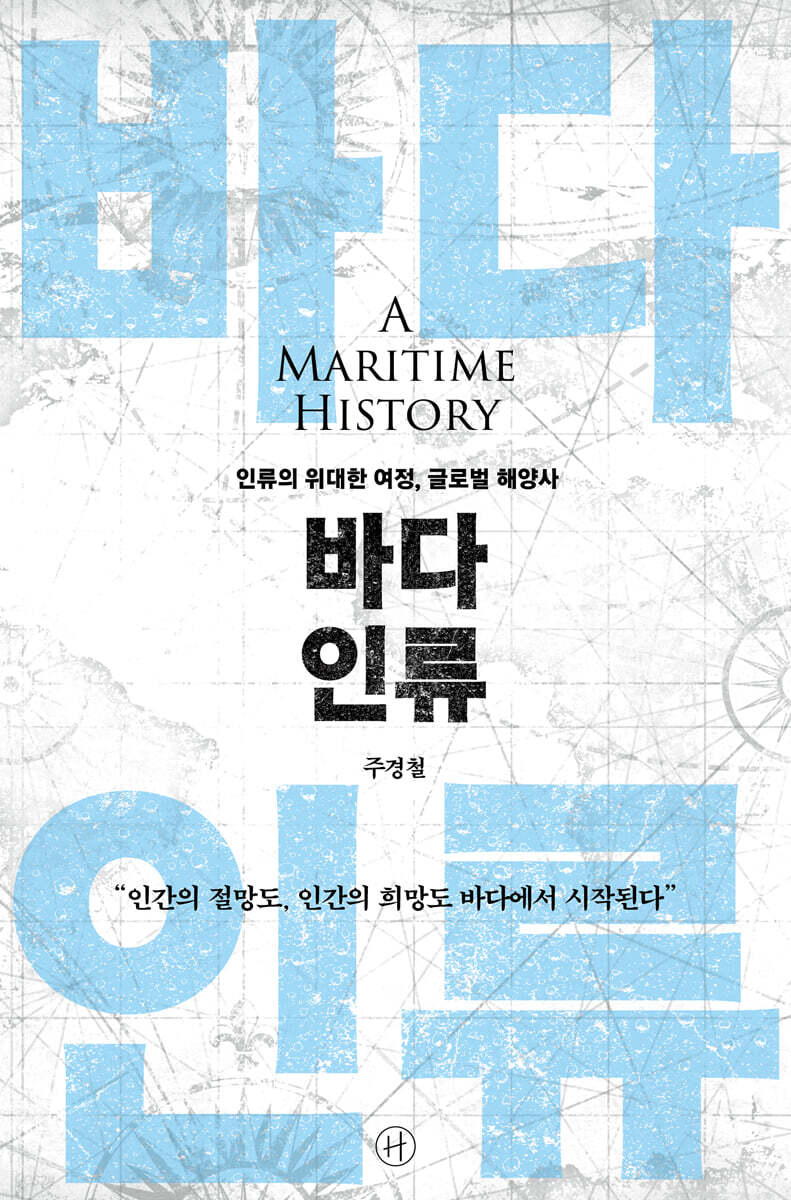
Sea Humans
 |
Description
Book Introduction
Both human despair and human hope begin in the sea. The Great Epic of Humanity Rewritten Through the Eyes of the Sea Professor Joo Kyung-chul, who reinterpreted modern world history with his masterpiece, "The Age of Exploration," which focused on the role of the "sea" in the development of history, now traces the contribution of the sea by looking at the entirety of human history. This book, which comprehensively reinterprets humanity's journey from prehistoric times to the near future through the lens of the sea, reveals aspects of human history that cannot be captured solely through the perspective of continental civilization. Understanding the "sea people" who spread through the sea, lived by utilizing the sea, and fought on the sea infinitely expands our perspective, which is confined to the continent. The ocean has always been a crucial stage in human history, and while it is currently in great danger, it remains the hottest place in our lives, a space that will have a decisive impact on our future lives. That's why we need a broader historical perspective that takes the world's oceans into account. Let's explore the future with insights gained from past history, together with Professor Joo Kyung-chul. |
- You can preview some of the book's contents.
Preview
index
Part 1: The Sea and the Development of Civilization
1.
The beginning of human history and the sea
Homo sapiens Crosses the Sea | Humans Enter the Americas | Expansion in the Pacific and Indian Oceans | Reconceptualizing the Pacific
2.
The ocean that embraces civilization
Fishing Networks | Mesopotamia: Rivers and Sea Connections | Navigation between the Indus and Mesopotamian Civilizations | Red Sea Trade and the Indian Ocean | Connections and Disconnections in the Indian Ocean Regions
3.
Mediterranean world
Ancient Egypt | Minoan and Mycenaean Civilizations | Late Bronze Age Cataclysms and Sea Peoples
4.
The flowering of classical Mediterranean civilization
The Rise and Fall of Phoenicia | Phoenician Trade and Colonization | Greek Maritime Activities | Egypt under Necho II
5.
Ancient Empires and the Sea
Militarization of the Mediterranean | Maritime Empires of Persia and Athens | Macedonia, Etruria, and Syracuse | The Rise of Rome | Suppression of Piracy and the Future of Power | Overwriting the Imperial System
Part 2: The Dynamism of the Asian Maritime World
6.
The development of the Maritime Silk Road
Long-distance trade in the Indian Ocean | Western Indian Ocean waters | Red Sea trade | The world of Periplus | Trade in goods and currency | Rome's position in the Indian Ocean world
7.
Expansion of East Asia's maritime network
The Maritime World of East Asia and Southeast Asia | Sahin and Dongshen | China and Rome's Efforts to Communicate | Zhaoqi and Funan | Faxian and the Strait of Malacca in the 5th Century | The Sui Empire
8.
Sea of Islam
The Formation and Expansion of the Islamic World | Dhows and Kamals | The Development of Arab-Persian Trade | Expansion to the East Coast of Africa | African Slaves | Pirates and Maritime Dangers | Beyond India and Southeast Asia to China
9.
The development of China's maritime world in contemporary times
Trade between China and Southeast Asia | Communication between China and the Arab-Persian Region | The Lives of the Poet and the Merchants | Resistance and Uprising | Economic Recovery and Restructuring
10.
The New Structure of the Asian Maritime World
Song Dynasty Economic Growth and the Changing Structure of Asian Maritime Trade | Chinese Merchants and Sailors | Foreign Merchants | Changes in the Persian Gulf and Red Sea Regions | Eastward Expansion of Muslim Merchants | The Chola Dynasty | A Connected World
11.
Mongolia's dominance of the sea and the Ming's retreat from the sea
The Mongol Empire's Land and Sea Mobility | Expedition to Japan | Mongol Diplomatic Missions and Military Dispatch | Mongol Overseas Trade | Changes in the Late Yuan Dynasty and the Founding of the Ming Dynasty | Expedition to the South Seas | China's Maritime Retreat | Ming's Maritime System and Ryukyu
Part 3: Exchange and Domination in the Age of Exploration
12.
The maritime world of medieval Europe
The fragmentation of the Mediterranean world and the integration of the Islamic world | Trade and exchange in Northern Europe in the early Middle Ages | The expansion of the Vikings | The Vikings' advance into America | The formation and development of the Hanseatic League | The goods, ships, and merchants of the Hanseatic League | Conflicts and revival in the Mediterranean world | The connection between the Mediterranean and the Atlantic | Changes in the late Middle Ages
13.
Europe's maritime expansion
Interpreting the World: Maps and Geography | The Atlantic's 'Fortunate Islands' | Portugal Takes the Lead | Circumnavigating Africa | Arrival in India | Columbus | The New World of America | What is Discovery?
14.
Europe's Shock, Asia's Response
Portugal's Entry into the Indian Ocean | The Construction of the Estado | The Maritime Struggle between Portugal and the Ottoman Empire | Carreira and Cartas | Crisis and Opportunity: 1540–1580 | The Moluccas and the Pacific | Opening of the Pacific Route | Exploration of the Oceania Pacific | Tahiti
15.
Empire and Plantation
Conquest of America | Christianization | Colonial Trade | Depression and Structural Change: Sugar Cane and Slavery | Ecological Changes | Colonial Settlements in North America
16.
From the East India Company to the Empire
The Dutch East India Company | The Dutch East India Company's Asian Trade | Freedom of the Seas | The British East India Company | Taiwan and Nagasaki | Piracy and Smuggling
Part 4: The Development of a Global Maritime Network
17.
From sailing ships to steamships
Rediscovery of the Sea | The Golden Age of the Sailing Ship | The Development and Spread of Steamships | The Expansion of Maritime Networks | Regular Mail Routes in the Atlantic | The Rise of Giant Ships | The Globalization of Epidemics
18.
Growth of the global economy
The opening of the Suez Canal | The development of ship engines | The rivalry between shipping companies | Undersea telegraph cables | The development of world trade and the economy | From whale oil to petroleum | The petroleum industry | Oil, war, and international politics
19.
The Sea of Imperialism
The British Conquest of India | The Opening of China and Japan | The Opium Wars | The Opening of Japan | The Development of the Japanese Navy | The Age of Immigration | Blackbirding, Coolies, and White Slaves | Hawaii
20.
Navy development
Pax Britannica | The Rise of the U.S. Navy: The Civil War and Expansion into the Pacific | Mahan, Roosevelt, and the Panama Canal | Naval Competition to World War I | Military Changes Since the 20th Century | The End of the War and the Cold War
Part 5: The Ocean Today and Tomorrow
21.
Modern History of the Sea
Between the Cold War and the Hot War | Continuing Crises | Anti-Nuclear Movement | Asia's Seas: A Threat of War | Piracy and Smuggling | Fishing: The Future of Food for Humanity | Trade and the Economy After World War II | Ships, Canals, and Marine Accidents
22.
The ocean of the future, humanity's last hope
Seas of Conflict | Competition with China | Deteriorating Marine Environment | Plastics and Pollution | Development of the Marine Industry | Future Ships and E-Navigation | Submarine Resources | Arctic Development and Submarine Cables | Future Marine Cities
Epilogue
Image source and location
References
Search
1.
The beginning of human history and the sea
Homo sapiens Crosses the Sea | Humans Enter the Americas | Expansion in the Pacific and Indian Oceans | Reconceptualizing the Pacific
2.
The ocean that embraces civilization
Fishing Networks | Mesopotamia: Rivers and Sea Connections | Navigation between the Indus and Mesopotamian Civilizations | Red Sea Trade and the Indian Ocean | Connections and Disconnections in the Indian Ocean Regions
3.
Mediterranean world
Ancient Egypt | Minoan and Mycenaean Civilizations | Late Bronze Age Cataclysms and Sea Peoples
4.
The flowering of classical Mediterranean civilization
The Rise and Fall of Phoenicia | Phoenician Trade and Colonization | Greek Maritime Activities | Egypt under Necho II
5.
Ancient Empires and the Sea
Militarization of the Mediterranean | Maritime Empires of Persia and Athens | Macedonia, Etruria, and Syracuse | The Rise of Rome | Suppression of Piracy and the Future of Power | Overwriting the Imperial System
Part 2: The Dynamism of the Asian Maritime World
6.
The development of the Maritime Silk Road
Long-distance trade in the Indian Ocean | Western Indian Ocean waters | Red Sea trade | The world of Periplus | Trade in goods and currency | Rome's position in the Indian Ocean world
7.
Expansion of East Asia's maritime network
The Maritime World of East Asia and Southeast Asia | Sahin and Dongshen | China and Rome's Efforts to Communicate | Zhaoqi and Funan | Faxian and the Strait of Malacca in the 5th Century | The Sui Empire
8.
Sea of Islam
The Formation and Expansion of the Islamic World | Dhows and Kamals | The Development of Arab-Persian Trade | Expansion to the East Coast of Africa | African Slaves | Pirates and Maritime Dangers | Beyond India and Southeast Asia to China
9.
The development of China's maritime world in contemporary times
Trade between China and Southeast Asia | Communication between China and the Arab-Persian Region | The Lives of the Poet and the Merchants | Resistance and Uprising | Economic Recovery and Restructuring
10.
The New Structure of the Asian Maritime World
Song Dynasty Economic Growth and the Changing Structure of Asian Maritime Trade | Chinese Merchants and Sailors | Foreign Merchants | Changes in the Persian Gulf and Red Sea Regions | Eastward Expansion of Muslim Merchants | The Chola Dynasty | A Connected World
11.
Mongolia's dominance of the sea and the Ming's retreat from the sea
The Mongol Empire's Land and Sea Mobility | Expedition to Japan | Mongol Diplomatic Missions and Military Dispatch | Mongol Overseas Trade | Changes in the Late Yuan Dynasty and the Founding of the Ming Dynasty | Expedition to the South Seas | China's Maritime Retreat | Ming's Maritime System and Ryukyu
Part 3: Exchange and Domination in the Age of Exploration
12.
The maritime world of medieval Europe
The fragmentation of the Mediterranean world and the integration of the Islamic world | Trade and exchange in Northern Europe in the early Middle Ages | The expansion of the Vikings | The Vikings' advance into America | The formation and development of the Hanseatic League | The goods, ships, and merchants of the Hanseatic League | Conflicts and revival in the Mediterranean world | The connection between the Mediterranean and the Atlantic | Changes in the late Middle Ages
13.
Europe's maritime expansion
Interpreting the World: Maps and Geography | The Atlantic's 'Fortunate Islands' | Portugal Takes the Lead | Circumnavigating Africa | Arrival in India | Columbus | The New World of America | What is Discovery?
14.
Europe's Shock, Asia's Response
Portugal's Entry into the Indian Ocean | The Construction of the Estado | The Maritime Struggle between Portugal and the Ottoman Empire | Carreira and Cartas | Crisis and Opportunity: 1540–1580 | The Moluccas and the Pacific | Opening of the Pacific Route | Exploration of the Oceania Pacific | Tahiti
15.
Empire and Plantation
Conquest of America | Christianization | Colonial Trade | Depression and Structural Change: Sugar Cane and Slavery | Ecological Changes | Colonial Settlements in North America
16.
From the East India Company to the Empire
The Dutch East India Company | The Dutch East India Company's Asian Trade | Freedom of the Seas | The British East India Company | Taiwan and Nagasaki | Piracy and Smuggling
Part 4: The Development of a Global Maritime Network
17.
From sailing ships to steamships
Rediscovery of the Sea | The Golden Age of the Sailing Ship | The Development and Spread of Steamships | The Expansion of Maritime Networks | Regular Mail Routes in the Atlantic | The Rise of Giant Ships | The Globalization of Epidemics
18.
Growth of the global economy
The opening of the Suez Canal | The development of ship engines | The rivalry between shipping companies | Undersea telegraph cables | The development of world trade and the economy | From whale oil to petroleum | The petroleum industry | Oil, war, and international politics
19.
The Sea of Imperialism
The British Conquest of India | The Opening of China and Japan | The Opium Wars | The Opening of Japan | The Development of the Japanese Navy | The Age of Immigration | Blackbirding, Coolies, and White Slaves | Hawaii
20.
Navy development
Pax Britannica | The Rise of the U.S. Navy: The Civil War and Expansion into the Pacific | Mahan, Roosevelt, and the Panama Canal | Naval Competition to World War I | Military Changes Since the 20th Century | The End of the War and the Cold War
Part 5: The Ocean Today and Tomorrow
21.
Modern History of the Sea
Between the Cold War and the Hot War | Continuing Crises | Anti-Nuclear Movement | Asia's Seas: A Threat of War | Piracy and Smuggling | Fishing: The Future of Food for Humanity | Trade and the Economy After World War II | Ships, Canals, and Marine Accidents
22.
The ocean of the future, humanity's last hope
Seas of Conflict | Competition with China | Deteriorating Marine Environment | Plastics and Pollution | Development of the Marine Industry | Future Ships and E-Navigation | Submarine Resources | Arctic Development and Submarine Cables | Future Marine Cities
Epilogue
Image source and location
References
Search
Detailed image

Into the book
They (the Greeks) are not the 'farmers frightened by the shocks of the sea' described by Hesiod, but rather active people willing to embark on overseas adventures.
(…) From Homer to the time of Alexander, Greece, or more broadly the entire Mediterranean world, was a world in constant movement in many directions.
A key element explaining this phenomenon is the connection that navigation brings people and places together.
The Mediterranean world was composed of a collection of numerous networks, each with a center and a periphery.
It can be said to be similar to today's Internet network.
The idea of sending some of the population from the home country to other regions to rule and establish colonies under a single 'structure', as was previously discussed, is close to a fantasy.
Behind these fictional explanations lies the stereotype of the conflict between 'us (civilization)' and 'them (barbarians)' that was created during the Pericles era.
In reality, it is the expansion of the ‘network’ through constant communication.
And these networks are not rigidly fixed entities.
Each node and link in the network was not stable or continuous, but rather variable and had complex functions.
---From Chapter 4, “The Blooming of Classical Mediterranean Civilization”
The Ming Dynasty's expedition to the South Sea was a massive maritime expansion project that was difficult to find a parallel in world history.
However, it was not about finding new seas, but about sailing through already known seas, and it was more about showing off China to the surrounding world than about finding previously unknown lands.
After a short period of business, it was discontinued.
In 1488, as Europe was rounding the Cape of Good Hope and entering the Indian Ocean, China, which had decided on a maritime ban policy, was retreating from the Indian Ocean.
While Asia's maritime world has by no means completely ceased to function, and new networks have developed linking strongholds like Ryukyu, they have not replaced the vibrant maritime activity of the past.
(…) While China tried to draw the world beyond the sea into its own world, Europe expanded its periphery to the world through the sea.
As a result, maritime hegemony in the modern world fell to Europe.
---From Chapter 11, “Mongol Dominance of Sea Power and Ming’s Retreat at Sea”
'Geographical discovery' is an outdated term that is no longer used in textbooks.
(…) Contemporaries actually used the term ‘discovery’ (Spanish descubrimiento, Portuguese descobrimento).
What did you discover? What is its deeper meaning?
In the minds of the adventurers of the time, discovery did not mean seeing and learning for the first time something completely unknown, but rather confirming something that was already known but had not yet been seen.
(…) ‘Discovery’ is not an act of curiosity, but an act of conquest.
'Discovery' is the act of going and verifying what we already know, reorganizing our mental map, and actually incorporating it into our world.
It is an act done not with the eyes but with the tip of a sword.
---From Chapter 13, “Europe’s Maritime Expansion”
It is no exaggeration to say that the Age of Exploration was the age of piracy and smuggling.
Although there has been a period in history where pirates were rampant in every sea area, the period between 1500 and 1750 marked a marked change in character, as pirates rose to prominence on a global scale.
The phenomenon of piracy is also directly linked to smuggling.
Pirates had to dispose of their plundered cargo to survive, and the demand for such plundered goods was high, so smuggling, the secret trade of plundered goods, became inevitable.
In the early modern period, piracy and smuggling were important routes for the distribution of goods around the world.
---From Chapter 16, “From the East India Company to the Empire”
In order to better utilize and control the sea, we must first become familiar with the sea and know it well.
Initially, Romanticism depicted the sea as an infinite realm that weak humans dare not enter, but at the same time as a new realm of freedom.
Soon, the sea became a sacred space, not open to everyone, but only to those who deeply empathized and truly understood.
In that respect, it became entangled with the imperialist ideology that only Western powers with the power of science and technology could freely use the sea.
---From Chapter 17, “From Sailing Ship to Steamship”
From ancient times to the mid-19th century, the maximum distance that people could travel in a day using horses or sailing ships was about 160 kilometers.
When steam power was introduced, this distance was extended to 640 kilometers by ship and railway.
Revolutionary changes in transportation and communication led to the so-called 'defeat of distance' phenomenon. Steamships connected the world's continents.
The sea is no longer a strong barrier blocking human activity, but rather has been transformed into a space for communication.
Both positive and negative elements spread inexorably from world to world.
---From Chapter 17, “From Sailing Ship to Steamship”
The new era has not been one of peace, but one of equally horrific, and perhaps even more extreme, violence.
The framework for competition for hegemony has changed and intensified.
Now, we are moving beyond simply fighting on the sea, to fighting under the sea, in the sky, and in space, and even to the stage of trying to dominate the sea entirely.
The ocean has become a place of conflict.
Since the latter half of the 20th century, the world has been moving between a 'cold war and a hot war.'
(…) From Homer to the time of Alexander, Greece, or more broadly the entire Mediterranean world, was a world in constant movement in many directions.
A key element explaining this phenomenon is the connection that navigation brings people and places together.
The Mediterranean world was composed of a collection of numerous networks, each with a center and a periphery.
It can be said to be similar to today's Internet network.
The idea of sending some of the population from the home country to other regions to rule and establish colonies under a single 'structure', as was previously discussed, is close to a fantasy.
Behind these fictional explanations lies the stereotype of the conflict between 'us (civilization)' and 'them (barbarians)' that was created during the Pericles era.
In reality, it is the expansion of the ‘network’ through constant communication.
And these networks are not rigidly fixed entities.
Each node and link in the network was not stable or continuous, but rather variable and had complex functions.
---From Chapter 4, “The Blooming of Classical Mediterranean Civilization”
The Ming Dynasty's expedition to the South Sea was a massive maritime expansion project that was difficult to find a parallel in world history.
However, it was not about finding new seas, but about sailing through already known seas, and it was more about showing off China to the surrounding world than about finding previously unknown lands.
After a short period of business, it was discontinued.
In 1488, as Europe was rounding the Cape of Good Hope and entering the Indian Ocean, China, which had decided on a maritime ban policy, was retreating from the Indian Ocean.
While Asia's maritime world has by no means completely ceased to function, and new networks have developed linking strongholds like Ryukyu, they have not replaced the vibrant maritime activity of the past.
(…) While China tried to draw the world beyond the sea into its own world, Europe expanded its periphery to the world through the sea.
As a result, maritime hegemony in the modern world fell to Europe.
---From Chapter 11, “Mongol Dominance of Sea Power and Ming’s Retreat at Sea”
'Geographical discovery' is an outdated term that is no longer used in textbooks.
(…) Contemporaries actually used the term ‘discovery’ (Spanish descubrimiento, Portuguese descobrimento).
What did you discover? What is its deeper meaning?
In the minds of the adventurers of the time, discovery did not mean seeing and learning for the first time something completely unknown, but rather confirming something that was already known but had not yet been seen.
(…) ‘Discovery’ is not an act of curiosity, but an act of conquest.
'Discovery' is the act of going and verifying what we already know, reorganizing our mental map, and actually incorporating it into our world.
It is an act done not with the eyes but with the tip of a sword.
---From Chapter 13, “Europe’s Maritime Expansion”
It is no exaggeration to say that the Age of Exploration was the age of piracy and smuggling.
Although there has been a period in history where pirates were rampant in every sea area, the period between 1500 and 1750 marked a marked change in character, as pirates rose to prominence on a global scale.
The phenomenon of piracy is also directly linked to smuggling.
Pirates had to dispose of their plundered cargo to survive, and the demand for such plundered goods was high, so smuggling, the secret trade of plundered goods, became inevitable.
In the early modern period, piracy and smuggling were important routes for the distribution of goods around the world.
---From Chapter 16, “From the East India Company to the Empire”
In order to better utilize and control the sea, we must first become familiar with the sea and know it well.
Initially, Romanticism depicted the sea as an infinite realm that weak humans dare not enter, but at the same time as a new realm of freedom.
Soon, the sea became a sacred space, not open to everyone, but only to those who deeply empathized and truly understood.
In that respect, it became entangled with the imperialist ideology that only Western powers with the power of science and technology could freely use the sea.
---From Chapter 17, “From Sailing Ship to Steamship”
From ancient times to the mid-19th century, the maximum distance that people could travel in a day using horses or sailing ships was about 160 kilometers.
When steam power was introduced, this distance was extended to 640 kilometers by ship and railway.
Revolutionary changes in transportation and communication led to the so-called 'defeat of distance' phenomenon. Steamships connected the world's continents.
The sea is no longer a strong barrier blocking human activity, but rather has been transformed into a space for communication.
Both positive and negative elements spread inexorably from world to world.
---From Chapter 17, “From Sailing Ship to Steamship”
The new era has not been one of peace, but one of equally horrific, and perhaps even more extreme, violence.
The framework for competition for hegemony has changed and intensified.
Now, we are moving beyond simply fighting on the sea, to fighting under the sea, in the sky, and in space, and even to the stage of trying to dominate the sea entirely.
The ocean has become a place of conflict.
Since the latter half of the 20th century, the world has been moving between a 'cold war and a hot war.'
---From Chapter 20, “Navy Development”
Publisher's Review
The sea is not a dark blue barrier that restricts access.
It was a dynamic stage of human life!
―The most intense battlefield in human history that we never knew existed,
Reinterpreting human history from the perspective of the sea
History up to now has been overly focused on continental civilization and agricultural civilization.
So, has the ocean, which covers 71 percent of the Earth's surface, been nothing more than a deep, silent darkness, a barrier restricting human life? Indeed, from the very beginning of its global expansion, humanity has actively utilized the ocean.
As Homo sapiens, originating in Africa, migrated to the world's continents and numerous islands in the oceans, sea routes played a key role as much as land routes.
Thus, the ability to navigate was a very important factor in humans becoming the dominant species on Earth.
Furthermore, it is impossible to describe the decisive scenes of world history without mentioning the sea, such as the expansion of the ancient Mediterranean civilization, the exchange between Islamic merchants and the Tang and Song dynasties, the economic and cultural mediation of the port states of Southeast Asia and India, the development of Mongolia's maritime power and the Ming Dynasty's expedition to the South Seas, the connection and growth of the global economy through steamships and canals, and the imperialistic invasion through powerful warships.
This book vividly and meticulously describes the amazing role of the sea, restoring the place of the sea that had been missing from history.
Past explanations of the path of civilization development also seem to need revision.
It is commonly thought that the path from hunting and gathering to agriculture and then civilization was the common one, but this was an inference based on archaeology of inland areas.
New research suggests that coastal environments may also have supported large, settled communities and fostered complex civilisational activity.
―From Chapter 1, “The Beginning of Human History and the Sea” (page 28)
The fate of the Greek world and the Persian Empire was decided at sea.
The Battle of Salamis is one of the most important examples of how gaining control of the seas can be a decisive turning point in history.
―From Chapter 5, “Ancient Empires and the Sea” (p. 125)
In search of historical insights overlooked by the continent's history
―World-historical changes brought about by sea migration, trade, and war
―A historical understanding of the sea that determined the direction of world hegemony
It is remarkable that Homo sapiens knew how to use the sea while living on land.
The ocean has been a space of intense global migration, trade, and war throughout human history, and has been a great adventure that 'connects' the world.
Therefore, to fully and fairly understand human history, we must take the sea into account.
Let's take a look at the ancient Mediterranean world, often cited as the birthplace of Western civilization.
The textbook explanation is that the Greek civilization grew under the influence of advanced Oriental civilizations (ancient Mesopotamia and Egypt), and that the Roman Empire, which inherited and further developed it, became the mother of Western civilization.
However, there is a great risk that such a description will distort the truth of history.
This is because the early Mediterranean world was not a Greco-Roman world, but rather a complex historical flow in which a great variety of ethnic groups cooperated and fought each other.
In this space, elements of civilization from various regions, including Southern Europe, Africa, the Middle East, and Northern Europe, interacted and fused.
Only when we examine the period from the perspective of the Mediterranean (the sea) can we fully understand the contemporary dynamics that created a new civilization through the mixing of various civilizations.
Intuitively, ocean navigation seems to be a product of a fairly advanced civilization, but in reality, ocean navigation was practiced long before the Mesopotamian and Indus civilizations were established, and through this, civilizations developed as the two regions communicated with each other.
In other words, it is not that civilization gave birth to ocean voyages, but rather that ocean voyages promoted the development of civilization.
―From Chapter 2, “The Ocean Embracing Civilization” (page 45)
'Rome went out to sea' is a truly historically significant phenomenon.
A land army alone would only threaten its immediate neighbors, but when Rome became a maritime power, it became powerful on a whole other level.
It developed into an empire that influenced the vast Mediterranean world and beyond.
―From Chapter 5, “Ancient Empires and the Sea” (pp. 134–135)
The same goes for understanding Asian civilization.
In eastern Asia, a huge landmass stretches from the Malay Peninsula across China to the Korean Peninsula in the east, while on the other hand, archipelagos such as Indonesia, the Philippines, and Japan blend into the surrounding seas to form a vast maritime world.
How the relationship between the two worlds of Asia, the continent and the ocean, develops is a crucial question for understanding the course of world history.
However, due to the focus on continental history, research on the Asian maritime world has been relatively lacking.
By focusing on the long-term development of maritime networks between China and Southeast Asia, their connection to the Indian Ocean world, and the historical encounters between China and the Islamic world through the sea, this book awakens the previously dormant reality of the dynamic Indian Ocean maritime world.
This sea, where trade and exchange are possible beyond differences in religion, culture, and language, has been an 'oecumenical' space since early on.
This openness is a unique characteristic of the Indian Ocean that is difficult to find in other ocean regions.
This is also related to the fact that later Europeans were able to enter the Indian Ocean relatively easily.
Although it is a relative evaluation, if the Mediterranean Sea was a 'sea of constant struggle', the Indian Ocean could be called a 'sea of peace'.
While there was certainly a risk of pirates, there was no superpower willing to wage a deadly naval war and claim the entire Indian Ocean as "our sea."
Instead, free trade took place under a laissez-faire regime of navigation between multi-ethnic and multi-cultural groups.
―From Chapter 6, “The Development of the Maritime Silk Road” (p. 160)
Southeast Asian history is a history of turbulent change, with frequent internal conflicts and foreign invasions, making it difficult to organize.
However, one important trend that runs through this history is the intermediary trade between China and the Indian Ocean world.
And among the forces playing that role, a powerful 'maritime trading state' that controls the entire region emerges, and Funan can be said to be the first example.
Funan declined around the 6th century, but was succeeded by other states such as Srivijaya, Shailendra, Mataram, and Malacca.
―From Chapter 7, “Expansion of East Asian Maritime Networks” (p. 213)
The establishment of the Tang Empire had a very important meaning from the perspective of the Asian maritime world.
The party's international and open character had the power to attract foreign merchants and sailors.
Islamic-Persian sailors and merchants, who were actively expanding overseas, entered China, attracted by the demand for large-scale trade.
Now China has direct connections with the Islamic world via maritime routes.
By this time, China had fully integrated into the Indian Ocean network.
―From Chapter 9, “The Development of Contemporary China’s Maritime World” (p. 258)
Equipped with this oceanic perspective, we can gain a new understanding of the formation and development of civilization.
This book covers the entire history of civilization, from the dawn of civilization to the Age of Exploration and the modern sea, and presents a new interpretation of history.
The sea, in particular, vividly testifies to connections—economic and cultural exchange and trade—and thus provides a comprehensive understanding of the vast economic network that permeates all of human history.
The fact that China at one point underwent a 'maritime retreat' while Europe continued its 'maritime expansion' became a major turning point in modern world history.
While China decided that it did not need the world, Europe opened its sea routes and moved toward the world.
What Europe 'discovered' was not a continent, but the world's oceans.
―From Chapter 13, “Europe’s Maritime Expansion” (p. 416)
Portugal built a fairly dense network in the Asian seas.
What they created was a 'sea empire', or more precisely a 'trading-post empire'.
Before establishing inland colonial empires in the 19th century, Europeans first conquered the seas of Asia.
―From Chapter 14, “Europe’s Shock, Asia’s Response” (p. 472)
The trend of the Age of Exploration, where the sea became a highway rather than a boundary, was completed by the Panama Canal.
The United States used this canal to rapidly grow both economically and militarily.
If the Suez Canal opened the British era, the Panama Canal could be said to have opened the American century.
(…) With the Atlantic and Pacific Oceans connected, the world’s sea routes were truly connected.
The United States wanted to connect the world's oceans and control them.
―From Chapter 20, “Navy Development” (pp. 768–770)
The future of humanity depends on the ocean!
―Warnings of unimaginable violence and serious marine pollution
But the hope of humanity that will take responsibility for the future of 10 billion people
Even without the predictions of countless futurists and scholars, everyone knows that the oceans are more important than ever in human history.
It is no exaggeration to say that the future of humanity depends on the ocean.
The sea today is a place where hope and fear intertwine.
Humanity enjoys a prosperous life by making extensive use of the sea for transportation, fishing, resource extraction, and information transfer.
But even louder than that, I hear the sea's warning.
The immense military power of the great powers holds the potential for a clash on and under the sea.
In particular, the maritime space surrounding us is at risk of becoming the world's most dangerous theater of war.
Additionally, smuggling and piracy are rampant, exploiting the seas.
On the one hand, marine pollution, including excessive overfishing, pollution from tens of millions of ships, garbage islands that have drifted from land into the sea and grown to the size of continents, and rising ocean temperatures and acidification, have reached a point where they threaten human survival.
If this continues, if humanity were to go extinct, it would most likely originate in the ocean. However, the ocean holds promise: it can solve the food problem for a population expected to grow to 10 billion, facilitate trade, secure key resources, and foster industrial development.
Now it is humanity's turn to choose.
This book prompts reflection on the future oceans that humanity will choose.
From the dawn of human history to the present, this book examines the great journey of human civilization unfolding on the sea. By surveying the vast history of the ocean, it helps us seriously consider the future of the ocean and humanity, which are currently facing great danger.
The sea is also a precious space that provides great benefits to humans.
Feeding the world's rapidly growing population requires active use of fisheries resources.
Most trade takes place by sea, and the development of information and communication via submarine cables will become a key infrastructure for future economic development.
There is a high possibility that key resources that are difficult to obtain on land can be obtained from the deep sea.
Perhaps the day will come when humans will return to the sea, the cradle of life, and make it our final resting place.
Humanity's last hope may be found in the sea.
The sea gives us both infinite fear and infinite hope.
Which of these will we choose? Let us hope that the lessons learned from past history can shed wise light on our future.
―From the Epilogue (page 883)
A compilation of the world's academic achievements in maritime history.
―Over 700 references, covering the latest research findings.
―Includes approximately 200 illustrations and maps.
『The Age of Exploration』 has been widely loved by readers for its combination of academic achievement and practical insight, from being selected as an outstanding academic book by the National Academy of Sciences of the Republic of Korea to a must-read for Korean CEOs by the Samsung Economic Research Institute.
For readers who have welcomed Professor Joo Kyung-chul's unique and fresh perspective on history, "Sea Man" is a masterpiece that answers their thirst, covering not only the modern era but all periods of human history.
The above studies were mainly limited to the 15th to 18th centuries.
One cannot help but be curious about the historical development patterns of the eras before and after that.
I became curious to examine how much the ocean contributed to the long-term progression of human history before the modern era, and how humanity has controlled and utilized the ocean in new ways since the Industrial Revolution and the age of imperialism to the present.
So, we have resorted to the presumption of trying to organize the entire history of mankind from the perspective of the sea.
(…) It is a historian’s dream to organize the entire history of mankind from a new perspective, but in reality it is a difficult goal to achieve.
Even though I knew it was an unreasonable goal, I mustered up the courage to write this book.
I hope that talented juniors will conduct even better research in the future.
―From “Preface” (pp. 6-8)
This book contains the latest, carefully selected research findings from the world of historical scholarship.
Furthermore, in order to cover the modern and contemporary history of the sea, we did not neglect to reflect trends in various related fields of study, such as military science, economics, and marine science.
The bibliography alone includes over 700 papers, books, and various reports.
This single volume contains a vast body of academic achievements that would otherwise be difficult for readers to access individually.
It also includes over 200 illustrations and maps that vividly illustrate the ever-changing maritime world, helping readers navigate the long history of the world.
It was a dynamic stage of human life!
―The most intense battlefield in human history that we never knew existed,
Reinterpreting human history from the perspective of the sea
History up to now has been overly focused on continental civilization and agricultural civilization.
So, has the ocean, which covers 71 percent of the Earth's surface, been nothing more than a deep, silent darkness, a barrier restricting human life? Indeed, from the very beginning of its global expansion, humanity has actively utilized the ocean.
As Homo sapiens, originating in Africa, migrated to the world's continents and numerous islands in the oceans, sea routes played a key role as much as land routes.
Thus, the ability to navigate was a very important factor in humans becoming the dominant species on Earth.
Furthermore, it is impossible to describe the decisive scenes of world history without mentioning the sea, such as the expansion of the ancient Mediterranean civilization, the exchange between Islamic merchants and the Tang and Song dynasties, the economic and cultural mediation of the port states of Southeast Asia and India, the development of Mongolia's maritime power and the Ming Dynasty's expedition to the South Seas, the connection and growth of the global economy through steamships and canals, and the imperialistic invasion through powerful warships.
This book vividly and meticulously describes the amazing role of the sea, restoring the place of the sea that had been missing from history.
Past explanations of the path of civilization development also seem to need revision.
It is commonly thought that the path from hunting and gathering to agriculture and then civilization was the common one, but this was an inference based on archaeology of inland areas.
New research suggests that coastal environments may also have supported large, settled communities and fostered complex civilisational activity.
―From Chapter 1, “The Beginning of Human History and the Sea” (page 28)
The fate of the Greek world and the Persian Empire was decided at sea.
The Battle of Salamis is one of the most important examples of how gaining control of the seas can be a decisive turning point in history.
―From Chapter 5, “Ancient Empires and the Sea” (p. 125)
In search of historical insights overlooked by the continent's history
―World-historical changes brought about by sea migration, trade, and war
―A historical understanding of the sea that determined the direction of world hegemony
It is remarkable that Homo sapiens knew how to use the sea while living on land.
The ocean has been a space of intense global migration, trade, and war throughout human history, and has been a great adventure that 'connects' the world.
Therefore, to fully and fairly understand human history, we must take the sea into account.
Let's take a look at the ancient Mediterranean world, often cited as the birthplace of Western civilization.
The textbook explanation is that the Greek civilization grew under the influence of advanced Oriental civilizations (ancient Mesopotamia and Egypt), and that the Roman Empire, which inherited and further developed it, became the mother of Western civilization.
However, there is a great risk that such a description will distort the truth of history.
This is because the early Mediterranean world was not a Greco-Roman world, but rather a complex historical flow in which a great variety of ethnic groups cooperated and fought each other.
In this space, elements of civilization from various regions, including Southern Europe, Africa, the Middle East, and Northern Europe, interacted and fused.
Only when we examine the period from the perspective of the Mediterranean (the sea) can we fully understand the contemporary dynamics that created a new civilization through the mixing of various civilizations.
Intuitively, ocean navigation seems to be a product of a fairly advanced civilization, but in reality, ocean navigation was practiced long before the Mesopotamian and Indus civilizations were established, and through this, civilizations developed as the two regions communicated with each other.
In other words, it is not that civilization gave birth to ocean voyages, but rather that ocean voyages promoted the development of civilization.
―From Chapter 2, “The Ocean Embracing Civilization” (page 45)
'Rome went out to sea' is a truly historically significant phenomenon.
A land army alone would only threaten its immediate neighbors, but when Rome became a maritime power, it became powerful on a whole other level.
It developed into an empire that influenced the vast Mediterranean world and beyond.
―From Chapter 5, “Ancient Empires and the Sea” (pp. 134–135)
The same goes for understanding Asian civilization.
In eastern Asia, a huge landmass stretches from the Malay Peninsula across China to the Korean Peninsula in the east, while on the other hand, archipelagos such as Indonesia, the Philippines, and Japan blend into the surrounding seas to form a vast maritime world.
How the relationship between the two worlds of Asia, the continent and the ocean, develops is a crucial question for understanding the course of world history.
However, due to the focus on continental history, research on the Asian maritime world has been relatively lacking.
By focusing on the long-term development of maritime networks between China and Southeast Asia, their connection to the Indian Ocean world, and the historical encounters between China and the Islamic world through the sea, this book awakens the previously dormant reality of the dynamic Indian Ocean maritime world.
This sea, where trade and exchange are possible beyond differences in religion, culture, and language, has been an 'oecumenical' space since early on.
This openness is a unique characteristic of the Indian Ocean that is difficult to find in other ocean regions.
This is also related to the fact that later Europeans were able to enter the Indian Ocean relatively easily.
Although it is a relative evaluation, if the Mediterranean Sea was a 'sea of constant struggle', the Indian Ocean could be called a 'sea of peace'.
While there was certainly a risk of pirates, there was no superpower willing to wage a deadly naval war and claim the entire Indian Ocean as "our sea."
Instead, free trade took place under a laissez-faire regime of navigation between multi-ethnic and multi-cultural groups.
―From Chapter 6, “The Development of the Maritime Silk Road” (p. 160)
Southeast Asian history is a history of turbulent change, with frequent internal conflicts and foreign invasions, making it difficult to organize.
However, one important trend that runs through this history is the intermediary trade between China and the Indian Ocean world.
And among the forces playing that role, a powerful 'maritime trading state' that controls the entire region emerges, and Funan can be said to be the first example.
Funan declined around the 6th century, but was succeeded by other states such as Srivijaya, Shailendra, Mataram, and Malacca.
―From Chapter 7, “Expansion of East Asian Maritime Networks” (p. 213)
The establishment of the Tang Empire had a very important meaning from the perspective of the Asian maritime world.
The party's international and open character had the power to attract foreign merchants and sailors.
Islamic-Persian sailors and merchants, who were actively expanding overseas, entered China, attracted by the demand for large-scale trade.
Now China has direct connections with the Islamic world via maritime routes.
By this time, China had fully integrated into the Indian Ocean network.
―From Chapter 9, “The Development of Contemporary China’s Maritime World” (p. 258)
Equipped with this oceanic perspective, we can gain a new understanding of the formation and development of civilization.
This book covers the entire history of civilization, from the dawn of civilization to the Age of Exploration and the modern sea, and presents a new interpretation of history.
The sea, in particular, vividly testifies to connections—economic and cultural exchange and trade—and thus provides a comprehensive understanding of the vast economic network that permeates all of human history.
The fact that China at one point underwent a 'maritime retreat' while Europe continued its 'maritime expansion' became a major turning point in modern world history.
While China decided that it did not need the world, Europe opened its sea routes and moved toward the world.
What Europe 'discovered' was not a continent, but the world's oceans.
―From Chapter 13, “Europe’s Maritime Expansion” (p. 416)
Portugal built a fairly dense network in the Asian seas.
What they created was a 'sea empire', or more precisely a 'trading-post empire'.
Before establishing inland colonial empires in the 19th century, Europeans first conquered the seas of Asia.
―From Chapter 14, “Europe’s Shock, Asia’s Response” (p. 472)
The trend of the Age of Exploration, where the sea became a highway rather than a boundary, was completed by the Panama Canal.
The United States used this canal to rapidly grow both economically and militarily.
If the Suez Canal opened the British era, the Panama Canal could be said to have opened the American century.
(…) With the Atlantic and Pacific Oceans connected, the world’s sea routes were truly connected.
The United States wanted to connect the world's oceans and control them.
―From Chapter 20, “Navy Development” (pp. 768–770)
The future of humanity depends on the ocean!
―Warnings of unimaginable violence and serious marine pollution
But the hope of humanity that will take responsibility for the future of 10 billion people
Even without the predictions of countless futurists and scholars, everyone knows that the oceans are more important than ever in human history.
It is no exaggeration to say that the future of humanity depends on the ocean.
The sea today is a place where hope and fear intertwine.
Humanity enjoys a prosperous life by making extensive use of the sea for transportation, fishing, resource extraction, and information transfer.
But even louder than that, I hear the sea's warning.
The immense military power of the great powers holds the potential for a clash on and under the sea.
In particular, the maritime space surrounding us is at risk of becoming the world's most dangerous theater of war.
Additionally, smuggling and piracy are rampant, exploiting the seas.
On the one hand, marine pollution, including excessive overfishing, pollution from tens of millions of ships, garbage islands that have drifted from land into the sea and grown to the size of continents, and rising ocean temperatures and acidification, have reached a point where they threaten human survival.
If this continues, if humanity were to go extinct, it would most likely originate in the ocean. However, the ocean holds promise: it can solve the food problem for a population expected to grow to 10 billion, facilitate trade, secure key resources, and foster industrial development.
Now it is humanity's turn to choose.
This book prompts reflection on the future oceans that humanity will choose.
From the dawn of human history to the present, this book examines the great journey of human civilization unfolding on the sea. By surveying the vast history of the ocean, it helps us seriously consider the future of the ocean and humanity, which are currently facing great danger.
The sea is also a precious space that provides great benefits to humans.
Feeding the world's rapidly growing population requires active use of fisheries resources.
Most trade takes place by sea, and the development of information and communication via submarine cables will become a key infrastructure for future economic development.
There is a high possibility that key resources that are difficult to obtain on land can be obtained from the deep sea.
Perhaps the day will come when humans will return to the sea, the cradle of life, and make it our final resting place.
Humanity's last hope may be found in the sea.
The sea gives us both infinite fear and infinite hope.
Which of these will we choose? Let us hope that the lessons learned from past history can shed wise light on our future.
―From the Epilogue (page 883)
A compilation of the world's academic achievements in maritime history.
―Over 700 references, covering the latest research findings.
―Includes approximately 200 illustrations and maps.
『The Age of Exploration』 has been widely loved by readers for its combination of academic achievement and practical insight, from being selected as an outstanding academic book by the National Academy of Sciences of the Republic of Korea to a must-read for Korean CEOs by the Samsung Economic Research Institute.
For readers who have welcomed Professor Joo Kyung-chul's unique and fresh perspective on history, "Sea Man" is a masterpiece that answers their thirst, covering not only the modern era but all periods of human history.
The above studies were mainly limited to the 15th to 18th centuries.
One cannot help but be curious about the historical development patterns of the eras before and after that.
I became curious to examine how much the ocean contributed to the long-term progression of human history before the modern era, and how humanity has controlled and utilized the ocean in new ways since the Industrial Revolution and the age of imperialism to the present.
So, we have resorted to the presumption of trying to organize the entire history of mankind from the perspective of the sea.
(…) It is a historian’s dream to organize the entire history of mankind from a new perspective, but in reality it is a difficult goal to achieve.
Even though I knew it was an unreasonable goal, I mustered up the courage to write this book.
I hope that talented juniors will conduct even better research in the future.
―From “Preface” (pp. 6-8)
This book contains the latest, carefully selected research findings from the world of historical scholarship.
Furthermore, in order to cover the modern and contemporary history of the sea, we did not neglect to reflect trends in various related fields of study, such as military science, economics, and marine science.
The bibliography alone includes over 700 papers, books, and various reports.
This single volume contains a vast body of academic achievements that would otherwise be difficult for readers to access individually.
It also includes over 200 illustrations and maps that vividly illustrate the ever-changing maritime world, helping readers navigate the long history of the world.
GOODS SPECIFICS
- Date of issue: January 24, 2022
- Format: Hardcover book binding method guide
- Page count, weight, size: 976 pages | 1,296g | 140*210*40mm
- ISBN13: 9791160807844
- ISBN10: 1160807841
You may also like
카테고리
korean


korean

![ELLE 엘르 스페셜 에디션 A형 : 12월 [2025]](http://librairie.coreenne.fr/cdn/shop/files/b8e27a3de6c9538896439686c6b0e8fb.jpg?v=1766436872&width=3840)


