

Sewing machines and modern Japan
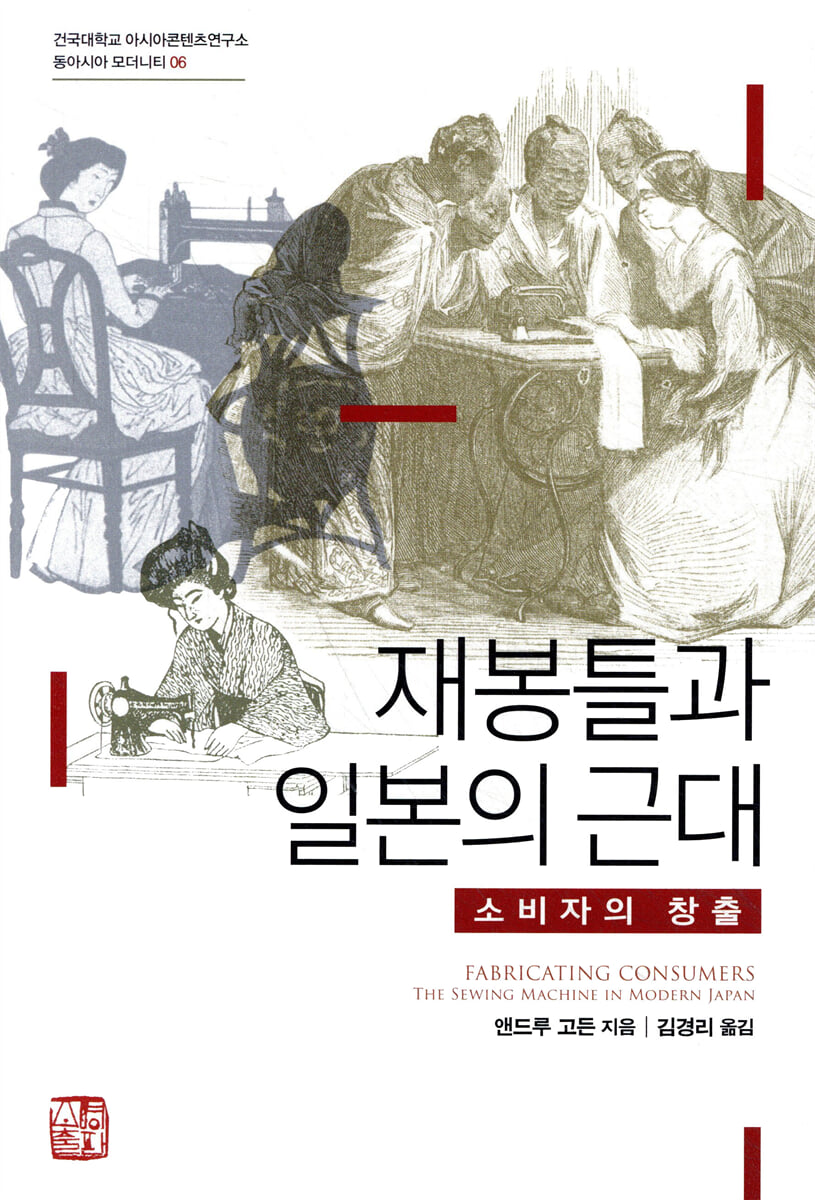 |
Description
Book Introduction
The Sewing Machine: A History That Shows the Expansion of History from a Male-centric to a Female-centric World
Andrew Gordon, a researcher of Japanese cultural history, has demonstrated deep insight into modern Japanese history through his works, “200 Years of Japan: From the Edo Period to the Present” and “A History of Japanese Labor Relations 1853–2010.”
However, in this book, the author focused on the 'social labor' of women, which expanded the formation and maintenance of modern states from 'male' leadership to 'female' leadership.
Furthermore, author Gordon presented a new research perspective that argued that women's role in modern and contemporary Japanese history was indispensable to the nation-state, as they were both "consumers" of the modern brand product called "sewing machine" and "producers" who actively utilized it to achieve economic independence.
Andrew Gordon, a researcher of Japanese cultural history, has demonstrated deep insight into modern Japanese history through his works, “200 Years of Japan: From the Edo Period to the Present” and “A History of Japanese Labor Relations 1853–2010.”
However, in this book, the author focused on the 'social labor' of women, which expanded the formation and maintenance of modern states from 'male' leadership to 'female' leadership.
Furthermore, author Gordon presented a new research perspective that argued that women's role in modern and contemporary Japanese history was indispensable to the nation-state, as they were both "consumers" of the modern brand product called "sewing machine" and "producers" who actively utilized it to achieve economic independence.
- You can preview some of the book's contents.
Preview
index
time
Starting with 4
Introduction 9
Part 1: Singer in Japan
Chapter 1: Sewing Machines of the Meiji Period 27
Chapter 2 American Sales Law 57
Chapter 3: Selling and Consuming Modern Life 101
Chapter 4: Resisting Yankee Capitalism 159
Part 2: Sewing Modernity
Chapter 5 Weapons of the Rear 203
Chapter 6: The Phoenix of Machine Manufacturing 255
Chapter 7: The Country of Yangjaesa 313
Conclusion 361
Holds 377
Translator's Note 382
Key References 389
Chart List 401
Americas 403
Starting with 4
Introduction 9
Part 1: Singer in Japan
Chapter 1: Sewing Machines of the Meiji Period 27
Chapter 2 American Sales Law 57
Chapter 3: Selling and Consuming Modern Life 101
Chapter 4: Resisting Yankee Capitalism 159
Part 2: Sewing Modernity
Chapter 5 Weapons of the Rear 203
Chapter 6: The Phoenix of Machine Manufacturing 255
Chapter 7: The Country of Yangjaesa 313
Conclusion 361
Holds 377
Translator's Note 382
Key References 389
Chart List 401
Americas 403
Publisher's Review
The Sewing Machine: A History That Shows the Expansion of History from a Male-centric to a Female-centric World
Andrew Gordon, a researcher of Japanese cultural history, has demonstrated deep insight into modern Japanese history through his works, “200 Years of Japan: From the Edo Period to the Present” and “A History of Japanese Labor Relations 1853–2010.”
However, in this book, the author focused on the 'social labor' of women, which expanded the formation and maintenance of modern states from 'male' leadership to 'female' leadership.
Furthermore, author Gordon presented a new research perspective that argued that women's role in modern and contemporary Japanese history was indispensable to the nation-state, as they were both "consumers" of the modern brand product called "sewing machine" and "producers" who actively utilized it to achieve economic independence.
In this process, we closely examine the localization process of the "sewing machine" and how Japanese salesmen, "created" through the sales strategies of Singer Sewing Machine Co., the world's first multinational corporation, in the Japanese market—credit cards, installment purchases, and direct sales—were able to turn Japanese women into "consumers."
Furthermore, the broad research on the overall history of living culture, such as the Japanese employment system completed through labor-management disputes, the industrialization process of indigenous Japanese manufacturers for the postwar economic revival of Japan, the use of social survey analysis through 'time use' statistics, and finally the mixing of cultural identities due to the acceptance of Hwayang clothing, was refreshing.
Women's unpaid domestic labor was reduced by the industrialization of garment production starting in the early 20th century, while they were transformed into a sideline labor force with economic value.
However, it is no exaggeration to say that most of the labor related to clothing at home has been resolved through the introduction of washing machines following sewing machines, and the recently released 'dryers' and 'clothes sterilizers'.
Ultimately, the women who were 'made' into 'consumers' by providing sewing machine labor inside and outside of ordinary households in modern Japan and Joseon during the Japanese colonial period, as mentioned by the author, are now being replaced by 'professional housewives' who 'manage' all household-related consumption.
The study concluded with clear results that challenge the biased idea that the 20th century economy and consumption were centered on men, as modern women gained economic and consumer power through various skills rather than just sewing machine labor.
Andrew Gordon, a researcher of Japanese cultural history, has demonstrated deep insight into modern Japanese history through his works, “200 Years of Japan: From the Edo Period to the Present” and “A History of Japanese Labor Relations 1853–2010.”
However, in this book, the author focused on the 'social labor' of women, which expanded the formation and maintenance of modern states from 'male' leadership to 'female' leadership.
Furthermore, author Gordon presented a new research perspective that argued that women's role in modern and contemporary Japanese history was indispensable to the nation-state, as they were both "consumers" of the modern brand product called "sewing machine" and "producers" who actively utilized it to achieve economic independence.
In this process, we closely examine the localization process of the "sewing machine" and how Japanese salesmen, "created" through the sales strategies of Singer Sewing Machine Co., the world's first multinational corporation, in the Japanese market—credit cards, installment purchases, and direct sales—were able to turn Japanese women into "consumers."
Furthermore, the broad research on the overall history of living culture, such as the Japanese employment system completed through labor-management disputes, the industrialization process of indigenous Japanese manufacturers for the postwar economic revival of Japan, the use of social survey analysis through 'time use' statistics, and finally the mixing of cultural identities due to the acceptance of Hwayang clothing, was refreshing.
Women's unpaid domestic labor was reduced by the industrialization of garment production starting in the early 20th century, while they were transformed into a sideline labor force with economic value.
However, it is no exaggeration to say that most of the labor related to clothing at home has been resolved through the introduction of washing machines following sewing machines, and the recently released 'dryers' and 'clothes sterilizers'.
Ultimately, the women who were 'made' into 'consumers' by providing sewing machine labor inside and outside of ordinary households in modern Japan and Joseon during the Japanese colonial period, as mentioned by the author, are now being replaced by 'professional housewives' who 'manage' all household-related consumption.
The study concluded with clear results that challenge the biased idea that the 20th century economy and consumption were centered on men, as modern women gained economic and consumer power through various skills rather than just sewing machine labor.
GOODS SPECIFICS
- Date of issue: August 20, 2021
- Page count, weight, size: 437 pages | 658g | 152*223*30mm
- ISBN13: 9791159056093
- ISBN10: 1159056099
You may also like
카테고리
korean


korean

![ELLE 엘르 스페셜 에디션 A형 : 12월 [2025]](http://librairie.coreenne.fr/cdn/shop/files/b8e27a3de6c9538896439686c6b0e8fb.jpg?v=1766436872&width=3840)


