

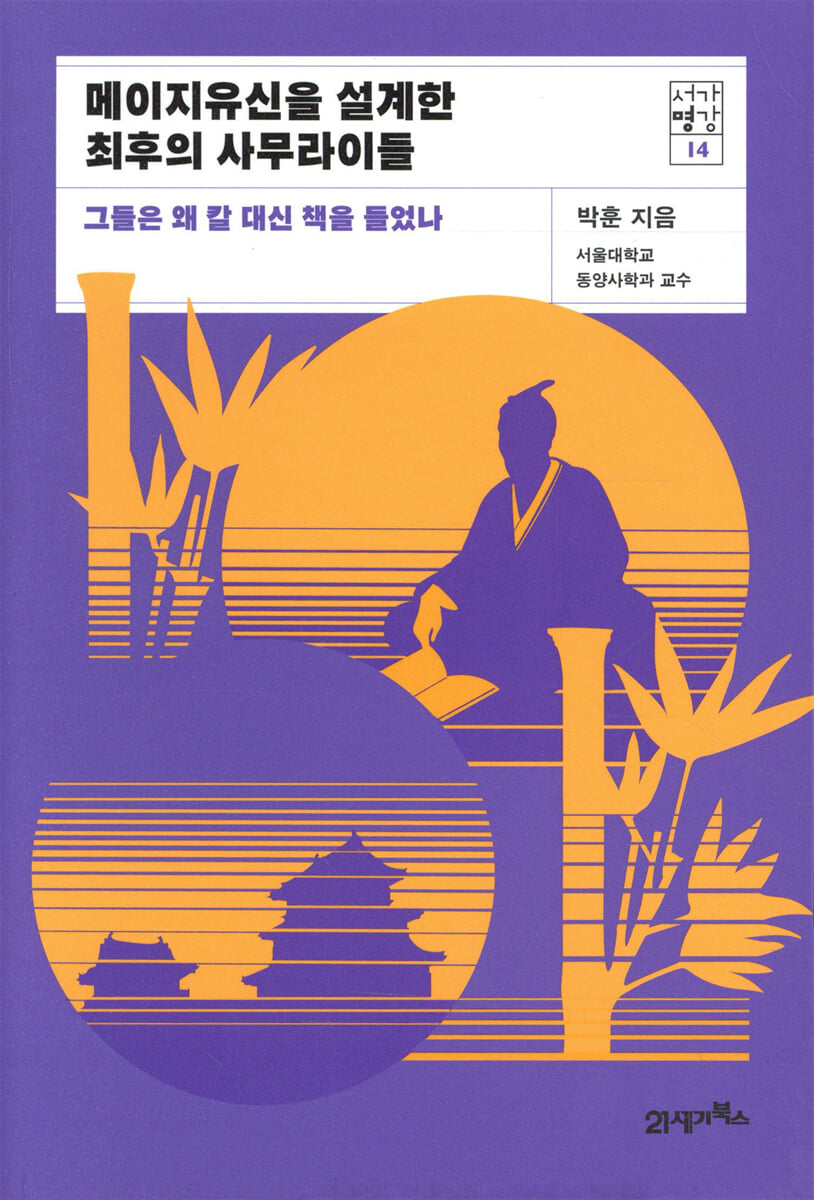
The Last Samurai Who Designed the Meiji Restoration
 |
Description
Book Introduction
"Seogamyeonggang": A famous lecture you can attend without going to Seoul National University. The decisive figures who created modern Japan! Discover Korea's finest lectures in book form! The fourteenth volume in the "Seogamyeonggang" series, featuring carefully curated lectures by current Seoul National University faculty, has been published. The Seoga Myunggang series, which transcribes the lectures of Seoul National University's top professors in various fields, including history, philosophy, science, medicine, and art, into books, provides readers with the expansion of knowledge and the joy of learning. Professor Park Hoon of the Department of Oriental History at Seoul National University, author of “The Last Samurai Who Designed the Meiji Restoration,” unravels Japanese history focusing on the four samurai who laid the foundation for the Meiji Restoration: Yoshida Shoin, Sakamoto Ryoma, Saigo Takamori, and Okubo Toshimichi. The author, who has contributed to understanding of Japan through his column series, lectures, and writing for various media outlets, sheds light on the revolutionaries who created modern Japan, living dramatic lives that included desperate leaps and tragic ends. You will have a unique experience understanding Japanese history through the main characters of the Meiji Restoration. |
- You can preview some of the book's contents.
Preview
index
Before reading this book
Classification of academic disciplines
Main keywords
Introduction: Getting to Know Japanese History
Part 1: Historical Background: Japan on the Verge of Crisis
The economic situation of Japan and Korea at the end of the Edo period
Samurai, filled with resentment, dream of leaping forward
Crisis hits the archipelago
Q/A Ask and Answer
Part 2: Yoshida Shoin, the teacher of the Meiji Restoration
The outside world, seeking out a more outside world
Igniting the Spark of Revolution at Songha Village Inn
System innovation is necessary for overseas expansion!
Leaving behind the 'Chomanggulgi' and the Japanese spirit
Q/A Ask and Answer
Part 3: Laundering Japan, Ryoma Sakamoto
“We are born into this world to achieve something.”
Abandoning the Tosa domain for Japan
Leading the Satsuma-Choshu alliance
Ryoma's blueprint for a new Japan
Q/A Ask and Answer
Part 4: The Last Samurai, Saigo Takamori
Embracing the West and the Modern, Japan and Tradition
Overcoming a political crisis and becoming a big shot
Samurai Saigo's Decisive Moment
The last samurai who became a legend
Q/A Ask and Answer
Part 5: Okubo Toshimichi, the Iron-Blooded Prime Minister of Modern Japan
Become a ruthless revolutionary
A desperate leap forward, a drive for reform
Confronting his childhood friend Saigo Takamori
Learn from the West and make Japan stronger than the West!
Q/A Ask and Answer
Outgoing article: A Reading of Japanese History by "Thoughtful Citizens"
References
Classification of academic disciplines
Main keywords
Introduction: Getting to Know Japanese History
Part 1: Historical Background: Japan on the Verge of Crisis
The economic situation of Japan and Korea at the end of the Edo period
Samurai, filled with resentment, dream of leaping forward
Crisis hits the archipelago
Q/A Ask and Answer
Part 2: Yoshida Shoin, the teacher of the Meiji Restoration
The outside world, seeking out a more outside world
Igniting the Spark of Revolution at Songha Village Inn
System innovation is necessary for overseas expansion!
Leaving behind the 'Chomanggulgi' and the Japanese spirit
Q/A Ask and Answer
Part 3: Laundering Japan, Ryoma Sakamoto
“We are born into this world to achieve something.”
Abandoning the Tosa domain for Japan
Leading the Satsuma-Choshu alliance
Ryoma's blueprint for a new Japan
Q/A Ask and Answer
Part 4: The Last Samurai, Saigo Takamori
Embracing the West and the Modern, Japan and Tradition
Overcoming a political crisis and becoming a big shot
Samurai Saigo's Decisive Moment
The last samurai who became a legend
Q/A Ask and Answer
Part 5: Okubo Toshimichi, the Iron-Blooded Prime Minister of Modern Japan
Become a ruthless revolutionary
A desperate leap forward, a drive for reform
Confronting his childhood friend Saigo Takamori
Learn from the West and make Japan stronger than the West!
Q/A Ask and Answer
Outgoing article: A Reading of Japanese History by "Thoughtful Citizens"
References
Detailed image

Into the book
To compete with Japan, you must first thoroughly understand your opponent.
It also has to be strategic.
There is a saying that Koreans are the only people in the world who ignore Japan.
In reality, Westerners do not look down on Japanese society, even though they find it a bit strange, and they do not look down on the Chinese, even though they hate them quite a bit.
But we ignore it for now even though we don't know much about it.
You just close your eyes at the point where you absolutely need to know.
That shouldn't be the case.
Even if people all over the world ignore Japan, we should not ignore Japan.
---From "Introduction | Becoming Familiar with Japanese History"
Especially in the late 18th century and into the 19th century, the economic hardship of lower-ranking samurai became very severe.
Many samurai expressed their discontent with the world.
However, Japan does not have a past system.
Even if the nobles of Joseon were poor, if they passed the civil service examination, their fortunes would suddenly improve.
However, since samurai were not people who learned literature, there was no civil service examination in that society.
So how can a samurai rise to fame? War.
---From "Part 1 | Historical Background: Japan on the Verge of Crisis"
The policies they advocated, such as the politicization of the emperor, the abolition of the separation of military and agricultural service, the introduction of the peasant-military system, the relaxation of the sankin rotation system, and the lifting of the ban on the manufacture of taesan (military-farmer) were almost impossible to achieve without transforming the very foundations of the shogunate system.
The moment the Yang theorists revised their course to temporarily postpone the reckless battle with the West and pursue a self-reliance policy for the time being in preparation for future victory, they were able to transform into a powerful force that was rich in national wealth and military power.
This change of course occurred around 1863-1864, and they immediately became the core of the anti-shogunate restoration forces.
---From "Part 2 | Yoshida Shoin, the Master of the Meiji Restoration"
The shogunate ultimately did not accept the French temptation to help establish the Tokugawa dynasty by establishing a system of counties throughout the country.
It would be more accurate to say that I couldn't accept it rather than that I didn't accept it.
While it was true that foreign support was undoubtedly a tremendous help, as Ryoma's anger showed, the stigma of colluding with foreign powers seemed to bring about political losses that far outweighed those losses.
No matter how intense the power struggle became, there was an implicit social consensus among political elites that collusion with foreign powers was not allowed.
---From "Part 3 | Laundering Japan, Ryoma Sakamoto"
The Last Samurai, Saigo, was idolized after his death.
He must have been a traitor because he rebelled against the Meiji government that supported the Emperor, but no one thought that way.
The same was true for Emperor Meiji and Okubo Toshimichi.
Therein lies the issue of modern Japanese identity.
The Meiji Restoration was a tremendous Westernizing transformation.
Although the country pursued Westernization diligently for its survival, it attempted to compensate for the sense of national loss that inevitably arose in the process through Saigo.
---From "Part 4 | The Last Samurai, Saigo Takamori"
Seeing the US and European countries firsthand, everything happening in Japan seemed like child's play.
It was not the time to be talking about samurai vested rights or the preservation of Japanese traditions.
Unless we make a desperate effort to make Japan like Europe right now, both vested interests and traditions will disappear like a mirage.
The only way to preserve Japanese traditions and national identity is, paradoxically, to make Japan a "European empire."
This is what is meant by the irony of history.
It also has to be strategic.
There is a saying that Koreans are the only people in the world who ignore Japan.
In reality, Westerners do not look down on Japanese society, even though they find it a bit strange, and they do not look down on the Chinese, even though they hate them quite a bit.
But we ignore it for now even though we don't know much about it.
You just close your eyes at the point where you absolutely need to know.
That shouldn't be the case.
Even if people all over the world ignore Japan, we should not ignore Japan.
---From "Introduction | Becoming Familiar with Japanese History"
Especially in the late 18th century and into the 19th century, the economic hardship of lower-ranking samurai became very severe.
Many samurai expressed their discontent with the world.
However, Japan does not have a past system.
Even if the nobles of Joseon were poor, if they passed the civil service examination, their fortunes would suddenly improve.
However, since samurai were not people who learned literature, there was no civil service examination in that society.
So how can a samurai rise to fame? War.
---From "Part 1 | Historical Background: Japan on the Verge of Crisis"
The policies they advocated, such as the politicization of the emperor, the abolition of the separation of military and agricultural service, the introduction of the peasant-military system, the relaxation of the sankin rotation system, and the lifting of the ban on the manufacture of taesan (military-farmer) were almost impossible to achieve without transforming the very foundations of the shogunate system.
The moment the Yang theorists revised their course to temporarily postpone the reckless battle with the West and pursue a self-reliance policy for the time being in preparation for future victory, they were able to transform into a powerful force that was rich in national wealth and military power.
This change of course occurred around 1863-1864, and they immediately became the core of the anti-shogunate restoration forces.
---From "Part 2 | Yoshida Shoin, the Master of the Meiji Restoration"
The shogunate ultimately did not accept the French temptation to help establish the Tokugawa dynasty by establishing a system of counties throughout the country.
It would be more accurate to say that I couldn't accept it rather than that I didn't accept it.
While it was true that foreign support was undoubtedly a tremendous help, as Ryoma's anger showed, the stigma of colluding with foreign powers seemed to bring about political losses that far outweighed those losses.
No matter how intense the power struggle became, there was an implicit social consensus among political elites that collusion with foreign powers was not allowed.
---From "Part 3 | Laundering Japan, Ryoma Sakamoto"
The Last Samurai, Saigo, was idolized after his death.
He must have been a traitor because he rebelled against the Meiji government that supported the Emperor, but no one thought that way.
The same was true for Emperor Meiji and Okubo Toshimichi.
Therein lies the issue of modern Japanese identity.
The Meiji Restoration was a tremendous Westernizing transformation.
Although the country pursued Westernization diligently for its survival, it attempted to compensate for the sense of national loss that inevitably arose in the process through Saigo.
---From "Part 4 | The Last Samurai, Saigo Takamori"
Seeing the US and European countries firsthand, everything happening in Japan seemed like child's play.
It was not the time to be talking about samurai vested rights or the preservation of Japanese traditions.
Unless we make a desperate effort to make Japan like Europe right now, both vested interests and traditions will disappear like a mirage.
The only way to preserve Japanese traditions and national identity is, paradoxically, to make Japan a "European empire."
This is what is meant by the irony of history.
---From "Part 5 | Okubo Toshimichi, the Iron-Blooded Prime Minister of Modern Japan"
Publisher's Review
“I will completely wash Japan!”
The last samurai who designed the Meiji Restoration!
The problem with Japan remains our destiny.
However, in order to compete with Japan in today's world, we must not blindly ignore and push them away, but rather understand their history correctly.
So where should we begin our understanding of Japanese history? Professor Park Hoon, Korea's leading authority on Japanese history, recommends beginning with the Meiji Restoration.
This is because Japan today has not strayed significantly from the path paved by the Meiji Restoration.
The Meiji Restoration refers to the great social transformation that struck the Japanese archipelago from the mid to late 19th century.
Japan, which successfully adopted Western civilization, reformed its system, and achieved great transformation, emerged as a true modern Asian power through its victories in the Sino-Japanese War and the Russo-Japanese War.
So how was the Meiji Restoration possible, and who designed it?
This book features four samurai who were in the midst of a great revolution.
This book introduces the process of the birth of modern Japan, focusing on Yoshida Shoin, the spiritual leader of the Meiji Restoration, Sakamoto Ryoma, the icon of modern Japan, Saigo Takamori, who remained a samurai until the end, and Okubo Toshimichi, who organized chaos with cool-headed judgment and leadership.
The author presents the dramatic lives of those who achieved dramatic innovation through bold judgment in the midst of a rapidly changing era, and eloquently unravels important events in Japanese history, such as the Taisei Hohanan, the Satcho Pact, and the Black Ship Incident.
Why did they take up books instead of swords?
A lecture on Japanese history through the protagonists of the Meiji Restoration!
This book, "The Last Samurai Who Designed the Meiji Restoration," connects the lives of four revolutionaries who each attempted to change the world in their own way during the chaotic final years of the Tokugawa shogunate to historical events, making it easier to approach Japanese history, which can often feel unfamiliar.
Part 1 explains the political and social background of the Tokugawa period at the end of the Edo period and presents the reasons why the Meiji Restoration had to take place.
The author emphasizes that the lower-ranking samurai, who had lost their path to success due to the long period of peace, took up 'books' and studied Confucianism to escape economic hardship, and presents a new perspective on the samurai, who were previously represented by 'swords'.
Samurai holding books advocated the "respect the emperor and joi theory" based on their academic knowledge, which later became the ideological foundation of the Meiji Restoration and united the warrior class.
Part 2 highlights Yoshida Shoin, who is considered the spiritual leader of the Meiji Restoration.
Shoin taught talented people at a small school called Songhachon School, spread his ideas, opened a forum for discussion, and ignited the flames of revolution.
The author emphasizes that the theory of revering the king and respecting the two kings that Shoin advocated at Songhachon Inn was not simply a theory of rejecting foreign powers, but rather a kind of 'reform theory of the two kings' that denied national isolation and dreamed of a wealthy and powerful nation.
Part 3 depicts Sakamoto Ryoma, a man of great influence during his time who mediated between the Satsuma and Choshu clans and led the Satsuma-Choshu Treaty.
The author describes Ryoma's life, which was like a drama, from his escape from the domain to the Satcho Oath and the return of the Taisei to Japan, in an unfilial manner.
As you read about his eventful life, you will understand why Japanese people to this day are so enthusiastic about Ryoma, the 'icon of modern Japan.'
Part 4 shows the life of Saigo Takamori, who is called the 'romantic figure of modern Japan' and served as the model for the movie [The Last Samurai].
This book argues that his efforts to preserve both Western civilization and Japanese traditions are closely related to the Japanese identity that was lost during the great transformation, and analyzes that the demands of the times were reflected in the historical figure.
In Part 5, we take a three-dimensional look at Okubo Toshimichi, one of the “Three Heroes of the Restoration” and the first Minister of the Interior in modern Japan.
This book reexamines the achievements of Okubo Toshimichi, who, despite not being popular due to his realistic leadership, helped to organize a time of chaos.
In this way, the author sharply analyzes the desperate actions of the reformers hidden behind the great transformation called the Meiji Restoration.
Why should we learn Japanese history?
To compete, you must first know thoroughly!
The four samurai described in this book were all from lower-ranking warrior families, and although they were part of the ruling class, they faced the reality of their political and economic influence gradually dwindling.
But in the end, a new page of history was written just as they had planned.
Their insight into their times and their bold drive are still noteworthy today.
The author says:
“Even if people all over the world ignore Japan, we should not ignore Japan.
Conversely, even if people all over the world respect Japan, we don't need to do so.
However, it is necessary to know in detail.” This book provides another pleasure of reading history by bringing us closer to Japanese history, which felt distant, through the last samurai who tried to open a new world.
Furthermore, by allowing Korea and Japan to view Japan's history correctly, it will serve as a stepping stone for a healthy competitive relationship between the two countries.
Seoga Myunggang, a knowledge archive that adds sophistication and elegance to your life.
What if anyone could listen to and learn from the popular lectures taken by Seoul National University students?
It was great to be able to attend lectures given by Seoul National University students!
It's like a gift to me who is tired of work life!
It was a study that was really necessary for living!
Seoga Myunggang (famous lectures you can listen to without going to Seoul National University) is a series of lectures from Seoul National University, the most prestigious university in Korea. It reconstructs the informative and interesting lectures of current Seoul National University professors and puts them into a book.
Since the summer of 2017, Seoul National University's top professors in their respective fields have been giving lectures on different topics every month under the name of "Seo Ga-myeong-gang." Each lecture drew an audience of approximately 100, who were deeply moved and enthralled by the feast of these renowned lectures.
Seogamaeunggang's diverse humanities content is available not only through books but also through live lectures and podcasts. It covers young and innovative topics, from popular lectures selected directly by Seoul National University students, to interdisciplinary lectures, and practical knowledge incorporating trends.
This program provides an opportunity for working professionals seeking to acquire general knowledge during their commute, young people exploring career paths, and all educated individuals in Korea who always harbor a passion for learning to easily watch, listen to, and learn from Korea's best lectures.
The last samurai who designed the Meiji Restoration!
The problem with Japan remains our destiny.
However, in order to compete with Japan in today's world, we must not blindly ignore and push them away, but rather understand their history correctly.
So where should we begin our understanding of Japanese history? Professor Park Hoon, Korea's leading authority on Japanese history, recommends beginning with the Meiji Restoration.
This is because Japan today has not strayed significantly from the path paved by the Meiji Restoration.
The Meiji Restoration refers to the great social transformation that struck the Japanese archipelago from the mid to late 19th century.
Japan, which successfully adopted Western civilization, reformed its system, and achieved great transformation, emerged as a true modern Asian power through its victories in the Sino-Japanese War and the Russo-Japanese War.
So how was the Meiji Restoration possible, and who designed it?
This book features four samurai who were in the midst of a great revolution.
This book introduces the process of the birth of modern Japan, focusing on Yoshida Shoin, the spiritual leader of the Meiji Restoration, Sakamoto Ryoma, the icon of modern Japan, Saigo Takamori, who remained a samurai until the end, and Okubo Toshimichi, who organized chaos with cool-headed judgment and leadership.
The author presents the dramatic lives of those who achieved dramatic innovation through bold judgment in the midst of a rapidly changing era, and eloquently unravels important events in Japanese history, such as the Taisei Hohanan, the Satcho Pact, and the Black Ship Incident.
Why did they take up books instead of swords?
A lecture on Japanese history through the protagonists of the Meiji Restoration!
This book, "The Last Samurai Who Designed the Meiji Restoration," connects the lives of four revolutionaries who each attempted to change the world in their own way during the chaotic final years of the Tokugawa shogunate to historical events, making it easier to approach Japanese history, which can often feel unfamiliar.
Part 1 explains the political and social background of the Tokugawa period at the end of the Edo period and presents the reasons why the Meiji Restoration had to take place.
The author emphasizes that the lower-ranking samurai, who had lost their path to success due to the long period of peace, took up 'books' and studied Confucianism to escape economic hardship, and presents a new perspective on the samurai, who were previously represented by 'swords'.
Samurai holding books advocated the "respect the emperor and joi theory" based on their academic knowledge, which later became the ideological foundation of the Meiji Restoration and united the warrior class.
Part 2 highlights Yoshida Shoin, who is considered the spiritual leader of the Meiji Restoration.
Shoin taught talented people at a small school called Songhachon School, spread his ideas, opened a forum for discussion, and ignited the flames of revolution.
The author emphasizes that the theory of revering the king and respecting the two kings that Shoin advocated at Songhachon Inn was not simply a theory of rejecting foreign powers, but rather a kind of 'reform theory of the two kings' that denied national isolation and dreamed of a wealthy and powerful nation.
Part 3 depicts Sakamoto Ryoma, a man of great influence during his time who mediated between the Satsuma and Choshu clans and led the Satsuma-Choshu Treaty.
The author describes Ryoma's life, which was like a drama, from his escape from the domain to the Satcho Oath and the return of the Taisei to Japan, in an unfilial manner.
As you read about his eventful life, you will understand why Japanese people to this day are so enthusiastic about Ryoma, the 'icon of modern Japan.'
Part 4 shows the life of Saigo Takamori, who is called the 'romantic figure of modern Japan' and served as the model for the movie [The Last Samurai].
This book argues that his efforts to preserve both Western civilization and Japanese traditions are closely related to the Japanese identity that was lost during the great transformation, and analyzes that the demands of the times were reflected in the historical figure.
In Part 5, we take a three-dimensional look at Okubo Toshimichi, one of the “Three Heroes of the Restoration” and the first Minister of the Interior in modern Japan.
This book reexamines the achievements of Okubo Toshimichi, who, despite not being popular due to his realistic leadership, helped to organize a time of chaos.
In this way, the author sharply analyzes the desperate actions of the reformers hidden behind the great transformation called the Meiji Restoration.
Why should we learn Japanese history?
To compete, you must first know thoroughly!
The four samurai described in this book were all from lower-ranking warrior families, and although they were part of the ruling class, they faced the reality of their political and economic influence gradually dwindling.
But in the end, a new page of history was written just as they had planned.
Their insight into their times and their bold drive are still noteworthy today.
The author says:
“Even if people all over the world ignore Japan, we should not ignore Japan.
Conversely, even if people all over the world respect Japan, we don't need to do so.
However, it is necessary to know in detail.” This book provides another pleasure of reading history by bringing us closer to Japanese history, which felt distant, through the last samurai who tried to open a new world.
Furthermore, by allowing Korea and Japan to view Japan's history correctly, it will serve as a stepping stone for a healthy competitive relationship between the two countries.
Seoga Myunggang, a knowledge archive that adds sophistication and elegance to your life.
What if anyone could listen to and learn from the popular lectures taken by Seoul National University students?
It was great to be able to attend lectures given by Seoul National University students!
It's like a gift to me who is tired of work life!
It was a study that was really necessary for living!
Seoga Myunggang (famous lectures you can listen to without going to Seoul National University) is a series of lectures from Seoul National University, the most prestigious university in Korea. It reconstructs the informative and interesting lectures of current Seoul National University professors and puts them into a book.
Since the summer of 2017, Seoul National University's top professors in their respective fields have been giving lectures on different topics every month under the name of "Seo Ga-myeong-gang." Each lecture drew an audience of approximately 100, who were deeply moved and enthralled by the feast of these renowned lectures.
Seogamaeunggang's diverse humanities content is available not only through books but also through live lectures and podcasts. It covers young and innovative topics, from popular lectures selected directly by Seoul National University students, to interdisciplinary lectures, and practical knowledge incorporating trends.
This program provides an opportunity for working professionals seeking to acquire general knowledge during their commute, young people exploring career paths, and all educated individuals in Korea who always harbor a passion for learning to easily watch, listen to, and learn from Korea's best lectures.
GOODS SPECIFICS
- Publication date: December 21, 2020
- Page count, weight, size: 296 pages | 366g | 128*188*20mm
- ISBN13: 9788950993337
- ISBN10: 8950993333
You may also like
카테고리
korean


korean

![GQ KOREA Mark (Monthly): December [2025]](http://librairie.coreenne.fr/cdn/shop/files/8ef265dbbfbf186523ed75ba7319009d.jpg?v=1765340328&width=3840)


