

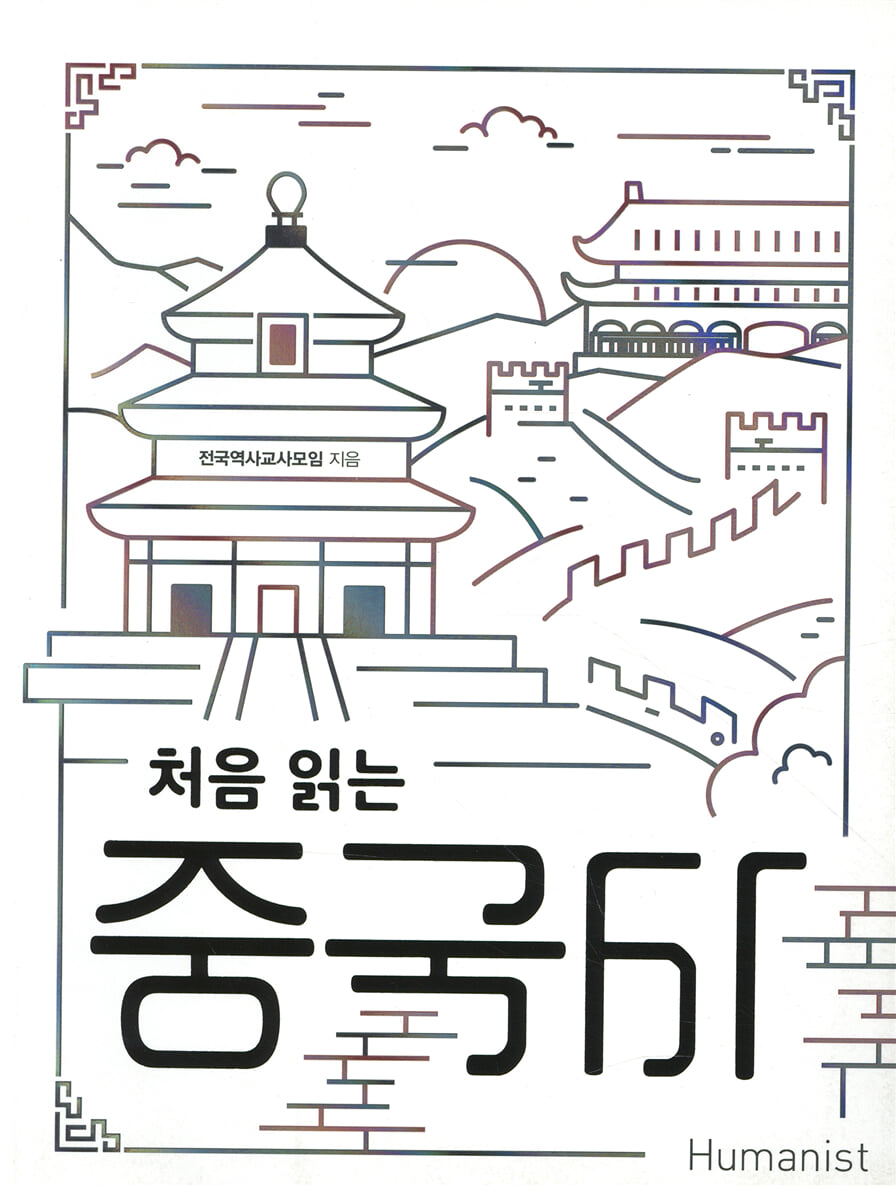
Reading Chinese History for the First Time
 |
Description
Book Introduction
The turbulent history of a continent created by the diverse ethnic groups that come together,
A three-dimensional view of Chinese history through the eyes of a Korean
China, which has grown into the world's second-largest economy, is the center of understanding East Asian civilization and is deeply connected to our future.
But in reality, we don't know much about Chinese history.
This is because we have only learned it as part of world history or as ancillary knowledge of Korean history.
Moreover, since there are no more opportunities to properly understand China's modern and contemporary history, we only think of China as a mysterious or ambiguous image.
"Reading Chinese History for the First Time" examines the Spring and Autumn Period and the Warring States Period, which were the arena for all kinds of wisdom, from the beginning of civilization in mainland China, to the Qin Dynasty, which unified a vast empire and established a national system, and the Sui and Tang Dynasty, which achieved the highest level of culture. It also examines in detail the history of nomadic peoples who were considered barbarians, and aims to show that Chinese history is a history created by the mingling of the Han Chinese and nomadic peoples.
Furthermore, it covers modern history in depth, from the Republic of China, which dreamed of a republic, to the People's Republic of China, which has simultaneously realized the ideals of socialism and modernization, so that we can think together about how China has developed and what kind of future they dream of.
It will be a valuable first step for readers who want to see Chinese history from a three-dimensional perspective.
A three-dimensional view of Chinese history through the eyes of a Korean
China, which has grown into the world's second-largest economy, is the center of understanding East Asian civilization and is deeply connected to our future.
But in reality, we don't know much about Chinese history.
This is because we have only learned it as part of world history or as ancillary knowledge of Korean history.
Moreover, since there are no more opportunities to properly understand China's modern and contemporary history, we only think of China as a mysterious or ambiguous image.
"Reading Chinese History for the First Time" examines the Spring and Autumn Period and the Warring States Period, which were the arena for all kinds of wisdom, from the beginning of civilization in mainland China, to the Qin Dynasty, which unified a vast empire and established a national system, and the Sui and Tang Dynasty, which achieved the highest level of culture. It also examines in detail the history of nomadic peoples who were considered barbarians, and aims to show that Chinese history is a history created by the mingling of the Han Chinese and nomadic peoples.
Furthermore, it covers modern history in depth, from the Republic of China, which dreamed of a republic, to the People's Republic of China, which has simultaneously realized the ideals of socialism and modernization, so that we can think together about how China has developed and what kind of future they dream of.
It will be a valuable first step for readers who want to see Chinese history from a three-dimensional perspective.
- You can preview some of the book's contents.
Preview
index
Publishing the first world history series
preface
Prologue - China and the Chinese, a melting pot of diverse cultures
Chapter 1: Myth and History: The Formation of Chinese Civilization
1.
From myth to history
* Invention of writing
2.
Silver, encompassing all nations of the world
3.
The state of the emperor claims to be the state of the emperor
- Touring the Erlitou Ruins
Chapter 2: The Spring and Autumn Period and the Warring States Period: A Leaping Forward Society
1.
A turbulent era begins
2.
The Hundred Schools of Thought, Laying the Foundation of Chinese Civilization
* Confucian classics, the Five Classics
3.
Seven bears from across the country compete
- Linzi, the capital of my country
Chapter 3: Jin and Han, the Formation of a Unified Empire
1.
Jin, creating 'China'
2.
One, institutionalizing the ruling system
* The immortal history book, 『Records of the Grand Historian』
3.
Confucianism Reborn as National Confucianism
* Development of exegesis
- Visiting Xianyang, the resting place of Qin Shi Huang
Chapter 4: The Wei, Jin, Northern and Southern Dynasties: A Fusion of Diverse Cultures
1.
The era of the novel "Romance of the Three Kingdoms"
2.
Han Chinese and nomadic peoples coexist
3.
Building a large-scale cave temple
* Magnolia Poem
* Zen Buddhism and Bodhidharma
- Chengdu, the capital of Shu and the birthplace of Taoism
Chapter 5: The Sui and Tang Dynasties, the Formation of the East Asian Cultural Sphere
1.
Sui, reunify the Central Plains
2.
Emperor Taizong of Tang, who became both emperor and great khan
3.
A new wind of change is blowing
* Genius poets, Li Bai and Du Fu
- Gateways to the West
Chapter 6: Song and Yuan Dynasties: Shaping the Flow of World History
1.
The Conqueror Dynasty Threatens the Central Plains
* The gateway to success, the civil service examination
2.
Innovation in Confucianism: The Establishment of Neo-Confucianism
* Song's three great inventions
3.
The Mongol Empire: Uniting All Civilizations
- Visiting Kaifeng, a huge commercial city
Chapter 7: The Ming and Qing Dynasties: The Completion of the Chinese Empire
1.
The Ming Dynasty, which succeeded the Han Chinese, returned to the steppes.
2.
From the Expedition of Purification to the Great Wall
3.
The Emperor, the Gentleman, and Nurhaci
4.
The Qing Empire Laid the Foundation for Modern China
* 『Shigu Quanshu』 and textual criticism
- Beijing, the heart of Chinese thought
Chapter 8: China and the West: The Rise of Modern Transformation Movements
1) China and the West, the scales are tipped
2) Let’s create an equal world and a prosperous country!
3) The country is on the verge of splitting, is it pro-Qing or anti-Qing?
* The Great East Thought and Kang Youwei's 『Great East Book』
4) Is it a constitutional monarchy or a republican democracy?
- Going to Shanghai, the Paris of the East
Chapter 9: War and Revolution, From the Republic of China to the People's Republic of China
1.
From Republican Revolution to Democracy
* Lu Xun's novel, The True Story of Ah Q
2.
The Kuomintang and the Communist Party: What kind of country will they create?
3.
The duet of war and revolution
4.
Defeating Japan and Seeking a New China
Yan'an, the city of anti-Japanese resistance and revolution
Chapter 10: 60 Years of the People's Republic of China: Pursuing Socialism and Modernization Together
1.
The birth of a new China
2.
Mao Zedong's China
3.
Deng Xiaoping pursues the modernization of socialism
4.
A Socialist Market Economy: The Resurgent Chinese Empire
* 'Study Theory' focusing on distribution
- Guangdong Province, a leading region of the socialist market economy
China and Korea in History
Epilogue: A Glimpse into the Chinese Dream Through Chinese History
Chronology
Chinese dynasties
References
Search
preface
Prologue - China and the Chinese, a melting pot of diverse cultures
Chapter 1: Myth and History: The Formation of Chinese Civilization
1.
From myth to history
* Invention of writing
2.
Silver, encompassing all nations of the world
3.
The state of the emperor claims to be the state of the emperor
- Touring the Erlitou Ruins
Chapter 2: The Spring and Autumn Period and the Warring States Period: A Leaping Forward Society
1.
A turbulent era begins
2.
The Hundred Schools of Thought, Laying the Foundation of Chinese Civilization
* Confucian classics, the Five Classics
3.
Seven bears from across the country compete
- Linzi, the capital of my country
Chapter 3: Jin and Han, the Formation of a Unified Empire
1.
Jin, creating 'China'
2.
One, institutionalizing the ruling system
* The immortal history book, 『Records of the Grand Historian』
3.
Confucianism Reborn as National Confucianism
* Development of exegesis
- Visiting Xianyang, the resting place of Qin Shi Huang
Chapter 4: The Wei, Jin, Northern and Southern Dynasties: A Fusion of Diverse Cultures
1.
The era of the novel "Romance of the Three Kingdoms"
2.
Han Chinese and nomadic peoples coexist
3.
Building a large-scale cave temple
* Magnolia Poem
* Zen Buddhism and Bodhidharma
- Chengdu, the capital of Shu and the birthplace of Taoism
Chapter 5: The Sui and Tang Dynasties, the Formation of the East Asian Cultural Sphere
1.
Sui, reunify the Central Plains
2.
Emperor Taizong of Tang, who became both emperor and great khan
3.
A new wind of change is blowing
* Genius poets, Li Bai and Du Fu
- Gateways to the West
Chapter 6: Song and Yuan Dynasties: Shaping the Flow of World History
1.
The Conqueror Dynasty Threatens the Central Plains
* The gateway to success, the civil service examination
2.
Innovation in Confucianism: The Establishment of Neo-Confucianism
* Song's three great inventions
3.
The Mongol Empire: Uniting All Civilizations
- Visiting Kaifeng, a huge commercial city
Chapter 7: The Ming and Qing Dynasties: The Completion of the Chinese Empire
1.
The Ming Dynasty, which succeeded the Han Chinese, returned to the steppes.
2.
From the Expedition of Purification to the Great Wall
3.
The Emperor, the Gentleman, and Nurhaci
4.
The Qing Empire Laid the Foundation for Modern China
* 『Shigu Quanshu』 and textual criticism
- Beijing, the heart of Chinese thought
Chapter 8: China and the West: The Rise of Modern Transformation Movements
1) China and the West, the scales are tipped
2) Let’s create an equal world and a prosperous country!
3) The country is on the verge of splitting, is it pro-Qing or anti-Qing?
* The Great East Thought and Kang Youwei's 『Great East Book』
4) Is it a constitutional monarchy or a republican democracy?
- Going to Shanghai, the Paris of the East
Chapter 9: War and Revolution, From the Republic of China to the People's Republic of China
1.
From Republican Revolution to Democracy
* Lu Xun's novel, The True Story of Ah Q
2.
The Kuomintang and the Communist Party: What kind of country will they create?
3.
The duet of war and revolution
4.
Defeating Japan and Seeking a New China
Yan'an, the city of anti-Japanese resistance and revolution
Chapter 10: 60 Years of the People's Republic of China: Pursuing Socialism and Modernization Together
1.
The birth of a new China
2.
Mao Zedong's China
3.
Deng Xiaoping pursues the modernization of socialism
4.
A Socialist Market Economy: The Resurgent Chinese Empire
* 'Study Theory' focusing on distribution
- Guangdong Province, a leading region of the socialist market economy
China and Korea in History
Epilogue: A Glimpse into the Chinese Dream Through Chinese History
Chronology
Chinese dynasties
References
Search
Detailed image

Publisher's Review
Reading Chinese History as a Key to Understanding Present-Day China
How should we view China today? Asking history.
This book describes Chinese history with a focus on the question, "How should we view present-day China?"
As a result, I came to deal in more detail with the recent history that is important for understanding present-day China and the Chinese people: the 40 years of reform and opening up, the 70 years of modern history of New China, and China's modern experience. I also dealt with pre-modern history by tracing the voices of tradition that have long been deeply rooted in their lives.
Although we have encountered Chinese history as a part of world history or Korean history, for the majority of readers who have never studied Chinese history separately, if this is their first time reading Chinese history, they should focus on increasing their understanding of the Chinese people, their neighbors living in the same era, and of China itself.
This book is written with a clear sense of problem in mind, making it the most appropriate introductory book for readers new to Chinese history.
When thinking of "present-day China," images that come to mind include a socialist market economy, rapid growth, a new center of the world economy, a multi-ethnic nation, Sinocentrism and patriotism, China between North and South Korea, and China as a significant member of East Asia, all of which are presented in a three-dimensional manner.
The turbulent history of the continent, created by diverse peoples
-A harmonious look at the history of the continent, where various ethnic groups, including the Han, Mongol, and Manchu, competed and coexisted.
"Reading Chinese History for the First Time" breaks away from the conventional narrative of Chinese history, which centers on the Han Chinese, who currently make up the largest ethnic group in China, and portrays the border regions as barbarians, and aims to objectively depict the characteristics of the periods in which various ethnic groups made great strides.
The history of the Mongols who built a world empire, the Manchus who laid the foundation for a powerful modern state, and the Jurchens who provided various stimuli for the development of various countries in Chinese history were gathered together and understood as a whole along with the Han people, as part of the major flow of Chinese history.
Through this, I wanted to convey through this book that the Han Chinese and nomadic peoples do not have separate histories, but rather are a community with a shared destiny who have greatly influenced each other over the Chinese mainland.
A vivid history of China, including recent modern and contemporary history.
-Looking into China's past, present, and future
In history education at school, modern and contemporary Chinese history since the Qing Dynasty is covered very briefly, and most Chinese history books on the market cover modern and contemporary history, but they barely cover recent history since the Tiananmen Square incident (1989).
However, not only modern and contemporary Chinese history, but also the history of the 20 years since the Tiananmen Square incident is very important for understanding present-day China.
In particular, the history teachers who wrote this book noted that the youth, the leaders of the future, have a weak understanding of China and are often mired in prejudice.
The image of China that young people have of a vast country with a large population and a country made in China is too narrow.
This is related to the fact that education on modern Chinese history is almost non-existent. Considering the current state of history education in Korea, this book, which covers nearly 40% of modern and contemporary Chinese history as a full-fledged liberal arts textbook, can be considered truly innovative.
Furthermore, rather than focusing on a specific position, the book focuses on depicting the dreams the Chinese people had when they built the People's Republic of China, and the failures, conflicts, and successes that occurred within it.
You can experience the modern history of China, which felt distant despite being our neighbor, in a vivid and familiar way.
Chinese history through the eyes of a Korean
-Looking at Korea from the perspective of Chinese history and East Asia
What does it mean for Koreans to know Chinese history? It goes beyond simply introducing China's vast and dynamic history, culture, and lifestyle through engaging narratives. Rather, it focuses on helping Koreans better understand Chinese history through exposure to it.
It allowed us to experience Korea from an East Asian perspective and to look back on Korea and Koreans within the context of the development of Chinese history.
Furthermore, rather than simply repeating foreign perspectives, the authors, who have been working as teachers and have pondered how to teach Chinese history to students, have written this book so that it can clearly reveal China's unique characteristics while maintaining a Korean perspective.
The National History Teachers Association's "World History for Beginners" series has been newly revised.
The 'First Reading of World History' series was planned with the aim of looking at world history through the 'eyes of Koreans', beyond the world history of 'Europe as the lead and China as a supporting role.'
Teachers from the National History Teachers Association selected five countries and began organizing their histories based on their field experience.
The books in this series cover each country's unique history, but they are written so that each country's history can be understood within the context of world history.
To help readers learn about major events, figures, and the historical significance of civilizations in world history, we've used timelines and maps to clearly connect the dots between the books in the series.
Another unique characteristic of this series is that it does not mechanically list political events in a chronological order, but vividly portrays the culture and history of the country.
Looking at the many reader reviews that poured in after the series was published in 2010, many praised the books, saying they chose them before traveling to Turkey, before going on a business trip to India, and before living in Japan to learn more about the country, and that the easy-to-read and three-dimensional descriptions led them to seek out and read books from other countries.
I hope that this series will continue to serve as a vivid introduction to the history of countries that cannot be fully understood through textbooks alone, or as an excellent guidebook for those planning a trip to those countries.
How should we view China today? Asking history.
This book describes Chinese history with a focus on the question, "How should we view present-day China?"
As a result, I came to deal in more detail with the recent history that is important for understanding present-day China and the Chinese people: the 40 years of reform and opening up, the 70 years of modern history of New China, and China's modern experience. I also dealt with pre-modern history by tracing the voices of tradition that have long been deeply rooted in their lives.
Although we have encountered Chinese history as a part of world history or Korean history, for the majority of readers who have never studied Chinese history separately, if this is their first time reading Chinese history, they should focus on increasing their understanding of the Chinese people, their neighbors living in the same era, and of China itself.
This book is written with a clear sense of problem in mind, making it the most appropriate introductory book for readers new to Chinese history.
When thinking of "present-day China," images that come to mind include a socialist market economy, rapid growth, a new center of the world economy, a multi-ethnic nation, Sinocentrism and patriotism, China between North and South Korea, and China as a significant member of East Asia, all of which are presented in a three-dimensional manner.
The turbulent history of the continent, created by diverse peoples
-A harmonious look at the history of the continent, where various ethnic groups, including the Han, Mongol, and Manchu, competed and coexisted.
"Reading Chinese History for the First Time" breaks away from the conventional narrative of Chinese history, which centers on the Han Chinese, who currently make up the largest ethnic group in China, and portrays the border regions as barbarians, and aims to objectively depict the characteristics of the periods in which various ethnic groups made great strides.
The history of the Mongols who built a world empire, the Manchus who laid the foundation for a powerful modern state, and the Jurchens who provided various stimuli for the development of various countries in Chinese history were gathered together and understood as a whole along with the Han people, as part of the major flow of Chinese history.
Through this, I wanted to convey through this book that the Han Chinese and nomadic peoples do not have separate histories, but rather are a community with a shared destiny who have greatly influenced each other over the Chinese mainland.
A vivid history of China, including recent modern and contemporary history.
-Looking into China's past, present, and future
In history education at school, modern and contemporary Chinese history since the Qing Dynasty is covered very briefly, and most Chinese history books on the market cover modern and contemporary history, but they barely cover recent history since the Tiananmen Square incident (1989).
However, not only modern and contemporary Chinese history, but also the history of the 20 years since the Tiananmen Square incident is very important for understanding present-day China.
In particular, the history teachers who wrote this book noted that the youth, the leaders of the future, have a weak understanding of China and are often mired in prejudice.
The image of China that young people have of a vast country with a large population and a country made in China is too narrow.
This is related to the fact that education on modern Chinese history is almost non-existent. Considering the current state of history education in Korea, this book, which covers nearly 40% of modern and contemporary Chinese history as a full-fledged liberal arts textbook, can be considered truly innovative.
Furthermore, rather than focusing on a specific position, the book focuses on depicting the dreams the Chinese people had when they built the People's Republic of China, and the failures, conflicts, and successes that occurred within it.
You can experience the modern history of China, which felt distant despite being our neighbor, in a vivid and familiar way.
Chinese history through the eyes of a Korean
-Looking at Korea from the perspective of Chinese history and East Asia
What does it mean for Koreans to know Chinese history? It goes beyond simply introducing China's vast and dynamic history, culture, and lifestyle through engaging narratives. Rather, it focuses on helping Koreans better understand Chinese history through exposure to it.
It allowed us to experience Korea from an East Asian perspective and to look back on Korea and Koreans within the context of the development of Chinese history.
Furthermore, rather than simply repeating foreign perspectives, the authors, who have been working as teachers and have pondered how to teach Chinese history to students, have written this book so that it can clearly reveal China's unique characteristics while maintaining a Korean perspective.
The National History Teachers Association's "World History for Beginners" series has been newly revised.
The 'First Reading of World History' series was planned with the aim of looking at world history through the 'eyes of Koreans', beyond the world history of 'Europe as the lead and China as a supporting role.'
Teachers from the National History Teachers Association selected five countries and began organizing their histories based on their field experience.
The books in this series cover each country's unique history, but they are written so that each country's history can be understood within the context of world history.
To help readers learn about major events, figures, and the historical significance of civilizations in world history, we've used timelines and maps to clearly connect the dots between the books in the series.
Another unique characteristic of this series is that it does not mechanically list political events in a chronological order, but vividly portrays the culture and history of the country.
Looking at the many reader reviews that poured in after the series was published in 2010, many praised the books, saying they chose them before traveling to Turkey, before going on a business trip to India, and before living in Japan to learn more about the country, and that the easy-to-read and three-dimensional descriptions led them to seek out and read books from other countries.
I hope that this series will continue to serve as a vivid introduction to the history of countries that cannot be fully understood through textbooks alone, or as an excellent guidebook for those planning a trip to those countries.
GOODS SPECIFICS
- Publication date: December 13, 2018
- Page count, weight, size: 388 pages | 708g | 165*220*30mm
- ISBN13: 9791160801859
- ISBN10: 1160801851
You may also like
카테고리
korean


korean

![GQ KOREA Mark (Monthly): December [2025]](http://librairie.coreenne.fr/cdn/shop/files/8ef265dbbfbf186523ed75ba7319009d.jpg?v=1765340328&width=3840)


