

Atlas of Central Eurasia
 |
Description
Book Introduction
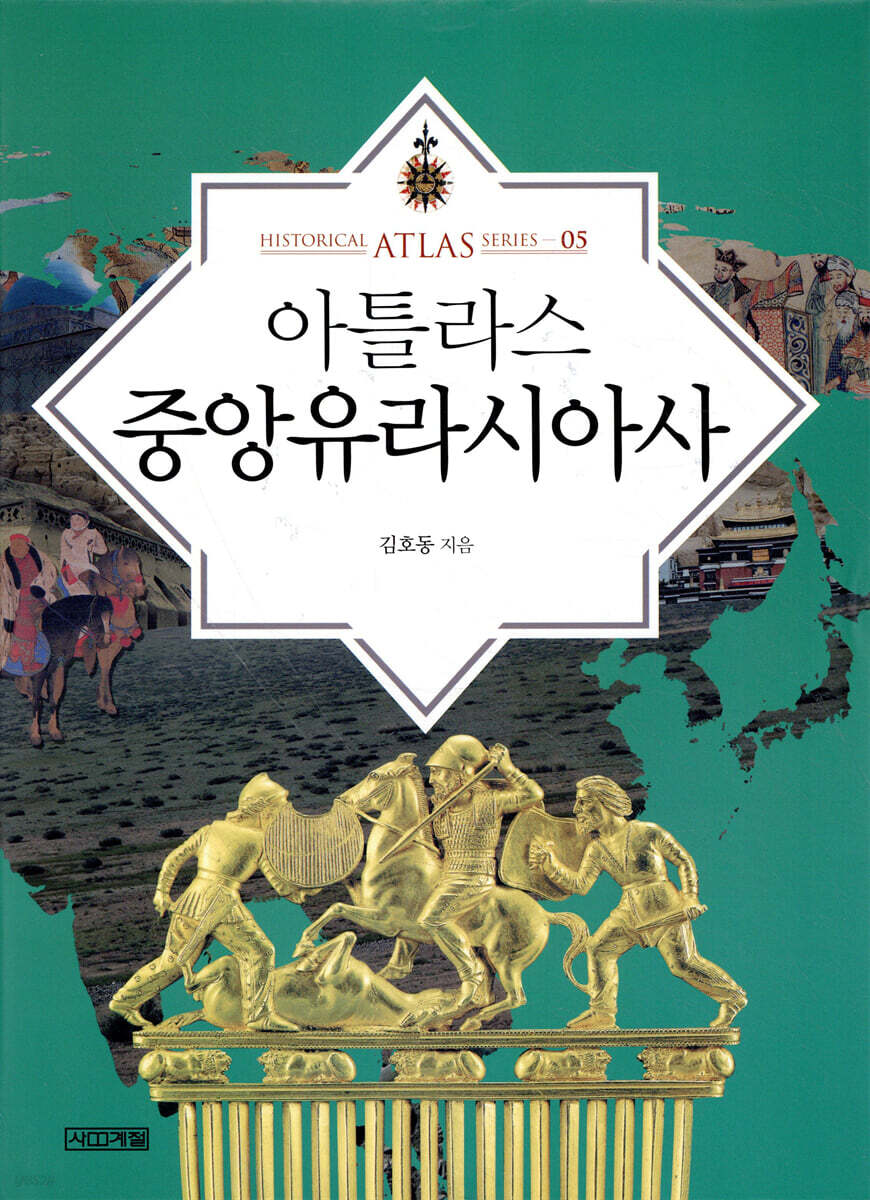
The first introductory book on Central Eurasian history written in Korean by our scholars
Until now, world history has been written with a focus on agricultural and settled civilizations.
The main characters are Egypt, Persia, India, Greece, the Roman Empire, Europe after the Middle Ages, America after the early modern period, and the successive Chinese dynasties such as the Jinhan, Sui, and Tang dynasties, and the Ming and Qing dynasties, which occupy the majority of world history textbooks.
But if we look at world history from a broader perspective, we see that there is another huge stage and hidden protagonist.
These are the nomads of the Central Eurasian steppe and the oasis city dwellers.
The nomads of the grasslands cultivated their own civilization through exchange and struggle, while they constantly stimulated agricultural civilization, and the oasis city dwellers traveled the Silk Road, serving as the arteries of world history.
"Atlas of Central Eurasia" is a book that covers the history of Central Eurasia, which has played a pivotal role in world history along with agricultural and settled civilizations for the past 3,000 years.
This book systematically covers 3,000 years of Central Eurasia's history, from the birth of nomads and the emergence of oasis merchants to the rise of nomadic world empires, including the Mongol Empire, and the subsequent changes.
Since the late 1990s, several comprehensive histories have been published that emphasize the historical significance of Central Eurasia, including 『History of Eurasian Nomadic Empires』(1998) by Sagyeseoul Publishing, which has consistently introduced the history and culture of the Central Eurasian region, as well as 『History of Central Eurasia』(Sonamu, 2005), 『Central Asian History for the Cultured』(Chaekwahamkke, 2009), and 『World History of Central Eurasia』(Sowadang, 2014).
Through these books, we were able to quench our thirst for the history of Central Eurasia to some extent.
However, these were all books translated from foreign academic achievements.
The new book, "Atlas of Central Eurasia," is not only the first comprehensive history of Central Eurasia written in Korean by a Korean researcher, but also the culmination of research achievements by a world-renowned scholar in the field, based on his own historical perspective.
This book, which is composed of 113 newly drawn maps and a thorough narration of 3,000 years of history based on primary sources written in various languages from ancient times to modern times and academic research results, is a world-class achievement that is difficult to find anywhere else in the world.
Until now, world history has been written with a focus on agricultural and settled civilizations.
The main characters are Egypt, Persia, India, Greece, the Roman Empire, Europe after the Middle Ages, America after the early modern period, and the successive Chinese dynasties such as the Jinhan, Sui, and Tang dynasties, and the Ming and Qing dynasties, which occupy the majority of world history textbooks.
But if we look at world history from a broader perspective, we see that there is another huge stage and hidden protagonist.
These are the nomads of the Central Eurasian steppe and the oasis city dwellers.
The nomads of the grasslands cultivated their own civilization through exchange and struggle, while they constantly stimulated agricultural civilization, and the oasis city dwellers traveled the Silk Road, serving as the arteries of world history.
"Atlas of Central Eurasia" is a book that covers the history of Central Eurasia, which has played a pivotal role in world history along with agricultural and settled civilizations for the past 3,000 years.
This book systematically covers 3,000 years of Central Eurasia's history, from the birth of nomads and the emergence of oasis merchants to the rise of nomadic world empires, including the Mongol Empire, and the subsequent changes.
Since the late 1990s, several comprehensive histories have been published that emphasize the historical significance of Central Eurasia, including 『History of Eurasian Nomadic Empires』(1998) by Sagyeseoul Publishing, which has consistently introduced the history and culture of the Central Eurasian region, as well as 『History of Central Eurasia』(Sonamu, 2005), 『Central Asian History for the Cultured』(Chaekwahamkke, 2009), and 『World History of Central Eurasia』(Sowadang, 2014).
Through these books, we were able to quench our thirst for the history of Central Eurasia to some extent.
However, these were all books translated from foreign academic achievements.
The new book, "Atlas of Central Eurasia," is not only the first comprehensive history of Central Eurasia written in Korean by a Korean researcher, but also the culmination of research achievements by a world-renowned scholar in the field, based on his own historical perspective.
This book, which is composed of 113 newly drawn maps and a thorough narration of 3,000 years of history based on primary sources written in various languages from ancient times to modern times and academic research results, is a world-class achievement that is difficult to find anywhere else in the world.
- You can preview some of the book's contents.
Preview
index
Author's Preface
prolog
01 Ancient nomadic state
02 Activities of the Turkic people
03 Conqueror Dynasty and the Mongol Empire
04 The Era of Successor States
05 Decline of the Nomadic State
Epilogue
Source of the illustration
References
Search
prolog
01 Ancient nomadic state
02 Activities of the Turkic people
03 Conqueror Dynasty and the Mongol Empire
04 The Era of Successor States
05 Decline of the Nomadic State
Epilogue
Source of the illustration
References
Search
Author's Preface
prolog
Central Eurasia: Terms and Concepts
Grasslands and deserts
Nomads and livestock
Nomadic societies and states
Oasis and Settlers
01) Ancient nomadic state
migration of population
The emergence of nomads
The emergence and origin of Scythia
Darius's Scythian Expedition
The development of the Scythian state
Characteristics and distribution of animal farming
Origin of the Huns
The establishment of the Xiongnu Empire
State structure of the Xiongnu Empire
Xiongnu society and culture
Seocheon of Wolji
War between the Huns and the Han
Zhang Qian and the Silk Road
The Xiongnu Empire and Central Asia
The Han Empire and Central Asia
City-states of Central Asia
The establishment of a tributary relationship with the Huns
The division of the Huns and the establishment of the Southern Huns
The Northern Xiongnu's Xichuan and Huns
The emergence and activities of scholars
The era of great migration
The unfinished nomadic empire of Yuyeon
Kushan, Kidara, and Hephthalites
Central Asian city-states of the 2nd to 5th centuries
The emergence of long-distance international merchants
Spread of Buddhism
2) Activities of the Turkic people
The rise of the Turkic Empire
The Turkic Empire and the Western World
The collapse of the Turkic Empire and the rise of the Tang Dynasty
The party's advance into Turkestan
The Rise of the Turks and the Second Empire
Ancient Turkic script and inscriptions
Activities of Sogdian merchants
The rise of Tibet
Arab powers advance eastward
Battle of Talas
Sogdian urban life
The rise of the Uyghur Empire
The Ansha Rebellion and Uyghur Intervention
A settlement in bloom on the meadow
The collapse of the Uyghur Empire
Hashe Uyghur
Tianshan Uyghur
Karakhan Dynasty
3) Conqueror dynasties and the Mongol Empire
The emergence of the Khitan Empire
The ruling structure of the Khitan Empire
The emergence of the Jurchen and the founding of the Jin Dynasty
The ruling system of the Jurchen Empire
Kara Kitai
Conqueror dynasties of western Eurasia
Migration of Mongolian groups
The eve of the emergence of the Mongol Empire
Genghis Khan's unification and foreign expeditions
War of World Conquest
The Tolui family's dethronement
Kublai Khan's rise to power
Intensifying internal strife
End of civil war and reconciliation
The unity and continuity of the Mongol Empire
The ruling structure of the Khan Ulus
Political developments of the Khan Ulus
Chagadai Ulus
Jochi Ulus
Hulegu Ulus
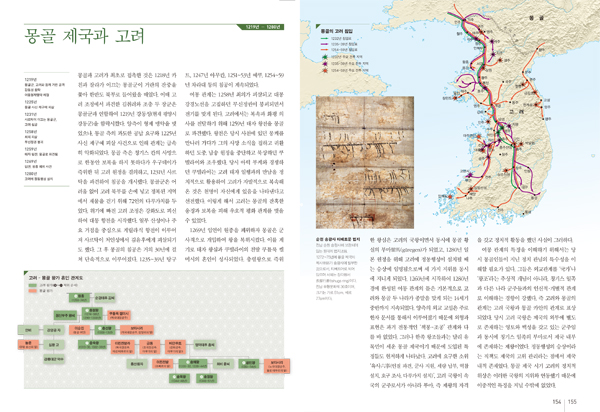
Mongol Empire and Goryeo
Pax Mongolica
The era of great travel
A new perception of the world
The collapse of the world empire
4) The era of successor states
Ming and early Mongolia and China
The establishment and development of the Mogul Khanate
The Rise of Timur and His Wars of Conquest
Descendants of Timur
Culture of the Timurid Empire
The emergence of Uzbeks, Kazakhs, and Kyrgyz
Khanates of Central Asia
The emergence of the Oirats
Dayan Khan's unification
Altan Khan's hegemony
Later Mogul Khanate
Naqshbandi sect of East Turkestan
The spread of Tibetan Buddhism
5) Decline of nomadic states
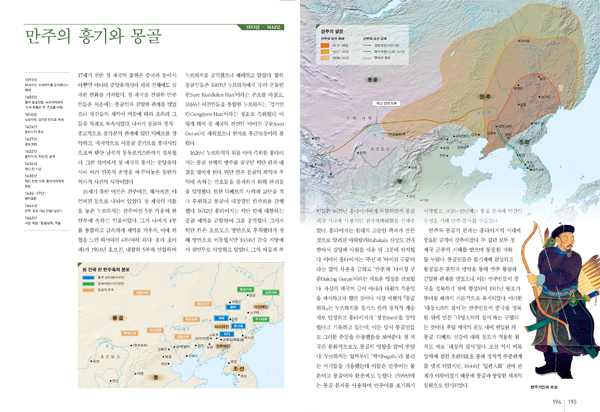
The Rise of Manchuria and Mongolia
Russia's eastward advance
Diplomatic relations between Russia and the Qing Dynasty
Galdan and Emperor Kangxi
The struggle over Tibet
The last nomadic nation, the Dzungars
Kazakh subjugation
The fall of the Dzungars
The transformation of Mongolian nomadic society
Qing Empire's rule over Xinjiang
Mongol rule over the Qing Empire
The Vulnerability of Xinjiang's Rule and the 'Holy War'
Jakub Beck's regime
Russia's occupation of Central Asia
Epilogue
Soviet Revolution and Central Asia
The development of the Mongolian socialist revolution
The Chinese Communist Party's annexation of Xinjiang
The Fate of Tibet
Central Eurasia Today
Source of the illustration
References
Search Author's Preface
prolog
Central Eurasia: Terms and Concepts
Grasslands and deserts
Nomads and livestock
Nomadic societies and states
Oasis and Settlers
01) Ancient nomadic state
migration of population
The emergence of nomads
The emergence and origin of Scythia
Darius's Scythian Expedition
The development of the Scythian state
Characteristics and distribution of animal farming
Origin of the Huns
The establishment of the Xiongnu Empire
State structure of the Xiongnu Empire
Xiongnu society and culture
Seocheon of Wolji
War between the Huns and the Han
Zhang Qian and the Silk Road
The Xiongnu Empire and Central Asia
The Han Empire and Central Asia
City-states of Central Asia
The establishment of a tributary relationship with the Huns
The division of the Huns and the establishment of the Southern Huns
The Northern Xiongnu's Xichuan and Huns
The emergence and activities of scholars
The era of great migration
The unfinished nomadic empire of Yuyeon
Kushan, Kidara, and Hephthalites
Central Asian city-states of the 2nd to 5th centuries
The emergence of long-distance international merchants
Spread of Buddhism
2) Activities of the Turkic people
The rise of the Turkic Empire
The Turkic Empire and the Western World
The collapse of the Turkic Empire and the rise of the Tang Dynasty
The party's advance into Turkestan
The Rise of the Turks and the Second Empire
Ancient Turkic script and inscriptions
Activities of Sogdian merchants
The rise of Tibet
Arab powers advance eastward
Battle of Talas
Sogdian urban life
The rise of the Uyghur Empire
The Ansha Rebellion and Uyghur Intervention
A settlement in bloom on the meadow
The collapse of the Uyghur Empire
Hashe Uyghur
Tianshan Uyghur
Karakhan Dynasty
3) Conqueror dynasties and the Mongol Empire
The emergence of the Khitan Empire
The ruling structure of the Khitan Empire
The emergence of the Jurchen and the founding of the Jin Dynasty
The ruling system of the Jurchen Empire
Kara Kitai
Conqueror dynasties of western Eurasia
Migration of Mongolian groups
The eve of the emergence of the Mongol Empire
Genghis Khan's unification and foreign expeditions
War of World Conquest
The Tolui family's dethronement
Kublai Khan's rise to power
Intensifying internal strife
End of civil war and reconciliation
The unity and continuity of the Mongol Empire
The ruling structure of the Khan Ulus
Political developments of the Khan Ulus
Chagadai Ulus
Jochi Ulus
Hulegu Ulus
Mongol Empire and Goryeo
Pax Mongolica
The era of great travel
A new perception of the world
The collapse of the world empire
4) The era of successor states
Ming and early Mongolia and China
The establishment and development of the Mogul Khanate
The Rise of Timur and His Wars of Conquest
Descendants of Timur
Culture of the Timurid Empire
The emergence of Uzbeks, Kazakhs, and Kyrgyz
Khanates of Central Asia
The emergence of the Oirats
Dayan Khan's unification
Altan Khan's hegemony
Later Mogul Khanate
Naqshbandi sect of East Turkestan
The spread of Tibetan Buddhism
5) Decline of nomadic states
The Rise of Manchuria and Mongolia
Russia's eastward advance
Diplomatic relations between Russia and the Qing Dynasty
Galdan and Emperor Kangxi
The struggle over Tibet
The last nomadic nation, the Dzungars
Kazakh subjugation
The fall of the Dzungars
The transformation of Mongolian nomadic society
Qing Empire's rule over Xinjiang
Mongol rule over the Qing Empire
The Vulnerability of Xinjiang's Rule and the 'Holy War'
Jakub Beck's regime
Russia's occupation of Central Asia
Epilogue
Soviet Revolution and Central Asia
The development of the Mongolian socialist revolution
The Chinese Communist Party's annexation of Xinjiang
The Fate of Tibet
Central Eurasia Today
Source of the illustration
References
Search
prolog
Central Eurasia: Terms and Concepts
Grasslands and deserts
Nomads and livestock
Nomadic societies and states
Oasis and Settlers
01) Ancient nomadic state
migration of population
The emergence of nomads
The emergence and origin of Scythia
Darius's Scythian Expedition
The development of the Scythian state
Characteristics and distribution of animal farming
Origin of the Huns
The establishment of the Xiongnu Empire
State structure of the Xiongnu Empire
Xiongnu society and culture
Seocheon of Wolji
War between the Huns and the Han
Zhang Qian and the Silk Road
The Xiongnu Empire and Central Asia
The Han Empire and Central Asia
City-states of Central Asia
The establishment of a tributary relationship with the Huns
The division of the Huns and the establishment of the Southern Huns
The Northern Xiongnu's Xichuan and Huns
The emergence and activities of scholars
The era of great migration
The unfinished nomadic empire of Yuyeon
Kushan, Kidara, and Hephthalites
Central Asian city-states of the 2nd to 5th centuries
The emergence of long-distance international merchants
Spread of Buddhism
2) Activities of the Turkic people
The rise of the Turkic Empire
The Turkic Empire and the Western World
The collapse of the Turkic Empire and the rise of the Tang Dynasty
The party's advance into Turkestan
The Rise of the Turks and the Second Empire
Ancient Turkic script and inscriptions
Activities of Sogdian merchants
The rise of Tibet
Arab powers advance eastward
Battle of Talas
Sogdian urban life
The rise of the Uyghur Empire
The Ansha Rebellion and Uyghur Intervention
A settlement in bloom on the meadow
The collapse of the Uyghur Empire
Hashe Uyghur
Tianshan Uyghur
Karakhan Dynasty
3) Conqueror dynasties and the Mongol Empire
The emergence of the Khitan Empire
The ruling structure of the Khitan Empire
The emergence of the Jurchen and the founding of the Jin Dynasty
The ruling system of the Jurchen Empire
Kara Kitai
Conqueror dynasties of western Eurasia
Migration of Mongolian groups
The eve of the emergence of the Mongol Empire
Genghis Khan's unification and foreign expeditions
War of World Conquest
The Tolui family's dethronement
Kublai Khan's rise to power
Intensifying internal strife
End of civil war and reconciliation
The unity and continuity of the Mongol Empire
The ruling structure of the Khan Ulus
Political developments of the Khan Ulus
Chagadai Ulus
Jochi Ulus
Hulegu Ulus
Mongol Empire and Goryeo
Pax Mongolica
The era of great travel
A new perception of the world
The collapse of the world empire
4) The era of successor states
Ming and early Mongolia and China
The establishment and development of the Mogul Khanate
The Rise of Timur and His Wars of Conquest
Descendants of Timur
Culture of the Timurid Empire
The emergence of Uzbeks, Kazakhs, and Kyrgyz
Khanates of Central Asia
The emergence of the Oirats
Dayan Khan's unification
Altan Khan's hegemony
Later Mogul Khanate
Naqshbandi sect of East Turkestan
The spread of Tibetan Buddhism
5) Decline of nomadic states
The Rise of Manchuria and Mongolia
Russia's eastward advance
Diplomatic relations between Russia and the Qing Dynasty
Galdan and Emperor Kangxi
The struggle over Tibet
The last nomadic nation, the Dzungars
Kazakh subjugation
The fall of the Dzungars
The transformation of Mongolian nomadic society
Qing Empire's rule over Xinjiang
Mongol rule over the Qing Empire
The Vulnerability of Xinjiang's Rule and the 'Holy War'
Jakub Beck's regime
Russia's occupation of Central Asia
Epilogue
Soviet Revolution and Central Asia
The development of the Mongolian socialist revolution
The Chinese Communist Party's annexation of Xinjiang
The Fate of Tibet
Central Eurasia Today
Source of the illustration
References
Search Author's Preface
prolog
Central Eurasia: Terms and Concepts
Grasslands and deserts
Nomads and livestock
Nomadic societies and states
Oasis and Settlers
01) Ancient nomadic state
migration of population
The emergence of nomads
The emergence and origin of Scythia
Darius's Scythian Expedition
The development of the Scythian state
Characteristics and distribution of animal farming
Origin of the Huns
The establishment of the Xiongnu Empire
State structure of the Xiongnu Empire
Xiongnu society and culture
Seocheon of Wolji
War between the Huns and the Han
Zhang Qian and the Silk Road
The Xiongnu Empire and Central Asia
The Han Empire and Central Asia
City-states of Central Asia
The establishment of a tributary relationship with the Huns
The division of the Huns and the establishment of the Southern Huns
The Northern Xiongnu's Xichuan and Huns
The emergence and activities of scholars
The era of great migration
The unfinished nomadic empire of Yuyeon
Kushan, Kidara, and Hephthalites
Central Asian city-states of the 2nd to 5th centuries
The emergence of long-distance international merchants
Spread of Buddhism
2) Activities of the Turkic people
The rise of the Turkic Empire
The Turkic Empire and the Western World
The collapse of the Turkic Empire and the rise of the Tang Dynasty
The party's advance into Turkestan
The Rise of the Turks and the Second Empire
Ancient Turkic script and inscriptions
Activities of Sogdian merchants
The rise of Tibet
Arab powers advance eastward
Battle of Talas
Sogdian urban life
The rise of the Uyghur Empire
The Ansha Rebellion and Uyghur Intervention
A settlement in bloom on the meadow
The collapse of the Uyghur Empire
Hashe Uyghur
Tianshan Uyghur
Karakhan Dynasty
3) Conqueror dynasties and the Mongol Empire
The emergence of the Khitan Empire
The ruling structure of the Khitan Empire
The emergence of the Jurchen and the founding of the Jin Dynasty
The ruling system of the Jurchen Empire
Kara Kitai
Conqueror dynasties of western Eurasia
Migration of Mongolian groups
The eve of the emergence of the Mongol Empire
Genghis Khan's unification and foreign expeditions
War of World Conquest
The Tolui family's dethronement
Kublai Khan's rise to power
Intensifying internal strife
End of civil war and reconciliation
The unity and continuity of the Mongol Empire
The ruling structure of the Khan Ulus
Political developments of the Khan Ulus
Chagadai Ulus
Jochi Ulus
Hulegu Ulus
Mongol Empire and Goryeo
Pax Mongolica
The era of great travel
A new perception of the world
The collapse of the world empire
4) The era of successor states
Ming and early Mongolia and China
The establishment and development of the Mogul Khanate
The Rise of Timur and His Wars of Conquest
Descendants of Timur
Culture of the Timurid Empire
The emergence of Uzbeks, Kazakhs, and Kyrgyz
Khanates of Central Asia
The emergence of the Oirats
Dayan Khan's unification
Altan Khan's hegemony
Later Mogul Khanate
Naqshbandi sect of East Turkestan
The spread of Tibetan Buddhism
5) Decline of nomadic states
The Rise of Manchuria and Mongolia
Russia's eastward advance
Diplomatic relations between Russia and the Qing Dynasty
Galdan and Emperor Kangxi
The struggle over Tibet
The last nomadic nation, the Dzungars
Kazakh subjugation
The fall of the Dzungars
The transformation of Mongolian nomadic society
Qing Empire's rule over Xinjiang
Mongol rule over the Qing Empire
The Vulnerability of Xinjiang's Rule and the 'Holy War'
Jakub Beck's regime
Russia's occupation of Central Asia
Epilogue
Soviet Revolution and Central Asia
The development of the Mongolian socialist revolution
The Chinese Communist Party's annexation of Xinjiang
The Fate of Tibet
Central Eurasia Today
Source of the illustration
References
Search
Detailed image
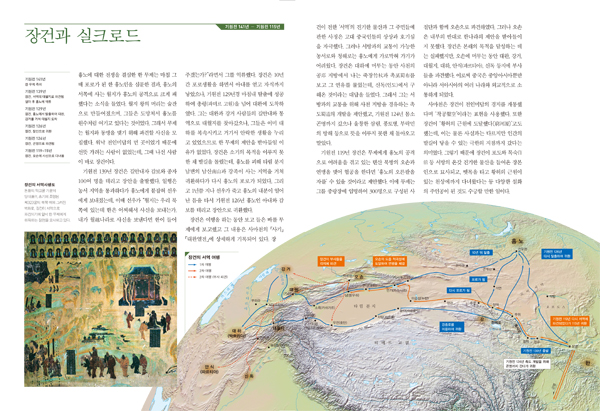
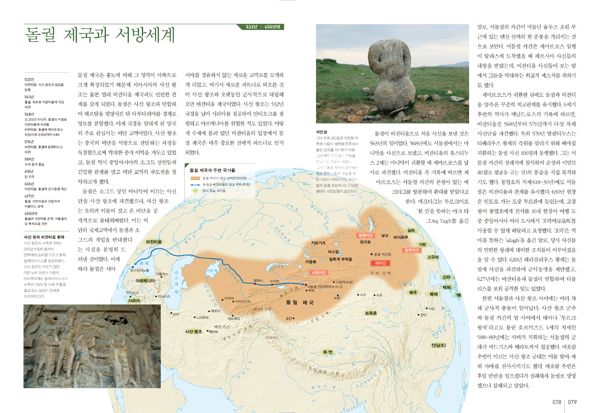
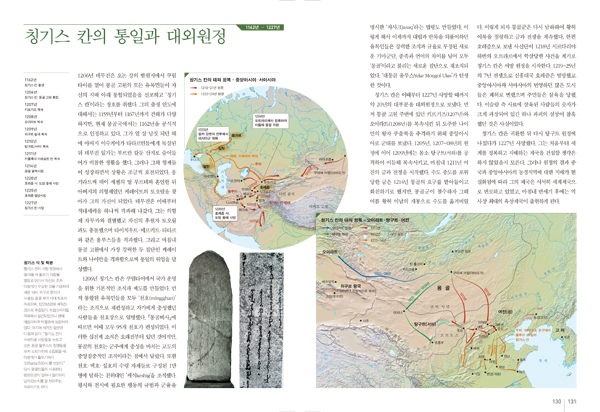
Publisher's Review
A masterpiece by Professor Kim Ho-dong of Seoul National University, the "Great Khan" of Central Eurasian history research.
The author of this book, Professor Kim Ho-dong of the Department of Oriental History at Seoul National University, is a world-renowned scholar in the field of Central Eurasian history.
He is currently preparing for publication as the editor-in-chief of the Cambridge History of the Mongol Empire, one of the Cambridge University Press History Series.
The goal is to review, select, and request revisions from manuscripts submitted by approximately 40 experts on the history of the Mongol Empire from around the world, with the aim of completing the book in two volumes by 2017.
The publication of this book will serve as an opportunity to establish the history of the Mongol Empire as an important era in world history.
The author, considered a pioneer in the field of Central Eurasian history in Korea, is a rare researcher who possesses both expertise and popularity.
As the first generation to study Central Eurasian history in the local language, he speaks over ten languages, including major ones such as English, Chinese, and Russian, as well as minority languages such as Persian, Mongolian, Turkish, and Uyghur. He has published numerous translations of key primary sources for his own research as well as for future scholars.
Representative works include Arab historian Ibn Khaldun's 『Introduction to History - Arabs, Islam, and Civilization』, and Rashid ad-Din's trilogy of works 『The Tribes』, 『The Book of Genghis Khan』, and 『The Descendants of the Khan』, which can be considered the three major basic sources for studying the history of the Mongol Empire along with 『Secret History of the Mongols』 and 『The Origin History』, and the travel books 『The Travels of Marco Polo』 and 『The Forerunners of Marco Polo』 from the Pax Mongolica era.
In addition, he has written numerous popular books that convey the value and enjoyment of Central Eurasian history to general readers.
These include 『From the Yellow River to the Tianshan Mountains』, 『The Mongol Empire and the Birth of World History』, and 『Eurasia Through a Thousand Years』.
Through these books, he restored the glorious past of the grasslands and oases, overshadowed by the history of the great powers, and the tragic history of ethnic minorities who fell into decline, losing their former glory. This helped correct the biased perspectives of readers regarding world history and suggested a path toward a holistic view of history.
This book, "Atlas of Central Eurasia," is a culmination of his 35 years of research and his long experience combining expertise and popularity.
Four Seasons Publishing Company's Atlas History Series Complete Edition
Launched in 2004, Sagyeseoul Publishing's Atlas History series is an ambitious project that seeks to expand historical awareness, previously limited to time, into space through maps. It is a high-quality historical textbook that represents the pinnacle of large-scale historical projects in the Korean publishing industry.
While numerous attempts to combine maps and history have already been made in the English-speaking world, the Four Seasons Atlas History Series is the first of its kind in Korea, based on long-term planning and drive, the high-quality historical narratives of domestic researchers, and the professional map-making know-how.
Inspired by the publication of this pioneering series, various forms of 'history through maps' series have been published in the domestic publishing industry since then.
However, most of them are translations, and there are still not many domestically written books.
From manuscript writing to map development, illustration selection, and editing, it took nearly three years to complete 『Atlas of Central Eurasia』, which is the fifth book in the Atlas History series, following 『Atlas of Korean History』 (2004), 『Atlas of World History』 (first edition 2004, completely revised edition 2009), 『Atlas of Chinese History』 (first edition 2007, revised and expanded edition 2015), and 『Atlas of Japanese History』 (2011), and is also the final book to close the series.
It is expected that 『Atlas of Central Eurasia』 will contribute to opening new horizons in historical learning and understanding, going beyond the level of a text-based introductory book.
Key Contents
prolog
Central Eurasian history is still an unfamiliar field to domestic readers.
Before reading the full history, I thought it would be helpful for readers to explain key concepts related to Central Eurasia, so I prepared a prologue.
The term Central Eurasia, the concepts of steppes and deserts, nomads and oasis dwellers are explained in detail.
Part 1: Ancient Nomadic States
It covers the period from the 7th century BC to the 5th century AD.
This was the era in which the Scythians and the Huns established the first nomadic states in history in the west and east of the Eurasian steppe, establishing political and economic relations with the surrounding settled agricultural peoples, while also playing an active role in the exchange of Eastern and Western civilizations through the Silk Road.
It also explains how these nomadic states were organized and operated, and what kind of relationships they had with the agricultural states to the south.
An interesting fact is that almost all the important and typical features that appear throughout Central Eurasian history appear in this period.
Therefore, accurately understanding the activities of ancient nomadic states can be said to be the cornerstone for understanding the subsequent historical development of Central Eurasia.
It is also noteworthy that when a nomadic state like the Huns and a settled state like the Han Dynasty experience unrest and the pattern of their relationship with each other breaks down, large-scale migrations of peoples occur along with political chaos.
The era of division in Chinese history, known as the Sixteen Kingdoms and the Northern and Southern Dynasties, was in fact merely an expression for the widespread migration of peoples that encompassed all of Central Eurasia.
Part 2: Activities of the Turkic Peoples
It covers the period from the 6th to the 10th centuries, when the era of great migrations and the resulting chaos ended and the Turks gained political hegemony in Central Eurasia.
In ancient Chinese records, a group recorded as the 'Geokturks' arose near the Altai Mountains and established a nomadic empire, the territory of which expanded much further west than that of the Huns in the past.
Following the footsteps of the Turks, the Uyghurs, a fellow Turkic group, also established a nomadic state.
The scope of activity of the nomadic state that set the stage for Central Eurasia was so wide that it extended to the Tang Dynasty in China, Byzantium in Europe, and the Sassanid Dynasty in Persia.
Additionally, the Sogdians, residents of the Central Asian oasis cities, joined hands with these nomads and engaged in trade throughout Eurasia, and also played a role in mediating the cultures of various regions.
However, the collapse of the Uyghur Empire in the mid-9th century brought an end to the era of Turkic hegemony.
This coincided with the collapse of the Tang Empire and the decline of the Abbasid Caliphate, causing widespread political turmoil across Eurasia.
Furthermore, this triggered a phenomenon that had occurred in the past: large-scale ethnic migration.
Part 3: The Conqueror Dynasty and the Mongol Empire
It covers the period from the 10th century, when the great migrations of peoples reappeared, to the 14th century, when the Mongol Empire rose and fell.
Before the emergence of the Mongol Empire, we will examine the characteristics of the states established in northern China by the Khitan (Liao) and Jurchen (Jin), known as the so-called "conquering dynasties" in Chinese history, and then examine the historical environment in which the Mongol Empire emerged.
It is particularly fascinating to explore where the Mongol Empire gained the strength to build the largest land empire in history, encompassing not only the steppes of Central Eurasia but also East and West Asia, Russia, and the northern Black Sea.
However, due to the empire's territorial scale and internal conflicts and wars within the Genghis clan, the Mongol Empire lost its initial unity and split into several relatively independent political 'uluses'.
That is, the Mongol Empire was divided into three major uluses in the West, with the Khan Ulus (Great Yuan) at its peak. Until now, it has been understood as a single empire divided into several successor states, but this book focuses on the fact that the political unity of the Mongol Empire was maintained to a considerable degree.
Because the Mongol Empire enabled unprecedented communication through its vast integration across Eurasia, we must not overlook the reality and historical significance of the cultural exchanges of this era, described as "Pax Mongolica."
Part 4: The Age of Successor States
It covers the history of Central Eurasia from the post-Mongol period, that is, from the 15th to the 17th centuries.
It is easy to assume that with the fall of the Mongol Empire, nomads ceased to play a significant historical role, but the course of events since the 15th century clearly demonstrates that this common belief is not true.
The world of the Mongol nomads who retreated to the steppes entered a period of lull due to the offensives of the Ming Dynasty and internal divisions within the nomadic society, but in the 15th century, under the leadership of the Oirat Western Mongols, they began to exert strong pressure on China and Central Asia, and were subsequently unified by the Eastern Mongols.
In Central Asia, the Timurid Empire emerged from the Chagadai Ulus and exerted its power by conquering even West Asia.
Also, during this period, Tibetan Buddhism and Islam actively carried out missionary work in the Mongolian steppe and East Turkestan, respectively, and as a result, the residents of the eastern and western parts of Central Eurasia converted to Buddhism and Islam, respectively.
Islamic influence expanded through Uyghuristan (Turpan and Hami) to Gansu and Shaanxi, and Tibetan Buddhism was connected to the inner and outer Mongolian steppes through the Qinghai region.
The emergence of a new political legitimacy based on the religious ideologies of Buddhism and Islam is also an important characteristic of the post-Mongol era.
Part 5: The Decline of the Nomadic States
Covers the period from the 17th century to the late 19th century.
In other words, it deals with the process by which the historical dynamics of Central Eurasia ultimately disappeared as the Qing Empire established by the Manchus on one side and the Russians on the other expanded into Central Eurasia, and the nomads and oasis dwellers who had been active in this region were subjugated and incorporated into these empires.
The Manchus, who grew up learning political legitimacy and national ideology cultivated in the Chinggis tradition, subjugated the nomads of Inner Mongolia and Outer Mongolia one after another, and finally, in the mid-18th century, they destroyed the Dzungars, which could be called the last nomadic state.
Furthermore, by taking over Tibet and Xinjiang, it completely dominated the eastern part of Central Eurasia.
Russia also began its fierce eastward advance in the mid-16th century, taking control of all of Siberia, and by the mid-to-late 19th century, it had succeeded in annexing the three khanates of Kokand, Bukhara, and Khiva in Central Asia.
As a result, Central Eurasia was completely divided between the two empires of Qing and Russia, and lost its historical independence and momentum.
Epilogue
The text of this book ends in the late 19th century.
Modern history is covered in the epilogue.
As the author points out in the preface, “I thought it might be somewhat acceptable to make a difference in the narrative regarding the period when it became part of Russia and China and lost its dominant role.”
The book concludes by describing the modern fate of the major regions of Central Eurasia, including Central Asia, Mongolia, Xinjiang, and Tibet, following the Soviet Revolution.
Features of this book
One theme on two pages
The book is divided into 96 themes, ranging from 'Migration of Populations' to 'Russia's Conquest of Central Asia', and each theme is presented on a double-page spread.
Maps, genealogical charts, and illustrations are provided to clearly explain the topic along with the main text.
The chronology placed at the top left of each theme serves as a coordinate that tells the reader which period the content they are currently reading applies to.
A total of 113 historical maps and 22 genealogical charts vividly depicting historical events.
The core of 『Atlas of Central Eurasia』 is to compress the content of the text into a map and expand the scope of historical understanding, which is currently confined to time, into space.
The author created almost all of the maps in this book.
First, we determined the longitude and latitude, and then entered the major place names that appeared in Central Eurasian history from ancient times to modern times into a map-making program.
Then, based on thorough interpretation of historical materials and geographical verification, the historical events, their development, and areas were implemented on a map.
Although the maps in this book were, of course, visualized by map illustration experts, the content is based on the author Kim Ho-dong's interpretation and research.
As the author is a leading expert in the field, the maps included in this book are in themselves an authoritative interpretation of history.
The 113 maps in this book visually reveal various aspects of Central Eurasian history, including the migration and settlement of nomadic peoples, wars between ethnic groups and nations, trade, and travel across Central Eurasia.
Additionally, the 22 genealogical charts provide a systematic overview of the complex lineages of nomadic monarchs, serving as a useful guide when reading the text.
High-quality graphic 3D maps
Breaking away from the monotonous flat maps found in most history books, we mainly used three-dimensional maps that realistically showed mountain ranges, rivers, plateaus, and plains.
Using points, lines, and planes, we clearly show the locations of historical events, borders, and spheres of influence, and by using arrows of various styles, we attempted to create the dynamism of time in a space that appears to be still.
Just by looking at the map from beginning to end, you can get a general picture of Central Eurasian history.
The author of this book, Professor Kim Ho-dong of the Department of Oriental History at Seoul National University, is a world-renowned scholar in the field of Central Eurasian history.
He is currently preparing for publication as the editor-in-chief of the Cambridge History of the Mongol Empire, one of the Cambridge University Press History Series.
The goal is to review, select, and request revisions from manuscripts submitted by approximately 40 experts on the history of the Mongol Empire from around the world, with the aim of completing the book in two volumes by 2017.
The publication of this book will serve as an opportunity to establish the history of the Mongol Empire as an important era in world history.
The author, considered a pioneer in the field of Central Eurasian history in Korea, is a rare researcher who possesses both expertise and popularity.
As the first generation to study Central Eurasian history in the local language, he speaks over ten languages, including major ones such as English, Chinese, and Russian, as well as minority languages such as Persian, Mongolian, Turkish, and Uyghur. He has published numerous translations of key primary sources for his own research as well as for future scholars.
Representative works include Arab historian Ibn Khaldun's 『Introduction to History - Arabs, Islam, and Civilization』, and Rashid ad-Din's trilogy of works 『The Tribes』, 『The Book of Genghis Khan』, and 『The Descendants of the Khan』, which can be considered the three major basic sources for studying the history of the Mongol Empire along with 『Secret History of the Mongols』 and 『The Origin History』, and the travel books 『The Travels of Marco Polo』 and 『The Forerunners of Marco Polo』 from the Pax Mongolica era.
In addition, he has written numerous popular books that convey the value and enjoyment of Central Eurasian history to general readers.
These include 『From the Yellow River to the Tianshan Mountains』, 『The Mongol Empire and the Birth of World History』, and 『Eurasia Through a Thousand Years』.
Through these books, he restored the glorious past of the grasslands and oases, overshadowed by the history of the great powers, and the tragic history of ethnic minorities who fell into decline, losing their former glory. This helped correct the biased perspectives of readers regarding world history and suggested a path toward a holistic view of history.
This book, "Atlas of Central Eurasia," is a culmination of his 35 years of research and his long experience combining expertise and popularity.
Four Seasons Publishing Company's Atlas History Series Complete Edition
Launched in 2004, Sagyeseoul Publishing's Atlas History series is an ambitious project that seeks to expand historical awareness, previously limited to time, into space through maps. It is a high-quality historical textbook that represents the pinnacle of large-scale historical projects in the Korean publishing industry.
While numerous attempts to combine maps and history have already been made in the English-speaking world, the Four Seasons Atlas History Series is the first of its kind in Korea, based on long-term planning and drive, the high-quality historical narratives of domestic researchers, and the professional map-making know-how.
Inspired by the publication of this pioneering series, various forms of 'history through maps' series have been published in the domestic publishing industry since then.
However, most of them are translations, and there are still not many domestically written books.
From manuscript writing to map development, illustration selection, and editing, it took nearly three years to complete 『Atlas of Central Eurasia』, which is the fifth book in the Atlas History series, following 『Atlas of Korean History』 (2004), 『Atlas of World History』 (first edition 2004, completely revised edition 2009), 『Atlas of Chinese History』 (first edition 2007, revised and expanded edition 2015), and 『Atlas of Japanese History』 (2011), and is also the final book to close the series.
It is expected that 『Atlas of Central Eurasia』 will contribute to opening new horizons in historical learning and understanding, going beyond the level of a text-based introductory book.
Key Contents
prolog
Central Eurasian history is still an unfamiliar field to domestic readers.
Before reading the full history, I thought it would be helpful for readers to explain key concepts related to Central Eurasia, so I prepared a prologue.
The term Central Eurasia, the concepts of steppes and deserts, nomads and oasis dwellers are explained in detail.
Part 1: Ancient Nomadic States
It covers the period from the 7th century BC to the 5th century AD.
This was the era in which the Scythians and the Huns established the first nomadic states in history in the west and east of the Eurasian steppe, establishing political and economic relations with the surrounding settled agricultural peoples, while also playing an active role in the exchange of Eastern and Western civilizations through the Silk Road.
It also explains how these nomadic states were organized and operated, and what kind of relationships they had with the agricultural states to the south.
An interesting fact is that almost all the important and typical features that appear throughout Central Eurasian history appear in this period.
Therefore, accurately understanding the activities of ancient nomadic states can be said to be the cornerstone for understanding the subsequent historical development of Central Eurasia.
It is also noteworthy that when a nomadic state like the Huns and a settled state like the Han Dynasty experience unrest and the pattern of their relationship with each other breaks down, large-scale migrations of peoples occur along with political chaos.
The era of division in Chinese history, known as the Sixteen Kingdoms and the Northern and Southern Dynasties, was in fact merely an expression for the widespread migration of peoples that encompassed all of Central Eurasia.
Part 2: Activities of the Turkic Peoples
It covers the period from the 6th to the 10th centuries, when the era of great migrations and the resulting chaos ended and the Turks gained political hegemony in Central Eurasia.
In ancient Chinese records, a group recorded as the 'Geokturks' arose near the Altai Mountains and established a nomadic empire, the territory of which expanded much further west than that of the Huns in the past.
Following the footsteps of the Turks, the Uyghurs, a fellow Turkic group, also established a nomadic state.
The scope of activity of the nomadic state that set the stage for Central Eurasia was so wide that it extended to the Tang Dynasty in China, Byzantium in Europe, and the Sassanid Dynasty in Persia.
Additionally, the Sogdians, residents of the Central Asian oasis cities, joined hands with these nomads and engaged in trade throughout Eurasia, and also played a role in mediating the cultures of various regions.
However, the collapse of the Uyghur Empire in the mid-9th century brought an end to the era of Turkic hegemony.
This coincided with the collapse of the Tang Empire and the decline of the Abbasid Caliphate, causing widespread political turmoil across Eurasia.
Furthermore, this triggered a phenomenon that had occurred in the past: large-scale ethnic migration.
Part 3: The Conqueror Dynasty and the Mongol Empire
It covers the period from the 10th century, when the great migrations of peoples reappeared, to the 14th century, when the Mongol Empire rose and fell.
Before the emergence of the Mongol Empire, we will examine the characteristics of the states established in northern China by the Khitan (Liao) and Jurchen (Jin), known as the so-called "conquering dynasties" in Chinese history, and then examine the historical environment in which the Mongol Empire emerged.
It is particularly fascinating to explore where the Mongol Empire gained the strength to build the largest land empire in history, encompassing not only the steppes of Central Eurasia but also East and West Asia, Russia, and the northern Black Sea.
However, due to the empire's territorial scale and internal conflicts and wars within the Genghis clan, the Mongol Empire lost its initial unity and split into several relatively independent political 'uluses'.
That is, the Mongol Empire was divided into three major uluses in the West, with the Khan Ulus (Great Yuan) at its peak. Until now, it has been understood as a single empire divided into several successor states, but this book focuses on the fact that the political unity of the Mongol Empire was maintained to a considerable degree.
Because the Mongol Empire enabled unprecedented communication through its vast integration across Eurasia, we must not overlook the reality and historical significance of the cultural exchanges of this era, described as "Pax Mongolica."
Part 4: The Age of Successor States
It covers the history of Central Eurasia from the post-Mongol period, that is, from the 15th to the 17th centuries.
It is easy to assume that with the fall of the Mongol Empire, nomads ceased to play a significant historical role, but the course of events since the 15th century clearly demonstrates that this common belief is not true.
The world of the Mongol nomads who retreated to the steppes entered a period of lull due to the offensives of the Ming Dynasty and internal divisions within the nomadic society, but in the 15th century, under the leadership of the Oirat Western Mongols, they began to exert strong pressure on China and Central Asia, and were subsequently unified by the Eastern Mongols.
In Central Asia, the Timurid Empire emerged from the Chagadai Ulus and exerted its power by conquering even West Asia.
Also, during this period, Tibetan Buddhism and Islam actively carried out missionary work in the Mongolian steppe and East Turkestan, respectively, and as a result, the residents of the eastern and western parts of Central Eurasia converted to Buddhism and Islam, respectively.
Islamic influence expanded through Uyghuristan (Turpan and Hami) to Gansu and Shaanxi, and Tibetan Buddhism was connected to the inner and outer Mongolian steppes through the Qinghai region.
The emergence of a new political legitimacy based on the religious ideologies of Buddhism and Islam is also an important characteristic of the post-Mongol era.
Part 5: The Decline of the Nomadic States
Covers the period from the 17th century to the late 19th century.
In other words, it deals with the process by which the historical dynamics of Central Eurasia ultimately disappeared as the Qing Empire established by the Manchus on one side and the Russians on the other expanded into Central Eurasia, and the nomads and oasis dwellers who had been active in this region were subjugated and incorporated into these empires.
The Manchus, who grew up learning political legitimacy and national ideology cultivated in the Chinggis tradition, subjugated the nomads of Inner Mongolia and Outer Mongolia one after another, and finally, in the mid-18th century, they destroyed the Dzungars, which could be called the last nomadic state.
Furthermore, by taking over Tibet and Xinjiang, it completely dominated the eastern part of Central Eurasia.
Russia also began its fierce eastward advance in the mid-16th century, taking control of all of Siberia, and by the mid-to-late 19th century, it had succeeded in annexing the three khanates of Kokand, Bukhara, and Khiva in Central Asia.
As a result, Central Eurasia was completely divided between the two empires of Qing and Russia, and lost its historical independence and momentum.
Epilogue
The text of this book ends in the late 19th century.
Modern history is covered in the epilogue.
As the author points out in the preface, “I thought it might be somewhat acceptable to make a difference in the narrative regarding the period when it became part of Russia and China and lost its dominant role.”
The book concludes by describing the modern fate of the major regions of Central Eurasia, including Central Asia, Mongolia, Xinjiang, and Tibet, following the Soviet Revolution.
Features of this book
One theme on two pages
The book is divided into 96 themes, ranging from 'Migration of Populations' to 'Russia's Conquest of Central Asia', and each theme is presented on a double-page spread.
Maps, genealogical charts, and illustrations are provided to clearly explain the topic along with the main text.
The chronology placed at the top left of each theme serves as a coordinate that tells the reader which period the content they are currently reading applies to.
A total of 113 historical maps and 22 genealogical charts vividly depicting historical events.
The core of 『Atlas of Central Eurasia』 is to compress the content of the text into a map and expand the scope of historical understanding, which is currently confined to time, into space.
The author created almost all of the maps in this book.
First, we determined the longitude and latitude, and then entered the major place names that appeared in Central Eurasian history from ancient times to modern times into a map-making program.
Then, based on thorough interpretation of historical materials and geographical verification, the historical events, their development, and areas were implemented on a map.
Although the maps in this book were, of course, visualized by map illustration experts, the content is based on the author Kim Ho-dong's interpretation and research.
As the author is a leading expert in the field, the maps included in this book are in themselves an authoritative interpretation of history.
The 113 maps in this book visually reveal various aspects of Central Eurasian history, including the migration and settlement of nomadic peoples, wars between ethnic groups and nations, trade, and travel across Central Eurasia.
Additionally, the 22 genealogical charts provide a systematic overview of the complex lineages of nomadic monarchs, serving as a useful guide when reading the text.
High-quality graphic 3D maps
Breaking away from the monotonous flat maps found in most history books, we mainly used three-dimensional maps that realistically showed mountain ranges, rivers, plateaus, and plains.
Using points, lines, and planes, we clearly show the locations of historical events, borders, and spheres of influence, and by using arrows of various styles, we attempted to create the dynamism of time in a space that appears to be still.
Just by looking at the map from beginning to end, you can get a general picture of Central Eurasian history.
GOODS SPECIFICS
- Date of issue: January 15, 2016
- Format: Hardcover book binding method guide
- Page count, weight, size: 272 pages | 1,018g | 188*254*24mm
- ISBN13: 9788958289326
- ISBN10: 8958289325
You may also like
카테고리
korean


korean

![GQ KOREA Mark (Monthly): December [2025]](http://librairie.coreenne.fr/cdn/shop/files/8ef265dbbfbf186523ed75ba7319009d.jpg?v=1765340328&width=3840)


