

Gyeongseong's hot places
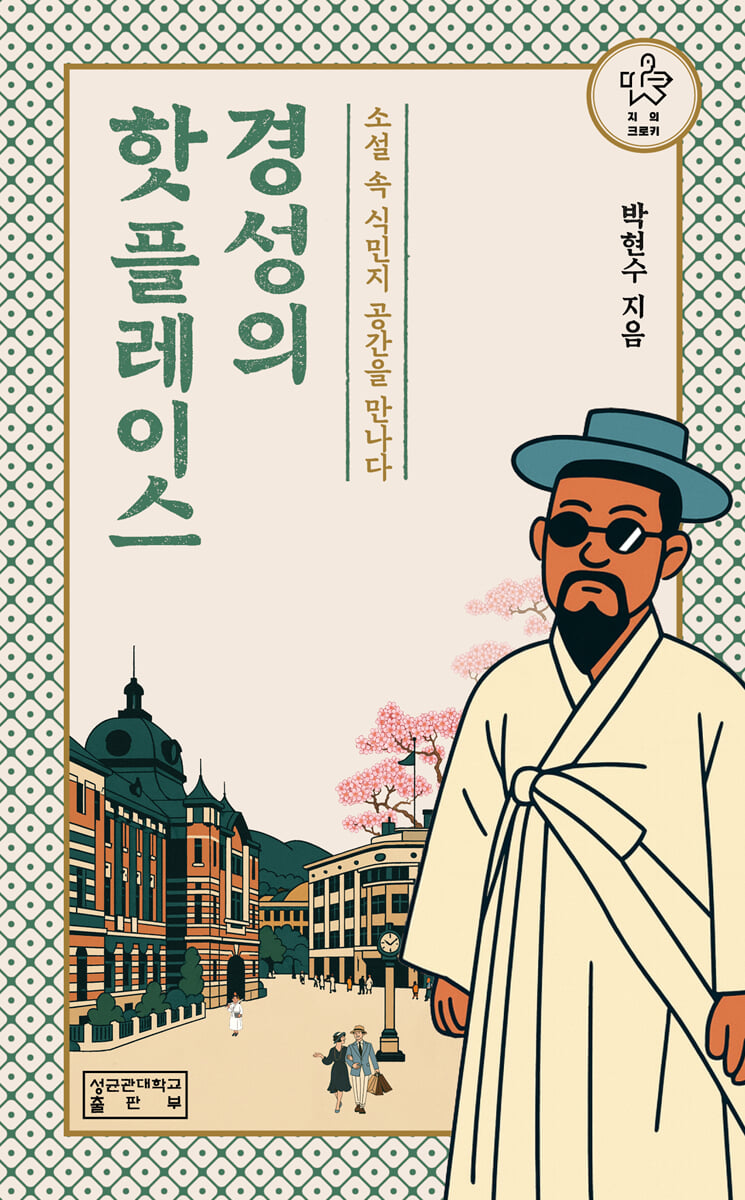 |
Description
Book Introduction
What did Gyeongseong look like during the colonial era?
8 Hot Places in Gyeongseong as Seen Through Novels
The author, who has been loved by readers for books such as 『Gyeongseong Restaurant Stroll』 (Hankyoreh Publishing, 2023), which describes restaurants in Gyeongseong that can be seen in recent colonial-era novels, and 『Hotteok and Chocolate Come to Gyeongseong』 (Hankyoreh Publishing, 2025), which covers eight popular desserts of the time, has now revealed the most popular places in Gyeongseong at the time.
Through this book, you will encounter eight of the hottest and most representative spaces of the era, from train stations to department stores, bakeries, golf courses, and amusement parks. You will feel as if you are walking through every nook and cranny of Gyeongseong of that era.
Furthermore, through these spaces, one can indirectly experience the colorful appearance of Gyeongseong during the colonial era, as well as the upheaval and pain of the times.
Furthermore, by encountering the history and changes of the same space that continue to this day, we will be able to understand this space and history anew.
When most people think of the colonial era, they tend to think of a landscape divided into pro-Japanese and anti-Japanese factions.
On one side, there were pro-Japanese collaborators who lived in the shadow of Japan and struggled for personal glory, while on the other side, there were people who devoted themselves to the independence movement to escape from colonial rule.
However, considering the proportion of Koreans at the time, only a very small number of people actively participated in pro-Japanese and anti-Japanese activities.
Most of the rest of the people had no choice but to faithfully live their daily lives.
Nevertheless, many people filled that era with dynamism and diversity, even though it was a colonial era.
The places that best show this are the spaces of Gyeongseong.
Unfortunately, we can't travel back in time to that era in person, but we can indirectly experience the hot spots of Gyeongseong through colonial-era novels.
At that time, the novel vividly portrayed the characters visiting the space of Gyeongseong, and also showed the colorful characteristics of that space.
At that time, Gyeongseong was the second largest city in Asia after Tokyo, Japan.
In Gyeongseong, the colonial capital, there was Meiji Confectionery, which competed for first and second place in coffee flavor, and there was also a place that displayed and sold confectionery produced by Morinaga Confectionery, such as chocolate, caramel, and biscuits.
There was also the Ttukseom Golf Course, the only 18-hole golf course in Joseon, and the Han River Boat Dock, a must-visit date course for couples whispering sweet nothings.
And the Mitsukoshi Department Store Gyeongseong branch and Kanebo Fruit Parlor, a fruit dessert cafe, were also showing off their power.
Usually, novels have a formal character of conflict and its development caused by the central character and other characters.
The novel vividly portrays characters visiting the colorful spaces of Gyeongseong, while also presenting the characteristics of those spaces.
For example, in Lee Tae-jun's "Youthful Voice," Eun-shim and her friends visit Meiji Confectionery and eat coffee and cookies.
Also, in the same author's book, "Three Daughters," the food served at the Ttukseom Golf Course and the clubhouse is described in detail.
Kim Nam-cheon's novel "Aquarium of Love" also features a space like Kanebo Fruit Parlor, a fancy and sophisticated dessert cafe that seems out of place in the colonial era.
This book focuses on the spaces of Gyeongseong that appear in the novels, explaining the meaning and characteristics of each space in the development of each novel, and further explaining the various backgrounds and phases that led to the appearance of each space, helping readers feel as if they were directly traveling to that space at that time.
It will also help you understand that era and place through various images.
Now, let's go to the hot places in Gyeongseong with this book.
8 Hot Places in Gyeongseong as Seen Through Novels
The author, who has been loved by readers for books such as 『Gyeongseong Restaurant Stroll』 (Hankyoreh Publishing, 2023), which describes restaurants in Gyeongseong that can be seen in recent colonial-era novels, and 『Hotteok and Chocolate Come to Gyeongseong』 (Hankyoreh Publishing, 2025), which covers eight popular desserts of the time, has now revealed the most popular places in Gyeongseong at the time.
Through this book, you will encounter eight of the hottest and most representative spaces of the era, from train stations to department stores, bakeries, golf courses, and amusement parks. You will feel as if you are walking through every nook and cranny of Gyeongseong of that era.
Furthermore, through these spaces, one can indirectly experience the colorful appearance of Gyeongseong during the colonial era, as well as the upheaval and pain of the times.
Furthermore, by encountering the history and changes of the same space that continue to this day, we will be able to understand this space and history anew.
When most people think of the colonial era, they tend to think of a landscape divided into pro-Japanese and anti-Japanese factions.
On one side, there were pro-Japanese collaborators who lived in the shadow of Japan and struggled for personal glory, while on the other side, there were people who devoted themselves to the independence movement to escape from colonial rule.
However, considering the proportion of Koreans at the time, only a very small number of people actively participated in pro-Japanese and anti-Japanese activities.
Most of the rest of the people had no choice but to faithfully live their daily lives.
Nevertheless, many people filled that era with dynamism and diversity, even though it was a colonial era.
The places that best show this are the spaces of Gyeongseong.
Unfortunately, we can't travel back in time to that era in person, but we can indirectly experience the hot spots of Gyeongseong through colonial-era novels.
At that time, the novel vividly portrayed the characters visiting the space of Gyeongseong, and also showed the colorful characteristics of that space.
At that time, Gyeongseong was the second largest city in Asia after Tokyo, Japan.
In Gyeongseong, the colonial capital, there was Meiji Confectionery, which competed for first and second place in coffee flavor, and there was also a place that displayed and sold confectionery produced by Morinaga Confectionery, such as chocolate, caramel, and biscuits.
There was also the Ttukseom Golf Course, the only 18-hole golf course in Joseon, and the Han River Boat Dock, a must-visit date course for couples whispering sweet nothings.
And the Mitsukoshi Department Store Gyeongseong branch and Kanebo Fruit Parlor, a fruit dessert cafe, were also showing off their power.
Usually, novels have a formal character of conflict and its development caused by the central character and other characters.
The novel vividly portrays characters visiting the colorful spaces of Gyeongseong, while also presenting the characteristics of those spaces.
For example, in Lee Tae-jun's "Youthful Voice," Eun-shim and her friends visit Meiji Confectionery and eat coffee and cookies.
Also, in the same author's book, "Three Daughters," the food served at the Ttukseom Golf Course and the clubhouse is described in detail.
Kim Nam-cheon's novel "Aquarium of Love" also features a space like Kanebo Fruit Parlor, a fancy and sophisticated dessert cafe that seems out of place in the colonial era.
This book focuses on the spaces of Gyeongseong that appear in the novels, explaining the meaning and characteristics of each space in the development of each novel, and further explaining the various backgrounds and phases that led to the appearance of each space, helping readers feel as if they were directly traveling to that space at that time.
It will also help you understand that era and place through various images.
Now, let's go to the hot places in Gyeongseong with this book.
index
Chapter 1: Gyeongseong Station, the center of the railway or the gateway to Gyeongseong
A grand and sophisticated Renaissance-style restaurant and grill | A poignant sense of sadness and the roar of a whistle | A view from the waiting room | The two faces of Gyeongseong Station
* Learn more: Take a look around Gyeongseong Station
Chapter 2: Jongno's Best Activity Photo Studio, Umigwan
A place to watch running and chasing | A landmark in Jongno | A place where I saw numerous action photos | Kim Du-han's stage | One of Gyeongseong's three major theaters, Umigwan
* Learn more: Women's seats are increasing, and children's audiences are decreasing
Chapter 3: The Best Spot for "Yaeng": Changgyeongwon
A famous cherry blossom spot from the colonial era | Changgyeongwon's "Night Cherry Blossoms" heralding spring | Rarely seen animals | Botanical garden greenhouses and skating rinks | Palaces turned into entertainment venues
* Learn more: The beautiful yet sad wild cherry blossoms of Changgyeongwon
Chapter 4: The Saddest Comrade's Saddest Teahouse, Dabang Swallow
The tea house in front of Jongno Police Station and its owner | An expert in architecture | But not interested in business | What does this absent-minded friend do?
* Learn more: Is there such a deserted teahouse?
Chapter 5: "Is this all one person's fortune teller?", Mitsukoshi Department Store
Where was the "○○ Obokbu"? | Selling both Japanese and Western clothes | Going to Mitsukoshi and eating Nanchi | The shackles of colonialism
* Learn more: Gyeongseong's Byeolcheonji, Department Store
Chapter 6: "I'll go there because it's on the second floor.", Meiji Confectionery
As if you've been waiting | Why coffee at a bakery? | A cozy second floor, a secret first floor | When it comes to coffee, it's Meiji Confectionery
* Learn more: Meiji Confectionery, a favorite of even the Queen of Tea
Chapter 7: Joseon's Only 18-Hole Golf Course, Gunjari Golf Course
At first, it was a bit difficult to send it far away | The clubhouse of Gunjari Golf Course | The scenery of Baby Golf Course | Why build a golf course on a grave?
* Learn more: Gunjari Golf Course and Baby Golf
Chapter 8: The Han River Park: A Place More Precious Than Food and Clothes
Reunited with an old lover | Boat dock at the Han River Park | Another pleasure: the skating rink | Summer attraction: the Han River swimming pool | The birth of the park, its light and shade
* Learn more: The pleasure streets of Hangang Park
A grand and sophisticated Renaissance-style restaurant and grill | A poignant sense of sadness and the roar of a whistle | A view from the waiting room | The two faces of Gyeongseong Station
* Learn more: Take a look around Gyeongseong Station
Chapter 2: Jongno's Best Activity Photo Studio, Umigwan
A place to watch running and chasing | A landmark in Jongno | A place where I saw numerous action photos | Kim Du-han's stage | One of Gyeongseong's three major theaters, Umigwan
* Learn more: Women's seats are increasing, and children's audiences are decreasing
Chapter 3: The Best Spot for "Yaeng": Changgyeongwon
A famous cherry blossom spot from the colonial era | Changgyeongwon's "Night Cherry Blossoms" heralding spring | Rarely seen animals | Botanical garden greenhouses and skating rinks | Palaces turned into entertainment venues
* Learn more: The beautiful yet sad wild cherry blossoms of Changgyeongwon
Chapter 4: The Saddest Comrade's Saddest Teahouse, Dabang Swallow
The tea house in front of Jongno Police Station and its owner | An expert in architecture | But not interested in business | What does this absent-minded friend do?
* Learn more: Is there such a deserted teahouse?
Chapter 5: "Is this all one person's fortune teller?", Mitsukoshi Department Store
Where was the "○○ Obokbu"? | Selling both Japanese and Western clothes | Going to Mitsukoshi and eating Nanchi | The shackles of colonialism
* Learn more: Gyeongseong's Byeolcheonji, Department Store
Chapter 6: "I'll go there because it's on the second floor.", Meiji Confectionery
As if you've been waiting | Why coffee at a bakery? | A cozy second floor, a secret first floor | When it comes to coffee, it's Meiji Confectionery
* Learn more: Meiji Confectionery, a favorite of even the Queen of Tea
Chapter 7: Joseon's Only 18-Hole Golf Course, Gunjari Golf Course
At first, it was a bit difficult to send it far away | The clubhouse of Gunjari Golf Course | The scenery of Baby Golf Course | Why build a golf course on a grave?
* Learn more: Gunjari Golf Course and Baby Golf
Chapter 8: The Han River Park: A Place More Precious Than Food and Clothes
Reunited with an old lover | Boat dock at the Han River Park | Another pleasure: the skating rink | Summer attraction: the Han River swimming pool | The birth of the park, its light and shade
* Learn more: The pleasure streets of Hangang Park
Detailed image

Publisher's Review
“Let’s take a look around Gyeongseong Station” Gyeongseong Station, the gateway to Gyeongseong
Gyeongseong Station served as Seoul Station until a new station was built in December 2003.
Gyeongseong Station was completed on October 25, 1925.
It was built on a total land area of 270,000 square meters, with a history of 17,000 square meters, and has 1 underground floor and 2 above-ground floors.
It is a Renaissance architectural style with a Byzantine dome and was built using brick and stone.
During the colonial era, Gyeongseong Station was located at the center of the railroad connecting Busan and Mokpo to the south, and Sinuiju and Wonsan to the north.
Meanwhile, Gyeongseong Station itself boasted a grand and splendid appearance, boasting the grandeur of modern civilization to the people living in Gyeongseong.
Even now, Gyeongseong Station is preserved next to Seoul Station under the name ‘Culture Station Seoul 284’.
“I’m talking about Umigwan, why are you making fun of the moving pictures...”, Umigwan, a landmark in Jongno
The address at the time where Umi-gwan was located was 89 Gwancheoljeong, Jongno.
The YMCA building that still exists today, across from the Central Christian Youth Center, appears a short walk towards Jongno 3-ga.
The first construction of Umi Hall was completed in December 1912.
It was a two-story brick building, and at the time it was a large theater with a seating capacity of 1,000 people.
Although it pursued the 'Yanghwagwan' (Western picture hall) that screened Western motion pictures, it also screened Japanese classics from time to time.
Umigwan, along with Dansungsa and Joseon Theater, was considered one of the three major theaters in Gyeongseong during the colonial period and was loved by audiences.
If you go to the place where Umi-gwan used to be, the building is gone, but you can find a sign that says 'Umi-gwan Site'.
"Everyone comes to Changgyeongwon to see the cherry blossoms." Changgyeongwon, the place that announces the arrival of spring.
Changgyeongwon was located on the site of Changgyeonggung Palace.
Japan, which occupied Joseon, attempted to turn Changgyeonggung Palace into a park-like space in order to erase the grandeur of the colonial palace.
The same reason was behind the establishment of botanical gardens, zoos, and museums, and the botanical garden in particular is said to have boasted the largest scale in the Orient at the time of its opening.
But what was most famous in Changgyeongwon was not the botanical garden or the zoo.
'Yaeng (夜櫻)', which means viewing cherry blossoms at night.
In this book, we will examine the scenery of Changgyeongwon, focusing on wild flowers, and also explore the shadow of colonialism hidden behind it.
“Is there another teahouse as deserted as that?”, Teahouse Swallow
The swallow is a teahouse run by writer Lee Sang, who is often called the ill-fated genius.
When it opened in 1933, it was located at Jongno 1-ga, which is now a short walk from Jongno 1-ga Station toward Gwanghwamun Station.
As it was designed and decorated by Lee Sang, who majored in architecture, Dabang Jebi features a unique exterior and interior.
However, it seems that Lee Sang had little interest in running the tea house, Jebi, despite his efforts to decorate it.
As you can see, it was so deserted that it was hard to find customers, and it closed in less than two years.
In this book, let's appreciate the unfortunate teahouse swallow that was eaten by the unfortunate genius Lee Sang.
“This is Mitsukoshi, let’s go in and take a look.
“It’s so pretty and elegant...” Mitsukoshi Department Store
Mitsukoshi Department Store was the most famous department store in Gyeongseong during the colonial era.
There were department stores in the same area, such as Minakai, Georgia, and Hwashin in Jongno, but they could not match the reputation of Mitsukoshi Department Store.
It was in October 1930 that Mitsukoshi Department Store opened on the site of the current Shinsegae Department Store headquarters.
Until then, it was located inside Bonjeong-gil under the unfamiliar name of Obokjeom.
Mitsukoshi Department Store, with its magnificent and splendid building and wide variety of goods, attracted the attention of colonial Koreans.
The restaurant on the 4th floor also sold a variety of delicious food.
However, none of the products or foods were from Joseon.
Even in Gyeongseong's best department store, the shackles of colonialism were at work.
“Myeong-gwa opened a store in Bonjeong and served really delicious food...”, Myeong-chi Confectionery
Meiji Confectionery was the most famous confectionery in Gyeongseong.
In colonial Korea, they competed fiercely with Samyoung Confectionery, and the competition between the two began in Japan.
One irony is that although it was a confectionery store, the most popular menu item at Meiji Confectionery was coffee.
Myeongchi Confectionery was located in Bonjeong 2-dong, but now it is near Myeongdong CGV.
Another characteristic of Meiji Confectionery is that the first and second floors have different structures.
The first floor has box-shaped seating and is aimed at couples, while the second floor has an open layout and is mainly visited by guests who want a comfortable atmosphere.
Here, you can savor the taste of Meiji Confectionery's coffee and also check out the first and second floors, which have different structures.
“Did there really exist golf courses and golfers 100 years ago?”, Gunjari Golf Course
Gunjari Golf Course was the only 18-hole golf course in colonial Joseon.
The history of Gyeongseong Golf Course began with Hyochangwon Golf Course, Cheongnyangni Golf Course, and then Gunjari Golf Course.
The location of Gunjari Golf Course was on the outskirts of Gyeongseong at the time, but is now where Children's Grand Park is located.
Until then, the number of people who could use golf courses was limited, and the restrictions were even more severe for Koreans.
Baby Golf Course was a place that welcomed people who wanted to go to the golf course but couldn't.
In this chapter, we will explore the scenery of Gyeongseong Golf Course, focusing on Gunjari Golf Course, and also take a look at Baby Golf Course, which was visited by many people instead.
“The three of them got on the Han River tram...”, Han River Park
The Han River is still a popular place for people to visit.
Even during the colonial era, the Han River Park provided comfort and entertainment to the people of Gyeongseong.
The Han River Park had a boat launch pad, a swimming pool, and a skating rink.
What's interesting is that they all operated in the same space, not in different places.
It was between the Han River Bridge and the pedestrian bridge on the north side of the Han River.
In the summer, since they operate in the same space, a boundary was set between the boat dock and the swimming pool to prevent accidents.
In this book, we will learn about what facilities were in the Hangang Park and who visited it.
Gyeongseong Station served as Seoul Station until a new station was built in December 2003.
Gyeongseong Station was completed on October 25, 1925.
It was built on a total land area of 270,000 square meters, with a history of 17,000 square meters, and has 1 underground floor and 2 above-ground floors.
It is a Renaissance architectural style with a Byzantine dome and was built using brick and stone.
During the colonial era, Gyeongseong Station was located at the center of the railroad connecting Busan and Mokpo to the south, and Sinuiju and Wonsan to the north.
Meanwhile, Gyeongseong Station itself boasted a grand and splendid appearance, boasting the grandeur of modern civilization to the people living in Gyeongseong.
Even now, Gyeongseong Station is preserved next to Seoul Station under the name ‘Culture Station Seoul 284’.
“I’m talking about Umigwan, why are you making fun of the moving pictures...”, Umigwan, a landmark in Jongno
The address at the time where Umi-gwan was located was 89 Gwancheoljeong, Jongno.
The YMCA building that still exists today, across from the Central Christian Youth Center, appears a short walk towards Jongno 3-ga.
The first construction of Umi Hall was completed in December 1912.
It was a two-story brick building, and at the time it was a large theater with a seating capacity of 1,000 people.
Although it pursued the 'Yanghwagwan' (Western picture hall) that screened Western motion pictures, it also screened Japanese classics from time to time.
Umigwan, along with Dansungsa and Joseon Theater, was considered one of the three major theaters in Gyeongseong during the colonial period and was loved by audiences.
If you go to the place where Umi-gwan used to be, the building is gone, but you can find a sign that says 'Umi-gwan Site'.
"Everyone comes to Changgyeongwon to see the cherry blossoms." Changgyeongwon, the place that announces the arrival of spring.
Changgyeongwon was located on the site of Changgyeonggung Palace.
Japan, which occupied Joseon, attempted to turn Changgyeonggung Palace into a park-like space in order to erase the grandeur of the colonial palace.
The same reason was behind the establishment of botanical gardens, zoos, and museums, and the botanical garden in particular is said to have boasted the largest scale in the Orient at the time of its opening.
But what was most famous in Changgyeongwon was not the botanical garden or the zoo.
'Yaeng (夜櫻)', which means viewing cherry blossoms at night.
In this book, we will examine the scenery of Changgyeongwon, focusing on wild flowers, and also explore the shadow of colonialism hidden behind it.
“Is there another teahouse as deserted as that?”, Teahouse Swallow
The swallow is a teahouse run by writer Lee Sang, who is often called the ill-fated genius.
When it opened in 1933, it was located at Jongno 1-ga, which is now a short walk from Jongno 1-ga Station toward Gwanghwamun Station.
As it was designed and decorated by Lee Sang, who majored in architecture, Dabang Jebi features a unique exterior and interior.
However, it seems that Lee Sang had little interest in running the tea house, Jebi, despite his efforts to decorate it.
As you can see, it was so deserted that it was hard to find customers, and it closed in less than two years.
In this book, let's appreciate the unfortunate teahouse swallow that was eaten by the unfortunate genius Lee Sang.
“This is Mitsukoshi, let’s go in and take a look.
“It’s so pretty and elegant...” Mitsukoshi Department Store
Mitsukoshi Department Store was the most famous department store in Gyeongseong during the colonial era.
There were department stores in the same area, such as Minakai, Georgia, and Hwashin in Jongno, but they could not match the reputation of Mitsukoshi Department Store.
It was in October 1930 that Mitsukoshi Department Store opened on the site of the current Shinsegae Department Store headquarters.
Until then, it was located inside Bonjeong-gil under the unfamiliar name of Obokjeom.
Mitsukoshi Department Store, with its magnificent and splendid building and wide variety of goods, attracted the attention of colonial Koreans.
The restaurant on the 4th floor also sold a variety of delicious food.
However, none of the products or foods were from Joseon.
Even in Gyeongseong's best department store, the shackles of colonialism were at work.
“Myeong-gwa opened a store in Bonjeong and served really delicious food...”, Myeong-chi Confectionery
Meiji Confectionery was the most famous confectionery in Gyeongseong.
In colonial Korea, they competed fiercely with Samyoung Confectionery, and the competition between the two began in Japan.
One irony is that although it was a confectionery store, the most popular menu item at Meiji Confectionery was coffee.
Myeongchi Confectionery was located in Bonjeong 2-dong, but now it is near Myeongdong CGV.
Another characteristic of Meiji Confectionery is that the first and second floors have different structures.
The first floor has box-shaped seating and is aimed at couples, while the second floor has an open layout and is mainly visited by guests who want a comfortable atmosphere.
Here, you can savor the taste of Meiji Confectionery's coffee and also check out the first and second floors, which have different structures.
“Did there really exist golf courses and golfers 100 years ago?”, Gunjari Golf Course
Gunjari Golf Course was the only 18-hole golf course in colonial Joseon.
The history of Gyeongseong Golf Course began with Hyochangwon Golf Course, Cheongnyangni Golf Course, and then Gunjari Golf Course.
The location of Gunjari Golf Course was on the outskirts of Gyeongseong at the time, but is now where Children's Grand Park is located.
Until then, the number of people who could use golf courses was limited, and the restrictions were even more severe for Koreans.
Baby Golf Course was a place that welcomed people who wanted to go to the golf course but couldn't.
In this chapter, we will explore the scenery of Gyeongseong Golf Course, focusing on Gunjari Golf Course, and also take a look at Baby Golf Course, which was visited by many people instead.
“The three of them got on the Han River tram...”, Han River Park
The Han River is still a popular place for people to visit.
Even during the colonial era, the Han River Park provided comfort and entertainment to the people of Gyeongseong.
The Han River Park had a boat launch pad, a swimming pool, and a skating rink.
What's interesting is that they all operated in the same space, not in different places.
It was between the Han River Bridge and the pedestrian bridge on the north side of the Han River.
In the summer, since they operate in the same space, a boundary was set between the boat dock and the swimming pool to prevent accidents.
In this book, we will learn about what facilities were in the Hangang Park and who visited it.
GOODS SPECIFICS
- Date of issue: October 30, 2025
- Page count, weight, size: 224 pages | 115*185*20mm
- ISBN13: 9791155506837
- ISBN10: 1155506839
You may also like
카테고리
korean


korean

![GQ KOREA Mark (Monthly): December [2025]](http://librairie.coreenne.fr/cdn/shop/files/8ef265dbbfbf186523ed75ba7319009d.jpg?v=1765340328&width=3840)


