

Fraud book
 |
Description
Book Introduction
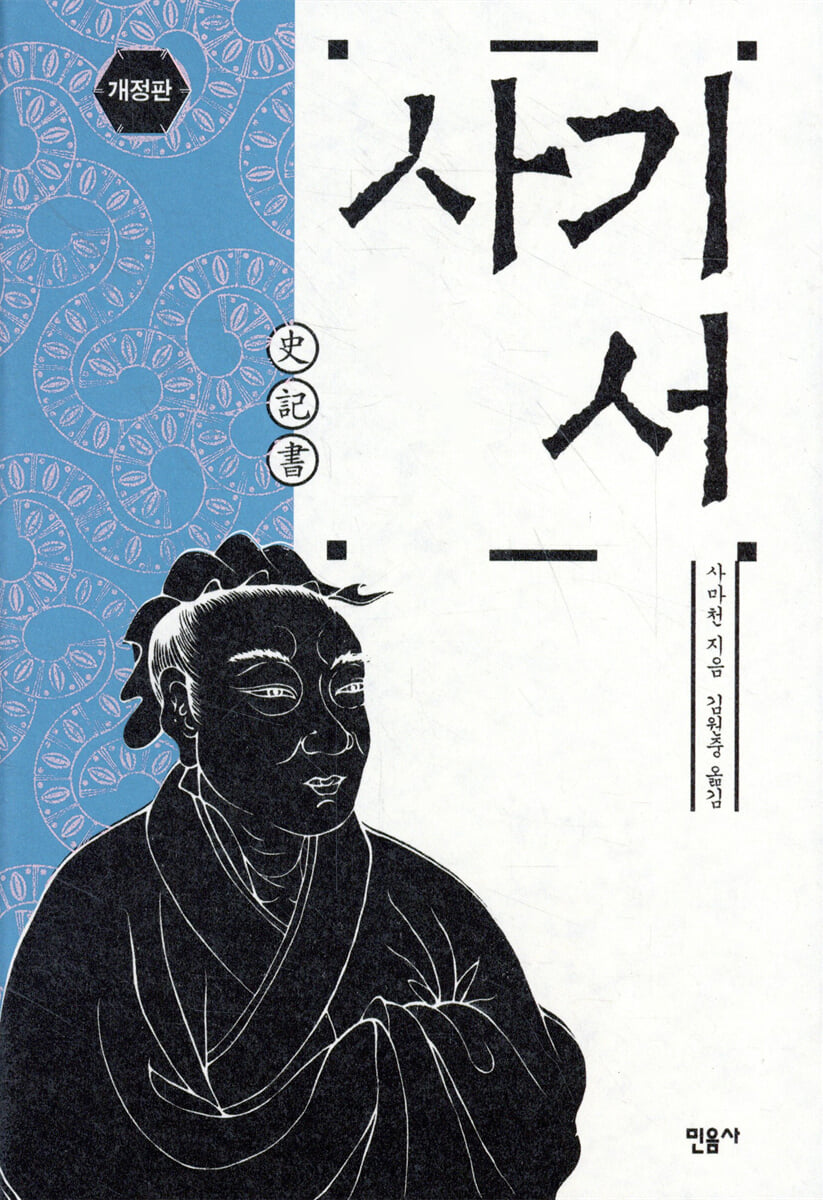
The world's first complete translation, a revised edition that includes all volumes of the Records of the Grand Historian and corrects them.
The origin of Chinese history and a model for Eastern historiography
Professor Kim Won-joong's 『Shijishu』, a representative humanities bestseller that has been loved by many readers through repeated editions, has been completely revised and republished by Minumsa.
Professor Kim Won-joong, who became the first individual to translate the entire 『Records of the Grand Historian』 in 2011, further enhanced the consistency and accuracy of the translation by comparing all volumes of 『Records of the Grand Historian』 and re-examining and supplementing the previously translated 『Book of the Grand Historian』.
The so-called "Eight Books", or eight chapters arranged in pairs, is a book that deals with rites and music, institutions, water management, astronomy, politics and war, social reform, and people's livelihood. Unlike other chapters, it comprehensively discusses the purpose and reality of politics, and the direction and means of maintaining order and reform.
Through this, Sima Qian encompasses both ancient and modern times, while sharply criticizing contemporary society and clearly revealing the ideal world he pursued.
ⓒ Kim Won-joong, 2015.
The origin of Chinese history and a model for Eastern historiography
Professor Kim Won-joong's 『Shijishu』, a representative humanities bestseller that has been loved by many readers through repeated editions, has been completely revised and republished by Minumsa.
Professor Kim Won-joong, who became the first individual to translate the entire 『Records of the Grand Historian』 in 2011, further enhanced the consistency and accuracy of the translation by comparing all volumes of 『Records of the Grand Historian』 and re-examining and supplementing the previously translated 『Book of the Grand Historian』.
The so-called "Eight Books", or eight chapters arranged in pairs, is a book that deals with rites and music, institutions, water management, astronomy, politics and war, social reform, and people's livelihood. Unlike other chapters, it comprehensively discusses the purpose and reality of politics, and the direction and means of maintaining order and reform.
Through this, Sima Qian encompasses both ancient and modern times, while sharply criticizing contemporary society and clearly revealing the ideal world he pursued.
ⓒ Kim Won-joong, 2015.
- You can preview some of the book's contents.
Preview
index
Translator's Preface to the Revised Edition
Translator's Preface
clear
Note
1.
Book of Rites
Moral norms are intertwined like warp and weft.
Yeran is a collection of human desires, resentments, and restraints.
An example is more fearsome than solid armor and sharp weapons.
The condition of adulthood is the presence or absence of manners.
2.
Music books
When politics is wrong, music is also obscene.
The birth of music comes from the emotion of things.
Politics will be fair only when etiquette and music are established.
Put virtue first
Yeran's personality and the energy of yin and yang
Virtue is the foundation of humanity, and vice is the flower of virtue.
Evil rules the mind, courtesy rules the body.
There is a clear reason why a gentleman should listen to music.
Confucius discusses music with Binmoga
Zigong asks a lowly musician about music.
Music should not be played in vain.
The reason the king enjoyed music was because of his rule.
3.
Book of Laws
It's no use looking at the clouds over enemy territory.
The relationship between the eight winds
How to calculate the rate
4.
Calendar
Why aspiring kings must be well-versed in the calendar
The contents of the "Gapja Pyeon" of the I Ching
Chapter 1: When the winter solstice comes in the year of the rat
Chapter 2 Number: When the Winter Solstice Comes in You
Chapter 3: When the Winter Solstice Comes at Noon
Chapter 4: When the Winter Solstice Comes in the Year of the Rabbit
5.
Book of Heaven
Describe all the natural world
Star: Donggung
Star: Namgung
Star: West Palace
Star: Bukgung
Seongseong: Jupiter
Hyeong-hwa: Mars
Prime: Saturn
Movement of the five planets
Taebaek: Venus
True: Mercury
The relationship between the twenty-eight constellations and the field
sun
moon
How to Divinate Strange Celestial Phenomenons
How to Divinate Clouds, Wind, and Other Things
1 year point
Why all monarchs and kings observed the movements of the sun and moon
Sentences that fell out
6.
Sealed Zen Book
Cunning cannot overcome virtue.
Qin Shi Huang attains virtue and performs the Fengshen ceremony.
The methods of offering sacrifices to the four evil spirits and the five evil spirits are different.
The way of offering sacrifices to the spirits of heaven and earth is also different.
After chasing a ghost like crazy, he was fooled by con artists.
Emperor Wu of Han, who performed absurd bonseon and gusen ceremonies in the later years of his reign
In his old age, Muje became even more immersed in the fantasy of Bongseon and Immortals.
7.
Ha Geoseo (河渠書)
The history of floods and flood control before the Jin Dynasty and the origin of Jeonggukgeo
The story of how a dragon's bones were discovered while digging a canal
8.
Pyeongjunseo (Pyeongjunseo)
I'm worried even though I have a lot of money
War brings great devastation to a nation.
The rich make money in different ways.
If the ruler is arrogant and extravagant, control is strengthened.
[Appendix] Book of Rewards to Minor Ministers
A scholar works for those who understand him.
What would someone like me say?
It shouldn't be explained in detail to vulgar people.
A masterpiece is born from humiliation
Thinking about humiliation makes my intestines rip nine times a day.
References
Search
Translator's Preface
clear
Note
1.
Book of Rites
Moral norms are intertwined like warp and weft.
Yeran is a collection of human desires, resentments, and restraints.
An example is more fearsome than solid armor and sharp weapons.
The condition of adulthood is the presence or absence of manners.
2.
Music books
When politics is wrong, music is also obscene.
The birth of music comes from the emotion of things.
Politics will be fair only when etiquette and music are established.
Put virtue first
Yeran's personality and the energy of yin and yang
Virtue is the foundation of humanity, and vice is the flower of virtue.
Evil rules the mind, courtesy rules the body.
There is a clear reason why a gentleman should listen to music.
Confucius discusses music with Binmoga
Zigong asks a lowly musician about music.
Music should not be played in vain.
The reason the king enjoyed music was because of his rule.
3.
Book of Laws
It's no use looking at the clouds over enemy territory.
The relationship between the eight winds
How to calculate the rate
4.
Calendar
Why aspiring kings must be well-versed in the calendar
The contents of the "Gapja Pyeon" of the I Ching
Chapter 1: When the winter solstice comes in the year of the rat
Chapter 2 Number: When the Winter Solstice Comes in You
Chapter 3: When the Winter Solstice Comes at Noon
Chapter 4: When the Winter Solstice Comes in the Year of the Rabbit
5.
Book of Heaven
Describe all the natural world
Star: Donggung
Star: Namgung
Star: West Palace
Star: Bukgung
Seongseong: Jupiter
Hyeong-hwa: Mars
Prime: Saturn
Movement of the five planets
Taebaek: Venus
True: Mercury
The relationship between the twenty-eight constellations and the field
sun
moon
How to Divinate Strange Celestial Phenomenons
How to Divinate Clouds, Wind, and Other Things
1 year point
Why all monarchs and kings observed the movements of the sun and moon
Sentences that fell out
6.
Sealed Zen Book
Cunning cannot overcome virtue.
Qin Shi Huang attains virtue and performs the Fengshen ceremony.
The methods of offering sacrifices to the four evil spirits and the five evil spirits are different.
The way of offering sacrifices to the spirits of heaven and earth is also different.
After chasing a ghost like crazy, he was fooled by con artists.
Emperor Wu of Han, who performed absurd bonseon and gusen ceremonies in the later years of his reign
In his old age, Muje became even more immersed in the fantasy of Bongseon and Immortals.
7.
Ha Geoseo (河渠書)
The history of floods and flood control before the Jin Dynasty and the origin of Jeonggukgeo
The story of how a dragon's bones were discovered while digging a canal
8.
Pyeongjunseo (Pyeongjunseo)
I'm worried even though I have a lot of money
War brings great devastation to a nation.
The rich make money in different ways.
If the ruler is arrogant and extravagant, control is strengthened.
[Appendix] Book of Rewards to Minor Ministers
A scholar works for those who understand him.
What would someone like me say?
It shouldn't be explained in detail to vulgar people.
A masterpiece is born from humiliation
Thinking about humiliation makes my intestines rip nine times a day.
References
Search
Publisher's Review
[Author Information]
Sima Qian
145 BC? - 90 BC?
His name was Jajang, and he was from Longmen, Shaanxi Province. His father, Sima Tan, was Grand Historian during the reign of Emperor Wu of Han.
At the age of ten, he followed his father to the capital Chang'an and studied under Dong Zhongshu and Kong An-guo.
He began his journey at the age of twenty, traveling throughout China and rising to the rank of Langzhong (郎中) upon his return.
In 110 BC, his father, Sima Tan, passed away, leaving a will telling him to write a history book.
In 108 BC, he became Grand Secretary and served Emperor Wu. To uphold his father's will, he organized and collected numerous documents from the stone chest containing the national library.
He officially began writing the Records of the Grand Historian in 104 BC.
In 99 BC, while Li Ling was leading an army to fight against the Huns, an incident occurred where he surrendered due to being outnumbered. At that time, Sima Qian went before Emperor Wu alone to defend Li Ling, which incurred the Emperor's wrath.
He was given the right to choose one of three punishments while in prison.
First, he would be executed according to the law; second, he would pay 500,000 won to avoid death; third, he would accept castration.
Sima Qian wanted to take the second option, but it was virtually impossible for him, a non-nobleman, to pay such a large sum of money, so he ended up choosing the last option.
In 93 BC, Sima Qian was finally at Emperor Wu's side again.
At this time, the writing of 『Sagi』 was largely completed.
It had been about 20 years since I had followed my father's will.
Translator: Kim Won-jung
He received a doctorate in Chinese literature from Sungkyunkwan University.
He served as a visiting scholar at the Academia Sinica in Taiwan and the China Institute of Cultural Studies, a visiting professor at the Institute of Chinese Language and Literature at National Taiwan Normal University, and a professor in the Department of Chinese Language and Literature at Konyang University. He is currently a professor in the Department of Chinese Language Education at the College of Education at Dankook University. He also serves as the chairman of the Korean Studies Promotion Committee, a member of the Humanities Special Committee of the Cultural Enrichment Committee, and vice president of the Korean Society of Chinese Culture.
Dedicated to delicately restoring Eastern classics into the universal language of our time, he is renowned for his translations that capture the condensed beauty of classical Chinese while preserving the beautiful texture of the Korean language, thus maintaining the dignity of the original text.
He was the first individual to completely translate the entirety of the Records of the Grand Historian, including 『Records of the Grand Historian』, which was selected as the best translation by the Professors' Newspaper, 『』, 『Records of the Grand Historian Table』, 『Records of the Grand Historian Book』, and 『Records of the Grand Historian Family』. He also translated over 20 classics, including 『Memorabilia of the Three Kingdoms』, 『The Analects of Confucius』, 『Mingxin Bojian』, 『The Art of War』, 『Han Feizi』, 『Zhenguan Zhengyao』, 『Zhengshi Samgukji』 (4 volumes), 『Dangshi』, and 『Songshi』.
He also published books such as 『Dictionary of Idioms and History』, 『Dictionary of Chinese Character Interpretations』, 『History of Chinese Culture』, and 『The World of Chinese Literary Theory』, and presented over 40 papers.
In 2011, he was selected as one of the Environmental Foundation's 'People Who Made the World Brighter in 2011' (Academic category).
Sima Qian
145 BC? - 90 BC?
His name was Jajang, and he was from Longmen, Shaanxi Province. His father, Sima Tan, was Grand Historian during the reign of Emperor Wu of Han.
At the age of ten, he followed his father to the capital Chang'an and studied under Dong Zhongshu and Kong An-guo.
He began his journey at the age of twenty, traveling throughout China and rising to the rank of Langzhong (郎中) upon his return.
In 110 BC, his father, Sima Tan, passed away, leaving a will telling him to write a history book.
In 108 BC, he became Grand Secretary and served Emperor Wu. To uphold his father's will, he organized and collected numerous documents from the stone chest containing the national library.
He officially began writing the Records of the Grand Historian in 104 BC.
In 99 BC, while Li Ling was leading an army to fight against the Huns, an incident occurred where he surrendered due to being outnumbered. At that time, Sima Qian went before Emperor Wu alone to defend Li Ling, which incurred the Emperor's wrath.
He was given the right to choose one of three punishments while in prison.
First, he would be executed according to the law; second, he would pay 500,000 won to avoid death; third, he would accept castration.
Sima Qian wanted to take the second option, but it was virtually impossible for him, a non-nobleman, to pay such a large sum of money, so he ended up choosing the last option.
In 93 BC, Sima Qian was finally at Emperor Wu's side again.
At this time, the writing of 『Sagi』 was largely completed.
It had been about 20 years since I had followed my father's will.
Translator: Kim Won-jung
He received a doctorate in Chinese literature from Sungkyunkwan University.
He served as a visiting scholar at the Academia Sinica in Taiwan and the China Institute of Cultural Studies, a visiting professor at the Institute of Chinese Language and Literature at National Taiwan Normal University, and a professor in the Department of Chinese Language and Literature at Konyang University. He is currently a professor in the Department of Chinese Language Education at the College of Education at Dankook University. He also serves as the chairman of the Korean Studies Promotion Committee, a member of the Humanities Special Committee of the Cultural Enrichment Committee, and vice president of the Korean Society of Chinese Culture.
Dedicated to delicately restoring Eastern classics into the universal language of our time, he is renowned for his translations that capture the condensed beauty of classical Chinese while preserving the beautiful texture of the Korean language, thus maintaining the dignity of the original text.
He was the first individual to completely translate the entirety of the Records of the Grand Historian, including 『Records of the Grand Historian』, which was selected as the best translation by the Professors' Newspaper, 『』, 『Records of the Grand Historian Table』, 『Records of the Grand Historian Book』, and 『Records of the Grand Historian Family』. He also translated over 20 classics, including 『Memorabilia of the Three Kingdoms』, 『The Analects of Confucius』, 『Mingxin Bojian』, 『The Art of War』, 『Han Feizi』, 『Zhenguan Zhengyao』, 『Zhengshi Samgukji』 (4 volumes), 『Dangshi』, and 『Songshi』.
He also published books such as 『Dictionary of Idioms and History』, 『Dictionary of Chinese Character Interpretations』, 『History of Chinese Culture』, and 『The World of Chinese Literary Theory』, and presented over 40 papers.
In 2011, he was selected as one of the Environmental Foundation's 'People Who Made the World Brighter in 2011' (Academic category).
GOODS SPECIFICS
- Date of publication: November 6, 2015
- Format: Hardcover book binding method guide
- Page count, weight, size: 380 pages | 676g | 136*201*30mm
- ISBN13: 9788937426841
- ISBN10: 8937426846
You may also like
카테고리
korean


korean

![ELLE 엘르 스페셜 에디션 A형 : 12월 [2025]](http://librairie.coreenne.fr/cdn/shop/files/b8e27a3de6c9538896439686c6b0e8fb.jpg?v=1766436872&width=3840)


