

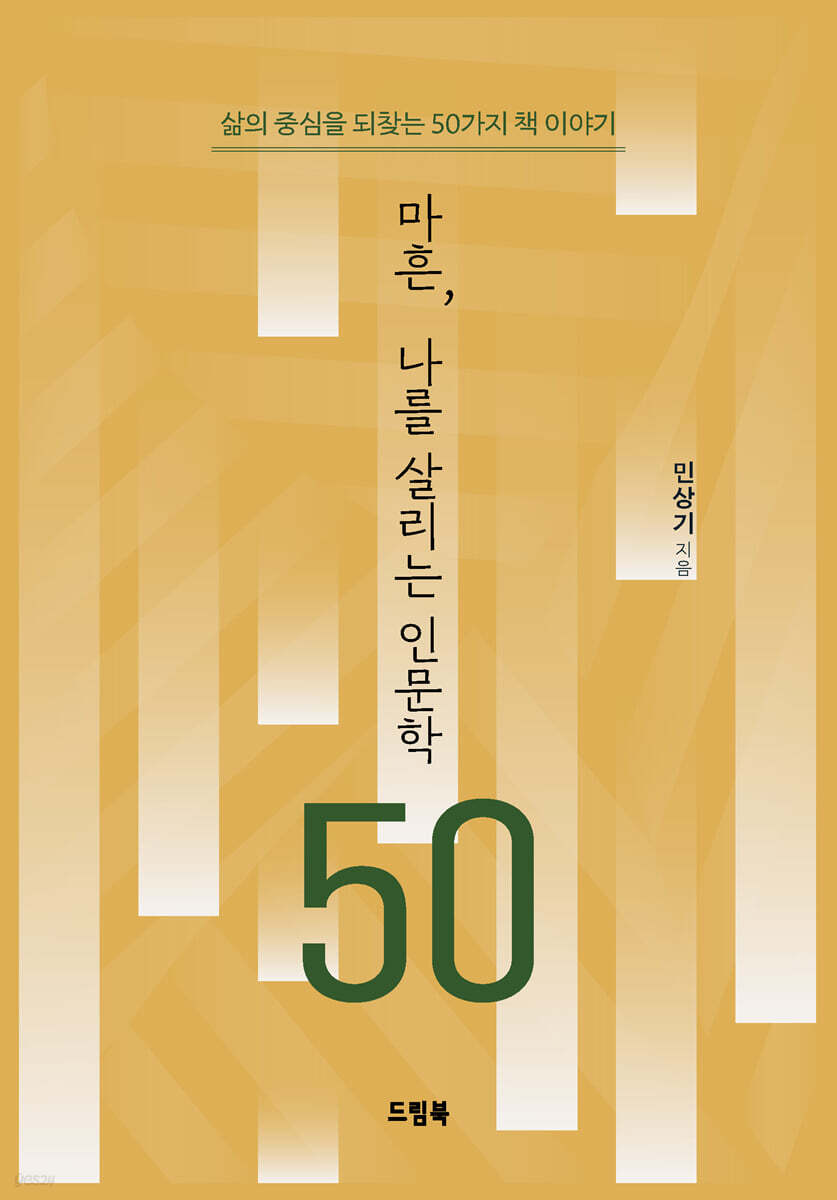
Forty: The Humanities That Saved Me 50
 |
Description
Book Introduction
"An age where you ask for direction, not speed,
Forty - 50 Humanities Books to Rebuild Your Life."
"Forty is now the time to learn 'how to survive.'
Humanities walk that path together."
“Forty, 50 Humanities That Saved Me” is not simply a book that introduces books.
It is a 'journey to relearn life'.
The author defines the age of forty as “a time to ask not how to run more, but how to live my life.”
That sentence alone makes the direction of this book clear.
An attitude that values direction over speed and reflection over achievement.
This book calmly explains the need for such a transition in the language of the humanities.
Forty - 50 Humanities Books to Rebuild Your Life."
"Forty is now the time to learn 'how to survive.'
Humanities walk that path together."
“Forty, 50 Humanities That Saved Me” is not simply a book that introduces books.
It is a 'journey to relearn life'.
The author defines the age of forty as “a time to ask not how to run more, but how to live my life.”
That sentence alone makes the direction of this book clear.
An attitude that values direction over speed and reflection over achievement.
This book calmly explains the need for such a transition in the language of the humanities.
- You can preview some of the book's contents.
Preview
index
Author's Preface
Part 1: Forty: A Practice to Reawaken Your Sense of Life
Jeong Yeo-ul's "Sensitivity Class"
Haruki Murakami's "Small but Certain Happiness"
Na Tae-joo, "I Look at You Like I Look at a Flower"
Michael Sandel's The Illusion of Fairness
M.
Scott Peck's The Road Less Traveled
Kim Young-ha's "The Reason for Travel"
Pierre Sansot, "Living Slowly"
Alain de Botton's "Anxiety"
Part 2 - Finding Your Way Through the Waves of Swaying Emotions
Saint-Exupéry's The Little Prince
John Bradshaw, "Healing Your Wounded Inner Child"
Parker J.
Palmer's "Politics for the Mourner"
Yoon Hong-gyun's "Self-Esteem Class"
Brian Hare and Vanessa Woods' "The Kind Survive"
Arthur Schopenhauer, "Schopenhauer's Theory of Happiness and Life"
Augustine's Confessions
Michel Foucault's Discipline and Punish
Lulu Miller's "Fish Doesn't Exist"
Han Seong-hee's "Psychology Letters to My Daughter"
Part 3 - Psychological Insights for Deeper Understanding of Oneself and Others
Marcus Aurelius's Meditations
Montaigne's Essays
Jeremy Rifkin's The Age of Empathy
Susan Cain's "Quiet"
Alain de Botton's "Why Do I Love You?"
John Stuart Mill's "On Liberty"
Kim Soo-hyun's "I Decided to Live as Myself"
Part 4 - The Essence of Humanity as Seen in Classics
Jane Austen's Pride and Prejudice
Victor Hugo's Les Misérables
Charles Dickens's David Copperfield
Gustave Flaubert's Madame Bovary
Mary Shelley's Frankenstein
Fyodor Dostoevsky's The Brothers Karamazov
Maxim Gorky's "Mother"
Johann Wolfgang von Goethe's The Sorrows of Young Werther
Leo Tolstoy's The Death of Ivan Ilyich
O. Henry's The Last Leaf
Part 5 - Reflecting on the Lessons of History and Faithful Reflection
Will Durant's Great Ideas
John Calvin's Institutes of the Christian Religion
Jared Diamond's Guns, Germs, and Steel
Blaise Pascal's Pensees
Karen Armstrong's A History of God
Augustine's Confessions
Part 6 - Stories that help us endure times of despair
Nathaniel Hawthorne's The Scarlet Letter
Leo Tolstoy's "What is Life?"
Steven Levitsky and Daniel Ziblatt, "How the Few Rule the Many"
Choi In-hun's "The Square"
Jo Jeong-rae's "Taebaek Mountains"
Albert Camus's "The Stranger"
Jack Kerouac's "On the Road"
Forest Carter's "The Day My Soul Was Warm"
Agota Kristof, The Three Lies of Existence
Part 1: Forty: A Practice to Reawaken Your Sense of Life
Jeong Yeo-ul's "Sensitivity Class"
Haruki Murakami's "Small but Certain Happiness"
Na Tae-joo, "I Look at You Like I Look at a Flower"
Michael Sandel's The Illusion of Fairness
M.
Scott Peck's The Road Less Traveled
Kim Young-ha's "The Reason for Travel"
Pierre Sansot, "Living Slowly"
Alain de Botton's "Anxiety"
Part 2 - Finding Your Way Through the Waves of Swaying Emotions
Saint-Exupéry's The Little Prince
John Bradshaw, "Healing Your Wounded Inner Child"
Parker J.
Palmer's "Politics for the Mourner"
Yoon Hong-gyun's "Self-Esteem Class"
Brian Hare and Vanessa Woods' "The Kind Survive"
Arthur Schopenhauer, "Schopenhauer's Theory of Happiness and Life"
Augustine's Confessions
Michel Foucault's Discipline and Punish
Lulu Miller's "Fish Doesn't Exist"
Han Seong-hee's "Psychology Letters to My Daughter"
Part 3 - Psychological Insights for Deeper Understanding of Oneself and Others
Marcus Aurelius's Meditations
Montaigne's Essays
Jeremy Rifkin's The Age of Empathy
Susan Cain's "Quiet"
Alain de Botton's "Why Do I Love You?"
John Stuart Mill's "On Liberty"
Kim Soo-hyun's "I Decided to Live as Myself"
Part 4 - The Essence of Humanity as Seen in Classics
Jane Austen's Pride and Prejudice
Victor Hugo's Les Misérables
Charles Dickens's David Copperfield
Gustave Flaubert's Madame Bovary
Mary Shelley's Frankenstein
Fyodor Dostoevsky's The Brothers Karamazov
Maxim Gorky's "Mother"
Johann Wolfgang von Goethe's The Sorrows of Young Werther
Leo Tolstoy's The Death of Ivan Ilyich
O. Henry's The Last Leaf
Part 5 - Reflecting on the Lessons of History and Faithful Reflection
Will Durant's Great Ideas
John Calvin's Institutes of the Christian Religion
Jared Diamond's Guns, Germs, and Steel
Blaise Pascal's Pensees
Karen Armstrong's A History of God
Augustine's Confessions
Part 6 - Stories that help us endure times of despair
Nathaniel Hawthorne's The Scarlet Letter
Leo Tolstoy's "What is Life?"
Steven Levitsky and Daniel Ziblatt, "How the Few Rule the Many"
Choi In-hun's "The Square"
Jo Jeong-rae's "Taebaek Mountains"
Albert Camus's "The Stranger"
Jack Kerouac's "On the Road"
Forest Carter's "The Day My Soul Was Warm"
Agota Kristof, The Three Lies of Existence
Publisher's Review
The book is an attempt to reestablish the 'center of life' through 50 volumes in various fields such as philosophy, literature, psychology, faith, and sociology.
But despite the breadth of the subject matter, the writing is consistent.
Rather than simply summarizing the core of each book, the author meticulously connects it to how it relates to life today.
In Jeong Yeo-ul's "Sensitivity Class," he talks about "recovery of feeling," and in Murakami Haruki's "This Small But Certain Happiness," he draws out "the resilience of small daily life."
The Poetry of Laziness and the Philosophy of Michael Sandel, M.
When Scott Peck's psychology meets in one book, the humanities become the 'language of life' rather than a theory.
Above all, the strength of this book is the author's attitude.
He does not treat the humanities as a means of accumulating knowledge or as a decoration of culture.
Rather, humanities are said to be the 'power to survive.'
He emphasizes that thinking becomes life only when specific practices such as “writing ten lines a day” and “sending a kind message to one person a day” are repeated.
This sentence moves the act of reading a book from simply reading it to the act of living it.
The humanities that the author speaks of are not the logic of the head, but training that is engraved in the body's memory.
Furthermore, 『Forty, 50 Humanities That Save Me』 honestly confronts the hearts of contemporary readers.
Forty is an anxious and complicated time for everyone.
Responsibilities increase, relationships become less strained, and physical strength decreases noticeably.
The author does not deny that reality.
However, even within that, he says, “Even if the speed slows down, the depth can increase.”
That sentence sounds like comforting language, but it is actually the most realistic insight.
This book does not encourage readers to escape.
Rather, I suggest that we practice together how to not lose ourselves in the complexities of reality.
After closing the book, you realize that the words 'save me' are not just emotional consolation.
It is a way back to oneself and a way to re-establish relationships in the world.
The author tells the reader to restore 'honesty'.
Because that is the starting point of all change.
"Forty, 50 Humanities That Saved Me" is ultimately a record of one person's humanistic life, and at the same time, a self-portrait of all of us who are passing forty.
It is a book of intellectual reflection and a time of spiritual recovery.
As we read, we come to know.
The humanities do not change the world, but rather change one person's perspective first.
And the place where that change begins is ‘the me of now.’
But despite the breadth of the subject matter, the writing is consistent.
Rather than simply summarizing the core of each book, the author meticulously connects it to how it relates to life today.
In Jeong Yeo-ul's "Sensitivity Class," he talks about "recovery of feeling," and in Murakami Haruki's "This Small But Certain Happiness," he draws out "the resilience of small daily life."
The Poetry of Laziness and the Philosophy of Michael Sandel, M.
When Scott Peck's psychology meets in one book, the humanities become the 'language of life' rather than a theory.
Above all, the strength of this book is the author's attitude.
He does not treat the humanities as a means of accumulating knowledge or as a decoration of culture.
Rather, humanities are said to be the 'power to survive.'
He emphasizes that thinking becomes life only when specific practices such as “writing ten lines a day” and “sending a kind message to one person a day” are repeated.
This sentence moves the act of reading a book from simply reading it to the act of living it.
The humanities that the author speaks of are not the logic of the head, but training that is engraved in the body's memory.
Furthermore, 『Forty, 50 Humanities That Save Me』 honestly confronts the hearts of contemporary readers.
Forty is an anxious and complicated time for everyone.
Responsibilities increase, relationships become less strained, and physical strength decreases noticeably.
The author does not deny that reality.
However, even within that, he says, “Even if the speed slows down, the depth can increase.”
That sentence sounds like comforting language, but it is actually the most realistic insight.
This book does not encourage readers to escape.
Rather, I suggest that we practice together how to not lose ourselves in the complexities of reality.
After closing the book, you realize that the words 'save me' are not just emotional consolation.
It is a way back to oneself and a way to re-establish relationships in the world.
The author tells the reader to restore 'honesty'.
Because that is the starting point of all change.
"Forty, 50 Humanities That Saved Me" is ultimately a record of one person's humanistic life, and at the same time, a self-portrait of all of us who are passing forty.
It is a book of intellectual reflection and a time of spiritual recovery.
As we read, we come to know.
The humanities do not change the world, but rather change one person's perspective first.
And the place where that change begins is ‘the me of now.’
GOODS SPECIFICS
- Date of issue: November 14, 2025
- Page count, weight, size: 388 pages | 143*205*30mm
- ISBN13: 9791199380769
- ISBN10: 1199380768
You may also like
카테고리
korean


korean

![GQ KOREA Mark (Monthly): December [2025]](http://librairie.coreenne.fr/cdn/shop/files/8ef265dbbfbf186523ed75ba7319009d.jpg?v=1765340328&width=3840)


