

Einstein
 |
Description
Book Introduction
“I have never considered peace and happiness as goals in themselves.”
─ Albert Einstein
Rereading the 20th-century icon, "Man of the Century."
If the 20th century was an age of science and technology, there was always one name at the center of it.
That's Albert Einstein.
At the turn of the century, Time magazine selected Einstein as its "Person of the Century," describing him as "the symbol of all scientists and the most brilliant intellect humanity has ever seen."
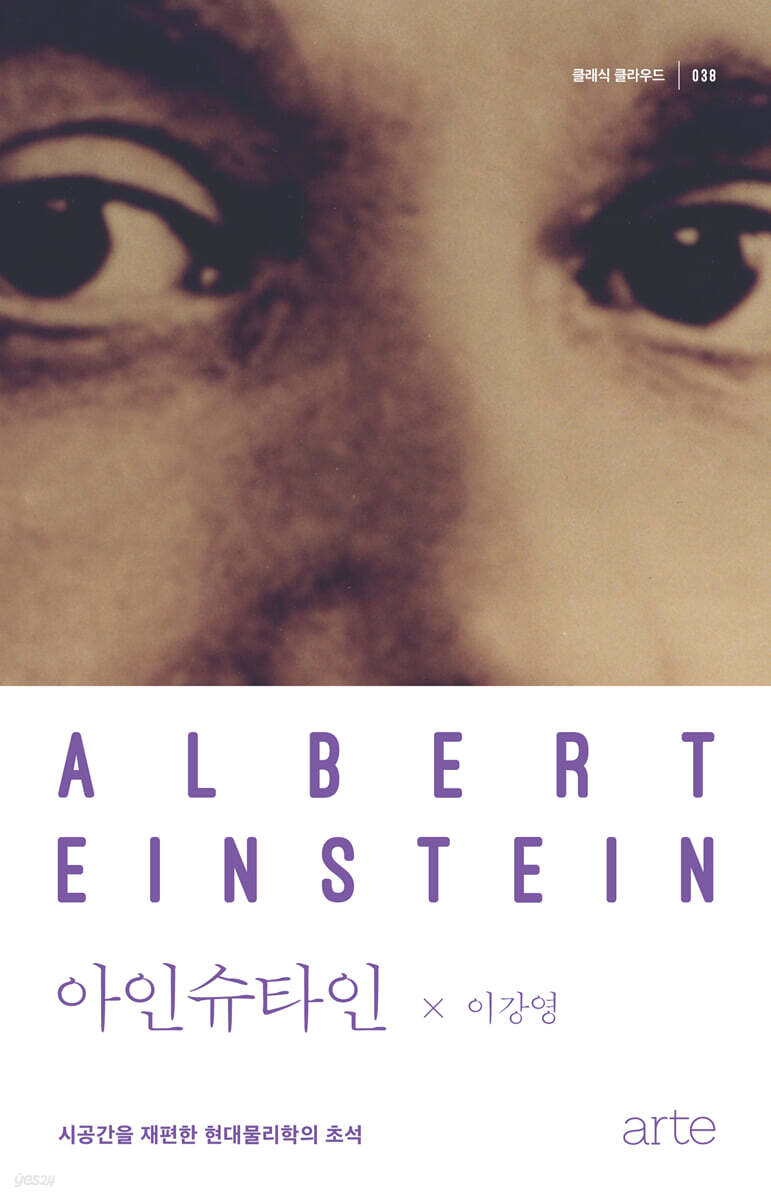
"Classic Cloud 038 Einstein" sheds new light on this great physicist not simply as a legend of genius, but as a "human who resisted authority" who faced the times.
The author, a professor of physics at Gyeongsang National University and a science writer, meticulously explores the inner workings of Einstein, “a man who rebelled against authority and loved freedom,” and how he developed the theory that rewrote space-time.
─ Albert Einstein
Rereading the 20th-century icon, "Man of the Century."
If the 20th century was an age of science and technology, there was always one name at the center of it.
That's Albert Einstein.
At the turn of the century, Time magazine selected Einstein as its "Person of the Century," describing him as "the symbol of all scientists and the most brilliant intellect humanity has ever seen."
"Classic Cloud 038 Einstein" sheds new light on this great physicist not simply as a legend of genius, but as a "human who resisted authority" who faced the times.
The author, a professor of physics at Gyeongsang National University and a science writer, meticulously explores the inner workings of Einstein, “a man who rebelled against authority and loved freedom,” and how he developed the theory that rewrote space-time.
- You can preview some of the book's contents.
Preview
index
PROLOGUE Man of the Century
1 Rebellion: Childhood
2 Youth: Einstein in Zurich 1
3 Trials: Dark Times
4 Happiness: Einstein in Bern
Professor 5: Einstein of Zurich 2
6 Gravity: Einstein in Prague
7 Geometry: Einstein in Zurich 3
8 Glory: Einstein in Berlin 1
9 Fame: Einstein in Berlin 2
10 Darkness: Einstein in Berlin 3
EPIOGUE Leaving without Worship or Fear
Einstein's keywords
A defining moment in Einstein's life
References
1 Rebellion: Childhood
2 Youth: Einstein in Zurich 1
3 Trials: Dark Times
4 Happiness: Einstein in Bern
Professor 5: Einstein of Zurich 2
6 Gravity: Einstein in Prague
7 Geometry: Einstein in Zurich 3
8 Glory: Einstein in Berlin 1
9 Fame: Einstein in Berlin 2
10 Darkness: Einstein in Berlin 3
EPIOGUE Leaving without Worship or Fear
Einstein's keywords
A defining moment in Einstein's life
References
Detailed image
.jpg)
Into the book
The most important thing about Einstein's character was this attitude: his instinctive rejection of authority and rebellion.
From childhood, he had an extreme aversion to and intolerance for any kind of authoritarian oppression.
It was the same in life and in physics.
Although this attitude sometimes caused friction with those around him and sometimes caused him disadvantages, Einstein did not care at all.
This attitude of rebellion against authority may have played a crucial role in allowing Einstein to think in a way that was completely different from what all scientists had believed for a long time, and ultimately to arrive at the theory of relativity.
Einstein lived through two world wars, held three citizenships, was married twice, and was the father of two children.
He was also Jewish, a pacifist, a Zionist, a target of anti-Semitism, death threats, and an offer to be president of Israel when it was founded.
He was the most famous person in the world, a Nobel Prize winner and recipient of every honor possible in life.
But these facts can only ever be secondary when talking about Einstein.
The most important thing in Einstein's life was science, and that remained true throughout his life.
Even Einstein said, “I have never considered peace and happiness as goals in themselves.”
--- From "Prologue: Man of the Century"
In late 19th century Germany, when Prussian militarism was at its peak, the military dominated the entire society.
Boys generally admired soldiers in uniform, fantasized about serving the emperor and their country, and dreamed of achieving great things and becoming successful.
The school's education also reflected this culture, emphasizing order and discipline and placing importance on the principle of absolute obedience.
This atmosphere also cast a shadow over our country through militaristic Japan and its president who graduated from a Japanese military academy.
But Einstein had an instinctive aversion to the military from the beginning.
The record that he said to his parents, “I don’t want to grow up to be that pitiful person,” while watching the splendid military parade that most children at the time were enthusiastic about shows the young Einstein’s perspective well.
--- From "1 Rebellion: Childhood"
It is still astonishing and hard to believe that a patent office employee who had not yet received a doctorate and was not even working at a university was able to publish important papers in such a short period of time in various fields.
That is why 1905 is called Einstein's 'year of miracles' (annus mirabilis).
But when the new year of 1905 dawned, there was no sign of things at 49 Kramgar.
Einstein still went out to Kramgar in the morning and went to the patent office, and returned in the evening to look after Hans Albert.
On Sundays, I would walk down the street with Mileva, smoking a pipe and pushing a stroller.
It was a peaceful day.
But ideas were swirling in his head.
At night, when the child was asleep, he sat at the large table in the living room and did calculations in a notebook.
--- From "4 Happiness: Einstein in Bern"
The report submitted by Planck, Nernst, Rubens, and Warburg, recommending Einstein to the Academy, presents the most accurate assessment of Einstein that could be made at this stage.
“In summary, it can be said that among the many important problems of modern physics, there is hardly one on which Einstein did not make a contribution.
As with the quantum hypothesis of light, we should not discount him too much for the fact that he sometimes makes outrageous and speculative claims.
True innovation, even in the most precise natural sciences, is impossible without taking occasional risks.
He is currently working intensively on a new theory of gravity, but only the future will tell us how successful it will be.”
--- From "8 Glory: Einstein in Berlin 1"
Although Einstein was excluded from the Manhattan Project, he learned the inside story of the atomic bomb in 1944, when it was nearing completion.
Because his former assistant, Otto Stern, visited Einstein during the fall and winter of 1944.
So Einstein began to take an interest in international relations after the war.
“Once an arms race begins, we will face a situation where we cannot avoid a preemptive strike by someone who will bring about horrific destruction beyond compare.” The political situation that unfolds after this is so complex that it is unnecessary to follow its details here.
Einstein's thoughts on this issue primarily focused on how to achieve international control of nuclear weapons.
And actual history largely went in a different direction than Einstein wanted.
From childhood, he had an extreme aversion to and intolerance for any kind of authoritarian oppression.
It was the same in life and in physics.
Although this attitude sometimes caused friction with those around him and sometimes caused him disadvantages, Einstein did not care at all.
This attitude of rebellion against authority may have played a crucial role in allowing Einstein to think in a way that was completely different from what all scientists had believed for a long time, and ultimately to arrive at the theory of relativity.
Einstein lived through two world wars, held three citizenships, was married twice, and was the father of two children.
He was also Jewish, a pacifist, a Zionist, a target of anti-Semitism, death threats, and an offer to be president of Israel when it was founded.
He was the most famous person in the world, a Nobel Prize winner and recipient of every honor possible in life.
But these facts can only ever be secondary when talking about Einstein.
The most important thing in Einstein's life was science, and that remained true throughout his life.
Even Einstein said, “I have never considered peace and happiness as goals in themselves.”
--- From "Prologue: Man of the Century"
In late 19th century Germany, when Prussian militarism was at its peak, the military dominated the entire society.
Boys generally admired soldiers in uniform, fantasized about serving the emperor and their country, and dreamed of achieving great things and becoming successful.
The school's education also reflected this culture, emphasizing order and discipline and placing importance on the principle of absolute obedience.
This atmosphere also cast a shadow over our country through militaristic Japan and its president who graduated from a Japanese military academy.
But Einstein had an instinctive aversion to the military from the beginning.
The record that he said to his parents, “I don’t want to grow up to be that pitiful person,” while watching the splendid military parade that most children at the time were enthusiastic about shows the young Einstein’s perspective well.
--- From "1 Rebellion: Childhood"
It is still astonishing and hard to believe that a patent office employee who had not yet received a doctorate and was not even working at a university was able to publish important papers in such a short period of time in various fields.
That is why 1905 is called Einstein's 'year of miracles' (annus mirabilis).
But when the new year of 1905 dawned, there was no sign of things at 49 Kramgar.
Einstein still went out to Kramgar in the morning and went to the patent office, and returned in the evening to look after Hans Albert.
On Sundays, I would walk down the street with Mileva, smoking a pipe and pushing a stroller.
It was a peaceful day.
But ideas were swirling in his head.
At night, when the child was asleep, he sat at the large table in the living room and did calculations in a notebook.
--- From "4 Happiness: Einstein in Bern"
The report submitted by Planck, Nernst, Rubens, and Warburg, recommending Einstein to the Academy, presents the most accurate assessment of Einstein that could be made at this stage.
“In summary, it can be said that among the many important problems of modern physics, there is hardly one on which Einstein did not make a contribution.
As with the quantum hypothesis of light, we should not discount him too much for the fact that he sometimes makes outrageous and speculative claims.
True innovation, even in the most precise natural sciences, is impossible without taking occasional risks.
He is currently working intensively on a new theory of gravity, but only the future will tell us how successful it will be.”
--- From "8 Glory: Einstein in Berlin 1"
Although Einstein was excluded from the Manhattan Project, he learned the inside story of the atomic bomb in 1944, when it was nearing completion.
Because his former assistant, Otto Stern, visited Einstein during the fall and winter of 1944.
So Einstein began to take an interest in international relations after the war.
“Once an arms race begins, we will face a situation where we cannot avoid a preemptive strike by someone who will bring about horrific destruction beyond compare.” The political situation that unfolds after this is so complex that it is unnecessary to follow its details here.
Einstein's thoughts on this issue primarily focused on how to achieve international control of nuclear weapons.
And actual history largely went in a different direction than Einstein wanted.
--- From "10 Darkness: Einstein in Berlin 3"
Publisher's Review
A boy who rebelled against authority, a journey of thought that changed the world.
The book details the story of a boy born into an ordinary Jewish family in Munich who rejects the authoritarian education of school and the oppression of society and develops his own original thinking.
As Einstein said, “Fate made me an authority figure to punish me for my contempt for authority,” he was a rebellious child who did not conform to the system from an early age.
Einstein's decision to drop out of school at the age of 15 and to renounce his German citizenship to refuse military service was the culmination of his rebellious spirit.
But that freedom was the source of imagination that later led to the theory of relativity.
The author emphasizes that Einstein's rebellion was not simply an anti-establishment act, but rather the 'courage of thought' to understand the world in a new way.
The structure of thought that rewrites space and time
In 1905, Einstein published four papers that fundamentally changed 20th-century physics: special relativity, the photon hypothesis, and the paper on Brownian motion.
He worked as a patent office employee at the time, thought freely, and with his outstanding physical intuition, he understood the physical structure of the world more accurately than anyone else.
『Classic Cloud 038 Einstein』 is not just a biography; it deeply explores how his scientific insights were formed from a physicist's perspective.
Drawing on extensive historical sources, the author presents a balanced portrait of Einstein's experimental thinking, philosophical beliefs, and human concerns.
In particular, it asks a new question about what science is, focusing on his 'intellectual courage' that enabled free thinking beyond the authoritarian scientific paradigm.
A new liberal arts gateway connecting science and humanities
『Classic Cloud 038 Einstein』 does not treat the life of the great scientist as a simple chronology or list of achievements.
The reader walks through the cities and times he passed through, from his boyhood in Munich, to his youth in Zurich, to his "miracle years" as a patent office worker in Bern, and to his laboratory in Princeton.
In the midst of countless equations, he was always a traveler who asked, 'Why?'
This book follows in the footsteps of that journey, inviting readers to revisit science, reason, and a deeper understanding of humanity.
The book details the story of a boy born into an ordinary Jewish family in Munich who rejects the authoritarian education of school and the oppression of society and develops his own original thinking.
As Einstein said, “Fate made me an authority figure to punish me for my contempt for authority,” he was a rebellious child who did not conform to the system from an early age.
Einstein's decision to drop out of school at the age of 15 and to renounce his German citizenship to refuse military service was the culmination of his rebellious spirit.
But that freedom was the source of imagination that later led to the theory of relativity.
The author emphasizes that Einstein's rebellion was not simply an anti-establishment act, but rather the 'courage of thought' to understand the world in a new way.
The structure of thought that rewrites space and time
In 1905, Einstein published four papers that fundamentally changed 20th-century physics: special relativity, the photon hypothesis, and the paper on Brownian motion.
He worked as a patent office employee at the time, thought freely, and with his outstanding physical intuition, he understood the physical structure of the world more accurately than anyone else.
『Classic Cloud 038 Einstein』 is not just a biography; it deeply explores how his scientific insights were formed from a physicist's perspective.
Drawing on extensive historical sources, the author presents a balanced portrait of Einstein's experimental thinking, philosophical beliefs, and human concerns.
In particular, it asks a new question about what science is, focusing on his 'intellectual courage' that enabled free thinking beyond the authoritarian scientific paradigm.
A new liberal arts gateway connecting science and humanities
『Classic Cloud 038 Einstein』 does not treat the life of the great scientist as a simple chronology or list of achievements.
The reader walks through the cities and times he passed through, from his boyhood in Munich, to his youth in Zurich, to his "miracle years" as a patent office worker in Bern, and to his laboratory in Princeton.
In the midst of countless equations, he was always a traveler who asked, 'Why?'
This book follows in the footsteps of that journey, inviting readers to revisit science, reason, and a deeper understanding of humanity.
GOODS SPECIFICS
- Date of issue: November 5, 2025
- Page count, weight, size: 548 pages | 135*210*35mm
- ISBN13: 9791173576089
- ISBN10: 1173576088
You may also like
카테고리
korean


korean

![GQ KOREA Mark (Monthly): December [2025]](http://librairie.coreenne.fr/cdn/shop/files/8ef265dbbfbf186523ed75ba7319009d.jpg?v=1765340328&width=3840)


