

Revisiting the Meiji Restoration
 |
Description
Book Introduction
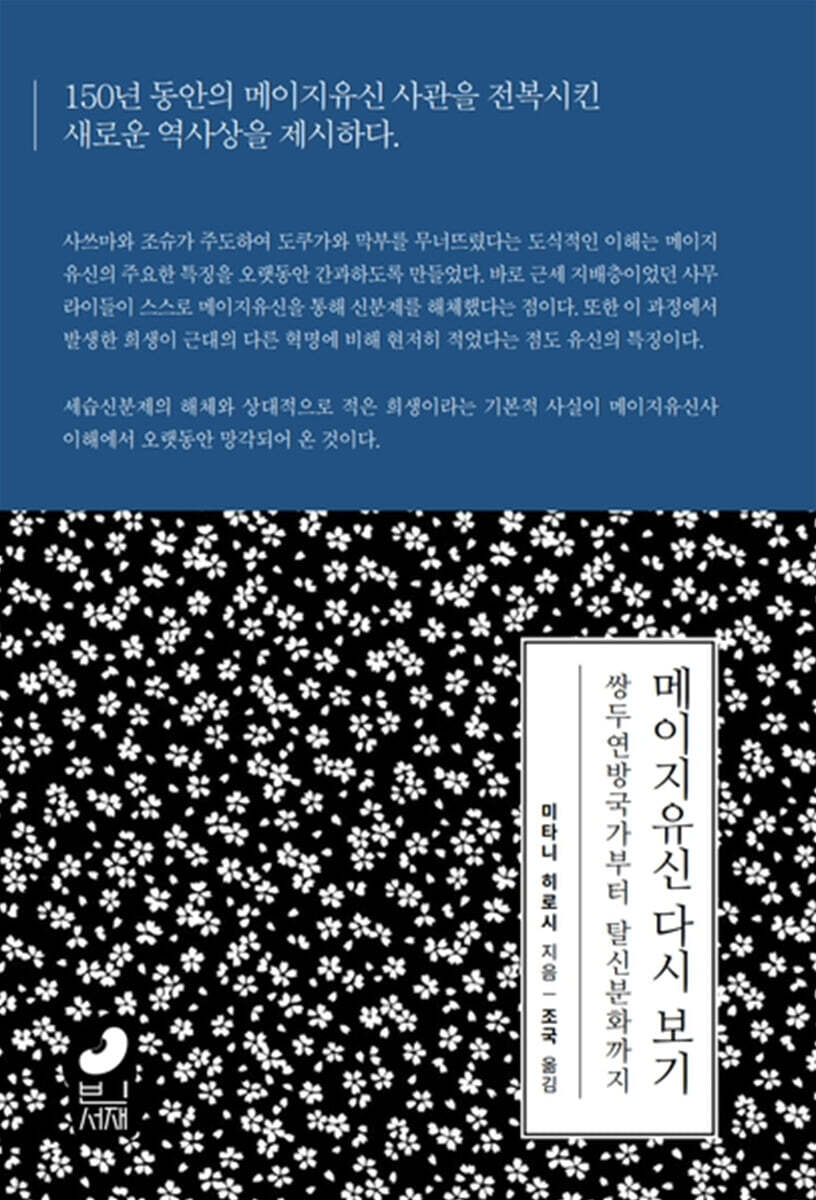
"Presenting a new historical perspective that overturns 150 years of Meiji Restoration history."
The schematic understanding that Satsuma and Choshu led the overthrow of the Tokugawa shogunate has long led to the overlooking of the key features of the Meiji Restoration.
The point is that the samurai, who were the ruling class in the early modern period, dismantled the class system through the Meiji Restoration.
Another characteristic of the Yushin Revolution is that the sacrifices that occurred during the process were significantly less than those of other modern revolutions.
The fundamental facts of the dismantling of the hereditary status system and the relatively small number of sacrifices made have long been forgotten in understanding the Meiji Restoration.
This book moves beyond a narrative centered on political actors such as specific clans and individuals active in the Restoration, or their opposing forces, and instead presents a model of contemporary Japanese people's "perception of challenges and search for solutions."
The symbols that summarized the political tasks of the late Edo period were ‘public opinion,’ ‘public opinion,’ and ‘monarchy.’
This was condensed into two plans for restoration of the monarchy: acceptance and transformation of the old system, or its complete rejection.
As a result of the victory of the side that completely rejected Tokugawa rule, the new Meiji government was established.
Early modern Japan was a two-headed, federal state comprised of two monarchs, the Emperor and the Shogun, and the ruling territories of over two hundred daimyo.
The tasks faced by the new government were unification and centralization of power, and declassification.
The new government established its basic framework in just three and a half years since its establishment.
These radical reforms, on the one hand, led to armed rebellion, and after the civil war was suppressed, the anti-government movement abandoned military force and relied on the media.
The terms ‘public opinion’ and ‘public opinion’ that emerged in the late Edo period expanded their political implications and continued into the Meiji period.
The schematic understanding that Satsuma and Choshu led the overthrow of the Tokugawa shogunate has long led to the overlooking of the key features of the Meiji Restoration.
The point is that the samurai, who were the ruling class in the early modern period, dismantled the class system through the Meiji Restoration.
Another characteristic of the Yushin Revolution is that the sacrifices that occurred during the process were significantly less than those of other modern revolutions.
The fundamental facts of the dismantling of the hereditary status system and the relatively small number of sacrifices made have long been forgotten in understanding the Meiji Restoration.
This book moves beyond a narrative centered on political actors such as specific clans and individuals active in the Restoration, or their opposing forces, and instead presents a model of contemporary Japanese people's "perception of challenges and search for solutions."
The symbols that summarized the political tasks of the late Edo period were ‘public opinion,’ ‘public opinion,’ and ‘monarchy.’
This was condensed into two plans for restoration of the monarchy: acceptance and transformation of the old system, or its complete rejection.
As a result of the victory of the side that completely rejected Tokugawa rule, the new Meiji government was established.
Early modern Japan was a two-headed, federal state comprised of two monarchs, the Emperor and the Shogun, and the ruling territories of over two hundred daimyo.
The tasks faced by the new government were unification and centralization of power, and declassification.
The new government established its basic framework in just three and a half years since its establishment.
These radical reforms, on the one hand, led to armed rebellion, and after the civil war was suppressed, the anti-government movement abandoned military force and relied on the media.
The terms ‘public opinion’ and ‘public opinion’ that emerged in the late Edo period expanded their political implications and continued into the Meiji period.
index
Introduction 8
Preface to the Korean Edition 8
Entering 13
Prologue: The Premise of the Meiji Restoration - The Fourth Wave of Globalization 23
1.
The First Wave of Globalization - Human Migration 23
2.
The Second Wave: Relay Trade and Military Expeditions 25
3.
Waves 3 and 4 - Western-origin Earth Unity 29
4.
The Transportation Revolution of the Mid-19th Century and the Pacific World 31
Chapter 1: The World Order in Early Modern East Asia 35
1.1 The World Order in East Asia 36
1.2 Early Modern Japan's World Order 45
Chapter 2: The Dual-Headed Federal State of Early Modern Japan 57
2.1 The Daimyo's 'Country' 58
2.2 Center 1 - 'Public' 66
2.3 Center 2 - 'Interest Rates' 72
Chapter 3 Early Modern Japanese Society - Structure, Dynamics, and Changes in Social Cohesion 81
3.1 'Jige' Society - Status by Domicile 83
3.2 Status Dynamics - Status by Function 85
3.3 From 'Jige' to 'Citizen' 91
3.4 Forming an Intellectual Network - Beyond Status and Region 94
Chapter 4: The International Environment and the Accumulation of Foreign Policy Theory in the First Half of the 19th Century 99
4.1 Changes in the International Environment in East Asia 100
4.2 Will to Implement the Isolation Policy 104
4.3 Intellectuals' Perception of the World 109
Chapter 5: The End: Changes in Foreign Policy 118
5.1 The Opium Wars and the Quest for Maintaining National Isolation 119
5.2 Policy Shift of the Public - From Limited Opening to Active Opening 127
5.3 Domestic Resistance and Diplomacy 131
Chapter 6: The End: The Collapse of Political Order 141
6.1 Technological Response to External Pressure and Accumulation of Political Distortion (1853–58) 142
6.2 Ansei 5th Coup (1858) 150
6.3 What a Tragedy It Was 176
Chapter 7: The End: The Movement for Justice, Respect, and Strength 181
7.1 Attempts at public-private reconciliation and the stalemate between the shogunate's military reforms and the Daimyo public-private movement 185
7.2 The Yang Movement's Dominance of Political Situation 198
Chapter 8: The End of the Era: The Search for Rebuilding Order - The Establishment of the "Public-Ministerial Union" System and the Emergence of Armed Conflict 218
8.1 The Ascension of 'Myeonghyeonhu' and 'Identity Renewal' 221
8.2 The 'Public-Private Merger' System and External Forces 230
8.3 Choshu's Advance to Kyoto and the Confucianization of the Choshu 239
8.4 The Conflict Between "Union" and "Publicity" (1) - The Tricks Surrounding the First Choshu Conquest 245
8.5 The Conflict between 'Union' and 'Public Interest' (2) - Choshu's 'Adversarial' System and the Treaty Permit Issue 253
8.6 Choshu's Final Disposition and Satcho's Approach 259
Chapter 9: The Restoration: From the 'Monarchy' to the 'Public' System (1) - From the First Attempt to the Final Daimyo Conference 265
September 1, 1911 Choshu War - The Fall of "Eowi Guang" 266
9.2 Tokugawa Yoshinobu's Succession and the Loss of the Opportunity for a "Public" Transformation of the Political System 270
9.3 The Last Shogun's Diplomacy and Political Reform 275
9.4 The Fourth Party of the Gonguipa and Shogun Yoshinobu 279
Chapter 10: The Yushin Reform: The Transformation of "Monarchy" and "Public Justice" (2) - The Mobilization of Forces and the Turbulent Shift in Policy and Alliances 286
10.1 Policy Shifts in Satsuma and Tosa - Mobilization of Force and the Concept of a New Government 290
10.2 The escalating development of the movement to return power and the rise of the army 295
Chapter 11: The Restoration of the Monarchy: From a Monarchy to a Public System (3) - Two Restorations of the Monarchy 306
11.1 Tokugawa Yoshinobu's return to power 306
11.2 Satsuma and Iwakura Tomomi - The Transition from Uprising to Coup d'état 315
11.3 The Road to the Imperial Restoration Coup - Participation of the Pro-Tokugawa Daimyo
From the November 4th Coup to Civil War - Yoshinobu's Inauguration and Frustration 329
Chapter 12: Meiji: Three and a Half Years of Transformation - "Justice," "Rule of Power," and "De-classification" 341
12.1 The Institution of "Ilshin" - The Meaning of the National Basic Law - Identity - 342
12.2 The Mujin Rebellion - The Limitations of Scale and the Enormity of Secondary Effects 354
12.3 Regional Competition and 'Public Justice,' 'Government,' and 'De-Classification' 369
Chapter 13: Meiji: Radical Reform and Armed Rebellion 383
13.1 Declassification - Class Liberation Policy 386
13.2 "National" Development Policy - Education and Conscription 392
13.3 Regional Integration Policy - Land and People Survey and Construction of Transportation and Communication Infrastructure 396
13.4 Financial Consolidation and Record Disposition 401
13.5 Remaining Government Coup and Jeonghanron Coup 408
13.6 Southwestern Civil War - End of the Yushin Rebellion, Breaking with Violence 418
Chapter 435: The Meiji Restoration: A Comparison and Globalization Perspective
1.
Overview of the Transformation Process 436
2.
Structural Changes in the Country 443
3.
Why Sacrifices Are Fewer - A Comparative Study 447
Postscript and Appendix 463
Author's Note 463
Translator's Note 468
Chronology 474
Edo Period Shogunate Official Structure 483
Search 490
Preface to the Korean Edition 8
Entering 13
Prologue: The Premise of the Meiji Restoration - The Fourth Wave of Globalization 23
1.
The First Wave of Globalization - Human Migration 23
2.
The Second Wave: Relay Trade and Military Expeditions 25
3.
Waves 3 and 4 - Western-origin Earth Unity 29
4.
The Transportation Revolution of the Mid-19th Century and the Pacific World 31
Chapter 1: The World Order in Early Modern East Asia 35
1.1 The World Order in East Asia 36
1.2 Early Modern Japan's World Order 45
Chapter 2: The Dual-Headed Federal State of Early Modern Japan 57
2.1 The Daimyo's 'Country' 58
2.2 Center 1 - 'Public' 66
2.3 Center 2 - 'Interest Rates' 72
Chapter 3 Early Modern Japanese Society - Structure, Dynamics, and Changes in Social Cohesion 81
3.1 'Jige' Society - Status by Domicile 83
3.2 Status Dynamics - Status by Function 85
3.3 From 'Jige' to 'Citizen' 91
3.4 Forming an Intellectual Network - Beyond Status and Region 94
Chapter 4: The International Environment and the Accumulation of Foreign Policy Theory in the First Half of the 19th Century 99
4.1 Changes in the International Environment in East Asia 100
4.2 Will to Implement the Isolation Policy 104
4.3 Intellectuals' Perception of the World 109
Chapter 5: The End: Changes in Foreign Policy 118
5.1 The Opium Wars and the Quest for Maintaining National Isolation 119
5.2 Policy Shift of the Public - From Limited Opening to Active Opening 127
5.3 Domestic Resistance and Diplomacy 131
Chapter 6: The End: The Collapse of Political Order 141
6.1 Technological Response to External Pressure and Accumulation of Political Distortion (1853–58) 142
6.2 Ansei 5th Coup (1858) 150
6.3 What a Tragedy It Was 176
Chapter 7: The End: The Movement for Justice, Respect, and Strength 181
7.1 Attempts at public-private reconciliation and the stalemate between the shogunate's military reforms and the Daimyo public-private movement 185
7.2 The Yang Movement's Dominance of Political Situation 198
Chapter 8: The End of the Era: The Search for Rebuilding Order - The Establishment of the "Public-Ministerial Union" System and the Emergence of Armed Conflict 218
8.1 The Ascension of 'Myeonghyeonhu' and 'Identity Renewal' 221
8.2 The 'Public-Private Merger' System and External Forces 230
8.3 Choshu's Advance to Kyoto and the Confucianization of the Choshu 239
8.4 The Conflict Between "Union" and "Publicity" (1) - The Tricks Surrounding the First Choshu Conquest 245
8.5 The Conflict between 'Union' and 'Public Interest' (2) - Choshu's 'Adversarial' System and the Treaty Permit Issue 253
8.6 Choshu's Final Disposition and Satcho's Approach 259
Chapter 9: The Restoration: From the 'Monarchy' to the 'Public' System (1) - From the First Attempt to the Final Daimyo Conference 265
September 1, 1911 Choshu War - The Fall of "Eowi Guang" 266
9.2 Tokugawa Yoshinobu's Succession and the Loss of the Opportunity for a "Public" Transformation of the Political System 270
9.3 The Last Shogun's Diplomacy and Political Reform 275
9.4 The Fourth Party of the Gonguipa and Shogun Yoshinobu 279
Chapter 10: The Yushin Reform: The Transformation of "Monarchy" and "Public Justice" (2) - The Mobilization of Forces and the Turbulent Shift in Policy and Alliances 286
10.1 Policy Shifts in Satsuma and Tosa - Mobilization of Force and the Concept of a New Government 290
10.2 The escalating development of the movement to return power and the rise of the army 295
Chapter 11: The Restoration of the Monarchy: From a Monarchy to a Public System (3) - Two Restorations of the Monarchy 306
11.1 Tokugawa Yoshinobu's return to power 306
11.2 Satsuma and Iwakura Tomomi - The Transition from Uprising to Coup d'état 315
11.3 The Road to the Imperial Restoration Coup - Participation of the Pro-Tokugawa Daimyo
From the November 4th Coup to Civil War - Yoshinobu's Inauguration and Frustration 329
Chapter 12: Meiji: Three and a Half Years of Transformation - "Justice," "Rule of Power," and "De-classification" 341
12.1 The Institution of "Ilshin" - The Meaning of the National Basic Law - Identity - 342
12.2 The Mujin Rebellion - The Limitations of Scale and the Enormity of Secondary Effects 354
12.3 Regional Competition and 'Public Justice,' 'Government,' and 'De-Classification' 369
Chapter 13: Meiji: Radical Reform and Armed Rebellion 383
13.1 Declassification - Class Liberation Policy 386
13.2 "National" Development Policy - Education and Conscription 392
13.3 Regional Integration Policy - Land and People Survey and Construction of Transportation and Communication Infrastructure 396
13.4 Financial Consolidation and Record Disposition 401
13.5 Remaining Government Coup and Jeonghanron Coup 408
13.6 Southwestern Civil War - End of the Yushin Rebellion, Breaking with Violence 418
Chapter 435: The Meiji Restoration: A Comparison and Globalization Perspective
1.
Overview of the Transformation Process 436
2.
Structural Changes in the Country 443
3.
Why Sacrifices Are Fewer - A Comparative Study 447
Postscript and Appendix 463
Author's Note 463
Translator's Note 468
Chronology 474
Edo Period Shogunate Official Structure 483
Search 490
Publisher's Review
Professor Park Hoon, who mainly studies the late Edo period and the transition period to the Meiji Restoration, was concerned that there were very few research papers on the Tokugawa period.
He gathered researchers around him, waited for the right time, and then created an opportunity to publish a research paper with the Platonic Academy.
As Korea-Japan relations worsen, I believe that understanding each other is crucial for building a brighter future. Therefore, I would like to introduce key studies on Japan's modern and contemporary history, which have been previously neglected.
In response, Binseojae Publishing prepared a research series.
He gathered researchers around him, waited for the right time, and then created an opportunity to publish a research paper with the Platonic Academy.
As Korea-Japan relations worsen, I believe that understanding each other is crucial for building a brighter future. Therefore, I would like to introduce key studies on Japan's modern and contemporary history, which have been previously neglected.
In response, Binseojae Publishing prepared a research series.
GOODS SPECIFICS
- Date of issue: November 12, 2025
- Page count, weight, size: 505 pages | 128*188*35mm
- ISBN13: 9791199133457
- ISBN10: 1199133450
You may also like
카테고리
korean


korean

![ELLE 엘르 스페셜 에디션 A형 : 12월 [2025]](http://librairie.coreenne.fr/cdn/shop/files/b8e27a3de6c9538896439686c6b0e8fb.jpg?v=1766436872&width=3840)


