

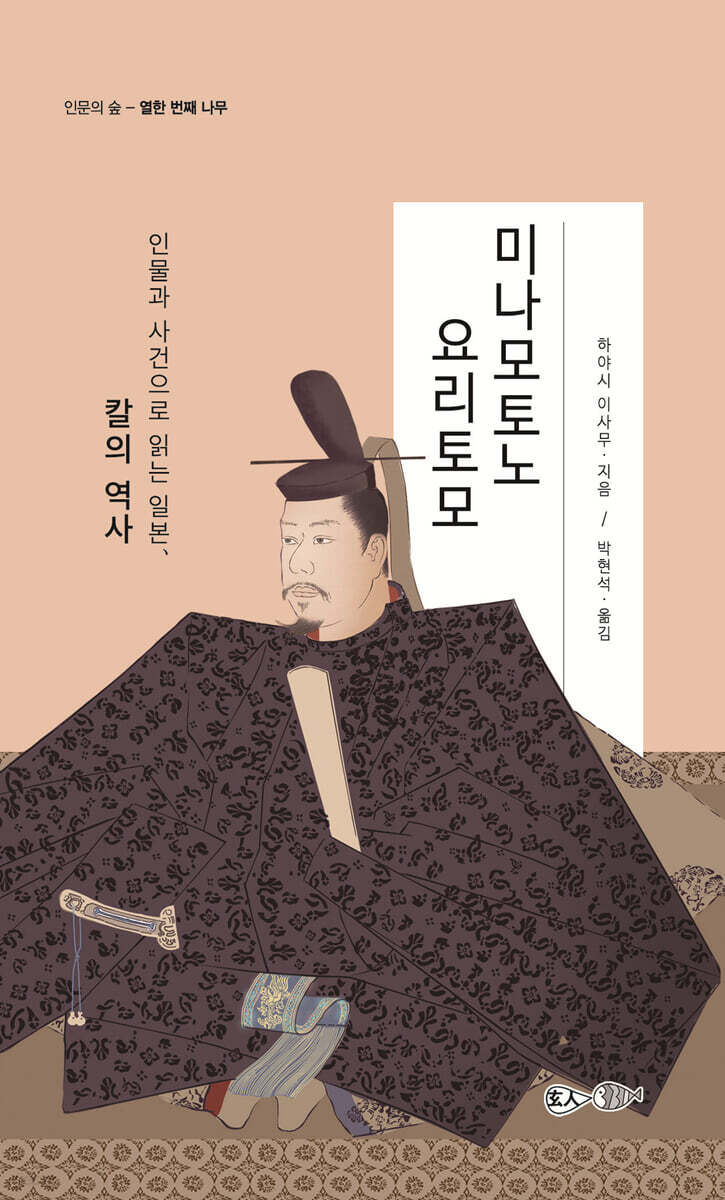
Minamoto no Yoritomo
 |
Description
Book Introduction
The person who had the greatest influence on Japanese politics and thought
This book is a concise and easy-to-understand narrative of the life of Minamoto no Yoritomo, who established a full-fledged military government in Japan and had a profound influence on not only the political system but also the culture and ideology of the Japanese people.
Minamoto no Yoritomo left an indelible mark on Japanese history, but he is not as popular as other heroes.
In this book, we also looked into the causes.
This book is a concise and easy-to-understand narrative of the life of Minamoto no Yoritomo, who established a full-fledged military government in Japan and had a profound influence on not only the political system but also the culture and ideology of the Japanese people.
Minamoto no Yoritomo left an indelible mark on Japanese history, but he is not as popular as other heroes.
In this book, we also looked into the causes.
index
west
Chapter 1: The Togoku Warrior Who Valued Grace
Chapter 2: The Genji Descendants Who Taste Disastrous Defeat
Chapter 3: The Young Warrior Yoritomo
Chapter 4: Yoritomo the Exile
Chapter 5: King Hyojong's Destruction of the Heike Clan
Chapter 6: Yoritomo, Who Could Not Become a Monk
Chapter 7: The Defeat at Ishibashiyama
Chapter 8: The Eight Cantos of the White Flag
Chapter 9: Yoritomo's Power and the Court
Chapter 10: Yoritomo, Who Conquered the World Without Leaving Kamakura
Chapter 11: The Conquest of Oshu
Chapter 12: Minamoto no Yoritomo, the Seii Taishogun
Chapter 13: Yoritomo's Unpopularity
Chapter 14: Anecdotes about Yoritomo
Chapter 1: The Togoku Warrior Who Valued Grace
Chapter 2: The Genji Descendants Who Taste Disastrous Defeat
Chapter 3: The Young Warrior Yoritomo
Chapter 4: Yoritomo the Exile
Chapter 5: King Hyojong's Destruction of the Heike Clan
Chapter 6: Yoritomo, Who Could Not Become a Monk
Chapter 7: The Defeat at Ishibashiyama
Chapter 8: The Eight Cantos of the White Flag
Chapter 9: Yoritomo's Power and the Court
Chapter 10: Yoritomo, Who Conquered the World Without Leaving Kamakura
Chapter 11: The Conquest of Oshu
Chapter 12: Minamoto no Yoritomo, the Seii Taishogun
Chapter 13: Yoritomo's Unpopularity
Chapter 14: Anecdotes about Yoritomo
Into the book
There may have been several reasons why Yoritomo chose to establish his shogunate in Kamakura rather than Kyoto, but the most important reason was probably because it was the place where his ancestors had laid down their roots for generations.
As was also stated in the advice of Chiba (Ji) Nosuke Tsunetane, Kamakura was a strategic location and a land with which people had maintained deep ancestral ties for generations.
And it might also have been because he was thinking about the troops there.
At that time, Khan Hash was truly the best in the world in terms of military force.
The spirit of the brave warriors who hunted deer and foxes and roamed the mountain villages day and night was overwhelming the spirit of Kyoto, which was steeped in elegance and luxury.
After conquering the world, Yoritomo first entered Kyoto and received a high official position, but soon resigned from this glorious position and returned to Kamakura.
Originally, Yoritomo knew himself well and believed that those who came into this world as warriors must fully fulfill their duties as warriors.
However, as Heishi, a warrior, began to rise in the ranks, he became arrogant and only wanted to stay in the splendid Kyoto and attain a high official position, so in the end, he ended up not being able to fight properly even though he was a warrior.
Yoritomo was well aware of this fact.
That is why Yoritomo did not seek a high official position, and instead of going to the splendid Kyoto, he made Kamakura in Kanto his base and gathered his samurai forces there.
If the court wanted to treat him with a high rank, the fact that he asked to become Taisho shows that he recognized that he was only a warrior's equal and tried to maintain that status.
It was natural that Yoritomo, a warrior of the same rank, would train his subordinate warriors to become excellent warriors.
The so-called promotion of bushido is exactly that.
In other words, it was strictly regulated that a warrior should revere the martial arts, value loyalty and filial piety, not forget kindness, keep faith, and make simplicity and frugality his creed.
However, it would have been nice if he had shown kindness and forgiveness to Yoshitsune and Noriyori, but it seems that Yoritomo's strong will was at play and he was unable to do so.
Originally, a fight did not occur because of only one side's fault.
However, he pursued Yoshitsune, who was wandering around various places, to the end, and eventually took his life.
I can't help but be amazed by its thoroughness.
Perhaps, there was a strong will at work there that made it impossible for Yoritomo to yield even an inch.
What was that strong will? It must have been the will to unify the warriors.
The will to unify the samurai and make them follow the rule of Kamakura was such that no sacrifice could be avoided.
For that reason, he demanded absolute obedience from all his warriors, to the point that later generations would consider it cruel.
As was also stated in the advice of Chiba (Ji) Nosuke Tsunetane, Kamakura was a strategic location and a land with which people had maintained deep ancestral ties for generations.
And it might also have been because he was thinking about the troops there.
At that time, Khan Hash was truly the best in the world in terms of military force.
The spirit of the brave warriors who hunted deer and foxes and roamed the mountain villages day and night was overwhelming the spirit of Kyoto, which was steeped in elegance and luxury.
After conquering the world, Yoritomo first entered Kyoto and received a high official position, but soon resigned from this glorious position and returned to Kamakura.
Originally, Yoritomo knew himself well and believed that those who came into this world as warriors must fully fulfill their duties as warriors.
However, as Heishi, a warrior, began to rise in the ranks, he became arrogant and only wanted to stay in the splendid Kyoto and attain a high official position, so in the end, he ended up not being able to fight properly even though he was a warrior.
Yoritomo was well aware of this fact.
That is why Yoritomo did not seek a high official position, and instead of going to the splendid Kyoto, he made Kamakura in Kanto his base and gathered his samurai forces there.
If the court wanted to treat him with a high rank, the fact that he asked to become Taisho shows that he recognized that he was only a warrior's equal and tried to maintain that status.
It was natural that Yoritomo, a warrior of the same rank, would train his subordinate warriors to become excellent warriors.
The so-called promotion of bushido is exactly that.
In other words, it was strictly regulated that a warrior should revere the martial arts, value loyalty and filial piety, not forget kindness, keep faith, and make simplicity and frugality his creed.
However, it would have been nice if he had shown kindness and forgiveness to Yoshitsune and Noriyori, but it seems that Yoritomo's strong will was at play and he was unable to do so.
Originally, a fight did not occur because of only one side's fault.
However, he pursued Yoshitsune, who was wandering around various places, to the end, and eventually took his life.
I can't help but be amazed by its thoroughness.
Perhaps, there was a strong will at work there that made it impossible for Yoritomo to yield even an inch.
What was that strong will? It must have been the will to unify the warriors.
The will to unify the samurai and make them follow the rule of Kamakura was such that no sacrifice could be avoided.
For that reason, he demanded absolute obedience from all his warriors, to the point that later generations would consider it cruel.
--- From the text
Publisher's Review
The founder of the samurai regime that ruled Japan for nearly 700 years
Among the Japanese history that is still unfamiliar to most Koreans, the period that many people are interested in and therefore have access to relatively more information about is the Sengoku period.
Japan's Warring States period is a fascinating period in which many figures rose and fell, leaving behind numerous fascinating anecdotes that will keep future generations gripped by the thrill of reading history.
However, if we go back about 300 years from the Warring States period, a period appears that shows many similar aspects to the Warring States period.
This is the period from the end of the Heian period to the beginning of the Kamakura shogunate, represented by the Genpei War.
I strongly feel that the thoughts and events of this period remain in the depths of the Japanese psyche and still form its foundation.
Although this is a period of considerable importance in Japanese history, there are very few historical books that accurately record the facts of the time, and there are not even any historical books that are recognized as official history.
Therefore, the history of that time contains a considerable amount of legendary elements.
If we look at it only from a historical perspective, it is a rather disappointing period, but if we think about it from a narrative perspective, it is also a period full of interesting events that stimulate the reader's imagination.
Minamoto no Yoritomo, who can be said to have played a leading role in history during that period, eventually rose to the top of the warriors after overcoming several near-death experiences, and based on that power, he established a completely new form of political system that had never been seen before, which had a great influence on Japanese politics, culture, thought, and society as a whole.
This new political form was the establishment of the shogunate (bakufu). The Kamakura shogunate, established by Minamoto no Yoritomo, was later succeeded by the Muromachi shogunate and the Edo shogunate, and the shogunate (military government) ruled Japan for approximately 700 years.
Although he is a figure who left behind great achievements in Japanese history, Minamoto no Yoritomo is not very popular within Japan.
There may be a combination of reasons, but I think the biggest reason is the cruelty with which he even eliminated his own younger siblings.
However, this book views such cruelty as one of the inevitable acts of rule to lay the foundation for the regime.
The realm of history is one in which there are multiple opinions and interpretations regarding a single fact.
I hope that through this book you will be able to form your own assessment of Minamoto no Yoritomo.
And I also want you to think about where the spiritual roots of the Japanese people began.
Among the Japanese history that is still unfamiliar to most Koreans, the period that many people are interested in and therefore have access to relatively more information about is the Sengoku period.
Japan's Warring States period is a fascinating period in which many figures rose and fell, leaving behind numerous fascinating anecdotes that will keep future generations gripped by the thrill of reading history.
However, if we go back about 300 years from the Warring States period, a period appears that shows many similar aspects to the Warring States period.
This is the period from the end of the Heian period to the beginning of the Kamakura shogunate, represented by the Genpei War.
I strongly feel that the thoughts and events of this period remain in the depths of the Japanese psyche and still form its foundation.
Although this is a period of considerable importance in Japanese history, there are very few historical books that accurately record the facts of the time, and there are not even any historical books that are recognized as official history.
Therefore, the history of that time contains a considerable amount of legendary elements.
If we look at it only from a historical perspective, it is a rather disappointing period, but if we think about it from a narrative perspective, it is also a period full of interesting events that stimulate the reader's imagination.
Minamoto no Yoritomo, who can be said to have played a leading role in history during that period, eventually rose to the top of the warriors after overcoming several near-death experiences, and based on that power, he established a completely new form of political system that had never been seen before, which had a great influence on Japanese politics, culture, thought, and society as a whole.
This new political form was the establishment of the shogunate (bakufu). The Kamakura shogunate, established by Minamoto no Yoritomo, was later succeeded by the Muromachi shogunate and the Edo shogunate, and the shogunate (military government) ruled Japan for approximately 700 years.
Although he is a figure who left behind great achievements in Japanese history, Minamoto no Yoritomo is not very popular within Japan.
There may be a combination of reasons, but I think the biggest reason is the cruelty with which he even eliminated his own younger siblings.
However, this book views such cruelty as one of the inevitable acts of rule to lay the foundation for the regime.
The realm of history is one in which there are multiple opinions and interpretations regarding a single fact.
I hope that through this book you will be able to form your own assessment of Minamoto no Yoritomo.
And I also want you to think about where the spiritual roots of the Japanese people began.
GOODS SPECIFICS
- Date of issue: November 15, 2025
- Page count, weight, size: 344 pages | 130*210*30mm
- ISBN13: 9791190156585
- ISBN10: 119015658X
You may also like
카테고리
korean


korean

![ELLE 엘르 스페셜 에디션 A형 : 12월 [2025]](http://librairie.coreenne.fr/cdn/shop/files/b8e27a3de6c9538896439686c6b0e8fb.jpg?v=1766436872&width=3840)


