

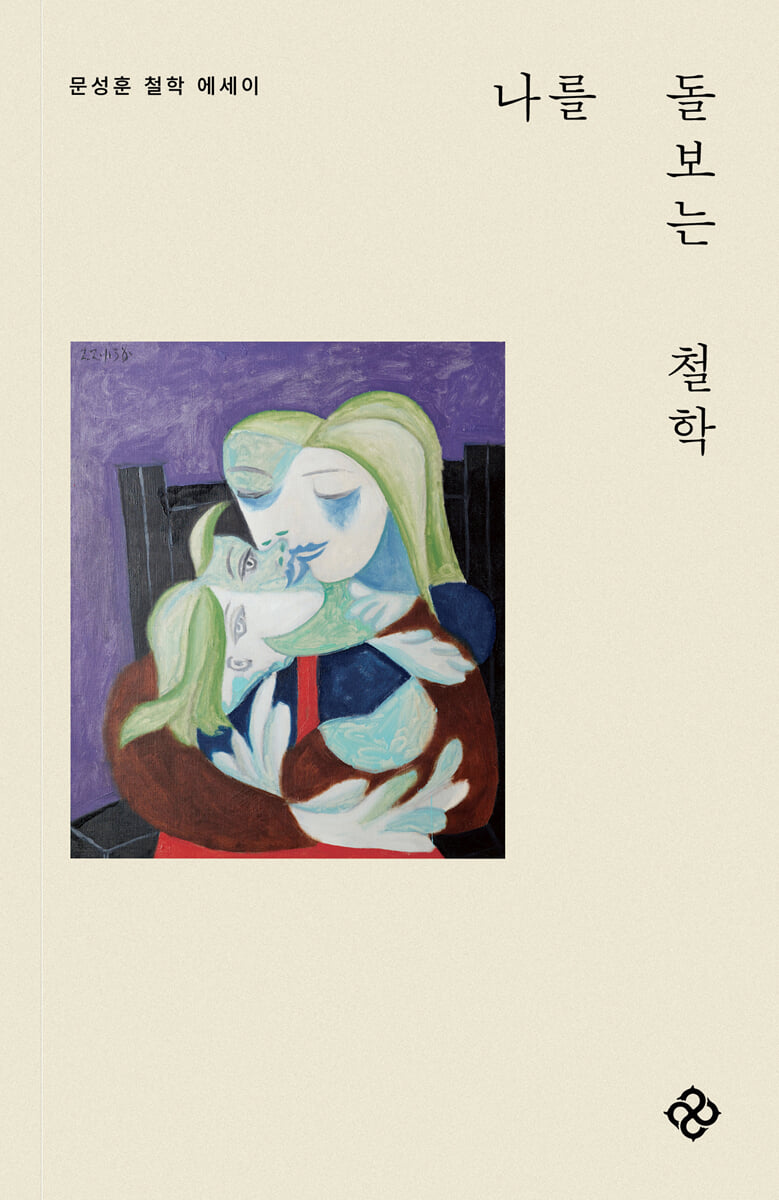
Philosophy of caring for myself
 |
Description
Book Introduction
“It is only through this book that I realize.
The power to rebuild the broken skeleton of life from scratch, step by step.
“That is precisely what comes from the transparent sentences of philosophy.”
- Jeong Yeo-ul (author of "To Me Who Doesn't Care About Myself")
As we endure the hardships of daily life, we sometimes find ourselves thinking that we need to take care of ourselves.
But I have no idea what I really need or how to take care of it.
Before we knew it, we had become so accustomed to following the world's directions and demands that we had lost the ability to listen to our own voices.
This book explores how to care for and heal my weary self, and how to get to know myself.
And it suggests ways to go beyond self-care and become the master of one's own life and create a life that suits oneself through the thoughts and religious teachings of Eastern and Western philosophers such as Socrates, Jean-Jacques Rousseau, Erich Fromm, Michel Foucault, and Confucius, as well as novels and poetry.
The power to rebuild the broken skeleton of life from scratch, step by step.
“That is precisely what comes from the transparent sentences of philosophy.”
- Jeong Yeo-ul (author of "To Me Who Doesn't Care About Myself")
As we endure the hardships of daily life, we sometimes find ourselves thinking that we need to take care of ourselves.
But I have no idea what I really need or how to take care of it.
Before we knew it, we had become so accustomed to following the world's directions and demands that we had lost the ability to listen to our own voices.
This book explores how to care for and heal my weary self, and how to get to know myself.
And it suggests ways to go beyond self-care and become the master of one's own life and create a life that suits oneself through the thoughts and religious teachings of Eastern and Western philosophers such as Socrates, Jean-Jacques Rousseau, Erich Fromm, Michel Foucault, and Confucius, as well as novels and poetry.
- You can preview some of the book's contents.
Preview
index
Opening Remarks: Now is the time to take care of myself.
1.
From self-development to self-care
2.
Philosophy and Self-Care
Part 1: Healing Me
1.
Me taking care of myself
2.
A wounded being
3.
The person who acknowledged me
4.
Finding direction in life through emotional wounds
5.
Solving mental problems
6.
Controlling a troubled mind
7.
Free 'me'!
Part 2: Knowing Me
1.
Know thyself
2.
Socrates' Self-Care
3.
Human beings
4.
It's not my fault
5.
I am dignified
6.
Lamborghini is not 'me'
7.
Finding the life I want
Part 3: Making Me
1.
Four Ways of Life
2.
Aesthetics of Existence
3.
I am a work of art
4.
Is it really good to live like this?
5.
Feel like a poet, think like a poet
6.
Enjoy a simple life
7.
Today like a lifetime
Closing Remarks: Self-Care and Society
reference book
1.
From self-development to self-care
2.
Philosophy and Self-Care
Part 1: Healing Me
1.
Me taking care of myself
2.
A wounded being
3.
The person who acknowledged me
4.
Finding direction in life through emotional wounds
5.
Solving mental problems
6.
Controlling a troubled mind
7.
Free 'me'!
Part 2: Knowing Me
1.
Know thyself
2.
Socrates' Self-Care
3.
Human beings
4.
It's not my fault
5.
I am dignified
6.
Lamborghini is not 'me'
7.
Finding the life I want
Part 3: Making Me
1.
Four Ways of Life
2.
Aesthetics of Existence
3.
I am a work of art
4.
Is it really good to live like this?
5.
Feel like a poet, think like a poet
6.
Enjoy a simple life
7.
Today like a lifetime
Closing Remarks: Self-Care and Society
reference book
Detailed image

Into the book
At first glance, many of the topics covered in philosophy may seem unrelated to self-care, but in fact, these topics are also related to self-care.
In other words, rather than living mindlessly following others or just spending each day being swayed by desire, if you truly want to live a good life and live that way, then the core topics of philosophy, such as God, existence, truth, humanity, ethics, justice, freedom, history, and art, are all important issues in taking care of yourself.
--- From the "Opening Remarks"
Solitude is a time when you can do things you can't do when you're with others, a time when you can choose and decide everything for yourself without worrying about what others think, a time when you can listen to what you want and reflect on yourself.
And in moments of solitude, I can also realize what the people I interact with mean to me.
(…) But in moments of solitude, I meet my true self and exist as myself and no one else.
And in moments of solitude, I become the master of my own free life, determining the value of everything.
--- From "Part 1: Healing Me"
If the reason we take care of ourselves is to live well, then what exactly does it mean to live well? If we know what our optimal state is, the answer is simple.
Living well means living a life in which I examine myself and make myself into the best possible person, and in which the 'me' in this best possible person leads the life, and thus, I live as a great person, a beautiful person.
Socrates not only believes that only a life examined in this way is valuable, but also says that only a life examined is a human life.
Because only humans who perform mental activities through reason can review their lives and make themselves into the best possible state.
--- From "Part 2: Knowing Myself"
Oscar Wilde, neither a philosopher nor a sociologist, did not propose any social ideology when he used the word individualism.
However, it seems clear what he had in mind when he used these words.
It was 'individualization'.
If society expects nothing from individuals, each individual will develop his or her own individuality, and if this individuation proceeds without hindrance, each individual will become not only a unique being, incomparable to others, but also an original being.
All of this has become a part of my life and has also made me who I am, so there is no need to blame myself for the past or whip my present self to make up for past mistakes.
Because the past is merely a choice I made among the infinite possibilities opened up by the present, not a mistake or error on my part that made it difficult to achieve my future goals.
In other words, rather than living mindlessly following others or just spending each day being swayed by desire, if you truly want to live a good life and live that way, then the core topics of philosophy, such as God, existence, truth, humanity, ethics, justice, freedom, history, and art, are all important issues in taking care of yourself.
--- From the "Opening Remarks"
Solitude is a time when you can do things you can't do when you're with others, a time when you can choose and decide everything for yourself without worrying about what others think, a time when you can listen to what you want and reflect on yourself.
And in moments of solitude, I can also realize what the people I interact with mean to me.
(…) But in moments of solitude, I meet my true self and exist as myself and no one else.
And in moments of solitude, I become the master of my own free life, determining the value of everything.
--- From "Part 1: Healing Me"
If the reason we take care of ourselves is to live well, then what exactly does it mean to live well? If we know what our optimal state is, the answer is simple.
Living well means living a life in which I examine myself and make myself into the best possible person, and in which the 'me' in this best possible person leads the life, and thus, I live as a great person, a beautiful person.
Socrates not only believes that only a life examined in this way is valuable, but also says that only a life examined is a human life.
Because only humans who perform mental activities through reason can review their lives and make themselves into the best possible state.
--- From "Part 2: Knowing Myself"
Oscar Wilde, neither a philosopher nor a sociologist, did not propose any social ideology when he used the word individualism.
However, it seems clear what he had in mind when he used these words.
It was 'individualization'.
If society expects nothing from individuals, each individual will develop his or her own individuality, and if this individuation proceeds without hindrance, each individual will become not only a unique being, incomparable to others, but also an original being.
All of this has become a part of my life and has also made me who I am, so there is no need to blame myself for the past or whip my present self to make up for past mistakes.
Because the past is merely a choice I made among the infinite possibilities opened up by the present, not a mistake or error on my part that made it difficult to achieve my future goals.
--- From "Part 3: Making Me"
Publisher's Review
The Beginning of Self-Care, Healing and Comfort
There was a time when the word "hold on" was trendy.
But just waiting for it to pass didn't make it any better.
As I endure the hardships of daily life, I sometimes wonder if I am living well and think that I need to take care of myself.
But I have no idea what I really need or how to take care of it.
Before we knew it, we had become so accustomed to following the world's directions and demands that we had lost the ability to listen to our own voices.
This book tells us how to know ourselves and how to take care of ourselves. 'Self-care' is a term from Michel Foucault, which can also be translated as 'self-care', and it means that each person becomes the subject of their own life, thinks about how to live well, and transforms themselves accordingly.
In self-care, there is no set definition of what a good life is, and it can vary depending on one's own concerns.
This is because I see life as a process of finding the best life for oneself, and as a creative work of art that one must create for oneself.
However, for those who are hurt by competition and interpersonal relationships, and who are suffering from relative deprivation or frustrated desires, healing is a priority.
So, in this book, we first look at how to heal and comfort myself.
A way of life for living well, self-care
Socrates, the father of Western philosophy, believed that the role of philosophy was self-care.
He said that taking care of oneself means “making oneself better,” and he encouraged people to take care of themselves in order to live well.
And he took it upon himself to be a philosopher's mission to assist in this.
Socrates believed that depending on the state of the 'I' who thinks about everything, judges, and leads life, our words, actions, emotions, and desires change, and the way we use our wealth, power, and status also changes, and our lives change as well.
Therefore, knowing myself means knowing what state I am in, and this self-awareness is possible through examining my own life.
The author first examines humans, saying, “Before knowing ‘me,’ it is necessary to know human characteristics because I am also a human being.”
According to Rousseau's view that humans are originally free and equal beings who help and cooperate with one another, we can pursue self-love while also showing empathy for others and helping and cooperating with one another.
Because helping and cooperating with one another is the way to overcome the imperfections of individual humans.
But when we start comparing ourselves to others, we enter a cycle of endless competition and self-blame.
And this competition takes me away from the life I want and from 'me'.
So, what direction should we pursue in our lives? Erich Fromm divides human types into "having-oriented people" and "being-oriented people."
Among them, existentially oriented humans worry about what kind of being they should become and how to live to become the being they want to be, and they want to establish a harmonious relationship with the world.
That is why the 'self' can be created and grown, form harmonious relationships, feel the fullness of existence, and also feel the happiness of self-realization.
Creating me this way connects to creating my life.
The life I want to live, created by me
You can live a successful life that others envy, yet not be happy. You can be incredibly popular, yet feel lonely. You can achieve your long-desired goals, yet feel empty.
If I live a life defined by others, I am not in that life.
“Because it’s not the life I found through my own hard work.” This book teaches us, who are tired of struggling to meet the standards set by others, how to live ‘the life I want.’
And it helps us find ways to live well through various aspects of life, such as Oscar Wilde, who tried to create himself as a beautiful work of art, Martin Heidegger's 'poet-like life', and Epicurus, who believed that a joyful life is the happiest life.
Isn't living well, true to myself, or at least not living a life that doesn't suit me, a form of self-care? This book helps me understand why I need to care for myself and why I must become the master of my own life.
And it suggests how to create a life that suits me, rather than a common lifestyle such as a successful life, a moral life, a normal life, or a religious life, through the thoughts of Eastern and Western philosophers, religious teachings, novels, and poetry.
There was a time when the word "hold on" was trendy.
But just waiting for it to pass didn't make it any better.
As I endure the hardships of daily life, I sometimes wonder if I am living well and think that I need to take care of myself.
But I have no idea what I really need or how to take care of it.
Before we knew it, we had become so accustomed to following the world's directions and demands that we had lost the ability to listen to our own voices.
This book tells us how to know ourselves and how to take care of ourselves. 'Self-care' is a term from Michel Foucault, which can also be translated as 'self-care', and it means that each person becomes the subject of their own life, thinks about how to live well, and transforms themselves accordingly.
In self-care, there is no set definition of what a good life is, and it can vary depending on one's own concerns.
This is because I see life as a process of finding the best life for oneself, and as a creative work of art that one must create for oneself.
However, for those who are hurt by competition and interpersonal relationships, and who are suffering from relative deprivation or frustrated desires, healing is a priority.
So, in this book, we first look at how to heal and comfort myself.
A way of life for living well, self-care
Socrates, the father of Western philosophy, believed that the role of philosophy was self-care.
He said that taking care of oneself means “making oneself better,” and he encouraged people to take care of themselves in order to live well.
And he took it upon himself to be a philosopher's mission to assist in this.
Socrates believed that depending on the state of the 'I' who thinks about everything, judges, and leads life, our words, actions, emotions, and desires change, and the way we use our wealth, power, and status also changes, and our lives change as well.
Therefore, knowing myself means knowing what state I am in, and this self-awareness is possible through examining my own life.
The author first examines humans, saying, “Before knowing ‘me,’ it is necessary to know human characteristics because I am also a human being.”
According to Rousseau's view that humans are originally free and equal beings who help and cooperate with one another, we can pursue self-love while also showing empathy for others and helping and cooperating with one another.
Because helping and cooperating with one another is the way to overcome the imperfections of individual humans.
But when we start comparing ourselves to others, we enter a cycle of endless competition and self-blame.
And this competition takes me away from the life I want and from 'me'.
So, what direction should we pursue in our lives? Erich Fromm divides human types into "having-oriented people" and "being-oriented people."
Among them, existentially oriented humans worry about what kind of being they should become and how to live to become the being they want to be, and they want to establish a harmonious relationship with the world.
That is why the 'self' can be created and grown, form harmonious relationships, feel the fullness of existence, and also feel the happiness of self-realization.
Creating me this way connects to creating my life.
The life I want to live, created by me
You can live a successful life that others envy, yet not be happy. You can be incredibly popular, yet feel lonely. You can achieve your long-desired goals, yet feel empty.
If I live a life defined by others, I am not in that life.
“Because it’s not the life I found through my own hard work.” This book teaches us, who are tired of struggling to meet the standards set by others, how to live ‘the life I want.’
And it helps us find ways to live well through various aspects of life, such as Oscar Wilde, who tried to create himself as a beautiful work of art, Martin Heidegger's 'poet-like life', and Epicurus, who believed that a joyful life is the happiest life.
Isn't living well, true to myself, or at least not living a life that doesn't suit me, a form of self-care? This book helps me understand why I need to care for myself and why I must become the master of my own life.
And it suggests how to create a life that suits me, rather than a common lifestyle such as a successful life, a moral life, a normal life, or a religious life, through the thoughts of Eastern and Western philosophers, religious teachings, novels, and poetry.
GOODS SPECIFICS
- Date of issue: September 20, 2025
- Page count, weight, size: 335 pages | 130*200mm
- ISBN13: 9788932475745
- ISBN10: 8932475741
You may also like
카테고리
korean


korean

![GQ KOREA Mark (Monthly): December [2025]](http://librairie.coreenne.fr/cdn/shop/files/8ef265dbbfbf186523ed75ba7319009d.jpg?v=1765340328&width=3840)


