

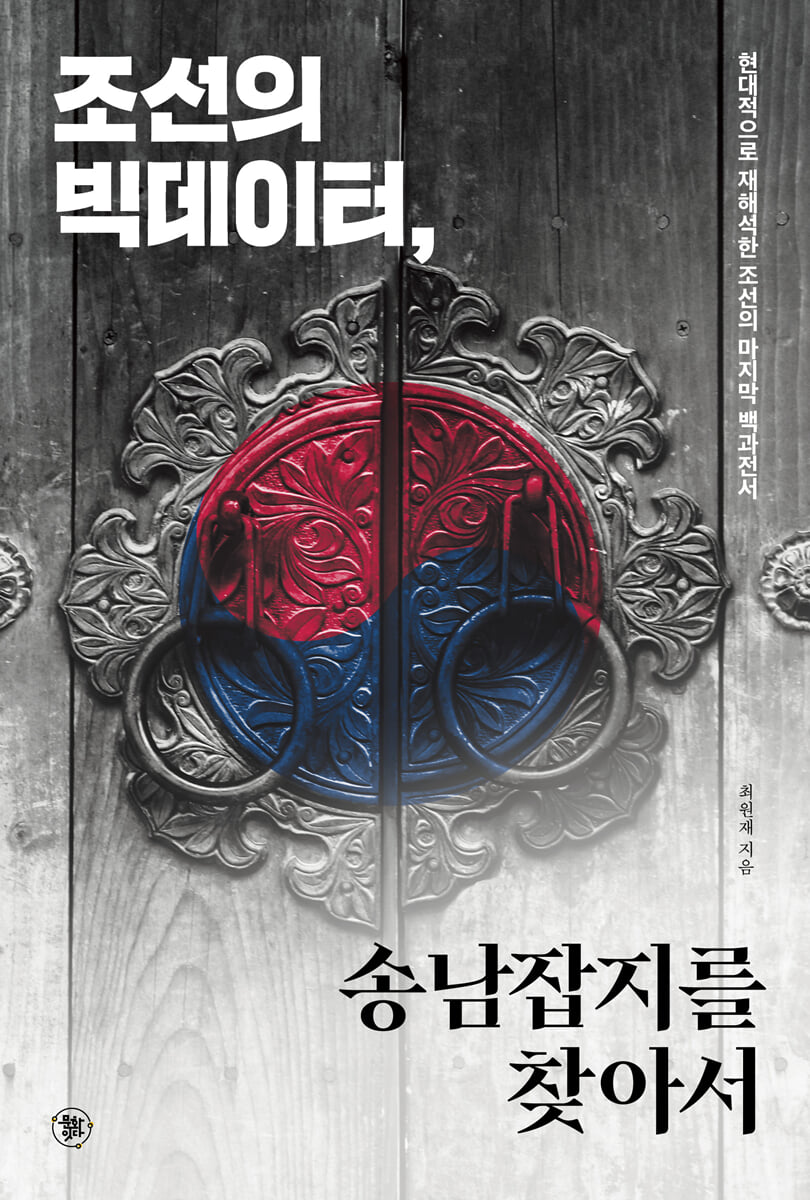
In search of Joseon's big data, Songnam Magazine
 |
Description
Book Introduction
In 1855, there was a 'data revolution' in Joseon too!
An exciting journey of knowledge connecting the classics and the modern era!
Songnam Magazine, published by Songnam Jo Jae-sam, is a representative encyclopedia and educational book of the late Joseon Dynasty, along with Lee Su-gwang's Jibongyuseol and Seongho Ik's Seonghosaeseol.
He classified knowledge into 14 fields, including astronomy, geography, agriculture, dialects, names, and music, and established a learning system that encompassed both classics and reality to teach his two sons.
It was not simply a book of miscellaneous knowledge, but a Joseon version of a data learning method.
『Songnam Magazine』 recorded the entirety of life and culture like data, including the origins of names, the origins of surnames, the roots of words like 'man' and 'gasina,' ribs and rice cakes, place names and legends, and even gisaeng and the civil service examination.
These seemingly trivial stories became learning tools that broadened our thinking and changed our way of looking at the world.
Like today's big data analysis, it shows that 19th-century Joseon also sought to open new avenues of learning through the 'connection of knowledge.'
Professor Choi Won-jae of Dongguk University reinterprets this book in a modern way, interpreting Songnam Magazine not as a simple classic but as data connected to today's culture.
It explores the identity of Koreans through various cases that connect the past and present, including the drama "The Strange Lawyer Woo Young-woo," the film "War of Crime," and the story of the names of actors Gong Yoo and Ahn Jung-hwan.
The moment you read it, you will be amazed at how interesting Korean studies can be.
"In Search of Joseon's Big Data, Songnam Magazine" is a book not only for scholars but also for all readers who want to understand the cultural roots of Koreans.
Following the data classification learning method of the late Joseon Dynasty, we come to realize that 'useless miscellaneous knowledge is the power of study.'
Join us on an exciting journey where forgotten knowledge is revived as modern culture.
- 'Culture Itda' is a subsidiary of Jeonghan Books, a publishing company, and is a local cultural content planning company that captures the history and cultural resources of the Goesan region of North Chungcheong Province through books and various cultural and artistic activities.
An exciting journey of knowledge connecting the classics and the modern era!
Songnam Magazine, published by Songnam Jo Jae-sam, is a representative encyclopedia and educational book of the late Joseon Dynasty, along with Lee Su-gwang's Jibongyuseol and Seongho Ik's Seonghosaeseol.
He classified knowledge into 14 fields, including astronomy, geography, agriculture, dialects, names, and music, and established a learning system that encompassed both classics and reality to teach his two sons.
It was not simply a book of miscellaneous knowledge, but a Joseon version of a data learning method.
『Songnam Magazine』 recorded the entirety of life and culture like data, including the origins of names, the origins of surnames, the roots of words like 'man' and 'gasina,' ribs and rice cakes, place names and legends, and even gisaeng and the civil service examination.
These seemingly trivial stories became learning tools that broadened our thinking and changed our way of looking at the world.
Like today's big data analysis, it shows that 19th-century Joseon also sought to open new avenues of learning through the 'connection of knowledge.'
Professor Choi Won-jae of Dongguk University reinterprets this book in a modern way, interpreting Songnam Magazine not as a simple classic but as data connected to today's culture.
It explores the identity of Koreans through various cases that connect the past and present, including the drama "The Strange Lawyer Woo Young-woo," the film "War of Crime," and the story of the names of actors Gong Yoo and Ahn Jung-hwan.
The moment you read it, you will be amazed at how interesting Korean studies can be.
"In Search of Joseon's Big Data, Songnam Magazine" is a book not only for scholars but also for all readers who want to understand the cultural roots of Koreans.
Following the data classification learning method of the late Joseon Dynasty, we come to realize that 'useless miscellaneous knowledge is the power of study.'
Join us on an exciting journey where forgotten knowledge is revived as modern culture.
- 'Culture Itda' is a subsidiary of Jeonghan Books, a publishing company, and is a local cultural content planning company that captures the history and cultural resources of the Goesan region of North Chungcheong Province through books and various cultural and artistic activities.
- You can preview some of the book's contents.
Preview
index
Recommendation
Introduction: In search of the origins of the Republic of Korea
Chapter 1.
Koreans of Personification
Yun I-jeong | Heo Yeop | Park Hyeokgeose | Alyeong | Shin Saimdang | Eojigan | Kim Sung-gyeom | Sungnyemun | Myeongcheon | Jeomyeongsan | Kim Si-seup | Kim Yu-sin·Lee Gi-chuk | Gyeon Hwon | Sang·Don·Tae | Yu Mong-in | Ryu Cha-dal·Lee Do | Lee Eop-bok·Kim Jung-jin | Icheon, Gyeonggi-do | Geumgangsan | Songnisan | Gaerong | Maisan | Gaeunpo | Geumnansae | Gimcheon | Jijijiji | Yi I | Nam Gon·Simjeong | Im Kkeokjeong | Sinmungo
Chapter 2.
Korean territoriality
Unification of the Three Kingdoms | Goguryeo | Baekje | Silla | Gaya | Joseon | Malgal | Balhae | Kim Geuk-su | Dongduran | Division of the Korean Peninsula | Dadariang | Tsushima Island | The Sea of Japan
Chapter 3.
Korean virtuality
Dragon | Monster | Well | Rice Cake | Play | Market
Chapter 4.
Korean star quality
Choi Chi-won | Hwarang | Civil Service | Marriage | Music
Chapter 5.
Avengers Korean
Nam I, An Jong-yak, Yi Yeong-gan, Yang Man-chun, Yu Bong-su, Shin Sung-gyeom, Eulji Mundeok, Gang Gam-chan, Jo Chung, Kim Chwi-ryeo, Park Seo, Kim Gyeong-son, Jeong Chung-sin, General Song, Ji Chae-mun, Jeong Ryeom, Choi Se-jin, Lee Ji-ham, Nam Sa-go, Yi Sa-bu, Ryu Seong-ryong, Yi Jun-gyeong, Jeong Se-un, Yi Sun-sin, Kwak Jae-u, Jo Heon, Je Mal, Kim Deok-ryeong, Yi Jang-son, Seong Sam-mun, Choi Seung-ji and his son, Heo Mok, Jeong Cheol-jo, Kim An-guk, Heo Man-seok, Yu Hyeong-won, Hong Gye-hui, Choi Bu, Seo Seung-sun, Park Se-mu, Lee Deok-mu, Gi Woo-ja, Jeong Hyeop, Jang Boong-ik
Chapter 6.
Most popular in South Korea
Masangjae | Ye·Poetry·Seo | Pyeonjeon | Paper | Village Yu Hui-gyeong | Jihwa | Hwang Mo-pil | Cheongsimhwan | Dansan O-ok | Nampo-seok | Music
Chapter 7.
Korean speaking habits
One | King | Love | Fall in love | Serious | Begging | Pipa | Abyss | Gudeul | Bokjak Bokjak | Stop | Apo | King | Sniper | Ahh | Baby | Mommy | Cuckoo | Come on! | Jjang jjang jjang | Haha | Blue | Paper | Ulleung | Wife | Earwax | Jicheong-gu | Eulsa Samgan | Yegyo·Jjokbali | Stubborn
The significance of Joseon's last encyclopedia
Introduction: In search of the origins of the Republic of Korea
Chapter 1.
Koreans of Personification
Yun I-jeong | Heo Yeop | Park Hyeokgeose | Alyeong | Shin Saimdang | Eojigan | Kim Sung-gyeom | Sungnyemun | Myeongcheon | Jeomyeongsan | Kim Si-seup | Kim Yu-sin·Lee Gi-chuk | Gyeon Hwon | Sang·Don·Tae | Yu Mong-in | Ryu Cha-dal·Lee Do | Lee Eop-bok·Kim Jung-jin | Icheon, Gyeonggi-do | Geumgangsan | Songnisan | Gaerong | Maisan | Gaeunpo | Geumnansae | Gimcheon | Jijijiji | Yi I | Nam Gon·Simjeong | Im Kkeokjeong | Sinmungo
Chapter 2.
Korean territoriality
Unification of the Three Kingdoms | Goguryeo | Baekje | Silla | Gaya | Joseon | Malgal | Balhae | Kim Geuk-su | Dongduran | Division of the Korean Peninsula | Dadariang | Tsushima Island | The Sea of Japan
Chapter 3.
Korean virtuality
Dragon | Monster | Well | Rice Cake | Play | Market
Chapter 4.
Korean star quality
Choi Chi-won | Hwarang | Civil Service | Marriage | Music
Chapter 5.
Avengers Korean
Nam I, An Jong-yak, Yi Yeong-gan, Yang Man-chun, Yu Bong-su, Shin Sung-gyeom, Eulji Mundeok, Gang Gam-chan, Jo Chung, Kim Chwi-ryeo, Park Seo, Kim Gyeong-son, Jeong Chung-sin, General Song, Ji Chae-mun, Jeong Ryeom, Choi Se-jin, Lee Ji-ham, Nam Sa-go, Yi Sa-bu, Ryu Seong-ryong, Yi Jun-gyeong, Jeong Se-un, Yi Sun-sin, Kwak Jae-u, Jo Heon, Je Mal, Kim Deok-ryeong, Yi Jang-son, Seong Sam-mun, Choi Seung-ji and his son, Heo Mok, Jeong Cheol-jo, Kim An-guk, Heo Man-seok, Yu Hyeong-won, Hong Gye-hui, Choi Bu, Seo Seung-sun, Park Se-mu, Lee Deok-mu, Gi Woo-ja, Jeong Hyeop, Jang Boong-ik
Chapter 6.
Most popular in South Korea
Masangjae | Ye·Poetry·Seo | Pyeonjeon | Paper | Village Yu Hui-gyeong | Jihwa | Hwang Mo-pil | Cheongsimhwan | Dansan O-ok | Nampo-seok | Music
Chapter 7.
Korean speaking habits
One | King | Love | Fall in love | Serious | Begging | Pipa | Abyss | Gudeul | Bokjak Bokjak | Stop | Apo | King | Sniper | Ahh | Baby | Mommy | Cuckoo | Come on! | Jjang jjang jjang | Haha | Blue | Paper | Ulleung | Wife | Earwax | Jicheong-gu | Eulsa Samgan | Yegyo·Jjokbali | Stubborn
The significance of Joseon's last encyclopedia
Into the book
Heo Gyun's Hong Gildong, who is famous as a thief along with Im Kkeok-jeong, was inspired by a character named Namgung Du.
Namgung Du was one of the Danhakpa (丹學派) scholars in the mid-Joseon period.
He was born in 1528 and passed the Jinsa exam in 1555.
While living in Impi, Okgu-gun, Jeollabuk-do, he witnessed an adultery between a concubine and a relative, and after killing them both, he became a monk.
In 1608, when Heo Gyun lived in Buan, he met Namgung Du, and based on his memories of that time, he wrote “Namgung Seonsaengjeon” in his anthology “Seongsobubugo”.
This work, along with “The Story of Hong Gildong,” is one of Heo Gyun’s most famous novels.
The story of Namgung Du, who is related to the practice of the art of immortality, is also recorded in 『Eoyu Yadam』 and 『Taekriji』.
--- p.76
In the 『Sinjeung Dongguk Yeoji Seungram (Newly Augmented Survey of the Geography of Korea)』, Geumjeongsan is described as follows: 'It is a mountain 20 li north of Dongnae-hyeon. At the top of the mountain there is a stone about three feet high. On top of it is a well. It is about 10 feet in circumference and 7 inches deep. The water never dries up and is golden in color.'
This is not a spring.
It is a well that collects rainwater and never dries up.
Busan's Geumjeong-gu (金井區) is also a town name derived from here.
The following is a record of the Uidong well in Seoul.
--- p.134
In this "Bukjeongsi", there is a phrase called "Mipyeong-guk (未平國)", and there is an episode where a ghost changed it to "Mideuk-guk (未得國)".
It is said that it was not a ghost but Ryu Ja-gwang who changed the characters from ‘if you cannot pacify the country’ to ‘if you cannot obtain the country’.
However, this is the result of Ryu Ja-gwang's 'branding'.
Nam-i's revolutionary theory is credible.
Ryu Ja-gwang provided a clue to the Muo Incident, and the Sarim branded him as a traitor.
The fabrication theory of "Bukjeongsi" should also be interpreted in this context.
After his death, General Nam became a god and was deified in the shaman world.
Nam-i's aunt gave birth to Shin Suk-kwon, Shin Suk-kwon gave birth to Shin Myeong-hwa, and Shin Myeong-hwa's daughter was Shin Saimdang, making them distant relatives of Nam-i.
--- p.206
Another Joseon official, Park Yeon, was a Joseon military officer who was naturalized in the Netherlands.
His Dutch name is Jan Janse de Weltevree.
After becoming a naturalized citizen of Joseon, the name given to him was Park Yeon.
In 1627, he drifted while sailing and landed on Jeju Island.
There is a record that he cried out when he was drifting, thinking that Koreans approaching him with torches would eat him.
Because Japan rejected the Christian group led by Park Yeon, Joseon gave up on repatriation.
Namgung Du was one of the Danhakpa (丹學派) scholars in the mid-Joseon period.
He was born in 1528 and passed the Jinsa exam in 1555.
While living in Impi, Okgu-gun, Jeollabuk-do, he witnessed an adultery between a concubine and a relative, and after killing them both, he became a monk.
In 1608, when Heo Gyun lived in Buan, he met Namgung Du, and based on his memories of that time, he wrote “Namgung Seonsaengjeon” in his anthology “Seongsobubugo”.
This work, along with “The Story of Hong Gildong,” is one of Heo Gyun’s most famous novels.
The story of Namgung Du, who is related to the practice of the art of immortality, is also recorded in 『Eoyu Yadam』 and 『Taekriji』.
--- p.76
In the 『Sinjeung Dongguk Yeoji Seungram (Newly Augmented Survey of the Geography of Korea)』, Geumjeongsan is described as follows: 'It is a mountain 20 li north of Dongnae-hyeon. At the top of the mountain there is a stone about three feet high. On top of it is a well. It is about 10 feet in circumference and 7 inches deep. The water never dries up and is golden in color.'
This is not a spring.
It is a well that collects rainwater and never dries up.
Busan's Geumjeong-gu (金井區) is also a town name derived from here.
The following is a record of the Uidong well in Seoul.
--- p.134
In this "Bukjeongsi", there is a phrase called "Mipyeong-guk (未平國)", and there is an episode where a ghost changed it to "Mideuk-guk (未得國)".
It is said that it was not a ghost but Ryu Ja-gwang who changed the characters from ‘if you cannot pacify the country’ to ‘if you cannot obtain the country’.
However, this is the result of Ryu Ja-gwang's 'branding'.
Nam-i's revolutionary theory is credible.
Ryu Ja-gwang provided a clue to the Muo Incident, and the Sarim branded him as a traitor.
The fabrication theory of "Bukjeongsi" should also be interpreted in this context.
After his death, General Nam became a god and was deified in the shaman world.
Nam-i's aunt gave birth to Shin Suk-kwon, Shin Suk-kwon gave birth to Shin Myeong-hwa, and Shin Myeong-hwa's daughter was Shin Saimdang, making them distant relatives of Nam-i.
--- p.206
Another Joseon official, Park Yeon, was a Joseon military officer who was naturalized in the Netherlands.
His Dutch name is Jan Janse de Weltevree.
After becoming a naturalized citizen of Joseon, the name given to him was Park Yeon.
In 1627, he drifted while sailing and landed on Jeju Island.
There is a record that he cried out when he was drifting, thinking that Koreans approaching him with torches would eat him.
Because Japan rejected the Christian group led by Park Yeon, Joseon gave up on repatriation.
--- p.263
Publisher's Review
Joseon's last encyclopedia, in search of its significance!
'A book filled with the cultural genes of the Korean people!'
Knowledge that seems useless, but when you know it, it's the power of study!
Songnam Japji, published by Songnam Jo Jae-sam, is a representative book of the late Joseon Dynasty, and is a book that systematically organizes records across 14 fields, including astronomy, geography, agricultural administration, dialects, names, civil service examinations, and music.
However, it was not a simple encyclopedia, but a textbook written by the author to teach his two sons.
Songnam gathered scattered knowledge into categories, traced the origins of words, names, foods, and place names, and encouraged children to ask questions and expand their thinking.
In 『Songnam Japji』, the reason why Park Hyeokgeose received the Park surname, the reason why the Sungnyemun signboard was hung vertically, the roots of the words 'sanai' and 'gasina', the origin of galbi, tteok, and dakgalbi, and the beginning of the gisaeng system are recorded.
This story, which at first glance seems like trivia, was actually an exercise in connecting knowledge and understanding context.
In the process of asking about and recording the origins of trivial things, learners gain new perspectives on the world.
Where traditional knowledge and today's culture meet!
The moment miscellaneous knowledge becomes culture, study truly comes alive!
Professor Choi Won-jae of Dongguk University reinterprets "Songnam Magazine" in a modern way, reviving its legacy as a contemporary cultural resource. By exploring the names of BTS members and other celebrities, he demonstrates how traditional knowledge connects with contemporary culture.
This proves that the classics are not just something that remains in the past, but are the key to interpreting our lives today.
In the mid-19th century, when 『Songnam Japji』 was written, Joseon society was permeated with an educational culture that focused on memorization-based preparation for the civil service examination.
However, Song Nam, following the spirit of Geokmulchiji, hoped that children would develop the ability to explore and think about the meaning of things.
"In Search of Joseon's Big Data, Songnam Magazine" interprets this intention from a contemporary perspective, reminding readers "not to memorize knowledge, but to think through questions."
This book is not a simple historical commentary.
This book is recommended for readers who want to understand the cultural roots of Koreans, scholars studying Korean studies and the Korean Wave, teachers and parents seeking new study methods, and anyone who loves the joy of knowledge.
‘Japjisik’, written in Joseon 170 years ago, tells us this today.
“Knowledge becomes power when connected.”
Songnam Magazine, a famous work by Goesan scholar Songnam Jo Jae-sam
Reborn through the planning of a local publisher
『Songnam Japji』, written by Songnam Jo Jae-sam, a scholar from Goesan, North Chungcheong Province, was not seen in the light of day due to the chaotic times of the late Joseon Dynasty and the regional influence of being written by a scholar. However, it was translated in 2008, which led to the start of full-scale research.
However, the publication is also significant in terms of the development of local culture, as a local publisher, feeling sorry that the 『Songnam Magazine』 remained a limited source accessible only to some researchers, wanted to introduce it to a wider public and planned and published this book by discovering local historical and cultural resources.
'A book filled with the cultural genes of the Korean people!'
Knowledge that seems useless, but when you know it, it's the power of study!
Songnam Japji, published by Songnam Jo Jae-sam, is a representative book of the late Joseon Dynasty, and is a book that systematically organizes records across 14 fields, including astronomy, geography, agricultural administration, dialects, names, civil service examinations, and music.
However, it was not a simple encyclopedia, but a textbook written by the author to teach his two sons.
Songnam gathered scattered knowledge into categories, traced the origins of words, names, foods, and place names, and encouraged children to ask questions and expand their thinking.
In 『Songnam Japji』, the reason why Park Hyeokgeose received the Park surname, the reason why the Sungnyemun signboard was hung vertically, the roots of the words 'sanai' and 'gasina', the origin of galbi, tteok, and dakgalbi, and the beginning of the gisaeng system are recorded.
This story, which at first glance seems like trivia, was actually an exercise in connecting knowledge and understanding context.
In the process of asking about and recording the origins of trivial things, learners gain new perspectives on the world.
Where traditional knowledge and today's culture meet!
The moment miscellaneous knowledge becomes culture, study truly comes alive!
Professor Choi Won-jae of Dongguk University reinterprets "Songnam Magazine" in a modern way, reviving its legacy as a contemporary cultural resource. By exploring the names of BTS members and other celebrities, he demonstrates how traditional knowledge connects with contemporary culture.
This proves that the classics are not just something that remains in the past, but are the key to interpreting our lives today.
In the mid-19th century, when 『Songnam Japji』 was written, Joseon society was permeated with an educational culture that focused on memorization-based preparation for the civil service examination.
However, Song Nam, following the spirit of Geokmulchiji, hoped that children would develop the ability to explore and think about the meaning of things.
"In Search of Joseon's Big Data, Songnam Magazine" interprets this intention from a contemporary perspective, reminding readers "not to memorize knowledge, but to think through questions."
This book is not a simple historical commentary.
This book is recommended for readers who want to understand the cultural roots of Koreans, scholars studying Korean studies and the Korean Wave, teachers and parents seeking new study methods, and anyone who loves the joy of knowledge.
‘Japjisik’, written in Joseon 170 years ago, tells us this today.
“Knowledge becomes power when connected.”
Songnam Magazine, a famous work by Goesan scholar Songnam Jo Jae-sam
Reborn through the planning of a local publisher
『Songnam Japji』, written by Songnam Jo Jae-sam, a scholar from Goesan, North Chungcheong Province, was not seen in the light of day due to the chaotic times of the late Joseon Dynasty and the regional influence of being written by a scholar. However, it was translated in 2008, which led to the start of full-scale research.
However, the publication is also significant in terms of the development of local culture, as a local publisher, feeling sorry that the 『Songnam Magazine』 remained a limited source accessible only to some researchers, wanted to introduce it to a wider public and planned and published this book by discovering local historical and cultural resources.
GOODS SPECIFICS
- Date of issue: August 27, 2025
- Page count, weight, size: 320 pages | 152*225*30mm
- ISBN13: 9791197659621
- ISBN10: 1197659625
You may also like
카테고리
korean


korean

![GQ KOREA Mark (Monthly): December [2025]](http://librairie.coreenne.fr/cdn/shop/files/8ef265dbbfbf186523ed75ba7319009d.jpg?v=1765340328&width=3840)


