

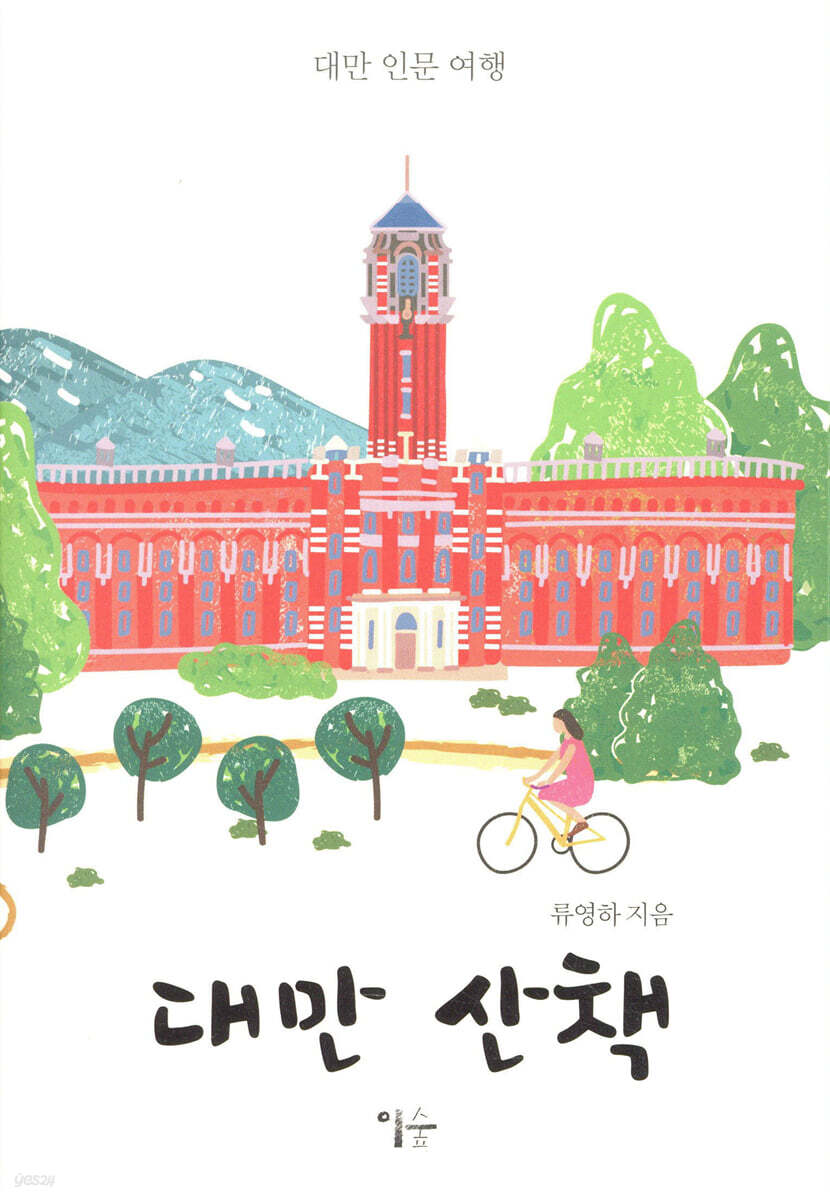
Walking in Taiwan
 |
Description
Book Introduction
This book is a revised edition of “A Walk in Taiwan,” published in 2022.
Some content has been revised and supplemented.
How about Taiwan as a travel destination? Instead of just visiting tourist attractions featured in guidebooks or posting Instagram photos, why not experience the real Taiwan, a place few outsiders know about? Historically and culturally, Taiwan is a fascinating country, but the truth is, we don't know much about it.
If you look for books about Taiwan, you'll find many introducing tourist attractions and food, but few that delve into Taiwan's history and culture.
This book contains the observations and reflections of a humanist who has had a long-standing connection with Taiwan, lived and studied there, taught at a Taiwanese university, and traveled throughout Taiwan for many years, exploring its food, customs, history, emotions, and culture.
In particular, the author uses his experience as a curator for the Taiwan edition of EBS TV's [World Taema Travel] to vividly introduce the vivid reality of Taiwan.
Additionally, the book is filled with over 600 photographs taken by the author on site over a long period of time, providing readers with a vivid and immersive experience.
Some content has been revised and supplemented.
How about Taiwan as a travel destination? Instead of just visiting tourist attractions featured in guidebooks or posting Instagram photos, why not experience the real Taiwan, a place few outsiders know about? Historically and culturally, Taiwan is a fascinating country, but the truth is, we don't know much about it.
If you look for books about Taiwan, you'll find many introducing tourist attractions and food, but few that delve into Taiwan's history and culture.
This book contains the observations and reflections of a humanist who has had a long-standing connection with Taiwan, lived and studied there, taught at a Taiwanese university, and traveled throughout Taiwan for many years, exploring its food, customs, history, emotions, and culture.
In particular, the author uses his experience as a curator for the Taiwan edition of EBS TV's [World Taema Travel] to vividly introduce the vivid reality of Taiwan.
Additionally, the book is filled with over 600 photographs taken by the author on site over a long period of time, providing readers with a vivid and immersive experience.
index
Me and Taiwan - In lieu of the preface 7
1.
eating
1) Water-boiled rice cake 19
2) Meat Starch Dumplings (肉圓) 23
3) Pepper Meat Oven Dumplings (胡椒餠) 25
4) Support surface 28
5) Ssangjangmyeon (雙醬麵) 31
6) Beef Noodles (Beef Noodles) 35
7) Braised short rib rice bowl (肉飯) 40
8) Rice ball (rice?) 44
9) Self-help 47
10) Bubble Tea (珍珠?茶) 50
11) Jiangzhe Cuisine 53
12) Japanese Cuisine 58
13) Taiwanese Cuisine 65
2.
walking
1) Imga Flower Garden 71
2) Fuhe Bridge Flea Market 77
3) Ningxia Night Market 79
4) Cheongpin Bookstore 84
5) Dadaocheng (Great Rice God) 89
6) Songshan Wenchang (松山文創)/Huashan Wenchang (華山文創) 95
7) Sanyi, the city of woodcarvings 103
8) Yongkang Street 110
9) Minseong Community 117
3.
look
1) Tongshao Shrine in Miaoli 125
2) Confucius Temple in Lugang 129
3) The Seonghwangmyo Temple of Sinju 139
4) Taichung's Zhenlan Palace - Mazu Temple 147
5) Palace Museum 154
6) National Father Memorial Hall 160
7) Liberty Square - Chiang Kai-shek Memorial Hall 166
8) 228 Peace Park 172
9) Shunyi Aboriginal Museum 178
10) Taiwan Museum of History in Tainan (台南) 188
4.
Know
1) Gift 197
2) Chinese characters 201
3) Traditional Chinese characters 208
4) Original person 213
5) Hakka people 217
6) Indigenous people 222
7) Hahan people 227
8) Both sides of the strait (China and Taiwan) 233
9) Taiwan or Republic of China 243
References 251
1.
eating
1) Water-boiled rice cake 19
2) Meat Starch Dumplings (肉圓) 23
3) Pepper Meat Oven Dumplings (胡椒餠) 25
4) Support surface 28
5) Ssangjangmyeon (雙醬麵) 31
6) Beef Noodles (Beef Noodles) 35
7) Braised short rib rice bowl (肉飯) 40
8) Rice ball (rice?) 44
9) Self-help 47
10) Bubble Tea (珍珠?茶) 50
11) Jiangzhe Cuisine 53
12) Japanese Cuisine 58
13) Taiwanese Cuisine 65
2.
walking
1) Imga Flower Garden 71
2) Fuhe Bridge Flea Market 77
3) Ningxia Night Market 79
4) Cheongpin Bookstore 84
5) Dadaocheng (Great Rice God) 89
6) Songshan Wenchang (松山文創)/Huashan Wenchang (華山文創) 95
7) Sanyi, the city of woodcarvings 103
8) Yongkang Street 110
9) Minseong Community 117
3.
look
1) Tongshao Shrine in Miaoli 125
2) Confucius Temple in Lugang 129
3) The Seonghwangmyo Temple of Sinju 139
4) Taichung's Zhenlan Palace - Mazu Temple 147
5) Palace Museum 154
6) National Father Memorial Hall 160
7) Liberty Square - Chiang Kai-shek Memorial Hall 166
8) 228 Peace Park 172
9) Shunyi Aboriginal Museum 178
10) Taiwan Museum of History in Tainan (台南) 188
4.
Know
1) Gift 197
2) Chinese characters 201
3) Traditional Chinese characters 208
4) Original person 213
5) Hakka people 217
6) Indigenous people 222
7) Hahan people 227
8) Both sides of the strait (China and Taiwan) 233
9) Taiwan or Republic of China 243
References 251
Into the book
If you had to define Taiwanese culture in one word, what would it be? I thought of dumplings and bamboo.
I wanted to define this beautiful 'Treasure Island' with dumplings that embrace all ingredients and bamboo that symbolizes moderation.
In Taiwan, recognition and principles coexist.
People are generous but meticulous.
Since the response to 『A Walk in Hong Kong』, which was published in 2019, was so good, I decided to give it the title 『A Walk in Taiwan』.
I hope that in the future, more people will study Taiwan, and that exchanges with Taiwan will deepen and broaden.
I know that it is absurd to even describe Taiwan, given my short stay in the country, my limited abilities, and my status as a foreigner.
I would like to humbly await readers' comments.
-- P.12
There are many restaurants in Taiwan.
It makes you wonder why there are so many restaurants.
Considering the types and numbers of restaurants, eating out is an important 'industry' for the country.
The food industry is clearly a major pillar supporting Taiwan's economy.
It is said that a population of 50,000 is the standard for defining a city.
This means that a city can be promoted to a city with 50,000 people, but it also means that if that many people live together, the city will run on its own.
We can live by buying and selling to each other.
Among them, making and selling food is the easiest way to reach people.
The reason there are so many restaurants in Taiwan is because eating out is an important industry.
There is an unspoken rule in society that says, "I'll eat your dumplings, so you eat my beef noodles."
That's how the economy works.
--- P.79
In the Taiwanese market, the cartoon "The Smurfs" comes to mind.
There are many different types of Smurfs living in the Smurf Village, including Papa Smurf, Smarty Smurf, and Grumpy Smurf.
But since each person does different things, there is no need to compete or fight.
For that reason, this cartoon was also suspected of secretly promoting socialism.
I lived in the countryside without electricity until I was ten.
There was only one barbershop, one school, one hospital, one 'jeombbang', one meat restaurant, one teahouse, one church, one brewery, and one shaman.
It was a typical rural scene at the time.
There is no need to worry about others or be particularly conscious of the store next door, so everyone is comfortable.
There was no competition, and they only had to worry about their own business.
--- P.90
Most commercial buildings in Taiwan have the same structure.
It is a form that reflects the belief that a store's entrance must be narrow for business to be successful, as well as land prices, based on feng shui and reality.
In addition, the idea of maximizing work efficiency by integrating business and residential spaces was reflected.
Arcade-style shopping malls are common throughout Taiwan.
Most newly built commercial buildings are also connected in an arcade style.
The arcade style is called 'qirou (騎樓)' in Chinese.
The character for ‘riding’ is used, but isn’t the name given because the building has legs supporting the second floor?
It was a necessary architectural structure in a time when the sunlight was very strong and it rained a lot, and there was no air conditioning.
(...) Taiwanese architecture doesn't feel ostentatious or wasteful of space.
It was built with practicality as the top priority.
There are no particularly unsightly symbols, signs or designs.
The entire city is made up of low buildings of less than 10 stories, which is comfortable for the viewer.
Unlike Hong Kong, you will realize how much more reassuring it is to have a view of the sky.
--- P.93
I was impressed by the flexibility of allowing dogs to freely enter the lobby at the library entrance.
It was refreshing to see students approaching each other, hanging out, and playing together.
The library I visited for the first time after receiving my service certificate was one step closer to becoming the library of my dreams.
On the high wall of the library lobby are verses from the famous modern Taiwanese poet, Zheng Che-yu-yu.
The works of art students were also on display in the reading room.
There is no need to set aside a separate space to exhibit your work.
There is no need to desperately advertise to get people to come and see it.
When students who visit the library turn their heads while studying, the works are waiting in a position where they can catch their eye.
What was more fun in the library was the 'space for blanking out' placed in one corner.
The moment I saw it, I almost shouted out loud, 'This is Taiwan!'
It was with this spirit that the Taiwanese people created Huashan and Songshan.
Taiwanese people have this flexibility.
The English notation of the place where the library was originally located clearly reveals the library's original intention.
'Relaxing and Inspiration' It means to get inspired while resting.
--- P.100
The process of the young man I met at the park pouring hot water to make coffee was as reverent and serious as a religious ritual.
I remember that moment, as a still image, of pouring coffee very slowly.
At that moment, the word 'sincerity', which represents the highest value of Confucianism, came to mind.
If you are sincere, you can move heaven.
In a word, 'sincerity' is interpreted as sincerity, purity, sincerity, and perfection.
It must have been an even more special memory because I encountered such utmost sincerity in the heart of a large city like Taipei.
Perhaps it was because it was a bustling city center, not a quiet countryside.
But that wasn't all.
In the alleys of Taipei and throughout Taiwan, we often encounter this utmost sincerity.
--- P.110
There are many transparent skylights in Taiwan.
A tutian is a Taiwanese-style Western-style building with three to five stories.
I once saw people engrossed in aerobic dancing in the neighborhood square in front of Tocheon around the time they got off work.
The neighborhood was so alive, and the people in the neighborhood were so social.
Tucheon is the most common space where different generations live on each floor.
Its low height ensures residents have a clear view of the sky.
While Korea's high-rise apartments and Hong Kong's skyscrapers block the sky, Taiwan's low-rise buildings always allow residents to see the sky.
French geographer Valéry Julezeau called Korea an “apartment republic.”
Apartment complexes are popping up one after another in the countryside.
There are local governments, construction companies, and landowners who benefit from building apartments.
I'm so envious of Taiwan, where two- and three-story buildings still dominate the cityscape.
I hope you will keep this comfortable scenery forever.
--- P.117
Mazu is the representative deity of Taiwan.
If you break it down literally, it means an ancestor like a mother.
She can be said to be like a mother to Taiwanese people.
The spiritual world of Mazu and Taiwanese people cannot be considered separately.
The number of Mazo followers is estimated at 14 million.
This accounts for 60% of Taiwan's total population.
There are over 500 large and small Mazu temples in Taiwan.
Majo is the god of the sea.
Since Taiwan is an island nation, the deity that rules the sea would have been popular.
Since they were surrounded by the sea, they needed a spirit to protect them.
In the private sector, she is called 'Grandma Majo', and she is originally from Fujian Province.
(...) When the rumor spread that Im-muk wore red clothes and helped sailors in trouble at sea, they began to place a statue of Ma-jo on their ships.
In recognition of her achievements, Im Mok was granted the titles of wife, concubine, and heavenly concubine 36 times, starting from Emperor Gaozong of the Song Dynasty.
During the Qing Dynasty, Emperor Kangxi appointed her as Empress Dowager and the country began to hold ancestral rites.
Afterwards, the shrine dedicated to her was called Cheonhoumyo (天后廟).
He was elevated from a private god to a government-sanctioned god.
--- P.147
The custom of hunting other tribes and taking their heads was a result of the struggle for survival over limited resources in the mountains.
Scholars saw population decline as the ultimate goal.
This act of violence was literally called 'chulcho', meaning 'coming out of the grass'.
They hunted people of all ages and genders, and if the hunt failed, the person who broke the taboo in their tribe had to be beheaded.
Only men who had experience hunting heads from other tribes could have tattoos on their faces, marry, and otherwise function as social beings.
Just as women's facial tattoos were proof of their right to spin, men's tattoos were also essential for survival.
Taiwanese aborigines performed rituals by offering human heads as sacrifices.
This was the custom of most of the 16 tribes, except for those who lived on independent islands and thus did not need to compete.
I wanted to define this beautiful 'Treasure Island' with dumplings that embrace all ingredients and bamboo that symbolizes moderation.
In Taiwan, recognition and principles coexist.
People are generous but meticulous.
Since the response to 『A Walk in Hong Kong』, which was published in 2019, was so good, I decided to give it the title 『A Walk in Taiwan』.
I hope that in the future, more people will study Taiwan, and that exchanges with Taiwan will deepen and broaden.
I know that it is absurd to even describe Taiwan, given my short stay in the country, my limited abilities, and my status as a foreigner.
I would like to humbly await readers' comments.
-- P.12
There are many restaurants in Taiwan.
It makes you wonder why there are so many restaurants.
Considering the types and numbers of restaurants, eating out is an important 'industry' for the country.
The food industry is clearly a major pillar supporting Taiwan's economy.
It is said that a population of 50,000 is the standard for defining a city.
This means that a city can be promoted to a city with 50,000 people, but it also means that if that many people live together, the city will run on its own.
We can live by buying and selling to each other.
Among them, making and selling food is the easiest way to reach people.
The reason there are so many restaurants in Taiwan is because eating out is an important industry.
There is an unspoken rule in society that says, "I'll eat your dumplings, so you eat my beef noodles."
That's how the economy works.
--- P.79
In the Taiwanese market, the cartoon "The Smurfs" comes to mind.
There are many different types of Smurfs living in the Smurf Village, including Papa Smurf, Smarty Smurf, and Grumpy Smurf.
But since each person does different things, there is no need to compete or fight.
For that reason, this cartoon was also suspected of secretly promoting socialism.
I lived in the countryside without electricity until I was ten.
There was only one barbershop, one school, one hospital, one 'jeombbang', one meat restaurant, one teahouse, one church, one brewery, and one shaman.
It was a typical rural scene at the time.
There is no need to worry about others or be particularly conscious of the store next door, so everyone is comfortable.
There was no competition, and they only had to worry about their own business.
--- P.90
Most commercial buildings in Taiwan have the same structure.
It is a form that reflects the belief that a store's entrance must be narrow for business to be successful, as well as land prices, based on feng shui and reality.
In addition, the idea of maximizing work efficiency by integrating business and residential spaces was reflected.
Arcade-style shopping malls are common throughout Taiwan.
Most newly built commercial buildings are also connected in an arcade style.
The arcade style is called 'qirou (騎樓)' in Chinese.
The character for ‘riding’ is used, but isn’t the name given because the building has legs supporting the second floor?
It was a necessary architectural structure in a time when the sunlight was very strong and it rained a lot, and there was no air conditioning.
(...) Taiwanese architecture doesn't feel ostentatious or wasteful of space.
It was built with practicality as the top priority.
There are no particularly unsightly symbols, signs or designs.
The entire city is made up of low buildings of less than 10 stories, which is comfortable for the viewer.
Unlike Hong Kong, you will realize how much more reassuring it is to have a view of the sky.
--- P.93
I was impressed by the flexibility of allowing dogs to freely enter the lobby at the library entrance.
It was refreshing to see students approaching each other, hanging out, and playing together.
The library I visited for the first time after receiving my service certificate was one step closer to becoming the library of my dreams.
On the high wall of the library lobby are verses from the famous modern Taiwanese poet, Zheng Che-yu-yu.
The works of art students were also on display in the reading room.
There is no need to set aside a separate space to exhibit your work.
There is no need to desperately advertise to get people to come and see it.
When students who visit the library turn their heads while studying, the works are waiting in a position where they can catch their eye.
What was more fun in the library was the 'space for blanking out' placed in one corner.
The moment I saw it, I almost shouted out loud, 'This is Taiwan!'
It was with this spirit that the Taiwanese people created Huashan and Songshan.
Taiwanese people have this flexibility.
The English notation of the place where the library was originally located clearly reveals the library's original intention.
'Relaxing and Inspiration' It means to get inspired while resting.
--- P.100
The process of the young man I met at the park pouring hot water to make coffee was as reverent and serious as a religious ritual.
I remember that moment, as a still image, of pouring coffee very slowly.
At that moment, the word 'sincerity', which represents the highest value of Confucianism, came to mind.
If you are sincere, you can move heaven.
In a word, 'sincerity' is interpreted as sincerity, purity, sincerity, and perfection.
It must have been an even more special memory because I encountered such utmost sincerity in the heart of a large city like Taipei.
Perhaps it was because it was a bustling city center, not a quiet countryside.
But that wasn't all.
In the alleys of Taipei and throughout Taiwan, we often encounter this utmost sincerity.
--- P.110
There are many transparent skylights in Taiwan.
A tutian is a Taiwanese-style Western-style building with three to five stories.
I once saw people engrossed in aerobic dancing in the neighborhood square in front of Tocheon around the time they got off work.
The neighborhood was so alive, and the people in the neighborhood were so social.
Tucheon is the most common space where different generations live on each floor.
Its low height ensures residents have a clear view of the sky.
While Korea's high-rise apartments and Hong Kong's skyscrapers block the sky, Taiwan's low-rise buildings always allow residents to see the sky.
French geographer Valéry Julezeau called Korea an “apartment republic.”
Apartment complexes are popping up one after another in the countryside.
There are local governments, construction companies, and landowners who benefit from building apartments.
I'm so envious of Taiwan, where two- and three-story buildings still dominate the cityscape.
I hope you will keep this comfortable scenery forever.
--- P.117
Mazu is the representative deity of Taiwan.
If you break it down literally, it means an ancestor like a mother.
She can be said to be like a mother to Taiwanese people.
The spiritual world of Mazu and Taiwanese people cannot be considered separately.
The number of Mazo followers is estimated at 14 million.
This accounts for 60% of Taiwan's total population.
There are over 500 large and small Mazu temples in Taiwan.
Majo is the god of the sea.
Since Taiwan is an island nation, the deity that rules the sea would have been popular.
Since they were surrounded by the sea, they needed a spirit to protect them.
In the private sector, she is called 'Grandma Majo', and she is originally from Fujian Province.
(...) When the rumor spread that Im-muk wore red clothes and helped sailors in trouble at sea, they began to place a statue of Ma-jo on their ships.
In recognition of her achievements, Im Mok was granted the titles of wife, concubine, and heavenly concubine 36 times, starting from Emperor Gaozong of the Song Dynasty.
During the Qing Dynasty, Emperor Kangxi appointed her as Empress Dowager and the country began to hold ancestral rites.
Afterwards, the shrine dedicated to her was called Cheonhoumyo (天后廟).
He was elevated from a private god to a government-sanctioned god.
--- P.147
The custom of hunting other tribes and taking their heads was a result of the struggle for survival over limited resources in the mountains.
Scholars saw population decline as the ultimate goal.
This act of violence was literally called 'chulcho', meaning 'coming out of the grass'.
They hunted people of all ages and genders, and if the hunt failed, the person who broke the taboo in their tribe had to be beheaded.
Only men who had experience hunting heads from other tribes could have tattoos on their faces, marry, and otherwise function as social beings.
Just as women's facial tattoos were proof of their right to spin, men's tattoos were also essential for survival.
Taiwanese aborigines performed rituals by offering human heads as sacrifices.
This was the custom of most of the 16 tribes, except for those who lived on independent islands and thus did not need to compete.
--- P.179
Publisher's Review
The author says the best things about Taiwan are the 'warm weather and kind people.'
While Taiwan's mild climate is a natural boon, the character of the Taiwanese people is the result of a long history and cultural environment.
In fact, most Taiwanese people are gentle, kind, and non-hostile.
They exchange greetings frequently and even offer kind words to strangers.
You quickly realize that they are very different from us, who are always on the run, angry and competitive, and honk their horns if the car in front of them is even a second late.
Of course, some people may find the anti-Korean sentiment and pro-Japanese tendencies of Taiwanese people irritating, but this book interestingly illustrates that all of this stems from the twists and turns of history.
This book is divided into four chapters.
Chapter 1, "Eating," introduces the various types of dumplings, noodles, rice, tea, foreign foods, and indigenous foods that can be found in traditional family-run small Taiwanese restaurants. Through these foods, the author shares the unique customs, values, and ways of thinking of Taiwan's history that he discovered.
Chapter 2 , "Walking," introduces the author's observations of flower gardens, flea markets, night markets, bookstores, unique local architecture, and residential complexes.
Rather than visiting tourist attractions in guidebooks, we offer a chance to visit Taiwan's unique places and get a glimpse into their real lives.
Chapter 3, "Examples," introduces the religious meanings and customs embedded in structures commonly found throughout Taiwan, such as shrines, Confucius Temples, Chenghuang Temples, and Mazu Temples. It also examines traces of history and politics, such as museums, the National Sun Yat-Sen Memorial Hall, and the 228 Peace Park.
Chapter 4, "Understanding," introduces Taiwan's culture and customs, and examines the history, ideology, and conflicts and reconciliation of the various ethnic groups that make up "Taiwanese," including the Naisheng, Hakka, and indigenous peoples.
It also provides an understanding of the political conflict and identity debate over unification and separation that is taking place against China.
While Taiwan's mild climate is a natural boon, the character of the Taiwanese people is the result of a long history and cultural environment.
In fact, most Taiwanese people are gentle, kind, and non-hostile.
They exchange greetings frequently and even offer kind words to strangers.
You quickly realize that they are very different from us, who are always on the run, angry and competitive, and honk their horns if the car in front of them is even a second late.
Of course, some people may find the anti-Korean sentiment and pro-Japanese tendencies of Taiwanese people irritating, but this book interestingly illustrates that all of this stems from the twists and turns of history.
This book is divided into four chapters.
Chapter 1, "Eating," introduces the various types of dumplings, noodles, rice, tea, foreign foods, and indigenous foods that can be found in traditional family-run small Taiwanese restaurants. Through these foods, the author shares the unique customs, values, and ways of thinking of Taiwan's history that he discovered.
Chapter 2 , "Walking," introduces the author's observations of flower gardens, flea markets, night markets, bookstores, unique local architecture, and residential complexes.
Rather than visiting tourist attractions in guidebooks, we offer a chance to visit Taiwan's unique places and get a glimpse into their real lives.
Chapter 3, "Examples," introduces the religious meanings and customs embedded in structures commonly found throughout Taiwan, such as shrines, Confucius Temples, Chenghuang Temples, and Mazu Temples. It also examines traces of history and politics, such as museums, the National Sun Yat-Sen Memorial Hall, and the 228 Peace Park.
Chapter 4, "Understanding," introduces Taiwan's culture and customs, and examines the history, ideology, and conflicts and reconciliation of the various ethnic groups that make up "Taiwanese," including the Naisheng, Hakka, and indigenous peoples.
It also provides an understanding of the political conflict and identity debate over unification and separation that is taking place against China.
GOODS SPECIFICS
- Date of issue: May 1, 2024
- Page count, weight, size: 256 pages | 130*190*20mm
- ISBN13: 9791191131697
- ISBN10: 1191131696
You may also like
카테고리
korean


korean

![ELLE 엘르 스페셜 에디션 A형 : 12월 [2025]](http://librairie.coreenne.fr/cdn/shop/files/b8e27a3de6c9538896439686c6b0e8fb.jpg?v=1766436872&width=3840)


