

Latest abnormal psychology
 |
Description
Book Introduction
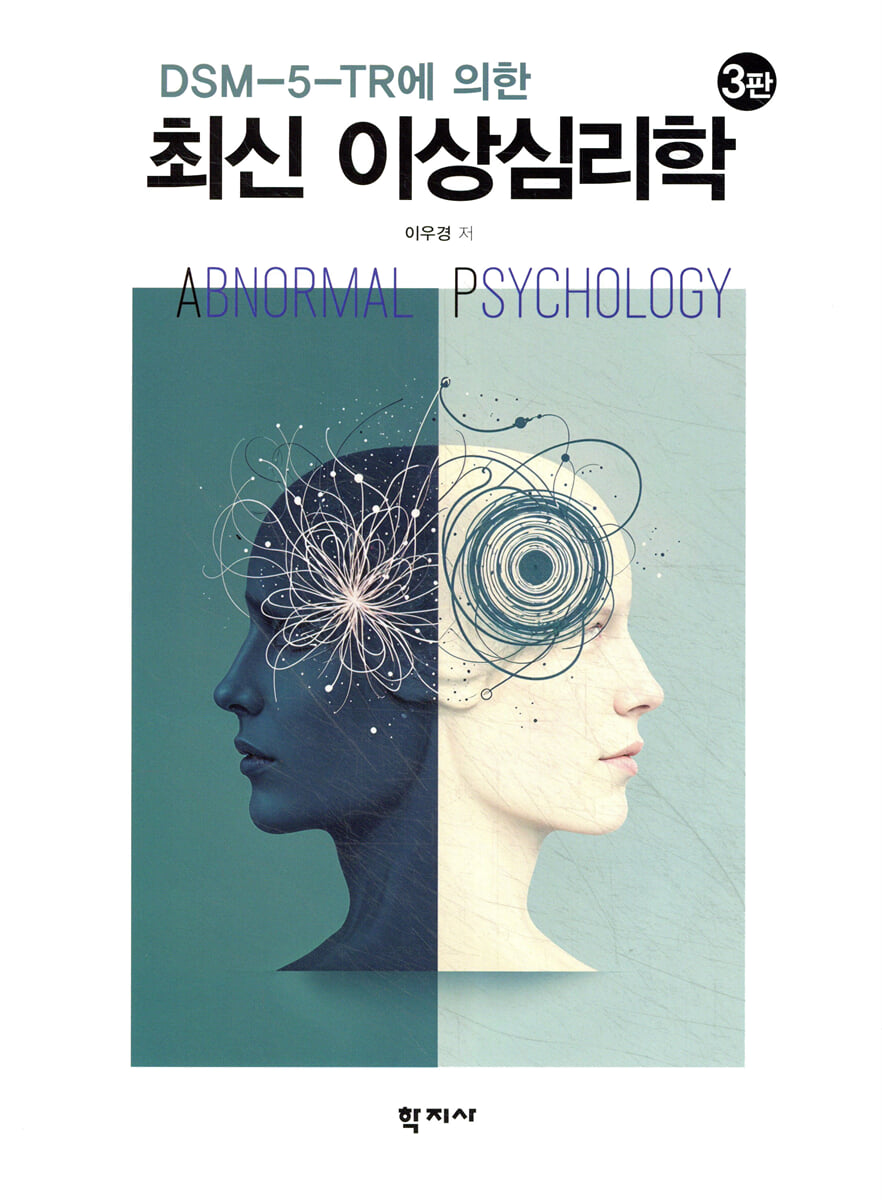
This is the third edition with revised diagnostic criteria and prevalence rates to match the newly published DSM-5-TR.
The diagnosis names are consistent with the Korean version of 『DSM-5-TR』 terminology as much as possible.
Considering the growing interest in sleep problems among the general public as well as clinical patients, we have supplemented the content on insomnia and hypersomnia.
Additionally, in line with the latest research trends on transgender, the concept of gender identity across a spectrum was added.
A brief introduction to the transdiagnostic approach, which can be considered the latest trend in abnormal psychology, is also included.
The diagnosis names are consistent with the Korean version of 『DSM-5-TR』 terminology as much as possible.
Considering the growing interest in sleep problems among the general public as well as clinical patients, we have supplemented the content on insomnia and hypersomnia.
Additionally, in line with the latest research trends on transgender, the concept of gender identity across a spectrum was added.
A brief introduction to the transdiagnostic approach, which can be considered the latest trend in abnormal psychology, is also included.
index
time
Preface to the 3rd edition
Preface to the 2nd edition
Preface to the First Edition
Chapter 1: Foundations of Abnormal Psychology
1.
Criteria for determining abnormal psychology
2.
The history and contemporary trends of abnormal psychology
3.
Major topics in abnormal psychology
4.
Models and therapeutic interventions explaining abnormal psychology
5.
Classification and Diagnostic System of Abnormal Behavior
6.
Official diagnostic classification system for mental disorders
Chapter 2 Neurodevelopmental Disorders
1.
intellectual developmental disability
2.
communication disorder
3.
autism spectrum disorder
4.
Attention Deficit Hyperactivity Disorder
5.
Specific learning disabilities
6.
movement disorders
Chapter 3 Schizophrenia Spectrum and Other Psychotic Disorders
1.
schizophrenia
2.
Other schizophrenia spectrum disorders
3.
Early psychosis
Chapter 4 Mood-Related Disorders
depressive disorder
1.
Types of depressive disorders
2.
Causes of depression
3.
Treatment of depressive disorder
bipolar disorder
1.
Types of bipolar disorder
2.
Causes of bipolar disorder
3.
Treatment of bipolar disorder
suicide
1.
Causes of suicide
2.
copycat suicide
3.
Suicide Prevention and Intervention
Chapter 5 Anxiety Disorders
1.
separation anxiety disorder
2.
selective mutism
3.
specific phobia
4.
social anxiety disorder
5.
panic disorder
6.
Agoraphobia
7.
Generalized anxiety disorder
Chapter 6 Obsessive-Compulsive and Related Disorders
1.
obsessive-compulsive disorder
2.
body dysmorphic disorder
3.
hoarding disorder
4.
Trichotillomania
5.
skin picking disorder
Chapter 7 Trauma and Stress-Related Disorders and Dissociative Disorders
Trauma and stress-related disorders
1.
adjustment disorder
2.
post-traumatic stress disorder
3.
persistent grief disorder
4.
Attachment-related disorders
Harry disorder
1.
dissociative identity disorder
2.
dissociative amnesia
3.
Depersonalization/Derealization Disorder
Chapter 8 Physical Symptoms and Related Disorders/Feeding and Eating Disorders/Excretory Disorders
Somatic symptoms and related disorders
1.
somatic symptom disorder
2.
Functional neurological symptom disorder (conversion disorder)
3.
Illness anxiety disorder
4.
factitious disorder
Feeding and Eating Disorders
1.
anorexia nervosa
2.
Bulimia nervosa11
3.
binge eating disorder
4.
Other eating disorders
excretory disorder
Chapter 9 Sleep-Wake Disorders and Sexual Disorders
sleep-wake disorder
1.
insomnia
2.
hypersomnia
3.
Narcolepsy
4.
Other sleep disorders
sexual disorders
1.
sexual dysfunction
2.
paraphilic sexual disorder
Gender dysphoria
1.
Clinical features of gender dysphoria
2.
Causes and Treatment of Gender Dysphoria
Chapter 10 Substance-Related and Addictive Disorders
alcohol-related disorders
1.
Clinical features of alcohol-related disorders
2.
Causes of alcoholism
3.
Treatment of alcoholism
Other substance use disorders
1.
caffeine-related disorders
2.
Cannabis-related disorders
3.
hallucinogen-related disorders
4.
Inhalant-related disorders
5.
opioid-related disorders
6.
Disorders associated with sedatives, hypnotics, or anxiolytics
7.
Stimulant-related disorders
8.
Tobacco-related disorders
Non-substance-related disorders: gambling disorder
1.
Clinical characteristics and course of gambling disorder
2.
Causes of gambling disorder
3.
Treatment of gambling disorder
Chapter 11 Personality and Personality Disorders
1.
Cluster A personality disorder
2.
Cluster B personality disorder
3.
Cluster C personality disorder
Chapter 12: Disruptive Impulse Control and Conduct Disorders/Neurocognitive Disorders
Disruptive impulse control and conduct disorder
1.
oppositional defiant disorder
2.
intermittent explosive disorder
3.
Conduct disorder
4.
Arsonism
5.
pathological kleptomania
neurocognitive disorders
1.
delirium
2.
neurocognitive disorders
Chapter 13: Current Trends in Abnormal Psychology
1.
An Alternative Model of Personality Disorders
2.
Other conditions that may be of clinical interest
3.
Diagnoses requiring further research
4.
Preventing Psychosis: Community Mental Health
5.
Parapsychology and Legal Issues
6.
New Psychotherapy: Cyber Counseling and Telepsychological Counseling
7.
A transdiagnostic approach to abnormal psychology and a hierarchical classification of psychopathology
References
Search
Preface to the 3rd edition
Preface to the 2nd edition
Preface to the First Edition
Chapter 1: Foundations of Abnormal Psychology
1.
Criteria for determining abnormal psychology
2.
The history and contemporary trends of abnormal psychology
3.
Major topics in abnormal psychology
4.
Models and therapeutic interventions explaining abnormal psychology
5.
Classification and Diagnostic System of Abnormal Behavior
6.
Official diagnostic classification system for mental disorders
Chapter 2 Neurodevelopmental Disorders
1.
intellectual developmental disability
2.
communication disorder
3.
autism spectrum disorder
4.
Attention Deficit Hyperactivity Disorder
5.
Specific learning disabilities
6.
movement disorders
Chapter 3 Schizophrenia Spectrum and Other Psychotic Disorders
1.
schizophrenia
2.
Other schizophrenia spectrum disorders
3.
Early psychosis
Chapter 4 Mood-Related Disorders
depressive disorder
1.
Types of depressive disorders
2.
Causes of depression
3.
Treatment of depressive disorder
bipolar disorder
1.
Types of bipolar disorder
2.
Causes of bipolar disorder
3.
Treatment of bipolar disorder
suicide
1.
Causes of suicide
2.
copycat suicide
3.
Suicide Prevention and Intervention
Chapter 5 Anxiety Disorders
1.
separation anxiety disorder
2.
selective mutism
3.
specific phobia
4.
social anxiety disorder
5.
panic disorder
6.
Agoraphobia
7.
Generalized anxiety disorder
Chapter 6 Obsessive-Compulsive and Related Disorders
1.
obsessive-compulsive disorder
2.
body dysmorphic disorder
3.
hoarding disorder
4.
Trichotillomania
5.
skin picking disorder
Chapter 7 Trauma and Stress-Related Disorders and Dissociative Disorders
Trauma and stress-related disorders
1.
adjustment disorder
2.
post-traumatic stress disorder
3.
persistent grief disorder
4.
Attachment-related disorders
Harry disorder
1.
dissociative identity disorder
2.
dissociative amnesia
3.
Depersonalization/Derealization Disorder
Chapter 8 Physical Symptoms and Related Disorders/Feeding and Eating Disorders/Excretory Disorders
Somatic symptoms and related disorders
1.
somatic symptom disorder
2.
Functional neurological symptom disorder (conversion disorder)
3.
Illness anxiety disorder
4.
factitious disorder
Feeding and Eating Disorders
1.
anorexia nervosa
2.
Bulimia nervosa11
3.
binge eating disorder
4.
Other eating disorders
excretory disorder
Chapter 9 Sleep-Wake Disorders and Sexual Disorders
sleep-wake disorder
1.
insomnia
2.
hypersomnia
3.
Narcolepsy
4.
Other sleep disorders
sexual disorders
1.
sexual dysfunction
2.
paraphilic sexual disorder
Gender dysphoria
1.
Clinical features of gender dysphoria
2.
Causes and Treatment of Gender Dysphoria
Chapter 10 Substance-Related and Addictive Disorders
alcohol-related disorders
1.
Clinical features of alcohol-related disorders
2.
Causes of alcoholism
3.
Treatment of alcoholism
Other substance use disorders
1.
caffeine-related disorders
2.
Cannabis-related disorders
3.
hallucinogen-related disorders
4.
Inhalant-related disorders
5.
opioid-related disorders
6.
Disorders associated with sedatives, hypnotics, or anxiolytics
7.
Stimulant-related disorders
8.
Tobacco-related disorders
Non-substance-related disorders: gambling disorder
1.
Clinical characteristics and course of gambling disorder
2.
Causes of gambling disorder
3.
Treatment of gambling disorder
Chapter 11 Personality and Personality Disorders
1.
Cluster A personality disorder
2.
Cluster B personality disorder
3.
Cluster C personality disorder
Chapter 12: Disruptive Impulse Control and Conduct Disorders/Neurocognitive Disorders
Disruptive impulse control and conduct disorder
1.
oppositional defiant disorder
2.
intermittent explosive disorder
3.
Conduct disorder
4.
Arsonism
5.
pathological kleptomania
neurocognitive disorders
1.
delirium
2.
neurocognitive disorders
Chapter 13: Current Trends in Abnormal Psychology
1.
An Alternative Model of Personality Disorders
2.
Other conditions that may be of clinical interest
3.
Diagnoses requiring further research
4.
Preventing Psychosis: Community Mental Health
5.
Parapsychology and Legal Issues
6.
New Psychotherapy: Cyber Counseling and Telepsychological Counseling
7.
A transdiagnostic approach to abnormal psychology and a hierarchical classification of psychopathology
References
Search
Publisher's Review
In this revised edition, the diagnostic criteria and prevalence rates have been revised to match the newly published DSM-5-TR.
Persistent Complex Bereavement Disorder, which was included as a research diagnosis in the 2nd edition, was moved to Prolonged Grief Disorder in the Posttraumatic Stress Disorders section of DSM-5-TR.
The diagnosis names were unified as much as possible with the Korean version of 『DSM-5-TR』, and an example of this is the change from gender dysphoria in the 2nd edition to gender dysphoria.
Considering the growing interest in sleep problems among the general public as well as clinical patients, we have supplemented the content on insomnia and hypersomnia.
Additionally, in line with the latest research trends on transgender, the concept of gender identity across a spectrum was added.
A brief introduction to the transdiagnostic approach, which can be considered the latest trend in abnormal psychology, is also included.
The transdiagnostic approach has the potential to be applied across multiple diagnostic categories in the future, as it emphasizes common processes and factors underlying different mental disorders rather than focusing solely on specific symptoms or categories.
In addition, the Hierarchical Classification System (HiTOP), which conceptualizes psychopathology in a dimensional and hierarchical manner and provides an alternative to existing diagnostic systems such as the DSM and ICD, was also included in the latest trends section.
Finally, we removed outdated data and references and included relatively recent new research literature.
Persistent Complex Bereavement Disorder, which was included as a research diagnosis in the 2nd edition, was moved to Prolonged Grief Disorder in the Posttraumatic Stress Disorders section of DSM-5-TR.
The diagnosis names were unified as much as possible with the Korean version of 『DSM-5-TR』, and an example of this is the change from gender dysphoria in the 2nd edition to gender dysphoria.
Considering the growing interest in sleep problems among the general public as well as clinical patients, we have supplemented the content on insomnia and hypersomnia.
Additionally, in line with the latest research trends on transgender, the concept of gender identity across a spectrum was added.
A brief introduction to the transdiagnostic approach, which can be considered the latest trend in abnormal psychology, is also included.
The transdiagnostic approach has the potential to be applied across multiple diagnostic categories in the future, as it emphasizes common processes and factors underlying different mental disorders rather than focusing solely on specific symptoms or categories.
In addition, the Hierarchical Classification System (HiTOP), which conceptualizes psychopathology in a dimensional and hierarchical manner and provides an alternative to existing diagnostic systems such as the DSM and ICD, was also included in the latest trends section.
Finally, we removed outdated data and references and included relatively recent new research literature.
GOODS SPECIFICS
- Date of issue: February 20, 2025
- Format: Paperback book binding method guide
- Page count, weight, size: 488 pages | 927g | 188*257*13mm
- ISBN13: 9788999733468
- ISBN10: 8999733467
You may also like
카테고리
korean


korean

![GQ KOREA Mark (Monthly): December [2025]](http://librairie.coreenne.fr/cdn/shop/files/8ef265dbbfbf186523ed75ba7319009d.jpg?v=1765340328&width=3840)


