

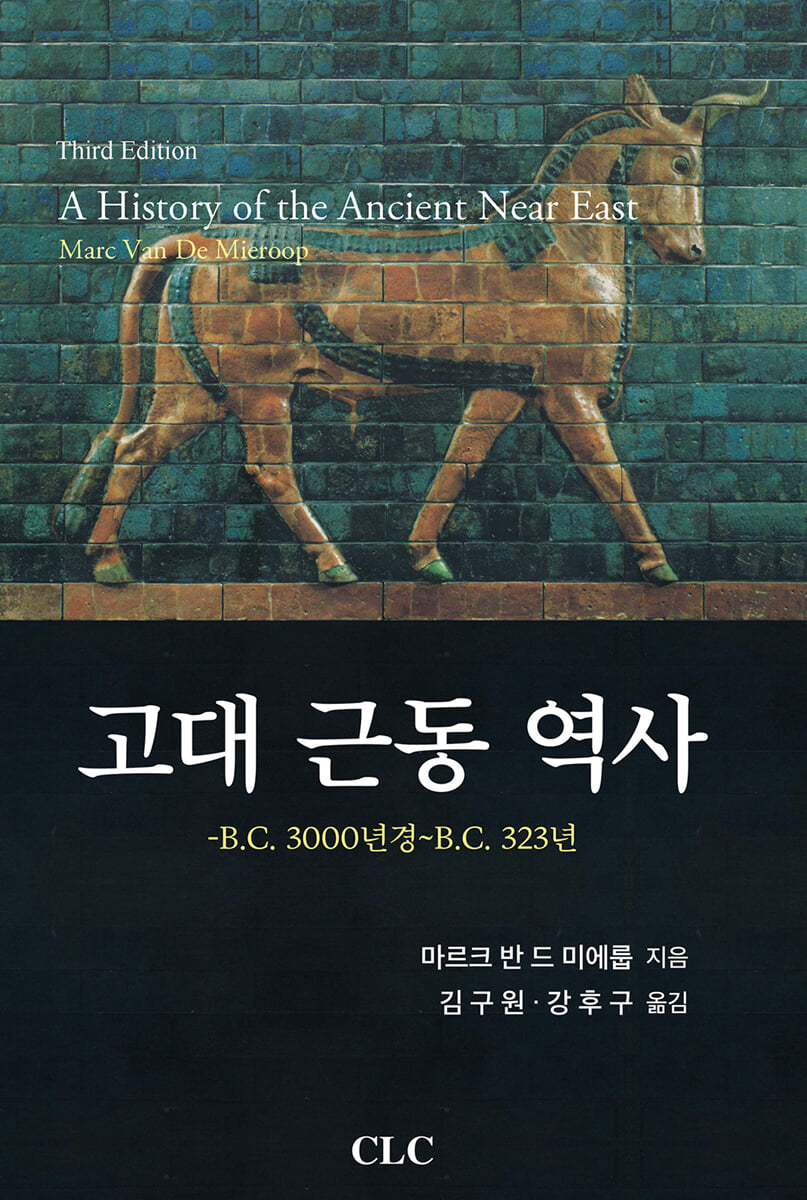
Ancient Near Eastern History
 |
Description
Book Introduction
This third edition of A History of the Ancient Near East provides a comprehensive examination of the unusual multicultural civilization of the ancient Near East.
This book presents the complex history of the region in a concise and accessible manner.
Beginning with the appearance of written records around 3000 AD, it covers the origins of the first cities in Mesopotamia, the rise of the Babylonian and Hittite kingdoms, and the rise of the Assyrian and Persian empires.
The concluding section describes the changes in the ancient Near East before the conquests of Alexander the Great, with new additions covering the dominance and continuity of the region during the Persian Empire.
Other recent additions include a comprehensive timeline of major events, 30 new illustrations, and a look at political events, military expeditions, and socio-cultural developments in the Near East over a period of three millennia.
This book presents the complex history of the region in a concise and accessible manner.
Beginning with the appearance of written records around 3000 AD, it covers the origins of the first cities in Mesopotamia, the rise of the Babylonian and Hittite kingdoms, and the rise of the Assyrian and Persian empires.
The concluding section describes the changes in the ancient Near East before the conquests of Alexander the Great, with new additions covering the dominance and continuity of the region during the Persian Empire.
Other recent additions include a comprehensive timeline of major events, 30 new illustrations, and a look at political events, military expeditions, and socio-cultural developments in the Near East over a period of three millennia.
- You can preview some of the book's contents.
Preview
index
Recommendation 1
Acknowledgements 14
Author's Preface to the Third Edition 16
Author's Preface to the Second Edition 17
Author's Preface to the First Edition 18
Translator's Preface 21
Author's Note 23
Chapter 1: Introductory Issues 25
1.
What is the Ancient Near East? 25
2.
Data 30
3.
Geography 33
4.
Prehistoric Ancient Near East 38
Part 1 City-States 50
Chapter 2: Origins: The Uruk Phenomenon 51
1.
Origins of the City 53
2.
Development of Writing and Administration 63
3.
The Expansion of Uruk 74
4.
78 after Uruk
Chapter 3: City-State Rivalry: The Early Monarchy 82
1.
Documentation and Historical Usefulness 83
2.
Political Development in Southern Mesopotamia 87
index
3.
Other Ancient Near Eastern Regions in the Early Monarchy 98
4.
Society in the Early Monarchy 104
5.
Scribal Culture 109
Chapter 4: Centralization in the Late Third Millennium 115
1.
Kings of Akkad 116
2.
Ur's Third Dynasty 132
Chapter 5: The Near East in the Early Second Millennium 147
1.
Nomads and Settlers 150
2.
Babylonia 154
3.
Asiriwa and the eastern region 161
4.
Marie and the West 170
Chapter 6: The Development of Territorial States in the Early Second Millennium 178
1.
Samshi-Adad and the Northern Mesopotamian Kingdom 180
2.
Hammurabi's Babylon 185
3.
Ancient Hittite Kingdom 198
4.
The Dark Ages 203
Part II Territory and State 209
Chapter 7: The Great Powers' Club 210
1.
Political System 212
2.
Political Relations: Diplomacy and Trade 217
3.
Regional Competition: War 230
4.
Common Ideology and Social Organization 232
Chapter 8: Western Nations in the Late Second Millennium 241
1.
Mitani 242
2.
Hittite New Kingdom 250
3.
Syria-Palestine 262
Chapter 9: Kassites, Assyrians, and Elamites 274
1.
Babylonia 276
2.
Assyria 285
3.
Medieval Kingdom of Elam 293
Chapter 10: The Collapse of the Territorial State System and Its Aftermath 301
1.
Historical Events 302
2.
Interpretation 312
3.
Aftermath 317
Part 3: Empire 328
Chapter 11: The Near Eastern World in the Early First Millennium 329
1.
Eastern countries 330
2.
West Area 343
Chapter 12: The Rise of Assyria 361
1.
Types of Assyrian Empire Policies 362
2.
Historical Records 373
3.
Expansion in the 9th Century 378
4.
The Decline of Assyria 383
Chapter 13: Assyria's World Conquest 388
1.
Establishing the Empire's Foundation 389
2.
Subduing the Great Powers 395
3.
Administration and Imperial Ideology 404
4.
Assyrian Culture 407
5.
The Fall of the Assyrian Empire 417
Chapter 14: The Medes and Babylonians 423
1.
The Medians and Anatolian States 425
2.
Neo-Babylonian Dynasty 431
Chapter 15: The Birth of a World Empire: Persia 449
1.
Materials and Challenges 450
2.
The Rise and Expansion of Persia 452
3.
Ruling State Administration 460
4.
The Birth of Imperial Structures 465
Chapter 16: The Dominance of World Empires: Persia 477
1.
Political Development 476
2.
Imperial Administration 482
3.
Persian local administrative system 487
4.
The End of the Empire 498
Epilogue 504
Wang Myeongrok 506
1.
Akkadian Dynasty 506
2.
Ur, 3rd Dynasty, 507
3.
Isin 1st Dynasty 507
4.
Larsa Dynasty 508
5.
Eshnunna 508
6.
Mari 509
7.
YamKhad 509
8.
510 First Dynasty of Babylon
9.
Hittite Kingdom 510
10.
Mitani 511
11.
Hittite New Kingdom 511
12.
Important King Lists of the Syrian-Palestinian Region 512
13.
Babylonia at the end of the second millennium 512
14.
Kings of Medieval Elam 513
15.
Babylonia, early 1st millennium 514
16.
Neo-Babylonian Dynasty 516
17.
Persian Empire 516
18.
Assyria 517
Guide to Advanced Learning 520
Timeline 528
Reference 532
Index 547
Acknowledgements 14
Author's Preface to the Third Edition 16
Author's Preface to the Second Edition 17
Author's Preface to the First Edition 18
Translator's Preface 21
Author's Note 23
Chapter 1: Introductory Issues 25
1.
What is the Ancient Near East? 25
2.
Data 30
3.
Geography 33
4.
Prehistoric Ancient Near East 38
Part 1 City-States 50
Chapter 2: Origins: The Uruk Phenomenon 51
1.
Origins of the City 53
2.
Development of Writing and Administration 63
3.
The Expansion of Uruk 74
4.
78 after Uruk
Chapter 3: City-State Rivalry: The Early Monarchy 82
1.
Documentation and Historical Usefulness 83
2.
Political Development in Southern Mesopotamia 87
index
3.
Other Ancient Near Eastern Regions in the Early Monarchy 98
4.
Society in the Early Monarchy 104
5.
Scribal Culture 109
Chapter 4: Centralization in the Late Third Millennium 115
1.
Kings of Akkad 116
2.
Ur's Third Dynasty 132
Chapter 5: The Near East in the Early Second Millennium 147
1.
Nomads and Settlers 150
2.
Babylonia 154
3.
Asiriwa and the eastern region 161
4.
Marie and the West 170
Chapter 6: The Development of Territorial States in the Early Second Millennium 178
1.
Samshi-Adad and the Northern Mesopotamian Kingdom 180
2.
Hammurabi's Babylon 185
3.
Ancient Hittite Kingdom 198
4.
The Dark Ages 203
Part II Territory and State 209
Chapter 7: The Great Powers' Club 210
1.
Political System 212
2.
Political Relations: Diplomacy and Trade 217
3.
Regional Competition: War 230
4.
Common Ideology and Social Organization 232
Chapter 8: Western Nations in the Late Second Millennium 241
1.
Mitani 242
2.
Hittite New Kingdom 250
3.
Syria-Palestine 262
Chapter 9: Kassites, Assyrians, and Elamites 274
1.
Babylonia 276
2.
Assyria 285
3.
Medieval Kingdom of Elam 293
Chapter 10: The Collapse of the Territorial State System and Its Aftermath 301
1.
Historical Events 302
2.
Interpretation 312
3.
Aftermath 317
Part 3: Empire 328
Chapter 11: The Near Eastern World in the Early First Millennium 329
1.
Eastern countries 330
2.
West Area 343
Chapter 12: The Rise of Assyria 361
1.
Types of Assyrian Empire Policies 362
2.
Historical Records 373
3.
Expansion in the 9th Century 378
4.
The Decline of Assyria 383
Chapter 13: Assyria's World Conquest 388
1.
Establishing the Empire's Foundation 389
2.
Subduing the Great Powers 395
3.
Administration and Imperial Ideology 404
4.
Assyrian Culture 407
5.
The Fall of the Assyrian Empire 417
Chapter 14: The Medes and Babylonians 423
1.
The Medians and Anatolian States 425
2.
Neo-Babylonian Dynasty 431
Chapter 15: The Birth of a World Empire: Persia 449
1.
Materials and Challenges 450
2.
The Rise and Expansion of Persia 452
3.
Ruling State Administration 460
4.
The Birth of Imperial Structures 465
Chapter 16: The Dominance of World Empires: Persia 477
1.
Political Development 476
2.
Imperial Administration 482
3.
Persian local administrative system 487
4.
The End of the Empire 498
Epilogue 504
Wang Myeongrok 506
1.
Akkadian Dynasty 506
2.
Ur, 3rd Dynasty, 507
3.
Isin 1st Dynasty 507
4.
Larsa Dynasty 508
5.
Eshnunna 508
6.
Mari 509
7.
YamKhad 509
8.
510 First Dynasty of Babylon
9.
Hittite Kingdom 510
10.
Mitani 511
11.
Hittite New Kingdom 511
12.
Important King Lists of the Syrian-Palestinian Region 512
13.
Babylonia at the end of the second millennium 512
14.
Kings of Medieval Elam 513
15.
Babylonia, early 1st millennium 514
16.
Neo-Babylonian Dynasty 516
17.
Persian Empire 516
18.
Assyria 517
Guide to Advanced Learning 520
Timeline 528
Reference 532
Index 547
Into the book
In other areas, the Uruk people settled in existing settlements and formed their own villages.
Interactions between Uruk immigrants and local populations brought cultural innovations such as megastructures to the region.
For example, a great temple was built at Tell Brak in northeastern Syria.
The temple was built according to local religious traditions, but its architectural techniques were influenced by those of southern Uruk.
The temple's internal structure, the building's foundation platform, the cone mosaic decoration, and the temple's contents are all cultural elements imported from southern Uruk.
In some areas, Uruk cultural influence was limited to a few buildings.
But even there, the impact on the local population could be significant.
For example, at Aslan Tepe, local elites tended to imitate southern customs and built massive structures.
Finally, it can be pointed out that there were also ancient settlements, such as Tepe Gaura, which had no cultural influence from Uruk at all.
--- p.76
The kings of Akkad did not exercise political power only in Babylonia.
Although several kings of the early monarchy period undertook military expeditions to various parts of the Near East, none could match the achievements of the kings of Sargon's dynasty.
To determine the sphere of influence of the Akkadian kingdom and the nature of its influence, we must examine the inscriptions of its kings.
These inscriptions are carved on stelae erected in the forecourt of the Nippur temple, following the tradition of the early monarchy, which regarded Nippur as the supreme city.
Military matters dominate the content of this inscription.
--- p.120
The Hittite borders were always fluid.
The capital was located in central Anatolia, on the upper reaches of the Kyzylyrmak River.
And their military expeditions were mainly concentrated in the south.
At its peak, Hatti also ruled western Syria.
However, it is not certain whether the northern and western borders reached the Black Sea coast and the Aegean Sea.
Since the state was organized around vassal kings rather than direct rule over territory, borders were determined by the degree to which the vassal states within the Hittite sphere of influence depended on the Hittites rather than by actual hegemony.
Throughout the period discussed here, the Hittites had greater interest in Syria than in the Anatolian frontier.
The political center of the Hittites was located at the northernmost tip of their territory.
--- p.252
Since the late 8th century, Babylonian and Chaldean resistance to Assyria has been supported to a significant extent by Elam.
The swamps to the south connected the two regions, and the rebels could easily escape from Babylonia to Elam and evade the Assyrian army.
Moreover, the Elamite armies were easily persuaded by the Babylonians to go to war against Assyria.
And often they were paid for their military service.
The history of Elam in the 5th century is almost completely known to us through Babylonian and Assyrian sources.
Although some Elamite kings left inscriptions, these are few in number and contain little information.
From 740 to 647, when Elam re-emerged on the international stage, we encounter five kings in the Elamite sources.
However, Mesopotamian sources record sixteen kings who claimed the throne of Elam.
Despite political instability in Elam (15 changes of rulers in 100 years), Elam was able to harass Assyria and amass wealth that was the envy of its neighbors.
--- p.336
When Ashurbanipal destroyed Elam in 646, the Medes appear to have expanded their influence into the Zagros Mountains.
In 614, a man named Umakishtar attacked Assyria and later destroyed the Assyrian Empire with the help of Babylonia.
Umakistar may have been chosen as a leader of the Medians for a time, but there is no evidence that he ever became king of a unified nation.
When the Assyrian Empire fell, the Assyrian fortresses were also abandoned.
The Medes and other Zagros mountain peoples continued to raid the surrounding areas.
To counter their raids, the Babylonians built a massive wall connecting the Tigris and Euphrates rivers directly above the city of Babylon.
Later, this wall was called the Median Wall.
Interactions between Uruk immigrants and local populations brought cultural innovations such as megastructures to the region.
For example, a great temple was built at Tell Brak in northeastern Syria.
The temple was built according to local religious traditions, but its architectural techniques were influenced by those of southern Uruk.
The temple's internal structure, the building's foundation platform, the cone mosaic decoration, and the temple's contents are all cultural elements imported from southern Uruk.
In some areas, Uruk cultural influence was limited to a few buildings.
But even there, the impact on the local population could be significant.
For example, at Aslan Tepe, local elites tended to imitate southern customs and built massive structures.
Finally, it can be pointed out that there were also ancient settlements, such as Tepe Gaura, which had no cultural influence from Uruk at all.
--- p.76
The kings of Akkad did not exercise political power only in Babylonia.
Although several kings of the early monarchy period undertook military expeditions to various parts of the Near East, none could match the achievements of the kings of Sargon's dynasty.
To determine the sphere of influence of the Akkadian kingdom and the nature of its influence, we must examine the inscriptions of its kings.
These inscriptions are carved on stelae erected in the forecourt of the Nippur temple, following the tradition of the early monarchy, which regarded Nippur as the supreme city.
Military matters dominate the content of this inscription.
--- p.120
The Hittite borders were always fluid.
The capital was located in central Anatolia, on the upper reaches of the Kyzylyrmak River.
And their military expeditions were mainly concentrated in the south.
At its peak, Hatti also ruled western Syria.
However, it is not certain whether the northern and western borders reached the Black Sea coast and the Aegean Sea.
Since the state was organized around vassal kings rather than direct rule over territory, borders were determined by the degree to which the vassal states within the Hittite sphere of influence depended on the Hittites rather than by actual hegemony.
Throughout the period discussed here, the Hittites had greater interest in Syria than in the Anatolian frontier.
The political center of the Hittites was located at the northernmost tip of their territory.
--- p.252
Since the late 8th century, Babylonian and Chaldean resistance to Assyria has been supported to a significant extent by Elam.
The swamps to the south connected the two regions, and the rebels could easily escape from Babylonia to Elam and evade the Assyrian army.
Moreover, the Elamite armies were easily persuaded by the Babylonians to go to war against Assyria.
And often they were paid for their military service.
The history of Elam in the 5th century is almost completely known to us through Babylonian and Assyrian sources.
Although some Elamite kings left inscriptions, these are few in number and contain little information.
From 740 to 647, when Elam re-emerged on the international stage, we encounter five kings in the Elamite sources.
However, Mesopotamian sources record sixteen kings who claimed the throne of Elam.
Despite political instability in Elam (15 changes of rulers in 100 years), Elam was able to harass Assyria and amass wealth that was the envy of its neighbors.
--- p.336
When Ashurbanipal destroyed Elam in 646, the Medes appear to have expanded their influence into the Zagros Mountains.
In 614, a man named Umakishtar attacked Assyria and later destroyed the Assyrian Empire with the help of Babylonia.
Umakistar may have been chosen as a leader of the Medians for a time, but there is no evidence that he ever became king of a unified nation.
When the Assyrian Empire fell, the Assyrian fortresses were also abandoned.
The Medes and other Zagros mountain peoples continued to raid the surrounding areas.
To counter their raids, the Babylonians built a massive wall connecting the Tigris and Euphrates rivers directly above the city of Babylon.
Later, this wall was called the Median Wall.
--- p.427
GOODS SPECIFICS
- Publication date: December 20, 2022
- Format: Hardcover book binding method guide
- Page count, weight, size: 560 pages | 152*225*35mm
- ISBN13: 9788934124825
- ISBN10: 8934124822
You may also like
카테고리
korean


korean

![ELLE 엘르 스페셜 에디션 A형 : 12월 [2025]](http://librairie.coreenne.fr/cdn/shop/files/b8e27a3de6c9538896439686c6b0e8fb.jpg?v=1766436872&width=3840)


