

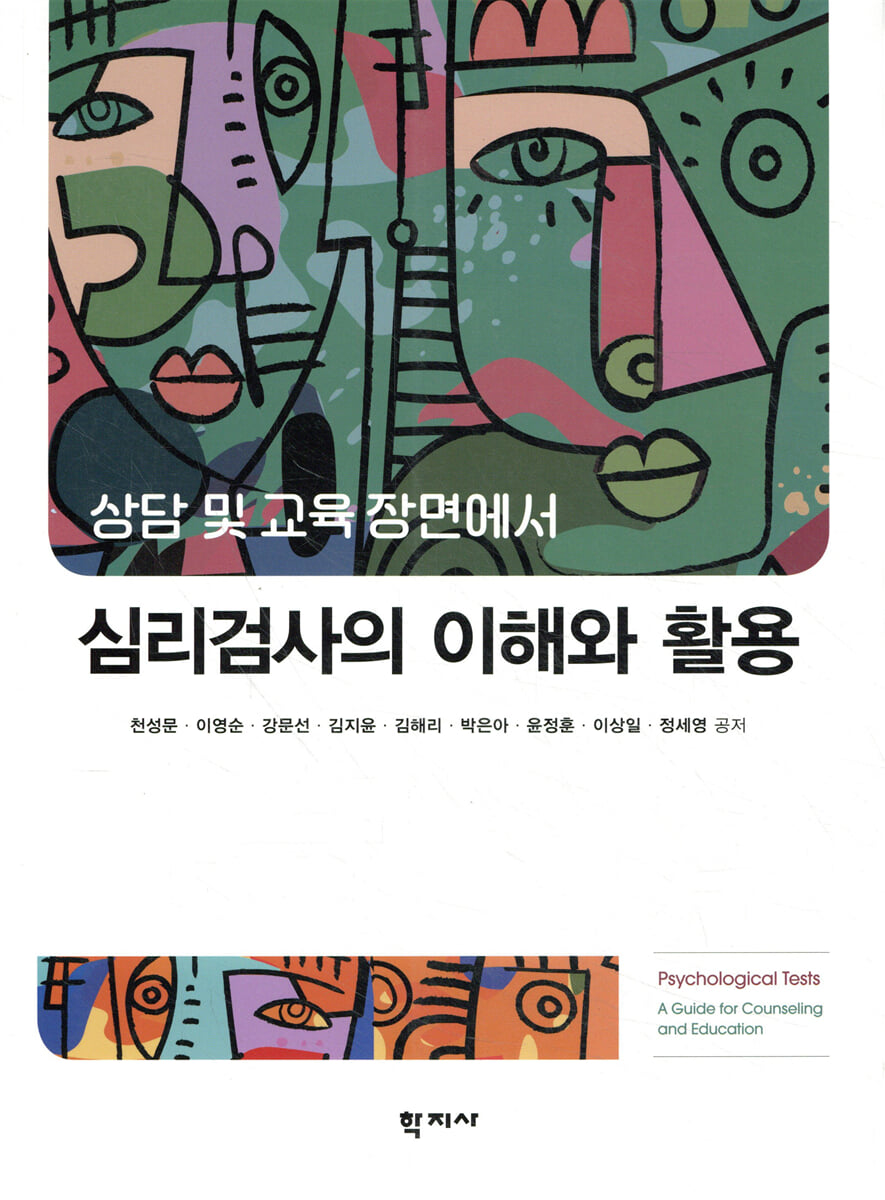
Understanding and Using Psychological Tests
 |
Description
Book Introduction
The authors structured this book around the importance of psychological testing in counseling and educational settings and the practical need for collaborative interaction using psychological testing.
First, it provides basic knowledge for understanding psychological testing, interview techniques for psychological testing, and describes the tests by dividing them into areas (intelligence tests, personality tests, projective tests, career tests, learning tests, mental health tests, and emotional, behavioral, and adaptation tests).
It is organized around tests that are mainly used in actual fields, and rather than providing basic contents mentioned in the test outline, we tried to provide answers to questions that practitioners realistically face in training and counseling settings.
In particular, this book describes interview techniques for psychological testing, examples of case reports for each test, and interpretation counseling based on them in a conversational format.
Although extensive experience is required to provide test results to examinees in a therapeutic and collaborative manner in the field, we hope that the information provided in this book will serve as a useful guide in the field.
Finally, we have tried to provide readers who wish to use psychological testing in counseling and education settings with the necessary information, including how to report the results of psychological testing.
Readers who encounter this book are encouraged to review it in conjunction with the standardized test outlines for each individual test.
As mentioned earlier, the authors' biggest concern and goal in writing this book was to write a book that could provide practical help while including the minimum amount of information mentioned in the examination guidelines.
For a complete understanding of the examination, it is necessary to use this book in conjunction with the outlines of each individual examination.
This book cannot be the answer to every area of psychological testing.
However, it is hoped that it can be utilized as a necessary teaching material to improve the ability to select and conduct psychological tests appropriately for the purpose in counseling and education settings, and to effectively convey the results according to the condition of the examinee.
First, it provides basic knowledge for understanding psychological testing, interview techniques for psychological testing, and describes the tests by dividing them into areas (intelligence tests, personality tests, projective tests, career tests, learning tests, mental health tests, and emotional, behavioral, and adaptation tests).
It is organized around tests that are mainly used in actual fields, and rather than providing basic contents mentioned in the test outline, we tried to provide answers to questions that practitioners realistically face in training and counseling settings.
In particular, this book describes interview techniques for psychological testing, examples of case reports for each test, and interpretation counseling based on them in a conversational format.
Although extensive experience is required to provide test results to examinees in a therapeutic and collaborative manner in the field, we hope that the information provided in this book will serve as a useful guide in the field.
Finally, we have tried to provide readers who wish to use psychological testing in counseling and education settings with the necessary information, including how to report the results of psychological testing.
Readers who encounter this book are encouraged to review it in conjunction with the standardized test outlines for each individual test.
As mentioned earlier, the authors' biggest concern and goal in writing this book was to write a book that could provide practical help while including the minimum amount of information mentioned in the examination guidelines.
For a complete understanding of the examination, it is necessary to use this book in conjunction with the outlines of each individual examination.
This book cannot be the answer to every area of psychological testing.
However, it is hoped that it can be utilized as a necessary teaching material to improve the ability to select and conduct psychological tests appropriately for the purpose in counseling and education settings, and to effectively convey the results according to the condition of the examinee.
index
preface
Chapter 1: Understanding Psychological Testing
1.
What is a psychological test?
2.
Use of psychological tests
3.
Classification of psychological tests
4.
Conditions for a good psychological test
5.
Selection and implementation of psychological tests
6.
Scoring and interpretation of psychological test results
7.
Ethical Use of Psychological Testing
Chapter 2 Interview for Psychological Testing
1.
Evaluation Interview and Therapeutic Interview
2.
Purpose of the interview
3.
Types of interviews
4.
Contents of the evaluation interview
5.
Interviews for Children and Adolescents
6.
Interview through screening test
7.
Interview skills
8.
Interview process
Chapter 3 Intelligence Test
1.
The concept and definition of intelligence
2.
The development of intelligence tests
3.
Composition of K-WISC-V
4.
Implementation and Grading
5.
7 Steps to Interpreting an Intelligence Test
6.
How to Use Intelligence Tests in Counseling Settings
7.
Examples of psychological evaluation reports and interpretation consultations
Chapter 4 Personality Domain (I): Minnesota Multiphasic Personality Inventory (MMPI)
1. Development process and history of the MMPI
2.
Implementation and Grading
3. Structure and interpretation of the MMPI-2
4. Structure and interpretation of the MMPI-2 Reconstructed Edition
5.
Examples of case reports and interpretation consultations
Chapter 5 Personality Domain (II): Temperament and Personality Inventory (TCI)
1. TCI's development process and history
2.
Implementation and Grading
3. Composition and interpretation of TCI
4.
Examples of case reports and interpretation consultations
Chapter 6 Personality Area (III): Other Personality Tests
1. MBTI
2. GOLDEN Personality Type Test - Ages 15 and older
3.
Personality Strengths Test - Adult/Teen
Chapter 7 Projective Tests (I): HTP, KFD, SCT
1.
House-Tree-Person Picture Test (HTP)
2.
Dynamic Family Diagnosis (KFD)
3.
Sentence Completion Test (SCT)
Chapter 8 Projective Tests (II): Rorschach Test, TAT
1.
Rorschach test
2.
Thematic Apperception Test (TAT)
Chapter 9 Career Test
1.
Strong Career Interest Test
2.
Holland Vocational Aptitude Test
Chapter 10 Learning Test
1.
Learning Strategy Test (MLST-Ⅱ)
2.
U&I Learning Style Test
Chapter 11 Mental Health
1.
Integrated Stress Test
2.
Depression-related tests
3.
Anxiety-related tests
4.
Suicide-related tests
Chapter 12: Emotional, Behavioral, and Adaptive Tests
1.
Korean Child Personality Rating Scale (KPRC)
2.
Korean version of the ASEBA (Academic Self-Assessment of Behavior in Children and Adolescents)
3.
MindFit Adaptive Competency Test
Chapter 13: Writing a Psychological Evaluation Report
1.
Purpose of the Psychological Evaluation Report
2.
Use of psychological assessment reports in counseling settings
3.
Evaluation procedures and hypothesis-driven evaluation
4.
Key Elements of a Psychological Evaluation Report
5.
Things to keep in mind when writing a psychological evaluation report
6.
Things to keep in mind when submitting a psychological evaluation report
7.
Examples of psychological evaluation reports and interpretation consultations
Search
Chapter 1: Understanding Psychological Testing
1.
What is a psychological test?
2.
Use of psychological tests
3.
Classification of psychological tests
4.
Conditions for a good psychological test
5.
Selection and implementation of psychological tests
6.
Scoring and interpretation of psychological test results
7.
Ethical Use of Psychological Testing
Chapter 2 Interview for Psychological Testing
1.
Evaluation Interview and Therapeutic Interview
2.
Purpose of the interview
3.
Types of interviews
4.
Contents of the evaluation interview
5.
Interviews for Children and Adolescents
6.
Interview through screening test
7.
Interview skills
8.
Interview process
Chapter 3 Intelligence Test
1.
The concept and definition of intelligence
2.
The development of intelligence tests
3.
Composition of K-WISC-V
4.
Implementation and Grading
5.
7 Steps to Interpreting an Intelligence Test
6.
How to Use Intelligence Tests in Counseling Settings
7.
Examples of psychological evaluation reports and interpretation consultations
Chapter 4 Personality Domain (I): Minnesota Multiphasic Personality Inventory (MMPI)
1. Development process and history of the MMPI
2.
Implementation and Grading
3. Structure and interpretation of the MMPI-2
4. Structure and interpretation of the MMPI-2 Reconstructed Edition
5.
Examples of case reports and interpretation consultations
Chapter 5 Personality Domain (II): Temperament and Personality Inventory (TCI)
1. TCI's development process and history
2.
Implementation and Grading
3. Composition and interpretation of TCI
4.
Examples of case reports and interpretation consultations
Chapter 6 Personality Area (III): Other Personality Tests
1. MBTI
2. GOLDEN Personality Type Test - Ages 15 and older
3.
Personality Strengths Test - Adult/Teen
Chapter 7 Projective Tests (I): HTP, KFD, SCT
1.
House-Tree-Person Picture Test (HTP)
2.
Dynamic Family Diagnosis (KFD)
3.
Sentence Completion Test (SCT)
Chapter 8 Projective Tests (II): Rorschach Test, TAT
1.
Rorschach test
2.
Thematic Apperception Test (TAT)
Chapter 9 Career Test
1.
Strong Career Interest Test
2.
Holland Vocational Aptitude Test
Chapter 10 Learning Test
1.
Learning Strategy Test (MLST-Ⅱ)
2.
U&I Learning Style Test
Chapter 11 Mental Health
1.
Integrated Stress Test
2.
Depression-related tests
3.
Anxiety-related tests
4.
Suicide-related tests
Chapter 12: Emotional, Behavioral, and Adaptive Tests
1.
Korean Child Personality Rating Scale (KPRC)
2.
Korean version of the ASEBA (Academic Self-Assessment of Behavior in Children and Adolescents)
3.
MindFit Adaptive Competency Test
Chapter 13: Writing a Psychological Evaluation Report
1.
Purpose of the Psychological Evaluation Report
2.
Use of psychological assessment reports in counseling settings
3.
Evaluation procedures and hypothesis-driven evaluation
4.
Key Elements of a Psychological Evaluation Report
5.
Things to keep in mind when writing a psychological evaluation report
6.
Things to keep in mind when submitting a psychological evaluation report
7.
Examples of psychological evaluation reports and interpretation consultations
Search
GOODS SPECIFICS
- Date of issue: August 30, 2024
- Format: Paperback book binding method guide
- Page count, weight, size: 680 pages | 188*255*27mm
- ISBN13: 9788999732140
You may also like
카테고리
korean


korean

![GQ KOREA Mark (Monthly): December [2025]](http://librairie.coreenne.fr/cdn/shop/files/8ef265dbbfbf186523ed75ba7319009d.jpg?v=1765340328&width=3840)


