

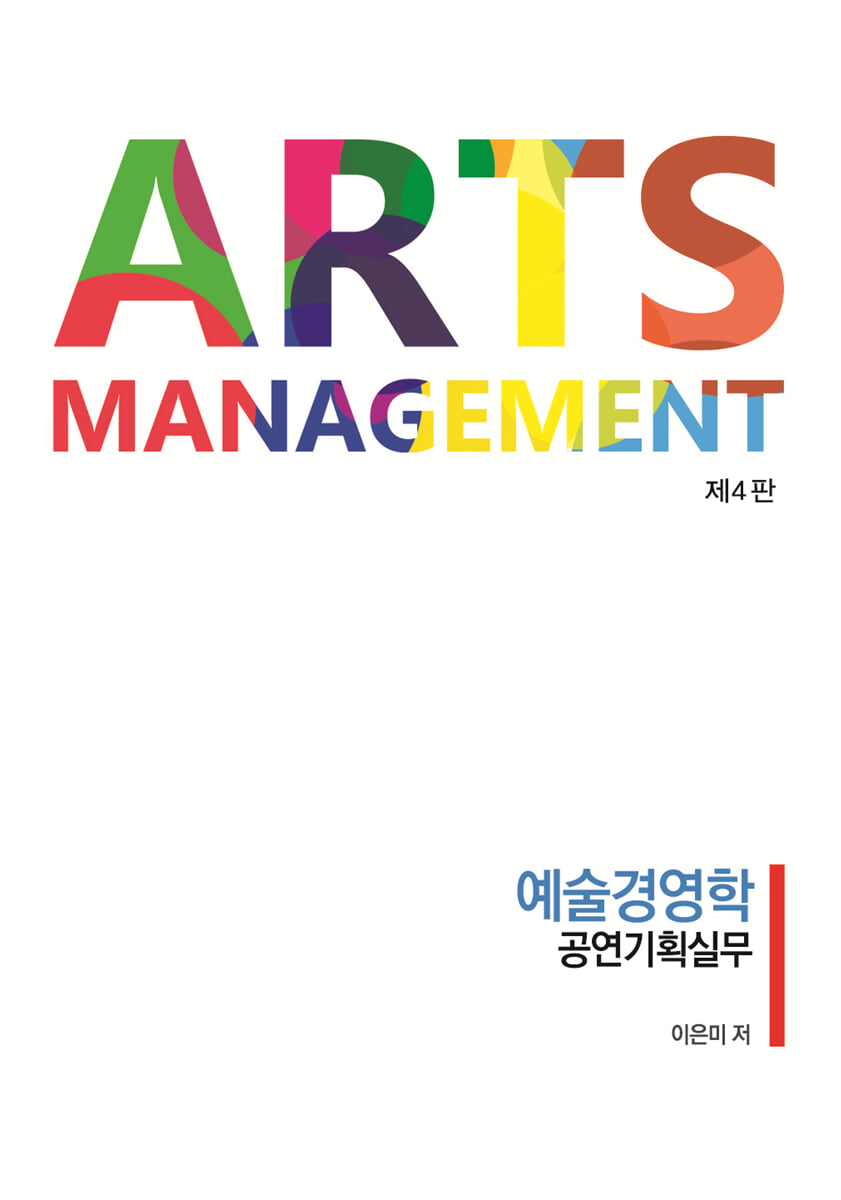
Arts Management Performance Planning Practice
 |
Description
Book Introduction
Arts management is a field that studies management techniques and policies for the development of culture and arts.
Since culture has its own characteristics in each country, arts management also develops with each country's unique cultural characteristics.
That is why our country's arts management is developing to suit our country's environment.
The scope of arts management is expanding.
Basically, it covers the areas of performance hall operation, performance arts group operation, performance planning and promotion marketing, and cultural policy, but these days it is expanding to include urban regeneration and lifestyle culture.
At first, people become fascinated with performances while watching them, and as they become interested in the human resources other than the actors and singers on stage, they often learn about the field of arts management.
This book was started while I was teaching basic arts management, performance planning, and public relations marketing to students in the practical music department at Baekseok Arts University.
However, since it is currently being used as a textbook for basic arts management classes in the Department of Performing Arts Management, this revised edition aims to cover a wide range of topics that must be covered in the field of arts management.
Arts management is a practice-based discipline.
Therefore, the contents of the book were organized to provide students and artists who want to understand the basic concepts of arts management and get help with their artistic activities with the basic content for performance planning.
Since culture has its own characteristics in each country, arts management also develops with each country's unique cultural characteristics.
That is why our country's arts management is developing to suit our country's environment.
The scope of arts management is expanding.
Basically, it covers the areas of performance hall operation, performance arts group operation, performance planning and promotion marketing, and cultural policy, but these days it is expanding to include urban regeneration and lifestyle culture.
At first, people become fascinated with performances while watching them, and as they become interested in the human resources other than the actors and singers on stage, they often learn about the field of arts management.
This book was started while I was teaching basic arts management, performance planning, and public relations marketing to students in the practical music department at Baekseok Arts University.
However, since it is currently being used as a textbook for basic arts management classes in the Department of Performing Arts Management, this revised edition aims to cover a wide range of topics that must be covered in the field of arts management.
Arts management is a practice-based discipline.
Therefore, the contents of the book were organized to provide students and artists who want to understand the basic concepts of arts management and get help with their artistic activities with the basic content for performance planning.
index
Chapter 1 Culture, Arts, and Management
1.
Definition and Characteristics of Culture
2.
What is art?
3.
management
4.
Non-profit management
Chapter 2 Arts Management
1.
Characteristics of Arts Management
2.
History of Arts Management
3.
Country-specific characteristics
Chapter 3 Cultural Policy
1.
Grounds for government intervention in culture
2.
Our country's cultural policy
3.
Representative cultural policies
4.
Government organization and related laws
Chapter 4 Cultural and Arts Organizations in Korea
1.
Classification of cultural and artistic organizations
2.
Organizational requirements
3.
Non-profit corporation
4.
Local Cultural Foundation
Chapter 5: Budget and Fundraising for Cultural and Arts Organizations
1.
Budget preparation
2.
government budget
3.
Fundraising
Chapter 6: Performance Halls in Our Country
1.
concert hall
2.
Cultural Arts Center
Chapter 7: Performance Hall Structure and Stage Staff
1.
Performance hall stage type
2.
Main stage facilities
3.
stage crew
4.
Auditorium space
Chapter 8: Performing Arts Planning
1.
What is planning?
2.
Motivation for planning performances
3.
Validity and checklist for performance planning
4.
coronation
Chapter 9: Writing a Performance Plan
1.
Performance planning establishment stage
2.
Writing a performance plan
3.
Planning and Progress Basics
4.
Performance planning practice
Chapter 10 Promotion
1.
Communication
2. PR (Public Relations)
3.
Effective promotional marketing steps
4.
Promotion of Arts Management
Chapter 11: Public Relations
1.
The role of a public relations officer
2.
How to write a press release
3.
crisis management
Chapter 12: Performing Arts Marketing
1.
marketing
2.
Marketing Core Logic
3.
consumer
4.
Performing Arts Marketing
Chapter 13 Corporate Mecenat
1.
Definition and conceptual changes of macenat
2.
Support for businesses and culture and arts
3.
Corporate Mecenat
Chapter 14 Cultural Industries and Copyright
1.
Definition and Characteristics of Cultural Industries
2.
copyright
1.
Definition and Characteristics of Culture
2.
What is art?
3.
management
4.
Non-profit management
Chapter 2 Arts Management
1.
Characteristics of Arts Management
2.
History of Arts Management
3.
Country-specific characteristics
Chapter 3 Cultural Policy
1.
Grounds for government intervention in culture
2.
Our country's cultural policy
3.
Representative cultural policies
4.
Government organization and related laws
Chapter 4 Cultural and Arts Organizations in Korea
1.
Classification of cultural and artistic organizations
2.
Organizational requirements
3.
Non-profit corporation
4.
Local Cultural Foundation
Chapter 5: Budget and Fundraising for Cultural and Arts Organizations
1.
Budget preparation
2.
government budget
3.
Fundraising
Chapter 6: Performance Halls in Our Country
1.
concert hall
2.
Cultural Arts Center
Chapter 7: Performance Hall Structure and Stage Staff
1.
Performance hall stage type
2.
Main stage facilities
3.
stage crew
4.
Auditorium space
Chapter 8: Performing Arts Planning
1.
What is planning?
2.
Motivation for planning performances
3.
Validity and checklist for performance planning
4.
coronation
Chapter 9: Writing a Performance Plan
1.
Performance planning establishment stage
2.
Writing a performance plan
3.
Planning and Progress Basics
4.
Performance planning practice
Chapter 10 Promotion
1.
Communication
2. PR (Public Relations)
3.
Effective promotional marketing steps
4.
Promotion of Arts Management
Chapter 11: Public Relations
1.
The role of a public relations officer
2.
How to write a press release
3.
crisis management
Chapter 12: Performing Arts Marketing
1.
marketing
2.
Marketing Core Logic
3.
consumer
4.
Performing Arts Marketing
Chapter 13 Corporate Mecenat
1.
Definition and conceptual changes of macenat
2.
Support for businesses and culture and arts
3.
Corporate Mecenat
Chapter 14 Cultural Industries and Copyright
1.
Definition and Characteristics of Cultural Industries
2.
copyright
GOODS SPECIFICS
- Date of issue: January 25, 2024
- Page count, weight, size: 216 pages | 172*245*20mm
- ISBN13: 9788959729951
- ISBN10: 8959729957
You may also like
카테고리
korean


korean

![GQ KOREA Mark (Monthly): December [2025]](http://librairie.coreenne.fr/cdn/shop/files/8ef265dbbfbf186523ed75ba7319009d.jpg?v=1765340328&width=3840)


