

Luther Becomes a Brand
 |
Description
Book Introduction
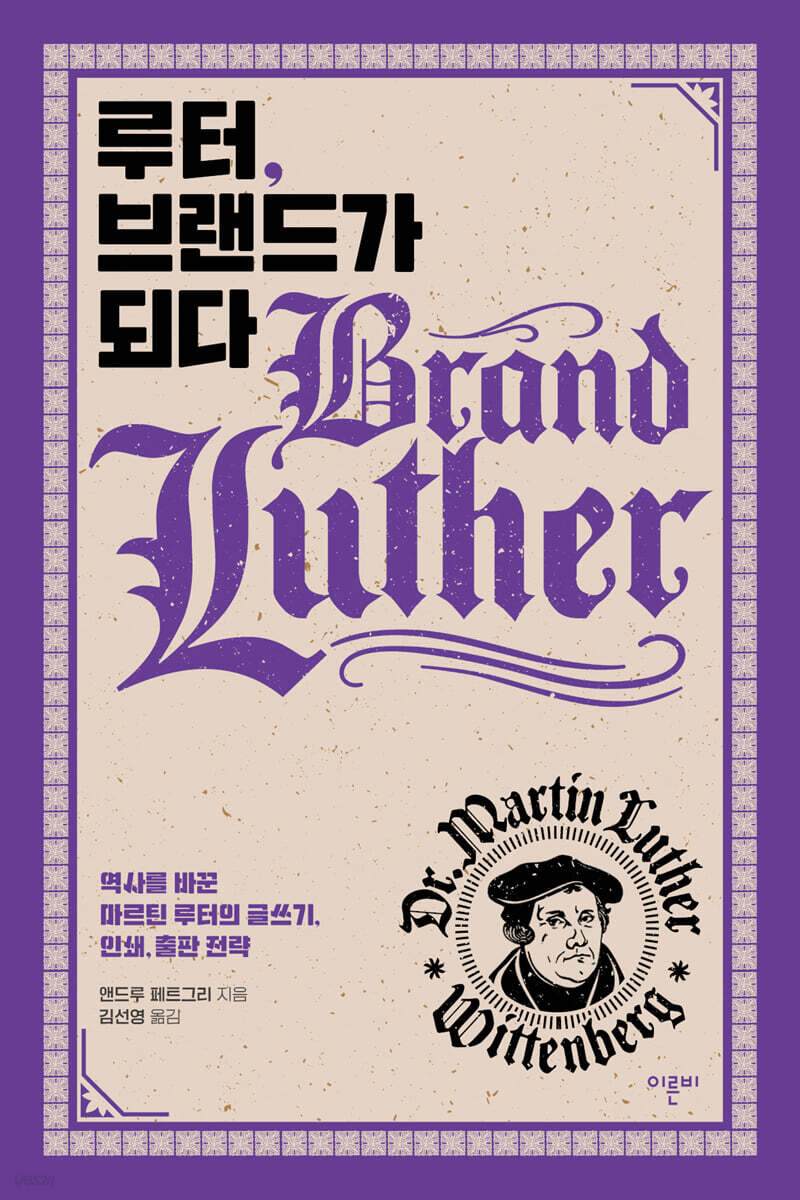
"Brand Luther" is a unique biography that deals with the religious reformer Luther from a commercial and economic perspective, rather than a conventional theological and doctrinal one.
The 'brand' in the title encapsulates the latter aspect.
The writings published under the name of 'Luther' were, at first glance, a brand product that was trusted and read, guaranteed to sell, a design printed matter embodying sophisticated editing and cover decoration, and furthermore, an icon of the times that communicated with the world, made a name for itself, and led reform.
This book is a fascinating portrayal of Luther's life and major events, and its unique strength is its detailed examination of the relationship between Luther and the German printing and publishing industry.
The author conducted research for 20 years, building a vast database of publications from across Europe dating from the early days of printing (1450-1600).
This book, which logically describes specific facts and various statistical figures as if they were testimonies from those who experienced the scene firsthand, skillfully explores the various aspects of history created by outstanding individuals and the structure of the times.
The 'brand' in the title encapsulates the latter aspect.
The writings published under the name of 'Luther' were, at first glance, a brand product that was trusted and read, guaranteed to sell, a design printed matter embodying sophisticated editing and cover decoration, and furthermore, an icon of the times that communicated with the world, made a name for itself, and led reform.
This book is a fascinating portrayal of Luther's life and major events, and its unique strength is its detailed examination of the relationship between Luther and the German printing and publishing industry.
The author conducted research for 20 years, building a vast database of publications from across Europe dating from the early days of printing (1450-1600).
This book, which logically describes specific facts and various statistical figures as if they were testimonies from those who experienced the scene firsthand, skillfully explores the various aspects of history created by outstanding individuals and the structure of the times.
- You can preview some of the book's contents.
Preview
index
Recommended Reading | Martin Luther and the German Printing and Publishing Industry
introduction
Part 1: A Unique Person
1 A small town in Germany
On the white mountain
New wealth and inventions
Walking with Luther
Education business
2 The Formation of a Revolutionary
Young Luther
Leucorea White Mountain
Fit for purpose
bitter struggle
3. Indemnity
The plan of salvation
noble deal
Poison chalice
The door of the Holy Church
Tetzel
Part 2: The Eye of the Storm
4 Eye of the Typhoon
Rome
vulgar acts and misunderstandings
Augsburg and Leipzig
The prosperity of the printing industry
Old Man Lau-Grunenberg
5. Outlaws
About good deeds
due process
Three statements
Worms
reclusive life
6 Luther Brand
imitation technology
Lucas Cranach
godfather
Luther Brand
Part 3 Friends and Enemies
7 Luther's Friends
Four Evangelists
A helping hand
God's Word
Troublemaker
Protestant Reformation in the Eight Cities
The Word of God Truly Proclaimed
Wisdom of the crowd
Luther's Refutation
Leipzig
9 Breakup
Erasmus
Peasant War
Zurich
Part 4: Building the Church
Pastors of 10 countries
first family
For the children
The Protestant Reformation and Printing
The power of sponsorship
11 Conclusion
Friends of the Princes
Signs and Miracles
The Last Battle
Eisleben
12 Legacies
Way of the Cross
Prophet, Teacher, Friend
Wittenberg and Jena
German tendencies
abbreviation
Note
Search
introduction
Part 1: A Unique Person
1 A small town in Germany
On the white mountain
New wealth and inventions
Walking with Luther
Education business
2 The Formation of a Revolutionary
Young Luther
Leucorea White Mountain
Fit for purpose
bitter struggle
3. Indemnity
The plan of salvation
noble deal
Poison chalice
The door of the Holy Church
Tetzel
Part 2: The Eye of the Storm
4 Eye of the Typhoon
Rome
vulgar acts and misunderstandings
Augsburg and Leipzig
The prosperity of the printing industry
Old Man Lau-Grunenberg
5. Outlaws
About good deeds
due process
Three statements
Worms
reclusive life
6 Luther Brand
imitation technology
Lucas Cranach
godfather
Luther Brand
Part 3 Friends and Enemies
7 Luther's Friends
Four Evangelists
A helping hand
God's Word
Troublemaker
Protestant Reformation in the Eight Cities
The Word of God Truly Proclaimed
Wisdom of the crowd
Luther's Refutation
Leipzig
9 Breakup
Erasmus
Peasant War
Zurich
Part 4: Building the Church
Pastors of 10 countries
first family
For the children
The Protestant Reformation and Printing
The power of sponsorship
11 Conclusion
Friends of the Princes
Signs and Miracles
The Last Battle
Eisleben
12 Legacies
Way of the Cross
Prophet, Teacher, Friend
Wittenberg and Jena
German tendencies
abbreviation
Note
Search
Into the book
Luther spent his life visiting printing houses, observing and supervising them.
He had firm views on what his books should look like and imposed strict standards.
Above all, Luther understood the aesthetics of books.
--- p.25
Luther intuitively understood the power of printing.
This was one of the most amazing abilities of this extraordinary person.
Luther had to intervene personally to ensure that a printing industry developed in Wittenberg that could meet the enormous demand for his writings.
--- p.41
Luther was a theologian of great insight, a charismatic leader and preacher, and a writer of immense passion and power.
But it was undoubtedly also the main driving force of Wittenberg's economy.
--- p.58
Before beginning his series of lectures on Romans in 1515, he asked Lau-Grunenberg to produce a Latin edition with wide line spacing, similar to that used in his Psalms lectures, for his and his students' use.
The copy Luther used is now preserved in the Berlin Library.
--- p.89
The Ninety-Five Theses took on new life when printed.
That life was completely separate from the debate Luther had planned.
Of course, the discussion that was initially envisioned did not materialize.
--- p.127
Many of Luther's writings were very short and could be reprinted quickly.
A well-organized printing house could produce 500 copies of an eight-page pamphlet a day.
What is truly remarkable is that Luther wrote so quickly and instinctively, tailoring his writing to the needs of the printing industry to maximize profits.
--- p.165
Reaching new readers required creativity and innovation.
The new movement demanded a new kind of book.
As they addressed these design challenges, German printers gradually developed a unique and instantly recognizable style.
The result was the 'Luther Brand'.
--- p.215
Luther's name was printed in large, bold letters, intended to jump out from the covers, to immediately catch the eye of shoppers browsing the stacks of books on the bookseller's shelves.
--- p.239
This was not the only way Luther used his fame to establish the Protestant Reformation.
He lent his reputation to others by writing brief prefaces or recommendations for books written by others on reform.
--- p.262
For small pamphlets, the industry standard was to print 300 to 700 copies.
Yet, the public's enthusiasm for Luther's writings encouraged printers to risk printing larger copies, sometimes up to 3,000.
During this period, the German market would have absorbed some four million copies of various writings on the debates and directives of the Protestant Reformation.
--- p.299
Most printers were businessmen, publishing for both Catholic and Protestant sides, and were willing to switch from one side to the other if it was worthwhile.
The real answer is that printers could tell which way the wind was blowing, that is, the trend.
The ability to read market trends is a crucial skill in the publishing industry, which relies on assessing risks and seizing opportunities.
--- p.312
Book production, sales, and distribution had now become Wittenberg's largest business, with books delivered to churches and customers throughout Germany.
At the center of all this was Luther.
He continued to write briskly, assigning work between printers, and proofreading during printing.
--- p.380
As time passed, Luther's fascination with the printing process technology did not subside.
Luther was closely involved in all aspects of the printing industry.
During the printing process, he examined his own books and those of other authors who interested him personally, gave direct advice to the printers, and rebuked them for their negligence, real or imagined.
--- p.382
Even as the drama faded, or at least became intermittent, the public's appetite for news remained.
The printers who had discovered a new public through Luther were reluctant to see this market disappear.
He had firm views on what his books should look like and imposed strict standards.
Above all, Luther understood the aesthetics of books.
--- p.25
Luther intuitively understood the power of printing.
This was one of the most amazing abilities of this extraordinary person.
Luther had to intervene personally to ensure that a printing industry developed in Wittenberg that could meet the enormous demand for his writings.
--- p.41
Luther was a theologian of great insight, a charismatic leader and preacher, and a writer of immense passion and power.
But it was undoubtedly also the main driving force of Wittenberg's economy.
--- p.58
Before beginning his series of lectures on Romans in 1515, he asked Lau-Grunenberg to produce a Latin edition with wide line spacing, similar to that used in his Psalms lectures, for his and his students' use.
The copy Luther used is now preserved in the Berlin Library.
--- p.89
The Ninety-Five Theses took on new life when printed.
That life was completely separate from the debate Luther had planned.
Of course, the discussion that was initially envisioned did not materialize.
--- p.127
Many of Luther's writings were very short and could be reprinted quickly.
A well-organized printing house could produce 500 copies of an eight-page pamphlet a day.
What is truly remarkable is that Luther wrote so quickly and instinctively, tailoring his writing to the needs of the printing industry to maximize profits.
--- p.165
Reaching new readers required creativity and innovation.
The new movement demanded a new kind of book.
As they addressed these design challenges, German printers gradually developed a unique and instantly recognizable style.
The result was the 'Luther Brand'.
--- p.215
Luther's name was printed in large, bold letters, intended to jump out from the covers, to immediately catch the eye of shoppers browsing the stacks of books on the bookseller's shelves.
--- p.239
This was not the only way Luther used his fame to establish the Protestant Reformation.
He lent his reputation to others by writing brief prefaces or recommendations for books written by others on reform.
--- p.262
For small pamphlets, the industry standard was to print 300 to 700 copies.
Yet, the public's enthusiasm for Luther's writings encouraged printers to risk printing larger copies, sometimes up to 3,000.
During this period, the German market would have absorbed some four million copies of various writings on the debates and directives of the Protestant Reformation.
--- p.299
Most printers were businessmen, publishing for both Catholic and Protestant sides, and were willing to switch from one side to the other if it was worthwhile.
The real answer is that printers could tell which way the wind was blowing, that is, the trend.
The ability to read market trends is a crucial skill in the publishing industry, which relies on assessing risks and seizing opportunities.
--- p.312
Book production, sales, and distribution had now become Wittenberg's largest business, with books delivered to churches and customers throughout Germany.
At the center of all this was Luther.
He continued to write briskly, assigning work between printers, and proofreading during printing.
--- p.380
As time passed, Luther's fascination with the printing process technology did not subside.
Luther was closely involved in all aspects of the printing industry.
During the printing process, he examined his own books and those of other authors who interested him personally, gave direct advice to the printers, and rebuked them for their negligence, real or imagined.
--- p.382
Even as the drama faded, or at least became intermittent, the public's appetite for news remained.
The printers who had discovered a new public through Luther were reluctant to see this market disappear.
--- p.473
Publisher's Review
“He spent his life writing incessantly and going back and forth to the printing house.
“Working with printers, we transformed the look of the book.”
Martin Luther, 16th-century bestselling author
This is the golden age of one-person media.
Anyone can become an influencer with their own content through Facebook, Instagram, YouTube, etc.
Today's social media has that much influence.
Of course, when it comes to media, traditional publishing is still going strong.
In fact, the practice of writing and publishing a book to become famous overnight has a long history.
500 years ago, the religious reformer Martin Luther is a prime example.
Half a century after Gutenberg invented the printing press in the mid-1440s, Luther, empowered by that technology, became a so-called best-selling author and created the publishing landscape we see today.
On October 31, 1517, Luther published his '95 Theses', pointing out the abuses of the medieval Catholic Church, symbolized by indulgences.
It was a proposal for a small academic discussion, but it sparked an unexpected debate and led to the Protestant Reformation, a major turning point in the history of Western civilization.
How was this massive transformation possible? Printing technology is often cited, but that alone is insufficient to explain it.
We must broadly examine Luther's extraordinary writing ability, his foresight into the possibilities of practical technology and his concrete efforts to realize them, and the changing landscape of the printing and publishing industry of his time.
Luther and the German Printing and Publishing Industry as a Brand
"Brand Luther" is a unique biography that deals with the religious reformer Luther from a commercial and economic perspective, rather than a conventional theological and doctrinal one.
The 'brand' in the title encapsulates the latter aspect.
The writings published under the name of 'Luther' were, at first glance, a brand product that was trusted and read, guaranteed to sell, a design printed matter embodying sophisticated editing and cover decoration, and furthermore, an icon of the times that communicated with the world, made a name for itself, and led reform.
This book is a fascinating portrayal of Luther's life and major events, and its unique strength is its detailed examination of the relationship between Luther and the German printing and publishing industry.
The author conducted research for 20 years, building a vast database of publications from across Europe dating from the early days of printing (1450-1600).
This book, which logically describes specific facts and various statistical figures as if they were testimonies from those who experienced the scene firsthand, skillfully explores the various aspects of history created by outstanding individuals and the structure of the times.
A printing and publishing craftsman who knew the aesthetics of books
The author's argument can be broadly summarized into two points.
First, when Luther made his radical claims, printers in Wittenberg and other imperial cities were tempted and began to print his writings.
Luther, who had a doctorate in theology and a university professor but had not published any printed works until the beginning of the Reformation, became a celebrity overnight, and businessmen who quickly recognized the commercial value of his writings kept their printing presses running, pouring the ideas of the Reformation into the market.
Ultimately, German printing houses were the primary mechanism for spreading Luther's personal thoughts to the public sphere and further informing the lower classes of society of the necessity and urgency of reform.
The reason this somewhat familiar perspective feels new is because of the details.
Detailed descriptions of the volume and edition of Luther's printed works, the publishers and timing of their publications, and the new woodcut format invented by Lucas Cranach vividly portray the printing and publishing world of the time.
The author also reveals a different side of Luther, who is often perceived as a bold revolutionary.
The Luther described by Petgri is a meticulous person who not only understood the power of printed type, but also intervened in every aspect of printing practice.
Luther spent his life visiting printing houses, observing and supervising them.
Luther's obsession with technical and aesthetic elements such as the typeface, cover shape, paper size and condition, design, and book weight, his complaints about those who lack technical skills or are negligent in their work, and his efforts to bring in capable contractors are in stark contrast to his image as a bold, charismatic leader.
Luther, the outstanding writer, and Wittenberg, the city of publishing
The second argument is that Luther was not a one-sided beneficiary of the development of printing.
The author emphasizes that Luther's pen churned out a relentless stream of bestsellers that captivated readers, and that this contributed decisively to the growth of the German printing industry by revitalizing the markets of Wittenberg, a city on the periphery of the printing and publishing industry, as well as the imperial cities.
Luther was a prolific writer and an accomplished writer.
Modern Luther scholars are overwhelmed by the sheer volume of his writings.
The 'Weimarer Ausgabe', the most authoritative primary source on Luther, consists of a whopping 127 volumes, each of which is two to three times the size and thickness of a typical book.
This valuable source, whose editing began in 1883, was finally completed in 2009.
Luther's writing skills are also well known.
He conveyed his message beautifully in concise, clear sentences and sophisticated expressions.
Once the manuscript was written, I was so confident in my writing skills that I rarely made any corrections.
The German Bible he translated is still considered a milestone in the history of German literature.
His prolific writing, his flowing style, and his content that piqued the public's curiosity moved businessmen who prioritized profitability, and publishing Luther's writings was a profitable business with guaranteed sales.
A significant number of the books printed on Wittenberg's printing presses were Luther's works.
The 'Lutherbrand' was formed.
The change was remarkable.
In 1513, Wittenberg had only one printing press; within 30 years, it had five working printing houses, and by the end of the 16th century, the small town had grown into a publishing center that surpassed the imperial cities that had dominated German publishing for some time.
With this, Germany, which had been balancing with Italy in terms of production, now became the leader in the European printing and publishing industry.
“Working with printers, we transformed the look of the book.”
Martin Luther, 16th-century bestselling author
This is the golden age of one-person media.
Anyone can become an influencer with their own content through Facebook, Instagram, YouTube, etc.
Today's social media has that much influence.
Of course, when it comes to media, traditional publishing is still going strong.
In fact, the practice of writing and publishing a book to become famous overnight has a long history.
500 years ago, the religious reformer Martin Luther is a prime example.
Half a century after Gutenberg invented the printing press in the mid-1440s, Luther, empowered by that technology, became a so-called best-selling author and created the publishing landscape we see today.
On October 31, 1517, Luther published his '95 Theses', pointing out the abuses of the medieval Catholic Church, symbolized by indulgences.
It was a proposal for a small academic discussion, but it sparked an unexpected debate and led to the Protestant Reformation, a major turning point in the history of Western civilization.
How was this massive transformation possible? Printing technology is often cited, but that alone is insufficient to explain it.
We must broadly examine Luther's extraordinary writing ability, his foresight into the possibilities of practical technology and his concrete efforts to realize them, and the changing landscape of the printing and publishing industry of his time.
Luther and the German Printing and Publishing Industry as a Brand
"Brand Luther" is a unique biography that deals with the religious reformer Luther from a commercial and economic perspective, rather than a conventional theological and doctrinal one.
The 'brand' in the title encapsulates the latter aspect.
The writings published under the name of 'Luther' were, at first glance, a brand product that was trusted and read, guaranteed to sell, a design printed matter embodying sophisticated editing and cover decoration, and furthermore, an icon of the times that communicated with the world, made a name for itself, and led reform.
This book is a fascinating portrayal of Luther's life and major events, and its unique strength is its detailed examination of the relationship between Luther and the German printing and publishing industry.
The author conducted research for 20 years, building a vast database of publications from across Europe dating from the early days of printing (1450-1600).
This book, which logically describes specific facts and various statistical figures as if they were testimonies from those who experienced the scene firsthand, skillfully explores the various aspects of history created by outstanding individuals and the structure of the times.
A printing and publishing craftsman who knew the aesthetics of books
The author's argument can be broadly summarized into two points.
First, when Luther made his radical claims, printers in Wittenberg and other imperial cities were tempted and began to print his writings.
Luther, who had a doctorate in theology and a university professor but had not published any printed works until the beginning of the Reformation, became a celebrity overnight, and businessmen who quickly recognized the commercial value of his writings kept their printing presses running, pouring the ideas of the Reformation into the market.
Ultimately, German printing houses were the primary mechanism for spreading Luther's personal thoughts to the public sphere and further informing the lower classes of society of the necessity and urgency of reform.
The reason this somewhat familiar perspective feels new is because of the details.
Detailed descriptions of the volume and edition of Luther's printed works, the publishers and timing of their publications, and the new woodcut format invented by Lucas Cranach vividly portray the printing and publishing world of the time.
The author also reveals a different side of Luther, who is often perceived as a bold revolutionary.
The Luther described by Petgri is a meticulous person who not only understood the power of printed type, but also intervened in every aspect of printing practice.
Luther spent his life visiting printing houses, observing and supervising them.
Luther's obsession with technical and aesthetic elements such as the typeface, cover shape, paper size and condition, design, and book weight, his complaints about those who lack technical skills or are negligent in their work, and his efforts to bring in capable contractors are in stark contrast to his image as a bold, charismatic leader.
Luther, the outstanding writer, and Wittenberg, the city of publishing
The second argument is that Luther was not a one-sided beneficiary of the development of printing.
The author emphasizes that Luther's pen churned out a relentless stream of bestsellers that captivated readers, and that this contributed decisively to the growth of the German printing industry by revitalizing the markets of Wittenberg, a city on the periphery of the printing and publishing industry, as well as the imperial cities.
Luther was a prolific writer and an accomplished writer.
Modern Luther scholars are overwhelmed by the sheer volume of his writings.
The 'Weimarer Ausgabe', the most authoritative primary source on Luther, consists of a whopping 127 volumes, each of which is two to three times the size and thickness of a typical book.
This valuable source, whose editing began in 1883, was finally completed in 2009.
Luther's writing skills are also well known.
He conveyed his message beautifully in concise, clear sentences and sophisticated expressions.
Once the manuscript was written, I was so confident in my writing skills that I rarely made any corrections.
The German Bible he translated is still considered a milestone in the history of German literature.
His prolific writing, his flowing style, and his content that piqued the public's curiosity moved businessmen who prioritized profitability, and publishing Luther's writings was a profitable business with guaranteed sales.
A significant number of the books printed on Wittenberg's printing presses were Luther's works.
The 'Lutherbrand' was formed.
The change was remarkable.
In 1513, Wittenberg had only one printing press; within 30 years, it had five working printing houses, and by the end of the 16th century, the small town had grown into a publishing center that surpassed the imperial cities that had dominated German publishing for some time.
With this, Germany, which had been balancing with Italy in terms of production, now became the leader in the European printing and publishing industry.
GOODS SPECIFICS
- Date of issue: January 5, 2022
- Page count, weight, size: 528 pages | 720g | 145*220*35mm
- ISBN13: 9791197014857
- ISBN10: 1197014853
You may also like
카테고리
korean


korean

![GQ KOREA Mark (Monthly): December [2025]](http://librairie.coreenne.fr/cdn/shop/files/8ef265dbbfbf186523ed75ba7319009d.jpg?v=1765340328&width=3840)


