

Orthopedics
 |
Description
Book Introduction
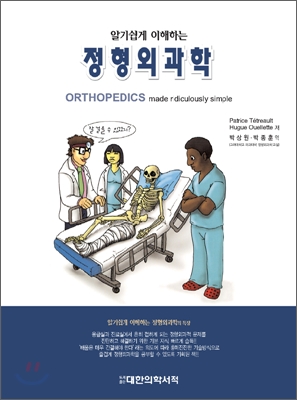
An orthopedic textbook that comprehensively covers essential information in the field of orthopedics.
The anatomy, diagnostic approaches, individual diseases in each field, and issues that should not be overlooked, related to each field such as the basics of the musculoskeletal system, upper and lower extremities, spine and pelvis, and pediatric orthopedics, are organized in an easy-to-memorize manner, and many illustrations are inserted to make them easy to see.
The anatomy, diagnostic approaches, individual diseases in each field, and issues that should not be overlooked, related to each field such as the basics of the musculoskeletal system, upper and lower extremities, spine and pelvis, and pediatric orthopedics, are organized in an easy-to-memorize manner, and many illustrations are inserted to make them easy to see.
index
Chapter 1: Musculoskeletal Basics
Ⅰ.
Terminology
go.
Direction in space
me.
Movement in space
all.
Commonly used orthopedic terms
II.
Musculoskeletal conditions
go.
Overall approach
1.
Primary Evaluation - 'ABC'
2.
Secondary Assessment - Symptoms and Signs
me.
Radiology 8
all.
Fractures and Dislocations
III.
Emergencies
go.
Compartment syndrome
me.
Open Fractures
all.
Neurological/Vascular Injury
Chapter 2 Upper limbs
Ⅰ.
Shoulder joint (Shoulder)
go.
Anatomy
me.
Approaches to Diagnosis
all.
individual issues
1.
Impingement syndrome and rotator cuff injury
2.
Adhesive capsulitis
3.
Proximal humeral fracture
4.
Clavicular fracture
5.
Acromioclavicular separation
6.
Glenohumeral joint dislocation
II.
Arm
go.
Anatomy
me.
Approaches to Diagnosis
all.
Individual diseases 35
1.
Proximal biceps tendon rupture
2.
Distal biceps tendon rupture
3.
...Humeral shaft fracture
III.
Elbow joint
go.
Anatomy
me.
Approaches to Diagnosis
all.
Individual diseases
1.
Tennis and golf elbow (humeral epicondylitis)
2.
Olecranon bursitis
3.
Distal humerus fracture
4.
Olecranon fracture
5.
Radial head fracture
6.
Elbow dislocation
IV.
Forearm
go.
Anatomy
me.
Approaches to Diagnosis
all.
Individual diseases
1.
Fractures of the radius and ulna
2.
Monteggia and Galeazzi fracture-dislocation
3.
Distal radius and ulna fractures
V.
Wrist and hand
go.
Anatomy
me.
Approaches to Diagnosis
all.
Individual diseases
1.
Carpal tunnel syndrome
2.
Kienb?k bottle
3.
De Quervain tenosynovitis
4.
Dupuytren contracture
5.
Trigger finger (stenosing flexor tenosynovitis)
6.
Scaphoid fracture
7.
Perilunate dislocation and lunate dislocation
(Perilunate and lunate dislocations)
8.
Fracture of the base of the first metacarpal
9.
Skier's thumb (ulnar collateral ligament injury)
10.
Boxer fracture
(Boxer's fracture, fourth or fifth metacarpal neck fracture)
11.
Distal phalanx fractures
Chapter 3
Ⅰ.
Hip joint
go.
Anatomy
me.
approach
all.
Individual diseases
1.
Trochanteric bursitis
2.
hip fracture
3.
hip dislocation
II.
femoral region
go.
Anatomy
me.
approach
all.
Individual diseases
1.
femoral shaft fracture
III.
Knee joint
go.
Anatomy
me.
approach
all.
Individual diseases
1.
meniscus tear
2.
Ligament damage (lesion from a child's chair)
3.
Damage to temple function
4.
distal femur fracture
5.
Tibial plateau fracture
IV.
Leg
go.
Anatomy
me.
approach
all.
Individual diseases
1.
Tibia and fibula fractures
V.
Foot and ankle joint
go.
Anatomy
me.
approach
all.
Individual diseases
1.
Metatarsalgia
2.
Hallux Valgus
3.
Heel Pain and Plantar Fasciitis
4.
Ankle sprains and fractures
5.
Talus fracture
6.
Calcaneal (aka lover's) fracture
7.
Lisfranc fracture
8.
Fracture of the base of the fifth metatarsal
(Fifth metatarsal base fracture - Jones' fracture)
Chapter 4: Chukseonggol
Ⅰ.
Spinal column
go.
Anatomy
me.
approach
all.
Individual diseases
1.
spinal disc disease
2.
Spondylolysis/spondylolisthesis
3.
spinal stenosis
4.
Cervical fractures and dislocations
5.
thoracolumbar fracture
II.
Pelvis
go.
Anatomy
me.
approach
all.
Individual diseases
1.
Pelvic ring fracture
Chapter 5 Systemic Diseases
Ⅰ.
infection
1.
Septic arthritis
2.
Osteomyelitis
II.
arthritis
1.
Osteoarthritis
2.
rheumatoid arthritis
3.
Crystalline arthropathy (gout, pseudogout, chondrocalcinosis)
III.
metabolic diseases
1.
osteoporosis
2.
osteomalacia
3.
avascular necrosis
IV.
bone tumor
1.
benign bone tumor
2.
malignant bone tumor
Chapter 6 Pediatric Orthopedics
I.
Fractures and dislocations
go.
Anatomy
me.
approach
all.
Individual diseases
1.
Radial head dislocation or 'pulled elbow'
2.
Slipped capital femoral epiphysis
3.
congenital hip dislocation
4.
osteochondrosis
(Osteochondrosis: Osgood-Schl?ter and Sever? disease)
5.
Osteogenesis imperfecta
6.
Child abuse
Search
Ⅰ.
Terminology
go.
Direction in space
me.
Movement in space
all.
Commonly used orthopedic terms
II.
Musculoskeletal conditions
go.
Overall approach
1.
Primary Evaluation - 'ABC'
2.
Secondary Assessment - Symptoms and Signs
me.
Radiology 8
all.
Fractures and Dislocations
III.
Emergencies
go.
Compartment syndrome
me.
Open Fractures
all.
Neurological/Vascular Injury
Chapter 2 Upper limbs
Ⅰ.
Shoulder joint (Shoulder)
go.
Anatomy
me.
Approaches to Diagnosis
all.
individual issues
1.
Impingement syndrome and rotator cuff injury
2.
Adhesive capsulitis
3.
Proximal humeral fracture
4.
Clavicular fracture
5.
Acromioclavicular separation
6.
Glenohumeral joint dislocation
II.
Arm
go.
Anatomy
me.
Approaches to Diagnosis
all.
Individual diseases 35
1.
Proximal biceps tendon rupture
2.
Distal biceps tendon rupture
3.
...Humeral shaft fracture
III.
Elbow joint
go.
Anatomy
me.
Approaches to Diagnosis
all.
Individual diseases
1.
Tennis and golf elbow (humeral epicondylitis)
2.
Olecranon bursitis
3.
Distal humerus fracture
4.
Olecranon fracture
5.
Radial head fracture
6.
Elbow dislocation
IV.
Forearm
go.
Anatomy
me.
Approaches to Diagnosis
all.
Individual diseases
1.
Fractures of the radius and ulna
2.
Monteggia and Galeazzi fracture-dislocation
3.
Distal radius and ulna fractures
V.
Wrist and hand
go.
Anatomy
me.
Approaches to Diagnosis
all.
Individual diseases
1.
Carpal tunnel syndrome
2.
Kienb?k bottle
3.
De Quervain tenosynovitis
4.
Dupuytren contracture
5.
Trigger finger (stenosing flexor tenosynovitis)
6.
Scaphoid fracture
7.
Perilunate dislocation and lunate dislocation
(Perilunate and lunate dislocations)
8.
Fracture of the base of the first metacarpal
9.
Skier's thumb (ulnar collateral ligament injury)
10.
Boxer fracture
(Boxer's fracture, fourth or fifth metacarpal neck fracture)
11.
Distal phalanx fractures
Chapter 3
Ⅰ.
Hip joint
go.
Anatomy
me.
approach
all.
Individual diseases
1.
Trochanteric bursitis
2.
hip fracture
3.
hip dislocation
II.
femoral region
go.
Anatomy
me.
approach
all.
Individual diseases
1.
femoral shaft fracture
III.
Knee joint
go.
Anatomy
me.
approach
all.
Individual diseases
1.
meniscus tear
2.
Ligament damage (lesion from a child's chair)
3.
Damage to temple function
4.
distal femur fracture
5.
Tibial plateau fracture
IV.
Leg
go.
Anatomy
me.
approach
all.
Individual diseases
1.
Tibia and fibula fractures
V.
Foot and ankle joint
go.
Anatomy
me.
approach
all.
Individual diseases
1.
Metatarsalgia
2.
Hallux Valgus
3.
Heel Pain and Plantar Fasciitis
4.
Ankle sprains and fractures
5.
Talus fracture
6.
Calcaneal (aka lover's) fracture
7.
Lisfranc fracture
8.
Fracture of the base of the fifth metatarsal
(Fifth metatarsal base fracture - Jones' fracture)
Chapter 4: Chukseonggol
Ⅰ.
Spinal column
go.
Anatomy
me.
approach
all.
Individual diseases
1.
spinal disc disease
2.
Spondylolysis/spondylolisthesis
3.
spinal stenosis
4.
Cervical fractures and dislocations
5.
thoracolumbar fracture
II.
Pelvis
go.
Anatomy
me.
approach
all.
Individual diseases
1.
Pelvic ring fracture
Chapter 5 Systemic Diseases
Ⅰ.
infection
1.
Septic arthritis
2.
Osteomyelitis
II.
arthritis
1.
Osteoarthritis
2.
rheumatoid arthritis
3.
Crystalline arthropathy (gout, pseudogout, chondrocalcinosis)
III.
metabolic diseases
1.
osteoporosis
2.
osteomalacia
3.
avascular necrosis
IV.
bone tumor
1.
benign bone tumor
2.
malignant bone tumor
Chapter 6 Pediatric Orthopedics
I.
Fractures and dislocations
go.
Anatomy
me.
approach
all.
Individual diseases
1.
Radial head dislocation or 'pulled elbow'
2.
Slipped capital femoral epiphysis
3.
congenital hip dislocation
4.
osteochondrosis
(Osteochondrosis: Osgood-Schl?ter and Sever? disease)
5.
Osteogenesis imperfecta
6.
Child abuse
Search
Into the book
Translator's Preface
*Many orthopedic textbooks have been written so far, but the content is complex and difficult to learn.
As the title suggests, this book is written to make orthopedics easy to understand and learn.
This book comprehensively covers all the essential information you need to know in the field of orthopedics.
What sets this book apart from other books is that it provides easy-to-memorize information on the anatomy, diagnostic approaches, individual diseases in each field, and issues that should not be overlooked, for each field, including the basics of the musculoskeletal system, upper and lower extremities, spine and pelvis, and pediatric orthopedics, and it includes many illustrations to make it easy to understand.
I hope this book will serve as a guide for those interested in learning about orthopedics, and that it will be useful not only to medical students but also to residents, nurses, and those working in medical-related professions.
Medical terminology was mainly referenced from the glossary published by the Korean Medical Association and the glossary published by the Korean Orthopedic Association.
January 2010
Park Sang-won, Department of Orthopedic Surgery, Korea University College of Medicine
*The field of orthopedics is probably the most extensive field not only for clinical doctors but also for many other medical professionals.
The field of orthopedics, which used to focus on trauma patients, has expanded to include new disease areas and targets due to the aging society, and sports have become deeply ingrained in the daily lives of the general public, leading to rapid development in the field of exercise-related diseases. As a result, the field of orthopedics is no longer just a field of activity for orthopedic surgeons, but is now a subject of interest for professionals in various fields.
This phenomenon can also be felt in lecture requests. Previously, lectures were limited to students and orthopedic specialists, but these days, requests for lectures in the field of orthopedics are coming from various fields such as sports centers, yoga groups, physical education, and dance groups.
What is frustrating in these situations is that it is difficult to tailor the lectures to the needs of experts in various fields, and there is no suitable orthopedic textbook to recommend to them.
It must have been much more than 20 years ago.
When I was a student, neuroanatomy was a subject that put a lot of stress on students.
There are only a few specialized books, but the content is so difficult. The lectures are about things that are difficult to imagine, so it was becoming more and more difficult.
While I was pondering this and that, I happened to come across a book on neuroanatomy at the library that explained things in an easy-to-understand way. The book was written in an easy-to-understand way, with various illustrations, suited to the reader's level.
How happy I was, thanks to that book, I still have the impression that neuroanatomy is an interesting subject.
When I think back to those times, I always thought that no matter what the subject, it wasn't that the subject was inherently difficult; it was just that the textbooks and lectures were made to be difficult.
While translating, I often found myself smiling at the author's efforts to make difficult parts that had to be memorized easy to understand in various ways.
Just as one would memorize the names of Joseon's kings by singing their names, the author also tried to learn orthopedics in a fun way using his own know-how.
There is a part where they make us memorize a section of fractures using the image of protesters and police, and it makes us wonder if such a thing really happened. Then, the queen suddenly appears, and it also shows a truly exciting way of describing it, such as providing a background explanation of the person who first described a certain disease.
While teaching to medical school students, health school students, and other students majoring in Pilates, yoga, dance, and physical education, I always felt regretful and apologetic for not being able to discover or write the necessary teaching materials for them as a professor in the field. However, after encountering this book, I thought, “This is it,” and decided to translate it in my own way.
Although there are some shortcomings and regrets, I hope that this book will be helpful to readers in many fields in their studies and that they will gain the impression that orthopedics is an easy and interesting field.
January 2010
Park Jong-hoon, Department of Orthopedic Surgery, Korea University College of Medicine
*Many orthopedic textbooks have been written so far, but the content is complex and difficult to learn.
As the title suggests, this book is written to make orthopedics easy to understand and learn.
This book comprehensively covers all the essential information you need to know in the field of orthopedics.
What sets this book apart from other books is that it provides easy-to-memorize information on the anatomy, diagnostic approaches, individual diseases in each field, and issues that should not be overlooked, for each field, including the basics of the musculoskeletal system, upper and lower extremities, spine and pelvis, and pediatric orthopedics, and it includes many illustrations to make it easy to understand.
I hope this book will serve as a guide for those interested in learning about orthopedics, and that it will be useful not only to medical students but also to residents, nurses, and those working in medical-related professions.
Medical terminology was mainly referenced from the glossary published by the Korean Medical Association and the glossary published by the Korean Orthopedic Association.
January 2010
Park Sang-won, Department of Orthopedic Surgery, Korea University College of Medicine
*The field of orthopedics is probably the most extensive field not only for clinical doctors but also for many other medical professionals.
The field of orthopedics, which used to focus on trauma patients, has expanded to include new disease areas and targets due to the aging society, and sports have become deeply ingrained in the daily lives of the general public, leading to rapid development in the field of exercise-related diseases. As a result, the field of orthopedics is no longer just a field of activity for orthopedic surgeons, but is now a subject of interest for professionals in various fields.
This phenomenon can also be felt in lecture requests. Previously, lectures were limited to students and orthopedic specialists, but these days, requests for lectures in the field of orthopedics are coming from various fields such as sports centers, yoga groups, physical education, and dance groups.
What is frustrating in these situations is that it is difficult to tailor the lectures to the needs of experts in various fields, and there is no suitable orthopedic textbook to recommend to them.
It must have been much more than 20 years ago.
When I was a student, neuroanatomy was a subject that put a lot of stress on students.
There are only a few specialized books, but the content is so difficult. The lectures are about things that are difficult to imagine, so it was becoming more and more difficult.
While I was pondering this and that, I happened to come across a book on neuroanatomy at the library that explained things in an easy-to-understand way. The book was written in an easy-to-understand way, with various illustrations, suited to the reader's level.
How happy I was, thanks to that book, I still have the impression that neuroanatomy is an interesting subject.
When I think back to those times, I always thought that no matter what the subject, it wasn't that the subject was inherently difficult; it was just that the textbooks and lectures were made to be difficult.
While translating, I often found myself smiling at the author's efforts to make difficult parts that had to be memorized easy to understand in various ways.
Just as one would memorize the names of Joseon's kings by singing their names, the author also tried to learn orthopedics in a fun way using his own know-how.
There is a part where they make us memorize a section of fractures using the image of protesters and police, and it makes us wonder if such a thing really happened. Then, the queen suddenly appears, and it also shows a truly exciting way of describing it, such as providing a background explanation of the person who first described a certain disease.
While teaching to medical school students, health school students, and other students majoring in Pilates, yoga, dance, and physical education, I always felt regretful and apologetic for not being able to discover or write the necessary teaching materials for them as a professor in the field. However, after encountering this book, I thought, “This is it,” and decided to translate it in my own way.
Although there are some shortcomings and regrets, I hope that this book will be helpful to readers in many fields in their studies and that they will gain the impression that orthopedics is an easy and interesting field.
January 2010
Park Jong-hoon, Department of Orthopedic Surgery, Korea University College of Medicine
--- From the preface
GOODS SPECIFICS
- Date of issue: January 27, 2010
- Page count, weight, size: 169 pages | 210*297*20mm
- ISBN13: 9788991219922
- ISBN10: 8991219934
You may also like
카테고리
korean


korean

![ELLE 엘르 스페셜 에디션 A형 : 12월 [2025]](http://librairie.coreenne.fr/cdn/shop/files/b8e27a3de6c9538896439686c6b0e8fb.jpg?v=1766436872&width=3840)


