

Full-fledged Korean-Chinese-Japanese World History 6
 |
Description
Book Introduction
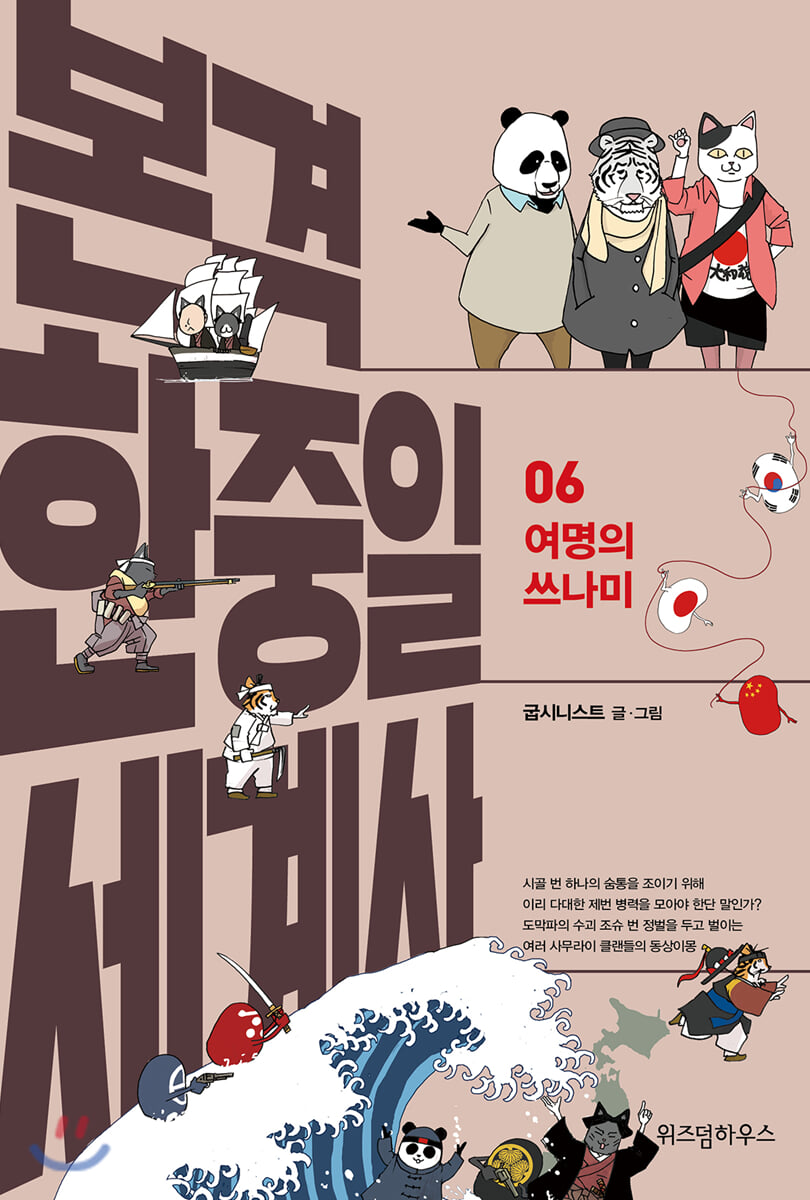
What decision did the Japanese shogunate make in the face of the tsunami on the eve of the Meiji Restoration?
The shogunate raised an army of 150,000 men from 35 domains, saying that it would set an example for the Choshu domain, the leading force of the Sonnōjoi faction.
Under pressure from Britain to open Hyogo, off the coast of Japan, Emperor Komei strongly declared "absolute surrender" and issued a bewildering order to dismiss and reform the shogunate's roju.
Shogun Iemochi was shocked by this and submitted his resignation to the court… .
The shogunate's head is about to burst from this dizziness.
Can Japan escape this massive whirlpool safely?
The shogunate raised an army of 150,000 men from 35 domains, saying that it would set an example for the Choshu domain, the leading force of the Sonnōjoi faction.
Under pressure from Britain to open Hyogo, off the coast of Japan, Emperor Komei strongly declared "absolute surrender" and issued a bewildering order to dismiss and reform the shogunate's roju.
Shogun Iemochi was shocked by this and submitted his resignation to the court… .
The shogunate's head is about to burst from this dizziness.
Can Japan escape this massive whirlpool safely?
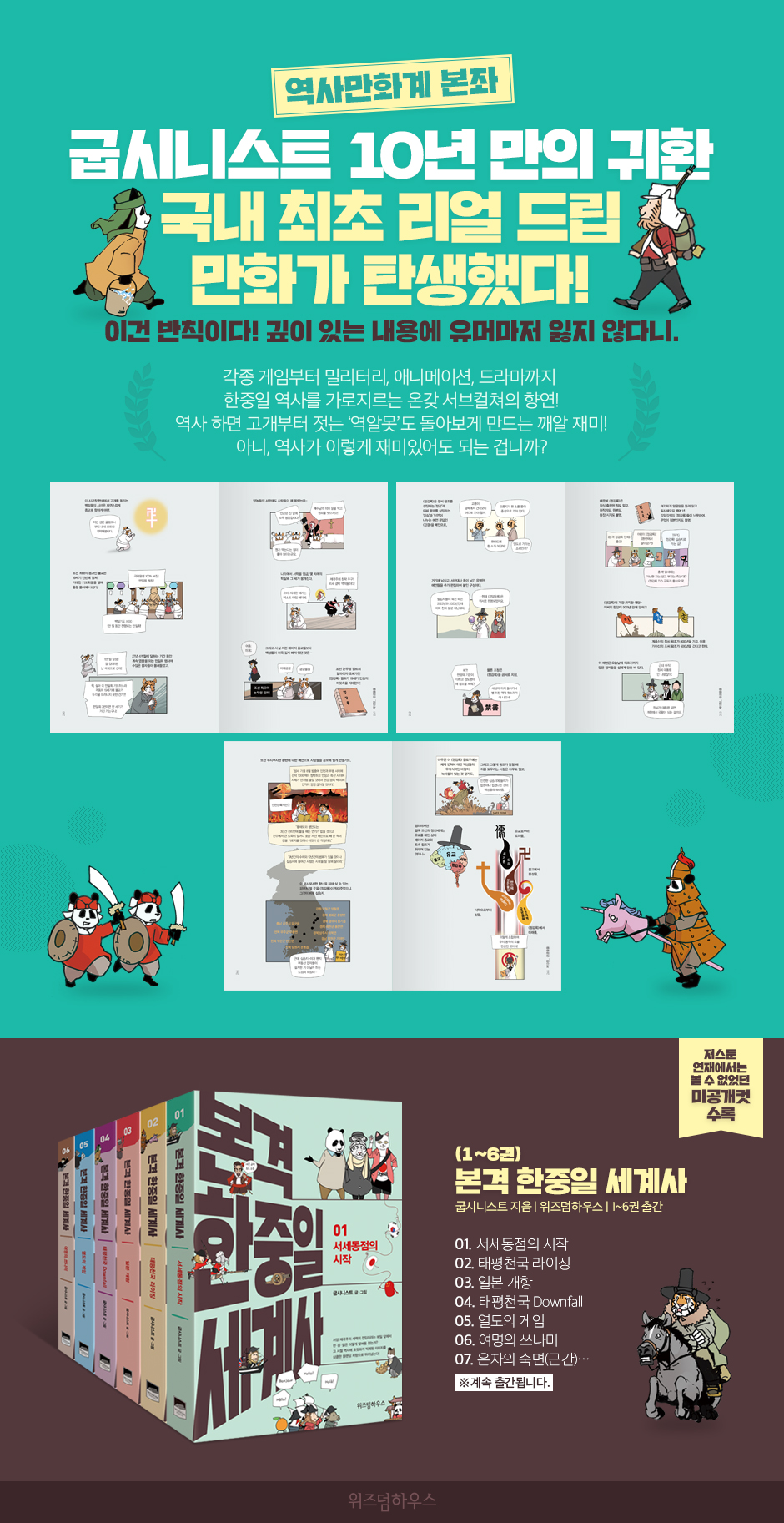
- You can preview some of the book's contents.
Preview
index
preface
Chapter 1 Shimonoseki Boom!
Chapter 2: Joshu's Last Day?!
Chapter 3 The Ingenious Army
Chapter 4 Under Pressure
Chapter 5 For the Alliance
Chapter 6: The Four Borders War
Chapter 7: End of the Beginning
Chapter 8: Palmerston's Memories
Chapter 9 Blue, Gray & Yellow
Chapter 10: The Rehemunan Temple
Chapter 11: Disruption of Justice
Chapter 12: The Imsul Peasant Uprising
Chapter 13 The Palace
Chapter 14 Change of Regime
Major events and people
Chapter 1 Shimonoseki Boom!
Chapter 2: Joshu's Last Day?!
Chapter 3 The Ingenious Army
Chapter 4 Under Pressure
Chapter 5 For the Alliance
Chapter 6: The Four Borders War
Chapter 7: End of the Beginning
Chapter 8: Palmerston's Memories
Chapter 9 Blue, Gray & Yellow
Chapter 10: The Rehemunan Temple
Chapter 11: Disruption of Justice
Chapter 12: The Imsul Peasant Uprising
Chapter 13 The Palace
Chapter 14 Change of Regime
Major events and people
Detailed image
Into the book
Looking at Japan as a whole, there are quite a few people who hope that the old system will have a soft landing through the merger of the public and private sectors.
The Shogun couple, the living embodiment of that public office merger.
The child born between the Shogun and the Emperor's younger sister will be the next Shogun, with the most noble bloodline in Japanese history.
The expectation of the union of the public and private sectors and the belief that the union of the public and private sectors will be realized through the second generation of the Shogun couple provide strong support for Yoshinobu, the evangelist of the union of the public and private sectors.
And Yoshinobu, who was the real power holder of the shogunate while also staying in Kyoto and calling himself a vassal of the court, held the position of an intermediary mediator between the shogunate and the court.
This subtle position of being able to control both the court and the shogunate while at the same time being unaffected by either was also a major foundation of his power.
--- pp.48~49, from "Chapter 2_Joshu's Last Day?!"
The world has always been ruled by those who monopolized weapons.
But finally, the people also gained the right to take up arms and participate in the world.
The class system that has been maintained firmly through the monopoly of ‘martial arts’.
The breaking of the monopoly of the unemployed means the collapse of the class system.
Just as in ancient Greece, where taking up arms and going to battle was the qualification for citizenship, the people, who had gradually developed their capabilities throughout the Edo period, took the first step toward becoming a nation by taking up arms and going to battle.
--- pp.56~57, from 「Chapter 3_ The Ingenious Army」
If you gather several samurai clans and start a big war... no matter which side you're on, the clans will take notice.
When there seems to be an opportunity for victory on one side, the samurai clans only then move forward and try to get on the victory bus without paying.
If I feel like something is brewing on this side, I run away without hesitation as soon as I smell it and without looking back.
The reason why such a mean appearance is inevitable is because the samurai clan army is basically a family army tightly knit by blood and regional ties within a small regional pool.
If a clan leader were to go to war at the call of the shogunate and waste his clan's troops, he would be beaten by his elders when he returned home.
--- pp.136~137, from 「Chapter 7_End of the Beginning」
Although the Jinju Uprising ended in about ten days, the spark of the uprising spread throughout the three southern provinces, and throughout 1862, from dozens of counties in the three southern provinces of Gyeongsang, Jeolla, and Chungcheong to Jeju Island, rebellions broke out simultaneously throughout the country.
The Shogun couple, the living embodiment of that public office merger.
The child born between the Shogun and the Emperor's younger sister will be the next Shogun, with the most noble bloodline in Japanese history.
The expectation of the union of the public and private sectors and the belief that the union of the public and private sectors will be realized through the second generation of the Shogun couple provide strong support for Yoshinobu, the evangelist of the union of the public and private sectors.
And Yoshinobu, who was the real power holder of the shogunate while also staying in Kyoto and calling himself a vassal of the court, held the position of an intermediary mediator between the shogunate and the court.
This subtle position of being able to control both the court and the shogunate while at the same time being unaffected by either was also a major foundation of his power.
--- pp.48~49, from "Chapter 2_Joshu's Last Day?!"
The world has always been ruled by those who monopolized weapons.
But finally, the people also gained the right to take up arms and participate in the world.
The class system that has been maintained firmly through the monopoly of ‘martial arts’.
The breaking of the monopoly of the unemployed means the collapse of the class system.
Just as in ancient Greece, where taking up arms and going to battle was the qualification for citizenship, the people, who had gradually developed their capabilities throughout the Edo period, took the first step toward becoming a nation by taking up arms and going to battle.
--- pp.56~57, from 「Chapter 3_ The Ingenious Army」
If you gather several samurai clans and start a big war... no matter which side you're on, the clans will take notice.
When there seems to be an opportunity for victory on one side, the samurai clans only then move forward and try to get on the victory bus without paying.
If I feel like something is brewing on this side, I run away without hesitation as soon as I smell it and without looking back.
The reason why such a mean appearance is inevitable is because the samurai clan army is basically a family army tightly knit by blood and regional ties within a small regional pool.
If a clan leader were to go to war at the call of the shogunate and waste his clan's troops, he would be beaten by his elders when he returned home.
--- pp.136~137, from 「Chapter 7_End of the Beginning」
Although the Jinju Uprising ended in about ten days, the spark of the uprising spread throughout the three southern provinces, and throughout 1862, from dozens of counties in the three southern provinces of Gyeongsang, Jeolla, and Chungcheong to Jeju Island, rebellions broke out simultaneously throughout the country.
--- pp.245~246, from “Chapter 12_Im-Sul Peasant Uprising”
Publisher's Review
The story unfolds between the Choshu clan, the leader of the Sonnojoi clan.
The conflicting dreams of the Western powers, the shogunate, and the samurai clans
Volume 6 mainly deals with Japan, which is still in turmoil both internally and externally following the outbreak of the Kinmen Incident.
At the center of this chaos is the Choshu clan, which shouted, "Yanggui go home."
On August 28, 1864, a week after the Kinmen Incident, Western powers gathered off the coast of Shimonoseki to show the Choshu clan, united by Western ideology, an example and to lift the blockade of the straits.
Britain, the Netherlands, France, and the United States form a combined fleet and exercise their power.
In the face of their overwhelming firepower, Choshu's batteries were simply shattered.
Meanwhile, in June of the same year, the emperor, enraged by Choshu firing a cannon at the imperial palace, appoints Choshu as an enemy of the court.
Accordingly, the shogunate sent out an army of 150,000 men from 35 clans to subdue the Choshu clan.
Could the shogunate truly wipe out Choshu with this massive army? The key to this question, surprisingly, lies with the Satsuma clan, a longtime enemy of Choshu.
Who will the Satsuma clan side with, the shogunate ordering them to attack Choshu or Choshu looking on?
Joseon, decaying in the confusion of the final days of the Sedo politics.
Can we expect an era of peace if we just deal with the civil unrest?
From this volume onwards, Joseon begins to gradually reveal itself.
In the late 1860s, Joseon was suffering from various types of corruption amid the confusion of the final days of the Sedo politics.
This is the so-called ‘disruption of the three governments.’
Corrupt officials are busy trying to get their hands on corrupt practices such as Jeonse (田稅), a tax levied on rice paddies and fields, Gunpo (軍布), a military cloth paid in lieu of military service, and Hwangok (還穀), a system of lending grain during the spring famine and receiving interest.
The people's anger, unable to endure all kinds of exploitation and embezzlement, eventually explodes in Jinju and develops into a large-scale civil unrest.
Although this rebellion ended in about ten days, the spark of the uprising spread throughout the three southern provinces and occurred simultaneously in various parts of the country.
The Joseon royal family struggles to resolve this chaos and somehow maintain the Yi dynasty system...
With 10 years left until Japan comes to tear down the door, how will Joseon resolve this chaos?
The 『Authentic Korean-Chinese-Japanese World History』 series
This is foul play! They don't even lose their humor in this profound content!
Easily overcoming the historical convention that "you have to memorize it to understand it."
When we talk about 'history', we often have the common perception that it is 'boring' and that 'you have to memorize it to understand it'.
This may be because the memories of memorizing the years and events that occurred during middle and high school history classes are all that remain of our image of history.
In contrast, this series deviates significantly from the conventional wisdom that history must be memorized.
This time, cartoonist Gupsinist has published a historical cartoon that covers the modern history of Korea, China, and Japan, utilizing his major.
This series describes the modern history of 19th-century East Asia, naturally incorporating various subcultures such as games, military, animation, and dramas into it.
As you slowly follow the author's extensive knowledge of history, the various parodies and wordplay that are sprinkled throughout, the zeitgeist and world situation of the time will naturally come to mind.
Through this series, readers will experience a significant reduction in the barriers to entry into history, which has often been perceived as difficult.
In the face of the tidal wave of Western imperialist powers entering the world,
How did China, Korea, and Japan resist or comply?
Why must we read world history through the lens of "Korea, China, and Japan"? To observe the tree of Korean history, our own history, we must first see the forest of Eastern history. Without understanding this, we cannot grasp the larger picture of world history.
To understand our country's past and present, and the global situation, we will compare the history of three East Asian countries.
World history up to now has not strayed far from the form of a brief description of the history of Western powers and the surrounding nations and peoples within the global historical flow they created.
However, in history, not only the military and diplomacy of powerful nations, but also the resistance and identity of weak nations occupy a large portion.
This series is an attempt to break away from the traditional Western-centric historical narrative and look at history from our East Asian perspective.
Among them, we will take a closer look at the period from the mid-19th century to the mid-20th century, when Korea, China, and Japan were most closely connected.
01.
The beginning of the West Sea branch
02.
Typhoon Heaven Rising
03.
Japan's opening
04.
Taiping Heavenly Kingdom Downfall
05.
Archipelago game
06.
Tsunami of Dawn
07.
The hermit's deep sleep (the basis)…
* Will continue to be published.
The conflicting dreams of the Western powers, the shogunate, and the samurai clans
Volume 6 mainly deals with Japan, which is still in turmoil both internally and externally following the outbreak of the Kinmen Incident.
At the center of this chaos is the Choshu clan, which shouted, "Yanggui go home."
On August 28, 1864, a week after the Kinmen Incident, Western powers gathered off the coast of Shimonoseki to show the Choshu clan, united by Western ideology, an example and to lift the blockade of the straits.
Britain, the Netherlands, France, and the United States form a combined fleet and exercise their power.
In the face of their overwhelming firepower, Choshu's batteries were simply shattered.
Meanwhile, in June of the same year, the emperor, enraged by Choshu firing a cannon at the imperial palace, appoints Choshu as an enemy of the court.
Accordingly, the shogunate sent out an army of 150,000 men from 35 clans to subdue the Choshu clan.
Could the shogunate truly wipe out Choshu with this massive army? The key to this question, surprisingly, lies with the Satsuma clan, a longtime enemy of Choshu.
Who will the Satsuma clan side with, the shogunate ordering them to attack Choshu or Choshu looking on?
Joseon, decaying in the confusion of the final days of the Sedo politics.
Can we expect an era of peace if we just deal with the civil unrest?
From this volume onwards, Joseon begins to gradually reveal itself.
In the late 1860s, Joseon was suffering from various types of corruption amid the confusion of the final days of the Sedo politics.
This is the so-called ‘disruption of the three governments.’
Corrupt officials are busy trying to get their hands on corrupt practices such as Jeonse (田稅), a tax levied on rice paddies and fields, Gunpo (軍布), a military cloth paid in lieu of military service, and Hwangok (還穀), a system of lending grain during the spring famine and receiving interest.
The people's anger, unable to endure all kinds of exploitation and embezzlement, eventually explodes in Jinju and develops into a large-scale civil unrest.
Although this rebellion ended in about ten days, the spark of the uprising spread throughout the three southern provinces and occurred simultaneously in various parts of the country.
The Joseon royal family struggles to resolve this chaos and somehow maintain the Yi dynasty system...
With 10 years left until Japan comes to tear down the door, how will Joseon resolve this chaos?
The 『Authentic Korean-Chinese-Japanese World History』 series
This is foul play! They don't even lose their humor in this profound content!
Easily overcoming the historical convention that "you have to memorize it to understand it."
When we talk about 'history', we often have the common perception that it is 'boring' and that 'you have to memorize it to understand it'.
This may be because the memories of memorizing the years and events that occurred during middle and high school history classes are all that remain of our image of history.
In contrast, this series deviates significantly from the conventional wisdom that history must be memorized.
This time, cartoonist Gupsinist has published a historical cartoon that covers the modern history of Korea, China, and Japan, utilizing his major.
This series describes the modern history of 19th-century East Asia, naturally incorporating various subcultures such as games, military, animation, and dramas into it.
As you slowly follow the author's extensive knowledge of history, the various parodies and wordplay that are sprinkled throughout, the zeitgeist and world situation of the time will naturally come to mind.
Through this series, readers will experience a significant reduction in the barriers to entry into history, which has often been perceived as difficult.
In the face of the tidal wave of Western imperialist powers entering the world,
How did China, Korea, and Japan resist or comply?
Why must we read world history through the lens of "Korea, China, and Japan"? To observe the tree of Korean history, our own history, we must first see the forest of Eastern history. Without understanding this, we cannot grasp the larger picture of world history.
To understand our country's past and present, and the global situation, we will compare the history of three East Asian countries.
World history up to now has not strayed far from the form of a brief description of the history of Western powers and the surrounding nations and peoples within the global historical flow they created.
However, in history, not only the military and diplomacy of powerful nations, but also the resistance and identity of weak nations occupy a large portion.
This series is an attempt to break away from the traditional Western-centric historical narrative and look at history from our East Asian perspective.
Among them, we will take a closer look at the period from the mid-19th century to the mid-20th century, when Korea, China, and Japan were most closely connected.
01.
The beginning of the West Sea branch
02.
Typhoon Heaven Rising
03.
Japan's opening
04.
Taiping Heavenly Kingdom Downfall
05.
Archipelago game
06.
Tsunami of Dawn
07.
The hermit's deep sleep (the basis)…
* Will continue to be published.
GOODS SPECIFICS
- Date of issue: August 15, 2019
- Page count, weight, size: 304 pages | 554g | 152*225*18mm
- ISBN13: 9791190182911
- ISBN10: 1190182912
You may also like
카테고리
korean


korean

![GQ KOREA Mark (Monthly): December [2025]](http://librairie.coreenne.fr/cdn/shop/files/8ef265dbbfbf186523ed75ba7319009d.jpg?v=1765340328&width=3840)


