

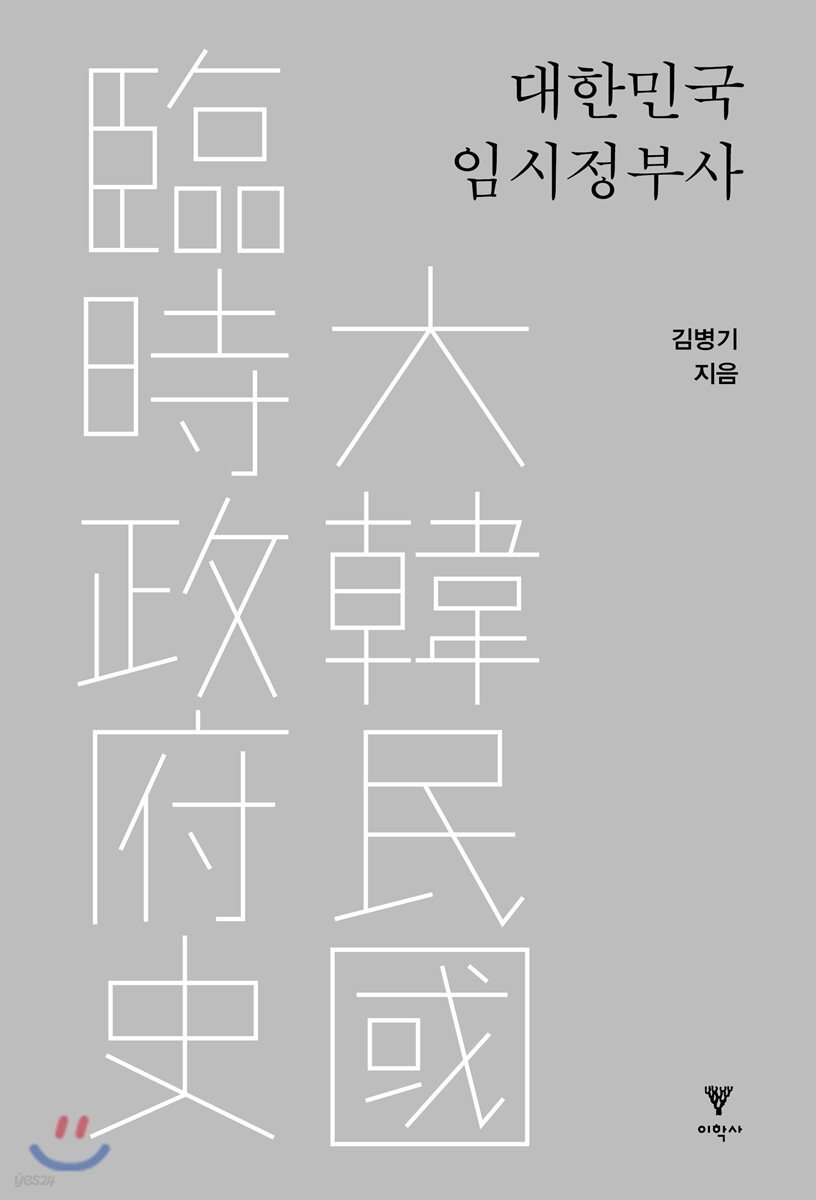
Provisional Government of the Republic of Korea
 |
Description
Book Introduction
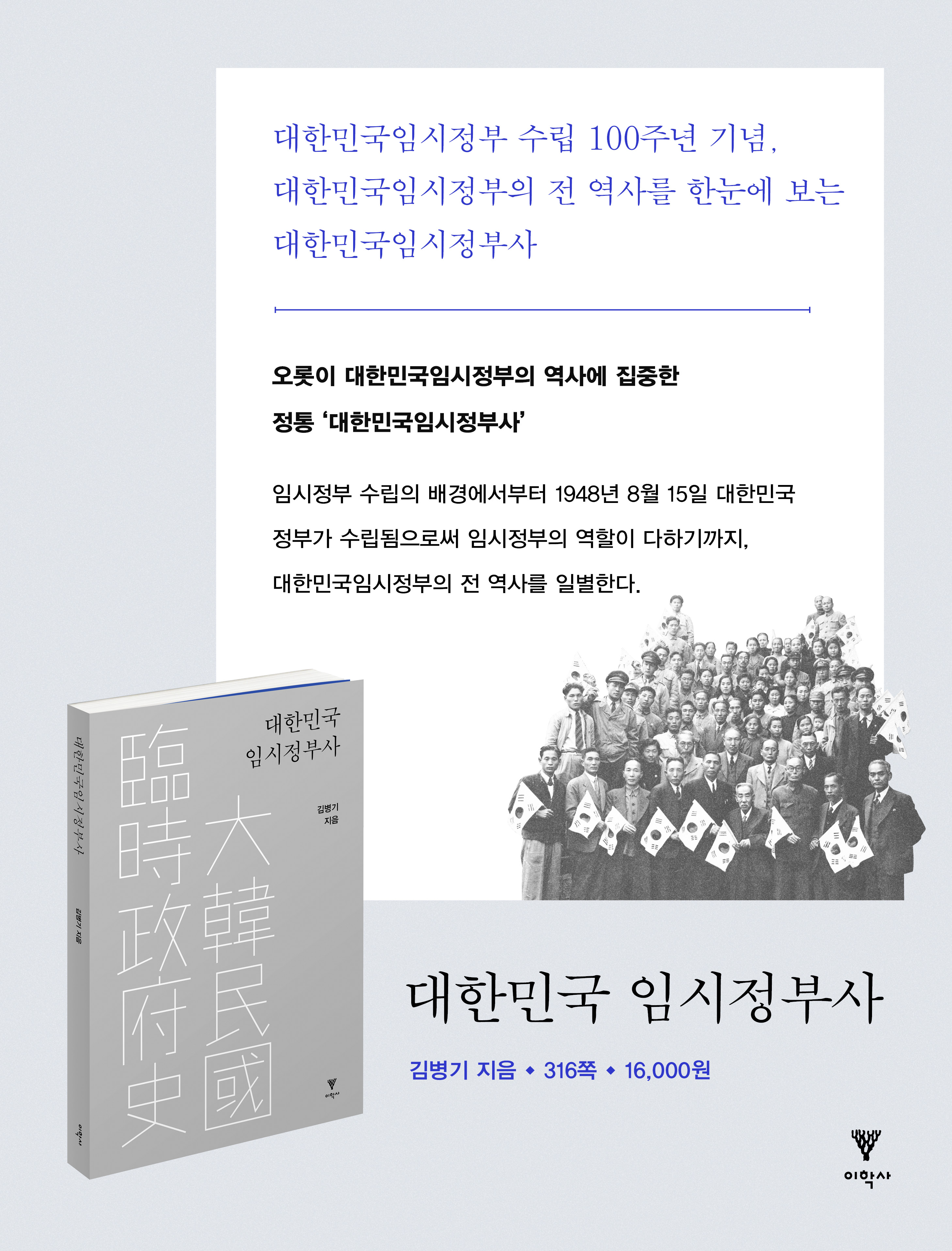
Commemorating the 100th anniversary of the establishment of the Provisional Government of the Republic of Korea,
The History of the Provisional Government of the Republic of Korea, a look at the entire history of the Provisional Government of the Republic of Korea
This book, planned and published on April 11, 2019 to commemorate the 100th anniversary of the establishment of the Provisional Government of the Republic of Korea, is a history textbook written by historian Dr. Kim Byeong-gi (Chairman of the Compilation Committee for the History of the Korean Independence Movement), the grandson of independence activist Kim Seung-hak, who served as the president of the 『Independence Newspaper』 published by the Provisional Government of the Republic of Korea and the chairman of the Army Staff in Manchuria, with the sole purpose of informing the public more about the history of the independence movement and the Provisional Government.
As an authentic 'History of the Provisional Government of the Republic of Korea' that focuses solely on the history of the Provisional Government of the Republic of Korea, this book focuses on describing it in an easy and plain way, taking into account the fact that previous histories of the Provisional Government of the Republic of Korea were highly academic in nature and not easy for general readers to read. By clearly organizing key events and historical flows, it allows a glimpse into the entire history of the Provisional Government of the Republic of Korea from the background of the establishment of the Provisional Government to the end of the Provisional Government's role with the establishment of the Republic of Korea government on August 15, 1948.
The History of the Provisional Government of the Republic of Korea, a look at the entire history of the Provisional Government of the Republic of Korea
This book, planned and published on April 11, 2019 to commemorate the 100th anniversary of the establishment of the Provisional Government of the Republic of Korea, is a history textbook written by historian Dr. Kim Byeong-gi (Chairman of the Compilation Committee for the History of the Korean Independence Movement), the grandson of independence activist Kim Seung-hak, who served as the president of the 『Independence Newspaper』 published by the Provisional Government of the Republic of Korea and the chairman of the Army Staff in Manchuria, with the sole purpose of informing the public more about the history of the independence movement and the Provisional Government.
As an authentic 'History of the Provisional Government of the Republic of Korea' that focuses solely on the history of the Provisional Government of the Republic of Korea, this book focuses on describing it in an easy and plain way, taking into account the fact that previous histories of the Provisional Government of the Republic of Korea were highly academic in nature and not easy for general readers to read. By clearly organizing key events and historical flows, it allows a glimpse into the entire history of the Provisional Government of the Republic of Korea from the background of the establishment of the Provisional Government to the end of the Provisional Government's role with the establishment of the Republic of Korea government on August 15, 1948.
- You can preview some of the book's contents.
Preview
index
Introduction: Overview of the Provisional Government of the Republic of Korea
Part 1: The Fall of the Empire and the Rise of the Republic
Chapter 1: Background to the Establishment of the Provisional Government
Changes in domestic and international situations
Shanghai Korean community
Dongjesa Temple and Shinhan Revolutionary Party
The birth of the provisional government and Shin Gyu-sik
The Paris Peace Conference and the New Korea Youth Party
Declaration of Independence and the March 1st Movement
Part 2: Shanghai Period (1919–1932)
Chapter 2: The Establishment of the Provisional Government
World War I and the movement to establish a government
The Elderly Government (National Assembly of the Republic of Korea)
Provisional Government of the Republic of Korea (Shanghai Provisional Government)
Hanseong government
Establishment of a unified government
Ahn Chang-ho, who laid the foundation for the provisional government
Chapter 3 Organization of the Provisional Government
Provisional Government
Lee Dong-nyeong, the Provisional Government's Hidden Mentor
Activities during the early days of the Provisional Government (1919-1921)
Establishment of a transportation bureau
Implementation of the joint communication system
Military and diplomatic activities of the provisional government
military activities
Squadron formation and Korean pilot training centers in the Americas
The Provisional Government's plan to train pilots and establish an air force
Provisional Government Direct Corps, Liberation Army Command
Korean Veterans Association
Forming the Korean Patriotic Association
Lee Bong-chang's Uprising: Assassinating the Japanese Emperor
Yun Bong-gil's Righteous Deed: "What even a million Chinese troops could not do
“A mere Joseon youth did it.”
The road to Luoyang Military Academy opens.
Military activities after the Sino-Japanese War
Chapter 4: Amendment of the Provisional Government Constitution and Reform of the Government
National Representative Assembly
Impeachment of the provisional president and constitutional amendment (April 1925)
Impeached President Syngman Rhee
Changes in the leadership system of the provisional government
National Single Party Movement
The Provisional Government's Search for Just Politics
Establishment of a left-right coalition government
Chapter 5: Propaganda and Diplomatic Activities
Publication of the Independent Newspaper
Compilation of the Provisional Government's history book
Pacific Conference and Far Eastern People's Congress
Part 3: The Migration Period (1932-1940)
Chapter 6: The Provisional Government during the Moving Period
Eight years of migration during difficult times
Seeking a political alliance
Part 4: The Chongqing Period (1940-1945)
Chapter 7 Korean Liberation Army
Creation of the Korean Liberation Army
Establishment of a recruitment office for the Korean Liberation Army recruitment activities
Changing the unit structure of the Korean Liberation Army
Reorganization of the General Headquarters
Each region is also reorganized
Recruitment activities of the Korean Liberation Army
Propaganda activities of the Korean Liberation Army
Declaration of war on Japan and Germany
Joint operations with British forces on the India-Burma front
US OSS and domestic vacuum operations
Links with the Korean Volunteer Army and the Northeast Anti-Japanese United Army
Plan for a domestic invasion operation based on Jeju Island
Part 5: The Return to Korea Period (1945-1948)
Chapter 8: Return of the Provisional Government
Japan surrenders
Return of the Provisional Government
Provisional government after returning to Korea
Enter into North-South negotiations
Appendix 1.
Chronology of the Provisional Government of the Republic of Korea
Appendix 2.
The Provisional Government of the Republic of Korea's founding principles
Key References
Search
Part 1: The Fall of the Empire and the Rise of the Republic
Chapter 1: Background to the Establishment of the Provisional Government
Changes in domestic and international situations
Shanghai Korean community
Dongjesa Temple and Shinhan Revolutionary Party
The birth of the provisional government and Shin Gyu-sik
The Paris Peace Conference and the New Korea Youth Party
Declaration of Independence and the March 1st Movement
Part 2: Shanghai Period (1919–1932)
Chapter 2: The Establishment of the Provisional Government
World War I and the movement to establish a government
The Elderly Government (National Assembly of the Republic of Korea)
Provisional Government of the Republic of Korea (Shanghai Provisional Government)
Hanseong government
Establishment of a unified government
Ahn Chang-ho, who laid the foundation for the provisional government
Chapter 3 Organization of the Provisional Government
Provisional Government
Lee Dong-nyeong, the Provisional Government's Hidden Mentor
Activities during the early days of the Provisional Government (1919-1921)
Establishment of a transportation bureau
Implementation of the joint communication system
Military and diplomatic activities of the provisional government
military activities
Squadron formation and Korean pilot training centers in the Americas
The Provisional Government's plan to train pilots and establish an air force
Provisional Government Direct Corps, Liberation Army Command
Korean Veterans Association
Forming the Korean Patriotic Association
Lee Bong-chang's Uprising: Assassinating the Japanese Emperor
Yun Bong-gil's Righteous Deed: "What even a million Chinese troops could not do
“A mere Joseon youth did it.”
The road to Luoyang Military Academy opens.
Military activities after the Sino-Japanese War
Chapter 4: Amendment of the Provisional Government Constitution and Reform of the Government
National Representative Assembly
Impeachment of the provisional president and constitutional amendment (April 1925)
Impeached President Syngman Rhee
Changes in the leadership system of the provisional government
National Single Party Movement
The Provisional Government's Search for Just Politics
Establishment of a left-right coalition government
Chapter 5: Propaganda and Diplomatic Activities
Publication of the Independent Newspaper
Compilation of the Provisional Government's history book
Pacific Conference and Far Eastern People's Congress
Part 3: The Migration Period (1932-1940)
Chapter 6: The Provisional Government during the Moving Period
Eight years of migration during difficult times
Seeking a political alliance
Part 4: The Chongqing Period (1940-1945)
Chapter 7 Korean Liberation Army
Creation of the Korean Liberation Army
Establishment of a recruitment office for the Korean Liberation Army recruitment activities
Changing the unit structure of the Korean Liberation Army
Reorganization of the General Headquarters
Each region is also reorganized
Recruitment activities of the Korean Liberation Army
Propaganda activities of the Korean Liberation Army
Declaration of war on Japan and Germany
Joint operations with British forces on the India-Burma front
US OSS and domestic vacuum operations
Links with the Korean Volunteer Army and the Northeast Anti-Japanese United Army
Plan for a domestic invasion operation based on Jeju Island
Part 5: The Return to Korea Period (1945-1948)
Chapter 8: Return of the Provisional Government
Japan surrenders
Return of the Provisional Government
Provisional government after returning to Korea
Enter into North-South negotiations
Appendix 1.
Chronology of the Provisional Government of the Republic of Korea
Appendix 2.
The Provisional Government of the Republic of Korea's founding principles
Key References
Search
Detailed image
Publisher's Review
The Provisional Government of the Republic of Korea is the root and origin of the Republic of Korea government.
In particular, this book goes beyond the narrow perspective of existing histories of the Provisional Government of the Republic of Korea, which limit its history to the period from 1919 to 1945 and thus view the Provisional Government's role as having ended with the liberation on August 15, 1945, and maintains the position that the Provisional Government's role continued until the establishment of the Republic of Korea government on August 15, 1948, and more actively expands the role and period of the Provisional Government.
In other words, although the provisional government in Chongqing at the time of liberation returned to the country in a private capacity rather than a government capacity due to opposition from the US military government stationed in the Korean Peninsula, it returned to the country and carried out various activities to establish a transitional government as a “government” by calling itself the provisional government until the establishment of the Republic of Korea government on August 15, 1948.
Therefore, unlike the existing general description of the history of the provisional government, which divides it into the Shanghai period, the period of movement, and the Chongqing period, this book divides the history of the provisional government into four periods by adding the period of return to Korea at the end.
This book's attempt to clarify that the Republic of Korea government established in 1948 succeeded and rebuilt the Provisional Government, while also firmly establishing that the Provisional Government of the Republic of Korea is the root and origin of the Republic of Korea, will serve as another foundation for putting an end to the ongoing controversy over National Foundation Day.
Main contents of this book
Establishment of the Provisional Government of the Republic of Korea
The Provisional Government of the Republic of Korea was a culmination of the dreams, aspirations, and actions of all the people of the Republic of Korea who sought to regain their lost country and establish themselves as a proud independent nation.
However, it was not easy until the Provisional Government of the Republic of Korea was launched.
The changes in the external situation such as the Xinhai Revolution in 1911, World War I, the Russian Revolution in 1917, Wilson's principle of national self-determination in 1918, and the Paris Peace Conference, along with the education and independence struggles in Manchuria, Gando, and Russia, and the domestic activities of independence activists gathered in Shanghai, such as the Dongjesa, Shinhan Revolutionary Party, Daedongbogukdan, and Shinhan Youth Party, all combined to give rise to the demands for the establishment of a provisional government in 1919, with the Muo Independence Declaration (February 1), the February 8 Independence Declaration, and the March 1 Independence Declaration (March 1st Independence Movement).
These nationwide declarations of independence and independence movements led to requests for the establishment of provisional governments, resulting in the establishment of a total of eight provisional governments at home and abroad between March and April 1919.
Among them, the ones with actual organizations and foundations were the Korean National Assembly in the Maritime Province, the Provisional Government of the Republic of Korea in Shanghai, and the Hanseong Government in Korea. These three provisional governments were integrated into the Provisional Government of the Republic of Korea in September 1919.
The provisional government, which was established in Shanghai in April 1919, began the difficult migration after the shining righteous struggles of Lee Bong-chang and Yun Bong-gil in 1932.
After passing through Jiaxing and Haiyan, he spent three years in Hangzhou from May 1932, and in 1935 he moved to Zhenjiang, where he stayed for about two years, before passing through Nanjing and Hankou and arriving in Changsha in 1937.
And after passing through Guangzhou and Wuzhou, he stayed briefly in Liuzhou in 1938, then passed through Guiyang and Zunyi and went to Qizhang in 1939.
After spending several months in the military, he settled in Chongqing in September 1940 and stayed there until liberation, returning to Seoul in November and December 1945.
The very fact that the Provisional Government moved around like this proves that the international situation surrounding the Provisional Government was constantly changing, that the Provisional Government's foundation was weak, and that its struggles were arduous.
[Shanghai period (1919-1932)]
The provisional government in Shanghai focused on foreign diplomacy, reorganized government organizations including various laws and systems, implemented a system of oversight for compatriots at home and abroad, established a transportation bureau, operated a resident association, and attempted to establish a military plan for the war of independence. However, due to a lack of manpower and funds, it failed to achieve the desired results.
Additionally, the provisional government during this period was hampered by complex internal issues, including the issue of the provisional government's representation, the issue of reforming or creating the provisional government, the impeachment of the provisional president, and the reorganization of the leadership system.
Nevertheless, this period was also a time when the Provisional Government regained its vitality as the center of the Korean independence movement, as the righteous struggle led by the Korean Patriotic Corps sounded the alarm of justice against Japanese militarism and world imperialism.
[Movement period (1932-1940)]
The period of migration was a difficult time, as the provisional government led a large family of about 100 people, both old and young, to avoid Japanese air raids. However, it was also a time when the wartime system was established and each party's political activities were active.
During this period, with the outbreak of the Sino-Japanese War and World War II, the provisional government took on the form of the Korean Liberation Army, and the Unification Alliance (Korea Anti-Japanese Front Unification Alliance), a unified body of independence movement forces in Manchuria and China, the National Revolutionary Party with the participation of nationalist and socialist forces, the right-wing Gwangbok Jinseon (Korean Liberation Movement Association), and the left-wing Korean National Front Federation were formed and actively engaged in activities.
[Chongqing period (1940-1945)]
The Chongqing period was a crucial period in which the Provisional Government established the Korean Liberation Army, prepared for the anti-Japanese struggle and domestic invasion operations, prepared for the establishment of a formal government after liberation (the "Platform for the Establishment of the Republic of Korea"), and realized a unified coalition government of left-right cooperation not only in the military but also in the political sphere.
The Korean Liberation Army, founded in September 1940, achieved military unification between the left and right by incorporating the Korean Youth Frontline Operations Corps, an independent armed force centered on anarchists, and the Korean Volunteer Corps, an armed organization of the left wing. It dispatched an operation unit to the Indian and Burmese fronts for joint operations with the British Army, and prepared for domestic invasion training with the U.S. OSS.
Based on the creation of this Korean Liberation Army, the Provisional Government declared war on Japan in 1941 and on Germany in 1945.
Meanwhile, in the 1942 elections, 14 left-wing figures, including anarchists and communists, participated as members of the Provisional Government, and in 1944, five left-wing figures, including three from the Korean National Revolutionary Party, one from the Korean National Liberation Alliance, and one from the Korean Anarchist League, were elected as State Council members, making the Provisional Government a unified coalition government that included left-wing and right-wing figures in China.
Although liberation came before the unification efforts of the independence movement forces centered around the Provisional Government could produce any tangible results, the Provisional Government played a role as a true representative of the people and a central organization of the independence movement during this period.
[Provisional Government of the Republic of Korea (1945-1948)]
The Provisional Government of the Republic of Korea protected the lives and property of overseas Koreans in China, launched an anti-trusteeship movement with the people, and organized a political task force and an administrative research committee to secure a national base.
Furthermore, the provisional government formed the Emergency National Assembly and the National Assembly (Daehanminhoe) to establish an interim government and promoted inter-Korean negotiations, but its role ended in 1948 when separate governments were established in both North and South Korea.
The Provisional Government of the Republic of Korea, a Left-Right Alliance: Another Meaning
As we mark the 100th anniversary of the establishment of the Provisional Government of the Republic of Korea, we must highlight the fact that, during the 30-year history of the Provisional Government, it established a unified coalition government through left-right cooperation during the tense period of World War II.
During this period, the provisional government, which had been run by right-wing nationalists for a long time, was transformed into a system in which leftists such as communists and anarchists joined forces to fight together, a system in which the three major forces of the independence movement in the Republic of Korea—nationalism, communism, and anarchism—joined forces.
The foundation of this innovation is the “Principles for the Founding of the Republic of Korea.”
On November 28, 1941, the Provisional Government announced the "Platform for the Establishment of the Republic of Korea," which contained the basic ideology and practices of the government we would establish after liberation.
The basic ideology of this platform is the principle of equality in politics, economy, and education, and equality among individuals, nations, and peoples, which are its core values.
The Three Equalities Movement pursued democracy in politics, nationalization of large lands and important industries in socioeconomic terms, and egalitarianism in education, including national education.
And it accepted the egalitarian elements of socialism based on nationalism (Samgyunism was born in the process of developing the national single party movement in the 1920s to overcome the ideological conflict between the left and right and to unify the independence movement camp, and was reflected in the platforms of the Korean Independence Party and the Korean National Party, which were the central political parties of the Provisional Government in the 1930s, as well as the left-wing Korean National Revolutionary Party).
The "Platform of the Founding of the Republic of Korea" contains the spirit of national unity that transcends the ideological conflict between the left and right.
This became the basis for the establishment of a left-right coalition government.
In our history, the only coalition government between the left and right was the provisional government in Chongqing.
Today, we need to deeply reflect on the spirit and practice of the Provisional Government, which overcame all difficulties and achieved a left-right alliance.
When the South and the North become one in the future, the spirit of the left-right alliance created by our independence activists at the forefront of the independence struggle in the 1940s and the Provisional Government of the Republic of Korea can serve as its foundation.
In particular, this book goes beyond the narrow perspective of existing histories of the Provisional Government of the Republic of Korea, which limit its history to the period from 1919 to 1945 and thus view the Provisional Government's role as having ended with the liberation on August 15, 1945, and maintains the position that the Provisional Government's role continued until the establishment of the Republic of Korea government on August 15, 1948, and more actively expands the role and period of the Provisional Government.
In other words, although the provisional government in Chongqing at the time of liberation returned to the country in a private capacity rather than a government capacity due to opposition from the US military government stationed in the Korean Peninsula, it returned to the country and carried out various activities to establish a transitional government as a “government” by calling itself the provisional government until the establishment of the Republic of Korea government on August 15, 1948.
Therefore, unlike the existing general description of the history of the provisional government, which divides it into the Shanghai period, the period of movement, and the Chongqing period, this book divides the history of the provisional government into four periods by adding the period of return to Korea at the end.
This book's attempt to clarify that the Republic of Korea government established in 1948 succeeded and rebuilt the Provisional Government, while also firmly establishing that the Provisional Government of the Republic of Korea is the root and origin of the Republic of Korea, will serve as another foundation for putting an end to the ongoing controversy over National Foundation Day.
Main contents of this book
Establishment of the Provisional Government of the Republic of Korea
The Provisional Government of the Republic of Korea was a culmination of the dreams, aspirations, and actions of all the people of the Republic of Korea who sought to regain their lost country and establish themselves as a proud independent nation.
However, it was not easy until the Provisional Government of the Republic of Korea was launched.
The changes in the external situation such as the Xinhai Revolution in 1911, World War I, the Russian Revolution in 1917, Wilson's principle of national self-determination in 1918, and the Paris Peace Conference, along with the education and independence struggles in Manchuria, Gando, and Russia, and the domestic activities of independence activists gathered in Shanghai, such as the Dongjesa, Shinhan Revolutionary Party, Daedongbogukdan, and Shinhan Youth Party, all combined to give rise to the demands for the establishment of a provisional government in 1919, with the Muo Independence Declaration (February 1), the February 8 Independence Declaration, and the March 1 Independence Declaration (March 1st Independence Movement).
These nationwide declarations of independence and independence movements led to requests for the establishment of provisional governments, resulting in the establishment of a total of eight provisional governments at home and abroad between March and April 1919.
Among them, the ones with actual organizations and foundations were the Korean National Assembly in the Maritime Province, the Provisional Government of the Republic of Korea in Shanghai, and the Hanseong Government in Korea. These three provisional governments were integrated into the Provisional Government of the Republic of Korea in September 1919.
The provisional government, which was established in Shanghai in April 1919, began the difficult migration after the shining righteous struggles of Lee Bong-chang and Yun Bong-gil in 1932.
After passing through Jiaxing and Haiyan, he spent three years in Hangzhou from May 1932, and in 1935 he moved to Zhenjiang, where he stayed for about two years, before passing through Nanjing and Hankou and arriving in Changsha in 1937.
And after passing through Guangzhou and Wuzhou, he stayed briefly in Liuzhou in 1938, then passed through Guiyang and Zunyi and went to Qizhang in 1939.
After spending several months in the military, he settled in Chongqing in September 1940 and stayed there until liberation, returning to Seoul in November and December 1945.
The very fact that the Provisional Government moved around like this proves that the international situation surrounding the Provisional Government was constantly changing, that the Provisional Government's foundation was weak, and that its struggles were arduous.
[Shanghai period (1919-1932)]
The provisional government in Shanghai focused on foreign diplomacy, reorganized government organizations including various laws and systems, implemented a system of oversight for compatriots at home and abroad, established a transportation bureau, operated a resident association, and attempted to establish a military plan for the war of independence. However, due to a lack of manpower and funds, it failed to achieve the desired results.
Additionally, the provisional government during this period was hampered by complex internal issues, including the issue of the provisional government's representation, the issue of reforming or creating the provisional government, the impeachment of the provisional president, and the reorganization of the leadership system.
Nevertheless, this period was also a time when the Provisional Government regained its vitality as the center of the Korean independence movement, as the righteous struggle led by the Korean Patriotic Corps sounded the alarm of justice against Japanese militarism and world imperialism.
[Movement period (1932-1940)]
The period of migration was a difficult time, as the provisional government led a large family of about 100 people, both old and young, to avoid Japanese air raids. However, it was also a time when the wartime system was established and each party's political activities were active.
During this period, with the outbreak of the Sino-Japanese War and World War II, the provisional government took on the form of the Korean Liberation Army, and the Unification Alliance (Korea Anti-Japanese Front Unification Alliance), a unified body of independence movement forces in Manchuria and China, the National Revolutionary Party with the participation of nationalist and socialist forces, the right-wing Gwangbok Jinseon (Korean Liberation Movement Association), and the left-wing Korean National Front Federation were formed and actively engaged in activities.
[Chongqing period (1940-1945)]
The Chongqing period was a crucial period in which the Provisional Government established the Korean Liberation Army, prepared for the anti-Japanese struggle and domestic invasion operations, prepared for the establishment of a formal government after liberation (the "Platform for the Establishment of the Republic of Korea"), and realized a unified coalition government of left-right cooperation not only in the military but also in the political sphere.
The Korean Liberation Army, founded in September 1940, achieved military unification between the left and right by incorporating the Korean Youth Frontline Operations Corps, an independent armed force centered on anarchists, and the Korean Volunteer Corps, an armed organization of the left wing. It dispatched an operation unit to the Indian and Burmese fronts for joint operations with the British Army, and prepared for domestic invasion training with the U.S. OSS.
Based on the creation of this Korean Liberation Army, the Provisional Government declared war on Japan in 1941 and on Germany in 1945.
Meanwhile, in the 1942 elections, 14 left-wing figures, including anarchists and communists, participated as members of the Provisional Government, and in 1944, five left-wing figures, including three from the Korean National Revolutionary Party, one from the Korean National Liberation Alliance, and one from the Korean Anarchist League, were elected as State Council members, making the Provisional Government a unified coalition government that included left-wing and right-wing figures in China.
Although liberation came before the unification efforts of the independence movement forces centered around the Provisional Government could produce any tangible results, the Provisional Government played a role as a true representative of the people and a central organization of the independence movement during this period.
[Provisional Government of the Republic of Korea (1945-1948)]
The Provisional Government of the Republic of Korea protected the lives and property of overseas Koreans in China, launched an anti-trusteeship movement with the people, and organized a political task force and an administrative research committee to secure a national base.
Furthermore, the provisional government formed the Emergency National Assembly and the National Assembly (Daehanminhoe) to establish an interim government and promoted inter-Korean negotiations, but its role ended in 1948 when separate governments were established in both North and South Korea.
The Provisional Government of the Republic of Korea, a Left-Right Alliance: Another Meaning
As we mark the 100th anniversary of the establishment of the Provisional Government of the Republic of Korea, we must highlight the fact that, during the 30-year history of the Provisional Government, it established a unified coalition government through left-right cooperation during the tense period of World War II.
During this period, the provisional government, which had been run by right-wing nationalists for a long time, was transformed into a system in which leftists such as communists and anarchists joined forces to fight together, a system in which the three major forces of the independence movement in the Republic of Korea—nationalism, communism, and anarchism—joined forces.
The foundation of this innovation is the “Principles for the Founding of the Republic of Korea.”
On November 28, 1941, the Provisional Government announced the "Platform for the Establishment of the Republic of Korea," which contained the basic ideology and practices of the government we would establish after liberation.
The basic ideology of this platform is the principle of equality in politics, economy, and education, and equality among individuals, nations, and peoples, which are its core values.
The Three Equalities Movement pursued democracy in politics, nationalization of large lands and important industries in socioeconomic terms, and egalitarianism in education, including national education.
And it accepted the egalitarian elements of socialism based on nationalism (Samgyunism was born in the process of developing the national single party movement in the 1920s to overcome the ideological conflict between the left and right and to unify the independence movement camp, and was reflected in the platforms of the Korean Independence Party and the Korean National Party, which were the central political parties of the Provisional Government in the 1930s, as well as the left-wing Korean National Revolutionary Party).
The "Platform of the Founding of the Republic of Korea" contains the spirit of national unity that transcends the ideological conflict between the left and right.
This became the basis for the establishment of a left-right coalition government.
In our history, the only coalition government between the left and right was the provisional government in Chongqing.
Today, we need to deeply reflect on the spirit and practice of the Provisional Government, which overcame all difficulties and achieved a left-right alliance.
When the South and the North become one in the future, the spirit of the left-right alliance created by our independence activists at the forefront of the independence struggle in the 1940s and the Provisional Government of the Republic of Korea can serve as its foundation.
GOODS SPECIFICS
- Date of issue: March 11, 2019
- Page count, weight, size: 316 pages | 458g | 153*224*30mm
- ISBN13: 9788961473361
- ISBN10: 8961473360
You may also like
카테고리
korean


korean

![GQ KOREA Mark (Monthly): December [2025]](http://librairie.coreenne.fr/cdn/shop/files/8ef265dbbfbf186523ed75ba7319009d.jpg?v=1765340328&width=3840)


