

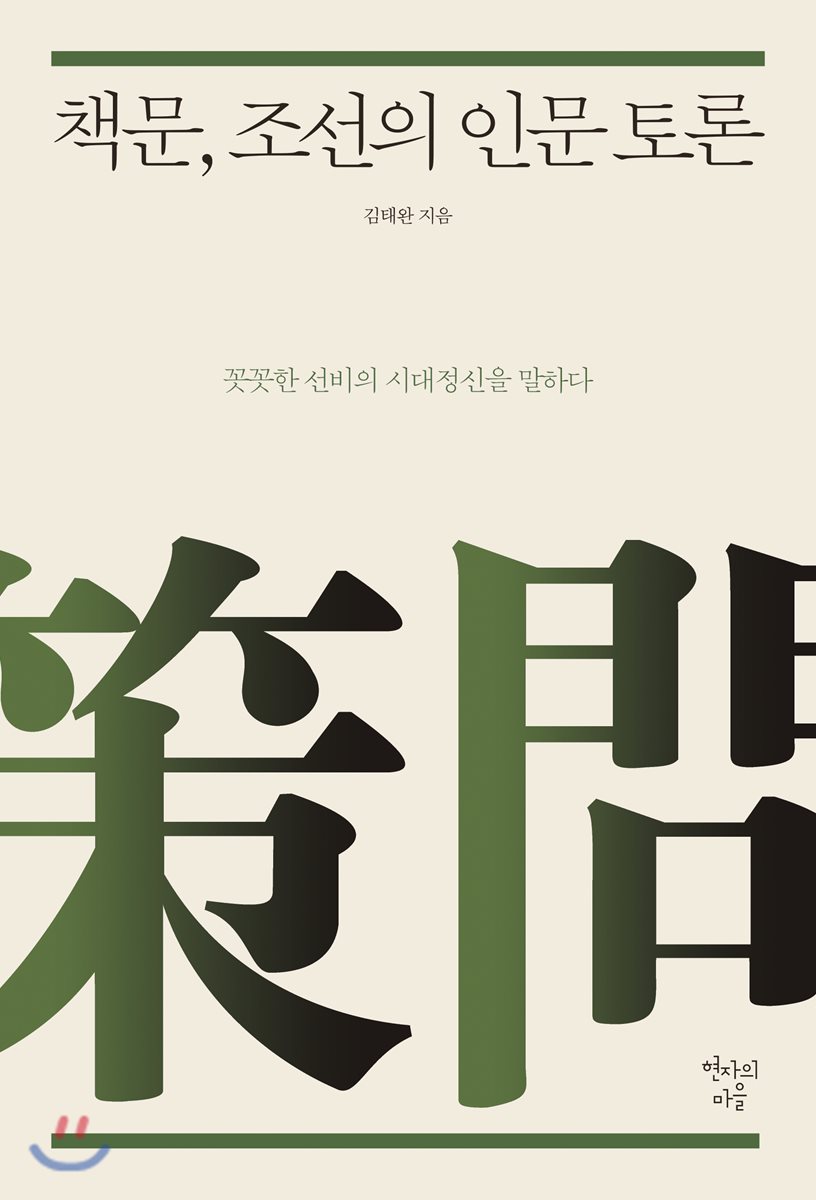
Bookmun, a discussion on humanities in Joseon
 |
Description
Book Introduction
This book is a compilation of numerous books, mainly those on the natural sciences, humanities, and social sciences of Joseon before the Two Wars.
Modern people who have been baptized in modern science tend to belittle the level of science in the Joseon Dynasty.
However, Joseon scholars tried to understand nature in their own way, and traces of their efforts can be seen in their books.
People construct the world around themselves.
Time and space are intertwined around me.
My purpose in life is to live my life well.
To live a good life, I study history, read literature, and understand and utilize the principles of science, technology, and civilization.
To live my life well, I study human psychology in general and look into my inner self.
And a society and a nation are communities of individuals who try to live their lives well.
All traces of life that occur in a community become culture through the test of time.
A culture that takes on a certain form determines the lives of individuals within a community and is dialectically sublated when challenged by new cultural aspects.
People in the Joseon Dynasty also tried to live their lives well.
The reason we look into Joseon culture is to interpret our own culture by using Joseon culture as a mirror.
The book contains the culture that the people of the Joseon Dynasty developed.
Modern people who have been baptized in modern science tend to belittle the level of science in the Joseon Dynasty.
However, Joseon scholars tried to understand nature in their own way, and traces of their efforts can be seen in their books.
People construct the world around themselves.
Time and space are intertwined around me.
My purpose in life is to live my life well.
To live a good life, I study history, read literature, and understand and utilize the principles of science, technology, and civilization.
To live my life well, I study human psychology in general and look into my inner self.
And a society and a nation are communities of individuals who try to live their lives well.
All traces of life that occur in a community become culture through the test of time.
A culture that takes on a certain form determines the lives of individuals within a community and is dialectically sublated when challenged by new cultural aspects.
People in the Joseon Dynasty also tried to live their lives well.
The reason we look into Joseon culture is to interpret our own culture by using Joseon culture as a mirror.
The book contains the culture that the people of the Joseon Dynasty developed.
index
1.
The law of nature
The way of the world...
Imwoon
Cheondo Book, Joseon's natural science......
this person
What is dynamics...
this person
About life, death, and ghosts...
this person
What do the seasons look like...
this person
Asking the meaning of spring......
Yoon Seon-do
2.
People and Culture
The Master's Path......
standard
The standard for value judgment...
Kim Ui-jeong
A poet who sings of the fundamental nature of humanity...
Lee Hwang/Song Gi-su
The mindset of recording history...
Hwang Jun-ryang/Park Seung-im
How to correct the scholar's spirit...
Jeongcheol
3.
Politics and Society
Is the progress of history determined?
This song
How to make people live well...
Chaesu
What a Prime Minister Should Have...
interest
To change the trend of extravagance into one of frugality...
Na Se-chan
How to reform corruption...
Hwang Jun-ryang
To gather technicians and make the country prosperous...
Yang Eung-jeong
How to cultivate talent...
Hong Seong-min
Pros and Cons of the Monetary System...
Kwon Deuk-gi
Reviews
The law of nature
The way of the world...
Imwoon
Cheondo Book, Joseon's natural science......
this person
What is dynamics...
this person
About life, death, and ghosts...
this person
What do the seasons look like...
this person
Asking the meaning of spring......
Yoon Seon-do
2.
People and Culture
The Master's Path......
standard
The standard for value judgment...
Kim Ui-jeong
A poet who sings of the fundamental nature of humanity...
Lee Hwang/Song Gi-su
The mindset of recording history...
Hwang Jun-ryang/Park Seung-im
How to correct the scholar's spirit...
Jeongcheol
3.
Politics and Society
Is the progress of history determined?
This song
How to make people live well...
Chaesu
What a Prime Minister Should Have...
interest
To change the trend of extravagance into one of frugality...
Na Se-chan
How to reform corruption...
Hwang Jun-ryang
To gather technicians and make the country prosperous...
Yang Eung-jeong
How to cultivate talent...
Hong Seong-min
Pros and Cons of the Monetary System...
Kwon Deuk-gi
Reviews
Into the book
1.
The law of nature
“If the principles of all things in heaven and earth were scattered in ten thousand different ways, they would not be able to come together as one, but if they were rooted in one fundamental principle, they could pursue its mystery to the end.
Before the chaos and creation, heaven and earth were not divided, people and things did not come into being, everything was condensed and mixed together, and clarity and turbidity were not differentiated, so it seems that the principle was not complete, but in fact, it has never been complete.
“The reason why heaven and earth are heaven and earth, and why people and things are people and things, is because they all do not escape the profound principle of becoming yin and then becoming yang.”
-From the principles of the world and the strategies of Imun
“The root of countless natural changes is simply one energy moving in yin and yang.
The movement of Qi becomes Yang, and stillness becomes Yin.
The alternation of movement and stillness is Qi, and the principle that causes this action is reason.
Among all the natural phenomena that appear between heaven and earth, some are formed by the gathering of the right energy of the five elements, while others are formed by the distorted energy of heaven and earth.
Or, there are phenomena that arise from the collision of yin and yang, and there are also phenomena that arise from the divergence of two energies.
So the sun, moon, stars, and constellations hang in the sky, rain, snow, frost, and dew fall to the ground, wind and clouds arise, thunder and lightning strike, and all these natural phenomena are energy, and the cause of all these natural phenomena is reason.
-From the Cheondo Book, Joseon's Natural Science, and Yi Yi's Countermeasures
“All things are made up of the Five Elements, and the Five Elements are nothing but yin and yang, and yin and yang are the Supreme Ultimate.
Taegeuk is also a name that was given forcibly.
The principle of all things taking shape is called the Book of Changes, the principle of manifestation is called the Way, and the action of that principle is called God.
For this reason, there are the natural karma of heaven and earth, the karma of Fuxi, the karma of King Wen and the Duke of Zhou, and the karma of Confucius. … … The karma is the principle that determines good and bad fortune and creates great undertakings.
Good and bad omens must be consulted through fortune telling, but generally speaking, human schemes cannot be without intention, and if there is intention, it is impossible to avoid selfishness.
For this reason, the ancient sage kings, even though they established the ultimate laws of the empire, did not dare to say that they were right themselves, and when there was a major issue in the country, they would consult the will of ghosts and make decisions based on questionable facts.
“The reason why we must appoint a fortune teller to tell our fortunes is to purify our body and mind so that we can listen to the commands of heaven.”
-What is dynamics, from Lee's countermeasures
“The human body is a fortress of the soul and spirit.
Hon is the god of energy and Baek is the god of justice.
When a person is alive, he spreads out and becomes a god, and when he dies, he withdraws and becomes an ear.
When the spirit energy rises to the sky and the pure energy returns to the earth, the energy disperses… … All things in the world exist or do not exist, but the ghosts that become after a person dies cannot be said to exist or not.
Why is that? If there is sincerity, God will appear accordingly, so we can say that He exists. If there is no sincerity, God will not appear, so we can say that He does not exist.
So, how can the existence or non-existence of God not be determined by humans?”
-On life and death, ghosts, from Lee Yi's countermeasures
“It is the law of heaven that one vital energy constantly moves and changes, giving birth to all things through the principle of yang and maturing all things through the principle of yin.
It is the duty of man to follow the dictates of heaven, to conform to the workings of yin and yang, to observe astronomy above and geography below, and to silently conform to the harmony of nature.
So, the saint inherited the way of heaven and established the standard of India, regulating the order of the four seasons and dividing them into seasons.
This is how the books on the calendar and the names of the holidays came to be.”
-What is the season like? Among Lee's countermeasures
“If we are to speak of the way for man to follow Heaven, it cannot be found anywhere else, but only in humanity.
When one flows, what is bestowed upon time is called spring, and what is bestowed upon a person is called humanity. What is bestowed upon time is spring in a person, and what is bestowed upon a person is humanity in a person, and what is bestowed upon time is spring in a person.
“If you gain humanity, you will be in harmony with spring, and if you lose humanity, you will be in opposition to spring. If you are in harmony with spring, a gentle energy will arrive and all things will grow, but if you are in opposition to spring, a fierce energy will arrive and all kinds of disasters will occur.”
- Asking the meaning of spring, from Yun Seon-do's countermeasures
2.
People and Culture
“When Heaven gave birth to the people, it bestowed upon everyone the nature of benevolence, righteousness, propriety, and wisdom, and the ethics of ruler and subject, parents and children, and husband and wife are contained therein.
A person who can fully develop his or her own nature and follow the principles of duty is a visionary.
However, ordinary people are not like that, and are bound by the temperament they were given and are blinded by material desires, so they do not know that their nature is inherent and that they have a duty that they should naturally perform as humans.
So, it is rare to find someone who does not act selfishly and fall to the level of an animal.
For this reason, only after learning from the wise can one develop one's original intelligence and return to the path of nature.
This is why the Master's Way arose.
“If you lead, support, teach, guide, open doors, enlighten, and enable them to achieve, making those who do not know how to be filial to be filial, and those who do not know how to be loyal to be loyal, how can there be any greater achievement than this in the way of a teacher?”
-From the Master's Path, the Standard's Measures
“Since ancient times, when public morality is practiced in the court, good and evil can be distinguished, and rewards and punishments can be carried out in a natural manner.
If public opinion is not exercised in the court, public opinion is blocked and public opinion cannot be gathered, which ultimately leads to confusion in value judgments of right and wrong, good and bad.
“If the state of affairs of the world reaches this point, the chaos will be indescribable.”
The standard for value judgment, among Kim Ui-jeong's measures
“The essence of poetry is that it is rooted in character and expressed through language.
Therefore, a person with a rich foundation has gentle and upright expressions.
A person who is frivolous and impatient is flashy in his expression and only shows flashiness on the outside.
“If the roots are deep, the branches will be lush, and if the body is large, the voice will be loud.”
Among the countermeasures of Yi Hwang, a poet who sang of the fundamental nature of humanity
“Poetry is the outward expression of human voices in sentences.
Since the heavens laid down the laws of all things, there is a principle of value and judgment, and since people are born with a personality, they have emotions of joy, anger, sorrow, and pleasure.
“When we come into contact with an object and a reaction occurs in our mind, we each have our own thoughts, and as our thoughts accumulate, sounds and melodies inevitably emerge naturally, flowing out into the language of our daily lives.”
Among the countermeasures of Song Gi-su, a poet who sang about the fundamental nature of humanity
“The official who took up the pen did not know the importance of the task entrusted to him and lost sight of the most just path. When he wrote down words, he sometimes left out the facts, and when he wrote down things, he sometimes omitted the truth.
“Because these value judgments fail to reflect reality, the very essence of a fair history book has been lost.”
The mindset for recording history, from Hwang Jun-ryang's countermeasures
“A person who becomes an officer must have talent, and even if he has talent, he must follow the path straight.
If the Way were upright, how could anyone fear men and Heaven, shirk their responsibilities, or vacate their positions? Even the most subtle of the words and deeds of rulers and subjects would not escape the records of historians, and the customs of the land would reveal all the facts in their entirety. Great justice and public opinion would shine like the sun and stars throughout the boundless universe and the eternal heavens and earth.
The mindset for recording history, from Park Seung-im's countermeasures
“Your Majesty, please lecture on learning to rectify your mind, and with your mind rectified, conduct politics.
Appoint upright, honest, and upright people to assist you; reward the humble and upright to promote good customs; value literary talent and emphasize skill and insight.
Then, scholars with integrity, honesty, and a strong spirit will gather in the court, helping the king to strengthen the foundation of enlightenment and education, and helping the ruler and teachers to lead and educate the people.”
How to correct the scholar's spirit, from Jeongcheol's countermeasures
3.
Politics and Society
“You must cultivate virtue in your heart and conduct politics with virtue.
There is no one who has not acquired virtue in his heart and has yet been able to apply it to politics.
The old king knew the reason.
So, in order to bring peace to the world, he first governed his country; in order to govern his country, he first governed his household; in order to govern his household, he first cultivated himself; and in order to cultivate his body, he first rectified his mind.
“I have never once in my life not given my heart to this process.”
Is the progress of history determined? Among the countermeasures of this song
“The people have plenty to eat, taxes and tributes are evenly distributed, and there are no robbers—these three are all conditions for the people to live comfortably in the countryside.
And the point is whether the leader is competent or not. … … It is said that the mind is the source of all change and the foundation of politics.
So how can the governance and chaos of the country, and the joys and sorrows of the people, exist outside the single mind of the king?”
Among the measures to make the people live well,
“A person who becomes a judge (Minister of Criminal Justice) must be sincere in making clear judgments.
A person who becomes the Minister of Culture must be sincere in maintaining an honest and gentle demeanor.
The Minister of Agriculture should be diligent in promoting agriculture in a timely manner.
Those responsible for educating the people must be diligent in generously spreading the teachings of the five moral virtues.
If the barbarians on all sides do not submit, we must think of a way to make them come to us on their own.
If there are people shivering in the cold and starving, we must think of ways to clothe and feed them.”
Among the things a prime minister must have, measures to deal with interest
“Courtesy arises from the public sentiment, is formed from courtesy and frugality, is revealed through moderation and decoration, and is damaged by extravagance and excess.
The so-called politeness and frugality are inherent virtues rooted in nature and contain the principles of nature.
So-called extravagance and excess are desires born from objects, and are the result of human desires reacting with the outside world.
Because desires that arise from external influences can easily violate moral principles, adults must use moderation and decoration as tools for practicing etiquette to discipline the minds of the people and establish norms. … … However, it is easy to move from frugality to luxury, but difficult to move from luxury to frugality.
Therefore, the superior must first personally practice the fundamental principles of education and make the hearts of the people good, and then the people will naturally recover their original nature.”
To change the extravagant trend into a frugal trend, among Na Se-chan's countermeasures,
“Now, people have lost all sense of shame and are using bribes to get positions, so they find people before the appointment documents are even issued.
So, shouldn't we first strictly establish the foundation for the cultivation of the spirit and clear the path for selecting officials? With the disappearance of the old customs, the duties of a teacher and a disciple have been lost. The study of righteousness is no longer taught, and the doctrine of public opinion grows more and more prevalent. Scholars don't study and question the classics, while teachers simply empty the granary. There's a joke about this.
So, how can we fail to first establish the right source of power and fulfill our military responsibilities? The public road is obscured and destroyed, and the tide of the seas is rising, and the soldiers' bloodshed and military spirit are paralyzed by the bribery of the powerful.
So, can we first clear the root of the spirit and prevent the path of giving and receiving bribes?”
How to Reform Corruption, by Hwang Jun-ryang
“It is up to the superiors to understand the situation of the technicians, and it is the responsibility of the subordinates to be faithful to their service.
If the superior takes good care of the circumstances of the subordinate, the subordinate will faithfully follow the orders of the superior.
The best way to understand the circumstances of your subordinates is to pay them enough so that they can live comfortably and to make their labor appropriate to their needs.”
Among Yang Eung-jeong's measures to bring together technicians and make the country prosperous,
“To build a great house, you must use good lumber, and to establish a political system, you must employ excellent talent.
“Because it is people who rule over the people on behalf of Heaven from above, and it is also people who govern various governments together.”
How to cultivate talent, from Hong Seong-min's plan
“The Chinese people circulate coins and currency, so that each person is supplied with daily necessities and every household is affluent.
The foolish people of our country, unable to circulate currency, end up living in misery and poverty.
The reason one side is rich and the other side is poor is not because the land is different.
“If there is no difference between diligence and laziness in imposing and collecting taxes, it is necessarily because the way to manage wealth and enrich the people is not properly carried out.”
Among the pros and cons of the monetary system and the measures taken by Kwon Deuk-gi
The law of nature
“If the principles of all things in heaven and earth were scattered in ten thousand different ways, they would not be able to come together as one, but if they were rooted in one fundamental principle, they could pursue its mystery to the end.
Before the chaos and creation, heaven and earth were not divided, people and things did not come into being, everything was condensed and mixed together, and clarity and turbidity were not differentiated, so it seems that the principle was not complete, but in fact, it has never been complete.
“The reason why heaven and earth are heaven and earth, and why people and things are people and things, is because they all do not escape the profound principle of becoming yin and then becoming yang.”
-From the principles of the world and the strategies of Imun
“The root of countless natural changes is simply one energy moving in yin and yang.
The movement of Qi becomes Yang, and stillness becomes Yin.
The alternation of movement and stillness is Qi, and the principle that causes this action is reason.
Among all the natural phenomena that appear between heaven and earth, some are formed by the gathering of the right energy of the five elements, while others are formed by the distorted energy of heaven and earth.
Or, there are phenomena that arise from the collision of yin and yang, and there are also phenomena that arise from the divergence of two energies.
So the sun, moon, stars, and constellations hang in the sky, rain, snow, frost, and dew fall to the ground, wind and clouds arise, thunder and lightning strike, and all these natural phenomena are energy, and the cause of all these natural phenomena is reason.
-From the Cheondo Book, Joseon's Natural Science, and Yi Yi's Countermeasures
“All things are made up of the Five Elements, and the Five Elements are nothing but yin and yang, and yin and yang are the Supreme Ultimate.
Taegeuk is also a name that was given forcibly.
The principle of all things taking shape is called the Book of Changes, the principle of manifestation is called the Way, and the action of that principle is called God.
For this reason, there are the natural karma of heaven and earth, the karma of Fuxi, the karma of King Wen and the Duke of Zhou, and the karma of Confucius. … … The karma is the principle that determines good and bad fortune and creates great undertakings.
Good and bad omens must be consulted through fortune telling, but generally speaking, human schemes cannot be without intention, and if there is intention, it is impossible to avoid selfishness.
For this reason, the ancient sage kings, even though they established the ultimate laws of the empire, did not dare to say that they were right themselves, and when there was a major issue in the country, they would consult the will of ghosts and make decisions based on questionable facts.
“The reason why we must appoint a fortune teller to tell our fortunes is to purify our body and mind so that we can listen to the commands of heaven.”
-What is dynamics, from Lee's countermeasures
“The human body is a fortress of the soul and spirit.
Hon is the god of energy and Baek is the god of justice.
When a person is alive, he spreads out and becomes a god, and when he dies, he withdraws and becomes an ear.
When the spirit energy rises to the sky and the pure energy returns to the earth, the energy disperses… … All things in the world exist or do not exist, but the ghosts that become after a person dies cannot be said to exist or not.
Why is that? If there is sincerity, God will appear accordingly, so we can say that He exists. If there is no sincerity, God will not appear, so we can say that He does not exist.
So, how can the existence or non-existence of God not be determined by humans?”
-On life and death, ghosts, from Lee Yi's countermeasures
“It is the law of heaven that one vital energy constantly moves and changes, giving birth to all things through the principle of yang and maturing all things through the principle of yin.
It is the duty of man to follow the dictates of heaven, to conform to the workings of yin and yang, to observe astronomy above and geography below, and to silently conform to the harmony of nature.
So, the saint inherited the way of heaven and established the standard of India, regulating the order of the four seasons and dividing them into seasons.
This is how the books on the calendar and the names of the holidays came to be.”
-What is the season like? Among Lee's countermeasures
“If we are to speak of the way for man to follow Heaven, it cannot be found anywhere else, but only in humanity.
When one flows, what is bestowed upon time is called spring, and what is bestowed upon a person is called humanity. What is bestowed upon time is spring in a person, and what is bestowed upon a person is humanity in a person, and what is bestowed upon time is spring in a person.
“If you gain humanity, you will be in harmony with spring, and if you lose humanity, you will be in opposition to spring. If you are in harmony with spring, a gentle energy will arrive and all things will grow, but if you are in opposition to spring, a fierce energy will arrive and all kinds of disasters will occur.”
- Asking the meaning of spring, from Yun Seon-do's countermeasures
2.
People and Culture
“When Heaven gave birth to the people, it bestowed upon everyone the nature of benevolence, righteousness, propriety, and wisdom, and the ethics of ruler and subject, parents and children, and husband and wife are contained therein.
A person who can fully develop his or her own nature and follow the principles of duty is a visionary.
However, ordinary people are not like that, and are bound by the temperament they were given and are blinded by material desires, so they do not know that their nature is inherent and that they have a duty that they should naturally perform as humans.
So, it is rare to find someone who does not act selfishly and fall to the level of an animal.
For this reason, only after learning from the wise can one develop one's original intelligence and return to the path of nature.
This is why the Master's Way arose.
“If you lead, support, teach, guide, open doors, enlighten, and enable them to achieve, making those who do not know how to be filial to be filial, and those who do not know how to be loyal to be loyal, how can there be any greater achievement than this in the way of a teacher?”
-From the Master's Path, the Standard's Measures
“Since ancient times, when public morality is practiced in the court, good and evil can be distinguished, and rewards and punishments can be carried out in a natural manner.
If public opinion is not exercised in the court, public opinion is blocked and public opinion cannot be gathered, which ultimately leads to confusion in value judgments of right and wrong, good and bad.
“If the state of affairs of the world reaches this point, the chaos will be indescribable.”
The standard for value judgment, among Kim Ui-jeong's measures
“The essence of poetry is that it is rooted in character and expressed through language.
Therefore, a person with a rich foundation has gentle and upright expressions.
A person who is frivolous and impatient is flashy in his expression and only shows flashiness on the outside.
“If the roots are deep, the branches will be lush, and if the body is large, the voice will be loud.”
Among the countermeasures of Yi Hwang, a poet who sang of the fundamental nature of humanity
“Poetry is the outward expression of human voices in sentences.
Since the heavens laid down the laws of all things, there is a principle of value and judgment, and since people are born with a personality, they have emotions of joy, anger, sorrow, and pleasure.
“When we come into contact with an object and a reaction occurs in our mind, we each have our own thoughts, and as our thoughts accumulate, sounds and melodies inevitably emerge naturally, flowing out into the language of our daily lives.”
Among the countermeasures of Song Gi-su, a poet who sang about the fundamental nature of humanity
“The official who took up the pen did not know the importance of the task entrusted to him and lost sight of the most just path. When he wrote down words, he sometimes left out the facts, and when he wrote down things, he sometimes omitted the truth.
“Because these value judgments fail to reflect reality, the very essence of a fair history book has been lost.”
The mindset for recording history, from Hwang Jun-ryang's countermeasures
“A person who becomes an officer must have talent, and even if he has talent, he must follow the path straight.
If the Way were upright, how could anyone fear men and Heaven, shirk their responsibilities, or vacate their positions? Even the most subtle of the words and deeds of rulers and subjects would not escape the records of historians, and the customs of the land would reveal all the facts in their entirety. Great justice and public opinion would shine like the sun and stars throughout the boundless universe and the eternal heavens and earth.
The mindset for recording history, from Park Seung-im's countermeasures
“Your Majesty, please lecture on learning to rectify your mind, and with your mind rectified, conduct politics.
Appoint upright, honest, and upright people to assist you; reward the humble and upright to promote good customs; value literary talent and emphasize skill and insight.
Then, scholars with integrity, honesty, and a strong spirit will gather in the court, helping the king to strengthen the foundation of enlightenment and education, and helping the ruler and teachers to lead and educate the people.”
How to correct the scholar's spirit, from Jeongcheol's countermeasures
3.
Politics and Society
“You must cultivate virtue in your heart and conduct politics with virtue.
There is no one who has not acquired virtue in his heart and has yet been able to apply it to politics.
The old king knew the reason.
So, in order to bring peace to the world, he first governed his country; in order to govern his country, he first governed his household; in order to govern his household, he first cultivated himself; and in order to cultivate his body, he first rectified his mind.
“I have never once in my life not given my heart to this process.”
Is the progress of history determined? Among the countermeasures of this song
“The people have plenty to eat, taxes and tributes are evenly distributed, and there are no robbers—these three are all conditions for the people to live comfortably in the countryside.
And the point is whether the leader is competent or not. … … It is said that the mind is the source of all change and the foundation of politics.
So how can the governance and chaos of the country, and the joys and sorrows of the people, exist outside the single mind of the king?”
Among the measures to make the people live well,
“A person who becomes a judge (Minister of Criminal Justice) must be sincere in making clear judgments.
A person who becomes the Minister of Culture must be sincere in maintaining an honest and gentle demeanor.
The Minister of Agriculture should be diligent in promoting agriculture in a timely manner.
Those responsible for educating the people must be diligent in generously spreading the teachings of the five moral virtues.
If the barbarians on all sides do not submit, we must think of a way to make them come to us on their own.
If there are people shivering in the cold and starving, we must think of ways to clothe and feed them.”
Among the things a prime minister must have, measures to deal with interest
“Courtesy arises from the public sentiment, is formed from courtesy and frugality, is revealed through moderation and decoration, and is damaged by extravagance and excess.
The so-called politeness and frugality are inherent virtues rooted in nature and contain the principles of nature.
So-called extravagance and excess are desires born from objects, and are the result of human desires reacting with the outside world.
Because desires that arise from external influences can easily violate moral principles, adults must use moderation and decoration as tools for practicing etiquette to discipline the minds of the people and establish norms. … … However, it is easy to move from frugality to luxury, but difficult to move from luxury to frugality.
Therefore, the superior must first personally practice the fundamental principles of education and make the hearts of the people good, and then the people will naturally recover their original nature.”
To change the extravagant trend into a frugal trend, among Na Se-chan's countermeasures,
“Now, people have lost all sense of shame and are using bribes to get positions, so they find people before the appointment documents are even issued.
So, shouldn't we first strictly establish the foundation for the cultivation of the spirit and clear the path for selecting officials? With the disappearance of the old customs, the duties of a teacher and a disciple have been lost. The study of righteousness is no longer taught, and the doctrine of public opinion grows more and more prevalent. Scholars don't study and question the classics, while teachers simply empty the granary. There's a joke about this.
So, how can we fail to first establish the right source of power and fulfill our military responsibilities? The public road is obscured and destroyed, and the tide of the seas is rising, and the soldiers' bloodshed and military spirit are paralyzed by the bribery of the powerful.
So, can we first clear the root of the spirit and prevent the path of giving and receiving bribes?”
How to Reform Corruption, by Hwang Jun-ryang
“It is up to the superiors to understand the situation of the technicians, and it is the responsibility of the subordinates to be faithful to their service.
If the superior takes good care of the circumstances of the subordinate, the subordinate will faithfully follow the orders of the superior.
The best way to understand the circumstances of your subordinates is to pay them enough so that they can live comfortably and to make their labor appropriate to their needs.”
Among Yang Eung-jeong's measures to bring together technicians and make the country prosperous,
“To build a great house, you must use good lumber, and to establish a political system, you must employ excellent talent.
“Because it is people who rule over the people on behalf of Heaven from above, and it is also people who govern various governments together.”
How to cultivate talent, from Hong Seong-min's plan
“The Chinese people circulate coins and currency, so that each person is supplied with daily necessities and every household is affluent.
The foolish people of our country, unable to circulate currency, end up living in misery and poverty.
The reason one side is rich and the other side is poor is not because the land is different.
“If there is no difference between diligence and laziness in imposing and collecting taxes, it is necessarily because the way to manage wealth and enrich the people is not properly carried out.”
Among the pros and cons of the monetary system and the measures taken by Kwon Deuk-gi
--- From the text
Publisher's Review
Books, a mirror that reveals Joseon culture
As the essay was originally submitted as an answer sheet for a past exam, it is a piece of writing that theoretically seeks and proposes solutions to current political issues.
Therefore, when we think of a book, we tend to think of it as a piece of writing that asks about and discusses political issues.
But how could human life be anything but the realm of politics? How much more so during the Joseon Dynasty, when academia, power, and politics were intertwined, scholars were tasked with exploring, interpreting, elucidating, and seeking alternatives to all social and human problems.
Joseon had a very high level of bureaucracy, which was rare for a pre-modern society.
The king did not wield absolute power, but rather conducted politics in consultation with high-ranking officials who had passed objective selection criteria and were recognized for their abilities and experience and had risen to the top of the administrative organization.
The past is a test that fairly selects officials.
Any male intellectual with a recognized social standing and knowledge and culture was eligible to take the civil service examination, which gave him the opportunity to become a public official and demonstrate his abilities to the nation and society.
As any system cannot avoid the negative effects that come with its operation, the past system's implementation process became a hotbed of numerous side effects and corruption. However, the system itself was quite modern in that it established systematic implementation rules and objective and fair selection criteria.
The past was an examination to select civil servants.
Therefore, what is evaluated through the test is the qualities that the applicant must have as a civil servant.
Since Joseon was a country of learning, the most important quality for a bureaucrat was, above all, outstanding learning.
The main purpose of learning was to serve the country.
The international relations of the Joseon Dynasty were based on the ideology of “Sa-dae-gyo-rin (先大交)”.
In the context of the language we use today, the word 'Four Great Powers' has a humiliating connotation, but originally it appeared in the Mencius to refer to diplomacy with powerful nations.
And 'Kyorin' means getting along with neighbors.
Ultimately, the framework of Joseon Dynasty foreign policy was to prioritize China, which exerted a tremendous influence on Joseon in all areas of politics, culture, and economy, and to foster friendly exchanges with the Mongols, Jurchens, Japanese, and Ryukyu.
Therefore, high-ranking officials had to have the international sensibility and culture necessary to go to China as envoys or to meet envoys coming from China, as well as the ability to read the political situations in other countries.
Also, Joseon's basic industry was agriculture.
Because the focus of industrial policy was to protect farmers and promote agricultural production.
Anyone who became a government official had to take charge of local administration at least once and build up a record of taking care of the livelihood of farmers and promoting agriculture.
Although the book test was not the most effective way to objectively verify the essential qualities of such officials, it was the most useful means of assessing their potential capabilities.
Therefore, in the past, the final exam was mostly conducted through written examinations, through which the examinees could demonstrate their honed knowledge, Chinese writing skills, insight into political issues at hand, and the experience to present a grand vision for the nation.
This book is a compilation of numerous books, mainly those on the natural sciences, humanities, and social sciences of Joseon before the Two Wars.
Modern people who have been baptized in modern science tend to belittle the level of science in the Joseon Dynasty.
However, Joseon scholars tried to understand nature in their own way, and traces of their efforts can be seen in their books.
People construct the world around themselves.
Time and space are intertwined around me.
My purpose in life is to live my life well.
To live a good life, I study history, read literature, and understand and utilize the principles of science, technology, and civilization.
To live my life well, I study human psychology in general and look into my inner self.
And a society and a nation are communities of individuals who try to live their lives well.
All traces of life that occur in a community become culture through the test of time.
A culture that takes on a certain form determines the lives of individuals within a community and is dialectically sublated when challenged by new cultural aspects.
People in the Joseon Dynasty also tried to live their lives well.
The reason we look into Joseon culture is to interpret our own culture by using Joseon culture as a mirror.
The book contains the culture that the people of the Joseon Dynasty developed.
『Chaekmun, Discussion on Humanities in Joseon』, shows the worldview, cosmology, and level of awareness of the political, social, and cultural aspects of Joseon Dynasty scholars.
『Chaekmun, Joseon's Humanities Debate』 is a book that selects and compiles essays on natural science, social science, and humanities from among the Chaekmun, the civil service examination answers of Joseon Dynasty scholars.
If the first book introducing the book mainly dealt with the book asking for political reform and solutions to current issues, this book attempted to show the diversity of the book.
In these books, which cover virtually every social issue—technology, industry, literature, history, education, public safety, national defense—we can read the passion and ambition of scholar-officials who, even within the limitations of the monarchy, strived to lead society properly, realize justice, and promote the public interest.
Eradicating deep-rooted evils is a hot topic in our society today.
If you look at the collected works of the Joseon Dynasty, you will see that the phrase “法久弊生” appears a lot not only in books but also in petitions, lectures on royal courts, and other writings expressing political views.
The saying “the law of corruption” means that no matter how good a law (system) is, if it becomes old, it will inevitably develop problems.
At that time, scholars and officials used the phrase "法其祖祖" to appeal, "There are now corruptions in the law, so change it quickly."
They are the same type of people who created the law and those who created evils while applying the law.
This is still the case today.
The lawmakers who made the law are breaking the law, and the public officials who serve the public interest according to the law are seeking private gain.
For those who benefit from the law, the law cannot be a bad thing.
Those who create corruption don't even think about it.
They deceive themselves with the self-suggestion that they are dedicated to the public good and social justice.
But you can't cover the sky with your hand.
If you cannot purify yourself, you will inevitably be liquidated by others.
In any society, if there are people who cry out for the destruction of the law, even in the wilderness, the life will be preserved, but if you ignore it, it will eventually perish.
Whether it was a preliminary written exam paper, an answer submitted for an actual exam, or a model answer prepared as an examiner, the mindset behind writing the essay would have been the same.
It is a sense of responsibility to take on the task of eradicating corruption and creating a new society.
Reform is always necessary, like inhaling and exhaling, anytime and anywhere.
If we lose the consciousness of reform, we are bound to stagnate and regress.
Every time a question was posed and a countermeasure proposed, wouldn't it spark discussion and debate among Joseon's intellectual community? Reform always requires the perspective of others.
This is because it is an objective judgment that is free from vested interests.
The applicants who submitted the book were typists in the Joseon bureaucracy.
This book is a perspective from Joseon, an outsider, looking at our society today.
As the essay was originally submitted as an answer sheet for a past exam, it is a piece of writing that theoretically seeks and proposes solutions to current political issues.
Therefore, when we think of a book, we tend to think of it as a piece of writing that asks about and discusses political issues.
But how could human life be anything but the realm of politics? How much more so during the Joseon Dynasty, when academia, power, and politics were intertwined, scholars were tasked with exploring, interpreting, elucidating, and seeking alternatives to all social and human problems.
Joseon had a very high level of bureaucracy, which was rare for a pre-modern society.
The king did not wield absolute power, but rather conducted politics in consultation with high-ranking officials who had passed objective selection criteria and were recognized for their abilities and experience and had risen to the top of the administrative organization.
The past is a test that fairly selects officials.
Any male intellectual with a recognized social standing and knowledge and culture was eligible to take the civil service examination, which gave him the opportunity to become a public official and demonstrate his abilities to the nation and society.
As any system cannot avoid the negative effects that come with its operation, the past system's implementation process became a hotbed of numerous side effects and corruption. However, the system itself was quite modern in that it established systematic implementation rules and objective and fair selection criteria.
The past was an examination to select civil servants.
Therefore, what is evaluated through the test is the qualities that the applicant must have as a civil servant.
Since Joseon was a country of learning, the most important quality for a bureaucrat was, above all, outstanding learning.
The main purpose of learning was to serve the country.
The international relations of the Joseon Dynasty were based on the ideology of “Sa-dae-gyo-rin (先大交)”.
In the context of the language we use today, the word 'Four Great Powers' has a humiliating connotation, but originally it appeared in the Mencius to refer to diplomacy with powerful nations.
And 'Kyorin' means getting along with neighbors.
Ultimately, the framework of Joseon Dynasty foreign policy was to prioritize China, which exerted a tremendous influence on Joseon in all areas of politics, culture, and economy, and to foster friendly exchanges with the Mongols, Jurchens, Japanese, and Ryukyu.
Therefore, high-ranking officials had to have the international sensibility and culture necessary to go to China as envoys or to meet envoys coming from China, as well as the ability to read the political situations in other countries.
Also, Joseon's basic industry was agriculture.
Because the focus of industrial policy was to protect farmers and promote agricultural production.
Anyone who became a government official had to take charge of local administration at least once and build up a record of taking care of the livelihood of farmers and promoting agriculture.
Although the book test was not the most effective way to objectively verify the essential qualities of such officials, it was the most useful means of assessing their potential capabilities.
Therefore, in the past, the final exam was mostly conducted through written examinations, through which the examinees could demonstrate their honed knowledge, Chinese writing skills, insight into political issues at hand, and the experience to present a grand vision for the nation.
This book is a compilation of numerous books, mainly those on the natural sciences, humanities, and social sciences of Joseon before the Two Wars.
Modern people who have been baptized in modern science tend to belittle the level of science in the Joseon Dynasty.
However, Joseon scholars tried to understand nature in their own way, and traces of their efforts can be seen in their books.
People construct the world around themselves.
Time and space are intertwined around me.
My purpose in life is to live my life well.
To live a good life, I study history, read literature, and understand and utilize the principles of science, technology, and civilization.
To live my life well, I study human psychology in general and look into my inner self.
And a society and a nation are communities of individuals who try to live their lives well.
All traces of life that occur in a community become culture through the test of time.
A culture that takes on a certain form determines the lives of individuals within a community and is dialectically sublated when challenged by new cultural aspects.
People in the Joseon Dynasty also tried to live their lives well.
The reason we look into Joseon culture is to interpret our own culture by using Joseon culture as a mirror.
The book contains the culture that the people of the Joseon Dynasty developed.
『Chaekmun, Discussion on Humanities in Joseon』, shows the worldview, cosmology, and level of awareness of the political, social, and cultural aspects of Joseon Dynasty scholars.
『Chaekmun, Joseon's Humanities Debate』 is a book that selects and compiles essays on natural science, social science, and humanities from among the Chaekmun, the civil service examination answers of Joseon Dynasty scholars.
If the first book introducing the book mainly dealt with the book asking for political reform and solutions to current issues, this book attempted to show the diversity of the book.
In these books, which cover virtually every social issue—technology, industry, literature, history, education, public safety, national defense—we can read the passion and ambition of scholar-officials who, even within the limitations of the monarchy, strived to lead society properly, realize justice, and promote the public interest.
Eradicating deep-rooted evils is a hot topic in our society today.
If you look at the collected works of the Joseon Dynasty, you will see that the phrase “法久弊生” appears a lot not only in books but also in petitions, lectures on royal courts, and other writings expressing political views.
The saying “the law of corruption” means that no matter how good a law (system) is, if it becomes old, it will inevitably develop problems.
At that time, scholars and officials used the phrase "法其祖祖" to appeal, "There are now corruptions in the law, so change it quickly."
They are the same type of people who created the law and those who created evils while applying the law.
This is still the case today.
The lawmakers who made the law are breaking the law, and the public officials who serve the public interest according to the law are seeking private gain.
For those who benefit from the law, the law cannot be a bad thing.
Those who create corruption don't even think about it.
They deceive themselves with the self-suggestion that they are dedicated to the public good and social justice.
But you can't cover the sky with your hand.
If you cannot purify yourself, you will inevitably be liquidated by others.
In any society, if there are people who cry out for the destruction of the law, even in the wilderness, the life will be preserved, but if you ignore it, it will eventually perish.
Whether it was a preliminary written exam paper, an answer submitted for an actual exam, or a model answer prepared as an examiner, the mindset behind writing the essay would have been the same.
It is a sense of responsibility to take on the task of eradicating corruption and creating a new society.
Reform is always necessary, like inhaling and exhaling, anytime and anywhere.
If we lose the consciousness of reform, we are bound to stagnate and regress.
Every time a question was posed and a countermeasure proposed, wouldn't it spark discussion and debate among Joseon's intellectual community? Reform always requires the perspective of others.
This is because it is an objective judgment that is free from vested interests.
The applicants who submitted the book were typists in the Joseon bureaucracy.
This book is a perspective from Joseon, an outsider, looking at our society today.
GOODS SPECIFICS
- Publication date: November 30, 2017
- Page count, weight, size: 382 pages | 695g | 155*224*30mm
- ISBN13: 9791196246006
- ISBN10: 1196246009
You may also like
카테고리
korean


korean

![GQ KOREA Mark (Monthly): December [2025]](http://librairie.coreenne.fr/cdn/shop/files/8ef265dbbfbf186523ed75ba7319009d.jpg?v=1765340328&width=3840)


