

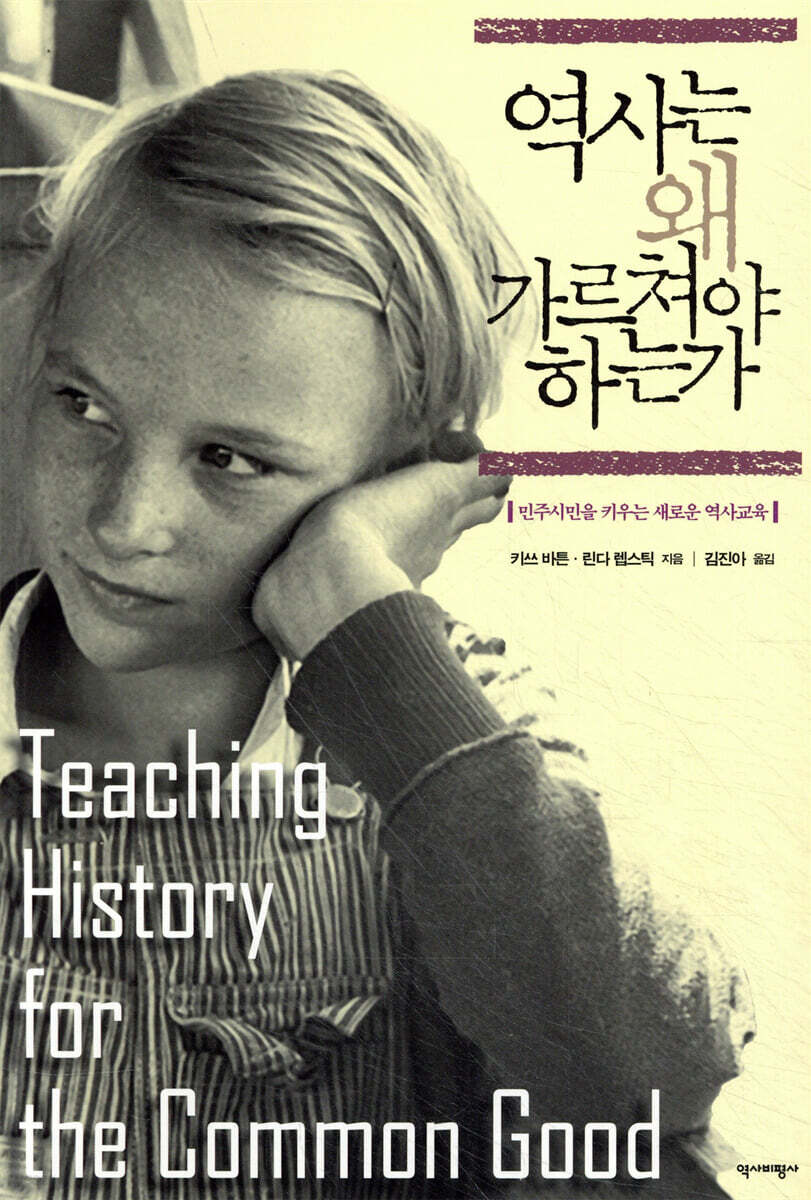
Why should history be taught?
 |
Description
Book Introduction
For a democratic society, a healthy public forum, and engaged citizens
Let's change history education now!
Why should history be taught? Instead of increasing the number of hours spent in Korean, English, and math in schools, or securing more time for music, art, and physical education, what legitimate reason is there to dedicate a significant portion of limited educational opportunities to the subject of "history"? Many might simply answer this question with the obvious, "It's history, and it's important."
However, this does not prove the importance of history education, but rather proves that our society does not have deep concerns about history education.
Where can we find the legitimacy of history education? There was a dictator who claimed that history was taught to foster patriotism among citizens loyal to the nation.
There were also pragmatists who sought to learn useful lessons from the past to benefit the present and future.
The argument that we all need to develop the analytical and logical ability to interpret historical data like historians has surprisingly wide support, with many realists openly admitting, "I'm studying to get into college."
All of these would be correct in one sense.
However, the reason the authors of this book cite as essential for history education in modern society is to foster “citizens who can contribute to the public forum that pursues the public good in a pluralistic, participatory democratic society.”
And the alternative proposed for this purpose is ‘humanistic historical learning.’
Let's change history education now!
Why should history be taught? Instead of increasing the number of hours spent in Korean, English, and math in schools, or securing more time for music, art, and physical education, what legitimate reason is there to dedicate a significant portion of limited educational opportunities to the subject of "history"? Many might simply answer this question with the obvious, "It's history, and it's important."
However, this does not prove the importance of history education, but rather proves that our society does not have deep concerns about history education.
Where can we find the legitimacy of history education? There was a dictator who claimed that history was taught to foster patriotism among citizens loyal to the nation.
There were also pragmatists who sought to learn useful lessons from the past to benefit the present and future.
The argument that we all need to develop the analytical and logical ability to interpret historical data like historians has surprisingly wide support, with many realists openly admitting, "I'm studying to get into college."
All of these would be correct in one sense.
However, the reason the authors of this book cite as essential for history education in modern society is to foster “citizens who can contribute to the public forum that pursues the public good in a pluralistic, participatory democratic society.”
And the alternative proposed for this purpose is ‘humanistic historical learning.’
- You can preview some of the book's contents.
Preview
index
Preface for Korean Readers
introduction
Part 1: History Education and Democracy
Chapter 1: What is History Education? - A Socio-Cultural Perspective
Chapter 2: Participatory Democracy and Humanistic History Education
Part 2: Approaches to History Education
Chapter 3: First Stance: Establishing Identity
Chapter 4: Analyzing the Second Stance
Chapter 5: The Third Stance: Making Moral Judgments
Chapter 6: The Fourth Stance, Show
Part 3: Useful Tools for History Education ① Narrative
Chapter 7: Narrative Structure and History Education
Chapter 8: Narratives on Personal Achievement and Motivation
Chapter 9: Narratives on National Freedom and Progress
Part 4: Useful Tools for History Education ② Exploratory Activities and Empathy
Chapter 10: Exploratory Activities
Chapter 11: Empathy as Perspective Understanding
Chapter 12: Historical Empathy as 'Care'
Part 5: How to Teach History
Chapter 13: The Purpose of Teacher Education and History Education
Translator's Note
introduction
Part 1: History Education and Democracy
Chapter 1: What is History Education? - A Socio-Cultural Perspective
Chapter 2: Participatory Democracy and Humanistic History Education
Part 2: Approaches to History Education
Chapter 3: First Stance: Establishing Identity
Chapter 4: Analyzing the Second Stance
Chapter 5: The Third Stance: Making Moral Judgments
Chapter 6: The Fourth Stance, Show
Part 3: Useful Tools for History Education ① Narrative
Chapter 7: Narrative Structure and History Education
Chapter 8: Narratives on Personal Achievement and Motivation
Chapter 9: Narratives on National Freedom and Progress
Part 4: Useful Tools for History Education ② Exploratory Activities and Empathy
Chapter 10: Exploratory Activities
Chapter 11: Empathy as Perspective Understanding
Chapter 12: Historical Empathy as 'Care'
Part 5: How to Teach History
Chapter 13: The Purpose of Teacher Education and History Education
Translator's Note
Publisher's Review
“Participating in the public life of a pluralistic democratic society
With an open mind and cool-headed perception
History education that nurtures future citizens
That is something that no one can deny
“That’s the only reason we have to teach history.”
From elementary to high school in the United States, the United Kingdom, Northern Ireland, and New Zealand
We visited numerous classrooms and explored the present and future of history education.
History Education Theory for a New Era
The authors hope that through history education, they can cultivate citizens who possess “a cool-headed understanding of phenomena and a sense of care, / an attitude that acknowledges the existence of different perspectives but seeks to draw rational conclusions based on evidence.”
And the authors are convinced that well-organized history classes with a clear sense of purpose are ideally suited to cultivating citizens with this attitude.
Within the various methods and dimensions (= stances) of history education, this book passionately explores what types of classes help or hinder students from becoming citizens who can properly function in the public sphere of a democratic society, drawing on a variety of real-life cases and the results of field research.
How do white and black students view American history differently?
What history do Catholic and Protestant children in Northern Ireland encounter in their schools and on the streets?
How will New Zealand children justify the Treaty of Waitangi and the lives of its indigenous people?
The countless classrooms the authors encountered around the world, and the children within them, also serve as a mirror reflecting the reality of Korean society and Korean history education.
“Elementary school children in lower grades will not be able to understand history because they have a weak sense of the passage of time”, “The best way to learn history is to gradually expand the scope to individual-family-region-nation-world”, “Feeling emotional empathy for the situations of people in the past is not learning history”, etc. Many preconceived notions about history education that we have conventionally or unconsciously accepted are reconstructed through vivid field experiences, and this experience also creates the pleasure of reading.
Above all, the point that the most important thing for teachers, no matter how rich their subject knowledge or how expert their teaching methodology, is to clearly establish their "educational objectives," resonates deeply.
Most of this book deals with the question of 'how' to teach history, but there is no single right answer among all the methods.
As teachers seek their own answers to the question, "Why do I want to teach history?", the authors' rich advice can serve as a true guide.
With an open mind and cool-headed perception
History education that nurtures future citizens
That is something that no one can deny
“That’s the only reason we have to teach history.”
From elementary to high school in the United States, the United Kingdom, Northern Ireland, and New Zealand
We visited numerous classrooms and explored the present and future of history education.
History Education Theory for a New Era
The authors hope that through history education, they can cultivate citizens who possess “a cool-headed understanding of phenomena and a sense of care, / an attitude that acknowledges the existence of different perspectives but seeks to draw rational conclusions based on evidence.”
And the authors are convinced that well-organized history classes with a clear sense of purpose are ideally suited to cultivating citizens with this attitude.
Within the various methods and dimensions (= stances) of history education, this book passionately explores what types of classes help or hinder students from becoming citizens who can properly function in the public sphere of a democratic society, drawing on a variety of real-life cases and the results of field research.
How do white and black students view American history differently?
What history do Catholic and Protestant children in Northern Ireland encounter in their schools and on the streets?
How will New Zealand children justify the Treaty of Waitangi and the lives of its indigenous people?
The countless classrooms the authors encountered around the world, and the children within them, also serve as a mirror reflecting the reality of Korean society and Korean history education.
“Elementary school children in lower grades will not be able to understand history because they have a weak sense of the passage of time”, “The best way to learn history is to gradually expand the scope to individual-family-region-nation-world”, “Feeling emotional empathy for the situations of people in the past is not learning history”, etc. Many preconceived notions about history education that we have conventionally or unconsciously accepted are reconstructed through vivid field experiences, and this experience also creates the pleasure of reading.
Above all, the point that the most important thing for teachers, no matter how rich their subject knowledge or how expert their teaching methodology, is to clearly establish their "educational objectives," resonates deeply.
Most of this book deals with the question of 'how' to teach history, but there is no single right answer among all the methods.
As teachers seek their own answers to the question, "Why do I want to teach history?", the authors' rich advice can serve as a true guide.
GOODS SPECIFICS
- Date of publication: August 18, 2017
- Page count, weight, size: 520 pages | 742g | 152*224*27mm
- ISBN13: 9788976964298
- ISBN10: 8976964292
You may also like
카테고리
korean


korean

![GQ KOREA Mark (Monthly): December [2025]](http://librairie.coreenne.fr/cdn/shop/files/8ef265dbbfbf186523ed75ba7319009d.jpg?v=1765340328&width=3840)


