

General biology experiment
 |
Description
Book Introduction
Biology is a fundamental discipline for understanding and applying life phenomena, and has shown tremendous progress over the past several centuries.
Moreover, in modern times, as academic boundaries are breaking down, the pace of development is becoming more astonishing as the technology from other basic science fields is being absorbed.
This rapid pace of development presents significant challenges in integrating all knowledge into a single textbook, and in many cases, the pace of new knowledge acquisition is not kept up, leaving theories as outdated theories.
However, if we look closely, we can see that the fundamentals of biology remain constant and serve as the backbone for the rest of the life sciences.
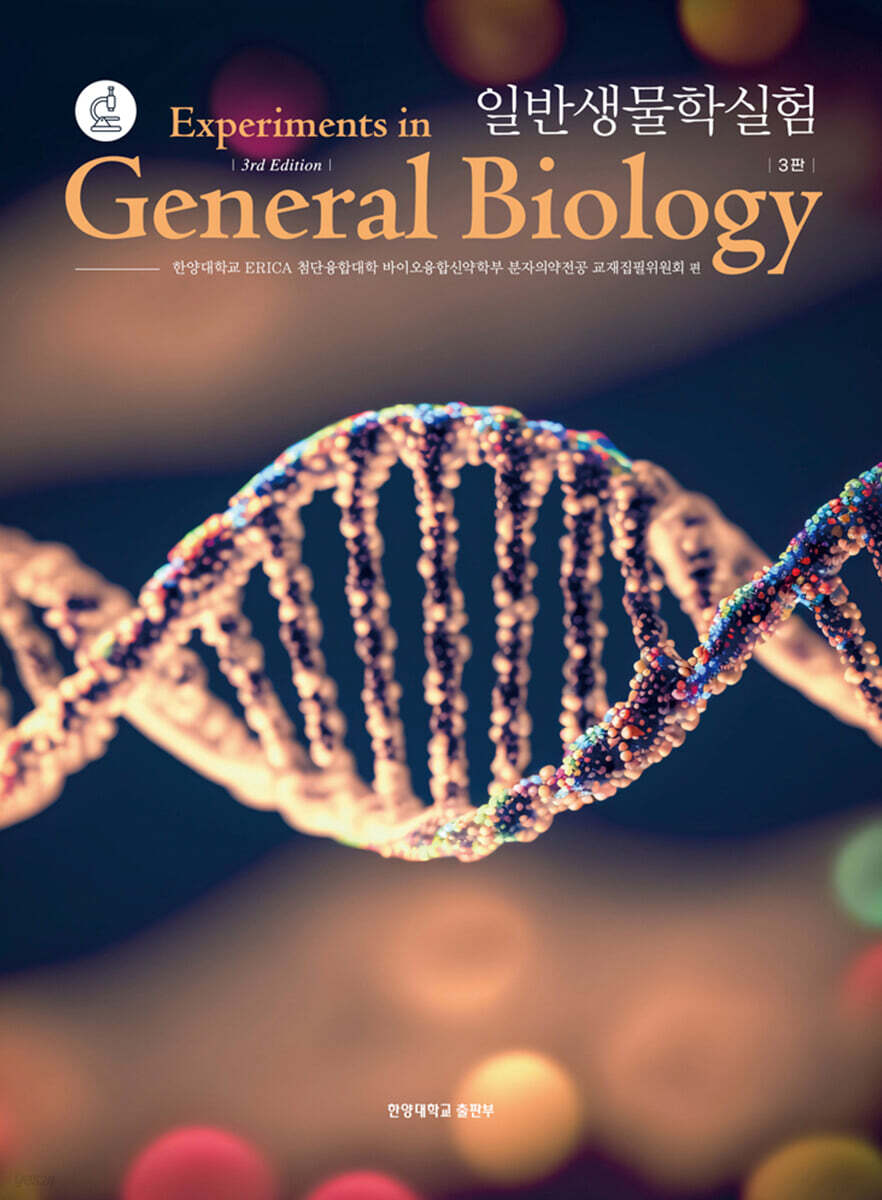
This textbook primarily covers essential knowledge that can be applied experimentally, in relation to topics covered in general biology courses at universities.
Beginning with the microscope, the most fundamental tool in the field of biology, it covers a wide range of topics, including basic explanations of many recently developed instruments, observation of animal and plant cells and microorganisms, genetic testing, observation and extraction of DNA structure, PCR, and dissection of experimental animals.
Additionally, at the end of each chapter, the objectives of the experiments performed in each chapter, the materials required for the experiments, the experimental protocol, and precautions and references for various risks that may arise during the experiments are attached, so that students who have not previously performed biology experiments can write experiment reports efficiently.
Moreover, in modern times, as academic boundaries are breaking down, the pace of development is becoming more astonishing as the technology from other basic science fields is being absorbed.
This rapid pace of development presents significant challenges in integrating all knowledge into a single textbook, and in many cases, the pace of new knowledge acquisition is not kept up, leaving theories as outdated theories.
However, if we look closely, we can see that the fundamentals of biology remain constant and serve as the backbone for the rest of the life sciences.
This textbook primarily covers essential knowledge that can be applied experimentally, in relation to topics covered in general biology courses at universities.
Beginning with the microscope, the most fundamental tool in the field of biology, it covers a wide range of topics, including basic explanations of many recently developed instruments, observation of animal and plant cells and microorganisms, genetic testing, observation and extraction of DNA structure, PCR, and dissection of experimental animals.
Additionally, at the end of each chapter, the objectives of the experiments performed in each chapter, the materials required for the experiments, the experimental protocol, and precautions and references for various risks that may arise during the experiments are attached, so that students who have not previously performed biology experiments can write experiment reports efficiently.
index
preface
Part 1 Eukaryotic cells
Chapter 1: Fundamentals of Life Science Experiments
Chapter 2 Plant Cells: Observation of Apical Mitosis
Chapter 3 Animal Cells: Understanding In Vitro Cell Experiments
Chapter 4 Mendel's Laws of Inheritance and Genetic Diseases
Chapter 5 Purification of Genomic DNA from Animal Cells
Chapter 6 Understanding PCR - Genotyping
Chapter 7 Observing DNA by Electrophoresis
Chapter 8 Understanding and Anatomical Observations of Laboratory Animals
Part 2 Prokaryotic cells
Chapter 9 DNA Cloning
Chapter 9-1 Cultivating Microorganisms
Chapter 9-2 Purification of Bacterial Plasmid DNA
Chapter 9-3 DNA Cutting Using Restriction Enzymes
Chapter 9-4 Gel extraction
Chapter 9-5 Ligation
Chapter 9-6 Transformation
Chapter 9-7 DNA Sequencing
References - SI units, prefixes used in units
Part 1 Eukaryotic cells
Chapter 1: Fundamentals of Life Science Experiments
Chapter 2 Plant Cells: Observation of Apical Mitosis
Chapter 3 Animal Cells: Understanding In Vitro Cell Experiments
Chapter 4 Mendel's Laws of Inheritance and Genetic Diseases
Chapter 5 Purification of Genomic DNA from Animal Cells
Chapter 6 Understanding PCR - Genotyping
Chapter 7 Observing DNA by Electrophoresis
Chapter 8 Understanding and Anatomical Observations of Laboratory Animals
Part 2 Prokaryotic cells
Chapter 9 DNA Cloning
Chapter 9-1 Cultivating Microorganisms
Chapter 9-2 Purification of Bacterial Plasmid DNA
Chapter 9-3 DNA Cutting Using Restriction Enzymes
Chapter 9-4 Gel extraction
Chapter 9-5 Ligation
Chapter 9-6 Transformation
Chapter 9-7 DNA Sequencing
References - SI units, prefixes used in units
GOODS SPECIFICS
- Date of issue: December 31, 2024
- Page count, weight, size: 140 pages | 188*257*20mm
- ISBN13: 9788972188162
- ISBN10: 8972188166
You may also like
카테고리
korean


korean

![GQ KOREA Mark (Monthly): December [2025]](http://librairie.coreenne.fr/cdn/shop/files/8ef265dbbfbf186523ed75ba7319009d.jpg?v=1765340328&width=3840)


