

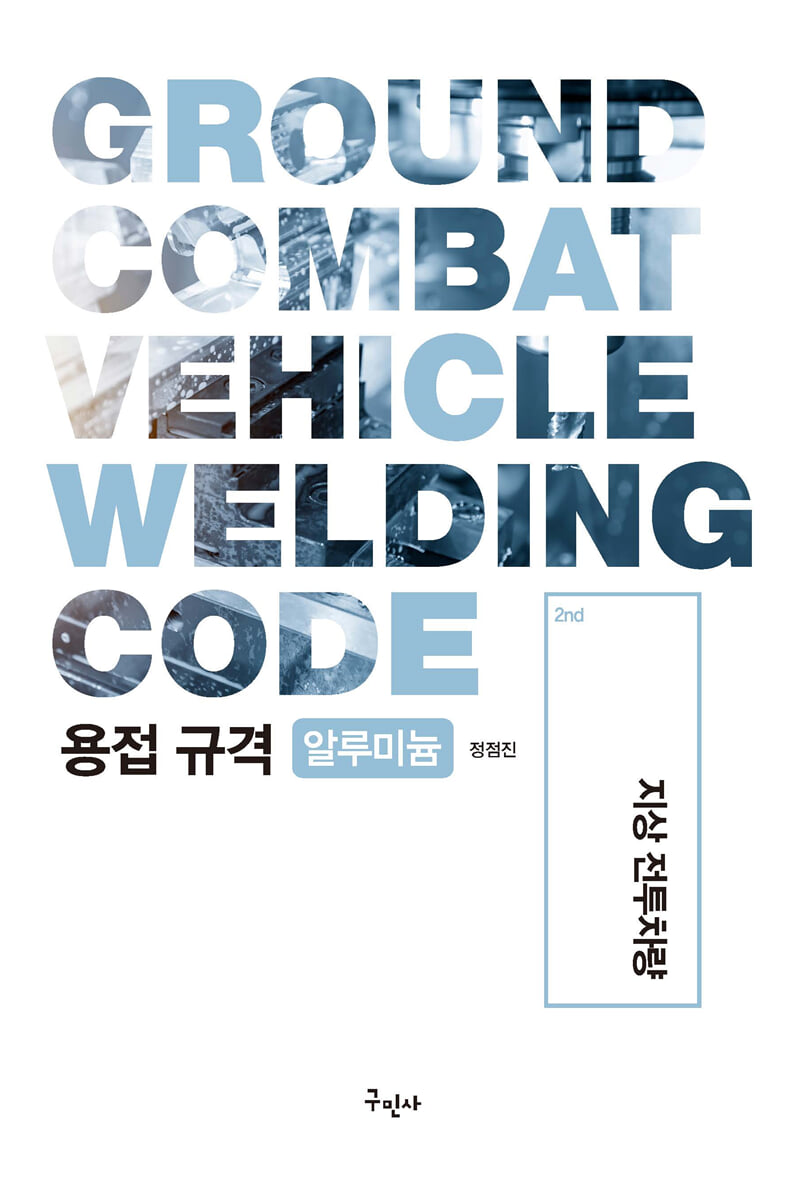
Welding specifications (aluminum)
 |
Description
index
Preface
1 General Provisions
1.1 Scope
1.2 Approval
1.3 Materials
1.4 Welding Processes
1.5 Equipment Calibration
1.6 Definitions
1.7 Welding Symbols
1.8 Safety Precautions
1.9 Standard Units of Measurement
2 General design criteria are excluded from this code.
3 Workmanship
3.1 General
3.2 Preparation of Base Material
3.3 Assembly
3.4 Control of Distortion and Shrinkage
3.5 Weld Profiles
3.6 Rework/Repairs
3.7 Cleaning of Completed Welds
4. TECHNIQUE
Part A General Requirements for GMAW, GTAW, and PAW (Variable Polarity)
General Requirements For Gas Metal Arc, Gas Tungsten Arc, Plasma Arc (Variable Polarity) Welding
4.1 Material Requirements
4.2 Welding Processes
4.3 Shielding Gases
4.4 Preheat Requirements
4.5 Interpass Temperature Requirements
4.6 Arc Strikes
4.7 Cleaning Prior to Welding
4.8 Welding Termination
4.9 Backing to Prevent Melting Through
4.10 Peening
4.11 Thermal Stress-Relief Treatment
Part B GMAW(Gas Metal Arc Welding)
4.12 General
4.13 Restrictions on GMAW With Single Electrode
Part C GTAW General Requirements (Gas Tungsten Arc Welding)
4.14 General
4.15 Tungsten Electrodes
4.16 Restrictions on Gas Tungsten Arc Welding
Part D PAW(Plasma Arc Welding)
4.17 General
4.18 Tungsten Electrodes
4.19 Restrictions on Variable Polarity PAW
5. QUALIFICATIONS OF PROCEDURES AND PERSONNEL
Part A General Requirements
5.1 General
5.2 Qualification of Welding Procedures
5.3 Qualification of Welders, Welding Operators, and Tack Welders
5.4 Qualification Responsibility
5.5 Records
5.6 Position of Test Welds
Part B Types of Tests, Test Methods, and Acceptance Criteria
5.7 Types and Purposes of Tests
5.8 Visual Examination
5.9 Tension Tests - Groove Welds
5.10 Bend Tests - Groove Welds - Plate and Pipe
5.11 Soundness Tests - Fillet Welds
5.12 Radiographic Examination (Optional for performance qualification of groove welds and plates)
Part C Procedure Qualification
5.13 General
5.14 Limits of Qualified Positions for Procedures
5.15 Preparation of Test Weldment - Procedure Qualification
5.16 Limitation of Variables-Procedure Qualification
5.17 Test-Procedure Qualification
5.18 Retests
Part D Performance Qualification
5.19 General
5.20 Limits of Qualified Positions for Performance
5.21 Preparation of Test Weldments and Performance Qualification
5.22 Limitations of Variables - Welder Performance Qualification
5.23 Limitations of Variables - Welding Operator Performance Qualification
5.24 Limitations of Variables - Tack Welder Performance Qualification
5.25 Tests - Performance Qualification
5.26 Retests
5.27 Period of Effectiveness
6 Inspection
Part A General Requirements
6.1 General
6.2 Inspection of Materials
6.3 Inspection of Welding Procedure Qualification and Equipment
6.4 Inspection of Welder, Welding Operator, and Tack Welder Qualifications
6.5 Inspection of Work and Records
6.6 Obligations of the Contractor
6.7 Nondestructive Testing
Part B Radiographic Inspection
6.8 General
6.9 Extent of Testing
6.10 Radiographic Procedures
6.11 Acceptability of Welds
6.12 Examination, Report, and Disposition of Radiographs
Part C: Ultrasonic Testing of Groove Welds
6.13 General
7 Stud welding
Part A General Requirements
7.1 General
Part B: Arc Stud Welding
7.2 General Requirements
7.3 Material Requirements
7.4 Workmanship
7.5 Technique
7.6 Qualification Requirements
7.7 Operator and Pre-production Qualification
7.8 Acceptance Criteria - Production Welds
7.9 Mislocated Studs
7.10 Repair of Misapplied Studs
Part C Capacitor Discharge Stud Welding
7.11 General Requirements
7.12 Material Requirements
7.13 Workmanship
7.14 Technique
7.15 Qualification Requirements
7.16 Operator and Pre-production Qualification
7.17 Acceptance Criteria - Production Welds
7.18 Mislocated Studs
7.19 Repair of Misapplied Studs
8 Non-critical welding
Part A General Requirements
8.1 Application
8.2 Base Metal
8.3 Filler Metal
Part B Workmanship
8.4 Dimensional Tolerances
8.5 Temporary Welds
8.6 Weld Termination
8.7 Quality of Welds
9 CRITICAL WELDING (Except Ballistic Structures)
Part A General Requirements
9.1 Application
9.2 Base Metal
9.3 Filler Metal
Part B Workmanship
9.4 Dimensional Tolerances
9.5 Temporary Welds
9.6 Weld Terminations
9.7 Quality of Welds
10 Ballistic Welding
Part A General Requirements
10.1 Application
10.2 Base Metal
10.3 Filler Metal
Part B Workmanship
10.4 Temporary Welds
10.5 Weld Terminations
10.6 Ballistic Certification
10.7 Macro Specimens
10.8 Quality of Welds
10.9 Ballistic Shock Test Procedure
APPENDICES
Appendix A List of Standards
Appendix B Weld Types
Appendix C Alternative Radiographic Sampling Plan
1 General Provisions
1.1 Scope
1.2 Approval
1.3 Materials
1.4 Welding Processes
1.5 Equipment Calibration
1.6 Definitions
1.7 Welding Symbols
1.8 Safety Precautions
1.9 Standard Units of Measurement
2 General design criteria are excluded from this code.
3 Workmanship
3.1 General
3.2 Preparation of Base Material
3.3 Assembly
3.4 Control of Distortion and Shrinkage
3.5 Weld Profiles
3.6 Rework/Repairs
3.7 Cleaning of Completed Welds
4. TECHNIQUE
Part A General Requirements for GMAW, GTAW, and PAW (Variable Polarity)
General Requirements For Gas Metal Arc, Gas Tungsten Arc, Plasma Arc (Variable Polarity) Welding
4.1 Material Requirements
4.2 Welding Processes
4.3 Shielding Gases
4.4 Preheat Requirements
4.5 Interpass Temperature Requirements
4.6 Arc Strikes
4.7 Cleaning Prior to Welding
4.8 Welding Termination
4.9 Backing to Prevent Melting Through
4.10 Peening
4.11 Thermal Stress-Relief Treatment
Part B GMAW(Gas Metal Arc Welding)
4.12 General
4.13 Restrictions on GMAW With Single Electrode
Part C GTAW General Requirements (Gas Tungsten Arc Welding)
4.14 General
4.15 Tungsten Electrodes
4.16 Restrictions on Gas Tungsten Arc Welding
Part D PAW(Plasma Arc Welding)
4.17 General
4.18 Tungsten Electrodes
4.19 Restrictions on Variable Polarity PAW
5. QUALIFICATIONS OF PROCEDURES AND PERSONNEL
Part A General Requirements
5.1 General
5.2 Qualification of Welding Procedures
5.3 Qualification of Welders, Welding Operators, and Tack Welders
5.4 Qualification Responsibility
5.5 Records
5.6 Position of Test Welds
Part B Types of Tests, Test Methods, and Acceptance Criteria
5.7 Types and Purposes of Tests
5.8 Visual Examination
5.9 Tension Tests - Groove Welds
5.10 Bend Tests - Groove Welds - Plate and Pipe
5.11 Soundness Tests - Fillet Welds
5.12 Radiographic Examination (Optional for performance qualification of groove welds and plates)
Part C Procedure Qualification
5.13 General
5.14 Limits of Qualified Positions for Procedures
5.15 Preparation of Test Weldment - Procedure Qualification
5.16 Limitation of Variables-Procedure Qualification
5.17 Test-Procedure Qualification
5.18 Retests
Part D Performance Qualification
5.19 General
5.20 Limits of Qualified Positions for Performance
5.21 Preparation of Test Weldments and Performance Qualification
5.22 Limitations of Variables - Welder Performance Qualification
5.23 Limitations of Variables - Welding Operator Performance Qualification
5.24 Limitations of Variables - Tack Welder Performance Qualification
5.25 Tests - Performance Qualification
5.26 Retests
5.27 Period of Effectiveness
6 Inspection
Part A General Requirements
6.1 General
6.2 Inspection of Materials
6.3 Inspection of Welding Procedure Qualification and Equipment
6.4 Inspection of Welder, Welding Operator, and Tack Welder Qualifications
6.5 Inspection of Work and Records
6.6 Obligations of the Contractor
6.7 Nondestructive Testing
Part B Radiographic Inspection
6.8 General
6.9 Extent of Testing
6.10 Radiographic Procedures
6.11 Acceptability of Welds
6.12 Examination, Report, and Disposition of Radiographs
Part C: Ultrasonic Testing of Groove Welds
6.13 General
7 Stud welding
Part A General Requirements
7.1 General
Part B: Arc Stud Welding
7.2 General Requirements
7.3 Material Requirements
7.4 Workmanship
7.5 Technique
7.6 Qualification Requirements
7.7 Operator and Pre-production Qualification
7.8 Acceptance Criteria - Production Welds
7.9 Mislocated Studs
7.10 Repair of Misapplied Studs
Part C Capacitor Discharge Stud Welding
7.11 General Requirements
7.12 Material Requirements
7.13 Workmanship
7.14 Technique
7.15 Qualification Requirements
7.16 Operator and Pre-production Qualification
7.17 Acceptance Criteria - Production Welds
7.18 Mislocated Studs
7.19 Repair of Misapplied Studs
8 Non-critical welding
Part A General Requirements
8.1 Application
8.2 Base Metal
8.3 Filler Metal
Part B Workmanship
8.4 Dimensional Tolerances
8.5 Temporary Welds
8.6 Weld Termination
8.7 Quality of Welds
9 CRITICAL WELDING (Except Ballistic Structures)
Part A General Requirements
9.1 Application
9.2 Base Metal
9.3 Filler Metal
Part B Workmanship
9.4 Dimensional Tolerances
9.5 Temporary Welds
9.6 Weld Terminations
9.7 Quality of Welds
10 Ballistic Welding
Part A General Requirements
10.1 Application
10.2 Base Metal
10.3 Filler Metal
Part B Workmanship
10.4 Temporary Welds
10.5 Weld Terminations
10.6 Ballistic Certification
10.7 Macro Specimens
10.8 Quality of Welds
10.9 Ballistic Shock Test Procedure
APPENDICES
Appendix A List of Standards
Appendix B Weld Types
Appendix C Alternative Radiographic Sampling Plan
Publisher's Review
TACOM 12472301_REV
Ground Combat Vehicle Welding Code-Aluminum
TACOM 12472301(REV), Ground Combat Vehicle Welding Code: Aluminum (03-JAN-2008), This code covers welding requirements applicable to the fabrication of ground combat aluminum alloy structures and components.
It should be used in conjunction with complementary codes or specifications suitable for material design and construction.
It is not intended to replace codes developed for special manufacturing purposes, such as the ASME Boiler and Pressure Vessel Code or the Aerospace Code, but is suitable for use in the fabrication of ballistic and non-ballistic primary structures, support structures and accessories.
Basic common requirements for all types of structures are described in Clauses 1 to 7, and exclusive relevant provisions for quality requirements based on the intended use of the welded structure are included in Clauses 8, 9 and 10.
This code is based on commercial and military standards ANSI/AWS B2.1, ANSI/AWS D1.2, MIL-STD 1946, and MIL-STD 372.
This document was prepared by a team from the U.S. Department of Defense, Land Systems Division (UDLP) and the U.S. Army's Tank-Automobile Armament Research, Development, and Engineering Center (TARDEC).
[introduction]
I started welding in defense industry production sites in 1978, a time when there was no such thing as welding standards.
Although engineers began to recognize the existence of defense welding standards in the mid-1980s, it took a long time for their existence to be confirmed to workers on the production floor.
A series of incidents related to quality documentation in early 2014 led to the realization that the existing defense welding standards were inactive, and the relevant companies in the Changwon Industrial Complex quickly began to respond.
In our case, we recognized the situation in early 2015, took some time to prepare, and began gradually applying welding quality documents, such as welder certification, PQR and WPS approval, and visual inspection standards, to product drawings starting in June 2016. We are currently expanding the application to all models.
The conventional MIL-STD welding standards are largely divided into welding methods, specifications, welding rods, inspections, and standards. As for applicable documents, AWS D1.1 and D1.2 are the upper standards, which are the welding standards of the American Welding Society, which was first established globally.
The military standard 'Welding Procedures for Structural Steel', Defense-015-0023 (Yeon) applied in our country, was created with reference to the US military standard MIL-STD-1261A (1968.9.30) and is a standard established in January 1975.
Some of these contents are from 1984.8.28.
It was abolished or as recently as 2003.7.28.
There were many cases of abolition. TACOM(US
The Army Tank-Automotive and Armaments Command welding standard was compiled in April 2003 from the previously scattered MIL-STDs, and cross-references were changed to TACOM Drawing 12472301 Chapters 10, 9, and 8 for aluminum and TACOM Drawing 12479550, Ballistic welds, Critical welds, and Non-critical welds for steel.
Inspection methods include liquid penetrant testing (PT: Penetration Test), magnetic particle testing (MT: Magnetic Test), radiographic testing (RT: Radiographic Test), ultrasonic testing (UT: Ultrasonic Test), and visual testing (VT: Visual Test).
ASTM is adopted as the inspection procedure, and MIL-STD, MiL-HDBK, SAEAMS, and AWS D1.1 CLAUSE 6 are adopted as the judgment criteria.
The relevant welding specifications can be downloaded from everyspec.com as TACOM12472301 for aluminum and TACOM12479550 for steel. Please refer to the original for any errors in the author's translation.
It is my hope that this translation will serve as a baseline for minimum communication in the welding of defense products.
Ground Combat Vehicle Welding Code-Aluminum
TACOM 12472301(REV), Ground Combat Vehicle Welding Code: Aluminum (03-JAN-2008), This code covers welding requirements applicable to the fabrication of ground combat aluminum alloy structures and components.
It should be used in conjunction with complementary codes or specifications suitable for material design and construction.
It is not intended to replace codes developed for special manufacturing purposes, such as the ASME Boiler and Pressure Vessel Code or the Aerospace Code, but is suitable for use in the fabrication of ballistic and non-ballistic primary structures, support structures and accessories.
Basic common requirements for all types of structures are described in Clauses 1 to 7, and exclusive relevant provisions for quality requirements based on the intended use of the welded structure are included in Clauses 8, 9 and 10.
This code is based on commercial and military standards ANSI/AWS B2.1, ANSI/AWS D1.2, MIL-STD 1946, and MIL-STD 372.
This document was prepared by a team from the U.S. Department of Defense, Land Systems Division (UDLP) and the U.S. Army's Tank-Automobile Armament Research, Development, and Engineering Center (TARDEC).
[introduction]
I started welding in defense industry production sites in 1978, a time when there was no such thing as welding standards.
Although engineers began to recognize the existence of defense welding standards in the mid-1980s, it took a long time for their existence to be confirmed to workers on the production floor.
A series of incidents related to quality documentation in early 2014 led to the realization that the existing defense welding standards were inactive, and the relevant companies in the Changwon Industrial Complex quickly began to respond.
In our case, we recognized the situation in early 2015, took some time to prepare, and began gradually applying welding quality documents, such as welder certification, PQR and WPS approval, and visual inspection standards, to product drawings starting in June 2016. We are currently expanding the application to all models.
The conventional MIL-STD welding standards are largely divided into welding methods, specifications, welding rods, inspections, and standards. As for applicable documents, AWS D1.1 and D1.2 are the upper standards, which are the welding standards of the American Welding Society, which was first established globally.
The military standard 'Welding Procedures for Structural Steel', Defense-015-0023 (Yeon) applied in our country, was created with reference to the US military standard MIL-STD-1261A (1968.9.30) and is a standard established in January 1975.
Some of these contents are from 1984.8.28.
It was abolished or as recently as 2003.7.28.
There were many cases of abolition. TACOM(US
The Army Tank-Automotive and Armaments Command welding standard was compiled in April 2003 from the previously scattered MIL-STDs, and cross-references were changed to TACOM Drawing 12472301 Chapters 10, 9, and 8 for aluminum and TACOM Drawing 12479550, Ballistic welds, Critical welds, and Non-critical welds for steel.
Inspection methods include liquid penetrant testing (PT: Penetration Test), magnetic particle testing (MT: Magnetic Test), radiographic testing (RT: Radiographic Test), ultrasonic testing (UT: Ultrasonic Test), and visual testing (VT: Visual Test).
ASTM is adopted as the inspection procedure, and MIL-STD, MiL-HDBK, SAEAMS, and AWS D1.1 CLAUSE 6 are adopted as the judgment criteria.
The relevant welding specifications can be downloaded from everyspec.com as TACOM12472301 for aluminum and TACOM12479550 for steel. Please refer to the original for any errors in the author's translation.
It is my hope that this translation will serve as a baseline for minimum communication in the welding of defense products.
GOODS SPECIFICS
- Date of issue: April 30, 2024
- Page count, weight, size: 187 pages | 153*224*20mm
- ISBN13: 9791168753792
- ISBN10: 1168753791
You may also like
카테고리
korean


korean

![GQ KOREA Mark (Monthly): December [2025]](http://librairie.coreenne.fr/cdn/shop/files/8ef265dbbfbf186523ed75ba7319009d.jpg?v=1765340328&width=3840)


