

The city is history
 |
Description
Book Introduction
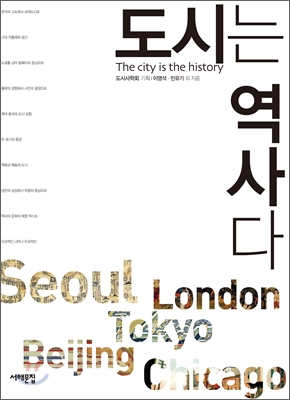
"The City is History" covers the origins, growth processes, spatial structure, social conflicts, urban culture, and the history of urban image and identity of the world's major cities, providing nourishment for efforts to deeply and broadly understand cities.
You cannot properly understand human history without knowing the history of cities.
To escape from the tiring daily life, let's take a stroll through the city's history as if we were taking a walk through its spaces.
How did cities begin, what meaning do urban spaces have, and why so many events took place in cities? The answers lie in history.
A cultural odyssey across the world's cities, from Seoul, Tokyo, and Beijing, representing Asia, to Paris and London, symbols of Europe, and finally to Chicago, a living witness to American history.
A vivid historical journey unfolds, transcending time and space.
You cannot properly understand human history without knowing the history of cities.
To escape from the tiring daily life, let's take a stroll through the city's history as if we were taking a walk through its spaces.
How did cities begin, what meaning do urban spaces have, and why so many events took place in cities? The answers lie in history.
A cultural odyssey across the world's cities, from Seoul, Tokyo, and Beijing, representing Asia, to Paris and London, symbols of Europe, and finally to Chicago, a living witness to American history.
A vivid historical journey unfolds, transcending time and space.
- You can preview some of the book's contents.
Preview
index
Introduction: World City Culture: See, Hear, and Enjoy While Strolling
Seoul, from a hermit's paradise to a global city
The Future of the 21st Century: The City / Hanyang, the Birth of the Capital / The Transformation of Seoul in the Late Joseon Dynasty / The Opening of the Imperial City / Gyeongseong, Colonial Modern Seoul / The 'Miracle on the Han River' and the Development of Gangnam / The 'Apartment Republic', a Byproduct of the Growth Machine / The Soul of an Ancient Capital Embedded in the Body of a Monster
Tokyo, the space of the modern imperial system
Theory of Relocating the Capital in Modern Japan / Edo, the Space of the Tokugawa Shogunate / Theory of Relocating the Capital in the Late Edo Restoration Period / The Space of the Modern Imperial System / The Defeat of 1945 and Tokyo
Beyond Osaka and Tokyo, to the center of Northeast Asia
Kansai's Central City / From Naniwa to Osaka / Osaka's Reconstruction and Economic Prosperity / The Meiji Restoration and its Transition to a Modern City / Seki Hajime and the Osaka Castle Keep Reconstruction Project / A New Leap Forward After the War
Beijing, from the Emperor's Garden to the Citizen's Square
Historical background of Beijing / Urban management and changes in the urban environment / Politics of Tiananmen and the square / Urban culture of Siheyuan and Tianqiao / Looking forward to new spatial politics and urban culture
Shanghai, Modern China's Urban Experiment
Old City Traditions / Concessions and Modern Urban Experiments / Ala Sanghanin / Arrowheads of China
London, a landscape of two centuries
From Frontier to Central City / Samuel Johnson's London / Urban Expansion / Geographic Polarization / Imperial Cities and Immigration / Millennium Festival and Beyond
Paris, the city of revolution and art
Invitation to Paris / The History of Paris from Antiquity to Absolute Monarchy / The City of Revolution and the Modernization of the Ottoman City / Creating a City of Culture and Arts and Social Solidarity / The May Myth of the 20th Century and a City in Harmony
Berlin, from symbol of the Cold War to the heart of Europe
A frontier city becomes the capital of Prussia / Germany's largest city / Plans to build "Germania, the capital of the world" / Traces of the Holocaust / The Berlin Blockade and the Great Airborne Operation / The construction and collapse of the Berlin Wall and reunification / Berlin's cityscape
St. Petersburg, a complex text of history and culture
The History of the Name 'Petersburg' / Peter's City / A Window to Europe / Petersburg Texts / Red October / Leningrad Will Not Fall! / Petersburg Again
Chicago, so American, so American
The Most American City / Pioneer and Growth / A History of Violence / The New Negro's Chicago / Modern Chicago
main
References
Search
Seoul, from a hermit's paradise to a global city
The Future of the 21st Century: The City / Hanyang, the Birth of the Capital / The Transformation of Seoul in the Late Joseon Dynasty / The Opening of the Imperial City / Gyeongseong, Colonial Modern Seoul / The 'Miracle on the Han River' and the Development of Gangnam / The 'Apartment Republic', a Byproduct of the Growth Machine / The Soul of an Ancient Capital Embedded in the Body of a Monster
Tokyo, the space of the modern imperial system
Theory of Relocating the Capital in Modern Japan / Edo, the Space of the Tokugawa Shogunate / Theory of Relocating the Capital in the Late Edo Restoration Period / The Space of the Modern Imperial System / The Defeat of 1945 and Tokyo
Beyond Osaka and Tokyo, to the center of Northeast Asia
Kansai's Central City / From Naniwa to Osaka / Osaka's Reconstruction and Economic Prosperity / The Meiji Restoration and its Transition to a Modern City / Seki Hajime and the Osaka Castle Keep Reconstruction Project / A New Leap Forward After the War
Beijing, from the Emperor's Garden to the Citizen's Square
Historical background of Beijing / Urban management and changes in the urban environment / Politics of Tiananmen and the square / Urban culture of Siheyuan and Tianqiao / Looking forward to new spatial politics and urban culture
Shanghai, Modern China's Urban Experiment
Old City Traditions / Concessions and Modern Urban Experiments / Ala Sanghanin / Arrowheads of China
London, a landscape of two centuries
From Frontier to Central City / Samuel Johnson's London / Urban Expansion / Geographic Polarization / Imperial Cities and Immigration / Millennium Festival and Beyond
Paris, the city of revolution and art
Invitation to Paris / The History of Paris from Antiquity to Absolute Monarchy / The City of Revolution and the Modernization of the Ottoman City / Creating a City of Culture and Arts and Social Solidarity / The May Myth of the 20th Century and a City in Harmony
Berlin, from symbol of the Cold War to the heart of Europe
A frontier city becomes the capital of Prussia / Germany's largest city / Plans to build "Germania, the capital of the world" / Traces of the Holocaust / The Berlin Blockade and the Great Airborne Operation / The construction and collapse of the Berlin Wall and reunification / Berlin's cityscape
St. Petersburg, a complex text of history and culture
The History of the Name 'Petersburg' / Peter's City / A Window to Europe / Petersburg Texts / Red October / Leningrad Will Not Fall! / Petersburg Again
Chicago, so American, so American
The Most American City / Pioneer and Growth / A History of Violence / The New Negro's Chicago / Modern Chicago
main
References
Search
Publisher's Review
History creates cities, and cities become history.
The history of living space and time,
A World City Cultural Odyssey
You cannot properly understand human history without knowing the history of cities.
To escape from the tiring daily life, let's take a stroll through the city's history as if we were taking a walk through its spaces.
How did cities begin, what meaning do urban spaces have, and why so many events took place in cities? The answers lie in history.
A cultural odyssey across the world's cities, from Seoul, Tokyo, and Beijing, representing Asia, to Paris and London, symbols of Europe, and finally to Chicago, a living witness to American history.
A vivid historical journey unfolds, transcending time and space.
Beyond Asia, to a global city
Seoul, reborn as a 'hermit's capital city', was a hermit's capital city with a history divided into five periods: becoming the capital of the Joseon Dynasty, destruction and reconstruction in the late Joseon Dynasty, urban transformation during the port opening period, colonial urbanization during the Japanese colonial period, and rapid urban growth after the Korean War.
Along with this, modern Seoul is transforming into a global city in need of reflection and introspection, experiencing various side effects resulting from its one-sided growth.
Tokyo has a long history, spanning from the founding of Edo by the Tokugawa shogunate, the predecessor of the city, through the Edo Restoration and the end of the Edo period, to becoming the capital of the East.
The various national symbolic spaces created in Tokyo as a 'space for the modern imperial system' fully display Tokyo's history.
Osaka, Japan's second largest city after Tokyo, prospered economically in the late 16th century thanks to the castle built by Toyotomi Hideyoshi.
In Osaka, which transformed into a modern city after the Meiji Restoration, the reconstruction of the Tenshukaku and the transformation of Osaka Castle into a park in the 1930s, through the participation of socially reformative mayors and citizens, created an urban culture that utilized history and tradition.
These efforts may be Osaka's current state as it strives to transform itself from "Tokyo to the center of Northeast Asia."
Beijing underwent major changes in its urban governance and urban environment in the late 19th and early 20th centuries.
Then, through the modern political culture that unfolded in Tiananmen Square, the Siheyuan (a residential space for Beijing citizens), and the Tianqiao Square (a space for urban culture for the people), Beijing's unique urban culture was created through its unique urban spatial structure.
Shanghai, which emerged as a symbol of China along with Beijing, has left traces of a modern urban culture and colonial city through the concession formed by the opening of the port in the mid-19th century.
Based on this, it is serving as a growth center of modern China, and since the 1990s, it has also been seeking to transform into an international city, including through the development of Pudong.
The city, a mirror reflecting history
London, once a supply base for ancient Rome, developed into the capital of the empire and a global city during the 18th and 19th centuries.
In particular, Westminster, the center of political administration, the East End, a representative slum in the 19th century, suburban expansion, various public buildings and monuments that reinforced the image of the imperial capital in the 19th century, and the development of the East End in the late 20th century clearly show the changes that London has undergone over the past two centuries.
Paris has the image of a city of revolution, which was engraved by various revolutions in the 19th century after the Great Revolution, and the image of a city of culture and art in the late 19th century, which went through the modern urban development of Haussmann.
The major historical events that occurred in Paris, such as the Paris Commune, the Popular Front, and the Revolution of 1968, as well as the public urban development of the Socialist government in the late 20th century, vividly portray present-day Paris.
The growth of Berlin, the capital of the Kingdom of Prussia and the Second German Empire, is clearly reflected in the expansion of Berlin in the 1920s, Hitler's plan for Germania as a world city in the 1930s, public monuments, and Berlin's position as the center of the Cold War after World War II.
And after the construction and dismantling of the Berlin Wall and the reunification of Germany in 1990, Berlin is being reborn as the center of Europe.
St. Petersburg, built by Peter the Great of Russia in the early 18th century.
The various myths about St. Petersburg that Russia suddenly created to accept Western European modern culture, the city's image projected into literary works, the city's siege by the German army during the Russian Revolution and World War II, and its open urban culture compared to Moscow all created St. Petersburg's unique urban culture.
Chicago is the most American city, and its history is a quintessential reflection of American history.
The city's growth in the 19th century and its rapid recovery after the Great Fire of 1871, the labor movement and violence, the 1893 Columbus Quadcentennial World's Fair, the race riots of the early 20th century, and the transformation of modern Chicago are all testaments to this.
This book, which covers the origins, growth processes, spatial structures, social conflicts, urban culture, and the history of urban image and identity of the world's major cities, will provide nourishment for efforts to deeply and broadly understand cities.
The history of living space and time,
A World City Cultural Odyssey
You cannot properly understand human history without knowing the history of cities.
To escape from the tiring daily life, let's take a stroll through the city's history as if we were taking a walk through its spaces.
How did cities begin, what meaning do urban spaces have, and why so many events took place in cities? The answers lie in history.
A cultural odyssey across the world's cities, from Seoul, Tokyo, and Beijing, representing Asia, to Paris and London, symbols of Europe, and finally to Chicago, a living witness to American history.
A vivid historical journey unfolds, transcending time and space.
Beyond Asia, to a global city
Seoul, reborn as a 'hermit's capital city', was a hermit's capital city with a history divided into five periods: becoming the capital of the Joseon Dynasty, destruction and reconstruction in the late Joseon Dynasty, urban transformation during the port opening period, colonial urbanization during the Japanese colonial period, and rapid urban growth after the Korean War.
Along with this, modern Seoul is transforming into a global city in need of reflection and introspection, experiencing various side effects resulting from its one-sided growth.
Tokyo has a long history, spanning from the founding of Edo by the Tokugawa shogunate, the predecessor of the city, through the Edo Restoration and the end of the Edo period, to becoming the capital of the East.
The various national symbolic spaces created in Tokyo as a 'space for the modern imperial system' fully display Tokyo's history.
Osaka, Japan's second largest city after Tokyo, prospered economically in the late 16th century thanks to the castle built by Toyotomi Hideyoshi.
In Osaka, which transformed into a modern city after the Meiji Restoration, the reconstruction of the Tenshukaku and the transformation of Osaka Castle into a park in the 1930s, through the participation of socially reformative mayors and citizens, created an urban culture that utilized history and tradition.
These efforts may be Osaka's current state as it strives to transform itself from "Tokyo to the center of Northeast Asia."
Beijing underwent major changes in its urban governance and urban environment in the late 19th and early 20th centuries.
Then, through the modern political culture that unfolded in Tiananmen Square, the Siheyuan (a residential space for Beijing citizens), and the Tianqiao Square (a space for urban culture for the people), Beijing's unique urban culture was created through its unique urban spatial structure.
Shanghai, which emerged as a symbol of China along with Beijing, has left traces of a modern urban culture and colonial city through the concession formed by the opening of the port in the mid-19th century.
Based on this, it is serving as a growth center of modern China, and since the 1990s, it has also been seeking to transform into an international city, including through the development of Pudong.
The city, a mirror reflecting history
London, once a supply base for ancient Rome, developed into the capital of the empire and a global city during the 18th and 19th centuries.
In particular, Westminster, the center of political administration, the East End, a representative slum in the 19th century, suburban expansion, various public buildings and monuments that reinforced the image of the imperial capital in the 19th century, and the development of the East End in the late 20th century clearly show the changes that London has undergone over the past two centuries.
Paris has the image of a city of revolution, which was engraved by various revolutions in the 19th century after the Great Revolution, and the image of a city of culture and art in the late 19th century, which went through the modern urban development of Haussmann.
The major historical events that occurred in Paris, such as the Paris Commune, the Popular Front, and the Revolution of 1968, as well as the public urban development of the Socialist government in the late 20th century, vividly portray present-day Paris.
The growth of Berlin, the capital of the Kingdom of Prussia and the Second German Empire, is clearly reflected in the expansion of Berlin in the 1920s, Hitler's plan for Germania as a world city in the 1930s, public monuments, and Berlin's position as the center of the Cold War after World War II.
And after the construction and dismantling of the Berlin Wall and the reunification of Germany in 1990, Berlin is being reborn as the center of Europe.
St. Petersburg, built by Peter the Great of Russia in the early 18th century.
The various myths about St. Petersburg that Russia suddenly created to accept Western European modern culture, the city's image projected into literary works, the city's siege by the German army during the Russian Revolution and World War II, and its open urban culture compared to Moscow all created St. Petersburg's unique urban culture.
Chicago is the most American city, and its history is a quintessential reflection of American history.
The city's growth in the 19th century and its rapid recovery after the Great Fire of 1871, the labor movement and violence, the 1893 Columbus Quadcentennial World's Fair, the race riots of the early 20th century, and the transformation of modern Chicago are all testaments to this.
This book, which covers the origins, growth processes, spatial structures, social conflicts, urban culture, and the history of urban image and identity of the world's major cities, will provide nourishment for efforts to deeply and broadly understand cities.
GOODS SPECIFICS
- Date of issue: June 1, 2011
- Page count, weight, size: 312 pages | 516g | 153*224*30mm
- ISBN13: 9788974834715
- ISBN10: 8974834715
You may also like
카테고리
korean


korean

![GQ KOREA Mark (Monthly): December [2025]](http://librairie.coreenne.fr/cdn/shop/files/8ef265dbbfbf186523ed75ba7319009d.jpg?v=1765340328&width=3840)


