

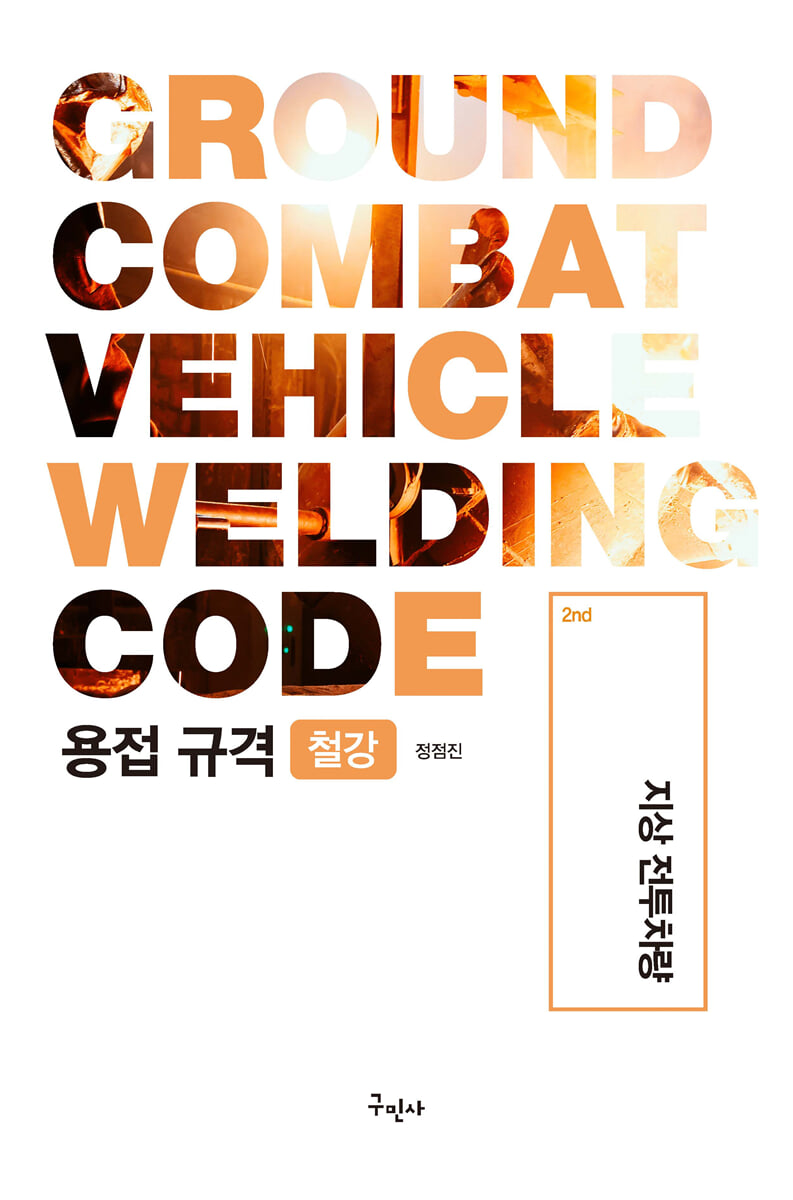
Welding specifications (steel)
 |
Description
index
Preface
1 General Requirements
1.1 Scope
1.2 Approval
1.3 Definitions
1.4 Welding Symbols
1.5 Equipment Calibration
1.6 Safety Precautions
1.7 Standard Units of Measurement
2 Design of Welded Connections
2.1 Intended Use
3 Prequalification of WPS
3.1 Scope
3.2 Welding Processes
3.3 Base Metal/Filler Metal Combinations
3.4 Minimum Preheat and Interpass Temperature Requirements
3.5 Limitation of WPS Variables
3.6 General WPS Requirements
3.7 Common Requirements of Partial and Complete Joint Penetration Groove and Fillet Welds
3.8 Partial Joint Penetration Requirements
3.9 Complete Joint Penetration Groove Weld Requirements
4. Qualification
4.0 Scope
Part A General Requirements
4.1 General
4.2 Common Requirements for WPS and Welding Personnel Performance Qualification
Part B Procedure Certification
4.3 General
4.4 Qualification Thickness Limitations
4.5 Qualification Position Limitations
4.6 Methods of Testing and Acceptance Criteria
4.7 Special Test Weldment Acceptance Criteria
4.8 Groove Test Weldments and Acceptance Criteria
4.9 Fillet Test Weldments and Acceptance Criteria
4.10 Cladding Test Weldment and Acceptance Criteria
4.11 Hard facing test weldment and acceptance criteria
4.12 Sheet Metal Weldments and Acceptance Criteria
4.13 Welding Procedure Specification Data
4.14 Procedure Qualification Variables
Part C Performance Certification
4.15 General
4.16 Testing
4.17 Examination Procedures and Acceptance Criteria
4.18 Performance Qualification Variables
5 Fabrication
5.1 Scope
5.2 Base Metal
5.3 Welding Consumables and Electrode Requirements
5.4 WPS Variables
5.5 Preheat and Interpass Temperatures
5.6 Backing, Backing Gas, or Inserts
5.7 Backing
5.8 Welding Environment
5.9 Compliance with Design
5.10 Preparation of Base Metal
5.11 Tack Welds
5.12 Control of Distortion and Shrinkage
5.13 Fillet Weld Assembly
5.14 Technique for Plug and Slot Welds
5.15 Rework/Repairs
5.16 Peening
5.17 Caulking
5.18 Arc Strikes
5.19 Weld Cleaning
6 Inspection
Part A General Requirements
6.1 General
6.2 Inspection of Welding Procedure Specification and Equipment
6.3 Inspection of Welder, Welding Operator, and Tack Welder Qualifications
6.4 Inspection of Work and Records
6.5 Obligations of the Contractor
6.6 Nondestructive Testing
Part B Radiological Examination
6.7 General
6.8 Extent of Testing
6.9 Radiographic Procedures
6.10 Acceptability of Welds
6.11 Examination, Report, and Disposition of Radiographs
Part C Acceptable Criteria
6.12 General
7 Stud Welding
7.1 Scope
7.2 Workmanship
7.3 Technique
7.4 Stud Application Qualification Requirements
7.5 Production Control
APPENDICES
Code Approved Base Materials and Welding Rods Requiring Certification Under Appendix A, Chapter 4
(Code Approved Base Metals and Filler Metals Requiring Qualification per Section 4)
Appendix B Welding of Armor Steel
B1 Introduction
B2 REFERENCED DOCUMENTS
B3 Requirements
Appendix C Forms
Appendix D Illustrations - Stud Weld Locations, Weld Test Specimens, and Test Fixtures
D1 Standard Stud Test Weldment Positions
D2 Guided Bend Specimens
D3 Tension Specimens
D4 Cladding and Hardfacing Specimens
D5 Test Fixtures
Appendix E Prequalified Joint Preparations and Joint Details
1 General Requirements
1.1 Scope
1.2 Approval
1.3 Definitions
1.4 Welding Symbols
1.5 Equipment Calibration
1.6 Safety Precautions
1.7 Standard Units of Measurement
2 Design of Welded Connections
2.1 Intended Use
3 Prequalification of WPS
3.1 Scope
3.2 Welding Processes
3.3 Base Metal/Filler Metal Combinations
3.4 Minimum Preheat and Interpass Temperature Requirements
3.5 Limitation of WPS Variables
3.6 General WPS Requirements
3.7 Common Requirements of Partial and Complete Joint Penetration Groove and Fillet Welds
3.8 Partial Joint Penetration Requirements
3.9 Complete Joint Penetration Groove Weld Requirements
4. Qualification
4.0 Scope
Part A General Requirements
4.1 General
4.2 Common Requirements for WPS and Welding Personnel Performance Qualification
Part B Procedure Certification
4.3 General
4.4 Qualification Thickness Limitations
4.5 Qualification Position Limitations
4.6 Methods of Testing and Acceptance Criteria
4.7 Special Test Weldment Acceptance Criteria
4.8 Groove Test Weldments and Acceptance Criteria
4.9 Fillet Test Weldments and Acceptance Criteria
4.10 Cladding Test Weldment and Acceptance Criteria
4.11 Hard facing test weldment and acceptance criteria
4.12 Sheet Metal Weldments and Acceptance Criteria
4.13 Welding Procedure Specification Data
4.14 Procedure Qualification Variables
Part C Performance Certification
4.15 General
4.16 Testing
4.17 Examination Procedures and Acceptance Criteria
4.18 Performance Qualification Variables
5 Fabrication
5.1 Scope
5.2 Base Metal
5.3 Welding Consumables and Electrode Requirements
5.4 WPS Variables
5.5 Preheat and Interpass Temperatures
5.6 Backing, Backing Gas, or Inserts
5.7 Backing
5.8 Welding Environment
5.9 Compliance with Design
5.10 Preparation of Base Metal
5.11 Tack Welds
5.12 Control of Distortion and Shrinkage
5.13 Fillet Weld Assembly
5.14 Technique for Plug and Slot Welds
5.15 Rework/Repairs
5.16 Peening
5.17 Caulking
5.18 Arc Strikes
5.19 Weld Cleaning
6 Inspection
Part A General Requirements
6.1 General
6.2 Inspection of Welding Procedure Specification and Equipment
6.3 Inspection of Welder, Welding Operator, and Tack Welder Qualifications
6.4 Inspection of Work and Records
6.5 Obligations of the Contractor
6.6 Nondestructive Testing
Part B Radiological Examination
6.7 General
6.8 Extent of Testing
6.9 Radiographic Procedures
6.10 Acceptability of Welds
6.11 Examination, Report, and Disposition of Radiographs
Part C Acceptable Criteria
6.12 General
7 Stud Welding
7.1 Scope
7.2 Workmanship
7.3 Technique
7.4 Stud Application Qualification Requirements
7.5 Production Control
APPENDICES
Code Approved Base Materials and Welding Rods Requiring Certification Under Appendix A, Chapter 4
(Code Approved Base Metals and Filler Metals Requiring Qualification per Section 4)
Appendix B Welding of Armor Steel
B1 Introduction
B2 REFERENCED DOCUMENTS
B3 Requirements
Appendix C Forms
Appendix D Illustrations - Stud Weld Locations, Weld Test Specimens, and Test Fixtures
D1 Standard Stud Test Weldment Positions
D2 Guided Bend Specimens
D3 Tension Specimens
D4 Cladding and Hardfacing Specimens
D5 Test Fixtures
Appendix E Prequalified Joint Preparations and Joint Details
Publisher's Review
TACOM 12479550_REV
Ground Combat Vehicle Welding Code - Steel
[introduction]
The military standard 'Welding Procedures for Structural Steel', Defense-015-0023 (Yeon), which was applied in our country, was created with reference to the US military standard MIL-STD-1261A (1968.9.30) and is a standard established in January 1975.
Some of these contents are from 1984.8.28.
It was abolished or as recently as 2003.7.28.
There were many cases where it was abolished.
TACOM(US
The Army Tank-Automotive and Armaments Command welding standard was compiled in April 2003 from the previously scattered MIL-STDs, and cross-references were changed to TACOM Drawing 12472301 Chapters 10, 9, and 8 for aluminum and TACOM Drawing 12479550, Ballistic welds, Critical welds, and Non-critical welds for steel.
Inspection methods include liquid penetrant testing (PT: Penetration Test), magnetic particle testing (MT: Magnetic Test), radiographic testing (RT: Radiographic Test), ultrasonic testing (UT: Ultrasonic Test), and visual testing (VT: Visual Test).
ASTM is adopted as the inspection procedure, and MIL-STD, MiL-HDBK, SAE-AMS, and AWS D1.1 CLAUSE 6 are adopted as the judgment criteria.
The relevant welding specifications can be downloaded from everyspec.com as TACOM12472301 for aluminum and TACOM12479550 for steel. Please refer to the original for any errors in the author's translation.
It is my hope that this translation will serve as a baseline for minimum communication in the welding of defense products.
[revision]
This code and all versions are maintained electronically. The original document must be signed at AMSTAR-TREE/ART.
Recommendations for changes should be submitted in writing to the U.S. Army Tank-Automobile and Armament Research, Development, and Engineering Center (TARDEC), AMSTATE/MEPS, Attention:
Modifications to this code require consensus from the welding team.
Ground Combat Vehicle Welding Code - Steel
[introduction]
The military standard 'Welding Procedures for Structural Steel', Defense-015-0023 (Yeon), which was applied in our country, was created with reference to the US military standard MIL-STD-1261A (1968.9.30) and is a standard established in January 1975.
Some of these contents are from 1984.8.28.
It was abolished or as recently as 2003.7.28.
There were many cases where it was abolished.
TACOM(US
The Army Tank-Automotive and Armaments Command welding standard was compiled in April 2003 from the previously scattered MIL-STDs, and cross-references were changed to TACOM Drawing 12472301 Chapters 10, 9, and 8 for aluminum and TACOM Drawing 12479550, Ballistic welds, Critical welds, and Non-critical welds for steel.
Inspection methods include liquid penetrant testing (PT: Penetration Test), magnetic particle testing (MT: Magnetic Test), radiographic testing (RT: Radiographic Test), ultrasonic testing (UT: Ultrasonic Test), and visual testing (VT: Visual Test).
ASTM is adopted as the inspection procedure, and MIL-STD, MiL-HDBK, SAE-AMS, and AWS D1.1 CLAUSE 6 are adopted as the judgment criteria.
The relevant welding specifications can be downloaded from everyspec.com as TACOM12472301 for aluminum and TACOM12479550 for steel. Please refer to the original for any errors in the author's translation.
It is my hope that this translation will serve as a baseline for minimum communication in the welding of defense products.
[revision]
This code and all versions are maintained electronically. The original document must be signed at AMSTAR-TREE/ART.
Recommendations for changes should be submitted in writing to the U.S. Army Tank-Automobile and Armament Research, Development, and Engineering Center (TARDEC), AMSTATE/MEPS, Attention:
Modifications to this code require consensus from the welding team.
GOODS SPECIFICS
- Date of issue: April 30, 2024
- Page count, weight, size: 206 pages | 153*224*20mm
- ISBN13: 9791168753808
- ISBN10: 1168753805
You may also like
카테고리
korean


korean

![GQ KOREA Mark (Monthly): December [2025]](http://librairie.coreenne.fr/cdn/shop/files/8ef265dbbfbf186523ed75ba7319009d.jpg?v=1765340328&width=3840)


