

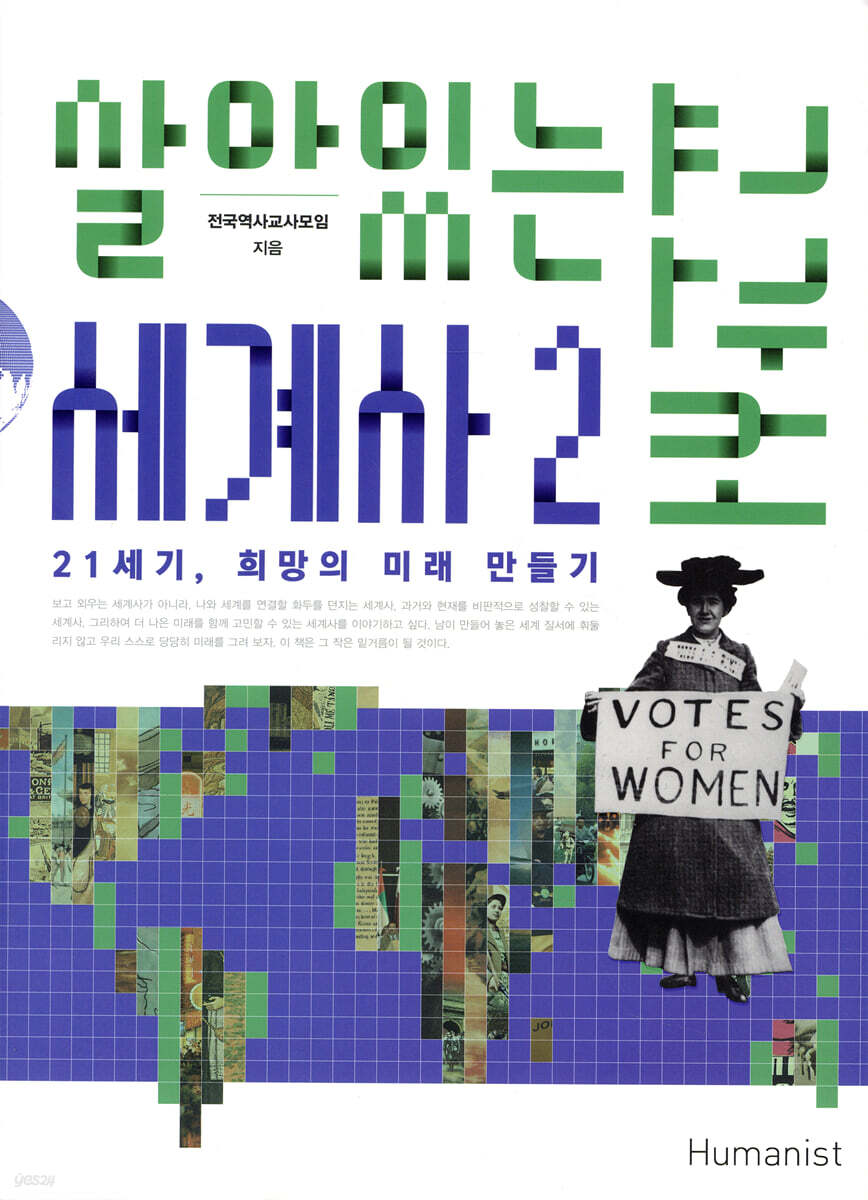
Living World History Textbook 2
 |
Description
Book Introduction
Develop your reading skills and network with yourself and the world!
More important than the 'perspective' and method of describing and developing world history is the question of 'who will write it?'
The 2,000 or so history teachers of the National History Teachers Association who wrote the “Living Korean History Textbook” and the 10 history teachers who wrote this book tried to help our youth who will live in the 21st century to break away from the Western-centric perspective of “Europe as the lead, China as the supporting role” and perceive the world through our own eyes and stories.
In addition, it maintained a perspective that enabled people to pursue peace, democracy, and a humane life, and it was read within the larger context of world history and Korean history by linking them.
Education, after all, provides a framework that allows us to view the world and the future through our own eyes.
This fully revised edition of "A Living World History Textbook" will serve as a guide, providing a glimpse into today's world and suggesting the world we will live in in the future.
More important than the 'perspective' and method of describing and developing world history is the question of 'who will write it?'
The 2,000 or so history teachers of the National History Teachers Association who wrote the “Living Korean History Textbook” and the 10 history teachers who wrote this book tried to help our youth who will live in the 21st century to break away from the Western-centric perspective of “Europe as the lead, China as the supporting role” and perceive the world through our own eyes and stories.
In addition, it maintained a perspective that enabled people to pursue peace, democracy, and a humane life, and it was read within the larger context of world history and Korean history by linking them.
Education, after all, provides a framework that allows us to view the world and the future through our own eyes.
This fully revised edition of "A Living World History Textbook" will serve as a guide, providing a glimpse into today's world and suggesting the world we will live in in the future.
- You can preview some of the book's contents.
Preview
index
Preface to the Revised Edition
For the youth who will network ‘me’ and ‘the world’, we are publishing a completely revised edition of ‘Living World History Textbook’.
Preface to the First Edition
Rewriting world history for the "Korean youth who will live in the 21st century."
Chapter 1: A New Way of Life, Modernity
From the 16th to the 19th century
Finding a new way
Chapter 2: The Beginning of Modernity in Europe
1.
Capitalists and workers emerge
2.
The Industrial Revolution begins
3.
The French Revolution: The Overthrow of the Old Order
4.
The seeds of a nation-state are sown
Chapter 3: The Development of European Nation-States and Imperialist Invasion
1.
The Revolution of 1848 and the Unification of Germany
2.
European countries pursue industrialization
3.
Workers assert their rights
4.
Nation-states rush toward imperialism
Chapter 4: America's Independence and the Birth of the United States
1.
America, break away from Britain
2.
Latin America also declares independence
3.
America Becomes Another Giant
4.
American Expansion and Latin America's Trials
Chapter 5 Imperialist Invasion and National Movements in Asia and Africa
1.
The wave of independence that shook the Ottoman Empire
2.
Africa rises above imperialism
3.
Indian nationalism born in opposition to Britain
4.
Southeast Asia, overcoming foreign powers
Chapter 6: Modern Transformation of the Three East Asian Countries and Japan's Imperialization
1.
Three East Asian countries open closed doors
2.
China seeks a new path
3.
Storm and Stress in East Asia in 1894
4.
China in Crisis: Can It Resurrect?
Chapter 7 Imperialist Wars and the Growth of Anti-Imperialist Movements
1.
All of Europe is engulfed in war
2.
The Russian Revolution shook the world
3.
Democracy expands in Europe
4.
The explosion of nationalist movements in Korea and China
5.
Nationalist movements spread across Asia
Chapter 8: World War II and the Struggle for Peace
1.
The Great Depression swept the world
2.
Fascism and those who fought against it
3.
Anti-Japanese struggle, stopping Japanese invasion
4.
World War II, the era of 'mass slaughter'
5.
Fascism falls
Chapter 9: Asian Independence and the Cold War Order
1.
Several Asian countries gain independence
2.
The United States and the Soviet Union divided Europe in two.
3.
East Asia: Division, War, and Rearmament
4.
Non-aligned bloc, peaceful coexistence, and anti-colonialism
Chapter 10: The Development of the Decolonization Movement and the Shaken Cold War Order
1.
Africa Breaks Free from Colonialism
2.
The United States and the Soviet Union seek coexistence
3.
The Vietnam War and the Prague Spring
4.
Rapid industrialization changes society
Chapter 11: Globalization and Democracy Today
1.
The Cold War ends, and the Soviet Union disappears.
2.
The wave of globalization sweeps over us
3.
Economic crisis shakes the world
4.
Democracy Faces Challenges
Chapter 12: What kind of future will we build in the 21st century?
Is a world without war possible?
Can we eliminate hunger, poverty, and inequality?
Dreaming of a harmonious life between humans and nature
Women's History
Women at the forefront of the revolution
·A gorgeous dollhouse, a shabby worker's house
·Pain that transcends the barriers of time
From darkness to light
The Taiping Heavenly Kingdom that women dream of
·We have the right to vote too!
The cries of the Japanese military's "comfort women" grandmothers
The courage of an ordinary rural woman
Women warriors of the Vietnam War
Towards a gender-equal society
Meet the times
·Meeting liberal economists from Adam Smith to David Ricardo
· Visit Owen's New Lanark factory
Indians who dreamed of coexistence
·Muslim brothers, stand up to imperialism!
Violence in the name of 'civilization'
"I am against war!" Käthe Kollwitz, an artist who was honest with history and reality.
·Kim San, the Korean revolutionary who left his mark on Arirang
McCarthyism and Stalinism
·Resist all authority
·Lula, from metal worker to president
The lives and dreams of youth
·The difficult daily life of a young worker
·You must go to school!
·Huck Finn, Follow Your Conscience
·Don't touch me!
·Students sent abroad to serve the country
·Roaring cheers heard everywhere
·Children used in war
An eight-year-old's memories of the Cold War
·Do not discriminate based on skin color!
·The peaceful world children hope for
supplement
World History Timeline
Search
About the Author
For the youth who will network ‘me’ and ‘the world’, we are publishing a completely revised edition of ‘Living World History Textbook’.
Preface to the First Edition
Rewriting world history for the "Korean youth who will live in the 21st century."
Chapter 1: A New Way of Life, Modernity
From the 16th to the 19th century
Finding a new way
Chapter 2: The Beginning of Modernity in Europe
1.
Capitalists and workers emerge
2.
The Industrial Revolution begins
3.
The French Revolution: The Overthrow of the Old Order
4.
The seeds of a nation-state are sown
Chapter 3: The Development of European Nation-States and Imperialist Invasion
1.
The Revolution of 1848 and the Unification of Germany
2.
European countries pursue industrialization
3.
Workers assert their rights
4.
Nation-states rush toward imperialism
Chapter 4: America's Independence and the Birth of the United States
1.
America, break away from Britain
2.
Latin America also declares independence
3.
America Becomes Another Giant
4.
American Expansion and Latin America's Trials
Chapter 5 Imperialist Invasion and National Movements in Asia and Africa
1.
The wave of independence that shook the Ottoman Empire
2.
Africa rises above imperialism
3.
Indian nationalism born in opposition to Britain
4.
Southeast Asia, overcoming foreign powers
Chapter 6: Modern Transformation of the Three East Asian Countries and Japan's Imperialization
1.
Three East Asian countries open closed doors
2.
China seeks a new path
3.
Storm and Stress in East Asia in 1894
4.
China in Crisis: Can It Resurrect?
Chapter 7 Imperialist Wars and the Growth of Anti-Imperialist Movements
1.
All of Europe is engulfed in war
2.
The Russian Revolution shook the world
3.
Democracy expands in Europe
4.
The explosion of nationalist movements in Korea and China
5.
Nationalist movements spread across Asia
Chapter 8: World War II and the Struggle for Peace
1.
The Great Depression swept the world
2.
Fascism and those who fought against it
3.
Anti-Japanese struggle, stopping Japanese invasion
4.
World War II, the era of 'mass slaughter'
5.
Fascism falls
Chapter 9: Asian Independence and the Cold War Order
1.
Several Asian countries gain independence
2.
The United States and the Soviet Union divided Europe in two.
3.
East Asia: Division, War, and Rearmament
4.
Non-aligned bloc, peaceful coexistence, and anti-colonialism
Chapter 10: The Development of the Decolonization Movement and the Shaken Cold War Order
1.
Africa Breaks Free from Colonialism
2.
The United States and the Soviet Union seek coexistence
3.
The Vietnam War and the Prague Spring
4.
Rapid industrialization changes society
Chapter 11: Globalization and Democracy Today
1.
The Cold War ends, and the Soviet Union disappears.
2.
The wave of globalization sweeps over us
3.
Economic crisis shakes the world
4.
Democracy Faces Challenges
Chapter 12: What kind of future will we build in the 21st century?
Is a world without war possible?
Can we eliminate hunger, poverty, and inequality?
Dreaming of a harmonious life between humans and nature
Women's History
Women at the forefront of the revolution
·A gorgeous dollhouse, a shabby worker's house
·Pain that transcends the barriers of time
From darkness to light
The Taiping Heavenly Kingdom that women dream of
·We have the right to vote too!
The cries of the Japanese military's "comfort women" grandmothers
The courage of an ordinary rural woman
Women warriors of the Vietnam War
Towards a gender-equal society
Meet the times
·Meeting liberal economists from Adam Smith to David Ricardo
· Visit Owen's New Lanark factory
Indians who dreamed of coexistence
·Muslim brothers, stand up to imperialism!
Violence in the name of 'civilization'
"I am against war!" Käthe Kollwitz, an artist who was honest with history and reality.
·Kim San, the Korean revolutionary who left his mark on Arirang
McCarthyism and Stalinism
·Resist all authority
·Lula, from metal worker to president
The lives and dreams of youth
·The difficult daily life of a young worker
·You must go to school!
·Huck Finn, Follow Your Conscience
·Don't touch me!
·Students sent abroad to serve the country
·Roaring cheers heard everywhere
·Children used in war
An eight-year-old's memories of the Cold War
·Do not discriminate based on skin color!
·The peaceful world children hope for
supplement
World History Timeline
Search
About the Author
Detailed image

Publisher's Review
1.
"Seeing Asian history through Korean eyes, and reading world history beyond the Eurocentric lens."
Why is Europe a continent? It's just a huge peninsula on the western side of the Eurasian continent, connected to Asia. How can it be considered a continent?
-Western history begins with Greco-Roman civilization, but what does Greco-Roman civilization have to do with the history of Britain or Germany?
Did Europe usher in the modern era because it was originally strong or advanced? Or did it become strong by invading other countries?
We have been instilled with a Western-centric view of history from a young age through history textbooks, history education, and history textbooks.
Current world history textbooks still contain a Western-centric view of history.
It is a world history with 'European history as the lead' and 'Chinese history as the supporting'.
We will look closely at how Europe has developed, and Asia will only be explored by looking at China.
It is based on the division of world history into three periods: ancient, medieval, and modern.
From this perspective, other regions cannot help but appear to be developing more slowly than Europe.
The Western powers that currently dominate the world are, as they always have been, perceiving themselves as the 'center'.
The National History Teachers Association's "Living World History Textbook" rejects the superiority of the West or the universality of Western modernity, and focuses on experiencing diverse forms of life while respecting cultural diversity.
We sought to portray a world history that pursues peace and democracy, a world history that pursues a humane life, a world history that pursues coexistence and solidarity while paying attention to the status of minorities, and a world history that reflects on the social changes brought about by science and technology and allows us to contemplate alternative ways of living to individualism, competition, and the pursuit of success.
2.
The World Order That Shaped Today and the People Who Lived Through It: Building a Hopeful Future in the 21st Century
Volume 2 covers modern and contemporary history.
Capitalism, the nation-state, and the world system formed through the double revolution were considered the characteristics of modernity, and the homogeneity between modern and contemporary times was emphasized rather than the differences in terms of the order formed around this time being enforced to the present day.
Rather than considering ‘realized Western modernity’ as something universal, they focused on objectifying and relativizing it.
In particular, it gave significant weight to the nationalist movements and anti-colonial lines in the Asian and African regions that had previously received little attention.
True to the phrase 'creating the future', the concerns and practices of the people who lived in that era were vividly depicted.
Furthermore, 『Living World History Textbook』 focuses on the relationship between world history and Korean history, and actively addresses key issues related to the worldview of contemporary Koreans and the worldview needed by 21st-century Korean youth.
Among the various regions of Asia, we have increased the weight of East Asia, and especially devoted space to the history of relations between Korea, China, and Japan.
In Volume 1, Korean history is considered a part of East Asian history, and a point of intersection with the world is established, and a path is set for East Asia to meet the European world through South Asia and West Asia.
Volume 2 examines the process of full-scale integration of world history, questions our own path to independent modernization, and encourages reflective thinking to lay the foundation for peaceful future development.
Through this, we were able to correctly understand our history, which was distorted by our past colonial experience, and actively participate in the flow of world history.
3.
The National History Teachers Association's "Living History Textbook" series has been newly revised.
This book started from the question of looking at world history from 'our perspective.'
This is because a world history textbook was desperately needed to help people connect with the world, reflect on the past and present, and dream of a better future.
The National History Teachers' Association, which published a trustworthy world history, has gathered once again to publish a completely revised edition after 15 years.
In particular, in this revised edition, proper nouns and various terms that had unfamiliar spellings were unified into the textbook terms in order to be closer to the original pronunciation.
We refined and corrected expressions that could be misunderstood, and avoided over-interpretation and definitive expressions.
Above all, chapters 11 and 12 of volume 2 were rewritten to keep up with the rapidly changing flow of modern history.
After the collapse of socialism, neoliberal globalization gained further influence, and economic crises became a daily occurrence. Resistance to these crises was repeatedly frustrated, leading to populism and far-right nationalism threatening democracy. This was an attempt to historically describe the current situation.
Through these attempts, I hope that readers will think together about how to navigate this era within the historical context.
"Seeing Asian history through Korean eyes, and reading world history beyond the Eurocentric lens."
Why is Europe a continent? It's just a huge peninsula on the western side of the Eurasian continent, connected to Asia. How can it be considered a continent?
-Western history begins with Greco-Roman civilization, but what does Greco-Roman civilization have to do with the history of Britain or Germany?
Did Europe usher in the modern era because it was originally strong or advanced? Or did it become strong by invading other countries?
We have been instilled with a Western-centric view of history from a young age through history textbooks, history education, and history textbooks.
Current world history textbooks still contain a Western-centric view of history.
It is a world history with 'European history as the lead' and 'Chinese history as the supporting'.
We will look closely at how Europe has developed, and Asia will only be explored by looking at China.
It is based on the division of world history into three periods: ancient, medieval, and modern.
From this perspective, other regions cannot help but appear to be developing more slowly than Europe.
The Western powers that currently dominate the world are, as they always have been, perceiving themselves as the 'center'.
The National History Teachers Association's "Living World History Textbook" rejects the superiority of the West or the universality of Western modernity, and focuses on experiencing diverse forms of life while respecting cultural diversity.
We sought to portray a world history that pursues peace and democracy, a world history that pursues a humane life, a world history that pursues coexistence and solidarity while paying attention to the status of minorities, and a world history that reflects on the social changes brought about by science and technology and allows us to contemplate alternative ways of living to individualism, competition, and the pursuit of success.
2.
The World Order That Shaped Today and the People Who Lived Through It: Building a Hopeful Future in the 21st Century
Volume 2 covers modern and contemporary history.
Capitalism, the nation-state, and the world system formed through the double revolution were considered the characteristics of modernity, and the homogeneity between modern and contemporary times was emphasized rather than the differences in terms of the order formed around this time being enforced to the present day.
Rather than considering ‘realized Western modernity’ as something universal, they focused on objectifying and relativizing it.
In particular, it gave significant weight to the nationalist movements and anti-colonial lines in the Asian and African regions that had previously received little attention.
True to the phrase 'creating the future', the concerns and practices of the people who lived in that era were vividly depicted.
Furthermore, 『Living World History Textbook』 focuses on the relationship between world history and Korean history, and actively addresses key issues related to the worldview of contemporary Koreans and the worldview needed by 21st-century Korean youth.
Among the various regions of Asia, we have increased the weight of East Asia, and especially devoted space to the history of relations between Korea, China, and Japan.
In Volume 1, Korean history is considered a part of East Asian history, and a point of intersection with the world is established, and a path is set for East Asia to meet the European world through South Asia and West Asia.
Volume 2 examines the process of full-scale integration of world history, questions our own path to independent modernization, and encourages reflective thinking to lay the foundation for peaceful future development.
Through this, we were able to correctly understand our history, which was distorted by our past colonial experience, and actively participate in the flow of world history.
3.
The National History Teachers Association's "Living History Textbook" series has been newly revised.
This book started from the question of looking at world history from 'our perspective.'
This is because a world history textbook was desperately needed to help people connect with the world, reflect on the past and present, and dream of a better future.
The National History Teachers' Association, which published a trustworthy world history, has gathered once again to publish a completely revised edition after 15 years.
In particular, in this revised edition, proper nouns and various terms that had unfamiliar spellings were unified into the textbook terms in order to be closer to the original pronunciation.
We refined and corrected expressions that could be misunderstood, and avoided over-interpretation and definitive expressions.
Above all, chapters 11 and 12 of volume 2 were rewritten to keep up with the rapidly changing flow of modern history.
After the collapse of socialism, neoliberal globalization gained further influence, and economic crises became a daily occurrence. Resistance to these crises was repeatedly frustrated, leading to populism and far-right nationalism threatening democracy. This was an attempt to historically describe the current situation.
Through these attempts, I hope that readers will think together about how to navigate this era within the historical context.
GOODS SPECIFICS
- Date of publication: December 9, 2019
- Page count, weight, size: 332 pages | 188*257*30mm
- ISBN13: 9788958620716
- ISBN10: 8958620714
You may also like
카테고리
korean


korean

![GQ KOREA Mark (Monthly): December [2025]](http://librairie.coreenne.fr/cdn/shop/files/8ef265dbbfbf186523ed75ba7319009d.jpg?v=1765340328&width=3840)


