

Theory and Practice of Crisis Counseling
 |
Description
Book Introduction
The world we live in in the 21st century is changing at a rapid pace every day.
Newly evolving artificial intelligence (AI) is now being used across time and space, conversational AI ChatGPT is being utilized throughout society, and the diversely constructed world of media is dominating all aspects of human life.
The dazzling economic development, advanced industry, and scientific advancement of modern society have brought us humans tremendous material abundance and convenience in life.
Nevertheless, the extreme crisis situations occurring throughout society remain unchanged, both in the past and present.
We live in an environment of extreme crises so diverse and complex that it is impossible to list them all: the rising suicide rate that causes people to lose the true meaning and value of life, the emergence of new diseases like COVID-19, and the crisis of natural and social disasters.
Human crises include psychosocial crises that everyone experiences on their journey through life and extreme situational crises that arise in unexpected circumstances.
Life crises that occur according to the stage of psychosocial development are general crises.
Conflicts with peers experienced while attending school in childhood, the pain of divorce experienced while getting married and starting a family, the pain of sudden death from a loved one, interpersonal conflicts and unemployment at work, and economic poverty in old age are all crises that everyone experiences in life.
These crises contribute to the growth of most people into better people through the implementation and fulfillment of psychosocial developmental tasks.
Through a crisis, we discover the true meaning and value of life and achieve greater growth than before the crisis experience.
However, when faced with extreme crises such as unexpected and sudden suicide attempts, sexual assault, disasters, acute stress, drug and media addiction, etc., a negative catastrophe occurs.
On February 6, 2023, a magnitude 7.8 earthquake struck Turkey, a region straddling Western Asia and Southern Europe, burying tens of thousands of people in the rubble of collapsed buildings.
On October 29, 2022, an unbelievable incident occurred in Itaewon, Seoul, South Korea, in which 159 people were crushed to death.
In addition, shocking and serious extreme crisis incidents such as the Sewol ferry sinking, the Cheonan warship sinking, the Jecheon fire disaster, and the Gyeongju earthquake occurred continuously.
When such an extreme crisis occurs, it is most important to quickly intervene in the crisis situation and take swift action to minimize the psychological and physical suffering of the victim.
However, there are also shameful cases where we failed to respond quickly and appropriately to these extreme crisis situations, which actually increased the damage.
This adds to the seriousness of the situation, as unfortunate cases continue to occur around us, where, despite being fully predictable crises, we fail to recognize them properly, miss the golden time, and fail to protect precious lives.
This book was written to help minimize the damage caused by crises by systematically addressing both general and extreme crises that arise in the psychosocial development of individuals in the 21st century.
I sincerely hope that this book will be of great help in responding wisely and without any mistakes or errors when faced with diverse and unpredictable extreme crisis situations.
We hope this book will be of great help to professionals seeking counseling methods to heal the psychological pain of victims of extreme crises, educators seeking various crisis-overcoming programs, college (graduate) students majoring in counseling psychology, military, police, and firefighters working in extreme occupational fields, and crisis victims who have experienced extreme crises.
Newly evolving artificial intelligence (AI) is now being used across time and space, conversational AI ChatGPT is being utilized throughout society, and the diversely constructed world of media is dominating all aspects of human life.
The dazzling economic development, advanced industry, and scientific advancement of modern society have brought us humans tremendous material abundance and convenience in life.
Nevertheless, the extreme crisis situations occurring throughout society remain unchanged, both in the past and present.
We live in an environment of extreme crises so diverse and complex that it is impossible to list them all: the rising suicide rate that causes people to lose the true meaning and value of life, the emergence of new diseases like COVID-19, and the crisis of natural and social disasters.
Human crises include psychosocial crises that everyone experiences on their journey through life and extreme situational crises that arise in unexpected circumstances.
Life crises that occur according to the stage of psychosocial development are general crises.
Conflicts with peers experienced while attending school in childhood, the pain of divorce experienced while getting married and starting a family, the pain of sudden death from a loved one, interpersonal conflicts and unemployment at work, and economic poverty in old age are all crises that everyone experiences in life.
These crises contribute to the growth of most people into better people through the implementation and fulfillment of psychosocial developmental tasks.
Through a crisis, we discover the true meaning and value of life and achieve greater growth than before the crisis experience.
However, when faced with extreme crises such as unexpected and sudden suicide attempts, sexual assault, disasters, acute stress, drug and media addiction, etc., a negative catastrophe occurs.
On February 6, 2023, a magnitude 7.8 earthquake struck Turkey, a region straddling Western Asia and Southern Europe, burying tens of thousands of people in the rubble of collapsed buildings.
On October 29, 2022, an unbelievable incident occurred in Itaewon, Seoul, South Korea, in which 159 people were crushed to death.
In addition, shocking and serious extreme crisis incidents such as the Sewol ferry sinking, the Cheonan warship sinking, the Jecheon fire disaster, and the Gyeongju earthquake occurred continuously.
When such an extreme crisis occurs, it is most important to quickly intervene in the crisis situation and take swift action to minimize the psychological and physical suffering of the victim.
However, there are also shameful cases where we failed to respond quickly and appropriately to these extreme crisis situations, which actually increased the damage.
This adds to the seriousness of the situation, as unfortunate cases continue to occur around us, where, despite being fully predictable crises, we fail to recognize them properly, miss the golden time, and fail to protect precious lives.
This book was written to help minimize the damage caused by crises by systematically addressing both general and extreme crises that arise in the psychosocial development of individuals in the 21st century.
I sincerely hope that this book will be of great help in responding wisely and without any mistakes or errors when faced with diverse and unpredictable extreme crisis situations.
We hope this book will be of great help to professionals seeking counseling methods to heal the psychological pain of victims of extreme crises, educators seeking various crisis-overcoming programs, college (graduate) students majoring in counseling psychology, military, police, and firefighters working in extreme occupational fields, and crisis victims who have experienced extreme crises.
index
PART 01 Theoretical Basis of Crisis Counseling
CHAPTER 01 Understanding the Crisis / 2
Section 1: Definition of Crisis 3
Section 2 Causes of the Crisis 8
Section 3 Theoretical Model 13
Section 4: Assessing the Crisis 16
CHAPTER 02 Theoretical Approach / 21
Section 1: Psychoanalytic Approach 22
Section 2: Behavioral Approach 30
Section 3: A Human-Centered Approach 39
Section 4 Cognitive Therapy Approaches 48
CHAPTER 03 Crisis Counseling Skills / 60
Section 1: The Concept of Crisis Counseling 61
Section 2: Stages of Crisis Counseling 66
Section 3: Crisis Counseling Techniques 73
Section 4: Crisis Counselor Competencies 81
CHAPTER 04: A Crisis Counseling Model / 90
Section 1: Individual Counseling Model 91
Section 2: Short-Term Counseling Model 101
Section 3: Solution-Focused Counseling Model 106
Section 4 Group Counseling Model 112
PART 02 Crisis Counseling Methodology by Type
CHAPTER 05: Suicide Crisis Counseling / 130
Section 1 Theoretical Background 131
Section 2: Characteristics of Youth Suicide 138
Section 3: Suicide Crisis Counseling Focus 145
Section 4: Suicide Crisis Counseling Methods 149
CHAPTER 06 Sexual Violence Crisis Counseling / 153
Section 1 Theoretical Background 154
Section 2: Characteristics of Incestuous Sexual Violence 162
Section 3: The Reality of Dating Sexual Violence 165
Section 4: Crisis Counseling Methods for Sexual Violence Victims 169
CHAPTER 07 Disaster Trauma Crisis Counseling / 176
Section 1 Theoretical Background 177
Section 2: Causes of Disaster Trauma 184
Section 3: The Concept of Disaster Crisis Counseling 190
Section 4: Crisis Counseling Methods for Disaster Victims 193
CHAPTER 08 PTSD Crisis Counseling / 202
Section 1 Theoretical Background 203
Section 2: Symptoms of PTSD 206
Section 3: Causes of PTSD 214
Section 4 PTSD Crisis Counseling Methods 223
CHAPTER 09 Addiction Crisis Counseling / 232
Section 1 Theoretical Background 233
Section 2: Characteristics of Drug Addiction 238
Section 3: Causes of Media Addiction 243
Section 4: Addiction Crisis Management Strategies 248
PART 03 Extreme Crisis Group Counseling Program
CHAPTER 10: Suicide Crisis Counseling Program / 260
CHAPTER 11 Sexual Violence Crisis Counseling Program / 279
CHAPTER 12: Extreme Stress Crisis Counseling Program / 298
CHAPTER 13 Disaster Trauma Crisis Counseling Program / 316
CHAPTER 14 PTSD Crisis Counseling Program / 335
CHAPTER 15: Media Addiction Crisis Counseling Program / 367
Reference 392
Search 396
CHAPTER 01 Understanding the Crisis / 2
Section 1: Definition of Crisis 3
Section 2 Causes of the Crisis 8
Section 3 Theoretical Model 13
Section 4: Assessing the Crisis 16
CHAPTER 02 Theoretical Approach / 21
Section 1: Psychoanalytic Approach 22
Section 2: Behavioral Approach 30
Section 3: A Human-Centered Approach 39
Section 4 Cognitive Therapy Approaches 48
CHAPTER 03 Crisis Counseling Skills / 60
Section 1: The Concept of Crisis Counseling 61
Section 2: Stages of Crisis Counseling 66
Section 3: Crisis Counseling Techniques 73
Section 4: Crisis Counselor Competencies 81
CHAPTER 04: A Crisis Counseling Model / 90
Section 1: Individual Counseling Model 91
Section 2: Short-Term Counseling Model 101
Section 3: Solution-Focused Counseling Model 106
Section 4 Group Counseling Model 112
PART 02 Crisis Counseling Methodology by Type
CHAPTER 05: Suicide Crisis Counseling / 130
Section 1 Theoretical Background 131
Section 2: Characteristics of Youth Suicide 138
Section 3: Suicide Crisis Counseling Focus 145
Section 4: Suicide Crisis Counseling Methods 149
CHAPTER 06 Sexual Violence Crisis Counseling / 153
Section 1 Theoretical Background 154
Section 2: Characteristics of Incestuous Sexual Violence 162
Section 3: The Reality of Dating Sexual Violence 165
Section 4: Crisis Counseling Methods for Sexual Violence Victims 169
CHAPTER 07 Disaster Trauma Crisis Counseling / 176
Section 1 Theoretical Background 177
Section 2: Causes of Disaster Trauma 184
Section 3: The Concept of Disaster Crisis Counseling 190
Section 4: Crisis Counseling Methods for Disaster Victims 193
CHAPTER 08 PTSD Crisis Counseling / 202
Section 1 Theoretical Background 203
Section 2: Symptoms of PTSD 206
Section 3: Causes of PTSD 214
Section 4 PTSD Crisis Counseling Methods 223
CHAPTER 09 Addiction Crisis Counseling / 232
Section 1 Theoretical Background 233
Section 2: Characteristics of Drug Addiction 238
Section 3: Causes of Media Addiction 243
Section 4: Addiction Crisis Management Strategies 248
PART 03 Extreme Crisis Group Counseling Program
CHAPTER 10: Suicide Crisis Counseling Program / 260
CHAPTER 11 Sexual Violence Crisis Counseling Program / 279
CHAPTER 12: Extreme Stress Crisis Counseling Program / 298
CHAPTER 13 Disaster Trauma Crisis Counseling Program / 316
CHAPTER 14 PTSD Crisis Counseling Program / 335
CHAPTER 15: Media Addiction Crisis Counseling Program / 367
Reference 392
Search 396
Detailed image
Publisher's Review
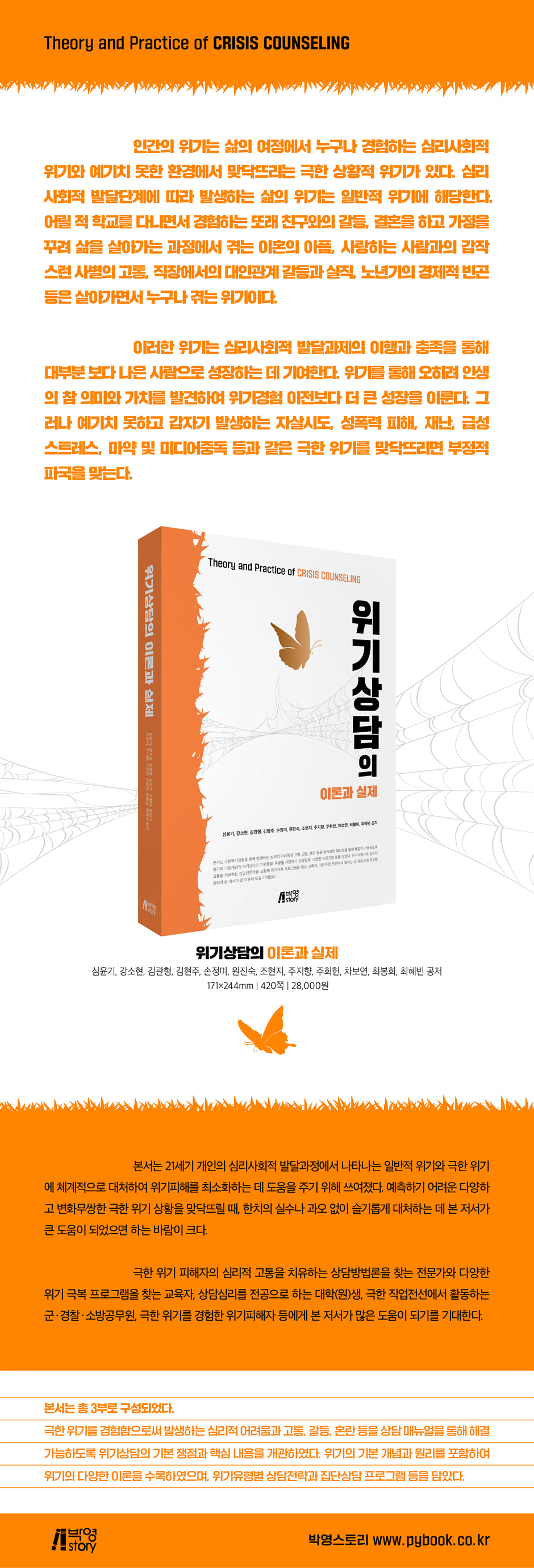
This book is divided into three parts.
The basic issues and core contents of crisis counseling were outlined in this counseling manual to help resolve psychological difficulties, pain, conflict, and confusion that arise from experiencing extreme crises.
It contains various theories of crisis, including basic concepts and principles of crisis, as well as counseling strategies and group counseling programs for each type of crisis.
Part 1 deals with the essence of crisis counseling.
Explains the basic concepts, theoretical background, and counseling approach model of crisis counseling.
· CHAPTER 1 covers the general concept of crisis.
We examine the characteristics and causes of crises, crisis models, crisis assessments, and assessment tools.
· CHAPTER 2 explains the theory applied in conducting crisis counseling.
It covers psychoanalysis, behaviorism, person-centered, and cognitive therapy theories.
· CHAPTER 3 discusses the characteristics of crisis counseling.
Explains in detail the concepts, stages, and techniques of counseling.
· CHAPTER 4 covers the crisis counseling approach model.
We provide models for individual counseling, short-term counseling, solution-focused counseling, and group counseling necessary for crisis counseling.
Part 2 discusses extreme crisis counseling methods by type.
It includes suicide crisis, psychological crisis of sexual assault victims, disaster damage crisis, PTSD, media addiction crisis, etc.
· CHAPTER 5 explains suicide crisis counseling methods.
We will take a closer look at suicide crisis counseling methodology, including the theoretical background of suicide.
· CHAPTER 6 explores crisis counseling for victims of sexual violence.
We examine the characteristics of dating violence and incestuous sexual violence and provide crisis counseling methods for victims of sexual violence.
· CHAPTER 7 introduces disaster crisis counseling.
We examine the types and characteristics of disasters, the symptoms and causes of disaster trauma, and discuss crisis counseling methods for disaster victims.
· CHAPTER 8 deals with PTSD crisis counseling.
We will look at the concept of trauma, symptoms of PTSD, causes of PTSD, and PTSD crisis counseling methods.
· CHAPTER 9 deals with addiction crisis counseling.
It explains the concept of addiction, mentions the causes of drug addiction and the characteristics of media addiction, and then provides counseling strategies for addiction crises.
Part 3 introduces a program applied to extreme crisis counseling.
It was designed to help experts in field-centered counseling, as well as counseling experts from various fields, effectively assist with extreme crisis counseling by type.
· CHAPTER 10 provides information on suicide crisis counseling programs.
· CHAPTER 11 covers sexual violence crisis counseling programs.
· CHAPTER 12 contains an extreme stress crisis counseling program.
· CHAPTER 13 introduces the disaster crisis counseling program.
· CHAPTER 14 covers PTSD crisis counseling programs.
· CHAPTER 15 describes the media addiction crisis counseling program.
During the process of creating this book, I received help and dedication from many people.
I would like to express my sincere gratitude to the many people who reminded me of the meaning and value of publishing this book throughout the writing process and who supported me through difficult times.
I would also like to express my deepest gratitude to those who readily provided me with various materials necessary for writing.
I would like to express my sincere gratitude to my co-authors, Kang So-hyun, Kim Gwan-hyung, Kim Hyun-joo, Son Jeong-mi, Won Jin-sook, Jo Hyun-ji, Joo Ji-hyang, Joo Hee-heon, Cha Bo-yeon, Choi Bong-hee, and Choi Hye-bin, who poured their heart and soul into creating this excellent crisis counseling book.
In addition, I share the joy and happiness of publishing this book with the many people who have shown me their warm interest, support, and encouragement throughout the writing process.
I would also like to express my deepest gratitude to Park Young Story CEO and all the staff who helped publish this book.
The basic issues and core contents of crisis counseling were outlined in this counseling manual to help resolve psychological difficulties, pain, conflict, and confusion that arise from experiencing extreme crises.
It contains various theories of crisis, including basic concepts and principles of crisis, as well as counseling strategies and group counseling programs for each type of crisis.
Part 1 deals with the essence of crisis counseling.
Explains the basic concepts, theoretical background, and counseling approach model of crisis counseling.
· CHAPTER 1 covers the general concept of crisis.
We examine the characteristics and causes of crises, crisis models, crisis assessments, and assessment tools.
· CHAPTER 2 explains the theory applied in conducting crisis counseling.
It covers psychoanalysis, behaviorism, person-centered, and cognitive therapy theories.
· CHAPTER 3 discusses the characteristics of crisis counseling.
Explains in detail the concepts, stages, and techniques of counseling.
· CHAPTER 4 covers the crisis counseling approach model.
We provide models for individual counseling, short-term counseling, solution-focused counseling, and group counseling necessary for crisis counseling.
Part 2 discusses extreme crisis counseling methods by type.
It includes suicide crisis, psychological crisis of sexual assault victims, disaster damage crisis, PTSD, media addiction crisis, etc.
· CHAPTER 5 explains suicide crisis counseling methods.
We will take a closer look at suicide crisis counseling methodology, including the theoretical background of suicide.
· CHAPTER 6 explores crisis counseling for victims of sexual violence.
We examine the characteristics of dating violence and incestuous sexual violence and provide crisis counseling methods for victims of sexual violence.
· CHAPTER 7 introduces disaster crisis counseling.
We examine the types and characteristics of disasters, the symptoms and causes of disaster trauma, and discuss crisis counseling methods for disaster victims.
· CHAPTER 8 deals with PTSD crisis counseling.
We will look at the concept of trauma, symptoms of PTSD, causes of PTSD, and PTSD crisis counseling methods.
· CHAPTER 9 deals with addiction crisis counseling.
It explains the concept of addiction, mentions the causes of drug addiction and the characteristics of media addiction, and then provides counseling strategies for addiction crises.
Part 3 introduces a program applied to extreme crisis counseling.
It was designed to help experts in field-centered counseling, as well as counseling experts from various fields, effectively assist with extreme crisis counseling by type.
· CHAPTER 10 provides information on suicide crisis counseling programs.
· CHAPTER 11 covers sexual violence crisis counseling programs.
· CHAPTER 12 contains an extreme stress crisis counseling program.
· CHAPTER 13 introduces the disaster crisis counseling program.
· CHAPTER 14 covers PTSD crisis counseling programs.
· CHAPTER 15 describes the media addiction crisis counseling program.
During the process of creating this book, I received help and dedication from many people.
I would like to express my sincere gratitude to the many people who reminded me of the meaning and value of publishing this book throughout the writing process and who supported me through difficult times.
I would also like to express my deepest gratitude to those who readily provided me with various materials necessary for writing.
I would like to express my sincere gratitude to my co-authors, Kang So-hyun, Kim Gwan-hyung, Kim Hyun-joo, Son Jeong-mi, Won Jin-sook, Jo Hyun-ji, Joo Ji-hyang, Joo Hee-heon, Cha Bo-yeon, Choi Bong-hee, and Choi Hye-bin, who poured their heart and soul into creating this excellent crisis counseling book.
In addition, I share the joy and happiness of publishing this book with the many people who have shown me their warm interest, support, and encouragement throughout the writing process.
I would also like to express my deepest gratitude to Park Young Story CEO and all the staff who helped publish this book.
GOODS SPECIFICS
- Date of issue: January 1, 2024
- Page count, weight, size: 420 pages | 171*244*31mm
- ISBN13: 9791165194734
You may also like
카테고리
korean


korean

![GQ KOREA Mark (Monthly): December [2025]](http://librairie.coreenne.fr/cdn/shop/files/8ef265dbbfbf186523ed75ba7319009d.jpg?v=1765340328&width=3840)


