

Roman Tales 9
 |
Description
Book Introduction
Roman Stories, Book 9.
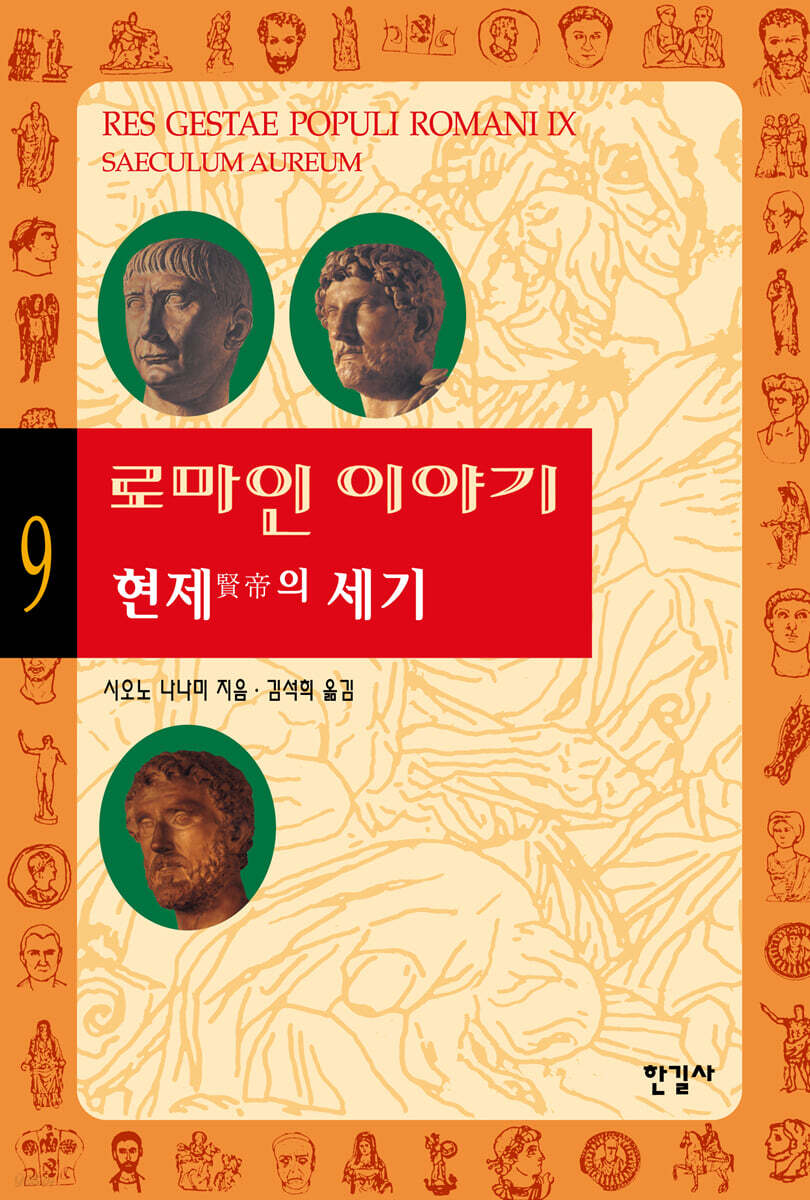
Starting with Romulus, the founder of Rome, the 9th volume of the "Roman Stories" series, published in 1993, is titled "The Present Century."
Trajan, a frontal attacker who expanded the territory of the Roman Empire to its maximum, Hadrian, who toured the entire empire and reestablished the ruling system, and Antoninus Pius, who established reforms with his gentle personality and virtue.
Why did later generations call them the Present Age, and why did their contemporaries call this period the Golden Age?
This is a story of 'leadership' of three outstanding men that comes back to life through the pen of Shiono.
Starting with Romulus, the founder of Rome, the 9th volume of the "Roman Stories" series, published in 1993, is titled "The Present Century."
Trajan, a frontal attacker who expanded the territory of the Roman Empire to its maximum, Hadrian, who toured the entire empire and reestablished the ruling system, and Antoninus Pius, who established reforms with his gentle personality and virtue.
Why did later generations call them the Present Age, and why did their contemporaries call this period the Golden Age?
This is a story of 'leadership' of three outstanding men that comes back to life through the pen of Shiono.
- You can preview some of the book's contents.
Preview
index
1.
Emperor Trajan
The road to the throne
With spirit in your heart
Return to Rome
The Prince of Ancient Rome
measures to prevent the commonwealth
Education funds
Dacia problem
First Dacian War
Architect Apollodorus
Trajan's Bridge
From the Black Sea to the Red Sea
Second Dacian War
improvement
Post-processing
public works
Provincial rule
Pliny
Taranjanus as a sign
Parthian problem
Parthian Expedition
death
2.
Emperor Hadrian
Boyhood
youth
The Road to Emperor
older woman
The Mystery of the Accession
As emperor
purge
Real recovery plan
Hadrian's 'Procession'
Rhine River
Rebuilding the defense system
Britannia
Hispania
Mediterranean
Orient
Athens
North Africa
『Complete Roman Law』
Temple of Venus
Pantheon
Villa Adriana
Back to 'Sunhaeng'
Roman legions
Egypt
Pretty boy Antino
Jewish revolt
Diaspora
Romans and Jews
afterlife
Successor problem
death
3.
Emperor Antoninus Pius
Happy times
person of character
Marcus Aurelius
Father of the Nation
Emperor Trajan
The road to the throne
With spirit in your heart
Return to Rome
The Prince of Ancient Rome
measures to prevent the commonwealth
Education funds
Dacia problem
First Dacian War
Architect Apollodorus
Trajan's Bridge
From the Black Sea to the Red Sea
Second Dacian War
improvement
Post-processing
public works
Provincial rule
Pliny
Taranjanus as a sign
Parthian problem
Parthian Expedition
death
2.
Emperor Hadrian
Boyhood
youth
The Road to Emperor
older woman
The Mystery of the Accession
As emperor
purge
Real recovery plan
Hadrian's 'Procession'
Rhine River
Rebuilding the defense system
Britannia
Hispania
Mediterranean
Orient
Athens
North Africa
『Complete Roman Law』
Temple of Venus
Pantheon
Villa Adriana
Back to 'Sunhaeng'
Roman legions
Egypt
Pretty boy Antino
Jewish revolt
Diaspora
Romans and Jews
afterlife
Successor problem
death
3.
Emperor Antoninus Pius
Happy times
person of character
Marcus Aurelius
Father of the Nation
Into the book
Will future generations remember the Romans?
I think the Romans might have something worth remembering too.
I wouldn't say it's because of the Romans' nature.
It's too arrogant to say that.
So, I would say it's because of the Romans' diligence, the Romans' zeal, the Romans' sense of honor.
Life is about cherishing these virtues and working hard, but only a few will achieve a shining reputation.
But what if the vast majority of the rest of us also deserve at least some salvation from obscurity and oblivion?
I think the Romans might have something worth remembering too.
I wouldn't say it's because of the Romans' nature.
It's too arrogant to say that.
So, I would say it's because of the Romans' diligence, the Romans' zeal, the Romans' sense of honor.
Life is about cherishing these virtues and working hard, but only a few will achieve a shining reputation.
But what if the vast majority of the rest of us also deserve at least some salvation from obscurity and oblivion?
--- pp.172-173
Later generations would call the period from 96 AD, when Nerva ascended the throne, through Trajan, Hadrian, Antoninus Pius, and until the death of Marcus Aurelius in 180 AD, the "Age of the Five Good Emperors," but contemporary Romans called it the "Golden Age."
And to the three emperors, who were evaluated as worthy of the adjective “golden” in the true sense, the following adjectives were presented.
If the emperor's name were the title of a book, this modifier would feel like a subtitle.
Trajan - 'Supreme Emperor' Hadrian - 'Roman peace and eternal empire' Antoninus Pius - 'Ordered tranquility' Later generations would call the period from 96 AD, when Nerva ascended to the throne, through Trajan, Hadrian, Antoninus Pius, and until the death of Marcus Aurelius in 180 AD, the 'Age of the Five Good Emperors', but contemporary Romans called it the 'Golden Age'.
And to the three emperors, who were evaluated as worthy of the adjective “golden” in the true sense, the following adjectives were presented.
If the emperor's name were the title of the book, this modifier would feel like a subtitle.
Trajan - 'Supreme Emperor' Hadrian - 'Roman Peace and Eternity of the Empire' Antoninus Pius - 'Ordered Tranquility'
And to the three emperors, who were evaluated as worthy of the adjective “golden” in the true sense, the following adjectives were presented.
If the emperor's name were the title of a book, this modifier would feel like a subtitle.
Trajan - 'Supreme Emperor' Hadrian - 'Roman peace and eternal empire' Antoninus Pius - 'Ordered tranquility' Later generations would call the period from 96 AD, when Nerva ascended to the throne, through Trajan, Hadrian, Antoninus Pius, and until the death of Marcus Aurelius in 180 AD, the 'Age of the Five Good Emperors', but contemporary Romans called it the 'Golden Age'.
And to the three emperors, who were evaluated as worthy of the adjective “golden” in the true sense, the following adjectives were presented.
If the emperor's name were the title of the book, this modifier would feel like a subtitle.
Trajan - 'Supreme Emperor' Hadrian - 'Roman Peace and Eternity of the Empire' Antoninus Pius - 'Ordered Tranquility'
--- p.423
As Antoninus believed that an emperor was the most empty of all, he thought that he should be an example to others not only in what he did but also in how he did it.
Since the two previous emperors had done most of the work that needed to be done, Antoninus, who succeeded them, had only to concentrate on how to do it.
According to Antoninus, work had to be thorough, clear, and concise, and fairness and transparency were absolute conditions.
He tried his best to avoid appointing relatives or friends based on connections or favoritism.
He treated his friends and relatives as equals, so they should not be overly dependent on him.
As Antoninus believed that an emperor was the most empty of all, he thought that he should be an example to others not only in what he did but also in how he did it.
Since the two previous emperors had done most of the work, Antoninus, who succeeded them, had only to concentrate on how to do it.
According to Antoninus, work had to be thorough, clear, and concise, and fairness and transparency were absolute conditions.
He tried his best to avoid appointing relatives or friends based on connections or favoritism.
He treated his friends and relatives as equals, so they should not be overly dependent on him.
Since the two previous emperors had done most of the work that needed to be done, Antoninus, who succeeded them, had only to concentrate on how to do it.
According to Antoninus, work had to be thorough, clear, and concise, and fairness and transparency were absolute conditions.
He tried his best to avoid appointing relatives or friends based on connections or favoritism.
He treated his friends and relatives as equals, so they should not be overly dependent on him.
As Antoninus believed that an emperor was the most empty of all, he thought that he should be an example to others not only in what he did but also in how he did it.
Since the two previous emperors had done most of the work, Antoninus, who succeeded them, had only to concentrate on how to do it.
According to Antoninus, work had to be thorough, clear, and concise, and fairness and transparency were absolute conditions.
He tried his best to avoid appointing relatives or friends based on connections or favoritism.
He treated his friends and relatives as equals, so they should not be overly dependent on him.
--- p.439
When one rises to a position of supreme power, one usually replaces his associates, including his close associates.
But Antoninus was not like that.
The commander of the Praetorian Guard, the only military force stationed in Italy, was usually appointed by the emperor's confidant, but he did not replace that position, showing that Hadrian's personnel were maintained to this extent. It is said that the commander of the Praetorian Guard held the position for a full 20 years, and only after he volunteered to retire was he replaced by someone of Antoninus' choice.
Hadrian's greetings were thoroughly tailored to the right person and were fully functional, but Antoninus also had his own way of dealing with people.
His idea was that if a person is given a task for a long time, he becomes good at it.
And Antoninus was also quite stubborn in pushing through his own ideas.
One day, his wife Faustina complained about her husband's stinginess. The emperor rebuked her with these words:
'You are so foolish.
Now that we have become the masters of the empire, even what we had before is not ours.' In any case, this is the kind of person who says such things.
There is no act more despicable than consuming property that should be returned to the state when it is not needed.
When one rises to a position of supreme power, one usually replaces his associates, including his close associates.
But Antoninus was not like that.
The commander of the Praetorian Guard, the only military force stationed in Italy, was usually appointed by the emperor's confidant, but he did not replace that position, showing that Hadrian's personnel were maintained to this extent. It is said that the commander of the Praetorian Guard held the position for a full 20 years, and only after he volunteered to retire was he replaced by someone of Antoninus' choice.
Hadrian's greetings were thoroughly tailored to the right person and were fully functional, but Antoninus also had his own way of dealing with people.
His idea was that if a person is given a task for a long time, he becomes good at it.
And Antoninus was also quite stubborn in pushing through his own ideas.
One day, his wife Faustina complained about her husband's stinginess. The emperor rebuked her with these words:
'You are so foolish.
Now that we have become the masters of the empire, even what we had before is not ours.' In any case, this is the kind of person who says such things.
There is no act more despicable than consuming property that should be returned to the state when it is not needed.
But Antoninus was not like that.
The commander of the Praetorian Guard, the only military force stationed in Italy, was usually appointed by the emperor's confidant, but he did not replace that position, showing that Hadrian's personnel were maintained to this extent. It is said that the commander of the Praetorian Guard held the position for a full 20 years, and only after he volunteered to retire was he replaced by someone of Antoninus' choice.
Hadrian's greetings were thoroughly tailored to the right person and were fully functional, but Antoninus also had his own way of dealing with people.
His idea was that if a person is given a task for a long time, he becomes good at it.
And Antoninus was also quite stubborn in pushing through his own ideas.
One day, his wife Faustina complained about her husband's stinginess. The emperor rebuked her with these words:
'You are so foolish.
Now that we have become the masters of the empire, even what we had before is not ours.' In any case, this is the kind of person who says such things.
There is no act more despicable than consuming property that should be returned to the state when it is not needed.
When one rises to a position of supreme power, one usually replaces his associates, including his close associates.
But Antoninus was not like that.
The commander of the Praetorian Guard, the only military force stationed in Italy, was usually appointed by the emperor's confidant, but he did not replace that position, showing that Hadrian's personnel were maintained to this extent. It is said that the commander of the Praetorian Guard held the position for a full 20 years, and only after he volunteered to retire was he replaced by someone of Antoninus' choice.
Hadrian's greetings were thoroughly tailored to the right person and were fully functional, but Antoninus also had his own way of dealing with people.
His idea was that if a person is given a task for a long time, he becomes good at it.
And Antoninus was also quite stubborn in pushing through his own ideas.
One day, his wife Faustina complained about her husband's stinginess. The emperor rebuked her with these words:
'You are so foolish.
Now that we have become the masters of the empire, even what we had before is not ours.' In any case, this is the kind of person who says such things.
There is no act more despicable than consuming property that should be returned to the state when it is not needed.
--- p.427,8
Trajan, who ruled the Roman Empire for 20 years, was the one who truly and faithfully carried out the duties of an emperor.
'One scholar, writing 1800 years later, commented on Hadrian: 'Instead of the provincials sending representatives to Rome to appeal to their demands, the emperor himself traveled through the provinces, listening to their voices.'
Wouldn't this be the most fitting epitaph for Hadrian's tomb?
'Although they were both Roman emperors, Turanus and Hadrian reigned as rulers, while Antoninus Pius consistently played the role of a father.
"Isn't Antoninus, as described by Marcus Aurelius, the very image of an ideal father?" "Trajan, who ruled the Roman Empire for twenty years, truly and faithfully fulfilled his duties as emperor."
'One scholar, writing 1800 years later, commented on Hadrian: 'Instead of the provincials sending representatives to Rome to appeal to their demands, the emperor himself traveled through the provinces, listening to their voices.'
Wouldn't this be the most fitting epitaph for Hadrian's tomb?
'Although they were both Roman emperors, Turanus and Hadrian reigned as rulers, while Antoninus Pius consistently played the role of a father.
Antoninus, as described by Marcus Auelius, is the very picture of an ideal father.'
'One scholar, writing 1800 years later, commented on Hadrian: 'Instead of the provincials sending representatives to Rome to appeal to their demands, the emperor himself traveled through the provinces, listening to their voices.'
Wouldn't this be the most fitting epitaph for Hadrian's tomb?
'Although they were both Roman emperors, Turanus and Hadrian reigned as rulers, while Antoninus Pius consistently played the role of a father.
"Isn't Antoninus, as described by Marcus Aurelius, the very image of an ideal father?" "Trajan, who ruled the Roman Empire for twenty years, truly and faithfully fulfilled his duties as emperor."
'One scholar, writing 1800 years later, commented on Hadrian: 'Instead of the provincials sending representatives to Rome to appeal to their demands, the emperor himself traveled through the provinces, listening to their voices.'
Wouldn't this be the most fitting epitaph for Hadrian's tomb?
'Although they were both Roman emperors, Turanus and Hadrian reigned as rulers, while Antoninus Pius consistently played the role of a father.
Antoninus, as described by Marcus Auelius, is the very picture of an ideal father.'
--- p.210.
---p.
420.
---p.453.
---p.
420.
---p.453.
It was after Julius Caesar expanded the area in the late Republic that it came to play a central role in imperial governance, along with the Roman Forum, and is now called the "Forum of the Emperors."
During the republican period, the central organ of the state was the Roman Forum, with the Aemilius Synagogue and the Senate at its northern edge.
Caesar first rebuilds the Senate chamber.
And to the north of it he built the 'Caesar Forum'.
The road between the Senate House and the Aemilius Synagogue also led to a residential area for the common people called Subura.
The dictionary defines the word 'forum', which is difficult to translate into languages not influenced by Latin, as "a large square in the center of the ancient Roman city, where politics.
economy.
It is explained as "the center of the judiciary and was also used for commercial transactions, trials, and public assemblies."
So to speak, it is a public square, but in our country, the meaning is expanded to include even a simple place for conversation as a 'forum'.
As described above, the Roman Forum contained the Curia, the Senate chamber where politics took place, the Basilica, a synagogue used for trials and commerce, a temple (Temple) where the treasury was kept underground, a podium (Rostrum) for assemblies, and triumphal arches and victory monuments that also served as decorations.
So it was a place where citizens would gather whenever something happened.
The 'Forum', which was created by Caesar and thus became Rome's unique architectural style, brought together these functions of the Roman Forum.
The basic shape is a rectangle.
On one side is a temple, and a double-pillared corridor with a roof surrounds the other three sides.
Inside the corridor, there are offices and shops lined up for commercial purposes.
There were also many cases where it was used as a school in the form of an academy.
The interior, surrounded by temples and corridors, is a square, and in the center of the square stands an equestrian statue of the creator of this forum.
The steps in front of the temple also serve as a podium from which to address the crowds gathered in the square.
It was after Julius Caesar expanded the area in the late Republic that it came to play a central role in imperial governance, along with the Roman Forum, and is now called the "Forum of the Emperors."
During the republican period, the central organ of the state was the Roman Forum, with the Aemilius Synagogue and the Senate at its northern edge.
Caesar first rebuilds the Senate chamber.
And to the north of it he built the 'Caesar Forum'.
The road between the Senate House and the Aemilius Synagogue also led to a residential area for the common people called Subura.
The dictionary defines the word 'forum', which is difficult to translate into languages not influenced by Latin, as "a large square in the center of the ancient Roman city, where politics.
economy.
It is explained that "it is the center of the judiciary and was also used for commercial transactions, trials, and public assemblies."
So to speak, it is a public square, but in our country, the meaning is expanded to include even a simple place for conversation as a 'forum'.
As described above, the Roman Forum contained the Curia, the Senate chamber where politics took place, the Basilica, a synagogue used for trials and commerce, a temple (Temple) where the treasury was kept underground, a podium (Rostrum) for assemblies, and triumphal arches and victory monuments that also served as decorations.
So it was a place where citizens would gather whenever something happened.
The 'Forum', which was created by Caesar and thus became Rome's unique architectural style, brought together these functions of the Roman Forum.
The basic shape is a rectangle.
On one side is a temple, and a double-pillared corridor with a roof surrounds the other three sides.
Inside the corridor, there are offices and shops lined up for commercial purposes.
There were also many cases where it was used as a school in the form of an academy.
The interior, surrounded by temples and corridors, is a square, and in the center of the square stands an equestrian statue of the man who created this forum.
The steps in front of the temple also serve as a podium from which to address the crowds gathered in the square.
During the republican period, the central organ of the state was the Roman Forum, with the Aemilius Synagogue and the Senate at its northern edge.
Caesar first rebuilds the Senate chamber.
And to the north of it he built the 'Caesar Forum'.
The road between the Senate House and the Aemilius Synagogue also led to a residential area for the common people called Subura.
The dictionary defines the word 'forum', which is difficult to translate into languages not influenced by Latin, as "a large square in the center of the ancient Roman city, where politics.
economy.
It is explained as "the center of the judiciary and was also used for commercial transactions, trials, and public assemblies."
So to speak, it is a public square, but in our country, the meaning is expanded to include even a simple place for conversation as a 'forum'.
As described above, the Roman Forum contained the Curia, the Senate chamber where politics took place, the Basilica, a synagogue used for trials and commerce, a temple (Temple) where the treasury was kept underground, a podium (Rostrum) for assemblies, and triumphal arches and victory monuments that also served as decorations.
So it was a place where citizens would gather whenever something happened.
The 'Forum', which was created by Caesar and thus became Rome's unique architectural style, brought together these functions of the Roman Forum.
The basic shape is a rectangle.
On one side is a temple, and a double-pillared corridor with a roof surrounds the other three sides.
Inside the corridor, there are offices and shops lined up for commercial purposes.
There were also many cases where it was used as a school in the form of an academy.
The interior, surrounded by temples and corridors, is a square, and in the center of the square stands an equestrian statue of the creator of this forum.
The steps in front of the temple also serve as a podium from which to address the crowds gathered in the square.
It was after Julius Caesar expanded the area in the late Republic that it came to play a central role in imperial governance, along with the Roman Forum, and is now called the "Forum of the Emperors."
During the republican period, the central organ of the state was the Roman Forum, with the Aemilius Synagogue and the Senate at its northern edge.
Caesar first rebuilds the Senate chamber.
And to the north of it he built the 'Caesar Forum'.
The road between the Senate House and the Aemilius Synagogue also led to a residential area for the common people called Subura.
The dictionary defines the word 'forum', which is difficult to translate into languages not influenced by Latin, as "a large square in the center of the ancient Roman city, where politics.
economy.
It is explained that "it is the center of the judiciary and was also used for commercial transactions, trials, and public assemblies."
So to speak, it is a public square, but in our country, the meaning is expanded to include even a simple place for conversation as a 'forum'.
As described above, the Roman Forum contained the Curia, the Senate chamber where politics took place, the Basilica, a synagogue used for trials and commerce, a temple (Temple) where the treasury was kept underground, a podium (Rostrum) for assemblies, and triumphal arches and victory monuments that also served as decorations.
So it was a place where citizens would gather whenever something happened.
The 'Forum', which was created by Caesar and thus became Rome's unique architectural style, brought together these functions of the Roman Forum.
The basic shape is a rectangle.
On one side is a temple, and a double-pillared corridor with a roof surrounds the other three sides.
Inside the corridor, there are offices and shops lined up for commercial purposes.
There were also many cases where it was used as a school in the form of an academy.
The interior, surrounded by temples and corridors, is a square, and in the center of the square stands an equestrian statue of the man who created this forum.
The steps in front of the temple also serve as a podium from which to address the crowds gathered in the square.
--- p.140-141
Publisher's Review
Nanami Shiono has a challenging historical interpretation that shatters existing notions and an amazing writing style that surpasses novelistic imagination.
He is already an influential writer with hundreds of thousands of readers in Korea.
The narrative talent that skillfully handles the story of Shiono Nanami, the intellectual ability to provide interesting knowledge and information, and humanity.
The accurate intuition about humanity leaves the reader with a strange charm.
Moreover, when you nod your head at the humanistic imagination and sophistication embedded in his work, you may feel how fortunate it is to have encountered a writer like Shiono Nanami in today's intellectual climate.
His promise to write a grand, 15-volume history of the Roman Empire, one volume a year by the year 2006, still stands.
Because the 9th volume of 『Roman Stories - The Present Century』 has finally been published.
As we read through the nine volumes of "Roman Stories," we once again discover why stories of Roman history, far removed from provocative sensibilities or thrilling science fiction imagination, captivate hundreds of thousands of readers.
'The Century of the Present' is a story about the era of the Five Sages, which follows the eighth volume of 'Crisis and Overcoming'.
Volume 8 records the 30 years of turmoil in the Roman Empire following the death of Emperor Nero in 68 AD.
During the short period of time under Vespanian, Titus, and Domitian, the Roman Empire was able to overcome the crises it faced, put the empire back on track, and implemented numerous policies, including the construction of the Germanic Wall, laying the foundation for the empire's prosperity.
The author said that this period laid the foundation for Rome to enjoy its greatest prosperity during the 'Age of the Five Good Emperors' of Nerva, Trajan, Hadrian, Antoninus Pius, and Marcus Aurelius.
Where did the Romans' wisdom and strategy, which transformed crises into opportunities, come from? This question was the central theme of Volume 8. Volume 9, "The Century of the Present Emperors," addresses why the era of these three wise emperors, who brought the Roman Empire to its peak, was called the "Golden Age" by their contemporaries, and why later generations dubbed them the "Three Wise Emperors."
The three good emperors covered in this book are Trajan, Hadrian, and Antoninus Pius.
He is already an influential writer with hundreds of thousands of readers in Korea.
The narrative talent that skillfully handles the story of Shiono Nanami, the intellectual ability to provide interesting knowledge and information, and humanity.
The accurate intuition about humanity leaves the reader with a strange charm.
Moreover, when you nod your head at the humanistic imagination and sophistication embedded in his work, you may feel how fortunate it is to have encountered a writer like Shiono Nanami in today's intellectual climate.
His promise to write a grand, 15-volume history of the Roman Empire, one volume a year by the year 2006, still stands.
Because the 9th volume of 『Roman Stories - The Present Century』 has finally been published.
As we read through the nine volumes of "Roman Stories," we once again discover why stories of Roman history, far removed from provocative sensibilities or thrilling science fiction imagination, captivate hundreds of thousands of readers.
'The Century of the Present' is a story about the era of the Five Sages, which follows the eighth volume of 'Crisis and Overcoming'.
Volume 8 records the 30 years of turmoil in the Roman Empire following the death of Emperor Nero in 68 AD.
During the short period of time under Vespanian, Titus, and Domitian, the Roman Empire was able to overcome the crises it faced, put the empire back on track, and implemented numerous policies, including the construction of the Germanic Wall, laying the foundation for the empire's prosperity.
The author said that this period laid the foundation for Rome to enjoy its greatest prosperity during the 'Age of the Five Good Emperors' of Nerva, Trajan, Hadrian, Antoninus Pius, and Marcus Aurelius.
Where did the Romans' wisdom and strategy, which transformed crises into opportunities, come from? This question was the central theme of Volume 8. Volume 9, "The Century of the Present Emperors," addresses why the era of these three wise emperors, who brought the Roman Empire to its peak, was called the "Golden Age" by their contemporaries, and why later generations dubbed them the "Three Wise Emperors."
The three good emperors covered in this book are Trajan, Hadrian, and Antoninus Pius.
GOODS SPECIFICS
- Date of issue: November 13, 2000
- Page count, weight, size: 478 pages | 706g | 148*210*30mm
- ISBN13: 9788935652600
- ISBN10: 8935652601
You may also like
카테고리
korean


korean

![GQ KOREA Mark (Monthly): December [2025]](http://librairie.coreenne.fr/cdn/shop/files/8ef265dbbfbf186523ed75ba7319009d.jpg?v=1765340328&width=3840)


