

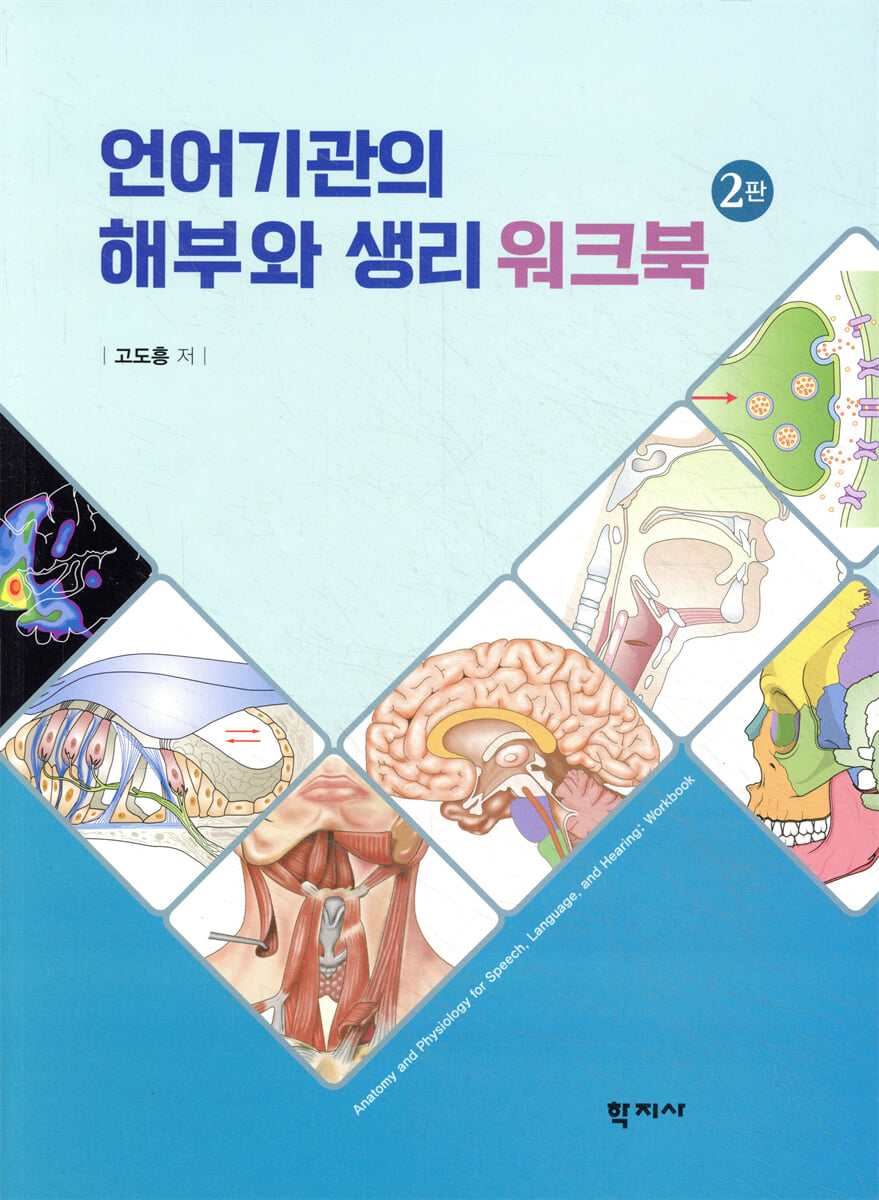
Anatomy and Physiology of the Language Organs Workbook
 |
Description
Book Introduction
This book attempts to use the etymology of specific words as a way to learn medical terminology more systematically and interestingly.
In fact, a significant portion of medical terminology comes from Greek and Latin.
The author intended the workbook to help students develop their own problem-solving skills.
So, I hope that you will become interested in anatomy and physiology without even realizing it.
From my perspective, the most desirable thing is for the textbook and workbook to complement each other and create a synergistic effect.
I would be very happy if this workbook could be of any help in understanding difficult anatomy and physiology.
In fact, a significant portion of medical terminology comes from Greek and Latin.
The author intended the workbook to help students develop their own problem-solving skills.
So, I hope that you will become interested in anatomy and physiology without even realizing it.
From my perspective, the most desirable thing is for the textbook and workbook to complement each other and create a synergistic effect.
I would be very happy if this workbook could be of any help in understanding difficult anatomy and physiology.
index
preface
For students using the workbook
Chapter 1: Fundamentals of Anatomy and Physiology
Learn key terms
1-1 Cross-section of the human body
1-2 Organs of the abdominal and thoracic cavities (anterior)
1-3 Human Skeleton
1-4 Skull (front)
1-5 Skull (posterior)
1-6 cranial sutures
1-7 sphenoid bone
1-8 mandible
1-9 ribs
1-10 sternum
1-11 vertebrae
1-12 Muscles of the Human Body (Front)
1-13 Muscles of the human body (back)
1-14 Facial expression muscles (front)
1-15 Facial expression muscles (lateral)
1-16 Pharynx
1-17 Suprahyoid muscle
1-18 Infrahyoid muscle
1-19 Muscle Structure of the Neck
Practice problems
solution
Chapter 2: Anatomy and Physiology of Respiration
Learn key terms
2-1 Prayer
2-2 Structure of the respiratory system
2-3 respiratory muscles
2-4 Ventilation process of inhalation and exhalation
2-5 Tracheal and bronchial trees
2-6 External and internal breathing
2-7 Structure of the lungs
2-8 Respiratory curve
Practice problems
solution
Chapter 3: Anatomy and Physiology of Vocalization and Articulation
Learn key terms
3-1 Location of the larynx
3-2 Larynx (front)
3-3 Larynx (back)
3-4 Intrinsic laryngeal muscles
3-5 extralaryngeal muscles
3-6 laryngeal cartilages
3-7 Section of the larynx
3-8 Larynx seen from above
3-9 Gate
3-10 Laryngeal nerves
3-11 Layered structure of the vocal cords
3-12 Articulatory organs
3-13 Oral vs. Nasal Sounds
3-14 Place of articulation
3-15 Korean Consonant Chart
3-16 Korean Vowel Chart
3-17 Consonant Identification (1)
Identification of 3-18 consonants (2)
Practice problems
solution
Chapter 4 Structure and Function of Nerves
Learn key terms
4-1 Classification of the Nervous System
4-2 Structure of a neuron
4-3 Synapse
4-4 Reflex Archery
4-5 action potentials
4-6 ventricles
4-7 Brainstem and thalamus
Origin of the 4-8 cranial nerves
Practice problems
solution
Chapter 5 Brain and Language
Learn key terms
5-1 Meninges
5-2 Structure of the cerebral cortex
5-3 Major areas of the cerebral cortex
5-4 Subareas of the cerebral cortex
5-5 Lateralization of the cerebral hemispheres
5-6 Midsagittal plane of the brain
5-7 Brodmann zone
5-8 Limbic system
5-9 Basal ganglia
5-10 cerebral medulla
5-11 Union Fiber
5-12 Structure of the diencephalon
5-13 Brainstem (lateral)
5-14 Delusional Form
5-15 Language processing in the brain
Practice problems
solution
Chapter 6: Anatomy and Physiology of Swallowing
Learn key terms
6-1 Prayer and Esophagus
6-2 Swallowing Structure
6-3 Oral
6-4 permanent teeth
6-5 masticatory muscles
6-6 Nasal cavity (lateral)
6-7 Structure of the tongue
Add 6-8 salivary glands
6-9 pharynx (lateral)
6-10 pharynx (back)
6-11 Digestive System
6-12 Digestive System
6-13 Invasion and aspiration
6-14 Esophagus
6-15th place
6-16 Linkage Exercise
6-17 collection
6-18 Duodenum
6-19 Captain
Stages of Swallowing 6-20
Practice problems
solution
Chapter 7 Anatomy and Physiology of the Hearing Organ
Learn key terms
7-1 Structure of the ear
7-2 Outer ear
7-3 Eardrum
7-4 Isogol
7-5 middle
7-6 Lee Nae-geun
7-7 Maze
7-8 wow
7-9 Corti organ
7-10 basement membrane
7-11 Pathway of the auditory nerve
7-12 Vestibular nerve pathways
7-13 Absolute hearing limit
7-14 Sound transmission path
Practice problems
solution
For students using the workbook
Chapter 1: Fundamentals of Anatomy and Physiology
Learn key terms
1-1 Cross-section of the human body
1-2 Organs of the abdominal and thoracic cavities (anterior)
1-3 Human Skeleton
1-4 Skull (front)
1-5 Skull (posterior)
1-6 cranial sutures
1-7 sphenoid bone
1-8 mandible
1-9 ribs
1-10 sternum
1-11 vertebrae
1-12 Muscles of the Human Body (Front)
1-13 Muscles of the human body (back)
1-14 Facial expression muscles (front)
1-15 Facial expression muscles (lateral)
1-16 Pharynx
1-17 Suprahyoid muscle
1-18 Infrahyoid muscle
1-19 Muscle Structure of the Neck
Practice problems
solution
Chapter 2: Anatomy and Physiology of Respiration
Learn key terms
2-1 Prayer
2-2 Structure of the respiratory system
2-3 respiratory muscles
2-4 Ventilation process of inhalation and exhalation
2-5 Tracheal and bronchial trees
2-6 External and internal breathing
2-7 Structure of the lungs
2-8 Respiratory curve
Practice problems
solution
Chapter 3: Anatomy and Physiology of Vocalization and Articulation
Learn key terms
3-1 Location of the larynx
3-2 Larynx (front)
3-3 Larynx (back)
3-4 Intrinsic laryngeal muscles
3-5 extralaryngeal muscles
3-6 laryngeal cartilages
3-7 Section of the larynx
3-8 Larynx seen from above
3-9 Gate
3-10 Laryngeal nerves
3-11 Layered structure of the vocal cords
3-12 Articulatory organs
3-13 Oral vs. Nasal Sounds
3-14 Place of articulation
3-15 Korean Consonant Chart
3-16 Korean Vowel Chart
3-17 Consonant Identification (1)
Identification of 3-18 consonants (2)
Practice problems
solution
Chapter 4 Structure and Function of Nerves
Learn key terms
4-1 Classification of the Nervous System
4-2 Structure of a neuron
4-3 Synapse
4-4 Reflex Archery
4-5 action potentials
4-6 ventricles
4-7 Brainstem and thalamus
Origin of the 4-8 cranial nerves
Practice problems
solution
Chapter 5 Brain and Language
Learn key terms
5-1 Meninges
5-2 Structure of the cerebral cortex
5-3 Major areas of the cerebral cortex
5-4 Subareas of the cerebral cortex
5-5 Lateralization of the cerebral hemispheres
5-6 Midsagittal plane of the brain
5-7 Brodmann zone
5-8 Limbic system
5-9 Basal ganglia
5-10 cerebral medulla
5-11 Union Fiber
5-12 Structure of the diencephalon
5-13 Brainstem (lateral)
5-14 Delusional Form
5-15 Language processing in the brain
Practice problems
solution
Chapter 6: Anatomy and Physiology of Swallowing
Learn key terms
6-1 Prayer and Esophagus
6-2 Swallowing Structure
6-3 Oral
6-4 permanent teeth
6-5 masticatory muscles
6-6 Nasal cavity (lateral)
6-7 Structure of the tongue
Add 6-8 salivary glands
6-9 pharynx (lateral)
6-10 pharynx (back)
6-11 Digestive System
6-12 Digestive System
6-13 Invasion and aspiration
6-14 Esophagus
6-15th place
6-16 Linkage Exercise
6-17 collection
6-18 Duodenum
6-19 Captain
Stages of Swallowing 6-20
Practice problems
solution
Chapter 7 Anatomy and Physiology of the Hearing Organ
Learn key terms
7-1 Structure of the ear
7-2 Outer ear
7-3 Eardrum
7-4 Isogol
7-5 middle
7-6 Lee Nae-geun
7-7 Maze
7-8 wow
7-9 Corti organ
7-10 basement membrane
7-11 Pathway of the auditory nerve
7-12 Vestibular nerve pathways
7-13 Absolute hearing limit
7-14 Sound transmission path
Practice problems
solution
GOODS SPECIFICS
- Date of issue: August 10, 2023
- Page count, weight, size: 193 pages | 188*255*20mm
- ISBN13: 9788999729423
- ISBN10: 8999729427
You may also like
카테고리
korean


korean

![GQ KOREA Mark (Monthly): December [2025]](http://librairie.coreenne.fr/cdn/shop/files/8ef265dbbfbf186523ed75ba7319009d.jpg?v=1765340328&width=3840)


