

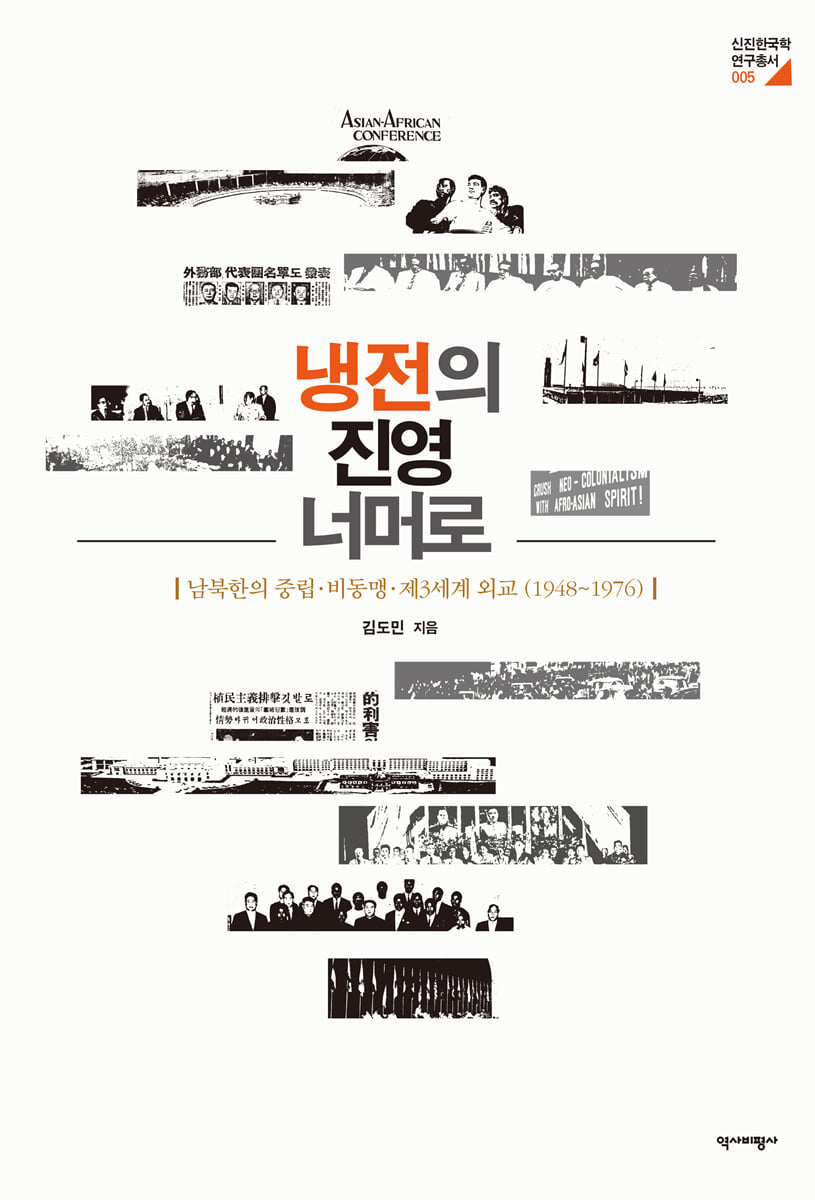
Beyond the Cold War
 |
Description
Book Introduction
The policy of non-alignment emerged from the determination of independent nations to defend their independence and the legitimate rights of their peoples.
The growth of non-aligned movements into a broad international movement that transcends racial, regional, and other barriers is essential to bringing about significant changes in the structure of the entire international community.
With the polarization of the international community based on the principle of blocs a permanent feature of international relations and the specter of nuclear conflict between great powers constantly hovering over humanity, non-aligned countries offer a new perspective for the world today and open the way for a easing of international tensions.
Our era stands at a crossroads in history.
Democratization of international relations is an indispensable imperative of our time.
―From the Declaration of the Third Lusaka Non-Aligned Summit, September 10, 1970.
The growth of non-aligned movements into a broad international movement that transcends racial, regional, and other barriers is essential to bringing about significant changes in the structure of the entire international community.
With the polarization of the international community based on the principle of blocs a permanent feature of international relations and the specter of nuclear conflict between great powers constantly hovering over humanity, non-aligned countries offer a new perspective for the world today and open the way for a easing of international tensions.
Our era stands at a crossroads in history.
Democratization of international relations is an indispensable imperative of our time.
―From the Declaration of the Third Lusaka Non-Aligned Summit, September 10, 1970.
- You can preview some of the book's contents.
Preview
index
Introduction: Viewing the Global Cold War and North and South Korea Together
Part 1: The Emergence of Factional Diplomacy and Neutrality—1948–Mid-to-Late 1950s
Chapter 1: Diplomacy between North and South Korea and the Postcolonial Issue (1948–1950)
1.
South Korea's capitalist diplomacy and the Japanese issue
2.
North Korea's socialist diplomacy and national liberation movement
Chapter 2: The Emergence of Neutrality and the Reactions of North and South Korea
1.
Armistice on the Korean Peninsula and the observation of the armistice by neutral countries and the repatriation of prisoners of war (1950–54)
2.
Geneva and Colombo Conferences (1954)
3.
First Asia-Africa Conference (1955)
4.
Austria's neutralization and independence (1955)
5.
Neutrality of socialist Hungary (1956) and Yugoslavia (1958)
Part 2: Beyond the Cold War Blocs - Mid-1950s to Late 1960s
Chapter 3: First Steps (1957)
1.
North Korea's diplomacy with non-socialist countries
2.
South Korea's neutral diplomacy
Chapter 4: New Africa and Diplomatic Competition between North and South Korea
1.
The rapid growth of new African nations and the active diplomacy between North and South Korea (1958–1968)
2.
Recognition of North and South Korea and the "Two Koreas/Joseon" Problem (1961–64)
Chapter 5: International Conferences Beyond the Cold War Bloc and the Responses of North and South Korea
1.
The Second Asian-African Conference and the Birth of the Non-Aligned Movement (1958-1961)
2.
Preparatory Meeting for the Second Asia-Africa Conference and the Second Non-Aligned Summit (1964)
3.
The 10th anniversary of the Bandung Conference and the indefinite postponement of the Second Asian-African Conference (1965)
Part 3: Toward Non-Alignment/Non-Flagship—Late 1960s–1976
Chapter 6: Preliminary Battle
1.
The New Cold War and Independent Diplomacy between North and South Korea (Late 1960s)
2.
The Resumption of the Non-Aligned Movement and the Wait-and-See Period between North and South Korea (1969-70)
3.
The Radicalization of the Non-Aligned Movement and Active Diplomacy between North and South Korea (1972–73)
Chapter 7: Head-on Confrontation
1.
North and South Korea's diplomatic campaign to join the nonaligned/nonaligned movement (1974-75)
2.
The Fifth Non-Aligned Summit and the North-South Korean Resolution on the Korean Peninsula (1976)
Conclusion: Neutrality and Peace
Part 1: The Emergence of Factional Diplomacy and Neutrality—1948–Mid-to-Late 1950s
Chapter 1: Diplomacy between North and South Korea and the Postcolonial Issue (1948–1950)
1.
South Korea's capitalist diplomacy and the Japanese issue
2.
North Korea's socialist diplomacy and national liberation movement
Chapter 2: The Emergence of Neutrality and the Reactions of North and South Korea
1.
Armistice on the Korean Peninsula and the observation of the armistice by neutral countries and the repatriation of prisoners of war (1950–54)
2.
Geneva and Colombo Conferences (1954)
3.
First Asia-Africa Conference (1955)
4.
Austria's neutralization and independence (1955)
5.
Neutrality of socialist Hungary (1956) and Yugoslavia (1958)
Part 2: Beyond the Cold War Blocs - Mid-1950s to Late 1960s
Chapter 3: First Steps (1957)
1.
North Korea's diplomacy with non-socialist countries
2.
South Korea's neutral diplomacy
Chapter 4: New Africa and Diplomatic Competition between North and South Korea
1.
The rapid growth of new African nations and the active diplomacy between North and South Korea (1958–1968)
2.
Recognition of North and South Korea and the "Two Koreas/Joseon" Problem (1961–64)
Chapter 5: International Conferences Beyond the Cold War Bloc and the Responses of North and South Korea
1.
The Second Asian-African Conference and the Birth of the Non-Aligned Movement (1958-1961)
2.
Preparatory Meeting for the Second Asia-Africa Conference and the Second Non-Aligned Summit (1964)
3.
The 10th anniversary of the Bandung Conference and the indefinite postponement of the Second Asian-African Conference (1965)
Part 3: Toward Non-Alignment/Non-Flagship—Late 1960s–1976
Chapter 6: Preliminary Battle
1.
The New Cold War and Independent Diplomacy between North and South Korea (Late 1960s)
2.
The Resumption of the Non-Aligned Movement and the Wait-and-See Period between North and South Korea (1969-70)
3.
The Radicalization of the Non-Aligned Movement and Active Diplomacy between North and South Korea (1972–73)
Chapter 7: Head-on Confrontation
1.
North and South Korea's diplomatic campaign to join the nonaligned/nonaligned movement (1974-75)
2.
The Fifth Non-Aligned Summit and the North-South Korean Resolution on the Korean Peninsula (1976)
Conclusion: Neutrality and Peace
Publisher's Review
A new wave of neutrality and non-alignment emerged across the camps.
―From the front lines of the Cold War, we see a new wave of decolonization, the end of the Cold War, and peace.
In the mid-to-late 1950s, following the Bandung Conference, countries pursuing neutrality and non-alignment emerged as new actors in international politics in the global Cold War.
Of course, just as Austria declared permanent neutrality and achieved independence, a neutral state in the old Swiss style was also being created.
Although the content and nature of neutrality varied, the wave of neutrality in the late 1950s had become an irreversible trend.
The South Korean government was critical of the wave of postcolonial peace and neutrality that emerged in the 1950s.
Peace and neutrality were merely a peaceful offensive and a neutral offensive against the free world that benefited the communist forces.
On the other hand, North Korea showed active support and solidarity from the perspective of peace and national liberation movement.
Although North and South Korea have shown conflicting perceptions and responses to non-alignment, they showed "symmetrical similarity" when evaluating the effects of peace and neutrality.
They only considered whether peace and neutrality were advantageous or disadvantageous to their own camp.
The Bandung Conference and Austria's neutralization and independence originated from the capitalist camp, while the neutral diplomacy advocated by Hungary and Yugoslavia originated from the socialist camp.
Therefore, while North Korea welcomed the Bandung Conference and Austria's neutralization and independence, it condemned the neutrality that emerged in socialist Hungary and Yugoslavia as counter-revolutionary and revisionist.
'Symmetrically', South Korea welcomed Hungary's neutrality, but condemned the Bandung Conference, in which many capitalist countries participated, and the neutralization and independence of capitalist Austria.
In this way, the wave of neutrality that emerged globally in the 1950s, striving for post-colonial and post-Cold War peace, was shattered by the powerful centrifugal force of bipolarity as soon as it reached the divided Korean Peninsula, the front line of the Cold War.
Prove yourself by competing in a land of neutrality and non-alignment.
―North and South Korea meet again at the Asia-Africa Conference
In the mid-to-late 1950s, North and South Korea first expanded beyond their own camps to non-socialist or neutral countries in Asia and Africa.
Especially around 1960, as the international political influence of African countries increased, diplomatic competition between North and South Korea over African countries intensified.
The birth and success of the Non-Aligned Movement in 1961 signaled to the world that countries that refused to take sides in the Cold War were key players in the global Cold War order.
In accordance with the decision of the Jakarta Preparatory Conference in 1964, North and South Korea became official invitees to the Second Asia-Africa Conference, and immediately received an invitation to the Asia-Africa Economic Conference held in Geneva, Switzerland.
With this, North and South Korea met again in Geneva for the first time in 10 years since their participation in the Geneva conference in 1954.
The rapid growth of African states in the early to mid-1960s strengthened the international political influence of the Third World, particularly the Asian-African group, but at the same time, the increasing number of states also led to an increase in conflicts among them.
Additionally, key figures who had led the neutrality and non-alignment movement died or were overthrown by military coups.
In particular, with the Third Non-Aligned Summit failing to be held throughout the 1960s, the Non-Aligned Movement seemed to be fading into the annals of international politics.
At the same time, diplomatic competition between North and South Korea across the Cold War bloc has also subsided.
The era of neutrality and non-alignment seemed to be coming to an end.
The non-aligned belief in the end of the Cold War and peace
―Suppressing Cold War voices that incite war
Around 1970, as leaders of the US and the Soviet Union and the US and China sought to ease tensions, the global Cold War, East Asia, and the Korean Peninsula experienced rapid changes, and the Non-Aligned Summit began to be held again.
In particular, when a resolution on the Korean Peninsula issue, advocated by North Korea, was adopted at the 1973 Algiers Non-Aligned Summit and North Korea attempted to directly join the Non-Aligned Movement, diplomatic competition between North and South Korea intensified.
At the 1975 Non-Aligned Foreign Ministers' Conference in Lima, Peru, North Korea succeeded in joining the organization on its own, overcoming South Korea's obstruction.
North Korea's non-aligned and Third World diplomacy seemed unstoppable.
However, North Korea's non-aligned diplomacy, which had been on a roll, ran into difficulties at the 1976 Colombo Summit.
As the number of countries expressing reservations about the resolution proposed by North Korea increased, the adoption of the resolution was canceled.
This may be due to the non-aligned countries' 'antipathy' toward North Korea, which heightened the crisis of war on the Korean Peninsula in 1976.
For many non-aligned countries that fundamentally pursue post-Cold War peace, North Korea's propaganda attacking the United States under the pretext of a war crisis would have been difficult to gain acceptance.
Since their emergence in 1961, refusing to take sides in the Cold War, the non-aligned nations have consistently pursued the goal of stopping war and creating peace.
Therefore, it can be seen that the independent judgment of many non-aligned countries seeking to create a peaceful Korean Peninsula free from war has put the brakes on North Korea's radical claims of not hesitating to wage war.
Actors who rejected the hostile Cold War order and dreamed of peace
And the diplomatic war between North and South Korea unfolded across the front lines of the Cold War.
This book explains the movements of the "neutral, non-aligned, and third world" that refused to take sides in the Cold War from 1948 to 1976, while also examining the historical process through which North and South Korea, as post-colonial divided nations, advanced beyond the Cold War bloc and clashed at the Non-Aligned Conference in the mid-1970s.
The fierce diplomatic competition between North and South Korea, which stretched beyond the Cold War bloc, was not secondary or subordinate to the bipolar Cold War, but rather a dynamic history unfolding in a field where issues such as the "global Cold War," decolonization, and division intersected.
The weaker countries of North and South Korea and the Third World, which were considered peripheral to the Cold War, were active actors in the changes in the global Cold War order.
While the book's central theme is the history of North-South diplomatic competition across the political spectrum, it also includes the stories of actors who dreamed of a post-colonial, post-Cold War peace beyond the hostile and dichotomous violence of the Cold War.
―From the front lines of the Cold War, we see a new wave of decolonization, the end of the Cold War, and peace.
In the mid-to-late 1950s, following the Bandung Conference, countries pursuing neutrality and non-alignment emerged as new actors in international politics in the global Cold War.
Of course, just as Austria declared permanent neutrality and achieved independence, a neutral state in the old Swiss style was also being created.
Although the content and nature of neutrality varied, the wave of neutrality in the late 1950s had become an irreversible trend.
The South Korean government was critical of the wave of postcolonial peace and neutrality that emerged in the 1950s.
Peace and neutrality were merely a peaceful offensive and a neutral offensive against the free world that benefited the communist forces.
On the other hand, North Korea showed active support and solidarity from the perspective of peace and national liberation movement.
Although North and South Korea have shown conflicting perceptions and responses to non-alignment, they showed "symmetrical similarity" when evaluating the effects of peace and neutrality.
They only considered whether peace and neutrality were advantageous or disadvantageous to their own camp.
The Bandung Conference and Austria's neutralization and independence originated from the capitalist camp, while the neutral diplomacy advocated by Hungary and Yugoslavia originated from the socialist camp.
Therefore, while North Korea welcomed the Bandung Conference and Austria's neutralization and independence, it condemned the neutrality that emerged in socialist Hungary and Yugoslavia as counter-revolutionary and revisionist.
'Symmetrically', South Korea welcomed Hungary's neutrality, but condemned the Bandung Conference, in which many capitalist countries participated, and the neutralization and independence of capitalist Austria.
In this way, the wave of neutrality that emerged globally in the 1950s, striving for post-colonial and post-Cold War peace, was shattered by the powerful centrifugal force of bipolarity as soon as it reached the divided Korean Peninsula, the front line of the Cold War.
Prove yourself by competing in a land of neutrality and non-alignment.
―North and South Korea meet again at the Asia-Africa Conference
In the mid-to-late 1950s, North and South Korea first expanded beyond their own camps to non-socialist or neutral countries in Asia and Africa.
Especially around 1960, as the international political influence of African countries increased, diplomatic competition between North and South Korea over African countries intensified.
The birth and success of the Non-Aligned Movement in 1961 signaled to the world that countries that refused to take sides in the Cold War were key players in the global Cold War order.
In accordance with the decision of the Jakarta Preparatory Conference in 1964, North and South Korea became official invitees to the Second Asia-Africa Conference, and immediately received an invitation to the Asia-Africa Economic Conference held in Geneva, Switzerland.
With this, North and South Korea met again in Geneva for the first time in 10 years since their participation in the Geneva conference in 1954.
The rapid growth of African states in the early to mid-1960s strengthened the international political influence of the Third World, particularly the Asian-African group, but at the same time, the increasing number of states also led to an increase in conflicts among them.
Additionally, key figures who had led the neutrality and non-alignment movement died or were overthrown by military coups.
In particular, with the Third Non-Aligned Summit failing to be held throughout the 1960s, the Non-Aligned Movement seemed to be fading into the annals of international politics.
At the same time, diplomatic competition between North and South Korea across the Cold War bloc has also subsided.
The era of neutrality and non-alignment seemed to be coming to an end.
The non-aligned belief in the end of the Cold War and peace
―Suppressing Cold War voices that incite war
Around 1970, as leaders of the US and the Soviet Union and the US and China sought to ease tensions, the global Cold War, East Asia, and the Korean Peninsula experienced rapid changes, and the Non-Aligned Summit began to be held again.
In particular, when a resolution on the Korean Peninsula issue, advocated by North Korea, was adopted at the 1973 Algiers Non-Aligned Summit and North Korea attempted to directly join the Non-Aligned Movement, diplomatic competition between North and South Korea intensified.
At the 1975 Non-Aligned Foreign Ministers' Conference in Lima, Peru, North Korea succeeded in joining the organization on its own, overcoming South Korea's obstruction.
North Korea's non-aligned and Third World diplomacy seemed unstoppable.
However, North Korea's non-aligned diplomacy, which had been on a roll, ran into difficulties at the 1976 Colombo Summit.
As the number of countries expressing reservations about the resolution proposed by North Korea increased, the adoption of the resolution was canceled.
This may be due to the non-aligned countries' 'antipathy' toward North Korea, which heightened the crisis of war on the Korean Peninsula in 1976.
For many non-aligned countries that fundamentally pursue post-Cold War peace, North Korea's propaganda attacking the United States under the pretext of a war crisis would have been difficult to gain acceptance.
Since their emergence in 1961, refusing to take sides in the Cold War, the non-aligned nations have consistently pursued the goal of stopping war and creating peace.
Therefore, it can be seen that the independent judgment of many non-aligned countries seeking to create a peaceful Korean Peninsula free from war has put the brakes on North Korea's radical claims of not hesitating to wage war.
Actors who rejected the hostile Cold War order and dreamed of peace
And the diplomatic war between North and South Korea unfolded across the front lines of the Cold War.
This book explains the movements of the "neutral, non-aligned, and third world" that refused to take sides in the Cold War from 1948 to 1976, while also examining the historical process through which North and South Korea, as post-colonial divided nations, advanced beyond the Cold War bloc and clashed at the Non-Aligned Conference in the mid-1970s.
The fierce diplomatic competition between North and South Korea, which stretched beyond the Cold War bloc, was not secondary or subordinate to the bipolar Cold War, but rather a dynamic history unfolding in a field where issues such as the "global Cold War," decolonization, and division intersected.
The weaker countries of North and South Korea and the Third World, which were considered peripheral to the Cold War, were active actors in the changes in the global Cold War order.
While the book's central theme is the history of North-South diplomatic competition across the political spectrum, it also includes the stories of actors who dreamed of a post-colonial, post-Cold War peace beyond the hostile and dichotomous violence of the Cold War.
GOODS SPECIFICS
- Date of issue: October 31, 2025
- Page count, weight, size: 568 pages | 802g | 152*230*30mm
- ISBN13: 9788976966056
- ISBN10: 8976966058
You may also like
카테고리
korean


korean

![GQ KOREA Mark (Monthly): December [2025]](http://librairie.coreenne.fr/cdn/shop/files/8ef265dbbfbf186523ed75ba7319009d.jpg?v=1765340328&width=3840)


