

Ulsan Yeojido
 |
Description
Book Introduction
Why did the 1,000-year-old kingdom of Silla never move its capital?
The reason is, surprisingly, that there was an international trade port called Ulsan.
As early as 1,200 years ago, Ulsan was the first international trading port on the Korean Peninsula.
Through Ulsan, which had three-dimensional internal and external ports called Sapo and Gaeunpo, Silla was able to achieve the unification of the three kingdoms and leap forward as an international trading nation.
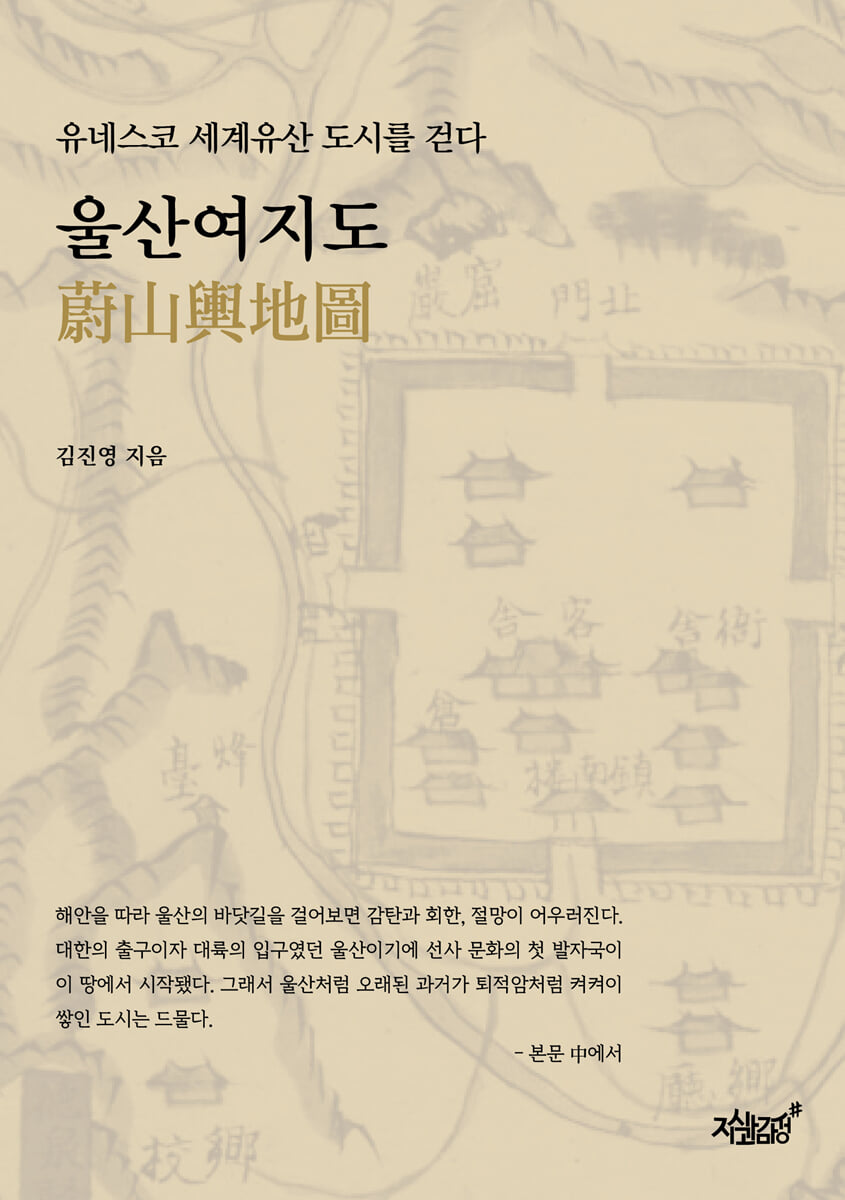
The humanities and geography history book that unravels the long history of Ulsan in a field trip format is 『Ulsan Yeojido』.
The reason is, surprisingly, that there was an international trade port called Ulsan.
As early as 1,200 years ago, Ulsan was the first international trading port on the Korean Peninsula.
Through Ulsan, which had three-dimensional internal and external ports called Sapo and Gaeunpo, Silla was able to achieve the unification of the three kingdoms and leap forward as an international trading nation.
The humanities and geography history book that unravels the long history of Ulsan in a field trip format is 『Ulsan Yeojido』.
- You can preview some of the book's contents.
Preview
index
Introduction: The story of a cart carrying the land of Ulsan
Chapter 1: From Ganjeol to Gangdong, the bloodline that runs through Ulsan
Eonyang, a city of light that was once a sea 10,000 years ago
Ganjeol, the first land of sunlight on the Korean Peninsula
Jin-ha, Gangyang, and Myeongseondo embrace the sandy beach
Longevity, a land where the cries of ghost whales echo as hallucinations
The end of Baekdudaegan Mountain Range, hiding its secret beauty
Jujeon, the red land where the last wind-chilling culture remained
Gangdong, the salty sea where whales relieve themselves
Chapter 2: Traces of Prehistoric Man, a Land Hidden with 10,000 Years of Secrets
Prehistoric Land, Evidence of Human Migration
Shinam, the coast where prehistoric humans prayed for abundance
Geomdan, the site of a Bronze Age time capsule from the Korean Peninsula
Samnam, the land where the prehistoric man planted his flag at Dumulmeori
Okhyun: Traces of rice farming that astonished the archaeological world
The roots of the Saroguk kingdom, founded by the Zhongshan and Iron Age powers
Dalcheon, the land where the secret map of Iron Road is buried
Chapter 3: The world Silla dreamed of and the utopia of the Buddhist land
The Haemun Gate, connecting Silla and the world
The spirit of tolerance that read the multicultural code 1,200 years ago
Taehwa, a land filled with the positive energy of Ulsan's feng shui
Magol, the birthplace of the nation, a land of strangely shaped rocks
Gyebeon, a logistics hub that protected one of the world's four major trading ports.
Daegok, a royal retreat of Silla with a towering Seoseok
Gateway, a castle with a hidden history of Northeast Asian warfare from 1,400 years ago
Manjushri, the wish for national protection Buddhism that permeates every corner of the mountain
Chapter 4: A world with seven mountains and five rivers flowing through it
Hakseong, the final battleground of the Joseon-Japanese War
Isu Samsan, the land of prophecy where a king will one day emerge
The barracks, a land where the determination to protect the country is as strong as an iron fortress
The Seven Peaks of Ulju, the Land of Cretaceous Dinosaurs
Namsan, a breathtaking landscape that hides even the moonlight
Beomseo (凡西), a small town that returns to Auraji
Nammok, the land where horses run towards the East Sea
Chapter 5: A World Heritage City, a Land of Ancient Miracles
Ulsan, the land of miracles in the ancient history of the Korean Peninsula
A land filled with breathtaking Cenozoic scenery and Cretaceous fossils
The First Miracle: Why Prehistoric Man Left Petroglyphs
The Second Miracle: Stone Age Cultures on the Coast and inland
Stone tool manufacturing and rice farming: the third and fourth miracles
The vast Bronze Age time capsule is the fifth miracle.
Whales: 10,000 Years of Content to Feed Ulsan
Evidence of whale hunting pouring out from Hwangseong and Sejuk
A land where prehistoric whale hunting is revived as a festival
Chapter 6: A Tale of 10,000 Years in Ulju
Eonyang, the secret land where peach blossoms are hidden
Mokdo Island, an island where mermaids and Japanese fishermen coexist
Guksu (菊秀), a land where Eun-eul and Bijo are strong in loyalty
Galsan, the ridge of the southern province where the flag is planted
Namchang, overcoming its history of exploitation, transforms into a local tourist destination.
Seosaeng, a hill where spring sunlight blooms with a particularly sad feeling
Seokcheon, the heart of Hoya, surrounded by a folding screen
Chapter 7: The Secret Hidden in Ulsan's Old Place Names
Ulsan and Ulju, place names steeped in 1,000 years of history
Seongnam, the center of Ulsan's governance for 500 years
Boksan, the land where the heavenly land meets the sea
Hamwol, the mountain of fortune where moonlight leads to Taehwa
Jangchun-o (藏春塢), a secret garden hiding the spring light
Dotjil, a mountain that no one knows about but has become its own guardian deity
Hogye, a century of memories carrying the history of iron
Duwang (斗旺), a village where the king's story becomes a legend
Hwajeong Cheonnae, a place to rest and enjoy the last rays of the year
Taehwagang Station, a land of global exchange 1,200 years ago
Ulsan and Yamato: The Dreams of Our Ancestors, Called Out by Zainichi Youth
Outgoing article: Finishing organizing the manuscript for the Ulsan Yeojido
Chapter 1: From Ganjeol to Gangdong, the bloodline that runs through Ulsan
Eonyang, a city of light that was once a sea 10,000 years ago
Ganjeol, the first land of sunlight on the Korean Peninsula
Jin-ha, Gangyang, and Myeongseondo embrace the sandy beach
Longevity, a land where the cries of ghost whales echo as hallucinations
The end of Baekdudaegan Mountain Range, hiding its secret beauty
Jujeon, the red land where the last wind-chilling culture remained
Gangdong, the salty sea where whales relieve themselves
Chapter 2: Traces of Prehistoric Man, a Land Hidden with 10,000 Years of Secrets
Prehistoric Land, Evidence of Human Migration
Shinam, the coast where prehistoric humans prayed for abundance
Geomdan, the site of a Bronze Age time capsule from the Korean Peninsula
Samnam, the land where the prehistoric man planted his flag at Dumulmeori
Okhyun: Traces of rice farming that astonished the archaeological world
The roots of the Saroguk kingdom, founded by the Zhongshan and Iron Age powers
Dalcheon, the land where the secret map of Iron Road is buried
Chapter 3: The world Silla dreamed of and the utopia of the Buddhist land
The Haemun Gate, connecting Silla and the world
The spirit of tolerance that read the multicultural code 1,200 years ago
Taehwa, a land filled with the positive energy of Ulsan's feng shui
Magol, the birthplace of the nation, a land of strangely shaped rocks
Gyebeon, a logistics hub that protected one of the world's four major trading ports.
Daegok, a royal retreat of Silla with a towering Seoseok
Gateway, a castle with a hidden history of Northeast Asian warfare from 1,400 years ago
Manjushri, the wish for national protection Buddhism that permeates every corner of the mountain
Chapter 4: A world with seven mountains and five rivers flowing through it
Hakseong, the final battleground of the Joseon-Japanese War
Isu Samsan, the land of prophecy where a king will one day emerge
The barracks, a land where the determination to protect the country is as strong as an iron fortress
The Seven Peaks of Ulju, the Land of Cretaceous Dinosaurs
Namsan, a breathtaking landscape that hides even the moonlight
Beomseo (凡西), a small town that returns to Auraji
Nammok, the land where horses run towards the East Sea
Chapter 5: A World Heritage City, a Land of Ancient Miracles
Ulsan, the land of miracles in the ancient history of the Korean Peninsula
A land filled with breathtaking Cenozoic scenery and Cretaceous fossils
The First Miracle: Why Prehistoric Man Left Petroglyphs
The Second Miracle: Stone Age Cultures on the Coast and inland
Stone tool manufacturing and rice farming: the third and fourth miracles
The vast Bronze Age time capsule is the fifth miracle.
Whales: 10,000 Years of Content to Feed Ulsan
Evidence of whale hunting pouring out from Hwangseong and Sejuk
A land where prehistoric whale hunting is revived as a festival
Chapter 6: A Tale of 10,000 Years in Ulju
Eonyang, the secret land where peach blossoms are hidden
Mokdo Island, an island where mermaids and Japanese fishermen coexist
Guksu (菊秀), a land where Eun-eul and Bijo are strong in loyalty
Galsan, the ridge of the southern province where the flag is planted
Namchang, overcoming its history of exploitation, transforms into a local tourist destination.
Seosaeng, a hill where spring sunlight blooms with a particularly sad feeling
Seokcheon, the heart of Hoya, surrounded by a folding screen
Chapter 7: The Secret Hidden in Ulsan's Old Place Names
Ulsan and Ulju, place names steeped in 1,000 years of history
Seongnam, the center of Ulsan's governance for 500 years
Boksan, the land where the heavenly land meets the sea
Hamwol, the mountain of fortune where moonlight leads to Taehwa
Jangchun-o (藏春塢), a secret garden hiding the spring light
Dotjil, a mountain that no one knows about but has become its own guardian deity
Hogye, a century of memories carrying the history of iron
Duwang (斗旺), a village where the king's story becomes a legend
Hwajeong Cheonnae, a place to rest and enjoy the last rays of the year
Taehwagang Station, a land of global exchange 1,200 years ago
Ulsan and Yamato: The Dreams of Our Ancestors, Called Out by Zainichi Youth
Outgoing article: Finishing organizing the manuscript for the Ulsan Yeojido
Publisher's Review
The land called Ulsan is truly mysterious.
When looking at the globe from above, Ulsan's exquisite location stands out.
As you walk step by step from the very bottom of Ulsan, you will gradually discover why prehistoric people made a living on this land 10,000 years ago.
Walking along the coast of Ulsan, one is filled with a mixture of admiration, regret, and despair.
Ulsan, which supports the lower spine of the southeastern part of the Korean Peninsula, is a naturally strategic location.
Because of its rich history, Ulsan has become a world cultural heritage city and is now the heart of cutting-edge industry.
The history of the land written step by step is the 『Ulsan Yeojido』.
When looking at the globe from above, Ulsan's exquisite location stands out.
As you walk step by step from the very bottom of Ulsan, you will gradually discover why prehistoric people made a living on this land 10,000 years ago.
Walking along the coast of Ulsan, one is filled with a mixture of admiration, regret, and despair.
Ulsan, which supports the lower spine of the southeastern part of the Korean Peninsula, is a naturally strategic location.
Because of its rich history, Ulsan has become a world cultural heritage city and is now the heart of cutting-edge industry.
The history of the land written step by step is the 『Ulsan Yeojido』.
GOODS SPECIFICS
- Date of issue: December 1, 2025
- Page count, weight, size: 328 pages | 148*210*30mm
- ISBN13: 9791139228991
- ISBN10: 1139228994
You may also like
카테고리
korean


korean

![GQ KOREA Mark (Monthly): December [2025]](http://librairie.coreenne.fr/cdn/shop/files/8ef265dbbfbf186523ed75ba7319009d.jpg?v=1765340328&width=3840)


