

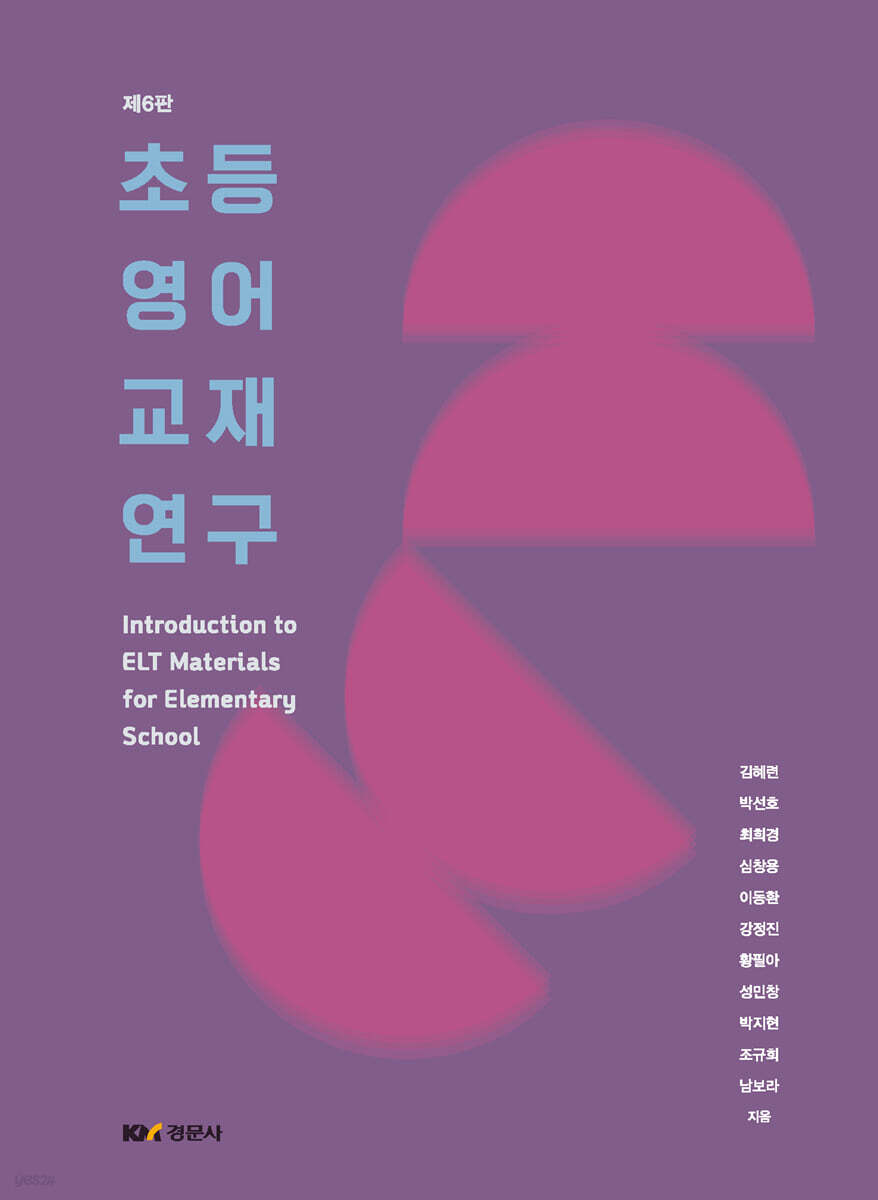
Research on elementary English textbooks
 |
Description
Book Introduction
Elementary school English classes focus on teaching language skills that form the basis of communication, cultivating students' ability to understand and express basic English used in everyday life.
Initially, the focus should be on oral language education, such as speaking, but written language should also be taught in a balanced way to develop.
This book is well-organized and systematic in its educational materials to achieve the goals of elementary English education.
Initially, the focus should be on oral language education, such as speaking, but written language should also be taught in a balanced way to develop.
This book is well-organized and systematic in its educational materials to achieve the goals of elementary English education.
- You can preview some of the book's contents.
Preview
index
Chapter 1: English Learning and Textbooks
1.
The Meaning and Necessity of Learning Materials / 2
2.
The Role of Textbooks and Teachers / 9
3.
Characteristics of a Great English Textbook / 10
4.
Using Classes and Textbooks / 19
5.
Establishing Awareness of Textbooks / 20
Chapter 2 English Syllabus
1.
Syllabus and Curriculum / 24
2.
Types of Syllabuses / 27
3.
Development and Use of Syllabuses / 40
Chapter 3 English Curriculum
1.
Curriculum Revision / 44
2.
Evolution of the English Curriculum in Korea / 45
3.
2022 Revised Elementary English Curriculum / 53
Chapter 4: Development and Evaluation of English Textbooks
1.
Types of English Textbooks / 68
2.
Development of English Textbooks / 77
3.
English Textbook Contents / 80
4.
Selection of English Textbook Content / 89
5.
Analysis of English Textbooks / 94
Chapter 5: Application and Revision of English Textbooks
1.
Applying English Textbooks / 102
2.
Adaptation of English Textbooks / 104
3.
Transforming Activities in English Classes / 116
Chapter 6: Elementary English Class Materials and Activities
1.
Teaching Materials and Teaching Aids: Meaning and Necessity / 132
2.
English Classroom / 134
3.
Elementary English Class Materials / 141
Chapter 7: Use of Multimedia Materials
1.
English Education Using Multimedia / 172
2.
English Education Using Computer Resources / 176
3.
English Education Using the Internet / 187
Chapter 8: Learner-Centered Learning and Tasks
1.
The Meaning of Leveled Learning / 208
2.
Learning Styles and Tasks / 214
3.
Self-Directed Language Learning and Tasks / 226
Chapter 9: Elementary English Classes and Assessment
1.
Language Evaluation / 238
2.
A History of Language Assessment / 241
3.
Types of Assessments and Tests / 244
4.
Evaluation Requirements / 248
5.
Assessment for Young Learners / 254
supplement
Appendix 1.
English Department Curriculum / 296
[Appendix 1] Material / 324
[Appendix 2] Communication Functions and Example Sentences / 325
[Appendix 3] Vocabulary: Basic Vocabulary Guidelines and Basic Vocabulary List / 342
[Appendix 4] Language Forms Required for Communication / 376
Appendix 2.
Perceptual Learning Style Questionnaire / 387
References / 389
Search / 405
1.
The Meaning and Necessity of Learning Materials / 2
2.
The Role of Textbooks and Teachers / 9
3.
Characteristics of a Great English Textbook / 10
4.
Using Classes and Textbooks / 19
5.
Establishing Awareness of Textbooks / 20
Chapter 2 English Syllabus
1.
Syllabus and Curriculum / 24
2.
Types of Syllabuses / 27
3.
Development and Use of Syllabuses / 40
Chapter 3 English Curriculum
1.
Curriculum Revision / 44
2.
Evolution of the English Curriculum in Korea / 45
3.
2022 Revised Elementary English Curriculum / 53
Chapter 4: Development and Evaluation of English Textbooks
1.
Types of English Textbooks / 68
2.
Development of English Textbooks / 77
3.
English Textbook Contents / 80
4.
Selection of English Textbook Content / 89
5.
Analysis of English Textbooks / 94
Chapter 5: Application and Revision of English Textbooks
1.
Applying English Textbooks / 102
2.
Adaptation of English Textbooks / 104
3.
Transforming Activities in English Classes / 116
Chapter 6: Elementary English Class Materials and Activities
1.
Teaching Materials and Teaching Aids: Meaning and Necessity / 132
2.
English Classroom / 134
3.
Elementary English Class Materials / 141
Chapter 7: Use of Multimedia Materials
1.
English Education Using Multimedia / 172
2.
English Education Using Computer Resources / 176
3.
English Education Using the Internet / 187
Chapter 8: Learner-Centered Learning and Tasks
1.
The Meaning of Leveled Learning / 208
2.
Learning Styles and Tasks / 214
3.
Self-Directed Language Learning and Tasks / 226
Chapter 9: Elementary English Classes and Assessment
1.
Language Evaluation / 238
2.
A History of Language Assessment / 241
3.
Types of Assessments and Tests / 244
4.
Evaluation Requirements / 248
5.
Assessment for Young Learners / 254
supplement
Appendix 1.
English Department Curriculum / 296
[Appendix 1] Material / 324
[Appendix 2] Communication Functions and Example Sentences / 325
[Appendix 3] Vocabulary: Basic Vocabulary Guidelines and Basic Vocabulary List / 342
[Appendix 4] Language Forms Required for Communication / 376
Appendix 2.
Perceptual Learning Style Questionnaire / 387
References / 389
Search / 405
Publisher's Review
Elementary school English classes focus on teaching language skills that form the basis of communication, cultivating students' ability to understand and express basic English used in everyday life.
Initially, the focus should be on oral language education, such as speaking, but written language should also be taught in a balanced way to develop.
This book is well-organized and systematic in its educational materials to achieve the goals of elementary English education.
To keep young students new to English interested in learning, educational materials that utilize a variety of multimedia, live materials, stories, activities, and games, along with new teaching methods, are needed.
Additionally, we must actively utilize edutech and digital teaching and learning tools for guidance.
In response to these educational needs, this book specifically proposes principles for organizing elementary English textbooks, teaching syllabi, curriculum, production, adaptation, and utilization of various educational materials, evaluation, and understanding and efficient teaching methods for the English learning process according to learner styles.
Revised to the 6th edition in March 2023.
Initially, the focus should be on oral language education, such as speaking, but written language should also be taught in a balanced way to develop.
This book is well-organized and systematic in its educational materials to achieve the goals of elementary English education.
To keep young students new to English interested in learning, educational materials that utilize a variety of multimedia, live materials, stories, activities, and games, along with new teaching methods, are needed.
Additionally, we must actively utilize edutech and digital teaching and learning tools for guidance.
In response to these educational needs, this book specifically proposes principles for organizing elementary English textbooks, teaching syllabi, curriculum, production, adaptation, and utilization of various educational materials, evaluation, and understanding and efficient teaching methods for the English learning process according to learner styles.
Revised to the 6th edition in March 2023.
GOODS SPECIFICS
- Date of issue: March 2, 2023
- Page count, weight, size: 424 pages | 188*257*30mm
- ISBN13: 9791160736120
- ISBN10: 116073612X
You may also like
카테고리
korean


korean

![GQ KOREA Mark (Monthly): December [2025]](http://librairie.coreenne.fr/cdn/shop/files/8ef265dbbfbf186523ed75ba7319009d.jpg?v=1765340328&width=3840)


