

History Collection in My Room
 |
Description
Book Introduction
With small items collected over 30 years
The dreams and hopes of the old people
Record it as 'history'
Park Geon-ho, a history collector and archivist
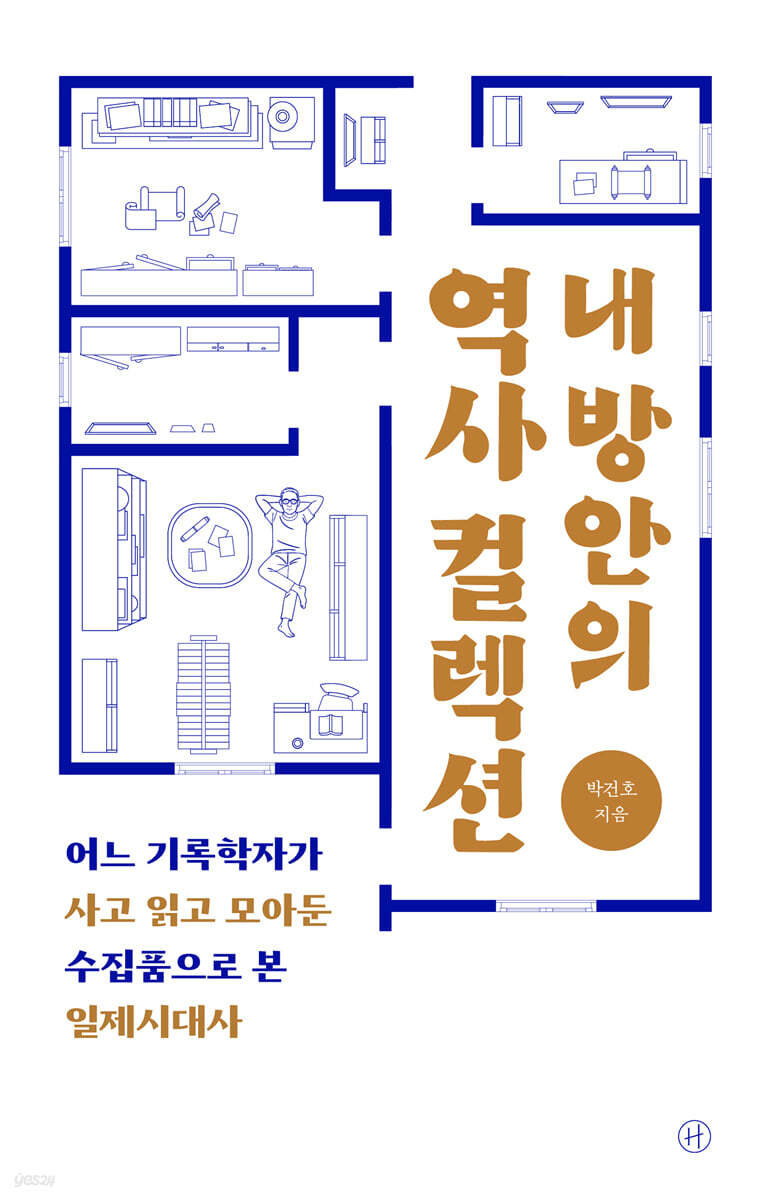
A new look at the history of the Japanese colonial period through 110 collectibles
Park Geon-ho, a history collector and archivist, appeared on a variety show and touched our hearts by introducing the 'Taegeukgi made by recycling the Japanese flag.'
With a special collection of 110 items carefully selected from the numerous collections he has amassed over the past 30 years, he presents a new interpretation of the history of the Japanese colonial period from the opening of the country to the immediate post-liberation period.
Old, faded photographs, letters, diaries, booklets, stamps and postcards, all kinds of certificates, even the Taegeukgi, rice sacks, and even building fragments... These objects, buried deep in history and imbued with the scent of people's lives, convey the emotions and resonance of an era that cannot be fully captured in words.
The dreams and hopes of the old people
Record it as 'history'
Park Geon-ho, a history collector and archivist
A new look at the history of the Japanese colonial period through 110 collectibles
Park Geon-ho, a history collector and archivist, appeared on a variety show and touched our hearts by introducing the 'Taegeukgi made by recycling the Japanese flag.'
With a special collection of 110 items carefully selected from the numerous collections he has amassed over the past 30 years, he presents a new interpretation of the history of the Japanese colonial period from the opening of the country to the immediate post-liberation period.
Old, faded photographs, letters, diaries, booklets, stamps and postcards, all kinds of certificates, even the Taegeukgi, rice sacks, and even building fragments... These objects, buried deep in history and imbued with the scent of people's lives, convey the emotions and resonance of an era that cannot be fully captured in words.
- You can preview some of the book's contents.
Preview
index
In publishing the book
prolog
1 Dream of a New Country 1876–1910
Interpreter Lee Eung-jun creates the first Taegeukgi (Korean flag)
The Origin of Korean Literature: The Tale of Chunhyang
Let's go! To Joseon, the land of opportunity!
The sorrow of a weak and insecure country
The Gyeongseong War of June 1894
Stand up to Mama
The Lost Lunar Time
Please deliver this letter quickly.
Dari-pung, Deokyul-pung or Jeon-eo-gi
A western ghost charging with a fire demon
The house is a crying mess with the railroad tracks and pillows
The places where Koreans live are full of shit and urine.
Military checks stained with the blood, sweat, and tears of Koreans
Economic sovereignty taken away by currency reform
Won Tae-woo confronts Ito with a stick
Could it be that we were deceived from the beginning?
I would rather die a free man than live as a slave.
May our country become a country of boys
Execute the students' short hair immediately
Heroes, save us.
2 Losing the country 1910-1930
The Fall of the Empire, the Beginning of the Republic
Joseon, the new territory of the Empire of Japan
Taegeukgi in the Meiji era
Shine brightly in the three thousand ri Rose of Sharon Garden
How did Oh Bong-du from Pyeongan Province get to Chandler?
Subdue Koreans with Koreans
He sold unripe fruit, he took off his shirt…
From the edge to the level
Between republicanism and restorationism
Korea is an independent nation and Koreans are a free people.
A riot, not an independence movement
Teachers wearing uniforms and carrying swords
Realization of the right to vote?
Time is more precious than money
Hot items of the time: economicization and rubber shoes
Let's create a society as equal as a scale.
The words that call for death, Jugoen Gojusen
Keijo Imperial University is established
Explain the reasons for the annexation of Korea by Japan.
The Government-General of Korea, a symbol of colonial rule
Korean rice on the Japanese table, Manchurian grains on the Korean table
Koreans targeting the royal family
Know everything about Joseon
Who is school for?
3 Daily Life in the Continuing War 1931–1939
Manbosan Incident and Yun Bong-gil's Uprising
Let's build a paradise of harmony among the five races.
The south grows cotton, the north raises sheep
Let's wear colored clothes
Let's learn, let's teach, let's all be together!
Kim Jeong-ho, a mountaineer, assisting the Japanese?
A patriotic plane named 'Gamani'
If you go to Gyeongseong, be sure to see the Independence Gate.
The ghosts are coming in on the train
The story of the year-end sympathy week and the gisaeng Kim Jin-hyang
Kim Dong-in's novel "Sweet Potato"?
“No, I’m an asshole!”
Korean and Japanese, which is the national language?
When did you ever tell me to only use Japanese?
From National Foundation Exercises to Imperial Subject Exercises
I will die under the flag
The craze for applying to become a special forces soldier in the Army
Comrades we meet again in 10 years
The birth of the Ban Sang-hoe
Paying taxes is a citizen's duty, and non-payment is a disgrace to a civilized nation.
The Ordeal of Joseon Hanwoo
From elementary school to elementary school and then to national school
4 Under the Shadow of the Empire 1940-1945
Construction of the Greater East Asia Co-Prosperity Sphere and the Eightfold Path
A woman's weapon is her body!
If it's metal, hand over everything, even brassware.
Weaving a sack is also patriotic.
People who bow their heads twice a day
I'll give you a good name
'Long live' the true flag of Joseon
Taegeukgi on a U.S. postage stamp
Joseon's traditional liquor becomes moonshine
Let's save rice and give back to the country.
Senoya Senoya We live in the sea
A truly humane farewell speech
The sorrow of a father leaving on a long journey
Japan won, Japan won.
When an enemy plane appears
Gathering the sincerity of a thousand people
The death of a kamikaze is never pretty
The Testament of a Falling Young Cherry Blossom
The atomic bomb ended the war
5 The Light of Liberation, the Coming Darkness 1945-1950
Liberation, the excitement and joy of that day
Fellow Koreans! Be absolutely self-restrained.
First Encounter with the 'Gwichukmije'
Is it artificial? Is it provisional?
A name regained with liberation
Let's learn from the past and build a new country.
Yeah!!! Let's go!!
Japanese police make a comeback
Until we achieved stamp independence
The birth of the 'post office'
Graduation ceremony in June
Attempting to break away from the remnants of Japanese imperialism
Where did all those Imperial Subjects' Oaths go?
From a symbol for everyone to a symbol for only one
Learning American-style democracy
The era of 'Kkappitan Lee'
Korea and Arirang drawn on a scarf
History of ID card changes since liberation
When I was taking the middle school entrance exam
Nine candidates for the symbol stick!
A school trip to Korea in its 30th year
The "National Foundation Day" Controversy Seen Through National Foundation Commemorative Deposit Certificates
Our wish is independence, even in our dreams, our wish is independence.
Goodbye, teacher!
A small war on the Ongjin Peninsula
Epilogue
prolog
1 Dream of a New Country 1876–1910
Interpreter Lee Eung-jun creates the first Taegeukgi (Korean flag)
The Origin of Korean Literature: The Tale of Chunhyang
Let's go! To Joseon, the land of opportunity!
The sorrow of a weak and insecure country
The Gyeongseong War of June 1894
Stand up to Mama
The Lost Lunar Time
Please deliver this letter quickly.
Dari-pung, Deokyul-pung or Jeon-eo-gi
A western ghost charging with a fire demon
The house is a crying mess with the railroad tracks and pillows
The places where Koreans live are full of shit and urine.
Military checks stained with the blood, sweat, and tears of Koreans
Economic sovereignty taken away by currency reform
Won Tae-woo confronts Ito with a stick
Could it be that we were deceived from the beginning?
I would rather die a free man than live as a slave.
May our country become a country of boys
Execute the students' short hair immediately
Heroes, save us.
2 Losing the country 1910-1930
The Fall of the Empire, the Beginning of the Republic
Joseon, the new territory of the Empire of Japan
Taegeukgi in the Meiji era
Shine brightly in the three thousand ri Rose of Sharon Garden
How did Oh Bong-du from Pyeongan Province get to Chandler?
Subdue Koreans with Koreans
He sold unripe fruit, he took off his shirt…
From the edge to the level
Between republicanism and restorationism
Korea is an independent nation and Koreans are a free people.
A riot, not an independence movement
Teachers wearing uniforms and carrying swords
Realization of the right to vote?
Time is more precious than money
Hot items of the time: economicization and rubber shoes
Let's create a society as equal as a scale.
The words that call for death, Jugoen Gojusen
Keijo Imperial University is established
Explain the reasons for the annexation of Korea by Japan.
The Government-General of Korea, a symbol of colonial rule
Korean rice on the Japanese table, Manchurian grains on the Korean table
Koreans targeting the royal family
Know everything about Joseon
Who is school for?
3 Daily Life in the Continuing War 1931–1939
Manbosan Incident and Yun Bong-gil's Uprising
Let's build a paradise of harmony among the five races.
The south grows cotton, the north raises sheep
Let's wear colored clothes
Let's learn, let's teach, let's all be together!
Kim Jeong-ho, a mountaineer, assisting the Japanese?
A patriotic plane named 'Gamani'
If you go to Gyeongseong, be sure to see the Independence Gate.
The ghosts are coming in on the train
The story of the year-end sympathy week and the gisaeng Kim Jin-hyang
Kim Dong-in's novel "Sweet Potato"?
“No, I’m an asshole!”
Korean and Japanese, which is the national language?
When did you ever tell me to only use Japanese?
From National Foundation Exercises to Imperial Subject Exercises
I will die under the flag
The craze for applying to become a special forces soldier in the Army
Comrades we meet again in 10 years
The birth of the Ban Sang-hoe
Paying taxes is a citizen's duty, and non-payment is a disgrace to a civilized nation.
The Ordeal of Joseon Hanwoo
From elementary school to elementary school and then to national school
4 Under the Shadow of the Empire 1940-1945
Construction of the Greater East Asia Co-Prosperity Sphere and the Eightfold Path
A woman's weapon is her body!
If it's metal, hand over everything, even brassware.
Weaving a sack is also patriotic.
People who bow their heads twice a day
I'll give you a good name
'Long live' the true flag of Joseon
Taegeukgi on a U.S. postage stamp
Joseon's traditional liquor becomes moonshine
Let's save rice and give back to the country.
Senoya Senoya We live in the sea
A truly humane farewell speech
The sorrow of a father leaving on a long journey
Japan won, Japan won.
When an enemy plane appears
Gathering the sincerity of a thousand people
The death of a kamikaze is never pretty
The Testament of a Falling Young Cherry Blossom
The atomic bomb ended the war
5 The Light of Liberation, the Coming Darkness 1945-1950
Liberation, the excitement and joy of that day
Fellow Koreans! Be absolutely self-restrained.
First Encounter with the 'Gwichukmije'
Is it artificial? Is it provisional?
A name regained with liberation
Let's learn from the past and build a new country.
Yeah!!! Let's go!!
Japanese police make a comeback
Until we achieved stamp independence
The birth of the 'post office'
Graduation ceremony in June
Attempting to break away from the remnants of Japanese imperialism
Where did all those Imperial Subjects' Oaths go?
From a symbol for everyone to a symbol for only one
Learning American-style democracy
The era of 'Kkappitan Lee'
Korea and Arirang drawn on a scarf
History of ID card changes since liberation
When I was taking the middle school entrance exam
Nine candidates for the symbol stick!
A school trip to Korea in its 30th year
The "National Foundation Day" Controversy Seen Through National Foundation Commemorative Deposit Certificates
Our wish is independence, even in our dreams, our wish is independence.
Goodbye, teacher!
A small war on the Ongjin Peninsula
Epilogue
Into the book
In 1892, a Korean novel was translated and published in France under the title 'Fragrant Spring (Printemps Parfume)'.
This book, whose title alone makes it difficult to guess what kind of novel it is, is none other than “Chunhyangjeon.”
Instead of Chunhyang wearing a beautiful hanbok and riding a swing, the illustration of a woman sitting on a swing wearing Western-style clothing and hair is unique.
The content is also somewhat different from what we know, in which Mongryong dresses up as a woman to meet Chunhyang.
--- From "The Origin of K-Literature, 『Chunhyangjeon』"
During the Japanese colonial period, the Rose of Sharon map of the Korean Peninsula was quite popular along with the Tiger map of the Korean Peninsula.
When Japanese geologist Bunjiro Goto described the Korean Peninsula's topography as a rabbit shape at the end of the Joseon Dynasty, Choi Nam-seon criticized him and claimed that the Korean Peninsula resembled a tiger roaring toward the continent.
Thus, a map of the Korean Peninsula in the shape of a tiger became popular during the early Japanese colonial period.
But as time passed, the Rose of Sharon began to replace the tiger.
--- From "Shine, the Three Thousand-Ri Rose of Sharon Garden"
To become a police officer during the Japanese colonial period, you had to take an exam.
Not only Japanese people, but also Koreans who wanted to get ahead in life would have taken this test.
A collection of past exam questions has also been published for test takers, one of which is the “Joseon Police Exam Question Collection” published by the editorial department of the Joseon Police Studies Association.
Looking at this workbook, we can see that there were tests in geography, history, arithmetic, dictation, and writing.
… Among the history problems, there was a topic that was by far the most frequently asked: explaining the ‘reasons for the Japan-Korea Annexation.’
--- From "Explain the reason for the annexation of Korea"
Korean students on a school trip to Japan took a commemorative photo in front of the Imperial Palace (the Emperor's residence) in Tokyo, Japan.
The bridge you see behind me is Nijubashi (double bridge).
Did the students who took the photo know that Kim Ji-seop, a member of the Uiyoldan, had thrown a bomb on that very bridge and died a martyr's death? During the Japanese colonial period, there were those who set out to eliminate the Emperor and his family.
--- From "Joseon people who targeted the royal family"
In 1943, during the height of World War II, the United States Postal Service issued the "Invaded Nations Series" stamps to express solidarity and comfort to European countries suffering under Nazi Germany's occupation.
…The following year, on November 2, 1944, the United States Postal Service issued a Korean stamp featuring the Taegeukgi as its thirteenth stamp.
It was the first stamp issued overseas to feature the Taegeukgi.
… As of January 20, 1945, a total of 4.02 million stamps had been sold, making it the highest-selling stamp in the Pirates series.
It was a moment when a small stamp became a symbol that informed the world of the existence of colonial Korea and its strong will for freedom.
--- From "Taegeukgi on U.S. Postage Stamps"
It was on September 8th, three weeks later, that the US military landed on the Korean Peninsula to disarm the Japanese army.
…the photo shows American soldiers in a patrol car meeting with Koreans.
… The back of this photo, believed to have been taken in September 1945, has the following inscription in English: “Welcome by Koreans while patrolling the outskirts to disarm Japanese.”
…What must have been the feelings of the colonial Koreans, who had been taught to be ‘American-British devils’ so much that they had nails drilled into their ears, when they first encountered the American soldiers after liberation?
--- From "First Encounter with the 'Ghost of America'"
Often the language of a great power is power itself.
A representative example is the Goryeo Won interventionist Jo In-gyu.
Although he was of humble origins, he became a Mongolian interpreter and gained the trust of Kublai Khan, the founder of the Yuan Dynasty. He rose through the ranks to become the highest official, Shijung, and the father-in-law of King Chungseon.
After the opening of the port, the illiterate Lee Ha-young, who had been selling glutinous rice cakes, rose to become a secretary at the U.S. Embassy and then the Minister of Foreign Affairs in just over a decade because he could speak English.
… It was the same when the North and South were divided along the 38th parallel immediately after liberation and American and Soviet troops were stationed there.
English and Russian were the shortcuts to wealth and success.
This book, whose title alone makes it difficult to guess what kind of novel it is, is none other than “Chunhyangjeon.”
Instead of Chunhyang wearing a beautiful hanbok and riding a swing, the illustration of a woman sitting on a swing wearing Western-style clothing and hair is unique.
The content is also somewhat different from what we know, in which Mongryong dresses up as a woman to meet Chunhyang.
--- From "The Origin of K-Literature, 『Chunhyangjeon』"
During the Japanese colonial period, the Rose of Sharon map of the Korean Peninsula was quite popular along with the Tiger map of the Korean Peninsula.
When Japanese geologist Bunjiro Goto described the Korean Peninsula's topography as a rabbit shape at the end of the Joseon Dynasty, Choi Nam-seon criticized him and claimed that the Korean Peninsula resembled a tiger roaring toward the continent.
Thus, a map of the Korean Peninsula in the shape of a tiger became popular during the early Japanese colonial period.
But as time passed, the Rose of Sharon began to replace the tiger.
--- From "Shine, the Three Thousand-Ri Rose of Sharon Garden"
To become a police officer during the Japanese colonial period, you had to take an exam.
Not only Japanese people, but also Koreans who wanted to get ahead in life would have taken this test.
A collection of past exam questions has also been published for test takers, one of which is the “Joseon Police Exam Question Collection” published by the editorial department of the Joseon Police Studies Association.
Looking at this workbook, we can see that there were tests in geography, history, arithmetic, dictation, and writing.
… Among the history problems, there was a topic that was by far the most frequently asked: explaining the ‘reasons for the Japan-Korea Annexation.’
--- From "Explain the reason for the annexation of Korea"
Korean students on a school trip to Japan took a commemorative photo in front of the Imperial Palace (the Emperor's residence) in Tokyo, Japan.
The bridge you see behind me is Nijubashi (double bridge).
Did the students who took the photo know that Kim Ji-seop, a member of the Uiyoldan, had thrown a bomb on that very bridge and died a martyr's death? During the Japanese colonial period, there were those who set out to eliminate the Emperor and his family.
--- From "Joseon people who targeted the royal family"
In 1943, during the height of World War II, the United States Postal Service issued the "Invaded Nations Series" stamps to express solidarity and comfort to European countries suffering under Nazi Germany's occupation.
…The following year, on November 2, 1944, the United States Postal Service issued a Korean stamp featuring the Taegeukgi as its thirteenth stamp.
It was the first stamp issued overseas to feature the Taegeukgi.
… As of January 20, 1945, a total of 4.02 million stamps had been sold, making it the highest-selling stamp in the Pirates series.
It was a moment when a small stamp became a symbol that informed the world of the existence of colonial Korea and its strong will for freedom.
--- From "Taegeukgi on U.S. Postage Stamps"
It was on September 8th, three weeks later, that the US military landed on the Korean Peninsula to disarm the Japanese army.
…the photo shows American soldiers in a patrol car meeting with Koreans.
… The back of this photo, believed to have been taken in September 1945, has the following inscription in English: “Welcome by Koreans while patrolling the outskirts to disarm Japanese.”
…What must have been the feelings of the colonial Koreans, who had been taught to be ‘American-British devils’ so much that they had nails drilled into their ears, when they first encountered the American soldiers after liberation?
--- From "First Encounter with the 'Ghost of America'"
Often the language of a great power is power itself.
A representative example is the Goryeo Won interventionist Jo In-gyu.
Although he was of humble origins, he became a Mongolian interpreter and gained the trust of Kublai Khan, the founder of the Yuan Dynasty. He rose through the ranks to become the highest official, Shijung, and the father-in-law of King Chungseon.
After the opening of the port, the illiterate Lee Ha-young, who had been selling glutinous rice cakes, rose to become a secretary at the U.S. Embassy and then the Minister of Foreign Affairs in just over a decade because he could speak English.
… It was the same when the North and South were divided along the 38th parallel immediately after liberation and American and Soviet troops were stationed there.
English and Russian were the shortcuts to wealth and success.
--- From "The Age of 'Kkappitan Lee'"
Publisher's Review
The deep emotion of history conveyed through faded and old objects
─A fresh look at the history of the Japanese colonial era with a collection of 110 historical items.
─Over 200 images capture the essence of the times.
A few years ago, after publishing his first book as a 'history collector,' the author appeared on a TV show and introduced the 'Taegeukgi made by recycling the Japanese flag.'
On August 15, 1945, the Taegeukgi was hastily created by painting over the Japanese flag in the excitement of liberation.
That faded Taegeukgi, just one of the author's many collections, touched the hearts of many.
Its visual power brought us to that scene that day and allowed us to fully experience the thrill of liberation.
The author's room is filled with his extensive collection of artefacts that he has amassed over the past 30 years.
There is no single item without a story.
So, selecting 110 points among them was not an easy task.
The author and editor combed through piles of materials to select and include in this book items that are rich in the scent of the lives of people of old.
From the opening of ports to the fall of the country, Japanese colonial rule, and immediately after liberation, the collection of 110 items and over 200 images conveys the resonance of that era that cannot be fully expressed in words alone.
From grand narratives like the first Taegeuk design printed in a book by the U.S. Navy, the Edict of Sunjong, and a manuscript of the Declaration of Independence, to everyday objects left behind by ordinary people, such as letters, diaries, booklets, receipts, stamps, postcards, and various certificates, you can encounter a three-dimensional history where macro and micro history intersect.
Furthermore, by looking into the lives and daily lives of individuals hidden in the vast history that textbooks don't cover, and by examining the stories and historical context of each collection from the perspective of everyday people rather than simply listing past events, we can experience modern and contemporary Korean history in a more vivid and familiar way.
(Collections) Most of them are things that reflect the lives of ordinary people who left no significant trace in history.
As a history collector and archival student, I collect these seemingly trivial historical materials, uncover the stories they contain, and preserve them as history to be remembered.
…I wanted to go beyond simply conveying historical facts, and fully convey the lives of ancient people contained within these objects.
─ From "Preparing a Book" (pp. 4 and 8)
A history that we all share in the collection in my room.
─Where a collector's passion, a historian's insight, and a history educator's expertise meet.
─A new historical narrative for a new era that encounters, records, and remembers history.
"The History Collection in My Room" is a book born from a triple identity: the expertise of an educator who has taught history to students for over 30 years, the experience of an archivist who deals with historical records, and the passion and insight of a collector who has personally collected numerous historical materials.
Narratives and images of the collection, which illuminate its historical context and background along with the stories behind the collection, add the pleasure of 'seeing' history to the fun of 'reading' it, and help readers have a visually rich historical experience.
The 110 articles that make up the book are 'curated' into five major periods in chronological order, from the opening of the country to immediately after liberation (just before the Korean War).
The book itself becomes a small museum, allowing readers to follow the flow of history as if viewing an exhibition.
Each article also sheds light on the historical context and background of the collection while conveying its content briefly and concisely, allowing modern readers accustomed to visual and intuitive content to easily access history.
〈Chapter 1: The Dream of a New Country〉 covers the period from the opening of Joseon to just before Japan's forced annexation of Korea in 1910.
Through a variety of fascinating collections, we explore the daily lives of Koreans as they began to interact with the outside world, the reforms of the new Korean Empire, and the unsettling process of losing their national sovereignty.
ㆍThe first Taegeukgi design (page 20, only page numbers are given below), French edition of Chunhyangjeon (24), Korean language self-study book for Japanese (28)
ㆍEdict of King Gojong (45) with the name of the Geonyang era, ordering short hair (92), order immediately after the enactment of the Sanitation and Cleanliness Act (64)
ㆍRecords of the Gyeongseong War (36), military badges issued during the Russo-Japanese War (68)
ㆍIllustration of Governor Won Tae-woo (76, 78) included in the Russo-Japanese War photo album, and Baekdonghwa (72) that disappeared during the currency reform project
Beginning with Emperor Sunjong's imperial edict announcing the Japan-Korea Annexation Treaty, Chapter 2: Losing the Country, Chapter 3: The Continuing Daily Life of War, and Chapter 4: Under the Shadow of the Empire cover the period from Japan's forced annexation of Korea in 1910 to Japan's defeat in 1945.
It contains collections that show the colonial control and oppression of Japan, the blatant exploitation under the wartime system, and the resulting changes in lifestyle.
ㆍCriminal law book containing the punishment rules for police officers and photos of flogging (120, 122), photos of teachers in uniform and carrying swords (138)
ㆍJapanese elementary school textbooks using the Kim Jeong-ho myth (206)
ㆍPatriotic Airplane Donation Collection Poster (210), Imperial Subject Narrative Leaflet with Japanese Pronunciation in Korean (238)
ㆍA certificate of merit for a cattle competition showing the exploitation of Korean cattle (262), a commemorative photo of the offering, and a dinnerware set for the final battle (278, 280)
ㆍFlyer for the song "Destroy the US and Britain" (320)
In addition, it also includes a collection of items that provide a glimpse into the unwavering, quiet resistance and desire for independence of Koreans both inside and outside the Korean Peninsula.
But these aren't the only heart-pounding collections and stories.
The collection of artifacts that capture the lives of colonial Koreans who had to survive those dark times allows us to gauge their complex thoughts and minds.
ㆍAward with Taegeukgi (106), Mugunghwa Korean Peninsula embroidery (111)
ㆍManuscript of the Gimi Independence Declaration (130), Appeal for a strike at the Middle East School (185)
ㆍCertificate of Admission to the American National Congress (114), the first Taegeukgi (Korean flag) depicted on a U.S. postage stamp (298)
ㆍPhotos of young men enlisting as special forces soldiers (248, 250), will of a father enlisting (330)
〈Chapter 5: The Light of Liberation, the Coming Darkness〉 covers the period from August 15, 1945 to just before the outbreak of the Korean War.
In addition to the excitement of liberation, you can also examine the political conflict and tension between the left and right forces as they strive to establish an independent nation, the daily efforts to eliminate the remnants of Japanese imperialism and the countermoves, and the various social changes during the US military government.
ㆍTaegeukgi (340), a recycled Japanese flag, and a postcard and stamp commemorating the first anniversary of liberation (370)
ㆍProclamation of the Joseon National Foundation Preparatory Committee (342), 'First Independence Greetings' leaflet from the Special Envoy Office of the Provisional Government of the Republic of Korea (350)
ㆍPhoto taken with US soldiers and Koreans (344)
ㆍA nameplate with the original name and the original name written on the front and back (352), a genealogy that reveals the fact of the original name (354), 'Sangjjang' written in Korean (380), a monument to the Imperial Subjects with the letters erased (385), a resume of a person who served as a Japanese police officer (364)
ㆍA democratic education book titled "Overview of Constitutional Politics" (390) published by the US military government, Korean language textbooks and posters recruiting Korean language teachers (356, 358), and election campaign materials with a stick symbol (410).
From a history of suffering and trials to a history of achievement and joy
─Containing the dreams and hopes of the ancient people who remained unbroken even in despair.
"We are all in the gutter.
But some of them are looking at the stars in the sky." The author's preface (which opens the book) begins with these words from Oscar Wilde, revealing that this book is not simply intended to show the dark history of the Japanese colonial period.
Amidst the harsh turmoil of modern Korean history, which began over 150 years ago, and especially during the dark days of Japanese colonial rule, the story of Koreans who never gave up on their dreams tells not only a history marked by pain and hardship, but also the fleeting moments of achievement and joy.
The dream of an anonymous writer published in the Imperial Newspaper in 1899, introduced in the preface, is astonishing.
“In Jongno, Seoul, there are high-rise houses made of jade, each about ten stories high, well-connected to electricity and communication networks,” “the education system is so developed that the literacy rate is over 99 percent,” and “representatives elected by the people discuss national affairs in the National Assembly.” This dream seems to prophesy about the Republic of Korea in the 21st century.
Baekbeom Kim Gu also wanted “our country to become the most beautiful country in the world,” and said, “The only thing I desire infinitely is the power of high culture.”
These dreams were not all vain.
In the preface, the author points out that their dreams have become a reality in Korea today, saying, "This achievement was by no means achieved for free.
He emphasizes that "it is the result of countless Koreans' blood, sweat, tears, and fierce struggle."
This book reminds us that even in the harshest and most desperate of times, there were people who lived with dreams and hope, and it makes us realize that those unrecorded, ordinary lives have shaped who we are today.
─A fresh look at the history of the Japanese colonial era with a collection of 110 historical items.
─Over 200 images capture the essence of the times.
A few years ago, after publishing his first book as a 'history collector,' the author appeared on a TV show and introduced the 'Taegeukgi made by recycling the Japanese flag.'
On August 15, 1945, the Taegeukgi was hastily created by painting over the Japanese flag in the excitement of liberation.
That faded Taegeukgi, just one of the author's many collections, touched the hearts of many.
Its visual power brought us to that scene that day and allowed us to fully experience the thrill of liberation.
The author's room is filled with his extensive collection of artefacts that he has amassed over the past 30 years.
There is no single item without a story.
So, selecting 110 points among them was not an easy task.
The author and editor combed through piles of materials to select and include in this book items that are rich in the scent of the lives of people of old.
From the opening of ports to the fall of the country, Japanese colonial rule, and immediately after liberation, the collection of 110 items and over 200 images conveys the resonance of that era that cannot be fully expressed in words alone.
From grand narratives like the first Taegeuk design printed in a book by the U.S. Navy, the Edict of Sunjong, and a manuscript of the Declaration of Independence, to everyday objects left behind by ordinary people, such as letters, diaries, booklets, receipts, stamps, postcards, and various certificates, you can encounter a three-dimensional history where macro and micro history intersect.
Furthermore, by looking into the lives and daily lives of individuals hidden in the vast history that textbooks don't cover, and by examining the stories and historical context of each collection from the perspective of everyday people rather than simply listing past events, we can experience modern and contemporary Korean history in a more vivid and familiar way.
(Collections) Most of them are things that reflect the lives of ordinary people who left no significant trace in history.
As a history collector and archival student, I collect these seemingly trivial historical materials, uncover the stories they contain, and preserve them as history to be remembered.
…I wanted to go beyond simply conveying historical facts, and fully convey the lives of ancient people contained within these objects.
─ From "Preparing a Book" (pp. 4 and 8)
A history that we all share in the collection in my room.
─Where a collector's passion, a historian's insight, and a history educator's expertise meet.
─A new historical narrative for a new era that encounters, records, and remembers history.
"The History Collection in My Room" is a book born from a triple identity: the expertise of an educator who has taught history to students for over 30 years, the experience of an archivist who deals with historical records, and the passion and insight of a collector who has personally collected numerous historical materials.
Narratives and images of the collection, which illuminate its historical context and background along with the stories behind the collection, add the pleasure of 'seeing' history to the fun of 'reading' it, and help readers have a visually rich historical experience.
The 110 articles that make up the book are 'curated' into five major periods in chronological order, from the opening of the country to immediately after liberation (just before the Korean War).
The book itself becomes a small museum, allowing readers to follow the flow of history as if viewing an exhibition.
Each article also sheds light on the historical context and background of the collection while conveying its content briefly and concisely, allowing modern readers accustomed to visual and intuitive content to easily access history.
〈Chapter 1: The Dream of a New Country〉 covers the period from the opening of Joseon to just before Japan's forced annexation of Korea in 1910.
Through a variety of fascinating collections, we explore the daily lives of Koreans as they began to interact with the outside world, the reforms of the new Korean Empire, and the unsettling process of losing their national sovereignty.
ㆍThe first Taegeukgi design (page 20, only page numbers are given below), French edition of Chunhyangjeon (24), Korean language self-study book for Japanese (28)
ㆍEdict of King Gojong (45) with the name of the Geonyang era, ordering short hair (92), order immediately after the enactment of the Sanitation and Cleanliness Act (64)
ㆍRecords of the Gyeongseong War (36), military badges issued during the Russo-Japanese War (68)
ㆍIllustration of Governor Won Tae-woo (76, 78) included in the Russo-Japanese War photo album, and Baekdonghwa (72) that disappeared during the currency reform project
Beginning with Emperor Sunjong's imperial edict announcing the Japan-Korea Annexation Treaty, Chapter 2: Losing the Country, Chapter 3: The Continuing Daily Life of War, and Chapter 4: Under the Shadow of the Empire cover the period from Japan's forced annexation of Korea in 1910 to Japan's defeat in 1945.
It contains collections that show the colonial control and oppression of Japan, the blatant exploitation under the wartime system, and the resulting changes in lifestyle.
ㆍCriminal law book containing the punishment rules for police officers and photos of flogging (120, 122), photos of teachers in uniform and carrying swords (138)
ㆍJapanese elementary school textbooks using the Kim Jeong-ho myth (206)
ㆍPatriotic Airplane Donation Collection Poster (210), Imperial Subject Narrative Leaflet with Japanese Pronunciation in Korean (238)
ㆍA certificate of merit for a cattle competition showing the exploitation of Korean cattle (262), a commemorative photo of the offering, and a dinnerware set for the final battle (278, 280)
ㆍFlyer for the song "Destroy the US and Britain" (320)
In addition, it also includes a collection of items that provide a glimpse into the unwavering, quiet resistance and desire for independence of Koreans both inside and outside the Korean Peninsula.
But these aren't the only heart-pounding collections and stories.
The collection of artifacts that capture the lives of colonial Koreans who had to survive those dark times allows us to gauge their complex thoughts and minds.
ㆍAward with Taegeukgi (106), Mugunghwa Korean Peninsula embroidery (111)
ㆍManuscript of the Gimi Independence Declaration (130), Appeal for a strike at the Middle East School (185)
ㆍCertificate of Admission to the American National Congress (114), the first Taegeukgi (Korean flag) depicted on a U.S. postage stamp (298)
ㆍPhotos of young men enlisting as special forces soldiers (248, 250), will of a father enlisting (330)
〈Chapter 5: The Light of Liberation, the Coming Darkness〉 covers the period from August 15, 1945 to just before the outbreak of the Korean War.
In addition to the excitement of liberation, you can also examine the political conflict and tension between the left and right forces as they strive to establish an independent nation, the daily efforts to eliminate the remnants of Japanese imperialism and the countermoves, and the various social changes during the US military government.
ㆍTaegeukgi (340), a recycled Japanese flag, and a postcard and stamp commemorating the first anniversary of liberation (370)
ㆍProclamation of the Joseon National Foundation Preparatory Committee (342), 'First Independence Greetings' leaflet from the Special Envoy Office of the Provisional Government of the Republic of Korea (350)
ㆍPhoto taken with US soldiers and Koreans (344)
ㆍA nameplate with the original name and the original name written on the front and back (352), a genealogy that reveals the fact of the original name (354), 'Sangjjang' written in Korean (380), a monument to the Imperial Subjects with the letters erased (385), a resume of a person who served as a Japanese police officer (364)
ㆍA democratic education book titled "Overview of Constitutional Politics" (390) published by the US military government, Korean language textbooks and posters recruiting Korean language teachers (356, 358), and election campaign materials with a stick symbol (410).
From a history of suffering and trials to a history of achievement and joy
─Containing the dreams and hopes of the ancient people who remained unbroken even in despair.
"We are all in the gutter.
But some of them are looking at the stars in the sky." The author's preface (which opens the book) begins with these words from Oscar Wilde, revealing that this book is not simply intended to show the dark history of the Japanese colonial period.
Amidst the harsh turmoil of modern Korean history, which began over 150 years ago, and especially during the dark days of Japanese colonial rule, the story of Koreans who never gave up on their dreams tells not only a history marked by pain and hardship, but also the fleeting moments of achievement and joy.
The dream of an anonymous writer published in the Imperial Newspaper in 1899, introduced in the preface, is astonishing.
“In Jongno, Seoul, there are high-rise houses made of jade, each about ten stories high, well-connected to electricity and communication networks,” “the education system is so developed that the literacy rate is over 99 percent,” and “representatives elected by the people discuss national affairs in the National Assembly.” This dream seems to prophesy about the Republic of Korea in the 21st century.
Baekbeom Kim Gu also wanted “our country to become the most beautiful country in the world,” and said, “The only thing I desire infinitely is the power of high culture.”
These dreams were not all vain.
In the preface, the author points out that their dreams have become a reality in Korea today, saying, "This achievement was by no means achieved for free.
He emphasizes that "it is the result of countless Koreans' blood, sweat, tears, and fierce struggle."
This book reminds us that even in the harshest and most desperate of times, there were people who lived with dreams and hope, and it makes us realize that those unrecorded, ordinary lives have shaped who we are today.
GOODS SPECIFICS
- Date of issue: August 11, 2025
- Page count, weight, size: 436 pages | 568g | 129*200*27mm
- ISBN13: 9791170873600
- ISBN10: 117087360X
You may also like
카테고리
korean


korean

![GQ KOREA Mark (Monthly): December [2025]](http://librairie.coreenne.fr/cdn/shop/files/8ef265dbbfbf186523ed75ba7319009d.jpg?v=1765340328&width=3840)


