

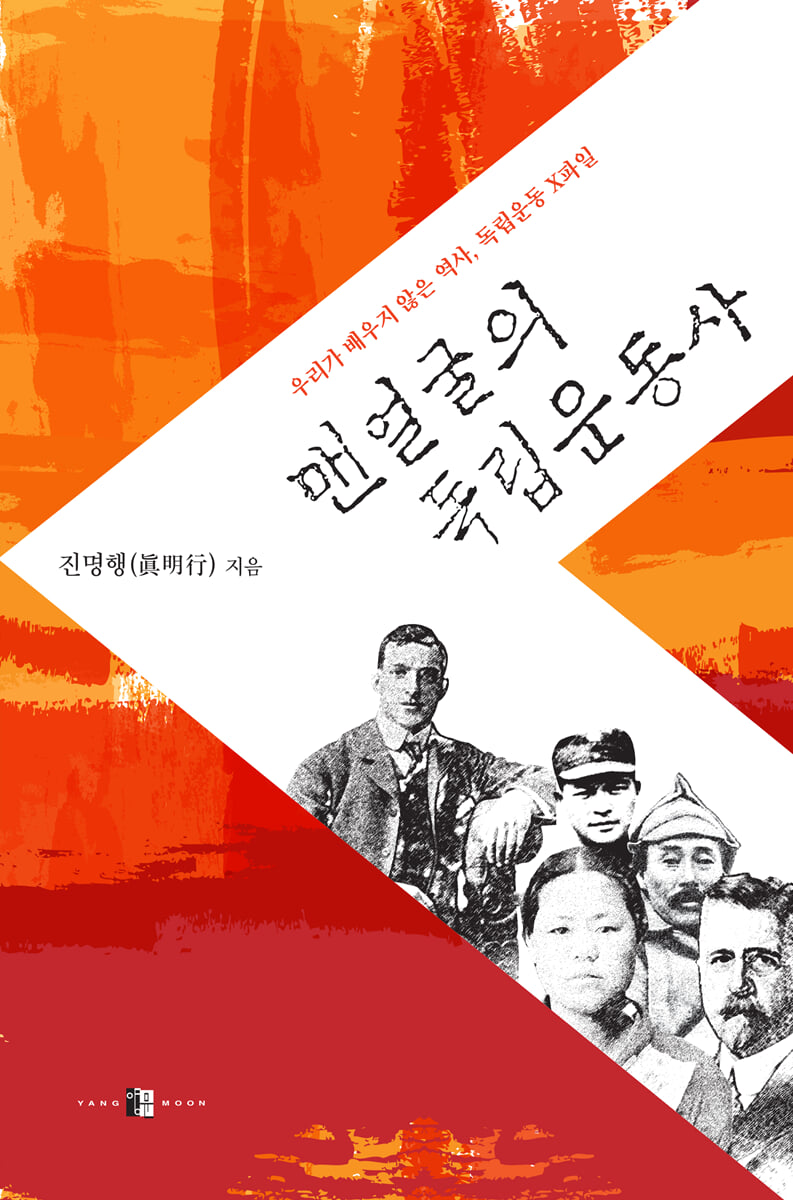
A Bare-Faced History of the Independence Movement
 |
Description
Book Introduction
The uncomfortable gaze that confronts the truth of history and the courage to overcome it
The Bare Face of the Independence Movement: The History We Never Learned, the Independence Movement X-Files
Historian Ranke believed that the historian's mission was to reveal "the past as it was (wie es eigentlich gewesen)."
But the reality doesn't seem to be like that.
Feed is always limited and open to interpretation.
In today's world, where interpretation is valued more than facts, there is a constant possibility that history will become the exclusive property of a certain power.
Especially in our society, which has experienced colonialism and division, the description of history often produces opposing logic depending on who is the subject of the interpretation.
The interpretation of history confined within a political framework can be seen as an arena for the intensifying battle of camp logic since before and after liberation.
Jin Myeong-haeng's new book, "The Bare-Faced History of the Independence Movement," rejects historical interpretations tamed by emotional conventions.
He constantly tries to turn things around and raise objections.
Depending on how you listen, it also reveals some uncomfortable parts without hesitation.
In our society, it is surprisingly difficult to raise a theory against the existing common sense.
Because it could come across as defamation to some.
Our society is characterized by a particularly strong emotional homogeneity enjoyed among groups.
Any insult to the representation of a specific person, whether blood or regional, is considered an insult to oneself.
In this atmosphere, digging into the hidden side of figures known as heroes throughout history is likely to face social criticism.
According to Michel Foucault, discourse is not simply speech or writing, but rather a ‘structure of power’ that operates within society.
So, what can and cannot be said is either incorporated into or excluded from the order established by power.
In that sense, in a history that emphasizes only the extremes of resistance, struggle, and perpetrators, the lives of the majority of people who adapted and survived within it are ignored.
Is the history of those who struggled to be treated as citizens, not as colonies, a shameful history?
That too is part of us.
The king who sold out his country, the queen who indulged in debt amidst the country's ruin, the officials who fought secretly with the great powers, and the common people who lived like beasts due to harsh exploitation and plunder. Rather than avoiding such shameful history with the bizarre excuse of a masochistic or colonialist view of history, we should learn more properly about it.
It is shameless to blame the absurdity of the times on a few traitors and pro-Japanese collaborators and try to avoid responsibility ourselves.
However, the public, who are prone to being enthusiastic about flashy things, tend to consume both academics and knowledge in the same way.
When a humanistic narrative unfolds in the form of good triumphing over evil, our thinking can easily become trapped within it.
History cannot be divided into good and evil, and should be viewed as a single process, but reality is not like that.
"The Bare Face of the Independence Movement" shatters the unprecedented desire that our history has walked the right path.
The faces of the people involved in the March 1st Movement, illuminated from a new perspective, are even somewhat shocking.
In the case of Hulbert and Bethel, academic research has progressed considerably, but it has only reaffirmed existing achievements rather than uncovering new sources.
In that respect, an in-depth investigation of these individuals is interesting.
The excavation and reconstruction of historical materials related to Yu Gwan-sun's death is a fresh approach that no one has attempted before.
The author, following the previous work, also addressed the issue of forgery in this new work.
Few would have suspected that there was something wrong with the seal stamped on the document issued by the king.
The mere fact that the royal edict in the document that we have blindly relied on as historical material was forged may mean that our history books may need to be rewritten.
It is not easy for non-specialists to discover the details that many scholars have missed.
In that respect, the achievements of this book seem to be considerable.
『The Bare Face of the Independence Movement』 is a book that not only denies existing historical narratives, but also denounces the absurdity of deductive historical interpretation.
How dangerous is a society that legally punishes the right to express differing opinions? The pathological phenomenon where the suffering of the victimized community is sanctified and any objection to it is considered a challenge reveals the backwardness of our society.
As the author mentioned in the epilogue, the fact that no one has reflected on the social abuse of an intellectual for over eight years, despite differing opinions on the interpretation of the comfort women issue, further supports this.
Given that history is a product of the imagination, it is only right that various hypotheses and theories be allowed.
If that is not possible, our society will likely remain trapped in an echo chamber and fall prey to Big Brother's conspiracy.
I hope this book will serve as a small cornerstone for healthy discussion and a virtuous intellectual cycle.
The Bare Face of the Independence Movement: The History We Never Learned, the Independence Movement X-Files
Historian Ranke believed that the historian's mission was to reveal "the past as it was (wie es eigentlich gewesen)."
But the reality doesn't seem to be like that.
Feed is always limited and open to interpretation.
In today's world, where interpretation is valued more than facts, there is a constant possibility that history will become the exclusive property of a certain power.
Especially in our society, which has experienced colonialism and division, the description of history often produces opposing logic depending on who is the subject of the interpretation.
The interpretation of history confined within a political framework can be seen as an arena for the intensifying battle of camp logic since before and after liberation.
Jin Myeong-haeng's new book, "The Bare-Faced History of the Independence Movement," rejects historical interpretations tamed by emotional conventions.
He constantly tries to turn things around and raise objections.
Depending on how you listen, it also reveals some uncomfortable parts without hesitation.
In our society, it is surprisingly difficult to raise a theory against the existing common sense.
Because it could come across as defamation to some.
Our society is characterized by a particularly strong emotional homogeneity enjoyed among groups.
Any insult to the representation of a specific person, whether blood or regional, is considered an insult to oneself.
In this atmosphere, digging into the hidden side of figures known as heroes throughout history is likely to face social criticism.
According to Michel Foucault, discourse is not simply speech or writing, but rather a ‘structure of power’ that operates within society.
So, what can and cannot be said is either incorporated into or excluded from the order established by power.
In that sense, in a history that emphasizes only the extremes of resistance, struggle, and perpetrators, the lives of the majority of people who adapted and survived within it are ignored.
Is the history of those who struggled to be treated as citizens, not as colonies, a shameful history?
That too is part of us.
The king who sold out his country, the queen who indulged in debt amidst the country's ruin, the officials who fought secretly with the great powers, and the common people who lived like beasts due to harsh exploitation and plunder. Rather than avoiding such shameful history with the bizarre excuse of a masochistic or colonialist view of history, we should learn more properly about it.
It is shameless to blame the absurdity of the times on a few traitors and pro-Japanese collaborators and try to avoid responsibility ourselves.
However, the public, who are prone to being enthusiastic about flashy things, tend to consume both academics and knowledge in the same way.
When a humanistic narrative unfolds in the form of good triumphing over evil, our thinking can easily become trapped within it.
History cannot be divided into good and evil, and should be viewed as a single process, but reality is not like that.
"The Bare Face of the Independence Movement" shatters the unprecedented desire that our history has walked the right path.
The faces of the people involved in the March 1st Movement, illuminated from a new perspective, are even somewhat shocking.
In the case of Hulbert and Bethel, academic research has progressed considerably, but it has only reaffirmed existing achievements rather than uncovering new sources.
In that respect, an in-depth investigation of these individuals is interesting.
The excavation and reconstruction of historical materials related to Yu Gwan-sun's death is a fresh approach that no one has attempted before.
The author, following the previous work, also addressed the issue of forgery in this new work.
Few would have suspected that there was something wrong with the seal stamped on the document issued by the king.
The mere fact that the royal edict in the document that we have blindly relied on as historical material was forged may mean that our history books may need to be rewritten.
It is not easy for non-specialists to discover the details that many scholars have missed.
In that respect, the achievements of this book seem to be considerable.
『The Bare Face of the Independence Movement』 is a book that not only denies existing historical narratives, but also denounces the absurdity of deductive historical interpretation.
How dangerous is a society that legally punishes the right to express differing opinions? The pathological phenomenon where the suffering of the victimized community is sanctified and any objection to it is considered a challenge reveals the backwardness of our society.
As the author mentioned in the epilogue, the fact that no one has reflected on the social abuse of an intellectual for over eight years, despite differing opinions on the interpretation of the comfort women issue, further supports this.
Given that history is a product of the imagination, it is only right that various hypotheses and theories be allowed.
If that is not possible, our society will likely remain trapped in an echo chamber and fall prey to Big Brother's conspiracy.
I hope this book will serve as a small cornerstone for healthy discussion and a virtuous intellectual cycle.
index
4 on the first head
The March 1st Movement: A Violent Clash Arising from Misunderstanding and Ignorance
Twisted and distorted symbols of the March 1st Movement
The fraud of nonviolence and nonresistance
Who did the 33 national representatives represent?
The Truth About the 33 Self-Proclaimed National Representatives
Whereabouts of 5,000 won borrowed from Cheondoism
What did Son Byeong-hee ring the bell for?
The desperate level of the leadership, the laughing stock of the world.
The missionary who loved money, Homer B.
Hulbert)
American missionaries who enjoyed the favor of the tyrant
Good invaders and bad invaders.
The great lie that he loved Korea more than Koreans
Ernest Thomas Bethell, the journalist who colluded with Russian spies
A media entrepreneur who turned Korea's misfortune into an opportunity for recovery
The national debt redemption movement marred by embezzlement and scandal
Anti-Japanese journalist recruited by Russian intelligence agencies
The Truth Behind the State-Fabricated Myth of Yu Gwan-sun
Who started the Yu Gwan-sun syndrome?
Yu Gwan-sun did not die shouting "Manse" in prison.
Yu Gwan-sun's release from prison and her mysterious death
Emperor Gojong's overseas slush funds disguised as funds for the independence movement
Who embezzled the slush funds hidden by Emperor Gojong from the Shanghai Bank?
Ponzi schemes and corruption surrounding Emperor Gojong
Hulbert appears with a forged withdrawal authorization.
Hong Beom-do, an independence activist who lived for the Soviet Union
The true identity of Hong Beom-do, the Bolshevik who ended the armed independence movement in Gando.
Where was Hong Beom-do during the Jayu City Massacre?
Records of crimes smeared with anti-Japanese independence movements
People who participated in gang robberies to repay entertainment debts became independence activists.
A descendant of the Andong clan, who lost his fortune to gambling, becomes an independence activist.
Kim Won-bong's actions were marred by robbery, corruption, bribery, and intrigue.
The man who fled on charges of embezzlement and fraud laid the foundation for the Shanghai Provisional Government.
A White Paper on the Crimes of Shanghai Independence Activists
The Manchurian plains, stained with the blood of factional strife, and those who took the path of self-destruction.
Conclusion
The March 1st Movement: A Violent Clash Arising from Misunderstanding and Ignorance
Twisted and distorted symbols of the March 1st Movement
The fraud of nonviolence and nonresistance
Who did the 33 national representatives represent?
The Truth About the 33 Self-Proclaimed National Representatives
Whereabouts of 5,000 won borrowed from Cheondoism
What did Son Byeong-hee ring the bell for?
The desperate level of the leadership, the laughing stock of the world.
The missionary who loved money, Homer B.
Hulbert)
American missionaries who enjoyed the favor of the tyrant
Good invaders and bad invaders.
The great lie that he loved Korea more than Koreans
Ernest Thomas Bethell, the journalist who colluded with Russian spies
A media entrepreneur who turned Korea's misfortune into an opportunity for recovery
The national debt redemption movement marred by embezzlement and scandal
Anti-Japanese journalist recruited by Russian intelligence agencies
The Truth Behind the State-Fabricated Myth of Yu Gwan-sun
Who started the Yu Gwan-sun syndrome?
Yu Gwan-sun did not die shouting "Manse" in prison.
Yu Gwan-sun's release from prison and her mysterious death
Emperor Gojong's overseas slush funds disguised as funds for the independence movement
Who embezzled the slush funds hidden by Emperor Gojong from the Shanghai Bank?
Ponzi schemes and corruption surrounding Emperor Gojong
Hulbert appears with a forged withdrawal authorization.
Hong Beom-do, an independence activist who lived for the Soviet Union
The true identity of Hong Beom-do, the Bolshevik who ended the armed independence movement in Gando.
Where was Hong Beom-do during the Jayu City Massacre?
Records of crimes smeared with anti-Japanese independence movements
People who participated in gang robberies to repay entertainment debts became independence activists.
A descendant of the Andong clan, who lost his fortune to gambling, becomes an independence activist.
Kim Won-bong's actions were marred by robbery, corruption, bribery, and intrigue.
The man who fled on charges of embezzlement and fraud laid the foundation for the Shanghai Provisional Government.
A White Paper on the Crimes of Shanghai Independence Activists
The Manchurian plains, stained with the blood of factional strife, and those who took the path of self-destruction.
Conclusion
Into the book
At a time when the pre-modern era was coming to an end, the country was unable to exert any power and collapsed, and many people wandered abroad.
Because the country that would have protected them had collapsed, the discrimination and exploitation of these people by the locals was severe.
The history we learn does not teach us that the people who protected them were not the Korean community or the independence army, but the Japanese consulate.
For example, the ‘Manbosan Incident’ is such a case.
Although there may be differences in degree, at least Korean immigrants overseas were receiving protections similar to those of the Japanese.
The problem was the Korean armed organization that was also their compatriot.
They routinely committed looting, murder, kidnapping, and violence under the pretext of protecting their fellow countrymen.
Some even joined forces with local bandits and displayed incredible power.
If they didn't cooperate with the funding, it wouldn't be a big deal to turn a village into a wasteland.
Despite all the suffering, no one was able to resist it.
--- p.6
However tyrannical the Japanese guards were, they were more humane than our corrupt prison guards.
They did not covet other men's women, capture innocent men, maim them, or beat them to death without reason and then secretly throw their bodies outside the city gates.
The fact that our guards treated the lives of prisoners as less valuable than those of flies signifies a society in which even the minimum level of human kindness has collapsed.
It was literally a sign of national ruin.
--- p.10
While the Japanese Government-General of Korea kept detailed records of prisoners' arrivals and departures, crimes, sentences, and diseases, we have no records at all of who died, who was released, or for what crime.
Even when someone died, the reason was not properly reported.
The difference between modern and pre-modern times is this significant.
At the border between barbarism and civilization, the fate of a people who fail to civilize themselves becomes clear.
That's what made the difference between Japan and us.
At a time when it wouldn't have been strange for anyone to have been preyed upon, what else could it be if not a sense of entitlement to ignore the essence and simply remain filled with hatred and hostility toward the perpetrator?
--- p.11
Our historians emphasize the fact that the Japanese military suppressed peaceful demonstrations, but regardless of the country, it is natural for public authorities to forcibly suppress demonstrations that go beyond the limit.
On the first day, March 1st, the protesters were so disorderly that they even stormed the palace where the crown prince was staying.
Few people know that a similar large-scale independence demonstration occurred in Gando about ten days later, but the Chinese military and police suppressed it more thoroughly and mercilessly than the Japanese.
Russia also strictly controlled the Shinhanchon community, a residential area for Koreans and Japanese, by closing it down and banning protests.
Although there was pressure from the Japanese consulate, the Chinese warlords of the Three Provinces and the Russian Far East government were not initially sympathetic to the radical independence movement taking place on their own soil.
What if the same protest method had been adopted in Washington, D.C. or Philadelphia? The result would have been similar to that in North Korea.
Therefore, we must no longer be fooled by the fabricated frame that says, ‘Peaceful demonstrations were suppressed by force.’
Because the country that would have protected them had collapsed, the discrimination and exploitation of these people by the locals was severe.
The history we learn does not teach us that the people who protected them were not the Korean community or the independence army, but the Japanese consulate.
For example, the ‘Manbosan Incident’ is such a case.
Although there may be differences in degree, at least Korean immigrants overseas were receiving protections similar to those of the Japanese.
The problem was the Korean armed organization that was also their compatriot.
They routinely committed looting, murder, kidnapping, and violence under the pretext of protecting their fellow countrymen.
Some even joined forces with local bandits and displayed incredible power.
If they didn't cooperate with the funding, it wouldn't be a big deal to turn a village into a wasteland.
Despite all the suffering, no one was able to resist it.
--- p.6
However tyrannical the Japanese guards were, they were more humane than our corrupt prison guards.
They did not covet other men's women, capture innocent men, maim them, or beat them to death without reason and then secretly throw their bodies outside the city gates.
The fact that our guards treated the lives of prisoners as less valuable than those of flies signifies a society in which even the minimum level of human kindness has collapsed.
It was literally a sign of national ruin.
--- p.10
While the Japanese Government-General of Korea kept detailed records of prisoners' arrivals and departures, crimes, sentences, and diseases, we have no records at all of who died, who was released, or for what crime.
Even when someone died, the reason was not properly reported.
The difference between modern and pre-modern times is this significant.
At the border between barbarism and civilization, the fate of a people who fail to civilize themselves becomes clear.
That's what made the difference between Japan and us.
At a time when it wouldn't have been strange for anyone to have been preyed upon, what else could it be if not a sense of entitlement to ignore the essence and simply remain filled with hatred and hostility toward the perpetrator?
--- p.11
Our historians emphasize the fact that the Japanese military suppressed peaceful demonstrations, but regardless of the country, it is natural for public authorities to forcibly suppress demonstrations that go beyond the limit.
On the first day, March 1st, the protesters were so disorderly that they even stormed the palace where the crown prince was staying.
Few people know that a similar large-scale independence demonstration occurred in Gando about ten days later, but the Chinese military and police suppressed it more thoroughly and mercilessly than the Japanese.
Russia also strictly controlled the Shinhanchon community, a residential area for Koreans and Japanese, by closing it down and banning protests.
Although there was pressure from the Japanese consulate, the Chinese warlords of the Three Provinces and the Russian Far East government were not initially sympathetic to the radical independence movement taking place on their own soil.
What if the same protest method had been adopted in Washington, D.C. or Philadelphia? The result would have been similar to that in North Korea.
Therefore, we must no longer be fooled by the fabricated frame that says, ‘Peaceful demonstrations were suppressed by force.’
--- p.38
Publisher's Review
Jin Myeong-haeng's writing is always direct.
There is no way to beat around the bush.
The reason his writing remains consistently popular online is because it addresses readers' itch.
It is not easy to challenge the history of stereotypes that we have been taught through rote learning.
This is because attempts to interpret and reconstruct history from a new perspective are often considered rude or disrespectful in our society.
However, the author raises questions about these fixed frames and social prejudices.
We have experienced foreign domination, been divided by foreign powers, and fought wars in which foreign powers intervened.
In the course of these historical tragedies and their aftermath, political propaganda based on nationalism has been very powerful.
At the government level, 'nationalist education' was promoted as a kind of national project, repeatedly instilling 'long-standing traditions,' 'excellent culture,' 'an indomitable spirit of independence,' and 'anti-Japanese sentiment,' placing more importance on what constitutes valuable history than on what is true.
Even now, when democratization has progressed to a certain extent, it is the same.
As a result, exaggerated narratives and heroic discourses that deviate from the facts have irreversibly polluted the public's thinking through schools and the mass media.
This book directly challenges the state-led, uniform interpretation of history.
The author also shatters countless historical common sense beliefs we take for granted, offering a rollback point that allows us to think anew.
By covering the March 1st Movement and its related figures, which are treated as sacred sites for the nation, we peel away layers of distortion and exaggeration one by one.
The process of tracing how heroes like Yu Gwan-sun and the 33 national representatives were mythologized in textbooks and identifying errors goes beyond simple facts and sharply points out that the way our society constructs "memory" stems from impure intentions.
Along with this, it raises fundamental questions about the conventional way of thinking that has uncritically trusted the 'goodwill' of foreigners who are said to have helped us during the late Joseon Dynasty.
Foreigners who were praised as patriots were in fact nothing more than realists who exercised political influence within their relationships with the Joseon royal family, pursued personal interests, and collaborated with imperialist invasions.
This is likely to be quite a shock to readers who have never doubted their good intentions.
Moreover, the description of the power structure, funding issues, and human rights violations within the independence movement reveals uncomfortable truths that were hidden in the name of 'nation.'
The author does not stop at simple accusations, but instead, through a reflective gaze that embraces even its darkness, simultaneously portrays the duality and human face of the independence movement.
The author provides a solid theoretical foundation by citing diverse and in-depth materials comparable to those found in professional textbooks, while at the same time avoiding being confined to an overly academic framework by explaining the subject in easy-to-understand, everyday language.
This is an advantage that only authors, not professional researchers, can have, and it may be the result of flexible thinking.
The witty plot, rich reading material, and thought-provoking structure go beyond simple fact-telling to encourage "thoughtful reading."
Of course, this book will not confirm any historical facts or end any controversies.
But more importantly, it allows readers to break free from existing stereotypes and look at facts with a more flexible perspective.
That alone makes this book worth reading.
Author's Note
This book is a sequel to 『The Two Faces of the Joseon Resistance』.
We tried to reconstruct historical events and figures not covered in the previous volume from a new perspective, excluding existing common theories.
The modern and contemporary history we have learned through rote memorization often goes beyond the selection of facts and commits creative distortions.
Although there may be various perspectives on historical events, our Constitution has sanctified them by including events such as the March 1st Movement, the establishment of the Provisional Government, and the April 19th Uprising in its preamble, thereby allowing only one evaluation.
There is no attempt more dangerous than state intervention in the interpretation of history.
The March 1st Movement should no longer be portrayed as a non-resistance, non-violent people's movement, and we must face the fact that the theory of the provisional government's legitimacy is nothing more than a fiction.
The reality of the people and organizations involved in this matter can no longer be embellished.
In the case of Yu Gwan-sun, it is no exaggeration to say that the heroic discourse that she was tortured and died a martyr for shouting "Manse" even after being imprisoned has long tamed us.
A cool-headed view is also required of foreigners who disguise themselves as blue-eyed patriots.
Even though there is no basis for believing that they loved Korea more than Koreans, glorifying them as heroes is nothing more than our one-sided longing.
They are people who have not had even the slightest affection for our people, and are nothing more than people who took advantage of anti-Japanese sentiment to fill their own pockets or colluded with enemy countries, ultimately harming our people.
Furthermore, we can no longer hide the human rights violations and crimes committed by certain groups and individuals under the pretext of the independence movement, as well as the tragedies of fratricide committed in the struggle for leadership.
Narratives of the independence movement that exonerate and praise all of their actions simply because they stood up to Japan only encourage emotional consumption of history and do nothing to uncover the truth.
It is extremely shameful to invoke history as a means of nationalism and self-justification.
The more you try to hide your shortcomings, the more you have to study them to learn the true lessons.
That's why we learn history.
This is not simply a matter of exposing the flaws of the past, but rather a call for deep reflection on how we remember and interpret the past today.
There is no way to beat around the bush.
The reason his writing remains consistently popular online is because it addresses readers' itch.
It is not easy to challenge the history of stereotypes that we have been taught through rote learning.
This is because attempts to interpret and reconstruct history from a new perspective are often considered rude or disrespectful in our society.
However, the author raises questions about these fixed frames and social prejudices.
We have experienced foreign domination, been divided by foreign powers, and fought wars in which foreign powers intervened.
In the course of these historical tragedies and their aftermath, political propaganda based on nationalism has been very powerful.
At the government level, 'nationalist education' was promoted as a kind of national project, repeatedly instilling 'long-standing traditions,' 'excellent culture,' 'an indomitable spirit of independence,' and 'anti-Japanese sentiment,' placing more importance on what constitutes valuable history than on what is true.
Even now, when democratization has progressed to a certain extent, it is the same.
As a result, exaggerated narratives and heroic discourses that deviate from the facts have irreversibly polluted the public's thinking through schools and the mass media.
This book directly challenges the state-led, uniform interpretation of history.
The author also shatters countless historical common sense beliefs we take for granted, offering a rollback point that allows us to think anew.
By covering the March 1st Movement and its related figures, which are treated as sacred sites for the nation, we peel away layers of distortion and exaggeration one by one.
The process of tracing how heroes like Yu Gwan-sun and the 33 national representatives were mythologized in textbooks and identifying errors goes beyond simple facts and sharply points out that the way our society constructs "memory" stems from impure intentions.
Along with this, it raises fundamental questions about the conventional way of thinking that has uncritically trusted the 'goodwill' of foreigners who are said to have helped us during the late Joseon Dynasty.
Foreigners who were praised as patriots were in fact nothing more than realists who exercised political influence within their relationships with the Joseon royal family, pursued personal interests, and collaborated with imperialist invasions.
This is likely to be quite a shock to readers who have never doubted their good intentions.
Moreover, the description of the power structure, funding issues, and human rights violations within the independence movement reveals uncomfortable truths that were hidden in the name of 'nation.'
The author does not stop at simple accusations, but instead, through a reflective gaze that embraces even its darkness, simultaneously portrays the duality and human face of the independence movement.
The author provides a solid theoretical foundation by citing diverse and in-depth materials comparable to those found in professional textbooks, while at the same time avoiding being confined to an overly academic framework by explaining the subject in easy-to-understand, everyday language.
This is an advantage that only authors, not professional researchers, can have, and it may be the result of flexible thinking.
The witty plot, rich reading material, and thought-provoking structure go beyond simple fact-telling to encourage "thoughtful reading."
Of course, this book will not confirm any historical facts or end any controversies.
But more importantly, it allows readers to break free from existing stereotypes and look at facts with a more flexible perspective.
That alone makes this book worth reading.
Author's Note
This book is a sequel to 『The Two Faces of the Joseon Resistance』.
We tried to reconstruct historical events and figures not covered in the previous volume from a new perspective, excluding existing common theories.
The modern and contemporary history we have learned through rote memorization often goes beyond the selection of facts and commits creative distortions.
Although there may be various perspectives on historical events, our Constitution has sanctified them by including events such as the March 1st Movement, the establishment of the Provisional Government, and the April 19th Uprising in its preamble, thereby allowing only one evaluation.
There is no attempt more dangerous than state intervention in the interpretation of history.
The March 1st Movement should no longer be portrayed as a non-resistance, non-violent people's movement, and we must face the fact that the theory of the provisional government's legitimacy is nothing more than a fiction.
The reality of the people and organizations involved in this matter can no longer be embellished.
In the case of Yu Gwan-sun, it is no exaggeration to say that the heroic discourse that she was tortured and died a martyr for shouting "Manse" even after being imprisoned has long tamed us.
A cool-headed view is also required of foreigners who disguise themselves as blue-eyed patriots.
Even though there is no basis for believing that they loved Korea more than Koreans, glorifying them as heroes is nothing more than our one-sided longing.
They are people who have not had even the slightest affection for our people, and are nothing more than people who took advantage of anti-Japanese sentiment to fill their own pockets or colluded with enemy countries, ultimately harming our people.
Furthermore, we can no longer hide the human rights violations and crimes committed by certain groups and individuals under the pretext of the independence movement, as well as the tragedies of fratricide committed in the struggle for leadership.
Narratives of the independence movement that exonerate and praise all of their actions simply because they stood up to Japan only encourage emotional consumption of history and do nothing to uncover the truth.
It is extremely shameful to invoke history as a means of nationalism and self-justification.
The more you try to hide your shortcomings, the more you have to study them to learn the true lessons.
That's why we learn history.
This is not simply a matter of exposing the flaws of the past, but rather a call for deep reflection on how we remember and interpret the past today.
GOODS SPECIFICS
- Date of issue: August 15, 2025
- Page count, weight, size: 336 pages | 152*230*30mm
- ISBN13: 9791198670281
- ISBN10: 1198670282
You may also like
카테고리
korean


korean

![GQ KOREA Mark (Monthly): December [2025]](http://librairie.coreenne.fr/cdn/shop/files/8ef265dbbfbf186523ed75ba7319009d.jpg?v=1765340328&width=3840)


