

Cosmic Code 3.6.9
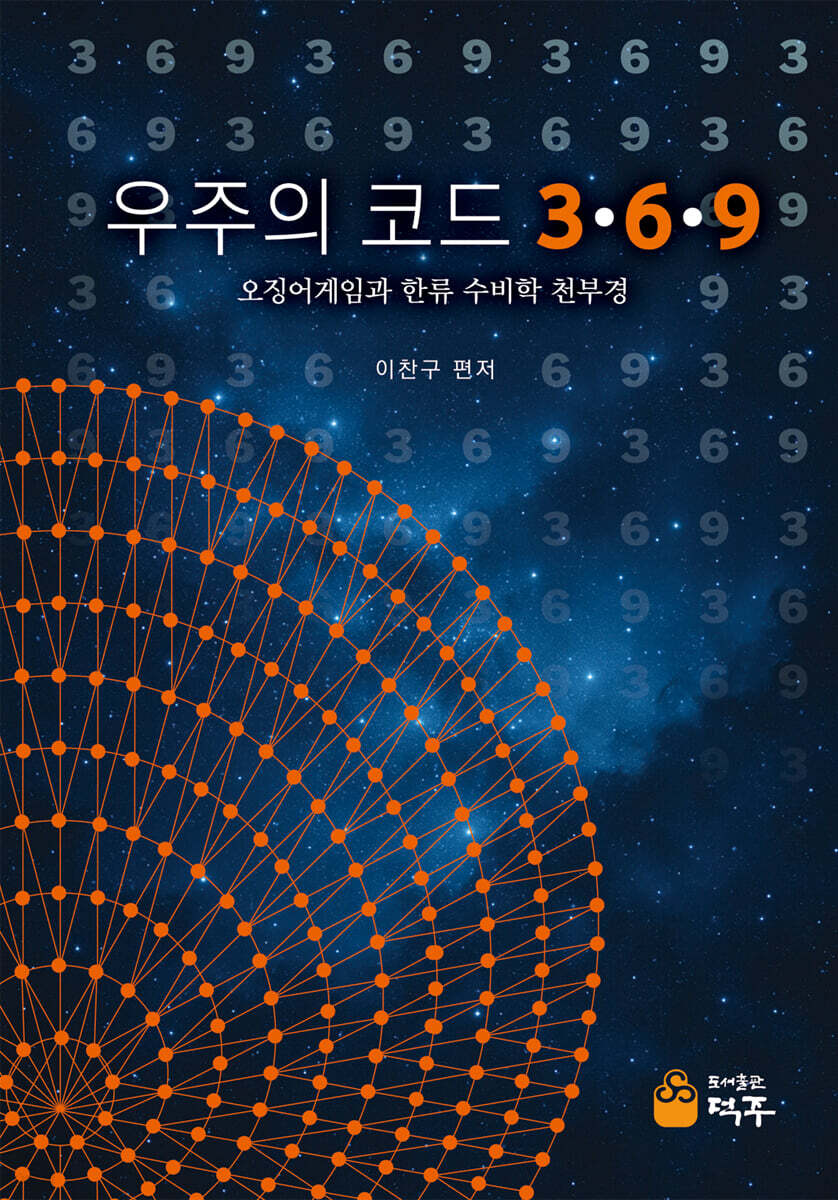 |
Description
Book Introduction
Nikola Tesla, the inventor of the century
What if you met the Heavenly Book containing the secret code of the universe?
In the drama 'Squid Game', a circle(?), a room(?), and an angle(△) appear, and in K-pop star Rosé's 'Apartment', there is a rhythm of 3.6.9 from our traditional game, and in the Korean numerology code 'Cheonbugyeong', there are circle, banggak, 3.6.9, and Cheonjiin(天地人).
This is the core driving force and keyword of the Korean Wave that touches the hearts of people around the world.
Nikola Tesla, the world's greatest inventor and physicist, prophesied that the numbers 3, 6, and 9 in the Book of Changes were the keys to the universe, and that if we could realize the greatness of these numbers, we would obtain the secrets of the universe.
After many years of research, Dr. Lee Chan-gu, a Korean expert on the Cheonbugyeong, has finally revealed the secrets of the Cheonbugyeong and Tesla 3.6.9.
What if you met the Heavenly Book containing the secret code of the universe?
In the drama 'Squid Game', a circle(?), a room(?), and an angle(△) appear, and in K-pop star Rosé's 'Apartment', there is a rhythm of 3.6.9 from our traditional game, and in the Korean numerology code 'Cheonbugyeong', there are circle, banggak, 3.6.9, and Cheonjiin(天地人).
This is the core driving force and keyword of the Korean Wave that touches the hearts of people around the world.
Nikola Tesla, the world's greatest inventor and physicist, prophesied that the numbers 3, 6, and 9 in the Book of Changes were the keys to the universe, and that if we could realize the greatness of these numbers, we would obtain the secrets of the universe.
After many years of research, Dr. Lee Chan-gu, a Korean expert on the Cheonbugyeong, has finally revealed the secrets of the Cheonbugyeong and Tesla 3.6.9.
index
Part 1: The Origin and Transmission of the Cheonbugyeong
Chapter 1: The Origin of the Cheonbugyeong
Chapter 2: The Transmission Path of the Cheonbugyeong
Traditions before 1916
Samsung's Natural Preservation
Cheonbugyeongseok engraved on a stele
Cheonbugyeong (Taebaek Ilsa)
Victory after 1916
The original stone copy of the Cheonbugyeong and the Cheonbugyeong map of the Dantak
Dangun Cheonbugyeong in the 'Jinshin Philosophy Tongpyeon'
Part 2: The Principles of the Heavenly Scriptures Found in Nature and History
Chapter 1: The Philosophy of Yin and Yang, of Being and Nothingness
The 'existence' of existence and the 'nonexistence' of nothingness as seen through trees
'No' and 'there' are yin and yang
One and Nothing, the Position of the North Star
Chapter 2 The Sun and Light
Weather and Earth
Sun worship and the people of cosmic light
Sun patterns found in Manchuria and the Korean Peninsula
Sun and sunflower
Chapter 3: Heaven, Earth, and Man, and the Three Gods
Samjok-o and Shingyo
Trinity
Hwanin, Hwanung, and Dangun, the historical figures, and 'Bright'
Heaven, Earth, and Humanity
Cheonbugyeong and Samtaegeuk
Various interpretations of the three-part Cheonbugyeong
Chapter 1: Jeon Byeong-hun's Interpretation of Dangun Cheonbugyeong
Preface to Dangun Cheonbugyeong
Reinterpretation of the original text (81 characters) and notes
Chapter 2: Interpretation of the Cheonbugyeong during the Anti-Japanese Struggle
Kwon Deok-gyu's Danguncheonbugyeonghae (1921)
Daejonggyo's 'Heavenly Book' (1922)
Lee Yong-tae's Cheonbugyeong Hyeonto (1930)
Kim Young-ui's 'Cheonbu Gyeongjuhae' (1937)
The praise of Cheonbugyeong by independence activists
Chapter 3: Modern Interpretation of the Cheonbugyeong
The Cheonbugyeong of the Buddhist monk Tanheo (1982)
Won Buddhism's Kim Dae-geo's interpretation of the Cheonbugyeong (1994)
Calligrapher Son Gyeong-sik's interpretation of the Cheonbugyeong (1996)
The interpretation of the Cheonbugyeong by the scholar Seokjin Kim (2009)
Part 4: The Heavenly Sutra and the Wonbanggak
Chapter 1: The Philosophical Basis of the Wonbangak
Rock-paper-scissors with numbers 2-1-3
The three geniuses of Won-Bang-Gak
Wonbanggak in Hangul
Chapter 2: Circular Consciousness and National Consciousness in the Circle
The original consciousness of humanity
Wonbanggak and Cheonwonjibangbang found in the ruins
Wonbanggak, the guardian of the nation and people
Chapter 3: Wonbangak in Folk Culture
Ganggangsullae, which symbolizes a circle
Land grabbing symbolized by a square
Squid game with all the round corners
Gosure and Hongik Ingan
Dangun and Heaven, Earth, and Man
Part 5: 3, 6, and 9 and the Order of the Universe
Chapter 1: The Tesla Code: The Key to the Universe
Tesla Code 369
Numbers and symbols
Pythagorean numbers
Patterns in nature discovered by Tesla
Chapter 2: The Heavenly Sutra and 369
Cheonbugyeong interpreted as 369
369 in Yin-Yang and Cheonbugyeong
Marco Rodin's Primal Unity
Drawing the '369 Cheonbu Gyeongdo' with the original unified point
In closing
Biographical Index
References
Chapter 1: The Origin of the Cheonbugyeong
Chapter 2: The Transmission Path of the Cheonbugyeong
Traditions before 1916
Samsung's Natural Preservation
Cheonbugyeongseok engraved on a stele
Cheonbugyeong (Taebaek Ilsa)
Victory after 1916
The original stone copy of the Cheonbugyeong and the Cheonbugyeong map of the Dantak
Dangun Cheonbugyeong in the 'Jinshin Philosophy Tongpyeon'
Part 2: The Principles of the Heavenly Scriptures Found in Nature and History
Chapter 1: The Philosophy of Yin and Yang, of Being and Nothingness
The 'existence' of existence and the 'nonexistence' of nothingness as seen through trees
'No' and 'there' are yin and yang
One and Nothing, the Position of the North Star
Chapter 2 The Sun and Light
Weather and Earth
Sun worship and the people of cosmic light
Sun patterns found in Manchuria and the Korean Peninsula
Sun and sunflower
Chapter 3: Heaven, Earth, and Man, and the Three Gods
Samjok-o and Shingyo
Trinity
Hwanin, Hwanung, and Dangun, the historical figures, and 'Bright'
Heaven, Earth, and Humanity
Cheonbugyeong and Samtaegeuk
Various interpretations of the three-part Cheonbugyeong
Chapter 1: Jeon Byeong-hun's Interpretation of Dangun Cheonbugyeong
Preface to Dangun Cheonbugyeong
Reinterpretation of the original text (81 characters) and notes
Chapter 2: Interpretation of the Cheonbugyeong during the Anti-Japanese Struggle
Kwon Deok-gyu's Danguncheonbugyeonghae (1921)
Daejonggyo's 'Heavenly Book' (1922)
Lee Yong-tae's Cheonbugyeong Hyeonto (1930)
Kim Young-ui's 'Cheonbu Gyeongjuhae' (1937)
The praise of Cheonbugyeong by independence activists
Chapter 3: Modern Interpretation of the Cheonbugyeong
The Cheonbugyeong of the Buddhist monk Tanheo (1982)
Won Buddhism's Kim Dae-geo's interpretation of the Cheonbugyeong (1994)
Calligrapher Son Gyeong-sik's interpretation of the Cheonbugyeong (1996)
The interpretation of the Cheonbugyeong by the scholar Seokjin Kim (2009)
Part 4: The Heavenly Sutra and the Wonbanggak
Chapter 1: The Philosophical Basis of the Wonbangak
Rock-paper-scissors with numbers 2-1-3
The three geniuses of Won-Bang-Gak
Wonbanggak in Hangul
Chapter 2: Circular Consciousness and National Consciousness in the Circle
The original consciousness of humanity
Wonbanggak and Cheonwonjibangbang found in the ruins
Wonbanggak, the guardian of the nation and people
Chapter 3: Wonbangak in Folk Culture
Ganggangsullae, which symbolizes a circle
Land grabbing symbolized by a square
Squid game with all the round corners
Gosure and Hongik Ingan
Dangun and Heaven, Earth, and Man
Part 5: 3, 6, and 9 and the Order of the Universe
Chapter 1: The Tesla Code: The Key to the Universe
Tesla Code 369
Numbers and symbols
Pythagorean numbers
Patterns in nature discovered by Tesla
Chapter 2: The Heavenly Sutra and 369
Cheonbugyeong interpreted as 369
369 in Yin-Yang and Cheonbugyeong
Marco Rodin's Primal Unity
Drawing the '369 Cheonbu Gyeongdo' with the original unified point
In closing
Biographical Index
References
Into the book
This book was inspired by the Wonbangak character in the Netflix original series 'Squid Game', which aired in September 2021.
As the world becomes aware of the image of the Wonbangak, it is only natural that we prepare materials that can explain it.
And here we have added the somewhat unfamiliar 'Tesla 369' from the West.
By connecting the Tesla number 369 with the number 369, the superior right number of the Cheonbugyeongdo, I tried to broaden the scope of understanding that people around the world can have about the Cheonbugyeong.
--- p.9
Cheonbugyeong is a short Chinese scripture of 81 characters that begins with "一始無始一" and ends with "一終無終一". It is our scripture that contains the principles of the creation of the universe.
In the Cheonbugyeong, there is a circle (?□△), 369, and heaven, earth, and man.
Also, in the Cheonbugyeong, there is a mysterious and unchanging fundamental principle, and there is a life activity that has no beginning or end and is infinite.
And there is a human presence that runs through it all.
--- p.9
In the 81 characters of the Cheonbugyeong, the numbers 1 to 10 are repeated 31 times.
That is why the Cheonbugyeong is also called the Su-gyeong.
The mathematical arrangement of the 'Cheonbugyeongdo', recently revealed by the editor, clearly reveals why the Cheonbugyeong is a mathematical scripture.
Since 'Budoji', the basic principle of repair arrangement has been
1 4 7
2 5 8
It's 3 6 9.
The 'Budoji' was revealed to the world in the 1980s, and Tesla's 369 became known after it was reported in the New York Times in 1984.
The 'Cheonbugyeongdo' was made public in 'Dantak' earlier, in 1921.
The Cheonbugyeong explains the infinite creation and transformation of numbers as 147, 285, and 369.
If we divide this into squares, the circle of the sky is 3, the room of the earth is 6, and the angle of a person is 9.
Tesla, who dreamed of free energy, gave great philosophical meaning to the number 369.
The theory is that all creation begins with 3, is balanced through 6, and is completed with 9.
As the world becomes aware of the image of the Wonbangak, it is only natural that we prepare materials that can explain it.
And here we have added the somewhat unfamiliar 'Tesla 369' from the West.
By connecting the Tesla number 369 with the number 369, the superior right number of the Cheonbugyeongdo, I tried to broaden the scope of understanding that people around the world can have about the Cheonbugyeong.
--- p.9
Cheonbugyeong is a short Chinese scripture of 81 characters that begins with "一始無始一" and ends with "一終無終一". It is our scripture that contains the principles of the creation of the universe.
In the Cheonbugyeong, there is a circle (?□△), 369, and heaven, earth, and man.
Also, in the Cheonbugyeong, there is a mysterious and unchanging fundamental principle, and there is a life activity that has no beginning or end and is infinite.
And there is a human presence that runs through it all.
--- p.9
In the 81 characters of the Cheonbugyeong, the numbers 1 to 10 are repeated 31 times.
That is why the Cheonbugyeong is also called the Su-gyeong.
The mathematical arrangement of the 'Cheonbugyeongdo', recently revealed by the editor, clearly reveals why the Cheonbugyeong is a mathematical scripture.
Since 'Budoji', the basic principle of repair arrangement has been
1 4 7
2 5 8
It's 3 6 9.
The 'Budoji' was revealed to the world in the 1980s, and Tesla's 369 became known after it was reported in the New York Times in 1984.
The 'Cheonbugyeongdo' was made public in 'Dantak' earlier, in 1921.
The Cheonbugyeong explains the infinite creation and transformation of numbers as 147, 285, and 369.
If we divide this into squares, the circle of the sky is 3, the room of the earth is 6, and the angle of a person is 9.
Tesla, who dreamed of free energy, gave great philosophical meaning to the number 369.
The theory is that all creation begins with 3, is balanced through 6, and is completed with 9.
--- p.184~185
Publisher's Review
The meeting of the Eastern Wonbangak and the Western Tesla Code 3.6.9
The editor emphasizes two things through this book.
One is the cultural code called 'Wonbanggak' and the other is the somewhat unfamiliar 'Tesla Code 369'.
The circle is one of the original symbols that Koreans and other human beings used to understand heaven, earth, and people.
This Wonbanggak became known to the world again through the drama 'Squid Game', and people around the world began to recall their memories of Wonbanggak through the Korean play culture depicted in the drama.
This can be seen as humanity's common awareness of original culture.
The reason why various forms of Korean Wave are popular around the world is probably because Korean Wave excels at reinterpreting original culture.
It is likely because Tesla understood this principle that he named 369 the key to the universe.
The number 9 in particular was called the singularity or primal point of unity by Marco Rodin.
In particular, 9 was also called god consciousness, which is a mysterious revelation in Cheonbugyeong and is in line with the fact that 9 is called the original number in Cheonbugyeongdo.
The editor emphasizes two things through this book.
One is the cultural code called 'Wonbanggak' and the other is the somewhat unfamiliar 'Tesla Code 369'.
The circle is one of the original symbols that Koreans and other human beings used to understand heaven, earth, and people.
This Wonbanggak became known to the world again through the drama 'Squid Game', and people around the world began to recall their memories of Wonbanggak through the Korean play culture depicted in the drama.
This can be seen as humanity's common awareness of original culture.
The reason why various forms of Korean Wave are popular around the world is probably because Korean Wave excels at reinterpreting original culture.
It is likely because Tesla understood this principle that he named 369 the key to the universe.
The number 9 in particular was called the singularity or primal point of unity by Marco Rodin.
In particular, 9 was also called god consciousness, which is a mysterious revelation in Cheonbugyeong and is in line with the fact that 9 is called the original number in Cheonbugyeongdo.
GOODS SPECIFICS
- Date of issue: July 15, 2025
- Page count, weight, size: 188 pages | 148*210*11mm
- ISBN13: 9791199346208
You may also like
카테고리
korean


korean

![ELLE 엘르 스페셜 에디션 A형 : 12월 [2025]](http://librairie.coreenne.fr/cdn/shop/files/b8e27a3de6c9538896439686c6b0e8fb.jpg?v=1766436872&width=3840)


