

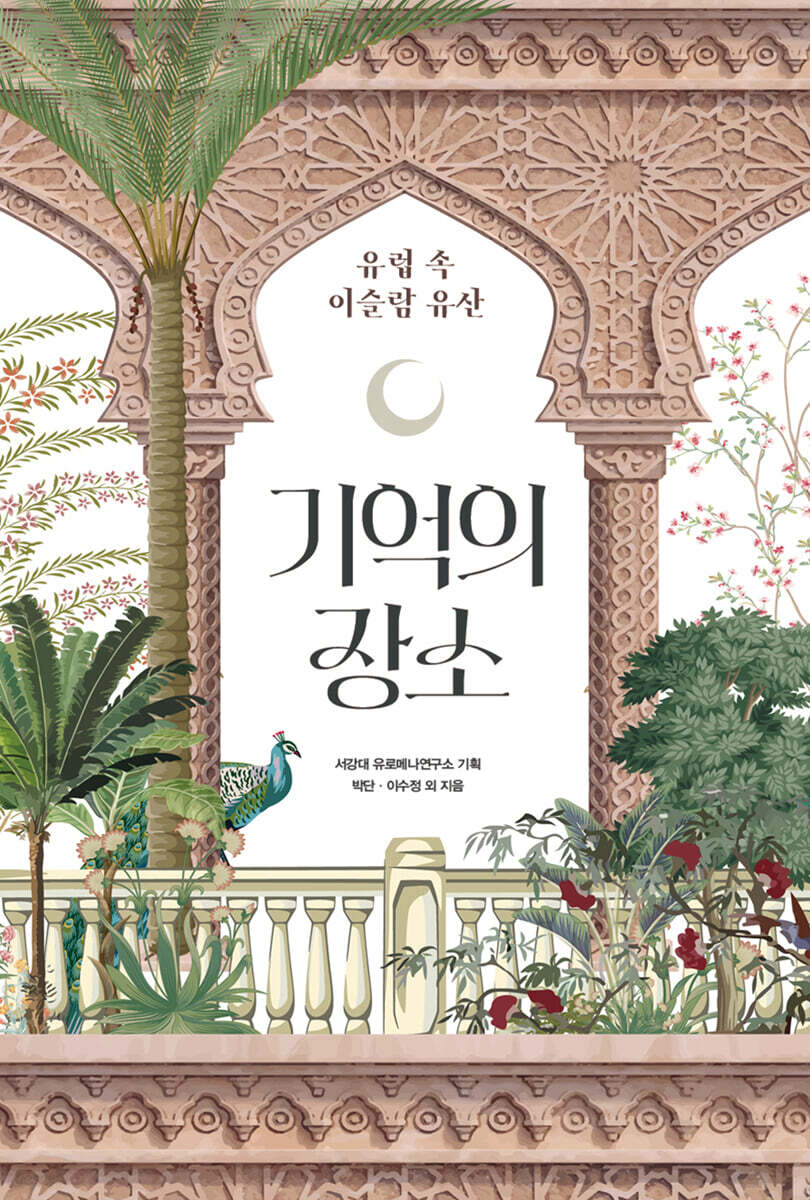
Place of Memories
 |
Description
Book Introduction
"Is Europe a Single Civilization?" In an age of uncertainty, encounter historical reflections that transcend the framework of outdated boundaries.
In 2025, military conflict between Iran and Israel escalates, leaving the world once again gripped by signs of a "clash of civilizations."
News and discourse once again call Islam an 'outsider,' a 'threat,' an 'other in opposition to Western civilization.'
However, this perspective obscures the fact that Islamic civilization took root in European history and was formed through mutual influence.
“Places of Memory: Islamic Culture in Europe” is a book that challenges this old framework.
In an attempt to restore erased traces and redraw the terrain of coexistence, the 21 researchers who participated in this work closely trace the "memory of Islam" that lives and breathes in European cities and cultures.
Rather than being a relic of the past, we trace the traces of Islamic heritage that are deeply embedded in the formation of European identity and culture today.
This book is particularly noteworthy as a spatial record that deconstructs the history of cultural boundaries and the 'myth of purity' of European civilization.
From the Institute of the Arab World in Paris to the roots of flamenco, Arabic loanwords in German and Spanish, and the philosophies of Averroes and Ibn Rushd… Tracing the traces of Islamic heritage imprinted in the city's architecture and language, culture and art, gestures and cuisine, it shows that the very identity of "Europe" was the result of multicultural contact.
Yes, that's right.
How did a civilization from across the Mediterranean become part of Europe? This book is an academic and cultural-political exploration of this question, as well as a human-geographic journey that captures a narrative of migration, hybridization, conflict, and coexistence.
In 2025, military conflict between Iran and Israel escalates, leaving the world once again gripped by signs of a "clash of civilizations."
News and discourse once again call Islam an 'outsider,' a 'threat,' an 'other in opposition to Western civilization.'
However, this perspective obscures the fact that Islamic civilization took root in European history and was formed through mutual influence.
“Places of Memory: Islamic Culture in Europe” is a book that challenges this old framework.
In an attempt to restore erased traces and redraw the terrain of coexistence, the 21 researchers who participated in this work closely trace the "memory of Islam" that lives and breathes in European cities and cultures.
Rather than being a relic of the past, we trace the traces of Islamic heritage that are deeply embedded in the formation of European identity and culture today.
This book is particularly noteworthy as a spatial record that deconstructs the history of cultural boundaries and the 'myth of purity' of European civilization.
From the Institute of the Arab World in Paris to the roots of flamenco, Arabic loanwords in German and Spanish, and the philosophies of Averroes and Ibn Rushd… Tracing the traces of Islamic heritage imprinted in the city's architecture and language, culture and art, gestures and cuisine, it shows that the very identity of "Europe" was the result of multicultural contact.
Yes, that's right.
How did a civilization from across the Mediterranean become part of Europe? This book is an academic and cultural-political exploration of this question, as well as a human-geographic journey that captures a narrative of migration, hybridization, conflict, and coexistence.
- You can preview some of the book's contents.
Preview
index
Preface 4
Part 1: Memory of Religion
Kim Ji-young | Places of Islamic Memory in Hungary_Jakovai Hassza and Gazi Kasim in Pecs
Centered around the Kasim Mosque
Kim Hee-won | Shah Jahan Mosque in England: A Memories of Islamic Culture Engraved in Britain
Park Dan | The Grand Mosque of Paris: From a 'memorial space' for Muslim soldiers to a 'space of unity' for all French people
Yeom Yun-ok | Hijab_A Place of Uncomfortable Memories
Park Hyun-do | Euromena: Reading the Crescent Moon and the Stars
Part 2: Cultural Memory
Minwonjeong | El Cid's Song: Memories of Resistance in the Encounter of Christianity and Islam
Yang Jeong-ah | The Coronation Robe of Roger II: Arab-Islamic Culture Remaining in Sicily Since the 9th Century
Lee Soo-jung | Memories of the Past and Present Conveyed by the Alhambra Palace
Nam Jong-guk | Renaissance Venetian Art: A Mirror to the Islamic World
Yun Deok-hee | Sabre: From a Weapon of the Devil to a Symbol of Modernization: The Ottoman Military Legacy in Europe
Lim Dong-hyeon | "Four Moorish Statues"_Muslim Slaves of Livorno
Kim Yu-jeong | Paris Arab World Institute - A "house of culture" connecting France and the Arab world
Part 3 Memory of Thought and Language
Hong Yong-jin | Averroes and the Intellectual Upheaval in Medieval Western Europe
Choi Seong-cheol | Ibn Khaldun: An Unfamiliar Memories Deserving Attention
Lee Jin-hyun | Traces of Islamic Astronomy in Copernicus's Revolutions
Kim Hyung-min | Arabic Loanwords in German: A Product of 'Cross-Cultural Collaboration'
Lee Kang-guk | Arabic in Spanish
Part 4: Memories of Everyday Life
Kim Jae-hee | Flamenco: Spanish dance born to Arab parents
Choi Seon-ah | Holbein Carpets: Adding Color to the Everyday Life of Europeans
Ihayan | A Pomak Wedding: A Testimony to Islamic Culture in Bulgaria
Yoon Yong-seon | Döner Kebab: From 'Place of Memory' to Germany's National Street Food
Note / Figure List / References
Part 1: Memory of Religion
Kim Ji-young | Places of Islamic Memory in Hungary_Jakovai Hassza and Gazi Kasim in Pecs
Centered around the Kasim Mosque
Kim Hee-won | Shah Jahan Mosque in England: A Memories of Islamic Culture Engraved in Britain
Park Dan | The Grand Mosque of Paris: From a 'memorial space' for Muslim soldiers to a 'space of unity' for all French people
Yeom Yun-ok | Hijab_A Place of Uncomfortable Memories
Park Hyun-do | Euromena: Reading the Crescent Moon and the Stars
Part 2: Cultural Memory
Minwonjeong | El Cid's Song: Memories of Resistance in the Encounter of Christianity and Islam
Yang Jeong-ah | The Coronation Robe of Roger II: Arab-Islamic Culture Remaining in Sicily Since the 9th Century
Lee Soo-jung | Memories of the Past and Present Conveyed by the Alhambra Palace
Nam Jong-guk | Renaissance Venetian Art: A Mirror to the Islamic World
Yun Deok-hee | Sabre: From a Weapon of the Devil to a Symbol of Modernization: The Ottoman Military Legacy in Europe
Lim Dong-hyeon | "Four Moorish Statues"_Muslim Slaves of Livorno
Kim Yu-jeong | Paris Arab World Institute - A "house of culture" connecting France and the Arab world
Part 3 Memory of Thought and Language
Hong Yong-jin | Averroes and the Intellectual Upheaval in Medieval Western Europe
Choi Seong-cheol | Ibn Khaldun: An Unfamiliar Memories Deserving Attention
Lee Jin-hyun | Traces of Islamic Astronomy in Copernicus's Revolutions
Kim Hyung-min | Arabic Loanwords in German: A Product of 'Cross-Cultural Collaboration'
Lee Kang-guk | Arabic in Spanish
Part 4: Memories of Everyday Life
Kim Jae-hee | Flamenco: Spanish dance born to Arab parents
Choi Seon-ah | Holbein Carpets: Adding Color to the Everyday Life of Europeans
Ihayan | A Pomak Wedding: A Testimony to Islamic Culture in Bulgaria
Yoon Yong-seon | Döner Kebab: From 'Place of Memory' to Germany's National Street Food
Note / Figure List / References
Into the book
Croissant, known as a representative French bread, means crescent moon in French.
It was given that name because its shape resembles a crescent moon.
However, there is an interesting story about the origin of this bread.
When the Ottoman Turks attacked Vienna in 1683 or Budapest in 1686, they dug tunnels under the walls all night long to enter the castle.
This was discovered by a baker working late into the night in the castle and reported to his allies, who defeated the Turkish army.
The story goes that the baker, in recognition of his crucial tip-off, was awarded the exclusive rights to create the crescent-shaped bread, a symbol of Muslims, thus introducing the croissant to the world.
Another story goes back even further, that in 732, Charles Martel of the Frankish kingdom made and ate it to celebrate his defeat of Muslim forces in Poitiers, in present-day France.
There are also stories that it was built to commemorate the first siege of Vienna by the Ottoman Turks in 1529, or the alliance between France I (au Grand Nez) and the Ottoman Turk Sultan Suleiman the Magnificent in 1536.
There are stories that he ate bread shaped like a crescent moon, a symbol of Islam, to fuel his fighting spirit, or that he ate crescent-shaped bread to commemorate a victory, but the truth of the story cannot be confirmed.
However, food historians consider the Austrian Kipferl to be the origin of the croissant.
This crescent-shaped bread is said to have been a favorite of Marie Antoinette, who was born in Vienna, Austria in 1755, married Louis XVI of France in 1770, and moved to Versailles.
There is a story that the croissant was created when a person missed the food of their homeland and asked the court baker to make it for them, but this is difficult to confirm.
What is certain is that the word croissant first appeared in French literature in 1853.
In 1839, Austrians August Zang and Ernest Schwarzer opened a pastry shop called Boulangerie viennoise in Paris and sold coffee, which became the origin of the croissant.
The recipe for today's croissant didn't appear until 1906.
That is, before 1906, the croissants we eat today did not exist.
I don't know if the defeat of the Muslim army and croissants were really related or not, but one thing is certain: the croissants we eat today didn't exist before 1906.
--- From "Reading Euromena with the Crescent Moon and Stars"
As we have seen, travelers to Livorno in the 17th and 18th centuries commonly focused their attention on the statue's upper section: Ferdinand I, Grand Master of the Knights of St. Stephen and the man who transformed the small fortress town into the largest trading port in the Mediterranean.
But the view of Napoleon's army, which occupied Livorno in 1799, was quite the opposite.
They focused on the miserable figures of the Moorish slaves carved at the bottom, not on Ferdinand I.
General Sextius Alexandre Francois Miollis (1759-1828), the commander of the French army, was deeply shocked when he saw this statue in the middle of the port of Livorno.
In his eyes, Ferdinand I was not a builder of freedom, but rather an oppressor who suppressed freedom.
In contrast, the four Moorish slaves at the bottom of the statue appeared as symbols of freedom resisting their oppressors.
Below is the content of a letter sent by General Miolis to the Livorno City Council at the time.
The only monument that exists in Livorno is a symbol of tyranny that insults humanity.
The four unfortunates chained to the pedestal are a hundred times braver than Ferdinand, who stands trampling upon them.
For the past 300 years, from the moment anyone sets foot in this harbor, a horrific sight unfolds before their eyes.
Anyone who encounters this piece will inevitably feel pain, anger, contempt, and hatred.
Now let us repay the insult inflicted upon humanity.
Citizens, order that in place of this monstrous statue, a Statue of Liberty be erected.
With one hand he breaks the chains of four slaves, and with the other he strikes Ferdinando's head with a spear while he is on the ground.
At the time, Miolis was equating the statue of Ferdinand I he had seen in Livorno with the equestrian statue of King Henry IV of France, made a few years earlier.
This equestrian statue, erected on the Pont Neuf in Paris, consisted of a central pedestal supporting Henry IV on horseback and four slave statues chained beneath it.
This monument was created in the early 17th century by the sculptor François-Frederic Lemot (1772-1827) at the request of Marie de Medicis (1575-1642), daughter of Francis I, for her husband, Henry IV.
However, in 1792, angry mobs during the Revolution destroyed the statue of Henry IV on horseback, but left the slave statues beneath it intact.
The contents of the above-quoted letter clearly show that, as art historian Mark Rosen has aptly pointed out, Miolis was trying to “reproduce in Livorno what had happened in Paris” in 1792.
But his plan never came to fruition.
The Four Moors were once removed on the orders of Miolis, but were restored to their original position in July 1799 when the Austrian army drove out the French.
Contemporaries called this event “the Moorish revenge.”
--- From "Four Moorish Statues_Muslim Slaves of Livorno"
The most important reason to remember Ibn Khaldun in European intellectual history is that he advocated the academicization of historical writing, which began in earnest in the West in the early 19th century, as early as the late 14th century.
He brought about a groundbreaking change in the way we view history, how we study it, and how we describe it.
Among these, the most innovative change was the emphasis on the need to establish history as an 'academic discipline', and a 'philosophical or social scientific discipline', rather than simply viewing it as 'knowledge' or 'information'.
[…] Ibn Khaldun criticized the way existing Arab historians dealt with the events.
He believed that we should move beyond simple literary and rhetorical approaches and expressions or superficial descriptions and focus on exploring the hidden side and essence of historical events and discovering principles and laws.
Ibn Khaldun was the first to recognize the possibility of history becoming an independent discipline.
Even the title of the book he wrote is unusual.
In Arabic, 'history' is usually expressed by the words 'Akhbar' and 'Tarikh'.
'Akbar' means 'information about notable events', i.e. 'events' themselves, and 'tariq' means 'measuring a period of time', i.e. 'chronology'.
However, Ibn Khaldun used the plural form of 'Ibra', 'Ibar', in the title of his history book.
'Ibra' originally meant 'moving from one place to another' or 'overcoming an obstacle'.
In its broader sense, it means 'seeing through the essence of an event or action', and further 'reaching the spiritual reality' within it.
Here, 'Kitab' was added, completing the title 'Kitab al-?ibar'.
A direct translation of this is 'a book of lessons', and in a broader sense, it can be said to be a history book containing insight, reflection, wisdom and awareness, understanding and advice, and counsel.
In other words, rather than simply listing events and conveying information, this book encourages readers to deeply reflect on human society and civilization, the political, economic, and socio-cultural systems of a nation, the rise and fall of dynasties, and their operating principles.
In that respect, the history written by Ibn Khaldun is not a chronicle, but rather a 'philosophy book through examples', as Thucydides and Polybius had already defined history.
In summary, Ibn Khaldun can be said to be the true forerunner of Ranke, who is called the 'father of modern Western historiography.'
The process of academicizing the historical narrative that Ranke completed was something that Ibn Khaldun had already practiced or advocated.
Of course, 19th-century Western historians added new elements in the process of establishing historical writing as an academic discipline.
First, the objectivity of historical research was strengthened by organizing the ‘historical-critical method.’
Second, we established an academic system by separating historical research and historical writing, and third, we established history as a discipline within the university.
Fourth, we carried out the work of collecting and compiling large-scale historical materials, and lastly, we expanded the academic foundation by systematically activating historical research.
--- From "Ibn Khaldun_Unfamiliar Memories Deserving Attention"
On the eve of the wedding, boys parade through the town streets carrying torches, adding to the festive atmosphere.
The bride and groom-to-be and their families enjoy the festival with the villagers, dancing the traditional dance, 'Horo', in the village square or school playground.
The Pomak wedding begins with the bride and groom preparing for the wedding ceremony in their respective homes.
Families and neighbors work together to help prepare, symbolically demonstrating community cooperation and solidarity.
On the day before or on the first day of the wedding, a ceremony is held to display the bride's dowry.
This tradition has important social significance in Pomak weddings, serving as an element that emphasizes the bride's family, social status, and role within the community.
[…] One of the most symbolic and important rituals in a Pomak wedding is the bride’s makeup ceremony, ‘Gelina’, which is performed on the second day.
The elaborate ceremony, which lasts more than two hours and is performed in a space out of sight of men, involves applying thick layers of white paint to the bride's face and decorating it with colorful sequins.
The bride transforms into a completely different person, wearing a red headscarf and covering her face with flowers and glittering decorations.
In the village, only a few women know this complex makeup technique, and the skill is considered a tradition passed down from generation to generation.
Gelina symbolically represents the bride's new life through marriage, and the process through which her identity and role change.
This ceremony, which involves decorating the bride's face with white paint and colorful sequins, symbolizes the bride's protection from evil influences and her rebirth into a pure and new state through marriage.
This ceremony symbolizes the bride's transformation, signifying her rebirth into a new being through marriage.
The mask that completely covers the bride's face symbolizes the disappearance of her previous identity and the beginning of a new life through marriage.
Additionally, the white paint covering the bride's face signifies purity and innocence, and signifies that she will serve as the center of a new family through marriage.
This ritual symbolically demonstrates the changing social role of the bride within the community.
Before marriage, the bride lives with her parents and is under their protection, but after marriage, she takes on the role of the central figure of her new family.
Beyond mere aesthetic purposes, makeup is deeply connected to the bride's acceptance of her new role through marriage.
The Pomak people believe that the bride must be protected from the evil eye at her wedding, and the ritual of covering her face is considered an important rite to protect her from evil spirits.
These traditions show that marriage is not simply the union of two people, but a significant ritual that requires spiritual protection and sanctity.
The mask, which completely covers the bride's face, acts as a symbolic barrier, signifying that the bride is entering the protection of her new family through marriage.
[…] For the Pomak people, a wedding is not simply about two people forming a family.
It is a cultural heritage created by the community together, and it is the continuity of tradition that is passed down through generations.
When they dance together at a wedding, attendees become part of the community, not just spectators, carrying on this tradition.
The horo dance, performed by holding hands and forming a circle, shows that individuals live in harmony within a community.
This symbolizes that marriage is not a one-time event limited to individuals, but rather a festival and a place of solidarity for the entire community.
It was given that name because its shape resembles a crescent moon.
However, there is an interesting story about the origin of this bread.
When the Ottoman Turks attacked Vienna in 1683 or Budapest in 1686, they dug tunnels under the walls all night long to enter the castle.
This was discovered by a baker working late into the night in the castle and reported to his allies, who defeated the Turkish army.
The story goes that the baker, in recognition of his crucial tip-off, was awarded the exclusive rights to create the crescent-shaped bread, a symbol of Muslims, thus introducing the croissant to the world.
Another story goes back even further, that in 732, Charles Martel of the Frankish kingdom made and ate it to celebrate his defeat of Muslim forces in Poitiers, in present-day France.
There are also stories that it was built to commemorate the first siege of Vienna by the Ottoman Turks in 1529, or the alliance between France I (au Grand Nez) and the Ottoman Turk Sultan Suleiman the Magnificent in 1536.
There are stories that he ate bread shaped like a crescent moon, a symbol of Islam, to fuel his fighting spirit, or that he ate crescent-shaped bread to commemorate a victory, but the truth of the story cannot be confirmed.
However, food historians consider the Austrian Kipferl to be the origin of the croissant.
This crescent-shaped bread is said to have been a favorite of Marie Antoinette, who was born in Vienna, Austria in 1755, married Louis XVI of France in 1770, and moved to Versailles.
There is a story that the croissant was created when a person missed the food of their homeland and asked the court baker to make it for them, but this is difficult to confirm.
What is certain is that the word croissant first appeared in French literature in 1853.
In 1839, Austrians August Zang and Ernest Schwarzer opened a pastry shop called Boulangerie viennoise in Paris and sold coffee, which became the origin of the croissant.
The recipe for today's croissant didn't appear until 1906.
That is, before 1906, the croissants we eat today did not exist.
I don't know if the defeat of the Muslim army and croissants were really related or not, but one thing is certain: the croissants we eat today didn't exist before 1906.
--- From "Reading Euromena with the Crescent Moon and Stars"
As we have seen, travelers to Livorno in the 17th and 18th centuries commonly focused their attention on the statue's upper section: Ferdinand I, Grand Master of the Knights of St. Stephen and the man who transformed the small fortress town into the largest trading port in the Mediterranean.
But the view of Napoleon's army, which occupied Livorno in 1799, was quite the opposite.
They focused on the miserable figures of the Moorish slaves carved at the bottom, not on Ferdinand I.
General Sextius Alexandre Francois Miollis (1759-1828), the commander of the French army, was deeply shocked when he saw this statue in the middle of the port of Livorno.
In his eyes, Ferdinand I was not a builder of freedom, but rather an oppressor who suppressed freedom.
In contrast, the four Moorish slaves at the bottom of the statue appeared as symbols of freedom resisting their oppressors.
Below is the content of a letter sent by General Miolis to the Livorno City Council at the time.
The only monument that exists in Livorno is a symbol of tyranny that insults humanity.
The four unfortunates chained to the pedestal are a hundred times braver than Ferdinand, who stands trampling upon them.
For the past 300 years, from the moment anyone sets foot in this harbor, a horrific sight unfolds before their eyes.
Anyone who encounters this piece will inevitably feel pain, anger, contempt, and hatred.
Now let us repay the insult inflicted upon humanity.
Citizens, order that in place of this monstrous statue, a Statue of Liberty be erected.
With one hand he breaks the chains of four slaves, and with the other he strikes Ferdinando's head with a spear while he is on the ground.
At the time, Miolis was equating the statue of Ferdinand I he had seen in Livorno with the equestrian statue of King Henry IV of France, made a few years earlier.
This equestrian statue, erected on the Pont Neuf in Paris, consisted of a central pedestal supporting Henry IV on horseback and four slave statues chained beneath it.
This monument was created in the early 17th century by the sculptor François-Frederic Lemot (1772-1827) at the request of Marie de Medicis (1575-1642), daughter of Francis I, for her husband, Henry IV.
However, in 1792, angry mobs during the Revolution destroyed the statue of Henry IV on horseback, but left the slave statues beneath it intact.
The contents of the above-quoted letter clearly show that, as art historian Mark Rosen has aptly pointed out, Miolis was trying to “reproduce in Livorno what had happened in Paris” in 1792.
But his plan never came to fruition.
The Four Moors were once removed on the orders of Miolis, but were restored to their original position in July 1799 when the Austrian army drove out the French.
Contemporaries called this event “the Moorish revenge.”
--- From "Four Moorish Statues_Muslim Slaves of Livorno"
The most important reason to remember Ibn Khaldun in European intellectual history is that he advocated the academicization of historical writing, which began in earnest in the West in the early 19th century, as early as the late 14th century.
He brought about a groundbreaking change in the way we view history, how we study it, and how we describe it.
Among these, the most innovative change was the emphasis on the need to establish history as an 'academic discipline', and a 'philosophical or social scientific discipline', rather than simply viewing it as 'knowledge' or 'information'.
[…] Ibn Khaldun criticized the way existing Arab historians dealt with the events.
He believed that we should move beyond simple literary and rhetorical approaches and expressions or superficial descriptions and focus on exploring the hidden side and essence of historical events and discovering principles and laws.
Ibn Khaldun was the first to recognize the possibility of history becoming an independent discipline.
Even the title of the book he wrote is unusual.
In Arabic, 'history' is usually expressed by the words 'Akhbar' and 'Tarikh'.
'Akbar' means 'information about notable events', i.e. 'events' themselves, and 'tariq' means 'measuring a period of time', i.e. 'chronology'.
However, Ibn Khaldun used the plural form of 'Ibra', 'Ibar', in the title of his history book.
'Ibra' originally meant 'moving from one place to another' or 'overcoming an obstacle'.
In its broader sense, it means 'seeing through the essence of an event or action', and further 'reaching the spiritual reality' within it.
Here, 'Kitab' was added, completing the title 'Kitab al-?ibar'.
A direct translation of this is 'a book of lessons', and in a broader sense, it can be said to be a history book containing insight, reflection, wisdom and awareness, understanding and advice, and counsel.
In other words, rather than simply listing events and conveying information, this book encourages readers to deeply reflect on human society and civilization, the political, economic, and socio-cultural systems of a nation, the rise and fall of dynasties, and their operating principles.
In that respect, the history written by Ibn Khaldun is not a chronicle, but rather a 'philosophy book through examples', as Thucydides and Polybius had already defined history.
In summary, Ibn Khaldun can be said to be the true forerunner of Ranke, who is called the 'father of modern Western historiography.'
The process of academicizing the historical narrative that Ranke completed was something that Ibn Khaldun had already practiced or advocated.
Of course, 19th-century Western historians added new elements in the process of establishing historical writing as an academic discipline.
First, the objectivity of historical research was strengthened by organizing the ‘historical-critical method.’
Second, we established an academic system by separating historical research and historical writing, and third, we established history as a discipline within the university.
Fourth, we carried out the work of collecting and compiling large-scale historical materials, and lastly, we expanded the academic foundation by systematically activating historical research.
--- From "Ibn Khaldun_Unfamiliar Memories Deserving Attention"
On the eve of the wedding, boys parade through the town streets carrying torches, adding to the festive atmosphere.
The bride and groom-to-be and their families enjoy the festival with the villagers, dancing the traditional dance, 'Horo', in the village square or school playground.
The Pomak wedding begins with the bride and groom preparing for the wedding ceremony in their respective homes.
Families and neighbors work together to help prepare, symbolically demonstrating community cooperation and solidarity.
On the day before or on the first day of the wedding, a ceremony is held to display the bride's dowry.
This tradition has important social significance in Pomak weddings, serving as an element that emphasizes the bride's family, social status, and role within the community.
[…] One of the most symbolic and important rituals in a Pomak wedding is the bride’s makeup ceremony, ‘Gelina’, which is performed on the second day.
The elaborate ceremony, which lasts more than two hours and is performed in a space out of sight of men, involves applying thick layers of white paint to the bride's face and decorating it with colorful sequins.
The bride transforms into a completely different person, wearing a red headscarf and covering her face with flowers and glittering decorations.
In the village, only a few women know this complex makeup technique, and the skill is considered a tradition passed down from generation to generation.
Gelina symbolically represents the bride's new life through marriage, and the process through which her identity and role change.
This ceremony, which involves decorating the bride's face with white paint and colorful sequins, symbolizes the bride's protection from evil influences and her rebirth into a pure and new state through marriage.
This ceremony symbolizes the bride's transformation, signifying her rebirth into a new being through marriage.
The mask that completely covers the bride's face symbolizes the disappearance of her previous identity and the beginning of a new life through marriage.
Additionally, the white paint covering the bride's face signifies purity and innocence, and signifies that she will serve as the center of a new family through marriage.
This ritual symbolically demonstrates the changing social role of the bride within the community.
Before marriage, the bride lives with her parents and is under their protection, but after marriage, she takes on the role of the central figure of her new family.
Beyond mere aesthetic purposes, makeup is deeply connected to the bride's acceptance of her new role through marriage.
The Pomak people believe that the bride must be protected from the evil eye at her wedding, and the ritual of covering her face is considered an important rite to protect her from evil spirits.
These traditions show that marriage is not simply the union of two people, but a significant ritual that requires spiritual protection and sanctity.
The mask, which completely covers the bride's face, acts as a symbolic barrier, signifying that the bride is entering the protection of her new family through marriage.
[…] For the Pomak people, a wedding is not simply about two people forming a family.
It is a cultural heritage created by the community together, and it is the continuity of tradition that is passed down through generations.
When they dance together at a wedding, attendees become part of the community, not just spectators, carrying on this tradition.
The horo dance, performed by holding hands and forming a circle, shows that individuals live in harmony within a community.
This symbolizes that marriage is not a one-time event limited to individuals, but rather a festival and a place of solidarity for the entire community.
--- From "The Pomaks' Wedding Ceremony: Testimony of Islamic Culture in Bulgaria"
Publisher's Review
Redrawing Europe - Following the Strata of Coexistence with Islam
Modern Europe is caught in a contradiction where it promotes itself as a multicultural society, yet specifically excludes Islam.
Bans on wearing the hijab in public places, surveillance and quarantine policies for Muslim immigrants, and other measures impose real restrictions on Muslim communities in Europe.
This book asks:
Was Islam really 'outside' Europe? No.
Islam has always existed within European history, within the fabric of its diverse cultural expressions, and in the traces of its memories.
Therefore, this book seeks to dispel the myth of Eurocentric nation-religion-civilization by asking the question, “Who is inside Europe and who is outside?” and to restore Europe as a place where multiple memories coexist.
"Places of Memory: Islamic Culture in Europe," in which 21 domestic and international researchers participated, presents concrete and three-dimensional cases under the structure of "Part 1 - Memory of Religion," "Part 2 - Memory of Culture," "Part 3 - Memory of Thought and Language," and "Part 4 - Memory of Everyday Life."
For example, the chapter on 'Religion' examines how Muslim communities constructed spaces of faith within Europe, while the chapter on 'Culture' explores the traces Islam left on European art and urban structures even after the Crusades.
The chapter 'Thought/Language' illuminates how European language and philosophical traditions have absorbed Islamic influences, while the chapter 'Daily Life' delicately deals with the 'Islamic lifestyle' that still lives and breathes in the lives of Europeans.
Why are we talking about 'Islam in Europe' now?
Islam is now a political, cultural, and social entity that can never be ignored in Europe and the world.
Yet, for many, Islam is still perceived as an 'alien civilization outside of Europe' or a 'recently introduced threat'.
But this perception is historically incorrect.
"Places of Memory: Islamic Culture in Europe" demonstrates that Islam is not simply an "immigrant culture" or an "other outside the border," but rather a part of the space of Europe from the Middle Ages to the present, a being that has co-constructed its identity.
To the question, "Why talk now?", this book offers three concrete answers:
First, we note the reality of Islam being excluded in the name of “European values” for political reasons.
In other words, it shows a situation in which policies that increasingly push Islamic communities out of the public sphere are spreading across European countries.
Hijab bans, surveillance policies against Muslims, and the closure of Islamic schools are all nominally promoted in the name of “secularism” or “protection of European values.”
But this is based on a narrow imagination about who should be inside and who should be outside in the space called Europe.
This book shatters this imagination by showing that Islam was already historically present and a constituent part of Europe.
Second, it raises the need to dismantle the myth of Europe's 'single civilization' for cultural reasons.
The European identity, built around the Renaissance and the Enlightenment, Christianity and a white-centric order, is virtually a fiction.
European architecture, music, language, and philosophy are complex products formed through interaction with Islamic civilization.
The philosophy of Averroes and Ibn Rushd was the foundation of medieval European thought, the scholarship of Al-Andalus became the basis of Renaissance humanism, and Arabian urban planning profoundly influenced the physical structure of southern European cities.
This book restores the 'forgotten genealogy' that must be included when redrawing Europe's self-portrait.
Third, for social reasons, we ask for an understanding of the reality and roots of multicultural coexistence.
Europe is already a multicultural society, with Muslim communities being a major civic group in almost all countries, including France, Germany, the UK and Italy.
However, coexistence with them is not only a condition of reality, but also the result of relationships that have continued from the past.
'Coexistence' is not just political rhetoric; it is only possible when we understand and reconstruct its historical premise.
This book helps us understand the conflicts and controversies currently unfolding in Europe not only as "current issues," but also in their historical context.
In other words, this book does not simply declare that “Islam is also part of Europe,” but persuasively demonstrates, through specific examples and arguments, why such historical awareness is necessary and how urgent it is for understanding Europe and the world today.
Reading Points and Recommended Readership
This book is a text that simultaneously possesses both culture and scholarship, a sense of reality, and historical depth.
This is the first collective research work to address the unprecedented domestic perspective of “Islam in Europe.” Its place-centered and case-centered narrative offers exceptional visuality and immersion, and it historically interprets contemporary issues such as refugees, immigration, decolonization, and multicultural coexistence. The book’s uses are infinitely expandable, with themes for exhibitions, book talks, regional connections (European urban history), and reading groups.
Therefore, I highly recommend it to readers who are concerned with issues of religion, identity, and coexistence in a political and social context.
Readers interested in world history, cultural history, and religious history in particular will gain an expanded perspective that goes beyond the illusion of Eurocentrism.
It is also a very practical text for those studying or teaching cultural and artistic fields such as architecture, art, food, and music.
Furthermore, it can be used as primary material for liberal arts classes, multicultural education, and global citizenship education for students, teachers, and educational activists.
Modern Europe is caught in a contradiction where it promotes itself as a multicultural society, yet specifically excludes Islam.
Bans on wearing the hijab in public places, surveillance and quarantine policies for Muslim immigrants, and other measures impose real restrictions on Muslim communities in Europe.
This book asks:
Was Islam really 'outside' Europe? No.
Islam has always existed within European history, within the fabric of its diverse cultural expressions, and in the traces of its memories.
Therefore, this book seeks to dispel the myth of Eurocentric nation-religion-civilization by asking the question, “Who is inside Europe and who is outside?” and to restore Europe as a place where multiple memories coexist.
"Places of Memory: Islamic Culture in Europe," in which 21 domestic and international researchers participated, presents concrete and three-dimensional cases under the structure of "Part 1 - Memory of Religion," "Part 2 - Memory of Culture," "Part 3 - Memory of Thought and Language," and "Part 4 - Memory of Everyday Life."
For example, the chapter on 'Religion' examines how Muslim communities constructed spaces of faith within Europe, while the chapter on 'Culture' explores the traces Islam left on European art and urban structures even after the Crusades.
The chapter 'Thought/Language' illuminates how European language and philosophical traditions have absorbed Islamic influences, while the chapter 'Daily Life' delicately deals with the 'Islamic lifestyle' that still lives and breathes in the lives of Europeans.
Why are we talking about 'Islam in Europe' now?
Islam is now a political, cultural, and social entity that can never be ignored in Europe and the world.
Yet, for many, Islam is still perceived as an 'alien civilization outside of Europe' or a 'recently introduced threat'.
But this perception is historically incorrect.
"Places of Memory: Islamic Culture in Europe" demonstrates that Islam is not simply an "immigrant culture" or an "other outside the border," but rather a part of the space of Europe from the Middle Ages to the present, a being that has co-constructed its identity.
To the question, "Why talk now?", this book offers three concrete answers:
First, we note the reality of Islam being excluded in the name of “European values” for political reasons.
In other words, it shows a situation in which policies that increasingly push Islamic communities out of the public sphere are spreading across European countries.
Hijab bans, surveillance policies against Muslims, and the closure of Islamic schools are all nominally promoted in the name of “secularism” or “protection of European values.”
But this is based on a narrow imagination about who should be inside and who should be outside in the space called Europe.
This book shatters this imagination by showing that Islam was already historically present and a constituent part of Europe.
Second, it raises the need to dismantle the myth of Europe's 'single civilization' for cultural reasons.
The European identity, built around the Renaissance and the Enlightenment, Christianity and a white-centric order, is virtually a fiction.
European architecture, music, language, and philosophy are complex products formed through interaction with Islamic civilization.
The philosophy of Averroes and Ibn Rushd was the foundation of medieval European thought, the scholarship of Al-Andalus became the basis of Renaissance humanism, and Arabian urban planning profoundly influenced the physical structure of southern European cities.
This book restores the 'forgotten genealogy' that must be included when redrawing Europe's self-portrait.
Third, for social reasons, we ask for an understanding of the reality and roots of multicultural coexistence.
Europe is already a multicultural society, with Muslim communities being a major civic group in almost all countries, including France, Germany, the UK and Italy.
However, coexistence with them is not only a condition of reality, but also the result of relationships that have continued from the past.
'Coexistence' is not just political rhetoric; it is only possible when we understand and reconstruct its historical premise.
This book helps us understand the conflicts and controversies currently unfolding in Europe not only as "current issues," but also in their historical context.
In other words, this book does not simply declare that “Islam is also part of Europe,” but persuasively demonstrates, through specific examples and arguments, why such historical awareness is necessary and how urgent it is for understanding Europe and the world today.
Reading Points and Recommended Readership
This book is a text that simultaneously possesses both culture and scholarship, a sense of reality, and historical depth.
This is the first collective research work to address the unprecedented domestic perspective of “Islam in Europe.” Its place-centered and case-centered narrative offers exceptional visuality and immersion, and it historically interprets contemporary issues such as refugees, immigration, decolonization, and multicultural coexistence. The book’s uses are infinitely expandable, with themes for exhibitions, book talks, regional connections (European urban history), and reading groups.
Therefore, I highly recommend it to readers who are concerned with issues of religion, identity, and coexistence in a political and social context.
Readers interested in world history, cultural history, and religious history in particular will gain an expanded perspective that goes beyond the illusion of Eurocentrism.
It is also a very practical text for those studying or teaching cultural and artistic fields such as architecture, art, food, and music.
Furthermore, it can be used as primary material for liberal arts classes, multicultural education, and global citizenship education for students, teachers, and educational activists.
GOODS SPECIFICS
- Date of issue: May 30, 2025
- Page count, weight, size: 532 pages | 152*225*35mm
- ISBN13: 9791193933138
- ISBN10: 1193933137
You may also like
카테고리
korean


korean

![GQ KOREA Mark (Monthly): December [2025]](http://librairie.coreenne.fr/cdn/shop/files/8ef265dbbfbf186523ed75ba7319009d.jpg?v=1765340328&width=3840)


