

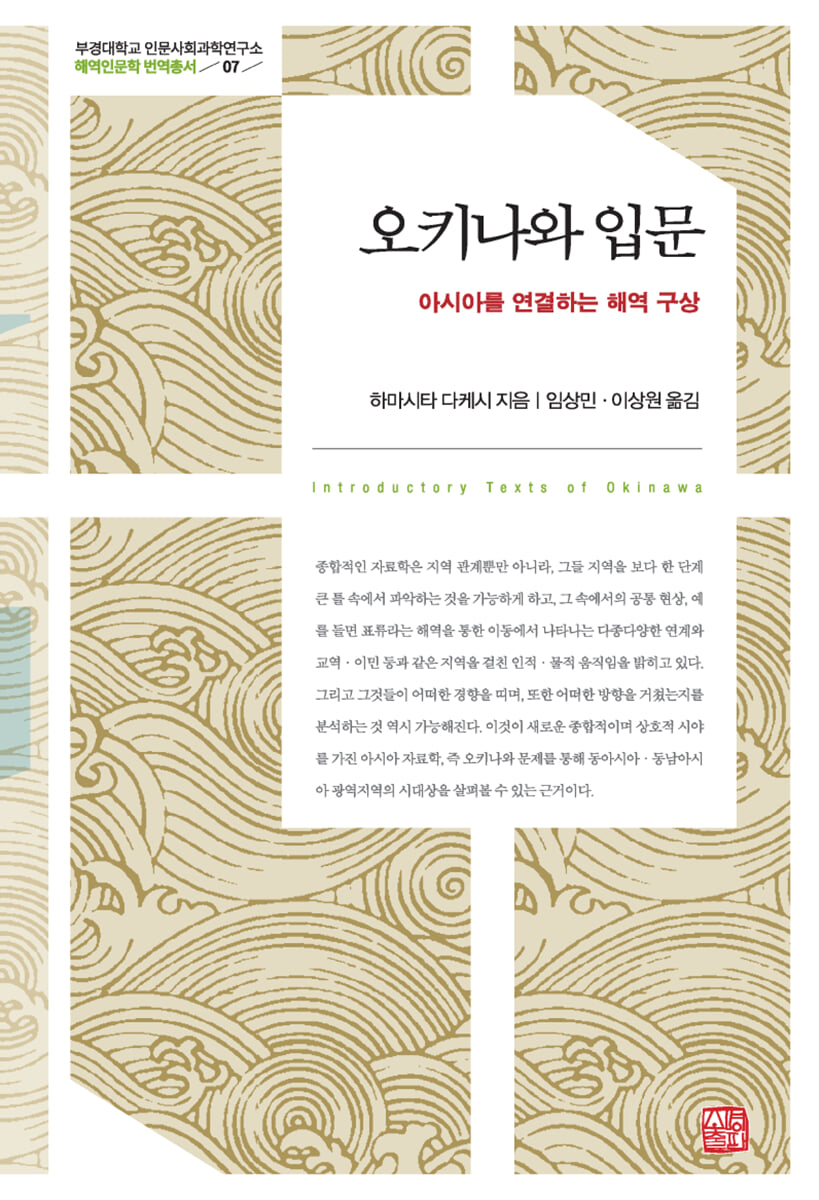
Introduction to Okinawa
 |
Description
Book Introduction
Takeshi Hamashita, who depicts a dynamic and fluidly changing landscape
Okinawa, which has been torn by war and scars since the modern era, is something we feel a kinship with.
Perhaps that is why research on Okinawa mainly starts from this sense.
However, Hamashita Takeshi's study on Okinawa, which advocated for a tribute trade system, is sidestepped here.
He is attempting a "methodological naturalization" of our perception of Okinawa and East Asia, focusing on the dynamism and the regional order formed around the regions and seas of China and East Asia at the time of the Ryukyu Kingdom, rather than on Okinawa as a periphery formed around the existing nation-state and land area.
Since the modern era, the idea of territorial sovereignty has been at work, seeking to subsume regions and maritime areas under the uniform and homogenized sovereignty of an exclusive nation-state. As a result, the independence and heterogeneity of these areas have been excluded from consideration.
Okinawa, too, is often described as a passive and closed space within the post-modern Japan-US relationship, as evidenced by its annexation by Japan (1879), US military rule (1945), and return to Japan (1972). However, focusing on its pre-modern maritime territory reveals a dynamic maritime network that could not be captured from a conventional land-centered perspective.
Takeshi Hamashita overturns the thinking that has been formed around land, that is, the relationship between central and local, center and periphery, suzerainty and sovereignty, South and North, private and public, and government and private, and depicts a dynamic and dynamically changing landscape centered around the maritime network of East Asia and Southeast Asia.
Okinawa, which has been torn by war and scars since the modern era, is something we feel a kinship with.
Perhaps that is why research on Okinawa mainly starts from this sense.
However, Hamashita Takeshi's study on Okinawa, which advocated for a tribute trade system, is sidestepped here.
He is attempting a "methodological naturalization" of our perception of Okinawa and East Asia, focusing on the dynamism and the regional order formed around the regions and seas of China and East Asia at the time of the Ryukyu Kingdom, rather than on Okinawa as a periphery formed around the existing nation-state and land area.
Since the modern era, the idea of territorial sovereignty has been at work, seeking to subsume regions and maritime areas under the uniform and homogenized sovereignty of an exclusive nation-state. As a result, the independence and heterogeneity of these areas have been excluded from consideration.
Okinawa, too, is often described as a passive and closed space within the post-modern Japan-US relationship, as evidenced by its annexation by Japan (1879), US military rule (1945), and return to Japan (1972). However, focusing on its pre-modern maritime territory reveals a dynamic maritime network that could not be captured from a conventional land-centered perspective.
Takeshi Hamashita overturns the thinking that has been formed around land, that is, the relationship between central and local, center and periphery, suzerainty and sovereignty, South and North, private and public, and government and private, and depicts a dynamic and dynamically changing landscape centered around the maritime network of East Asia and Southeast Asia.
- You can preview some of the book's contents.
Preview
index
Preface
Introduction and Geopolitical Location of Ryukyu and Okinawa9
Ryukyu and the Identity of the Sea
Okinawa's location
Okinawa on land, Okinawa on the sea
Chapter 1: Five Generations and 150 Years of Okinawa Studies: How Okinawa Has Been Perceived
Below, Iwa Houyū and Okinawa in Kokugaku
Identity of the Ryukyu Dynasty
Okinawa as seen from Yamato
Japan and the South Seas as seen from Ryukyu and Okinawa
Perry's opening of Ryukyu
Okinawa regional theory
A Message from Okinawa: A Warning Against "Economic Development" and "Consumer Society"
The system of "knowledge" in Okinawan culture
The World of the Ryukyu Dynasty's "Yeokdae Hoan"
Japanese information on the Ming and Qing courts
The Silk Trade and Japan's Industrialization
Chapter 2: Asian Seas Surrounding Ryukyu and Okinawa
Asia as seen from Okinawa
Seas of Asia - Seas and Countries
The formation of the maritime area and the three-dimensional structure of the Southwest Islands
Asia's maritime hegemony
Southeast Asia as seen from Ryukyu and Okinawa
The political space of the sea
regional dynamism
Chapter 3: The East Asian Tribute System and the Ryukyus
The Huai Order as Seen Through East Asian History
Cohesion of Maritime Societies - Tribute, Trade, Immigration, and Sea Gods
Tribute Trade and the Ryukyu Network
Huaiguan as seen through East Asian history
Fire ideology and hierarchical system
The negotiation method of the Huai order
The Dynamism of East Asian History
Ishigaki Island's Fire Order and Network
Wide Area Industrial Network - Guangdong 13th Industrial Complex
Canton Trade - Western Infiltration into Intra-Asian Trade
From drift to immigration
Changes in the Qing Dynasty's tribute policy
Reexamination of the Opium Wars
Political changes in surrounding areas
The Investiture of Ryukyu by Emperor Meiji
Chapter 4: Aiming for a New Asian Data Studies
"Yeokdae Boan" as a Comprehensive Source - A Collection of Diplomatic Documents from the Ryukyu Kingdom
『Ancient Security』 as a copy
Ryukyu Kingdom's diplomacy
Trade between Ryukyu and Manila
The Migration of People and the Formation of East Asian Immigration
Activation of networks within Asia and Southeast Asia
Ryukyu's role
The Movement of "People" to Japan - The "Tangsen" in Nagasaki's Inner Harbor
drifters from Joseon
Mazo's religious sphere and the movement of 'people'
A New Perspective on East Asia
Chapter 5: The Ryukyu and Okinawa Model Transcending National Borders
Okinawa Research Point of View
Nation-States and Metropolitan Areas - The Historicity of the Nation-State and the Perspective of Metropolitan Areas that Transcend the Nation
Okinawa Studies in Globalization and Localization: Models of Economic Development and Regional Relations
Historical Background of Ryukyu and Okinawa Studies
Immigration Network
Regional characteristics of Okinawa immigration
Network Problems - Networks Seen Through the Negotiation Process
Immigration Remittance Network
Remittance for immigration to Okinawa
Okinawa's Geopolitical Identity
Okinawa's Sea Power
Okinawa's post-war experiences and memories
Coming out
Historical and Information Resources of Ryukyu and Okinawa
Okinawa Studies and Okinawa Theory
Okinawa in Asia and Okinawa in the Modern World
Ryukyu History Chronology
List of Literature by Subject on Ryukyu and Okinawa Studies
Translator's Note
Introduction and Geopolitical Location of Ryukyu and Okinawa9
Ryukyu and the Identity of the Sea
Okinawa's location
Okinawa on land, Okinawa on the sea
Chapter 1: Five Generations and 150 Years of Okinawa Studies: How Okinawa Has Been Perceived
Below, Iwa Houyū and Okinawa in Kokugaku
Identity of the Ryukyu Dynasty
Okinawa as seen from Yamato
Japan and the South Seas as seen from Ryukyu and Okinawa
Perry's opening of Ryukyu
Okinawa regional theory
A Message from Okinawa: A Warning Against "Economic Development" and "Consumer Society"
The system of "knowledge" in Okinawan culture
The World of the Ryukyu Dynasty's "Yeokdae Hoan"
Japanese information on the Ming and Qing courts
The Silk Trade and Japan's Industrialization
Chapter 2: Asian Seas Surrounding Ryukyu and Okinawa
Asia as seen from Okinawa
Seas of Asia - Seas and Countries
The formation of the maritime area and the three-dimensional structure of the Southwest Islands
Asia's maritime hegemony
Southeast Asia as seen from Ryukyu and Okinawa
The political space of the sea
regional dynamism
Chapter 3: The East Asian Tribute System and the Ryukyus
The Huai Order as Seen Through East Asian History
Cohesion of Maritime Societies - Tribute, Trade, Immigration, and Sea Gods
Tribute Trade and the Ryukyu Network
Huaiguan as seen through East Asian history
Fire ideology and hierarchical system
The negotiation method of the Huai order
The Dynamism of East Asian History
Ishigaki Island's Fire Order and Network
Wide Area Industrial Network - Guangdong 13th Industrial Complex
Canton Trade - Western Infiltration into Intra-Asian Trade
From drift to immigration
Changes in the Qing Dynasty's tribute policy
Reexamination of the Opium Wars
Political changes in surrounding areas
The Investiture of Ryukyu by Emperor Meiji
Chapter 4: Aiming for a New Asian Data Studies
"Yeokdae Boan" as a Comprehensive Source - A Collection of Diplomatic Documents from the Ryukyu Kingdom
『Ancient Security』 as a copy
Ryukyu Kingdom's diplomacy
Trade between Ryukyu and Manila
The Migration of People and the Formation of East Asian Immigration
Activation of networks within Asia and Southeast Asia
Ryukyu's role
The Movement of "People" to Japan - The "Tangsen" in Nagasaki's Inner Harbor
drifters from Joseon
Mazo's religious sphere and the movement of 'people'
A New Perspective on East Asia
Chapter 5: The Ryukyu and Okinawa Model Transcending National Borders
Okinawa Research Point of View
Nation-States and Metropolitan Areas - The Historicity of the Nation-State and the Perspective of Metropolitan Areas that Transcend the Nation
Okinawa Studies in Globalization and Localization: Models of Economic Development and Regional Relations
Historical Background of Ryukyu and Okinawa Studies
Immigration Network
Regional characteristics of Okinawa immigration
Network Problems - Networks Seen Through the Negotiation Process
Immigration Remittance Network
Remittance for immigration to Okinawa
Okinawa's Geopolitical Identity
Okinawa's Sea Power
Okinawa's post-war experiences and memories
Coming out
Historical and Information Resources of Ryukyu and Okinawa
Okinawa Studies and Okinawa Theory
Okinawa in Asia and Okinawa in the Modern World
Ryukyu History Chronology
List of Literature by Subject on Ryukyu and Okinawa Studies
Translator's Note
Publisher's Review
Pre-modern maritime networks and the geopolitical position of Ryukyu
From a geopolitical perspective, Ryukyu is connected to the trade route from the Philippines to Sulu along the eastern islands of the South China Sea and to Thailand and Malacca along the western continental coast. Through this route, one can confirm the so-called maritime chain in which not only Chinese merchants from East Asia and Southeast Asia, but also Indian merchants, Islamic merchants, and even European merchants participated.
Until the Ming Dynasty, Ryukyu was recognized as a chain of islands connected to Taiwan, and within the tribute system with China surrounding the East and South China Seas, it established an intermediary trade network that obtained and delivered pepper and sapwood, which were not produced domestically, through trade with Southeast Asia.
In particular, Takeshi Hamashita, based on his experience of directly participating in the editing of the 『Yeokdae Hoan』, a diplomatic document covering the 400 years of the Ryukyu Dynasty that has been written since the 15th century, focuses on the wide-area regional network in which East Asian countries that had diplomatic relations with the Ryukyu Kingdom, centered around China, formed an organic unity under tributary relations and the Huai ideology.
And these maritime networks provide an opportunity to verbalize traces of various human and material movements that have not previously been recorded.
For example, the tributary relationship with China was not limited to a political relationship, but involved the movement of people and goods. As can be seen in the Ryukyukan in Fuzhou, the "36 Civilian Cities" of Ryukyu Kumemura, and the settlements of many Chinese communities formed in Southeast Asian port cities, Japan is known to have actively pursued an immigration policy in the latter half of the Meiji period, but it can be seen that trade and immigration rights were being formed simultaneously along maritime networks long before the modern era.
And this shift in thinking provides various hints for thinking about Japan's modern, postwar, and contemporary times.
For example, we generally understand pre-modern trade with foreign countries to be limited to Nagasaki, but if we look at it from a maritime perspective, there were four routes in total, including Nagasaki, which was an open port for foreign trade under the Edo shogunate's isolationist policy: the route with the Ainu of the Matsumae Domain in Hokkaido, the transit route between Joseon and Kyushu via Tsushima, and the route with China via Ryukyu via Satsuma.
Furthermore, considering these pre-modern maritime networks and the geopolitical location of Ryukyu, it is interesting to note that the United States had prior contact with the Ryukyu Kingdom in preparation for the opening of Japan.
In other words, it can be seen that Ryukyu, Satsuma, and Ryukyu under the Edo shogunate, which were part of a tributary system that operated around the East Asian and Southeast Asian maritime networks, were recognized as transit points connecting China and Japan.
Presenting the perspectives of Ryukyu and Okinawa from various perspectives.
This can also be seen as the reason why Takeshi Hamashita constantly refers to ‘Ryukyu and Okinawa’ in this book.
In other words, by revisiting the multi-layered order and negotiation relationships within the East Asian regional system of the Ryukyu region, viewed from a historical maritime perspective, it can be said that Okinawa presents us with the possibility of thinking about another open multicultural system with pluralism, diversity, and inclusiveness within the relationship between globalization and regionalization, rather than between the center and the provinces.
From a geopolitical perspective, Ryukyu is connected to the trade route from the Philippines to Sulu along the eastern islands of the South China Sea and to Thailand and Malacca along the western continental coast. Through this route, one can confirm the so-called maritime chain in which not only Chinese merchants from East Asia and Southeast Asia, but also Indian merchants, Islamic merchants, and even European merchants participated.
Until the Ming Dynasty, Ryukyu was recognized as a chain of islands connected to Taiwan, and within the tribute system with China surrounding the East and South China Seas, it established an intermediary trade network that obtained and delivered pepper and sapwood, which were not produced domestically, through trade with Southeast Asia.
In particular, Takeshi Hamashita, based on his experience of directly participating in the editing of the 『Yeokdae Hoan』, a diplomatic document covering the 400 years of the Ryukyu Dynasty that has been written since the 15th century, focuses on the wide-area regional network in which East Asian countries that had diplomatic relations with the Ryukyu Kingdom, centered around China, formed an organic unity under tributary relations and the Huai ideology.
And these maritime networks provide an opportunity to verbalize traces of various human and material movements that have not previously been recorded.
For example, the tributary relationship with China was not limited to a political relationship, but involved the movement of people and goods. As can be seen in the Ryukyukan in Fuzhou, the "36 Civilian Cities" of Ryukyu Kumemura, and the settlements of many Chinese communities formed in Southeast Asian port cities, Japan is known to have actively pursued an immigration policy in the latter half of the Meiji period, but it can be seen that trade and immigration rights were being formed simultaneously along maritime networks long before the modern era.
And this shift in thinking provides various hints for thinking about Japan's modern, postwar, and contemporary times.
For example, we generally understand pre-modern trade with foreign countries to be limited to Nagasaki, but if we look at it from a maritime perspective, there were four routes in total, including Nagasaki, which was an open port for foreign trade under the Edo shogunate's isolationist policy: the route with the Ainu of the Matsumae Domain in Hokkaido, the transit route between Joseon and Kyushu via Tsushima, and the route with China via Ryukyu via Satsuma.
Furthermore, considering these pre-modern maritime networks and the geopolitical location of Ryukyu, it is interesting to note that the United States had prior contact with the Ryukyu Kingdom in preparation for the opening of Japan.
In other words, it can be seen that Ryukyu, Satsuma, and Ryukyu under the Edo shogunate, which were part of a tributary system that operated around the East Asian and Southeast Asian maritime networks, were recognized as transit points connecting China and Japan.
Presenting the perspectives of Ryukyu and Okinawa from various perspectives.
This can also be seen as the reason why Takeshi Hamashita constantly refers to ‘Ryukyu and Okinawa’ in this book.
In other words, by revisiting the multi-layered order and negotiation relationships within the East Asian regional system of the Ryukyu region, viewed from a historical maritime perspective, it can be said that Okinawa presents us with the possibility of thinking about another open multicultural system with pluralism, diversity, and inclusiveness within the relationship between globalization and regionalization, rather than between the center and the provinces.
GOODS SPECIFICS
- Date of issue: June 1, 2025
- Page count, weight, size: 206 pages | 152*223*11mm
- ISBN13: 9791159054907
You may also like
카테고리
korean


korean

![GQ KOREA Mark (Monthly): December [2025]](http://librairie.coreenne.fr/cdn/shop/files/8ef265dbbfbf186523ed75ba7319009d.jpg?v=1765340328&width=3840)


